

Coffre historique italien en bois sculpté | Circa XVIe-XVIIe siècle
- Prix habituel
- $7,000.00
- Prix soldé
- $7,000.00
- Prix habituel
Impossible de charger la disponibilité du service de retrait


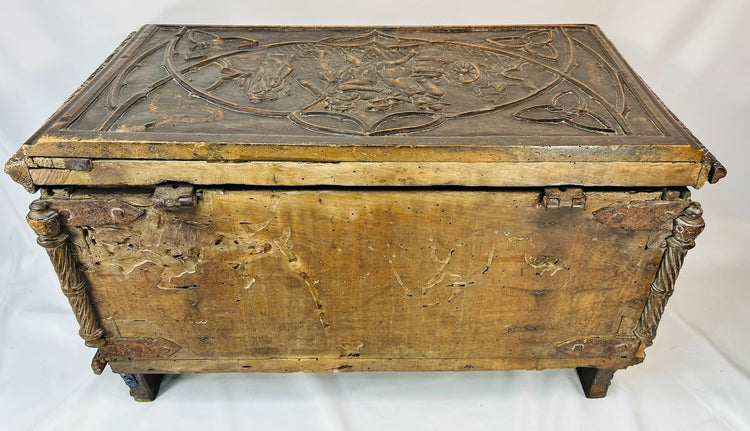
Coffre historique italien en bois sculpté | Circa XVIe-XVIIe siècle
Description
Plus
Moins
Contexte historique et origine
Région : Italie du Nord, Europe de la Renaissance
Matériau : Bois dur sculpté à la main avec serrurerie ancienne en fer forgé
Période : Circa 1550–1650 après J.-C.
Description
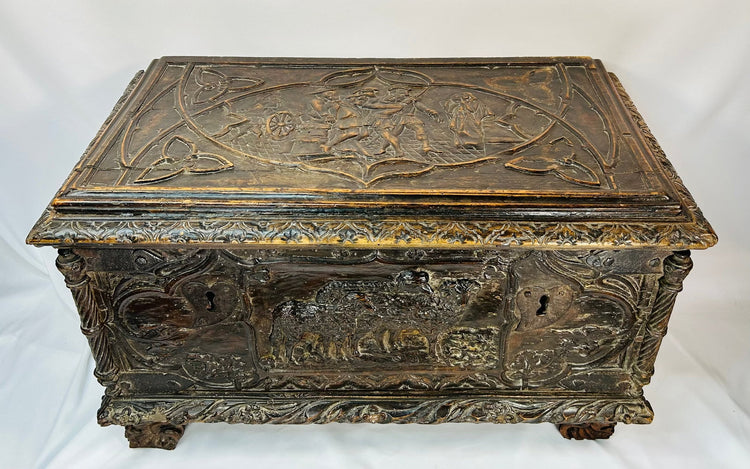
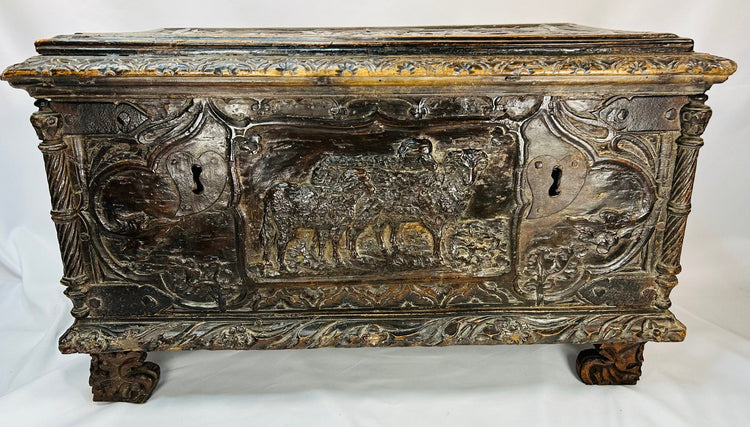
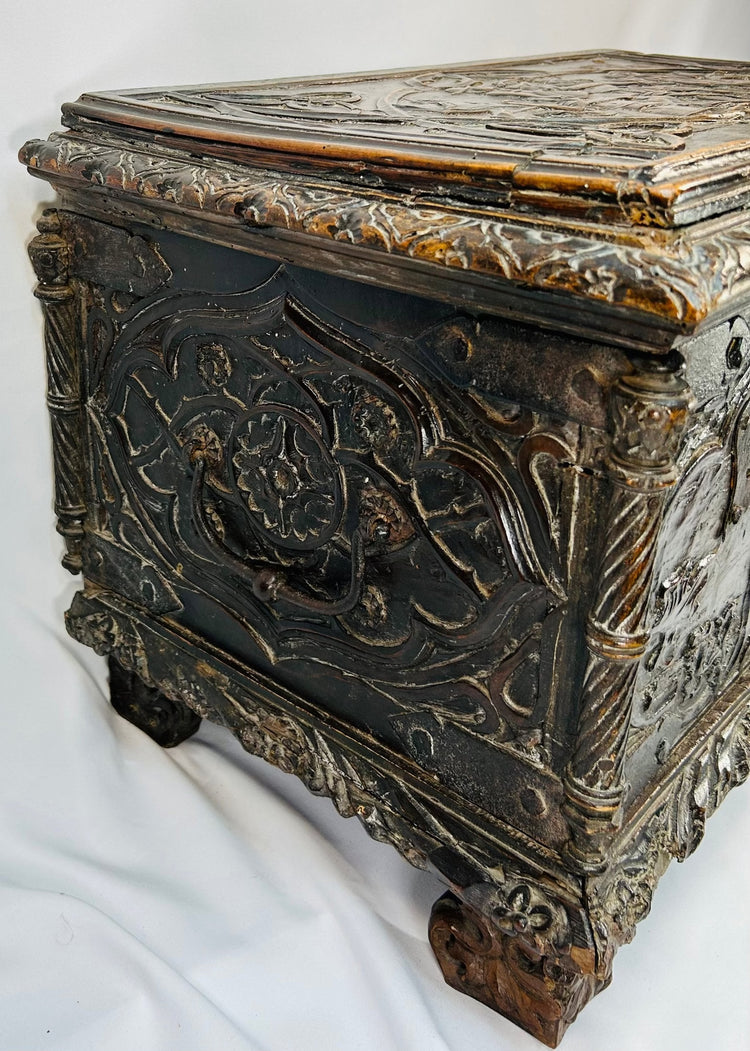
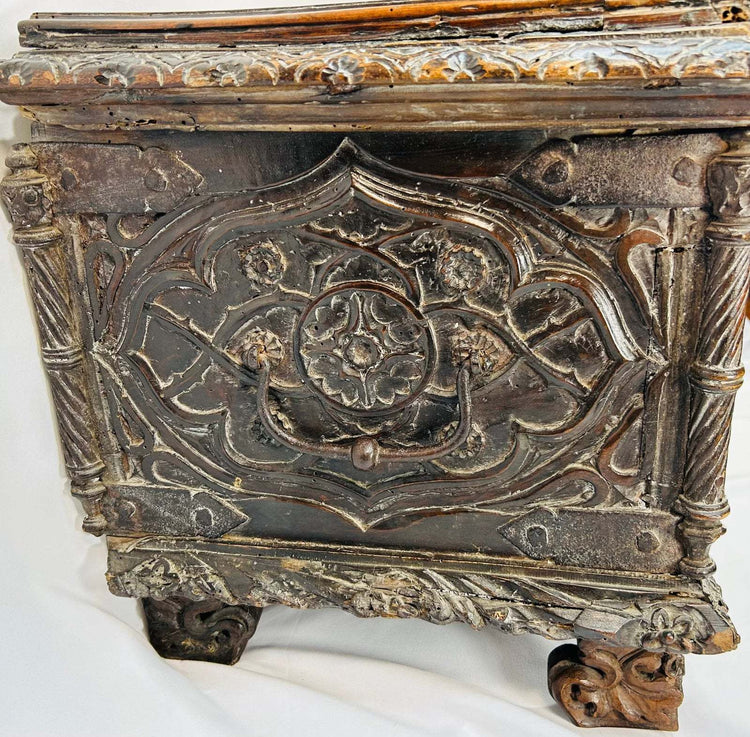
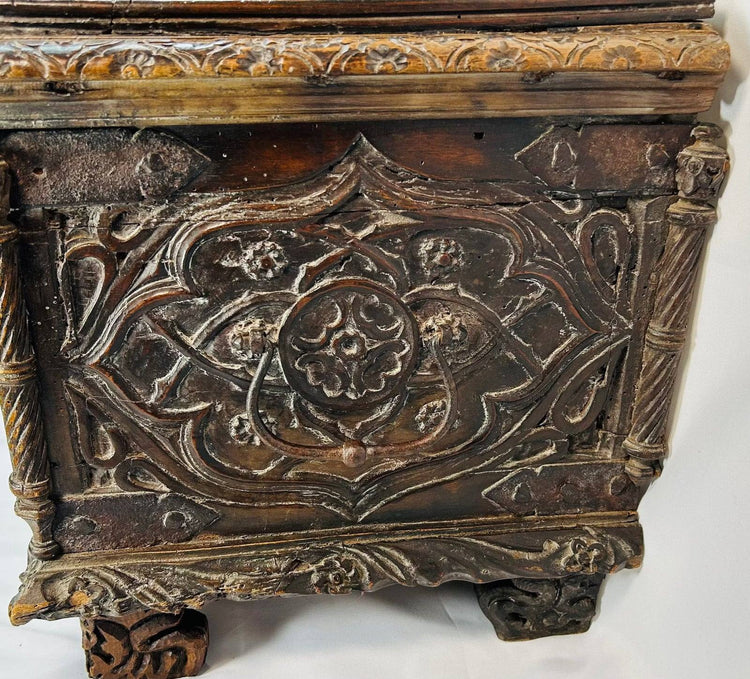
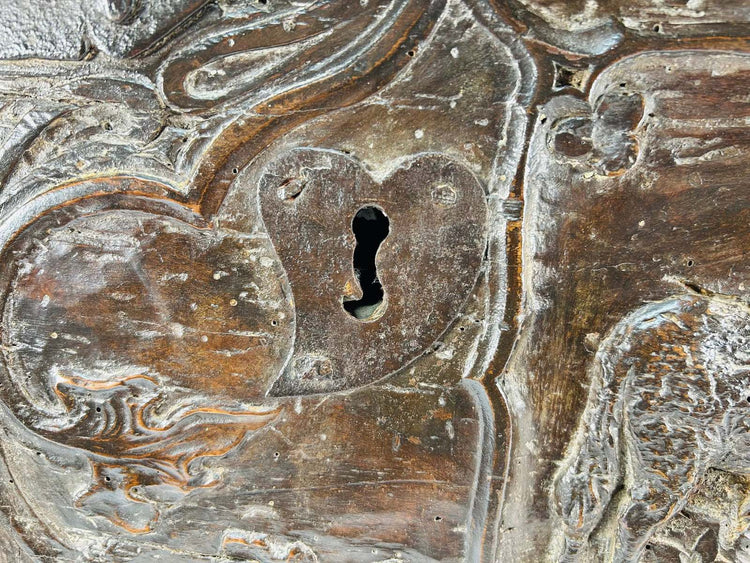
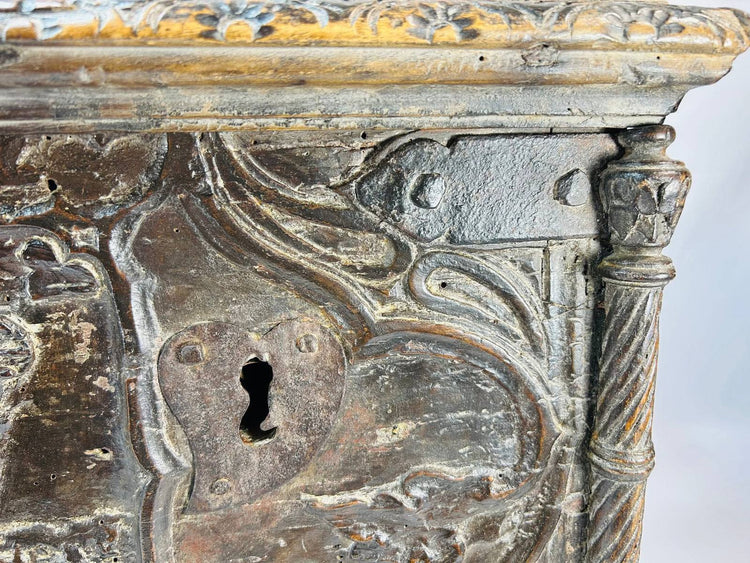
Cet exceptionnel cassone de la Renaissance — également connu sous le nom de forziere ou coffre à objets de valeur — illustre le savoir-faire artistique du nord de l'Italie à la fin de la Renaissance et au début de la période baroque. Sculpté dans un bois dur dense et richement décoré sur toutes ses faces, il présente des panneaux figuratifs profondément sculptés encadrés de volutes feuillagées fluides et de motifs classiques.
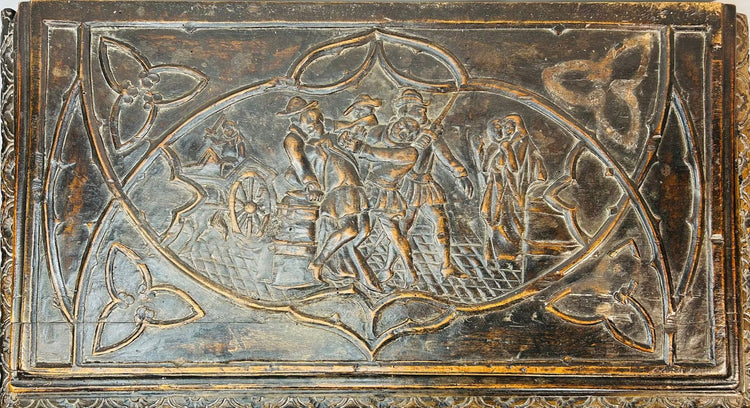
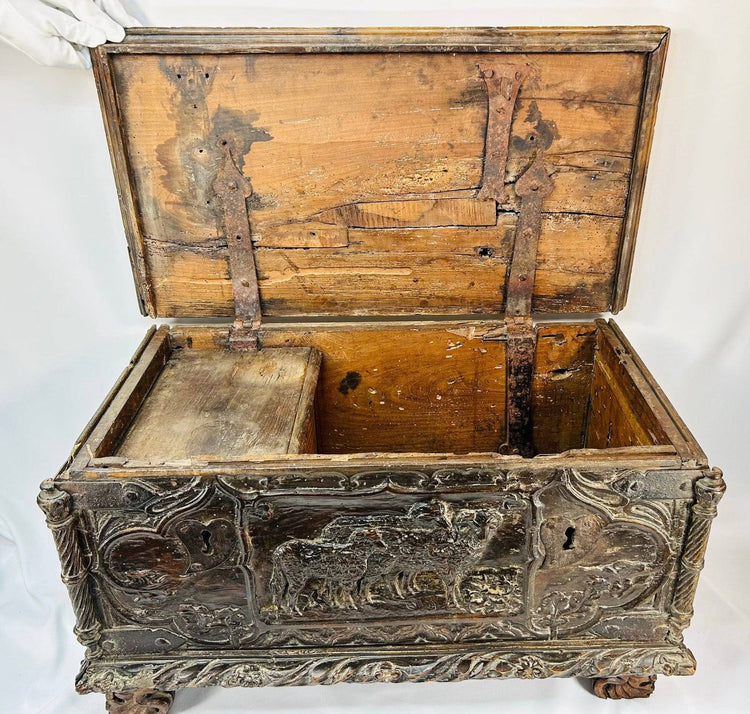
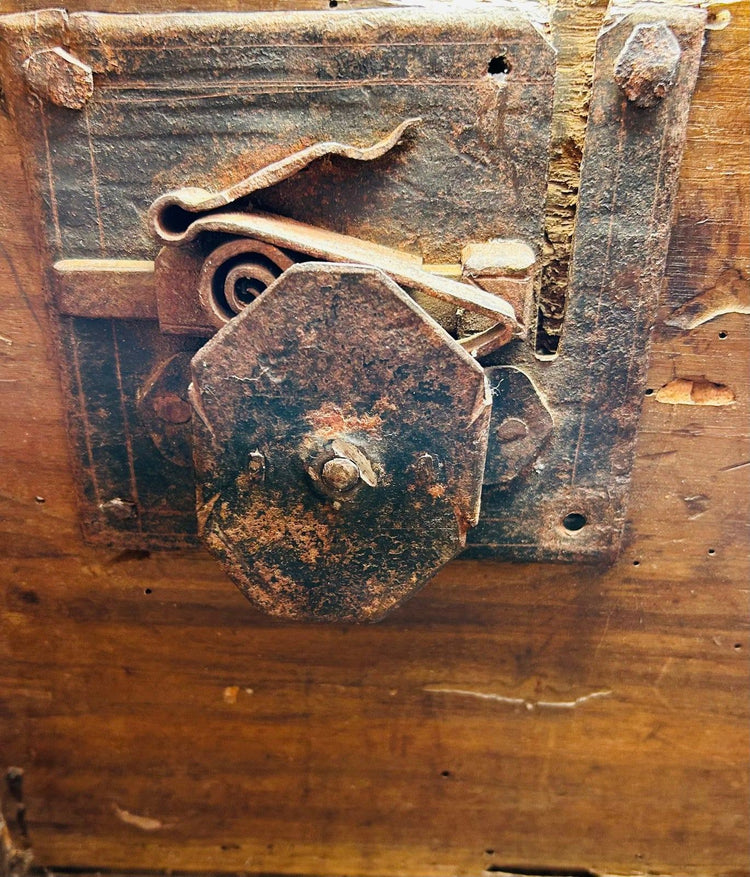
Le couvercle présente un tableau narratif complexe dans un cadre de style quadrilobé, tandis que la façade et les côtés affichent des scènes en relief supplémentaires incluant des animaux, des figures drapées et des éléments architecturaux. Reposant sur des pieds sculptés en volute et équipé d'un ancien mécanisme de serrure interne en fer forgé, ce coffre aurait à l'origine servi de coffre de dot, de coffre-fort cérémoniel ou de dépôt domestique pour des biens précieux.
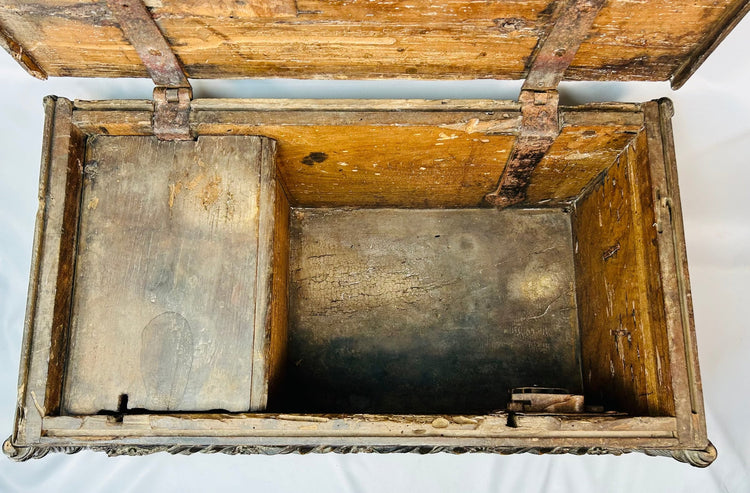
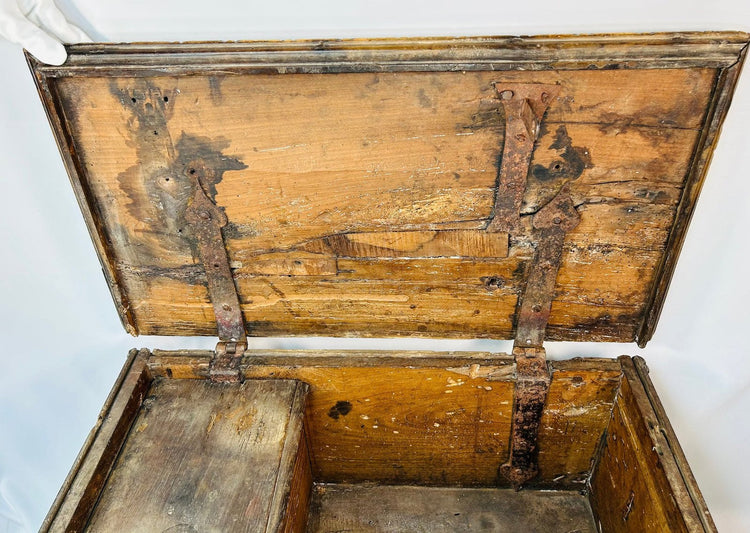
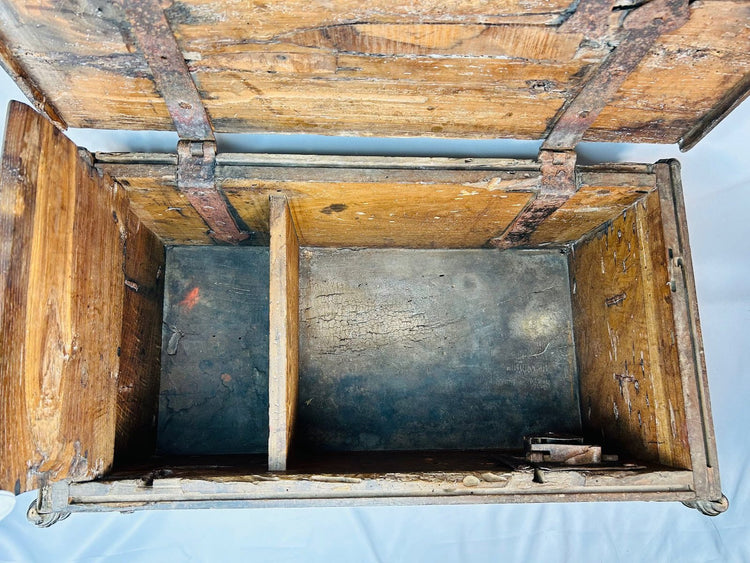
L'intérieur conserve sa structure compartimentée d'origine, y compris un tiroir latéral traditionnel. Une patine chaude et vieillie avec des traces de sa finition d'origine témoigne de siècles de conservation et d'une histoire continue.
Caractéristiques
- Panneaux figuratifs et feuillagés de la Renaissance finement sculptés à la main
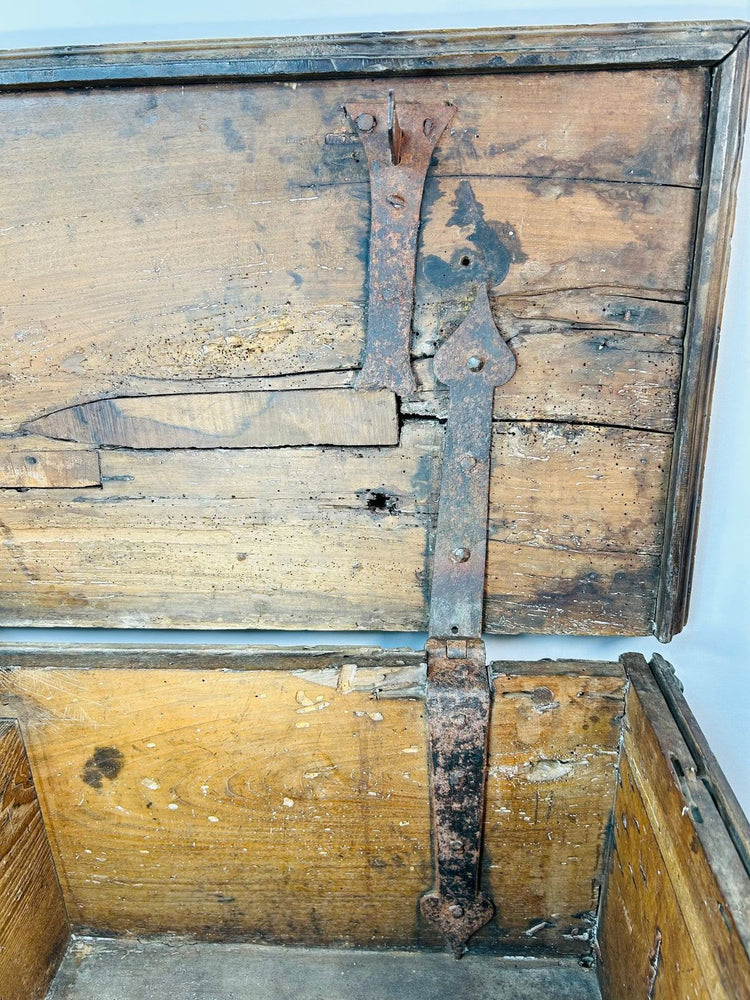
- Charnières et mécanisme de verrouillage interne anciens en fer forgé
- Intérieur compartimenté d'origine avec tiroir latéral traditionnel
- Pieds sculptés en volute et bordures décoratives de la Renaissance
- Patine profonde et chaleureuse conforme au savoir-faire des XVIe-XVIIe siècles
- Un exemple digne d'un musée de l'art domestique italien et de la tradition de la dot
Signification culturelle
Les cassoni de la Renaissance étaient essentiels aux foyers italiens et aux traditions de mariage, souvent présentés comme des coffres de mariage symbolisant la prospérité, la lignée, le raffinement culturel et la formation d'un nouveau ménage. Leurs reliefs sculptés représentaient fréquemment des récits mythologiques, pastoraux ou moraux, reflétant les valeurs et la sophistication artistique de la Renaissance.
Au-delà du symbolisme, ils servaient de coffres-forts sécurisés pour les textiles, les bijoux, les documents et les héritages familiaux. Aujourd'hui, des exemples survivants comme celui-ci offrent un aperçu inestimable de la vie domestique, de l'artisanat et de l'identité culturelle de la Renaissance — faisant le lien entre l'art et le design fonctionnel.
Condition
Très bon état antique avec usure due à l'âge. La surface présente une patine, des marques de manipulation et des abrasions mineures sur les panneaux sculptés. Retrait et oxydation attendus des ferrures en fer. Les pieds en volute montrent une restauration historique, typique et appropriée pour les cassoni de cet âge. L'intérieur reste d'origine sans reconstruction moderne. Structurellement sain et adapté à l'exposition.
Dimensions (approximatives)
Largeur : 28,25 po
Hauteur : 16,5 po
Âge (approximatif)
375–475 ans
Provenance
Provenant d'une collection privée de Sarasota, Floride, USA, constituée par un collectionneur de longue date passionné par les beaux-arts, les antiquités et les objets d'importance historique. La collection reflète des décennies d'acquisitions réfléchies auprès de galeries respectées, de ventes de succession et de maisons de vente aux enchères.
En savoir plus
Découvrez la sculpture sur bois de la Renaissance grâce à The Frame Blog
Explorez notre Collection d'artefacts du XVIIe siècle
Description
Contexte historique et origine
Région : Italie du Nord, Europe de la Renaissance
Matériau : Bois dur sculpté à la main avec serrurerie ancienne en fer forgé
Période : Circa 1550–1650 après J.-C.
Description
Cet exceptionnel cassone de la Renaissance — également connu sous le nom de forziere ou coffre à objets de valeur — illustre le savoir-faire artistique du nord de l'Italie à la fin de la Renaissance et au début de la période baroque. Sculpté dans un bois dur dense et richement décoré sur toutes ses faces, il présente des panneaux figuratifs profondément sculptés encadrés de volutes feuillagées fluides et de motifs classiques.
Le couvercle présente un tableau narratif complexe dans un cadre de style quadrilobé, tandis que la façade et les côtés affichent des scènes en relief supplémentaires incluant des animaux, des figures drapées et des éléments architecturaux. Reposant sur des pieds sculptés en volute et équipé d'un ancien mécanisme de serrure interne en fer forgé, ce coffre aurait à l'origine servi de coffre de dot, de coffre-fort cérémoniel ou de dépôt domestique pour des biens précieux.
L'intérieur conserve sa structure compartimentée d'origine, y compris un tiroir latéral traditionnel. Une patine chaude et vieillie avec des traces de sa finition d'origine témoigne de siècles de conservation et d'une histoire continue.
Caractéristiques
- Panneaux figuratifs et feuillagés de la Renaissance finement sculptés à la main
- Charnières et mécanisme de verrouillage interne anciens en fer forgé
- Intérieur compartimenté d'origine avec tiroir latéral traditionnel
- Pieds sculptés en volute et bordures décoratives de la Renaissance
- Patine profonde et chaleureuse conforme au savoir-faire des XVIe-XVIIe siècles
- Un exemple digne d'un musée de l'art domestique italien et de la tradition de la dot
Signification culturelle
Les cassoni de la Renaissance étaient essentiels aux foyers italiens et aux traditions de mariage, souvent présentés comme des coffres de mariage symbolisant la prospérité, la lignée, le raffinement culturel et la formation d'un nouveau ménage. Leurs reliefs sculptés représentaient fréquemment des récits mythologiques, pastoraux ou moraux, reflétant les valeurs et la sophistication artistique de la Renaissance.
Au-delà du symbolisme, ils servaient de coffres-forts sécurisés pour les textiles, les bijoux, les documents et les héritages familiaux. Aujourd'hui, des exemples survivants comme celui-ci offrent un aperçu inestimable de la vie domestique, de l'artisanat et de l'identité culturelle de la Renaissance — faisant le lien entre l'art et le design fonctionnel.
Condition
Très bon état antique avec usure due à l'âge. La surface présente une patine, des marques de manipulation et des abrasions mineures sur les panneaux sculptés. Retrait et oxydation attendus des ferrures en fer. Les pieds en volute montrent une restauration historique, typique et appropriée pour les cassoni de cet âge. L'intérieur reste d'origine sans reconstruction moderne. Structurellement sain et adapté à l'exposition.
Dimensions (approximatives)
Largeur : 28,25 po
Hauteur : 16,5 po
Âge (approximatif)
375–475 ans
Provenance
Provenant d'une collection privée de Sarasota, Floride, USA, constituée par un collectionneur de longue date passionné par les beaux-arts, les antiquités et les objets d'importance historique. La collection reflète des décennies d'acquisitions réfléchies auprès de galeries respectées, de ventes de succession et de maisons de vente aux enchères.
En savoir plus
Découvrez la sculpture sur bois de la Renaissance grâce à The Frame Blog
Explorez notre Collection d'artefacts du XVIIe siècle
Vous aimerez peut-être aussi
