



Pistolet à percussion indo-afghan | Modélisé d'après les armes militaires britanniques | Milieu du XIXe siècle
- Prix habituel
- $1,000.00
- Prix soldé
- $1,000.00
- Prix habituel
Impossible de charger la disponibilité du service de retrait


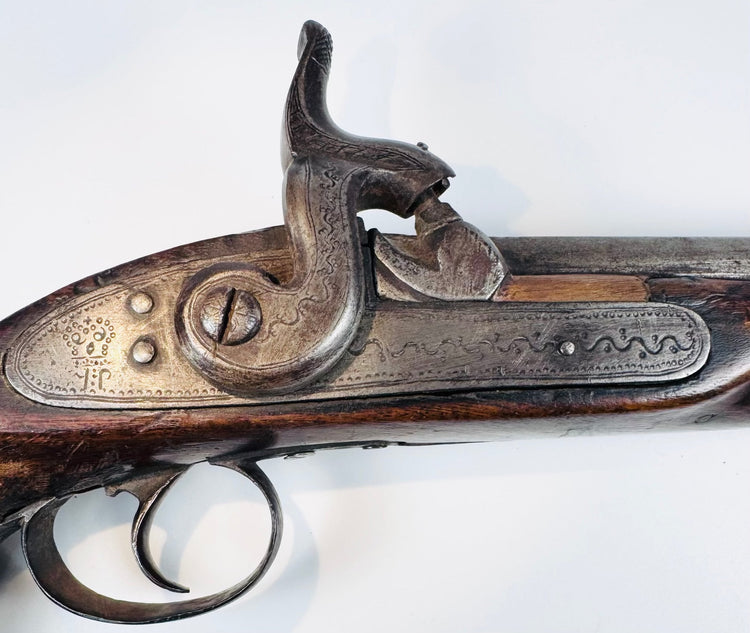
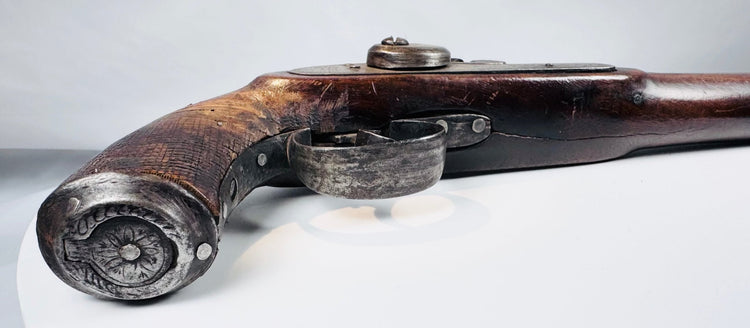
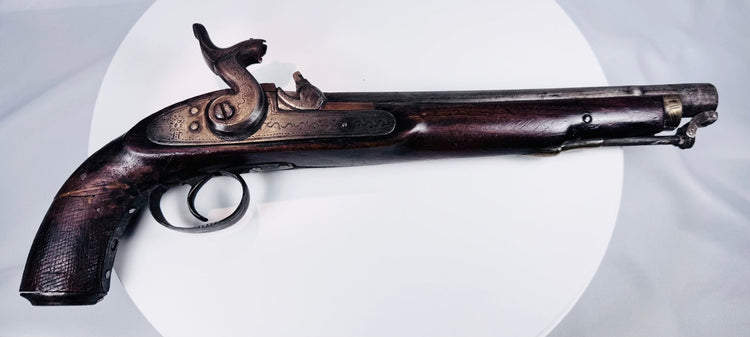
Pistolet à percussion indo-afghan | Modélisé d'après les armes militaires britanniques | Milieu du XIXe siècle
Description
Plus
Moins
Contexte historique et origine
Région : Afghanistan / Région de la Frontière du Nord-Ouest
Matériau : Monture en bois dur, platine et canon en fer, garnitures en laiton
Période : Milieu du XIXe siècle de notre ère, vers 1840–1870
Description
Ce pistolet de cavalerie à percussion distinctif est un exemple classique des armes à feu produites en Afghanistan et dans la vaste région de la Frontière du Nord-Ouest au cours du XIXe siècle. Étroitement calqué sur les pistolets militaires britanniques contemporains introduits en Asie centrale lors de l'expansion de l'influence britannique, l'arme reflète l'adaptation de la technologie européenne des armes à feu par les artisans et armuriers locaux.
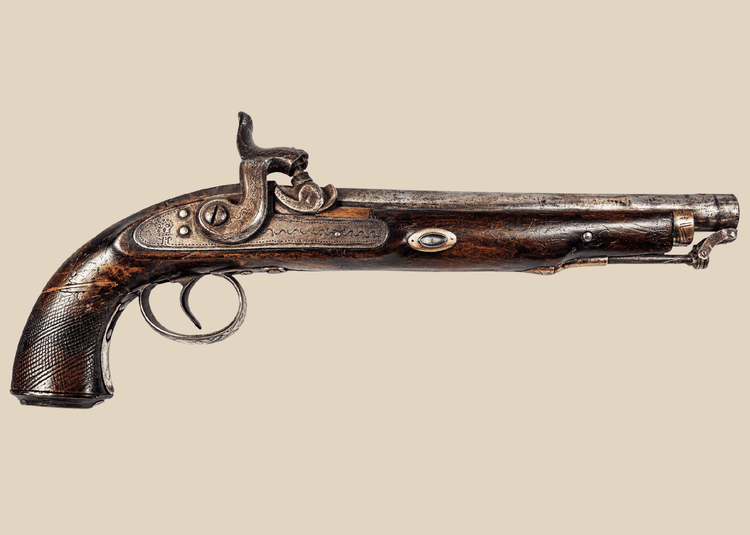
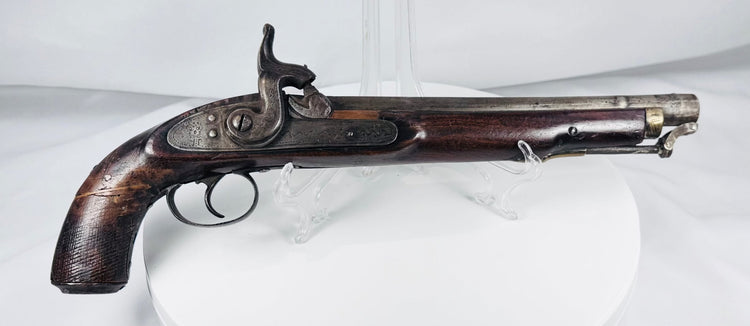
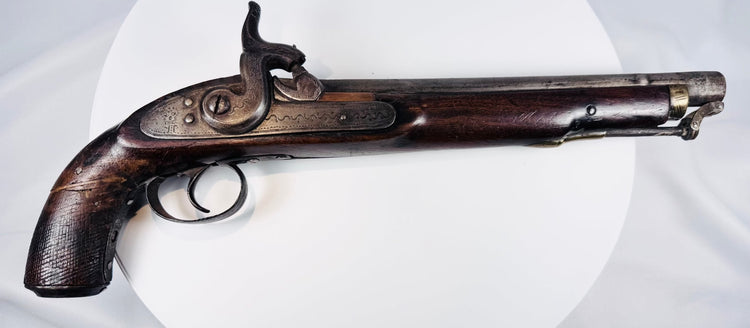
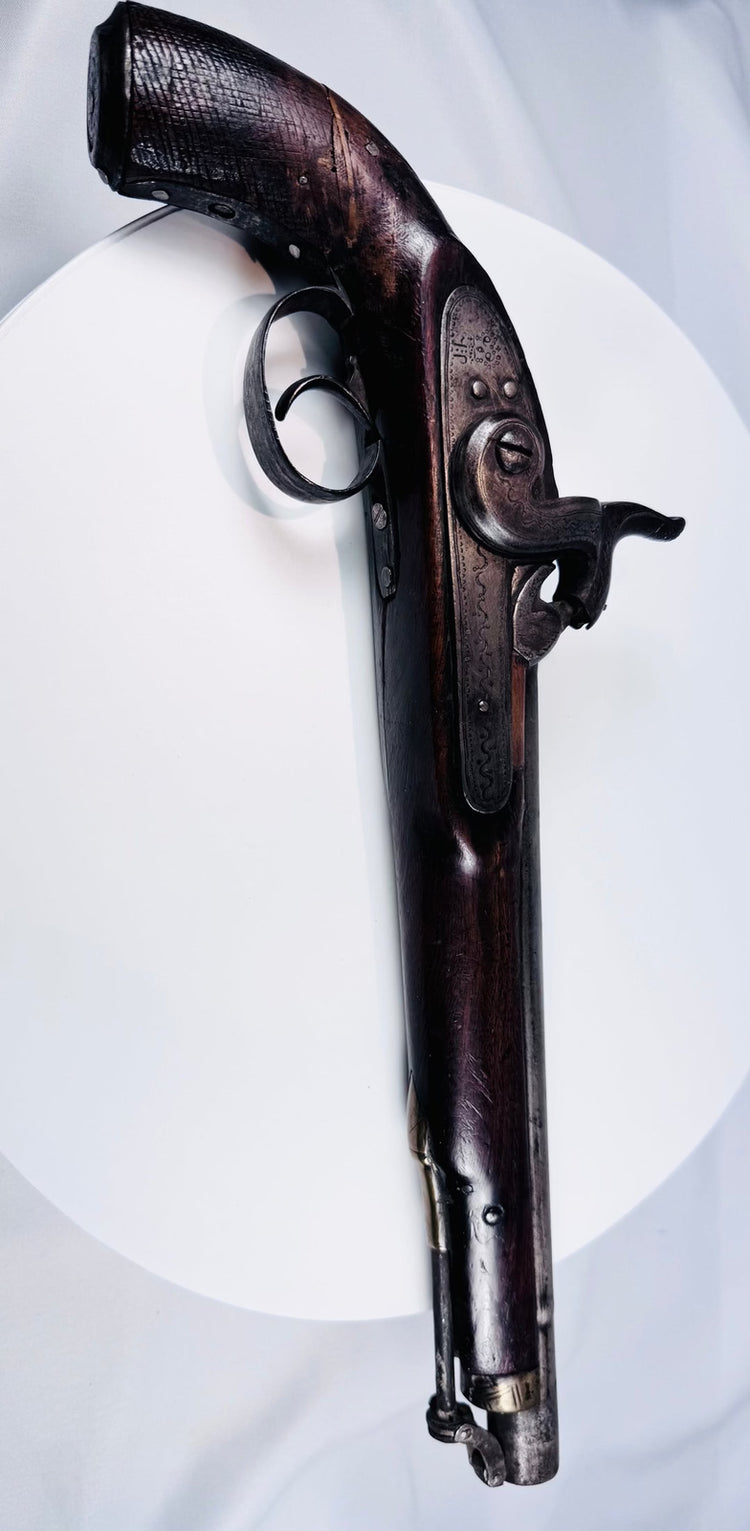
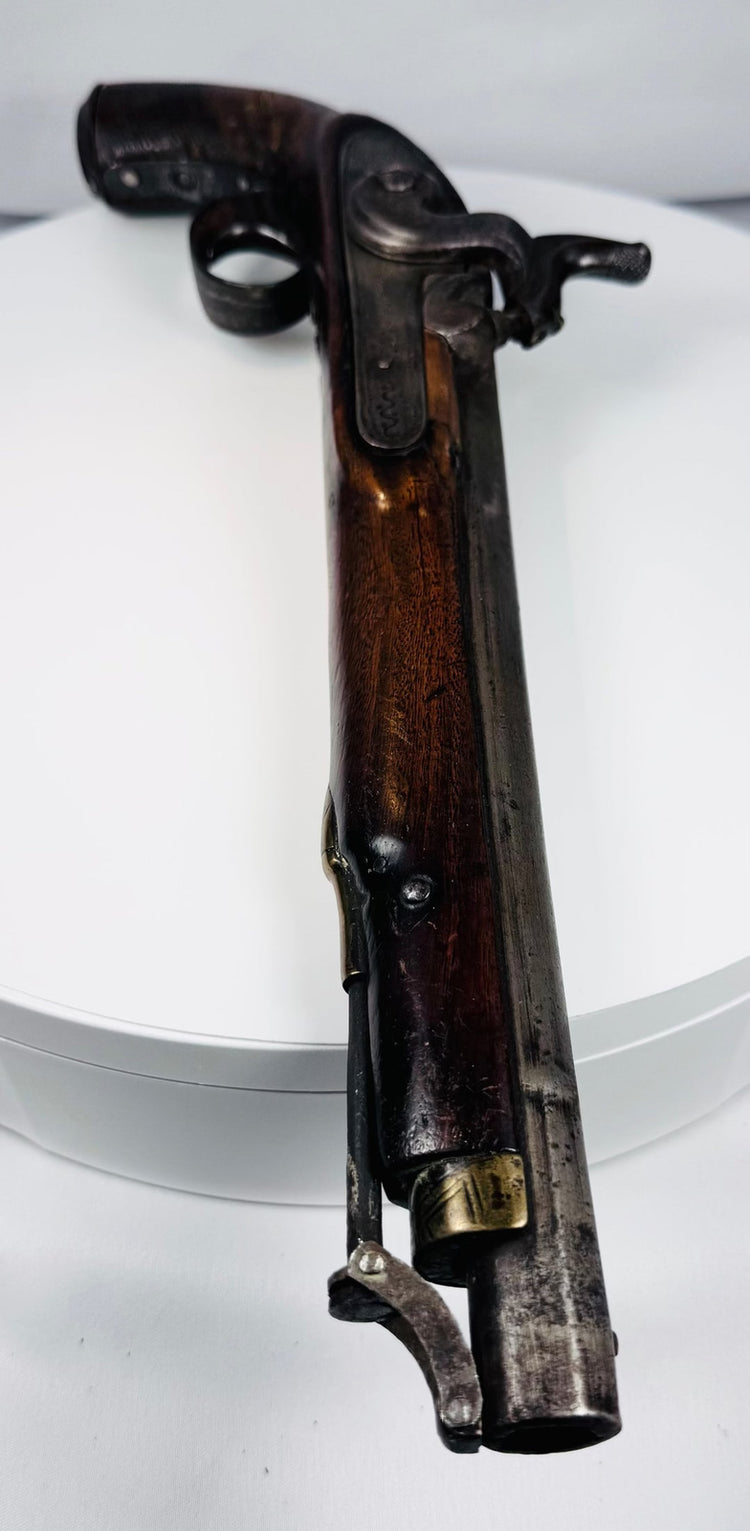
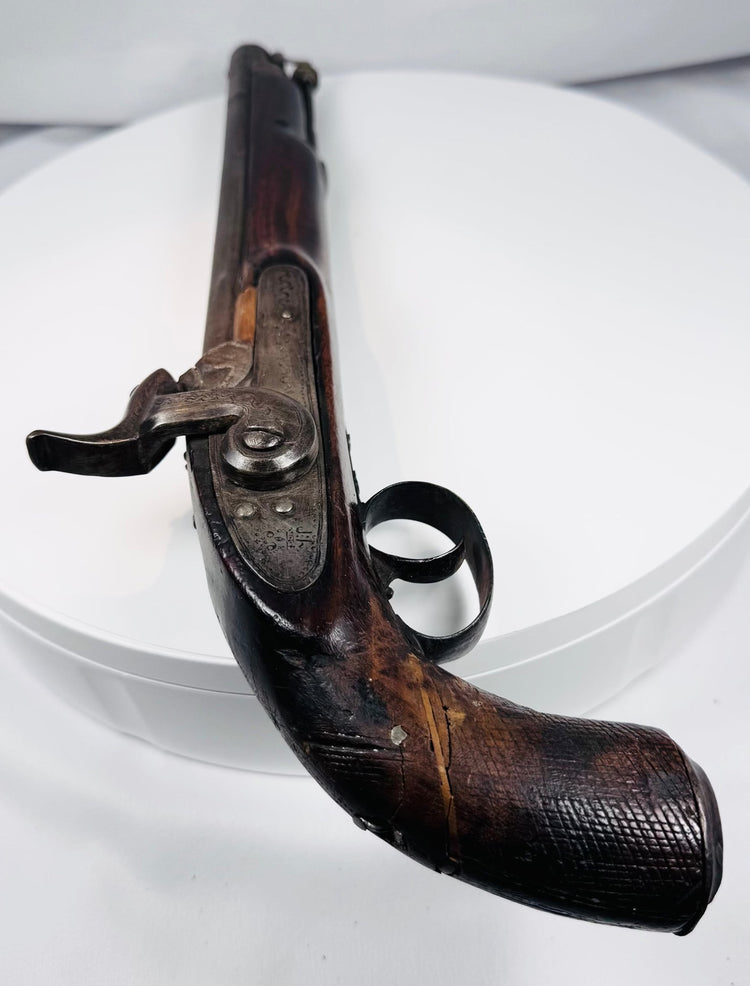
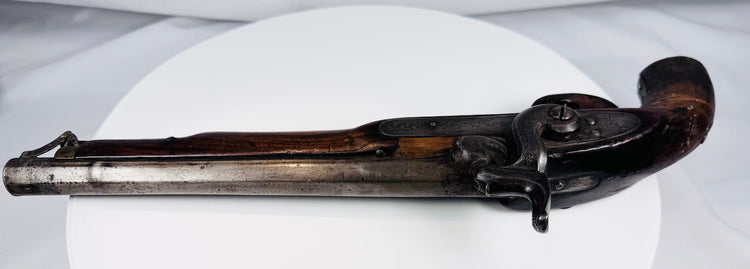
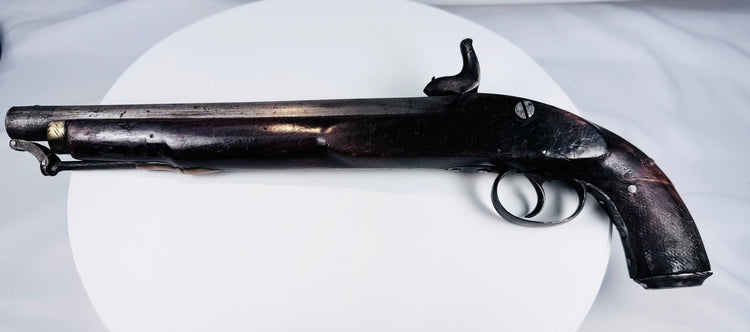
Construit avec une monture substantielle en bois dur et équipé d'un canon et d'un mécanisme de platine en fer, le pistolet présente la forme caractéristique des armes à feu martiales indo-afghanes de cette période. La platine et le chien sont ornés de gravures, tandis que les garnitures en laiton à la bouche offrent à la fois un renforcement et un contraste visuel. Le pistolet conserve sa baguette originale captivée montée sous le canon, une survie de plus en plus rare parmi les exemples comparables.
La silhouette générale s'inspire fortement des pistolets à percussion militaires britanniques du début de l'ère victorienne, bien que plusieurs caractéristiques régionales — y compris la platine gravée, le profil de la monture et les composants finis à la main — suggèrent une fabrication en Afghanistan ou dans les régions tribales bordant l'Inde britannique. Des armes à feu de ce type étaient largement portées par les cavaliers tribaux, les milices locales, les marchands et les troupes irrégulières pendant une période d'intense activité politique et militaire qui comprenait les conflits anglo-afghans du XIXe siècle.
Des exemples comme celui-ci incarnent l'échange culturel entre les armes militaires britanniques et les traditions armurières établies de longue date en Asie centrale et du Sud, où les ateliers locaux réinterprétaient souvent les conceptions importées selon les goûts indigènes et les techniques de fabrication.
Caractéristiques
- Probablement fabriqué en Afghanistan ou dans la Frontière du Nord-Ouest
- Milieu du XIXe siècle, vers 1840–1870
- Monture en bois dur avec platine et canon en fer
- Platine et chien gravés
- Renfort en laiton à la bouche
- Conserve sa baguette originale captivée
- Système d'allumage à percussion traditionnel
- Présente des techniques de construction régionales artisanales
Importance culturelle
Au XIXe siècle, l'Afghanistan et la Frontière du Nord-Ouest servaient de carrefour entre l'Asie centrale, la Perse et l'Inde britannique. L'introduction des armes à feu militaires britanniques pendant les guerres anglo-afghanes a profondément influencé les traditions armurières locales, conduisant les artisans régionaux à produire des pistolets et des mousquets inspirés des designs européens tout en incorporant des motifs décoratifs et des méthodes de construction indigènes.
Ces pistolets étaient appréciés non seulement comme des armes pratiques, mais aussi comme des symboles de statut, d'autorité et d'identité martiale. La fusion de la technologie militaire britannique avec l'artisanat afghan a donné naissance à une classe d'armes distincte qui continue d'intéresser les collectionneurs d'armement islamique, de militaria coloniale et d'artefacts frontaliers.
Condition
Le pistolet reste structurellement sain et présente une usure liée à l'âge attendue. La monture en bois dur présente des éraflures, des abrasions et des pertes éparses, en particulier autour de la poignée et du fût. De l'oxydation de surface, de l'usure due à la manipulation et des zones de patine assombrie par l'âge sont présentes sur les composants métalliques. La décoration gravée de la platine reste visible, et la baguette originale captivée est conservée sous le canon.
Dimensions (approximatives)
Longueur totale : 14,75 pouces
Âge (approximatif)
155–185 ans
Provenance
Faisait autrefois partie d'une collection privée de Cheyenne, Wyoming, États-Unis, comprenant un vaste ensemble d'armes à feu historiques. La collection a été assemblée sur de nombreuses années avec un accent particulier sur les pistolets, mousquets et armes antiques provenant d'Europe, du Moyen-Orient et d'Asie centrale.
En savoir plus
Explorez l'histoire de la guerre et des armes à feu le long de la frontière afghane à travers le National Army Museum
Parcourez notre collection d'armes à feu de collection et d'armement historique
Description
Contexte historique et origine
Région : Afghanistan / Région de la Frontière du Nord-Ouest
Matériau : Monture en bois dur, platine et canon en fer, garnitures en laiton
Période : Milieu du XIXe siècle de notre ère, vers 1840–1870
Description
Ce pistolet de cavalerie à percussion distinctif est un exemple classique des armes à feu produites en Afghanistan et dans la vaste région de la Frontière du Nord-Ouest au cours du XIXe siècle. Étroitement calqué sur les pistolets militaires britanniques contemporains introduits en Asie centrale lors de l'expansion de l'influence britannique, l'arme reflète l'adaptation de la technologie européenne des armes à feu par les artisans et armuriers locaux.
Construit avec une monture substantielle en bois dur et équipé d'un canon et d'un mécanisme de platine en fer, le pistolet présente la forme caractéristique des armes à feu martiales indo-afghanes de cette période. La platine et le chien sont ornés de gravures, tandis que les garnitures en laiton à la bouche offrent à la fois un renforcement et un contraste visuel. Le pistolet conserve sa baguette originale captivée montée sous le canon, une survie de plus en plus rare parmi les exemples comparables.
La silhouette générale s'inspire fortement des pistolets à percussion militaires britanniques du début de l'ère victorienne, bien que plusieurs caractéristiques régionales — y compris la platine gravée, le profil de la monture et les composants finis à la main — suggèrent une fabrication en Afghanistan ou dans les régions tribales bordant l'Inde britannique. Des armes à feu de ce type étaient largement portées par les cavaliers tribaux, les milices locales, les marchands et les troupes irrégulières pendant une période d'intense activité politique et militaire qui comprenait les conflits anglo-afghans du XIXe siècle.
Des exemples comme celui-ci incarnent l'échange culturel entre les armes militaires britanniques et les traditions armurières établies de longue date en Asie centrale et du Sud, où les ateliers locaux réinterprétaient souvent les conceptions importées selon les goûts indigènes et les techniques de fabrication.
Caractéristiques
- Probablement fabriqué en Afghanistan ou dans la Frontière du Nord-Ouest
- Milieu du XIXe siècle, vers 1840–1870
- Monture en bois dur avec platine et canon en fer
- Platine et chien gravés
- Renfort en laiton à la bouche
- Conserve sa baguette originale captivée
- Système d'allumage à percussion traditionnel
- Présente des techniques de construction régionales artisanales
Importance culturelle
Au XIXe siècle, l'Afghanistan et la Frontière du Nord-Ouest servaient de carrefour entre l'Asie centrale, la Perse et l'Inde britannique. L'introduction des armes à feu militaires britanniques pendant les guerres anglo-afghanes a profondément influencé les traditions armurières locales, conduisant les artisans régionaux à produire des pistolets et des mousquets inspirés des designs européens tout en incorporant des motifs décoratifs et des méthodes de construction indigènes.
Ces pistolets étaient appréciés non seulement comme des armes pratiques, mais aussi comme des symboles de statut, d'autorité et d'identité martiale. La fusion de la technologie militaire britannique avec l'artisanat afghan a donné naissance à une classe d'armes distincte qui continue d'intéresser les collectionneurs d'armement islamique, de militaria coloniale et d'artefacts frontaliers.
Condition
Le pistolet reste structurellement sain et présente une usure liée à l'âge attendue. La monture en bois dur présente des éraflures, des abrasions et des pertes éparses, en particulier autour de la poignée et du fût. De l'oxydation de surface, de l'usure due à la manipulation et des zones de patine assombrie par l'âge sont présentes sur les composants métalliques. La décoration gravée de la platine reste visible, et la baguette originale captivée est conservée sous le canon.
Dimensions (approximatives)
Longueur totale : 14,75 pouces
Âge (approximatif)
155–185 ans
Provenance
Faisait autrefois partie d'une collection privée de Cheyenne, Wyoming, États-Unis, comprenant un vaste ensemble d'armes à feu historiques. La collection a été assemblée sur de nombreuses années avec un accent particulier sur les pistolets, mousquets et armes antiques provenant d'Europe, du Moyen-Orient et d'Asie centrale.
En savoir plus
Explorez l'histoire de la guerre et des armes à feu le long de la frontière afghane à travers le National Army Museum
Parcourez notre collection d'armes à feu de collection et d'armement historique
Vous aimerez peut-être aussi
