

Fragment de tête effigie précolombienne | Ouest du Mexique | Vers 300 av. J.-C. – 300 apr. J.-C.
- Prix habituel
- $400.00
- Prix soldé
- $400.00
- Prix habituel
Impossible de charger la disponibilité du service de retrait


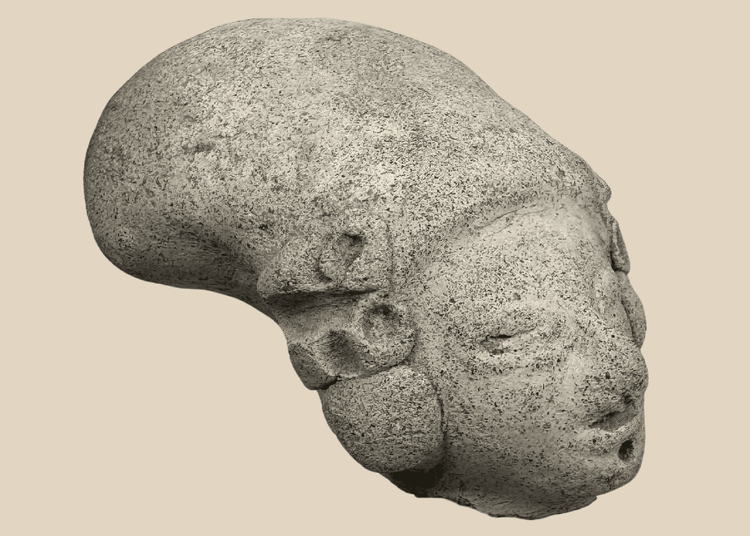
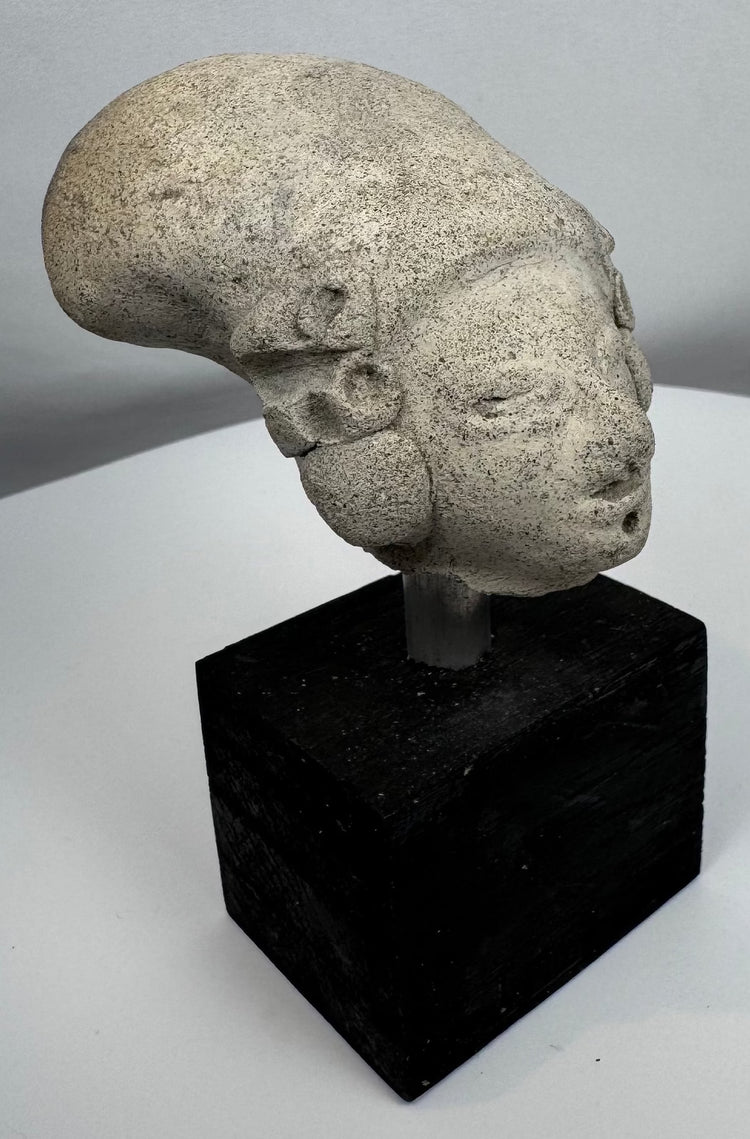


Fragment de tête effigie précolombienne | Ouest du Mexique | Vers 300 av. J.-C. – 300 apr. J.-C.
Description
Plus
Moins
Contexte historique et origine
Région : Ouest du Mexique (Région de Colima / Jalisco / Nayarit)
Matériau : Terre cuite
Période : Formatif précolombien tardif au début de la période classique, vers 300 av. J.-C. – 300 apr. J.-C.
Description
Cette ancienne tête-effigie précolombienne en terre cuite représente une figure humaine stylisée aux yeux clos, aux ornements d'oreille proéminents et à la forme crânienne allongée. La sculpture présente les conventions artistiques distinctives associées aux traditions céramiques de l'Ouest du Mexique, où les artisans créaient des représentations très expressives d'individus, d'ancêtres, de chamans et de membres de l'élite sociale.
La figure arbore de larges bobines d'oreille circulaires, un nez soigneusement modelé et une petite perforation sous la bouche. Une ouverture plus grande au sommet suggère que la tête faisait peut-être à l'origine partie d'un plus grand récipient effigie, sifflet, figure cérémonielle ou objet rituel. La forme allongée de la tête peut représenter une modification crânienne intentionnelle, une pratique documentée parmi diverses cultures mésoaméricaines anciennes et souvent associée au statut, à l'identité et à la distinction sociale.
Les figurines en terre cuite de l'Ouest du Mexique ont joué un rôle important dans les contextes funéraires et cérémoniels. Beaucoup étaient placées dans des tombes à puits comme compagnons des défunts ou servaient de représentations symboliques d'ancêtres, de chefs de communauté ou d'êtres surnaturels.
Caractéristiques
- Tête-effigie précolombienne authentique en terre cuite
- Tradition culturelle de l'Ouest du Mexique
- Représente une figure humaine avec des bobines d'oreille et une forme crânienne allongée
- Probablement une partie d'un plus grand objet cérémoniel ou funéraire
- Patine de surface attrayante et altération archéologique
- Montée sur un support de présentation personnalisé
- Excellent exemple de l'artisanat mésoaméricain ancien
État
État fragmentaire ancien avec usure de surface attendue, altération, dépôts minéraux et pertes conformes à l'âge et à la récupération archéologique. La tête est substantiellement intacte et est montée sur un support de présentation moderne.
Dimensions (approximatives)
Hauteur : 10 cm
Largeur : 7,6 cm
Profondeur : 6,4 cm
Âge (approximatif)
1 700 à 2 300 ans
Provenance
Issue d'une collection privée à Saint Paul, Minnesota, USA, constituée sur plusieurs décennies par un collectionneur passionné d'antiquités précolombiennes, méditerranéennes anciennes et égyptiennes. La collection était axée sur les artefacts archéologiques, les objets rituels et les œuvres d'art anciennes acquises auprès de galeries établies, de ventes de succession et d'acquisitions privées tout au long de la fin du XXe siècle.
En savoir plus
Explorez les traditions culturelles et les découvertes archéologiques de l'Ouest du Mexique à travers le Penn Museum
Parcourez notre Collection d'artefacts et de reliques précolombiens anciens
Description
Contexte historique et origine
Région : Ouest du Mexique (Région de Colima / Jalisco / Nayarit)
Matériau : Terre cuite
Période : Formatif précolombien tardif au début de la période classique, vers 300 av. J.-C. – 300 apr. J.-C.
Description
Cette ancienne tête-effigie précolombienne en terre cuite représente une figure humaine stylisée aux yeux clos, aux ornements d'oreille proéminents et à la forme crânienne allongée. La sculpture présente les conventions artistiques distinctives associées aux traditions céramiques de l'Ouest du Mexique, où les artisans créaient des représentations très expressives d'individus, d'ancêtres, de chamans et de membres de l'élite sociale.
La figure arbore de larges bobines d'oreille circulaires, un nez soigneusement modelé et une petite perforation sous la bouche. Une ouverture plus grande au sommet suggère que la tête faisait peut-être à l'origine partie d'un plus grand récipient effigie, sifflet, figure cérémonielle ou objet rituel. La forme allongée de la tête peut représenter une modification crânienne intentionnelle, une pratique documentée parmi diverses cultures mésoaméricaines anciennes et souvent associée au statut, à l'identité et à la distinction sociale.
Les figurines en terre cuite de l'Ouest du Mexique ont joué un rôle important dans les contextes funéraires et cérémoniels. Beaucoup étaient placées dans des tombes à puits comme compagnons des défunts ou servaient de représentations symboliques d'ancêtres, de chefs de communauté ou d'êtres surnaturels.
Caractéristiques
- Tête-effigie précolombienne authentique en terre cuite
- Tradition culturelle de l'Ouest du Mexique
- Représente une figure humaine avec des bobines d'oreille et une forme crânienne allongée
- Probablement une partie d'un plus grand objet cérémoniel ou funéraire
- Patine de surface attrayante et altération archéologique
- Montée sur un support de présentation personnalisé
- Excellent exemple de l'artisanat mésoaméricain ancien
État
État fragmentaire ancien avec usure de surface attendue, altération, dépôts minéraux et pertes conformes à l'âge et à la récupération archéologique. La tête est substantiellement intacte et est montée sur un support de présentation moderne.
Dimensions (approximatives)
Hauteur : 10 cm
Largeur : 7,6 cm
Profondeur : 6,4 cm
Âge (approximatif)
1 700 à 2 300 ans
Provenance
Issue d'une collection privée à Saint Paul, Minnesota, USA, constituée sur plusieurs décennies par un collectionneur passionné d'antiquités précolombiennes, méditerranéennes anciennes et égyptiennes. La collection était axée sur les artefacts archéologiques, les objets rituels et les œuvres d'art anciennes acquises auprès de galeries établies, de ventes de succession et d'acquisitions privées tout au long de la fin du XXe siècle.
En savoir plus
Explorez les traditions culturelles et les découvertes archéologiques de l'Ouest du Mexique à travers le Penn Museum
Parcourez notre Collection d'artefacts et de reliques précolombiens anciens
Vous aimerez peut-être aussi
