

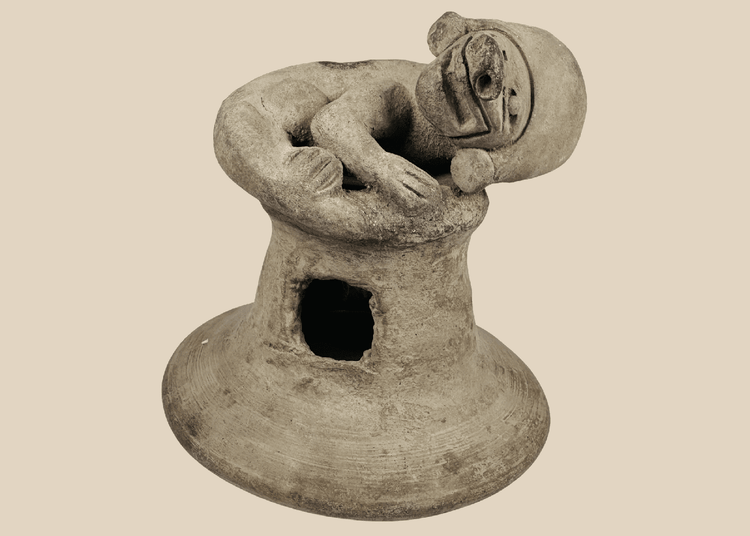
Encensoir en terre cuite Manteño précolombien | Couvercle de brasero anthropomorphe | Équateur | Provenance détaillée | Vers 800 avant notre ère – 800 de notre ère
- Prix habituel
- $1,000.00
- Prix soldé
- $1,000.00
- Prix habituel
Impossible de charger la disponibilité du service de retrait


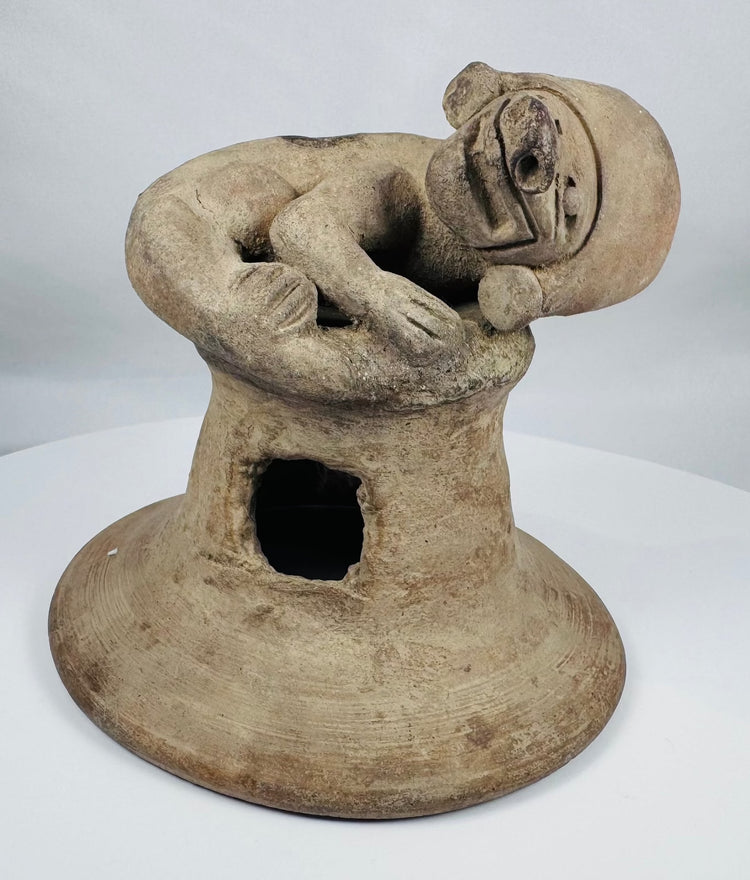
Encensoir en terre cuite Manteño précolombien | Couvercle de brasero anthropomorphe | Équateur | Provenance détaillée | Vers 800 avant notre ère – 800 de notre ère
Description
Plus
Moins
Contexte historique et origine
Région : Côte de l'Équateur (culture Manteño), Amérique du Sud
Matériau : Terre cuite modelée à la main
Période : environ 800 av. J.-C. – 800 apr. J.-C.
Description
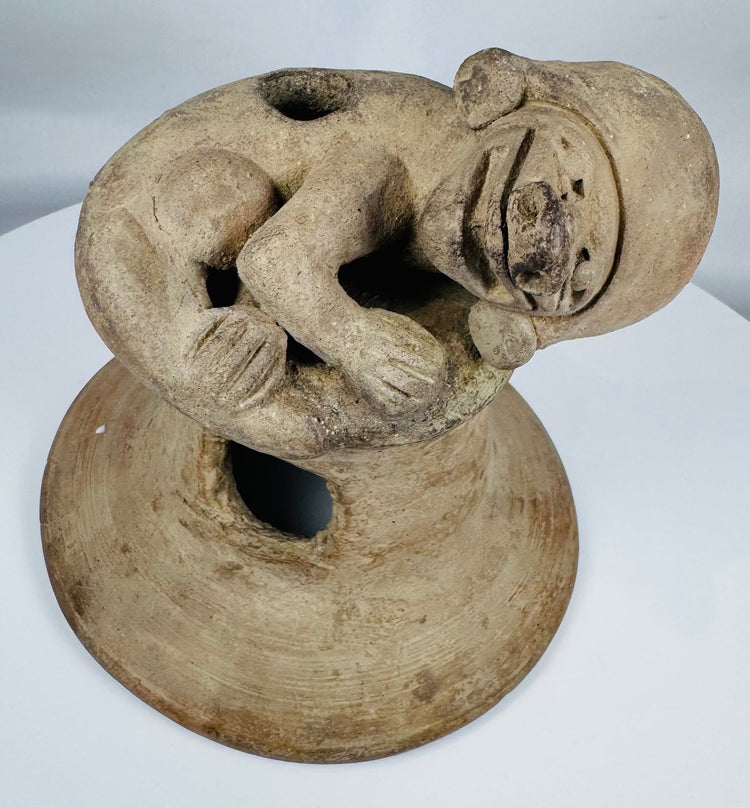
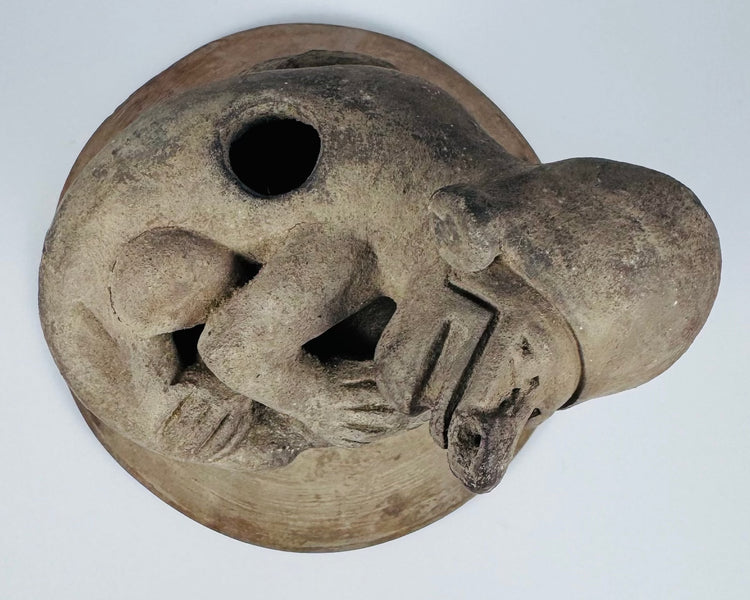
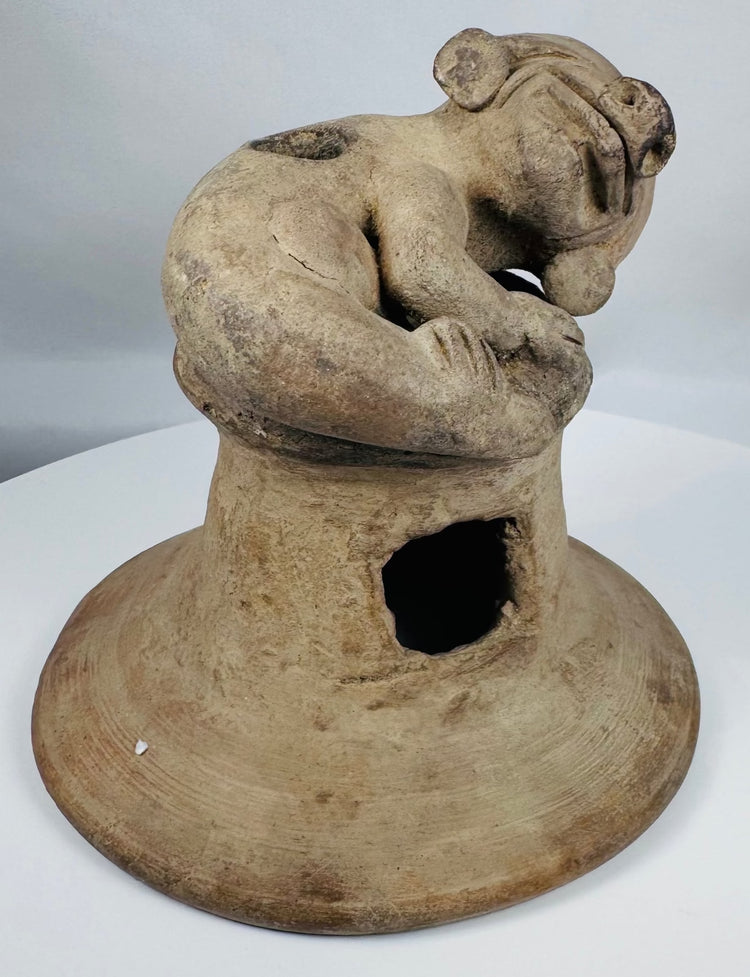
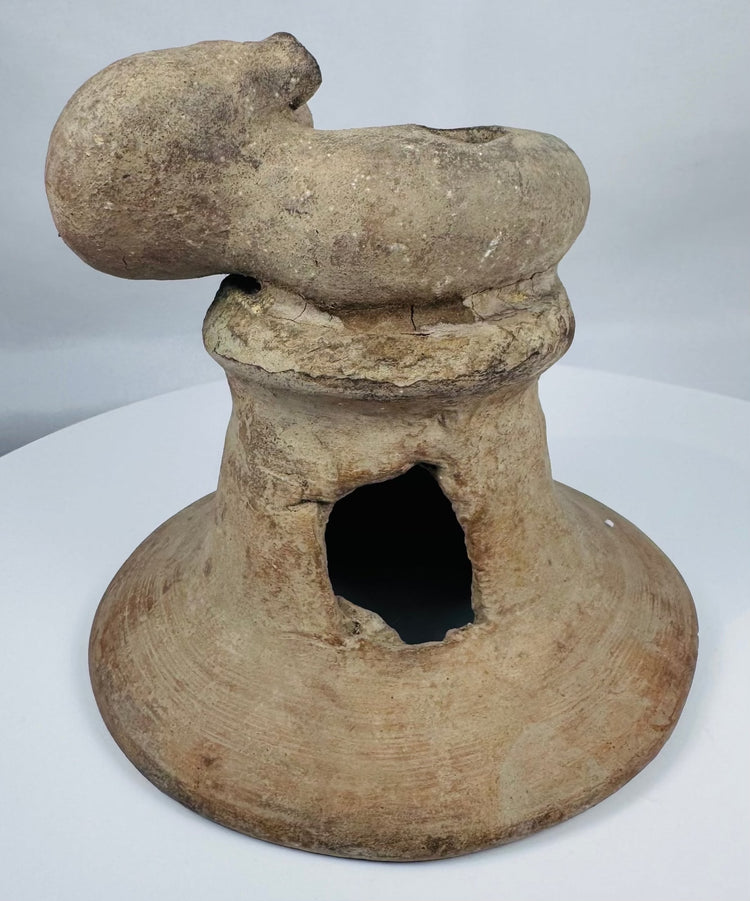
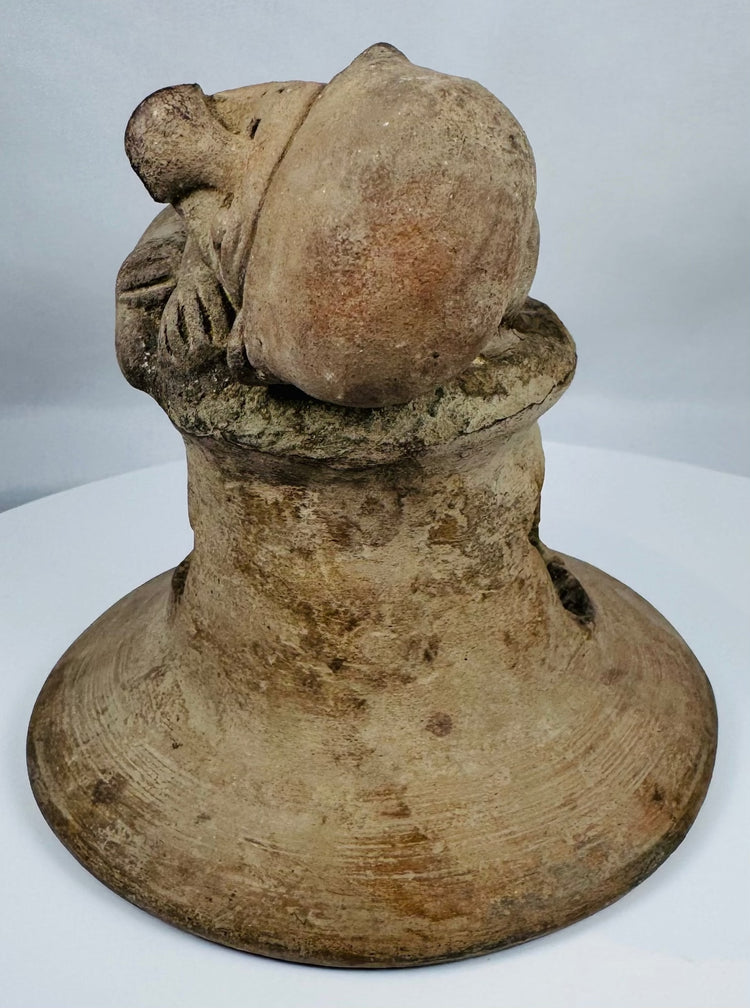
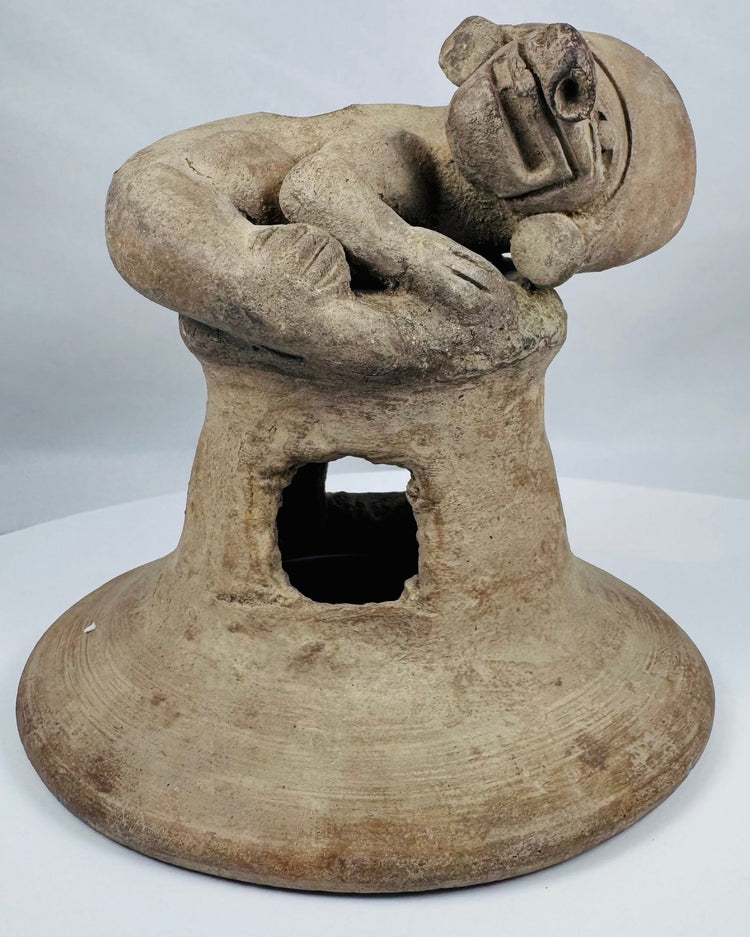
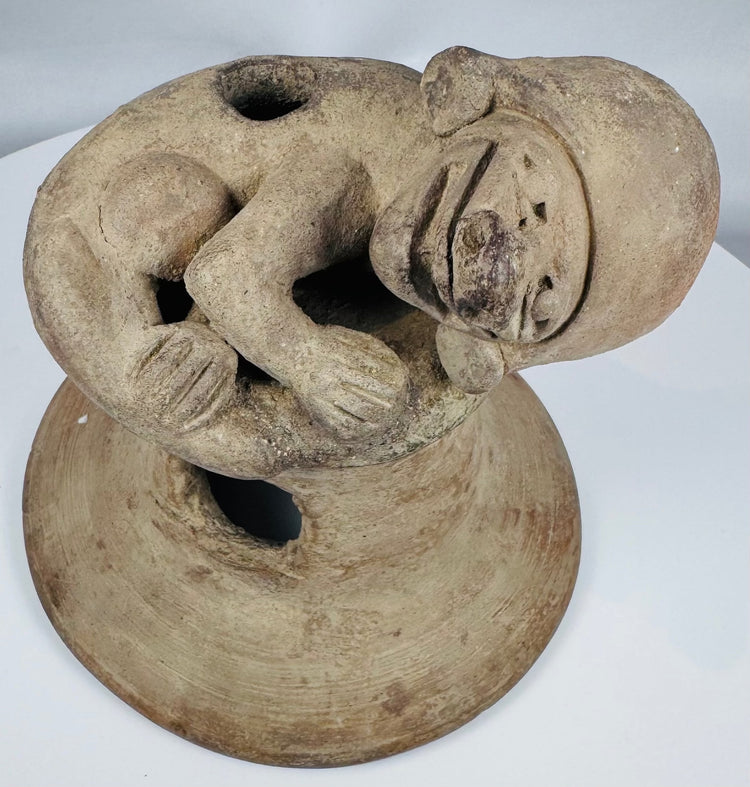
Ce couvercle d'encensoir (brûle-parfum) ou de brasero précolombien en terre cuite, authentique, est un exemple important de l'ancienne poterie cérémonielle équatorienne. Modélisé à la main en terre cuite, le récipient est surmonté d'une figure anthropomorphe couchée, représentée dans une posture accroupie compacte avec les membres pliés, une tête agrandie, un nez proéminent, des yeux enfoncés et de grands ornements auriculaires circulaires. Cette figure expressive reflète les traditions sculpturales distinctives associées à la culture Manteño et aux traditions céramiques côtières équatoriennes apparentées.
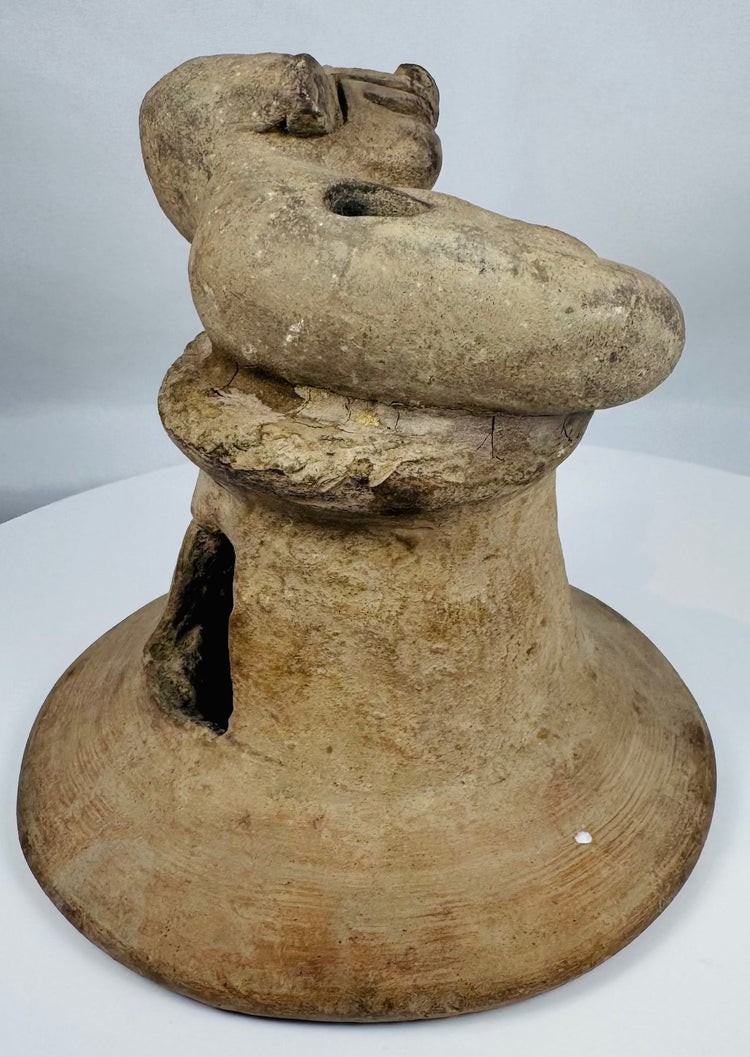
Le récipient combine des éléments fonctionnels et symboliques. De grandes ouvertures de ventilation autour de la section cylindrique supérieure permettaient à la chaleur et à la fumée de circuler tandis que des résines aromatiques, des herbes ou des offrandes rituelles brûlaient dans la chambre inférieure. La large base évasée assurait la stabilité pendant l'utilisation cérémonielle tout en aidant à disperser la fumée parfumée. De tels encensoirs jouaient un rôle important dans les rituels religieux, funéraires et communautaires à travers l'ancien Équateur.
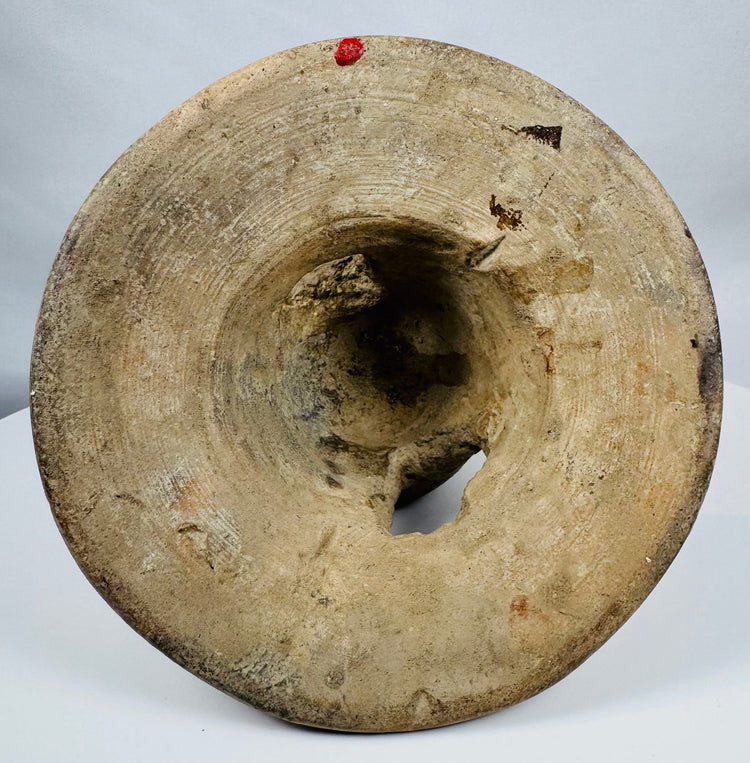
La posture compacte et les traits faciaux stylisés de la figure avaient probablement une signification cérémonielle et pouvaient représenter un ancêtre, un participant rituel, un chaman ou un être surnaturel. La pièce présente des surfaces terreuses attrayantes avec des concrétions minérales, des incrustations d'enfouissement et une altération due à l'âge, conformes à un enfouissement archéologique de longue durée.
Monté tel qu'il a été construit à l'origine, le récipient se présente exceptionnellement bien et constitue une représentation fascinante des traditions artistiques et cérémonielles de l'Équateur précolombien.
Caractéristiques
- Encensoir (brûle-parfum) ou couvercle de brasero précolombien authentique en terre cuite
- Culture Manteño, côte de l'Équateur
- Datant d'environ 800 av. J.-C. – 800 apr. J.-C.
- Figure anthropomorphe couchée en haut-relief
- Grandes ouvertures de ventilation pour la combustion rituelle d'encens
- Construction en céramique modelée à la main
- Surface archéologique attrayante avec des dépôts minéraux et une patine d'enfouissement
Signification historique
Les cultures de l'ancien Équateur ont produit une riche variété de céramiques cérémonielles utilisées dans des contextes domestiques et rituels. Les encensoirs tels que cet exemple jouaient un rôle important dans les cérémonies religieuses, où des substances aromatiques étaient brûlées comme offrandes aux divinités, aux ancêtres et aux forces spirituelles.
Les représentations anthropomorphes apparaissent fréquemment dans les traditions céramiques équatoriennes et dépeignent souvent des individus d'importance sociale, religieuse ou surnaturelle.
Condition
État ancien avec des preuves de restauration et de ruptures réparées là où la figure anthropomorphe rejoint la section supérieure du récipient. Éclats et pertes minimes le long des extrémités, y compris le nez, les oreilles et le pied. Altération de surface, dépôts minéraux, imperfections de cuisson, légers débris intérieurs et usure due à l'âge. Dans l'ensemble, la pièce se présente exceptionnellement bien et conserve un fort attrait visuel.
Dimensions (approximatives)
Hauteur : 13,3 cm
Diamètre : 12,7 cm
Âge (approximatif)
1 200–2 800 ans
Provenance
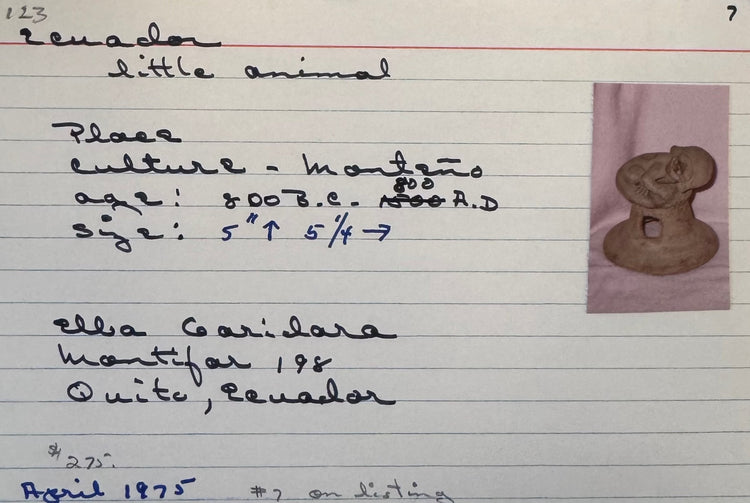
Achetée à Quito, en Équateur, en avril 1975, puis conservée dans la collection McMillan de St. Paul, Minnesota, États-Unis. Accompagnée de la documentation d'inventaire originale de la collection identifiant l'artefact comme l'article n° 123, un « petit animal » de la culture Manteño acquis en Équateur en avril 1975, ainsi que d'une photographie d'époque originale montrant la pièce dans la collection McMillan au cours des années 1980.
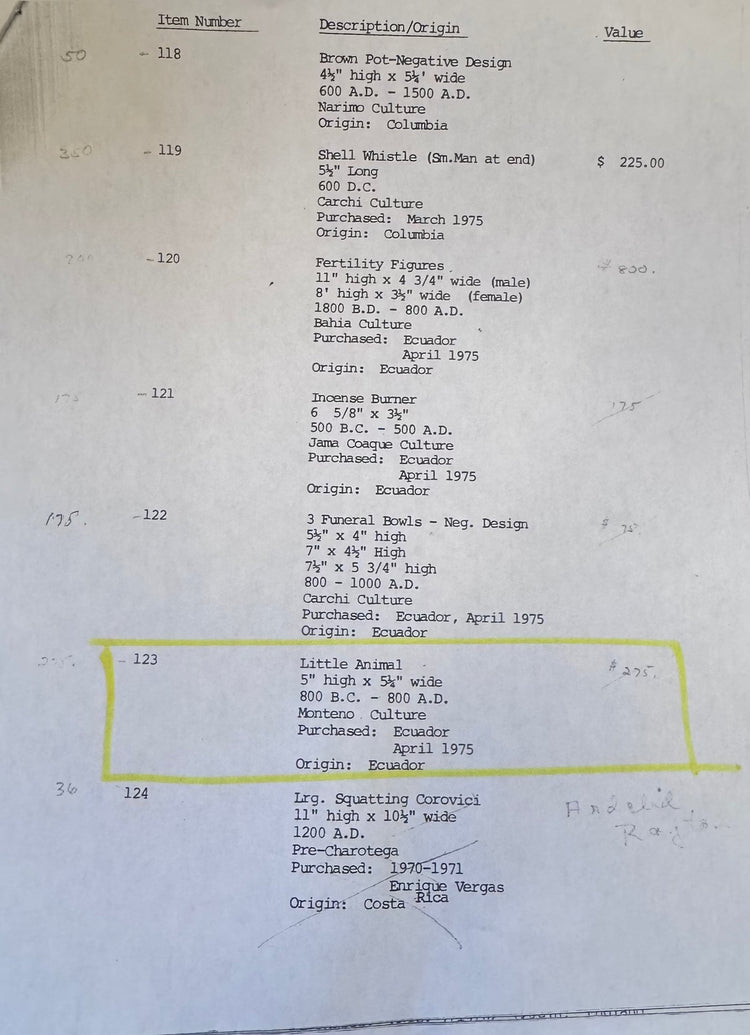
Est également incluse une photocopie de la page d'inventaire et d'évaluation originale de la collection répertoriant l'artefact au sein de la collection McMillan. L'artefact est resté dans la collection McMillan pendant environ cinq décennies avant d'être vendu par la succession et d'entrer sur le marché des antiquités.
En savoir plus
Découvrez le paysage archéologique et la signification culturelle de la civilisation Manteño de l'Équateur via le Centre du patrimoine mondial de l'UNESCO
Explorez notre collection de céramiques et poteries anciennes
Description
Contexte historique et origine
Région : Côte de l'Équateur (culture Manteño), Amérique du Sud
Matériau : Terre cuite modelée à la main
Période : environ 800 av. J.-C. – 800 apr. J.-C.
Description
Ce couvercle d'encensoir (brûle-parfum) ou de brasero précolombien en terre cuite, authentique, est un exemple important de l'ancienne poterie cérémonielle équatorienne. Modélisé à la main en terre cuite, le récipient est surmonté d'une figure anthropomorphe couchée, représentée dans une posture accroupie compacte avec les membres pliés, une tête agrandie, un nez proéminent, des yeux enfoncés et de grands ornements auriculaires circulaires. Cette figure expressive reflète les traditions sculpturales distinctives associées à la culture Manteño et aux traditions céramiques côtières équatoriennes apparentées.
Le récipient combine des éléments fonctionnels et symboliques. De grandes ouvertures de ventilation autour de la section cylindrique supérieure permettaient à la chaleur et à la fumée de circuler tandis que des résines aromatiques, des herbes ou des offrandes rituelles brûlaient dans la chambre inférieure. La large base évasée assurait la stabilité pendant l'utilisation cérémonielle tout en aidant à disperser la fumée parfumée. De tels encensoirs jouaient un rôle important dans les rituels religieux, funéraires et communautaires à travers l'ancien Équateur.
La posture compacte et les traits faciaux stylisés de la figure avaient probablement une signification cérémonielle et pouvaient représenter un ancêtre, un participant rituel, un chaman ou un être surnaturel. La pièce présente des surfaces terreuses attrayantes avec des concrétions minérales, des incrustations d'enfouissement et une altération due à l'âge, conformes à un enfouissement archéologique de longue durée.
Monté tel qu'il a été construit à l'origine, le récipient se présente exceptionnellement bien et constitue une représentation fascinante des traditions artistiques et cérémonielles de l'Équateur précolombien.
Caractéristiques
- Encensoir (brûle-parfum) ou couvercle de brasero précolombien authentique en terre cuite
- Culture Manteño, côte de l'Équateur
- Datant d'environ 800 av. J.-C. – 800 apr. J.-C.
- Figure anthropomorphe couchée en haut-relief
- Grandes ouvertures de ventilation pour la combustion rituelle d'encens
- Construction en céramique modelée à la main
- Surface archéologique attrayante avec des dépôts minéraux et une patine d'enfouissement
Signification historique
Les cultures de l'ancien Équateur ont produit une riche variété de céramiques cérémonielles utilisées dans des contextes domestiques et rituels. Les encensoirs tels que cet exemple jouaient un rôle important dans les cérémonies religieuses, où des substances aromatiques étaient brûlées comme offrandes aux divinités, aux ancêtres et aux forces spirituelles.
Les représentations anthropomorphes apparaissent fréquemment dans les traditions céramiques équatoriennes et dépeignent souvent des individus d'importance sociale, religieuse ou surnaturelle.
Condition
État ancien avec des preuves de restauration et de ruptures réparées là où la figure anthropomorphe rejoint la section supérieure du récipient. Éclats et pertes minimes le long des extrémités, y compris le nez, les oreilles et le pied. Altération de surface, dépôts minéraux, imperfections de cuisson, légers débris intérieurs et usure due à l'âge. Dans l'ensemble, la pièce se présente exceptionnellement bien et conserve un fort attrait visuel.
Dimensions (approximatives)
Hauteur : 13,3 cm
Diamètre : 12,7 cm
Âge (approximatif)
1 200–2 800 ans
Provenance
Achetée à Quito, en Équateur, en avril 1975, puis conservée dans la collection McMillan de St. Paul, Minnesota, États-Unis. Accompagnée de la documentation d'inventaire originale de la collection identifiant l'artefact comme l'article n° 123, un « petit animal » de la culture Manteño acquis en Équateur en avril 1975, ainsi que d'une photographie d'époque originale montrant la pièce dans la collection McMillan au cours des années 1980.
Est également incluse une photocopie de la page d'inventaire et d'évaluation originale de la collection répertoriant l'artefact au sein de la collection McMillan. L'artefact est resté dans la collection McMillan pendant environ cinq décennies avant d'être vendu par la succession et d'entrer sur le marché des antiquités.
En savoir plus
Découvrez le paysage archéologique et la signification culturelle de la civilisation Manteño de l'Équateur via le Centre du patrimoine mondial de l'UNESCO
Explorez notre collection de céramiques et poteries anciennes
Vous aimerez peut-être aussi
