



Précolombien | Fragment de figurine en terre cuite avec coiffe et boucles d'oreille | Vers 600-1200 après J.-C.
- Prix habituel
- $400.00
- Prix soldé
- $400.00
- Prix habituel
Impossible de charger la disponibilité du service de retrait


Précolombien | Fragment de figurine en terre cuite avec coiffe et boucles d'oreille | Vers 600-1200 après J.-C.
Description
Plus
Moins
Contexte historique et origine
Région : Mésoamérique, probablement la côte du Golfe du Mexique (région de Veracruz)
Matériau : Terre cuite avec des traces de pigment
Période : Classique tardif au Postclassique, environ 600-1200 de notre ère
Description
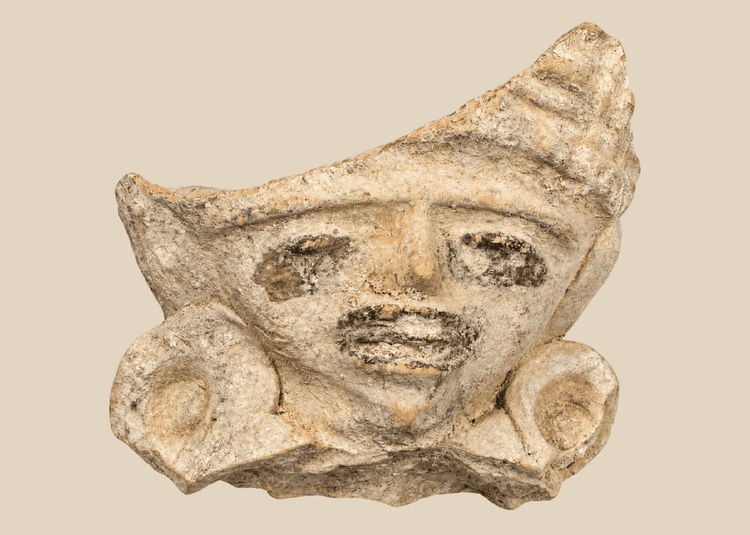
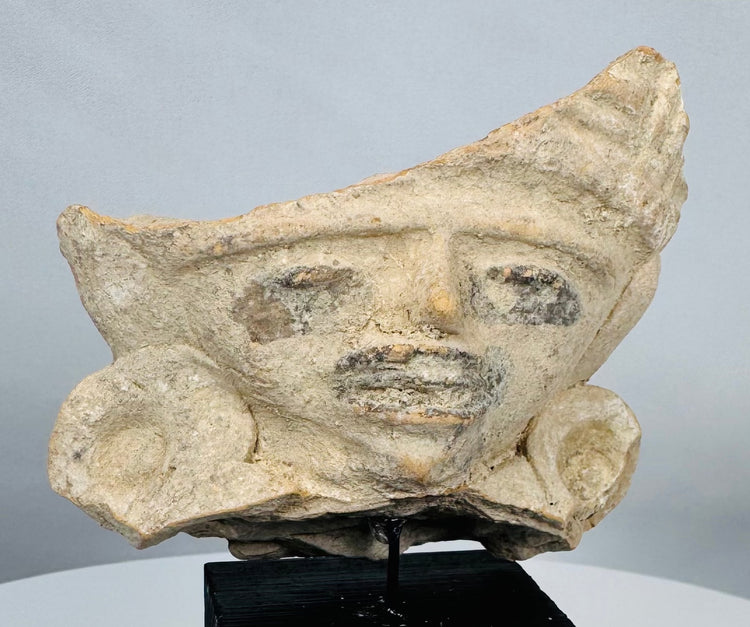
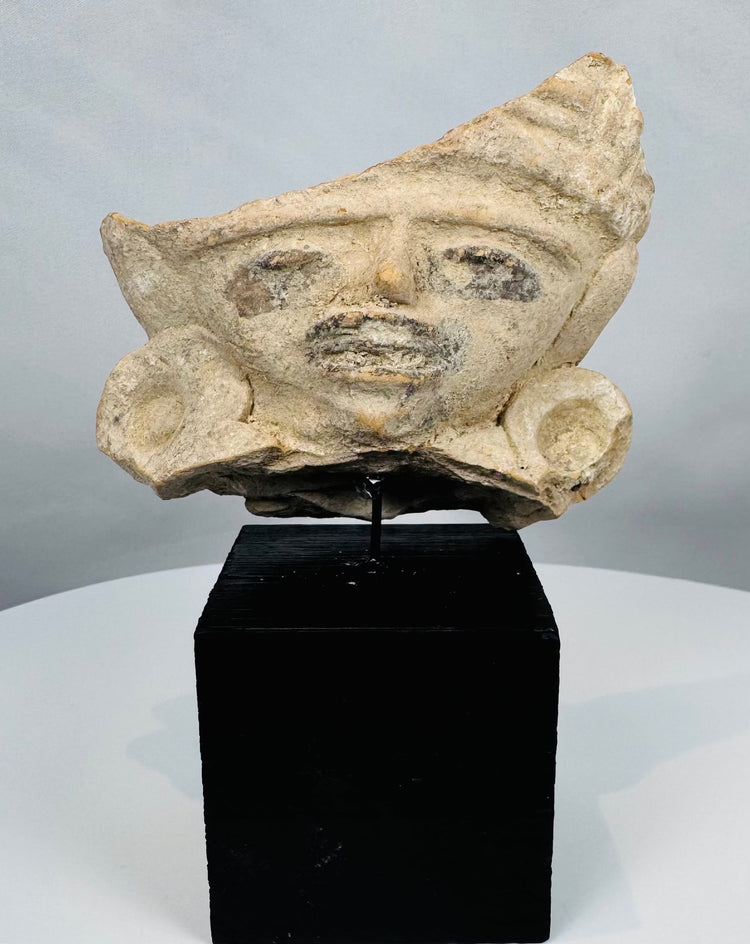
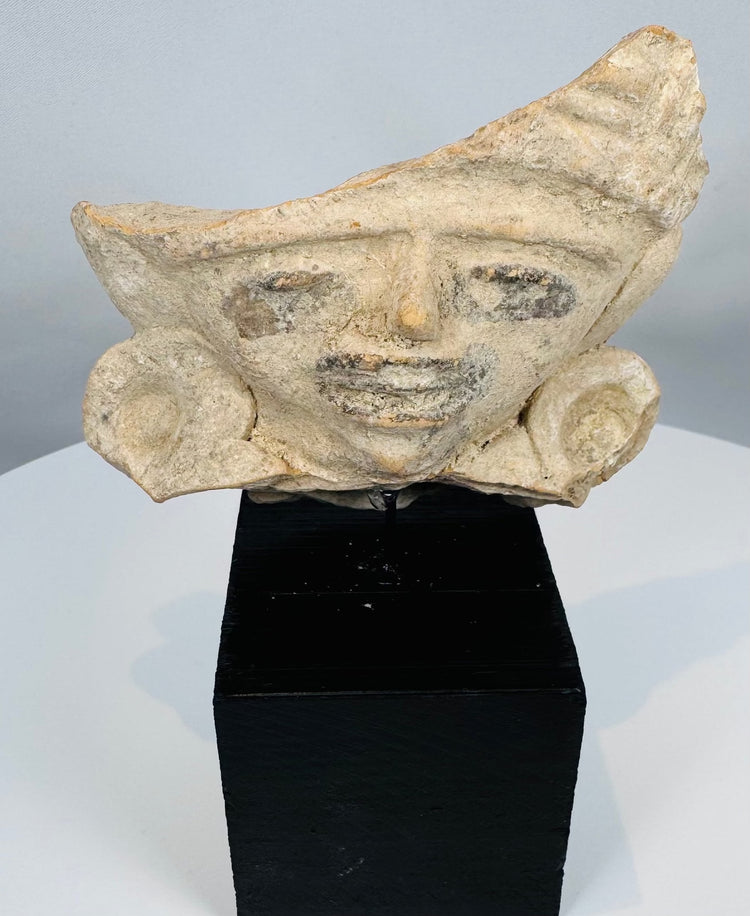
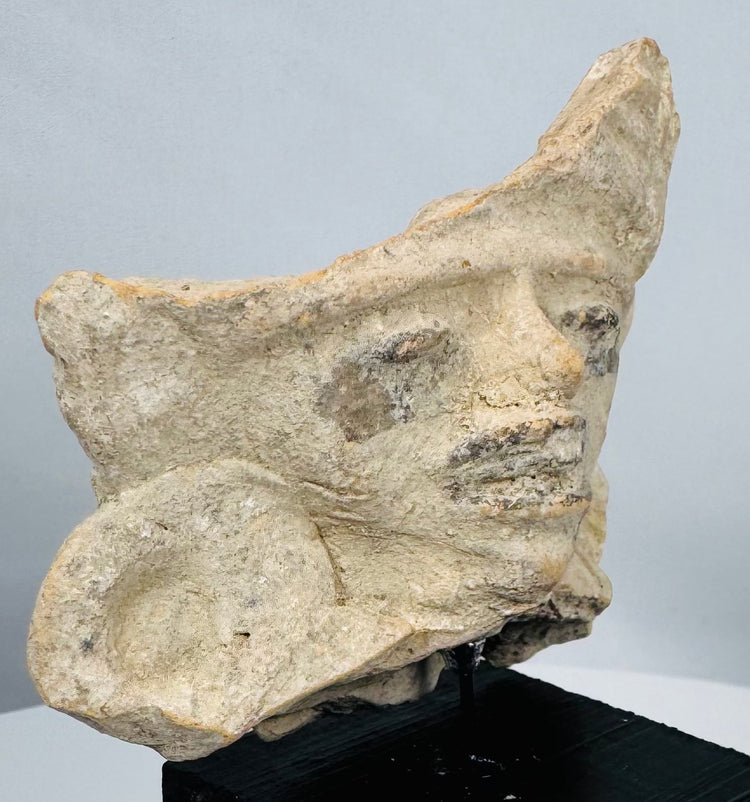
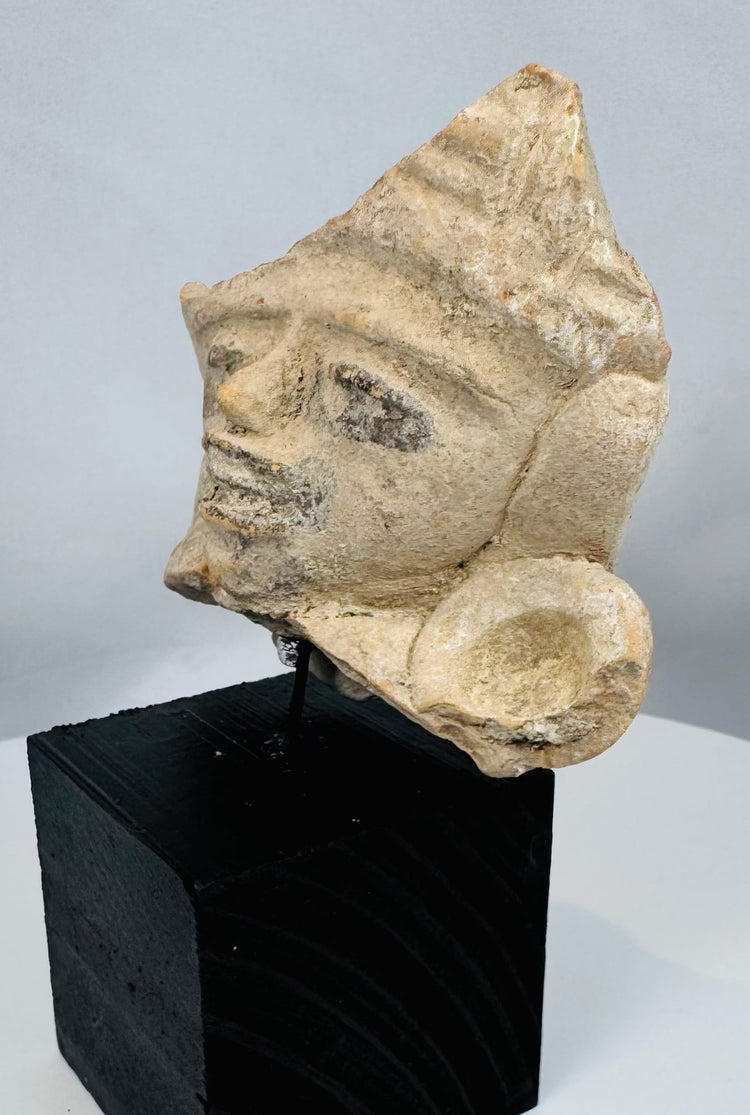
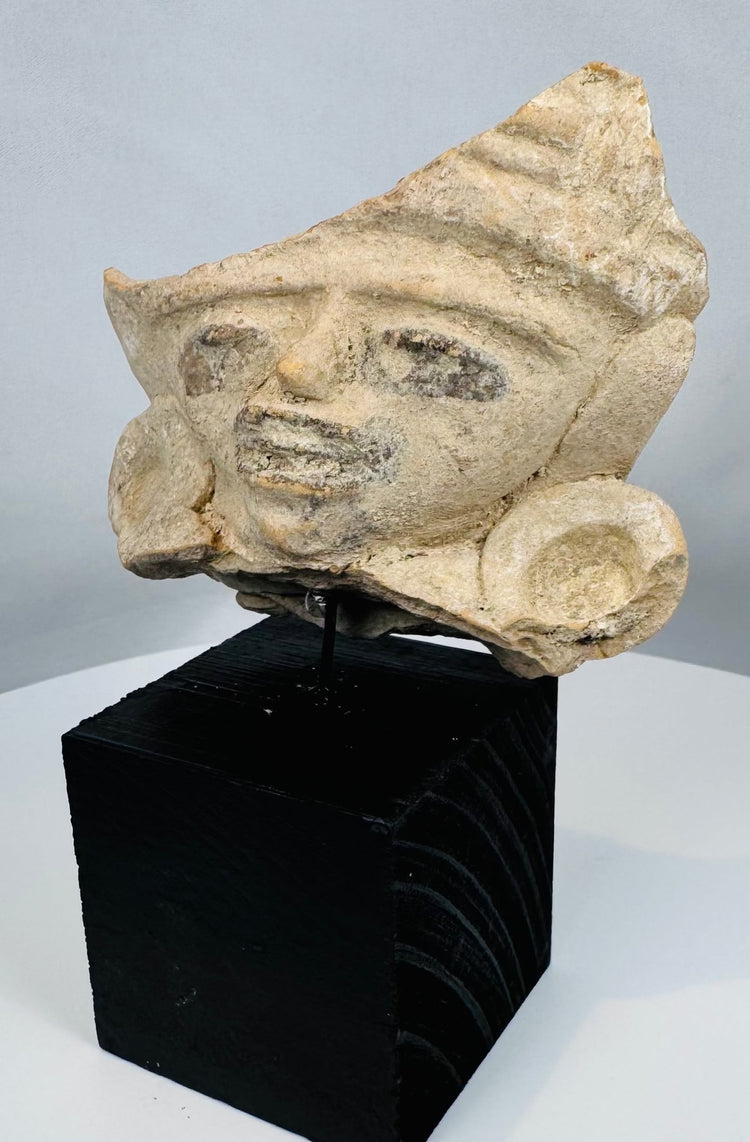
Cet impressionnant fragment figuratif précolombien en terre cuite représente un visage humain stylisé rendu en haut-relief, caractérisé par des yeux en amande, un nez proéminent, une bouche expressive et de grands ornements spiralés en forme de disques auriculaires flanquant chaque côté de la tête. Au-dessus du visage s'élève une coiffe élaborée en forme d'éventail ou une crête cérémonielle, suggérant que la figure représentait un individu de statut social, politique ou spirituel élevé.
Faisant à l'origine partie d'une composition sculpturale plus grande, ce fragment a pu orner une structure cérémonielle, une résidence d'élite, un objet rituel ou un élément architectural. Les traits faciaux conservés présentent des conventions artistiques couramment associées aux traditions de la côte du Golfe et du Mexique central, où les coiffes et les ornements auriculaires élaborés servaient de puissants symboles d'autorité, de lignage et d'identité cérémonielle.
Des traces de pigment foncé restent visibles dans les zones en creux des yeux et de la bouche, offrant un aperçu de l'apparence peinte originale de l'objet. La combinaison d'un modelage facial prononcé, de disques auriculaires spectaculaires et d'une coiffe expansive crée une présence visuelle saisissante qui reflète les traditions artistiques sophistiquées de l'ancienne Mésoamérique.
Caractéristiques
- Fragment figuratif précolombien en terre cuite
- Visage humain stylisé rendu en haut-relief
- Grands ornements spiralés en forme de disques auriculaires
- Coiffe cérémonielle élaborée en forme d'éventail
- Des traces de pigment original sont encore visibles
- Forte présence sculpturale et attrait visuel
- Monté sur un socle d'exposition personnalisé
- Probablement un fragment architectural, cérémoniel ou décoratif d'élite
Signification culturelle
Les représentations figuratives ont joué un rôle central dans les sociétés mésoaméricaines antiques, remplissant des fonctions religieuses, politiques et cérémonielles. Les disques auriculaires et les coiffes élaborées étaient des indicateurs importants de rang et d'identité, souvent associés aux dirigeants, aux prêtres, aux guerriers ou aux êtres surnaturels. Une telle imagerie communiquait le statut, le lignage, l'autorité spirituelle et la participation à des rituels sacrés. Des fragments comme celui-ci offrent un aperçu précieux du langage visuel et des traditions artistiques qui ont façonné la vie cérémonielle à travers l'ancien Mexique.
État
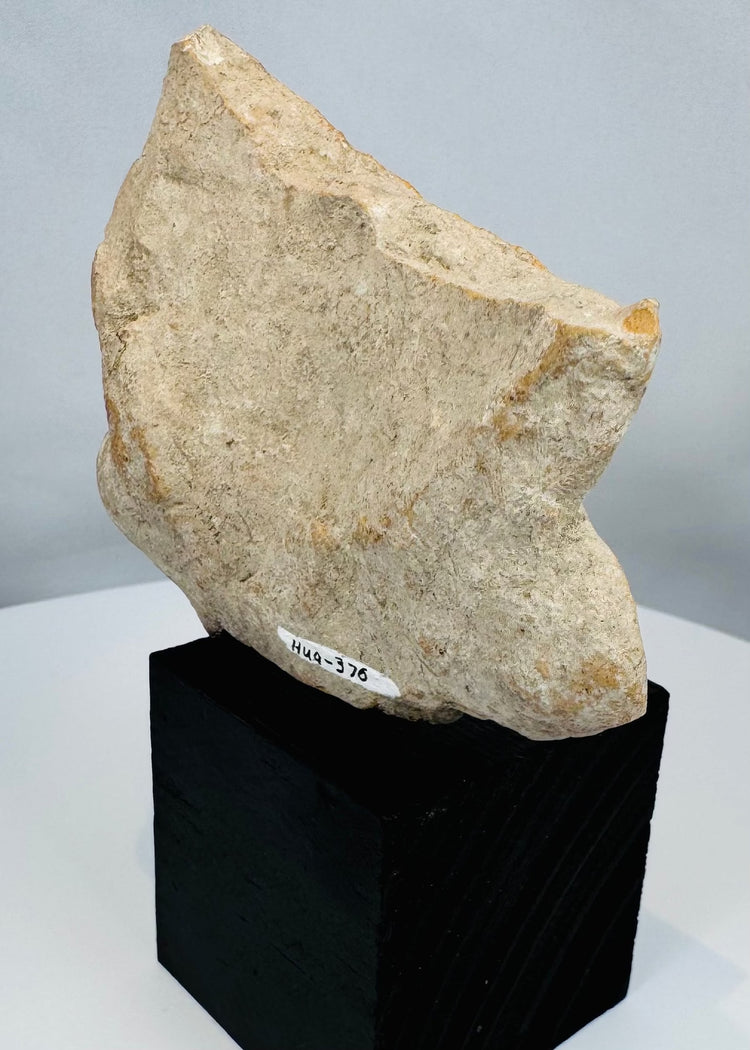
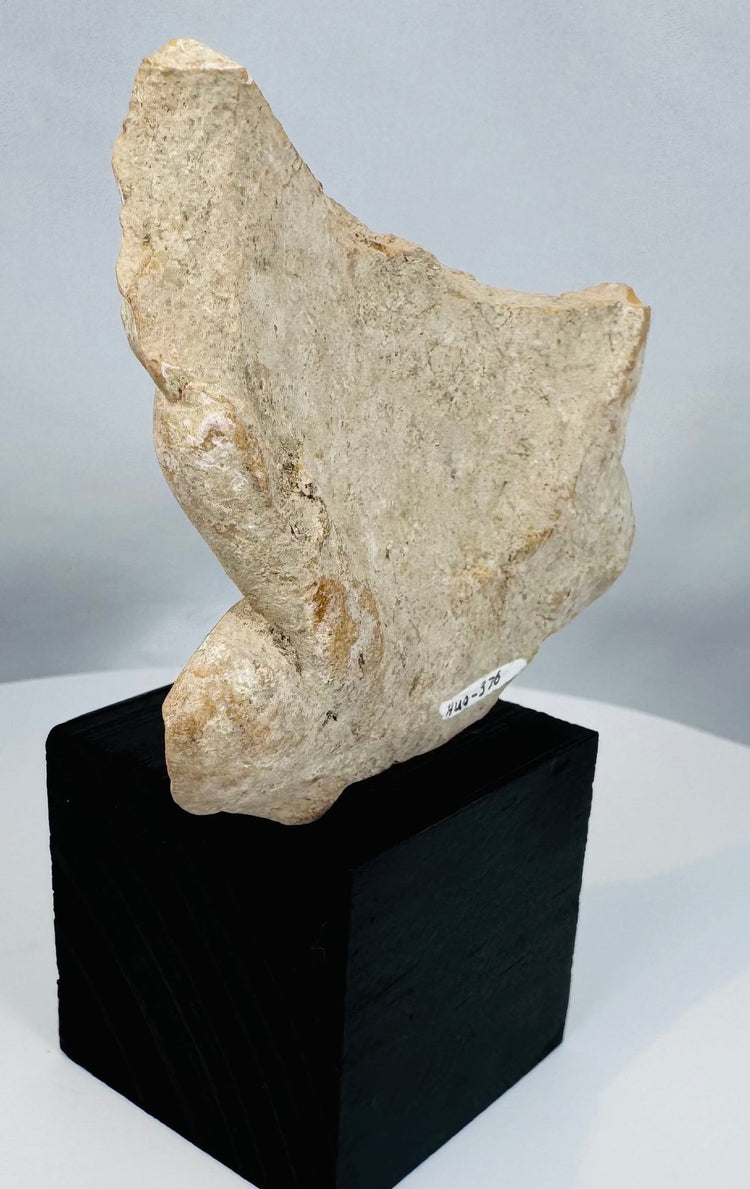
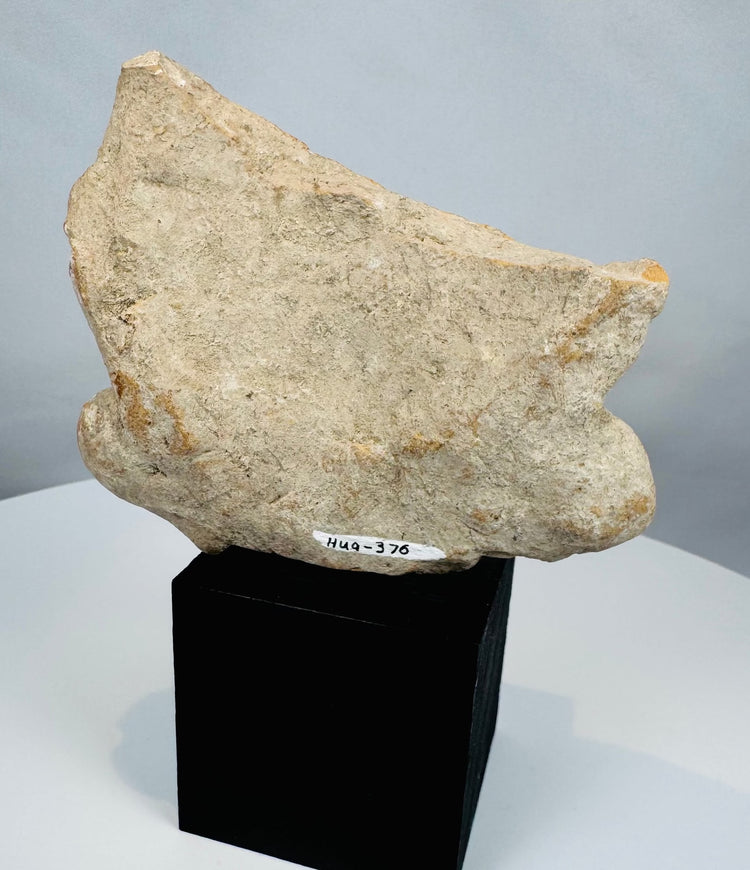
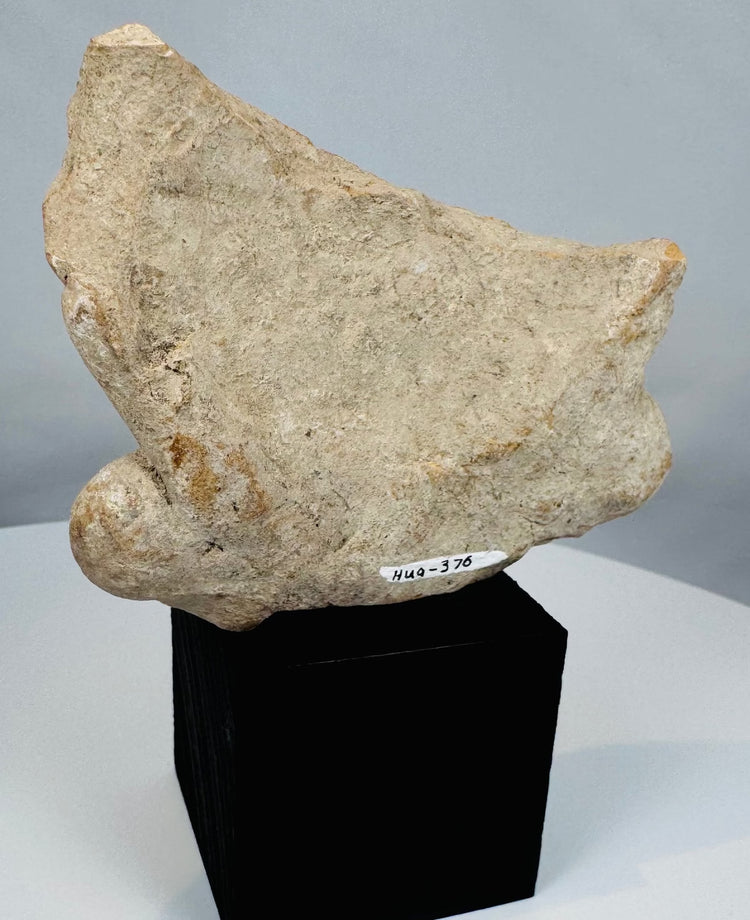
Bon état ancien général. Fragmentaire comme prévu, avec des pertes par rapport à l'objet original. Usure de surface, abrasions, incrustations minérales, perte de pigment et pertes de bords sont présentes partout, conformément à l'âge et à la récupération archéologique. Monté pour l'exposition. La surface conserve une jolie patine ancienne.
Dimensions (approximatives)
Hauteur : 13,34 cm
Largeur : 13,34 cm
Profondeur : 5,08 cm
Âge (approximatif)
800-1 400 ans
Provenance
Collection privée de Fayetteville, Arkansas, États-Unis. Ancienne collection privée de Fayetteville, Arkansas, assemblée entre 1960 et 2024. Faisait auparavant partie de la collection de la galerie Artemis Fine Arts.
En savoir plus
Découvrez l'histoire, les cultures et les civilisations de l'ancienne Mésoamérique grâce à la Bibliothèque de ressources du National Geographic
Parcourez notre Collection d'artefacts précolombiens anciens
Description
Contexte historique et origine
Région : Mésoamérique, probablement la côte du Golfe du Mexique (région de Veracruz)
Matériau : Terre cuite avec des traces de pigment
Période : Classique tardif au Postclassique, environ 600-1200 de notre ère
Description
Cet impressionnant fragment figuratif précolombien en terre cuite représente un visage humain stylisé rendu en haut-relief, caractérisé par des yeux en amande, un nez proéminent, une bouche expressive et de grands ornements spiralés en forme de disques auriculaires flanquant chaque côté de la tête. Au-dessus du visage s'élève une coiffe élaborée en forme d'éventail ou une crête cérémonielle, suggérant que la figure représentait un individu de statut social, politique ou spirituel élevé.
Faisant à l'origine partie d'une composition sculpturale plus grande, ce fragment a pu orner une structure cérémonielle, une résidence d'élite, un objet rituel ou un élément architectural. Les traits faciaux conservés présentent des conventions artistiques couramment associées aux traditions de la côte du Golfe et du Mexique central, où les coiffes et les ornements auriculaires élaborés servaient de puissants symboles d'autorité, de lignage et d'identité cérémonielle.
Des traces de pigment foncé restent visibles dans les zones en creux des yeux et de la bouche, offrant un aperçu de l'apparence peinte originale de l'objet. La combinaison d'un modelage facial prononcé, de disques auriculaires spectaculaires et d'une coiffe expansive crée une présence visuelle saisissante qui reflète les traditions artistiques sophistiquées de l'ancienne Mésoamérique.
Caractéristiques
- Fragment figuratif précolombien en terre cuite
- Visage humain stylisé rendu en haut-relief
- Grands ornements spiralés en forme de disques auriculaires
- Coiffe cérémonielle élaborée en forme d'éventail
- Des traces de pigment original sont encore visibles
- Forte présence sculpturale et attrait visuel
- Monté sur un socle d'exposition personnalisé
- Probablement un fragment architectural, cérémoniel ou décoratif d'élite
Signification culturelle
Les représentations figuratives ont joué un rôle central dans les sociétés mésoaméricaines antiques, remplissant des fonctions religieuses, politiques et cérémonielles. Les disques auriculaires et les coiffes élaborées étaient des indicateurs importants de rang et d'identité, souvent associés aux dirigeants, aux prêtres, aux guerriers ou aux êtres surnaturels. Une telle imagerie communiquait le statut, le lignage, l'autorité spirituelle et la participation à des rituels sacrés. Des fragments comme celui-ci offrent un aperçu précieux du langage visuel et des traditions artistiques qui ont façonné la vie cérémonielle à travers l'ancien Mexique.
État
Bon état ancien général. Fragmentaire comme prévu, avec des pertes par rapport à l'objet original. Usure de surface, abrasions, incrustations minérales, perte de pigment et pertes de bords sont présentes partout, conformément à l'âge et à la récupération archéologique. Monté pour l'exposition. La surface conserve une jolie patine ancienne.
Dimensions (approximatives)
Hauteur : 13,34 cm
Largeur : 13,34 cm
Profondeur : 5,08 cm
Âge (approximatif)
800-1 400 ans
Provenance
Collection privée de Fayetteville, Arkansas, États-Unis. Ancienne collection privée de Fayetteville, Arkansas, assemblée entre 1960 et 2024. Faisait auparavant partie de la collection de la galerie Artemis Fine Arts.
En savoir plus
Découvrez l'histoire, les cultures et les civilisations de l'ancienne Mésoamérique grâce à la Bibliothèque de ressources du National Geographic
Parcourez notre Collection d'artefacts précolombiens anciens
Vous aimerez peut-être aussi
