

Fragment de tête en terre cuite précolombienne | Mésoamérique | Vers 300 avant notre ère – 900 de notre ère
- Prix habituel
- $350.00
- Prix soldé
- $350.00
- Prix habituel
Impossible de charger la disponibilité du service de retrait


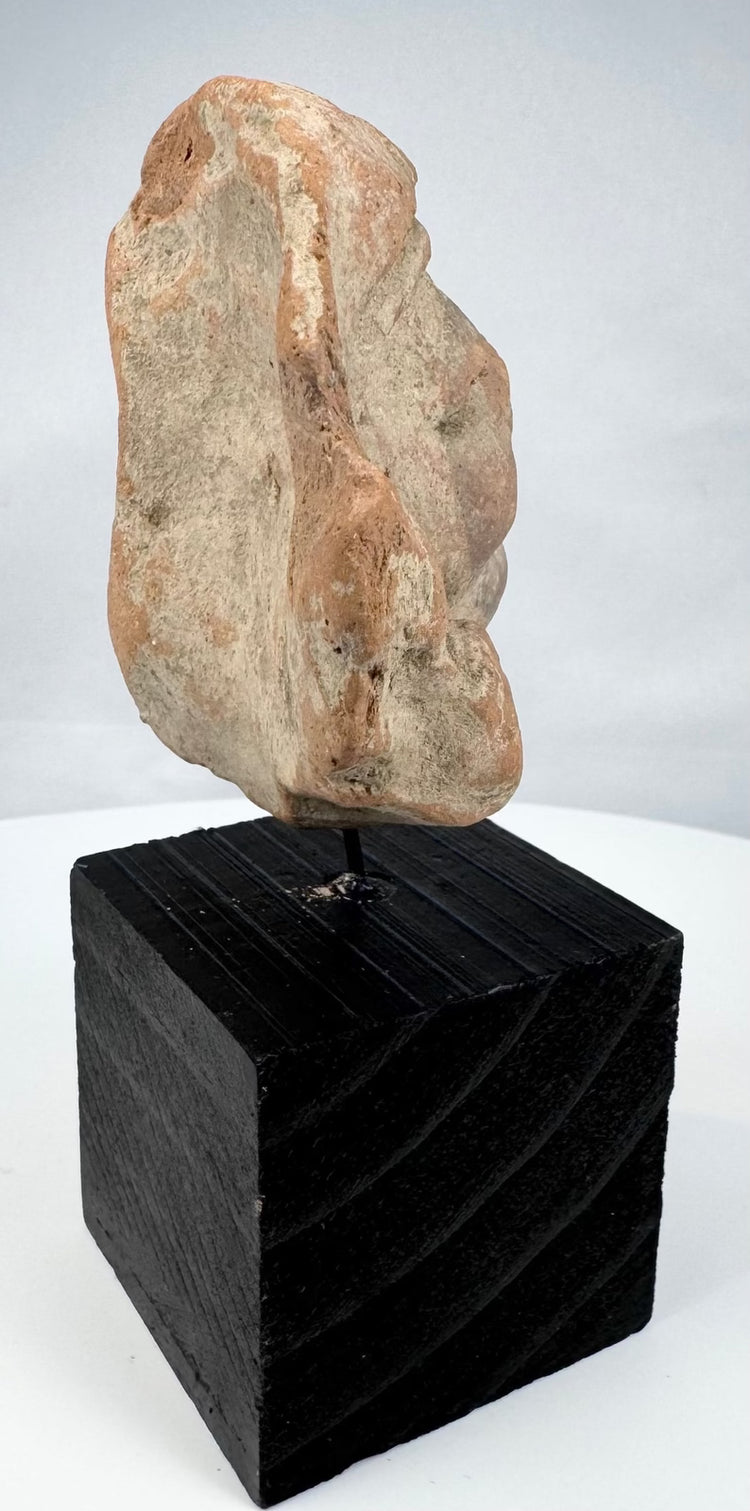
Fragment de tête en terre cuite précolombienne | Mésoamérique | Vers 300 avant notre ère – 900 de notre ère
Description
Plus
Moins
Contexte historique et origine
Région : Mésoamérique, probablement le centre ou l'ouest du Mexique
Matériau : Terre cuite avec des traces de pigment
Période : Période préclassique tardive à postclassique ancienne, vers 300 av. J.-C. – 900 apr. J.-C.
Description
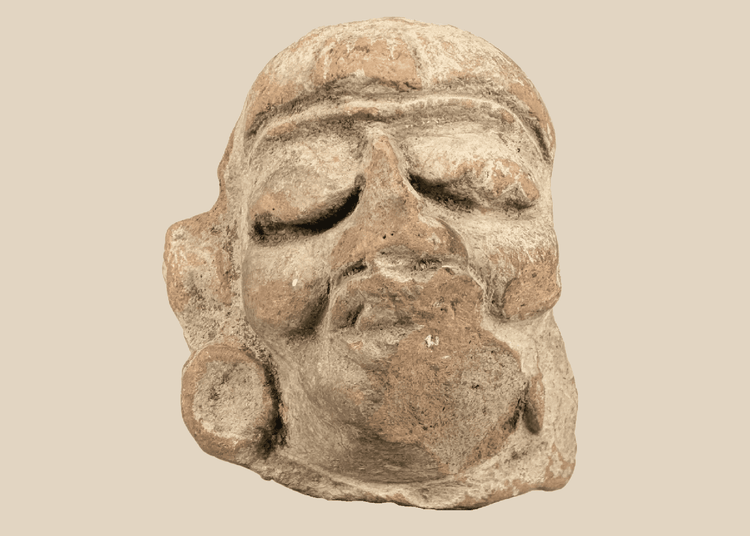
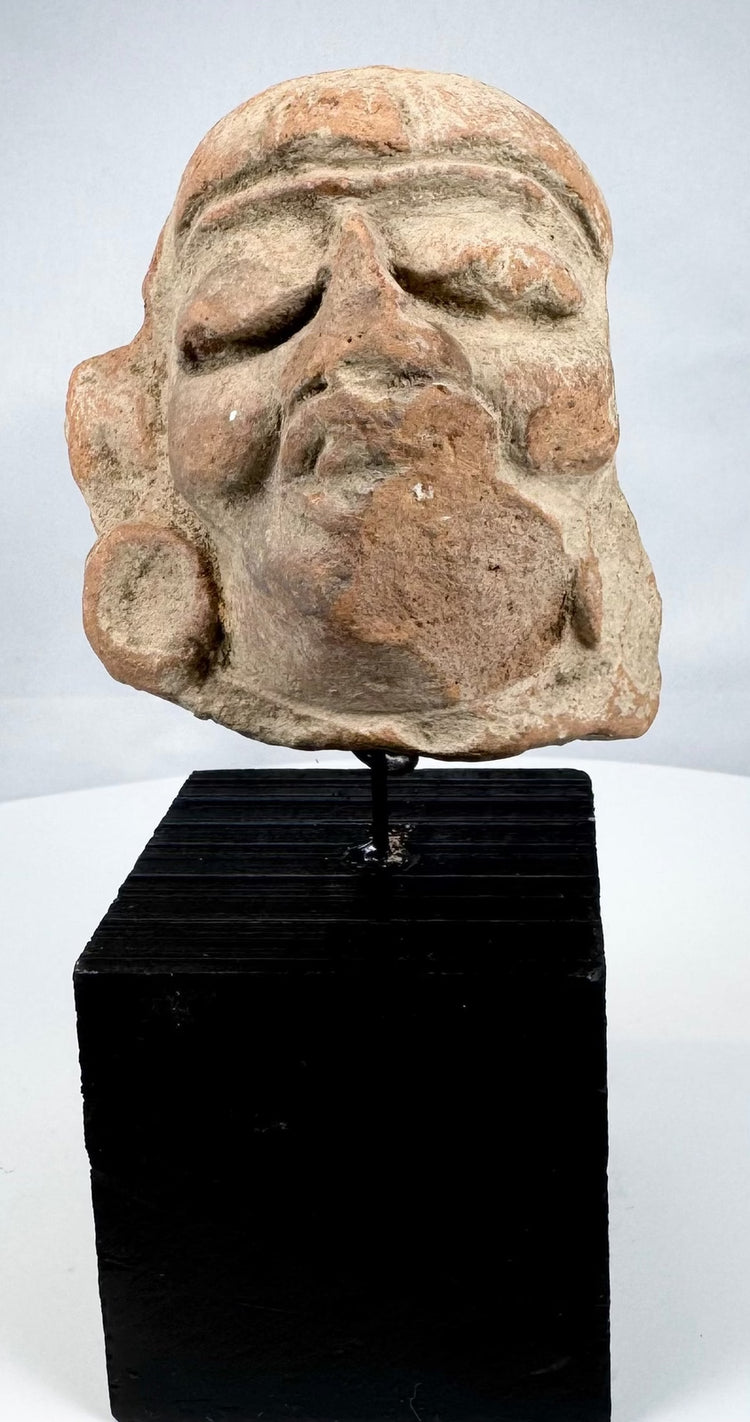
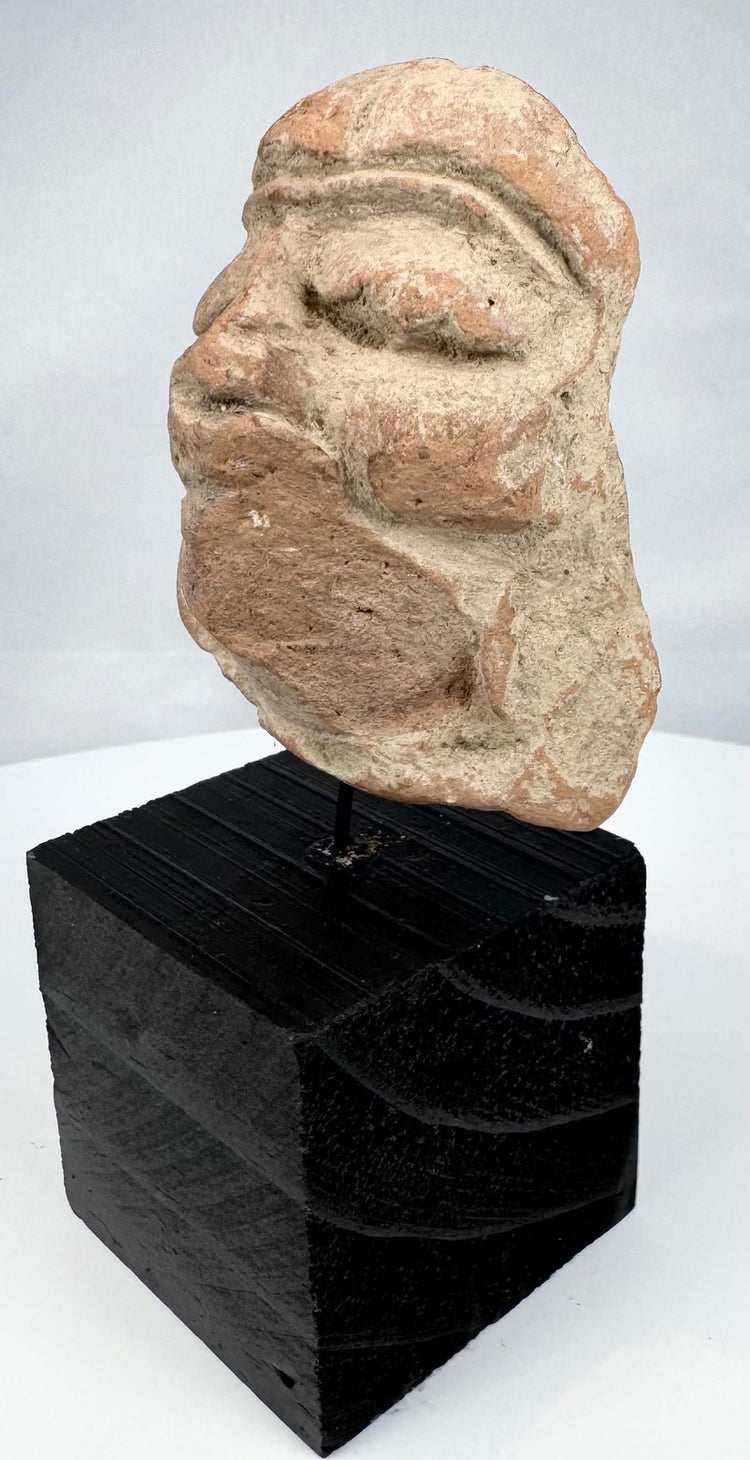
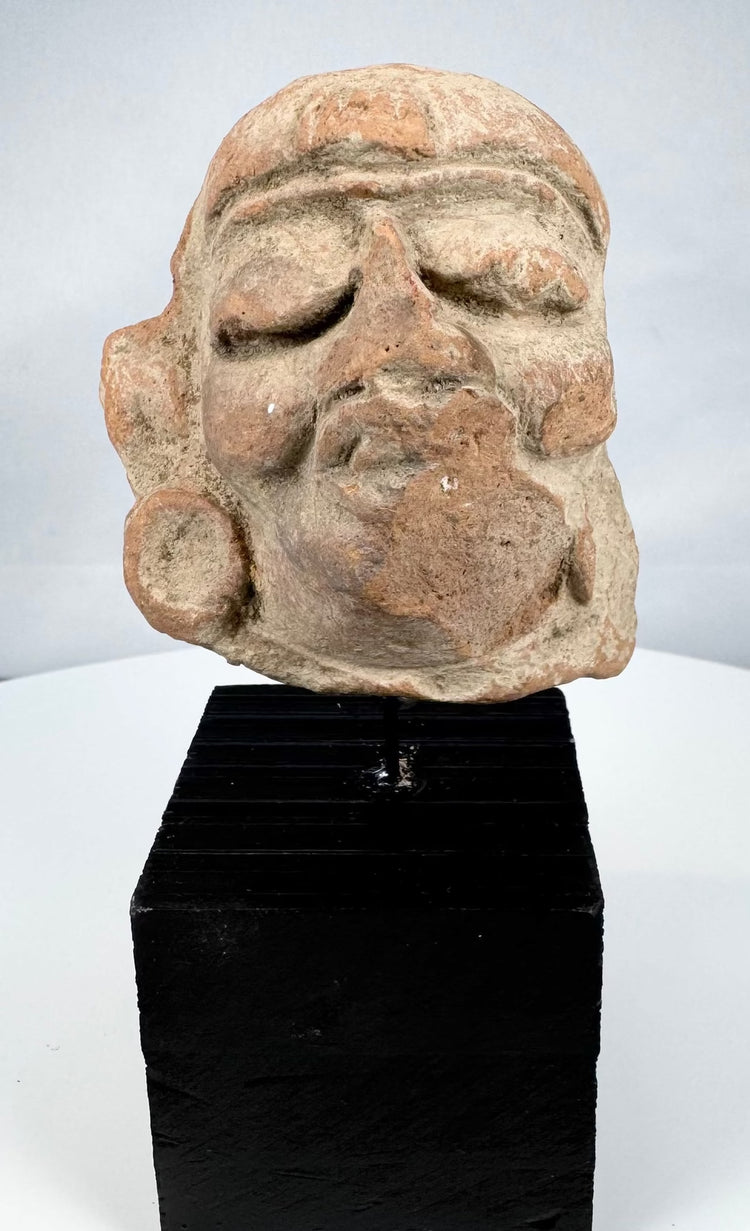
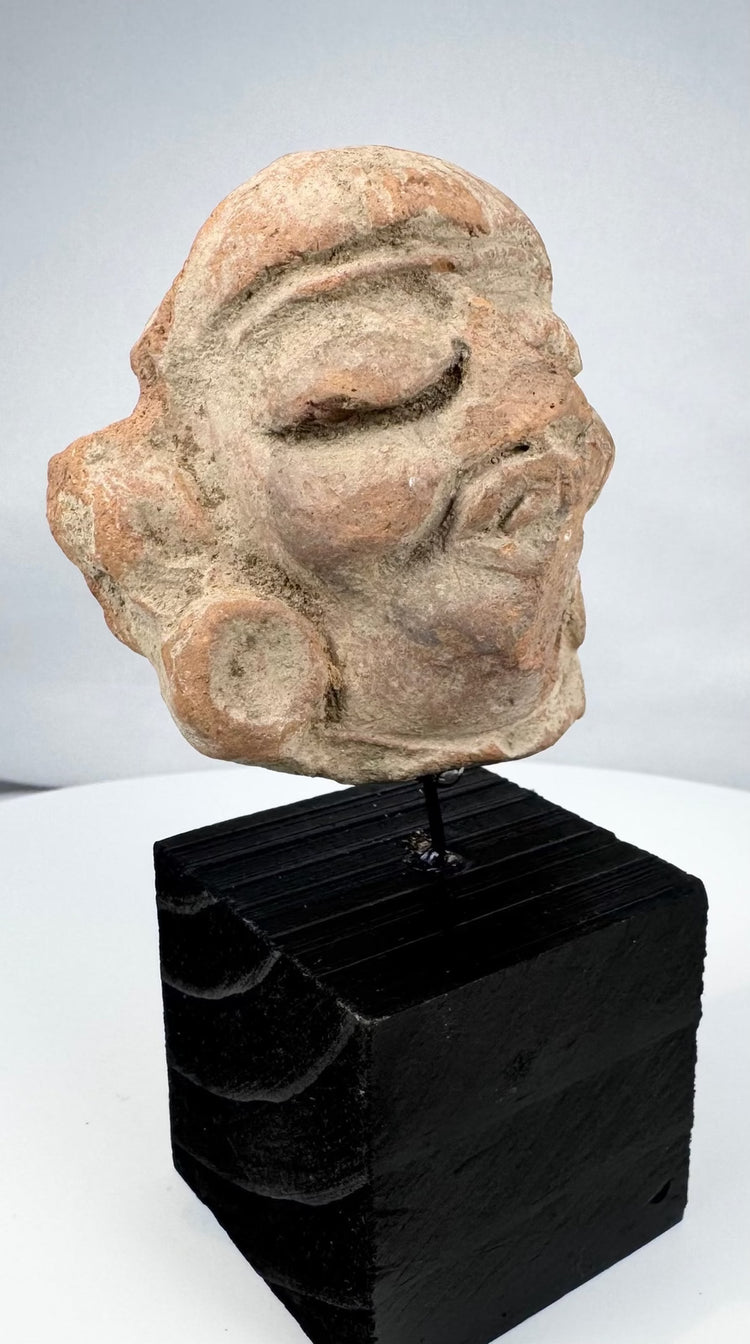
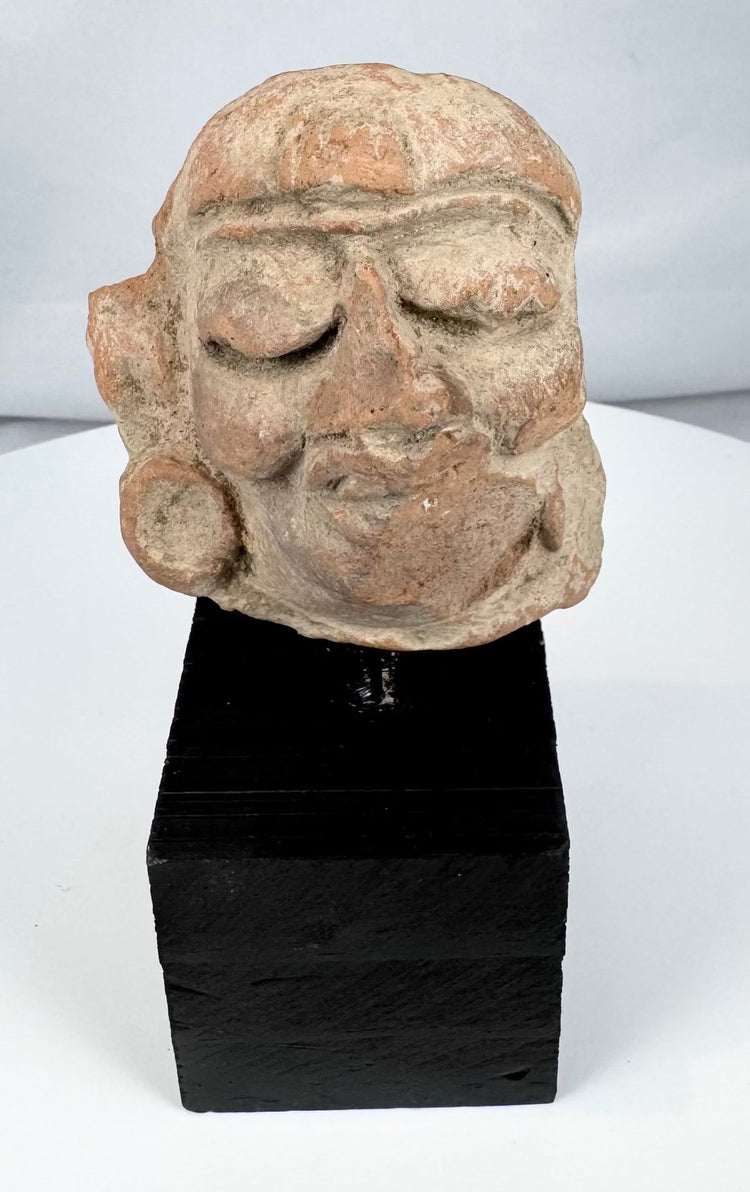
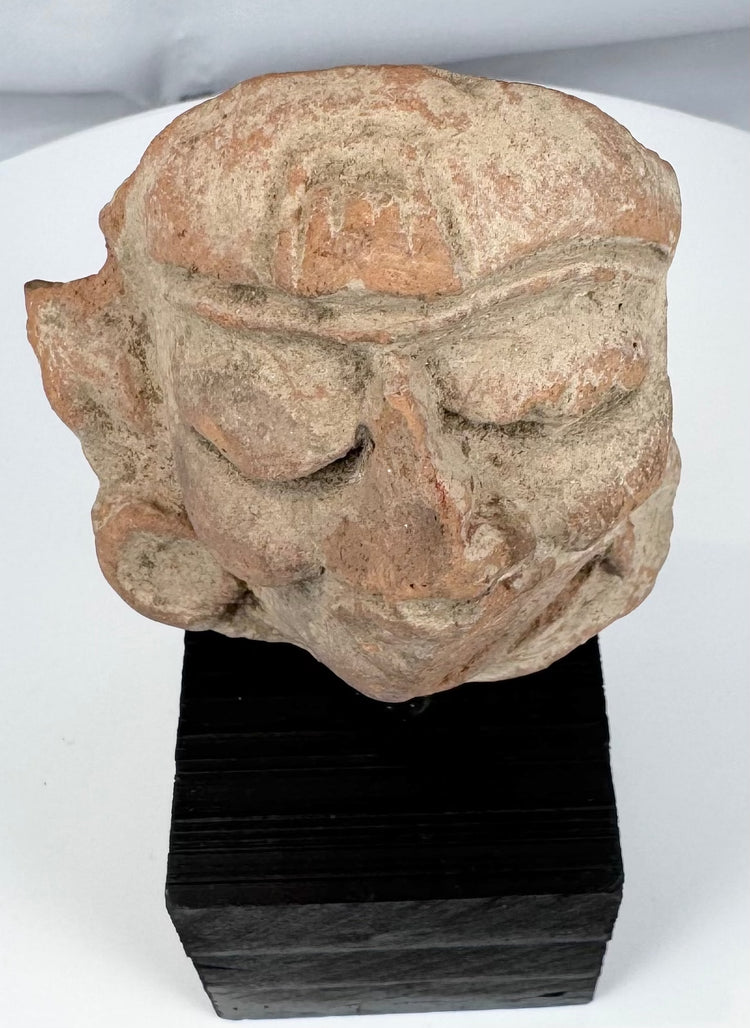
Cet intrigant fragment de tête en terre cuite représente une figure humaine stylisée avec des yeux fortement cernés, un nez large, des lèvres pleines et de proéminents ornements d'oreille circulaires. La sculpture conserve des traces de pigment rouge-orangé sous une patine de surface pâle et terreuse, conférant à la pièce un caractère archéologique saisissant.
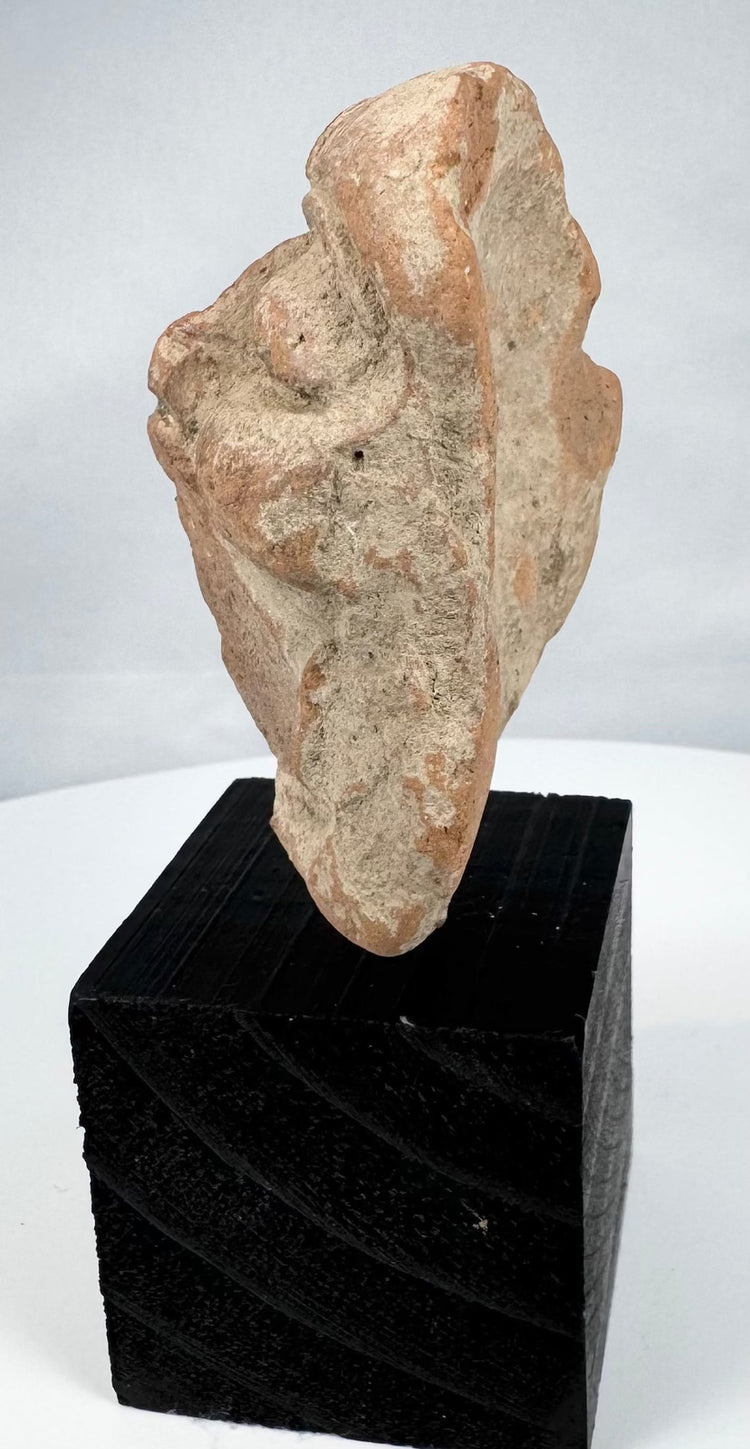
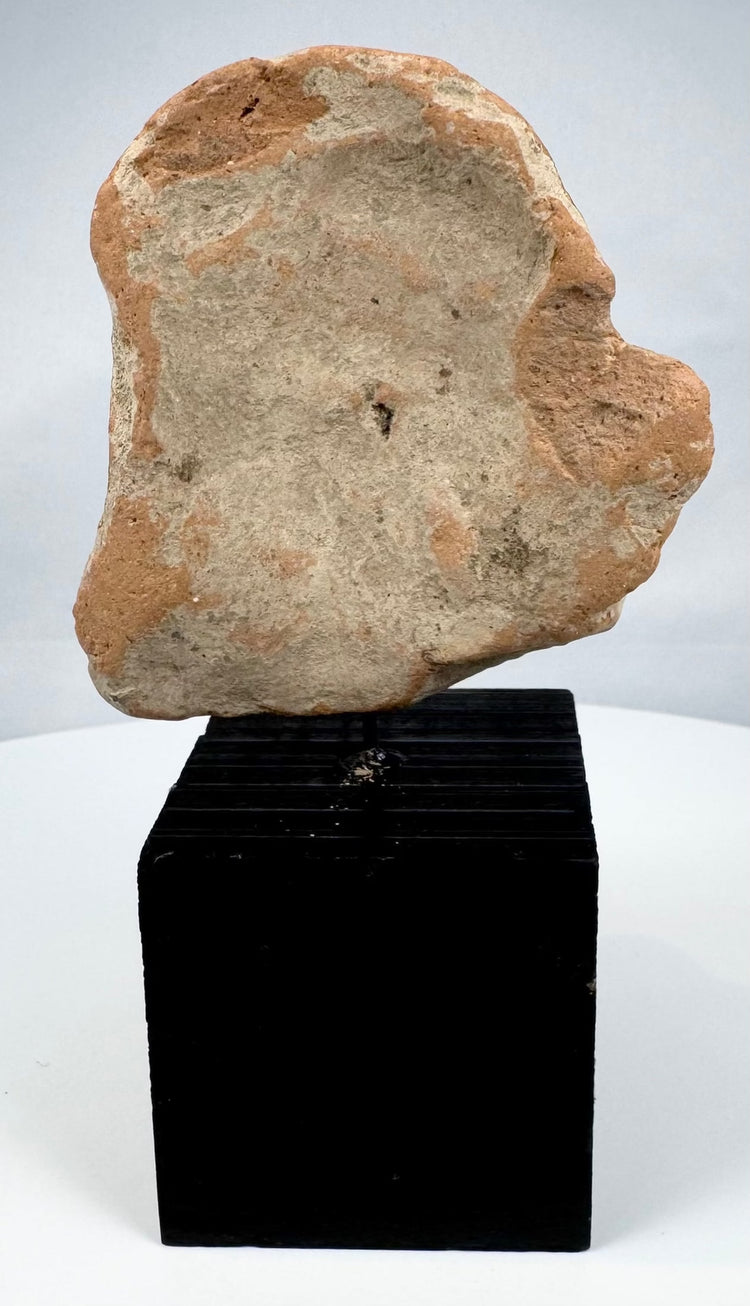
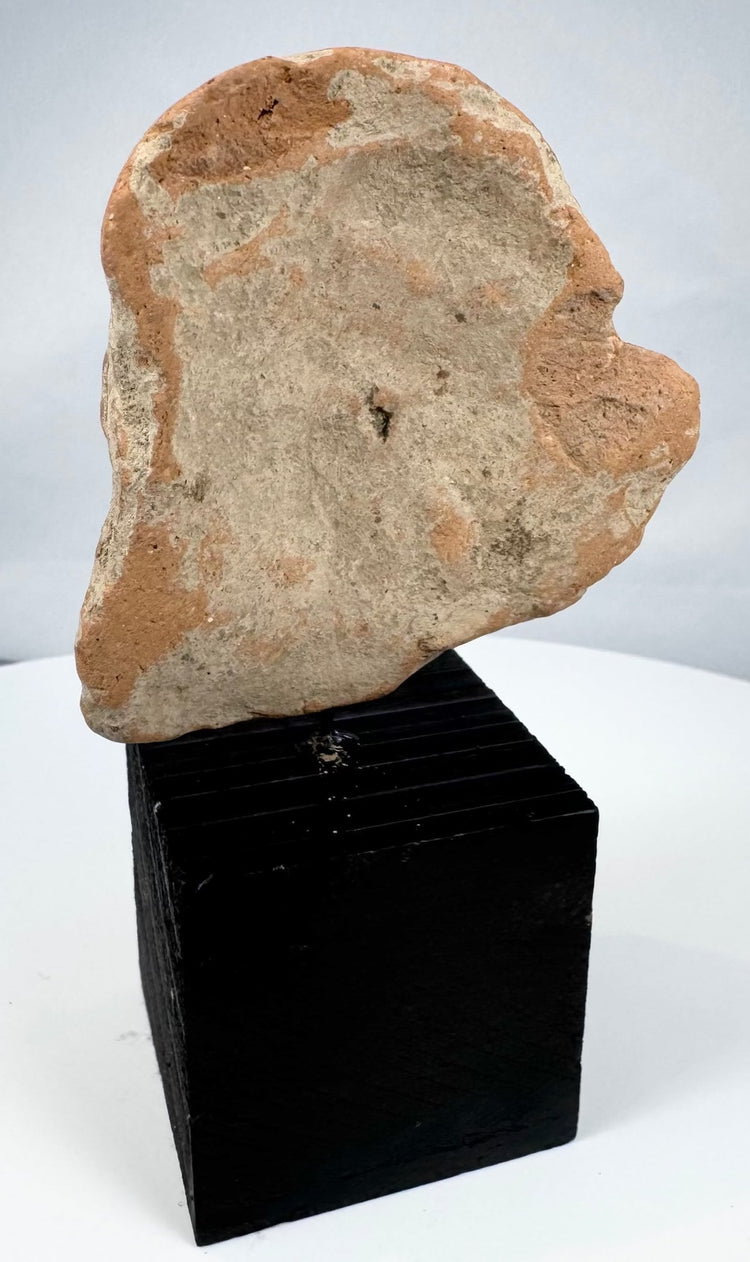
Le visage est modelé avec des yeux profondément creusés et des joues prononcées, tandis qu'une bande en relief sur le front peut représenter une coiffe, un bandeau textile ou une coiffure. De grandes boucles d'oreille circulaires flanquent la tête, une caractéristique fréquemment rencontrée dans les traditions artistiques mésoaméricaines antiques. Le revers reste en grande partie inachevé et présente des signes de l'âge, d'altération et d'incrustations dues à l'enfouissement.
Bien que l'attribution culturelle précise reste incertaine, le style sculptural rappelle les têtes en céramique produites dans tout le Mexique antique, où les têtes détachées et les embellissements architecturaux faisaient souvent partie de figures cérémonielles, d'effigies ou de programmes décoratifs plus vastes.
Caractéristiques
- Fragment de tête en terre cuite avec des traces de pigment d'origine
- Représente un visage humain stylisé avec des yeux clos ou lourdement cernés
- Caractérisé par de proéminents ornements d'oreille circulaires
- Bande frontale en relief ou élément de coiffe
- Surface archéologique altérée avec incrustations terreuses
- Monté sur un support de présentation moderne sur mesure
- Forte présence sculpturale et attrait visuel
Signification culturelle
Les sculptures en terre cuite ont joué un rôle important dans toute la Mésoamérique antique, remplissant des fonctions religieuses, funéraires et architecturales. Les têtes et les fragments faciaux sont parmi les vestiges les plus reconnaissables de ces traditions et offrent un aperçu précieux des styles artistiques régionaux, des identités sociales et des pratiques cérémonielles.
Comme les têtes détachées ont été fréquemment séparées de leur contexte d'origine au cours de siècles d'enfouissement, de fouilles et de collecte, de nombreux exemples restent difficiles à attribuer avec certitude. Indépendamment de son origine précise, ce fragment reflète l'héritage artistique durable des civilisations américaines antiques.
État
État fragmentaire, comme on peut s'y attendre pour un objet archéologique en terre cuite. Usure de surface, incrustations minérales, perte de pigment et éclats épars sont présents partout. Les pertes sur les bords et le revers sont cohérentes avec l'âge et l'enfouissement prolongé. La pièce est montée sur une base de présentation moderne.
Dimensions (Approximatives)
Hauteur : 14 cm
Largeur : 5 cm
Profondeur : 5 cm
Âge (Approximatif)
1 100 à 2 300 ans
Provenance
Anciennement partie d'une collection privée de Saint Paul, Minnesota, États-Unis, spécialisée dans l'art et les antiquités précolombiennes. Constituée sur de nombreuses années, la collection se concentrait principalement sur les objets en céramique et en terre cuite des cultures antiques de Mésoamérique et d'Amérique du Sud, avec un accent particulier sur les fragments sculpturaux, les objets rituels et les artefacts archéologiques.
En savoir plus
Découvrez les formes, les fonctions et le contexte culturel des figurines en céramique du Mexique antique à travers le Musée australien
Découvrez notre Collection d'artefacts et de reliques précolombiens antiques
Description
Contexte historique et origine
Région : Mésoamérique, probablement le centre ou l'ouest du Mexique
Matériau : Terre cuite avec des traces de pigment
Période : Période préclassique tardive à postclassique ancienne, vers 300 av. J.-C. – 900 apr. J.-C.
Description
Cet intrigant fragment de tête en terre cuite représente une figure humaine stylisée avec des yeux fortement cernés, un nez large, des lèvres pleines et de proéminents ornements d'oreille circulaires. La sculpture conserve des traces de pigment rouge-orangé sous une patine de surface pâle et terreuse, conférant à la pièce un caractère archéologique saisissant.
Le visage est modelé avec des yeux profondément creusés et des joues prononcées, tandis qu'une bande en relief sur le front peut représenter une coiffe, un bandeau textile ou une coiffure. De grandes boucles d'oreille circulaires flanquent la tête, une caractéristique fréquemment rencontrée dans les traditions artistiques mésoaméricaines antiques. Le revers reste en grande partie inachevé et présente des signes de l'âge, d'altération et d'incrustations dues à l'enfouissement.
Bien que l'attribution culturelle précise reste incertaine, le style sculptural rappelle les têtes en céramique produites dans tout le Mexique antique, où les têtes détachées et les embellissements architecturaux faisaient souvent partie de figures cérémonielles, d'effigies ou de programmes décoratifs plus vastes.
Caractéristiques
- Fragment de tête en terre cuite avec des traces de pigment d'origine
- Représente un visage humain stylisé avec des yeux clos ou lourdement cernés
- Caractérisé par de proéminents ornements d'oreille circulaires
- Bande frontale en relief ou élément de coiffe
- Surface archéologique altérée avec incrustations terreuses
- Monté sur un support de présentation moderne sur mesure
- Forte présence sculpturale et attrait visuel
Signification culturelle
Les sculptures en terre cuite ont joué un rôle important dans toute la Mésoamérique antique, remplissant des fonctions religieuses, funéraires et architecturales. Les têtes et les fragments faciaux sont parmi les vestiges les plus reconnaissables de ces traditions et offrent un aperçu précieux des styles artistiques régionaux, des identités sociales et des pratiques cérémonielles.
Comme les têtes détachées ont été fréquemment séparées de leur contexte d'origine au cours de siècles d'enfouissement, de fouilles et de collecte, de nombreux exemples restent difficiles à attribuer avec certitude. Indépendamment de son origine précise, ce fragment reflète l'héritage artistique durable des civilisations américaines antiques.
État
État fragmentaire, comme on peut s'y attendre pour un objet archéologique en terre cuite. Usure de surface, incrustations minérales, perte de pigment et éclats épars sont présents partout. Les pertes sur les bords et le revers sont cohérentes avec l'âge et l'enfouissement prolongé. La pièce est montée sur une base de présentation moderne.
Dimensions (Approximatives)
Hauteur : 14 cm
Largeur : 5 cm
Profondeur : 5 cm
Âge (Approximatif)
1 100 à 2 300 ans
Provenance
Anciennement partie d'une collection privée de Saint Paul, Minnesota, États-Unis, spécialisée dans l'art et les antiquités précolombiennes. Constituée sur de nombreuses années, la collection se concentrait principalement sur les objets en céramique et en terre cuite des cultures antiques de Mésoamérique et d'Amérique du Sud, avec un accent particulier sur les fragments sculpturaux, les objets rituels et les artefacts archéologiques.
En savoir plus
Découvrez les formes, les fonctions et le contexte culturel des figurines en céramique du Mexique antique à travers le Musée australien
Découvrez notre Collection d'artefacts et de reliques précolombiens antiques
Vous aimerez peut-être aussi
