



Flasque en verre romain de forme circulaire aplatie | Vers le Ier-IIIe siècle de notre ère
- Prix habituel
- $900.00
- Prix soldé
- $900.00
- Prix habituel
Impossible de charger la disponibilité du service de retrait


Flasque en verre romain de forme circulaire aplatie | Vers le Ier-IIIe siècle de notre ère
Description
Plus
Moins
Contexte historique et origine
Région : Empire romain
Matériau : Verre soufflé libre de couleur vert pâle
Période : Circa 1er-3ème siècle de notre ère
Description
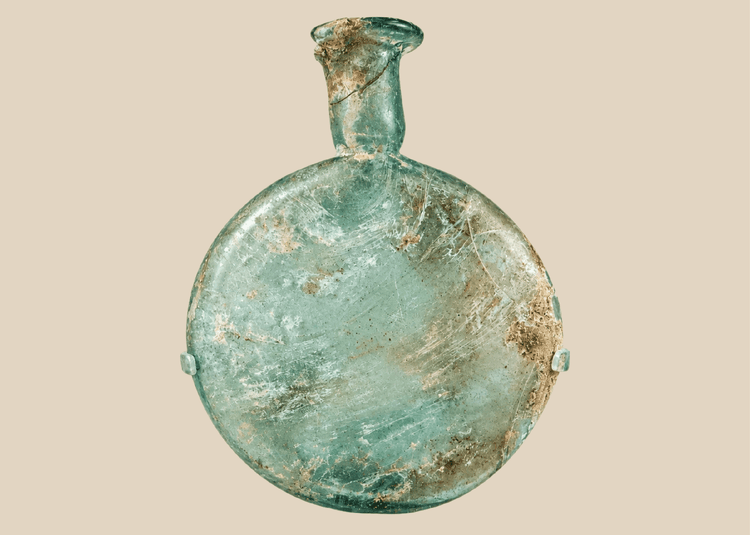
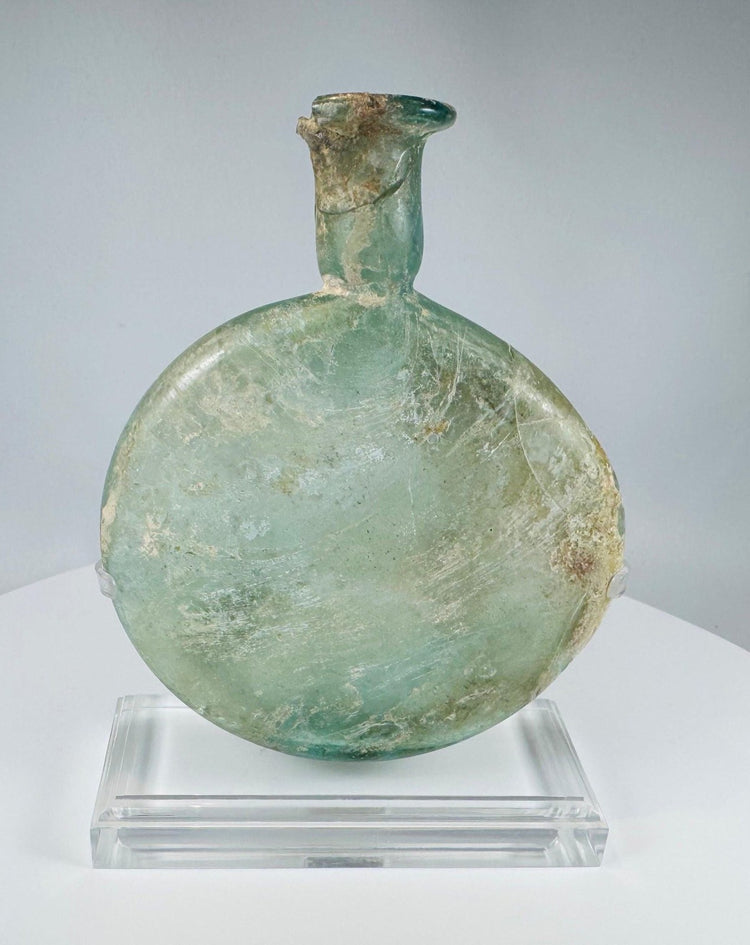
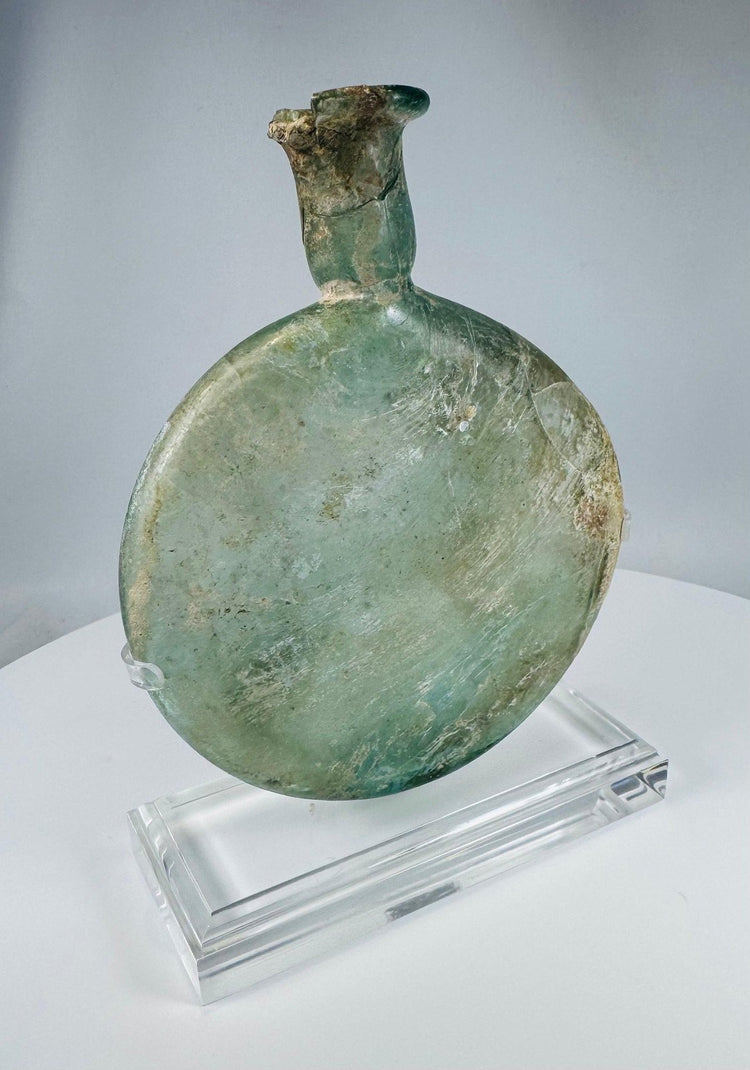
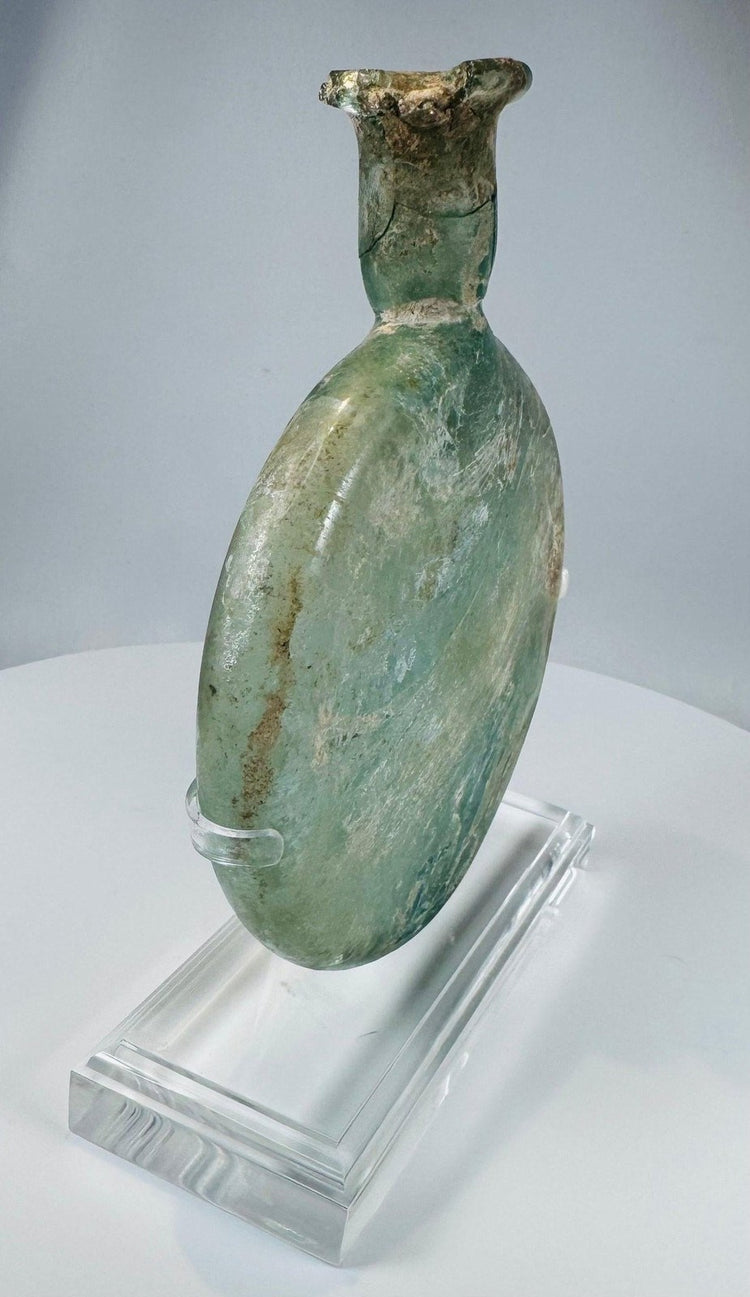
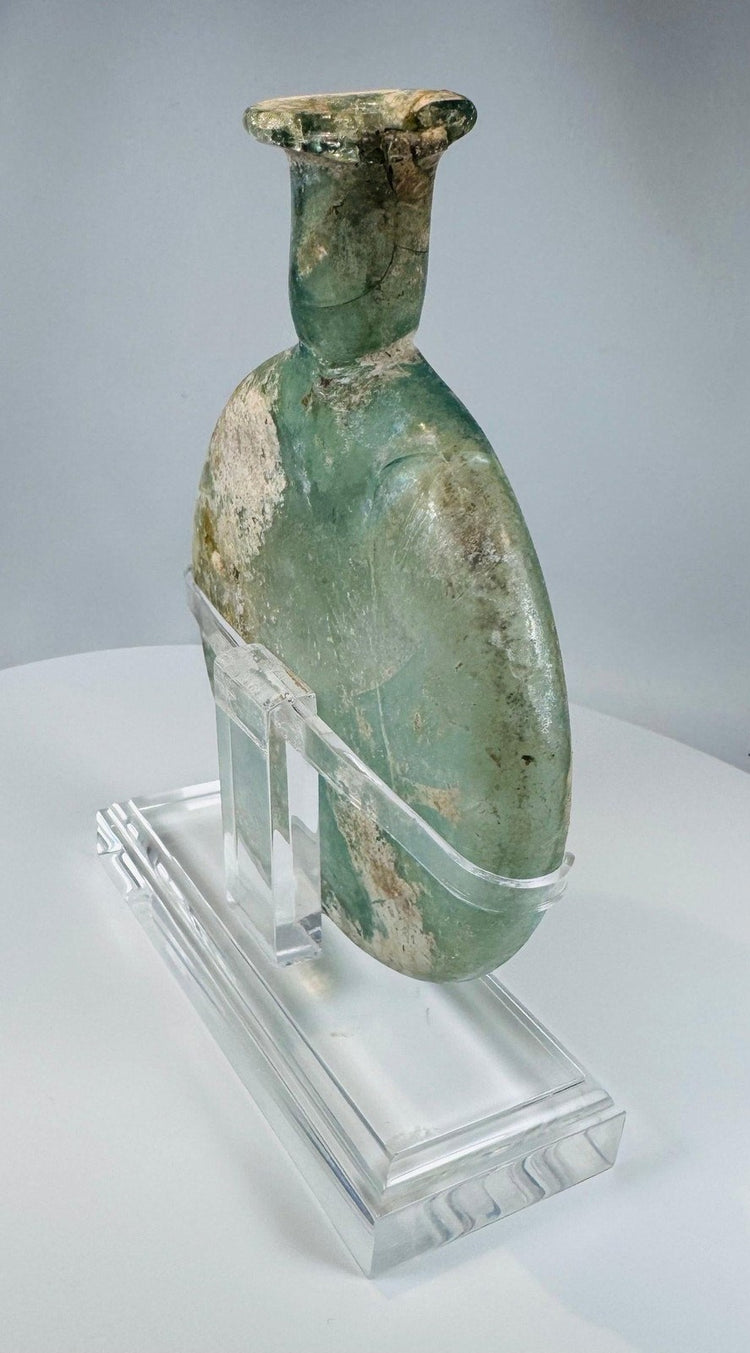
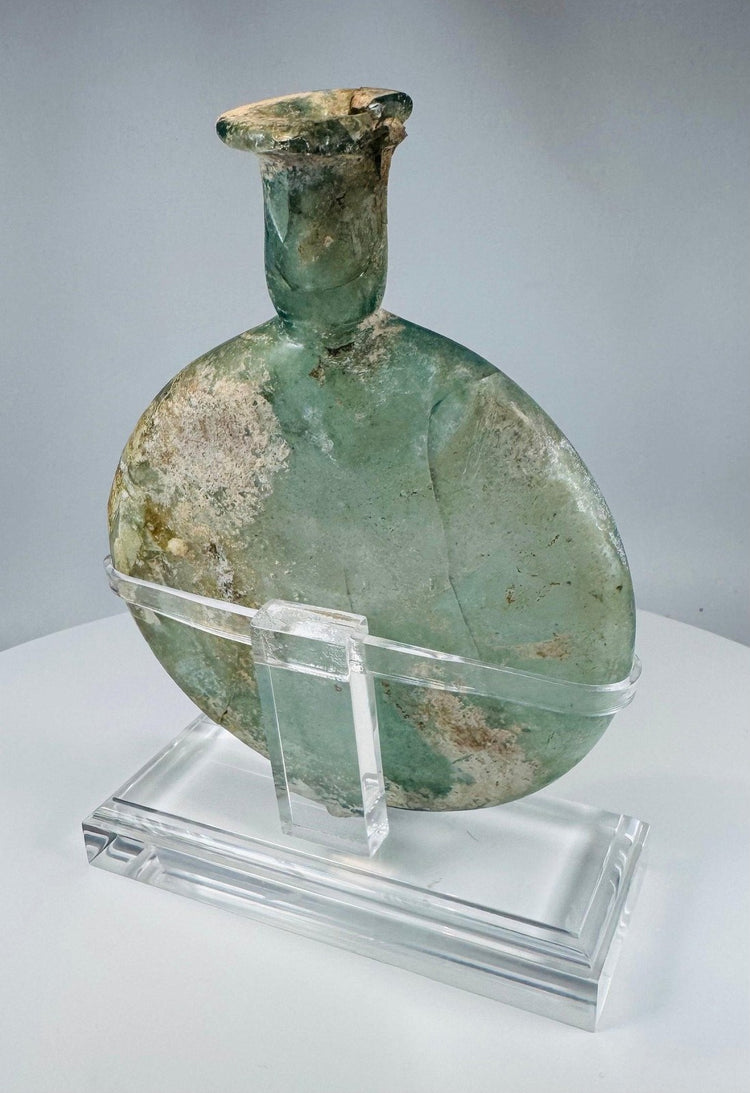
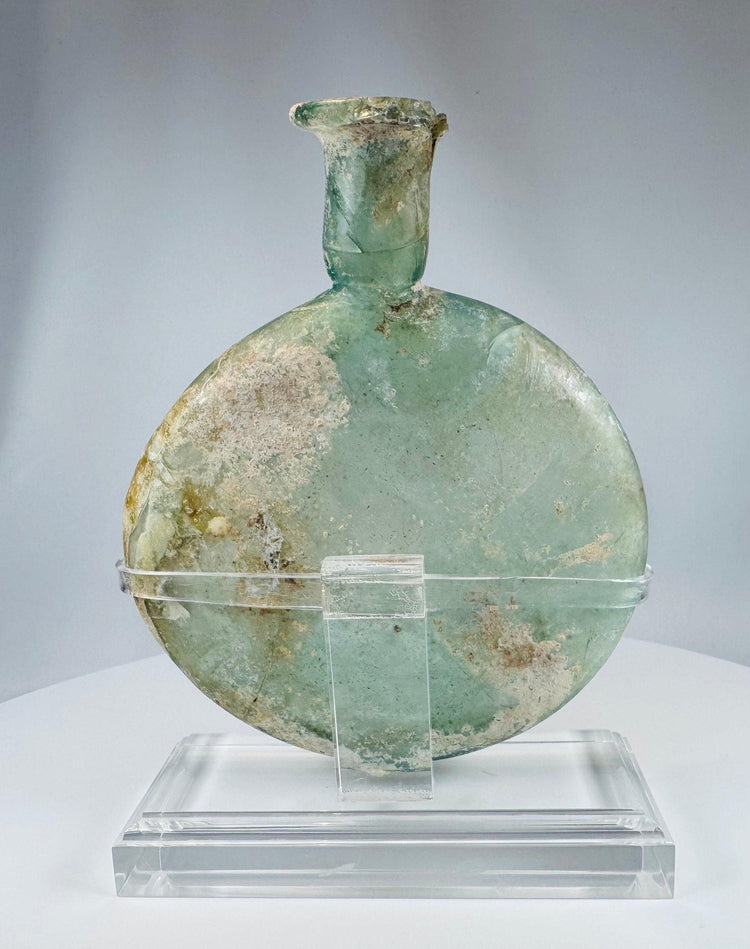
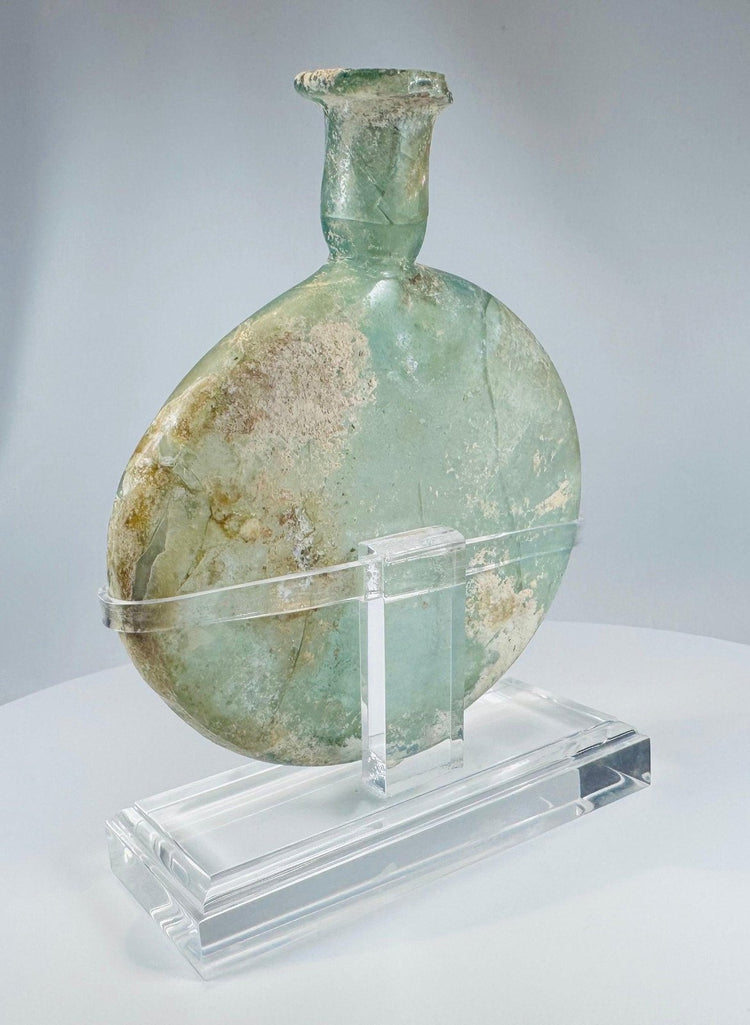
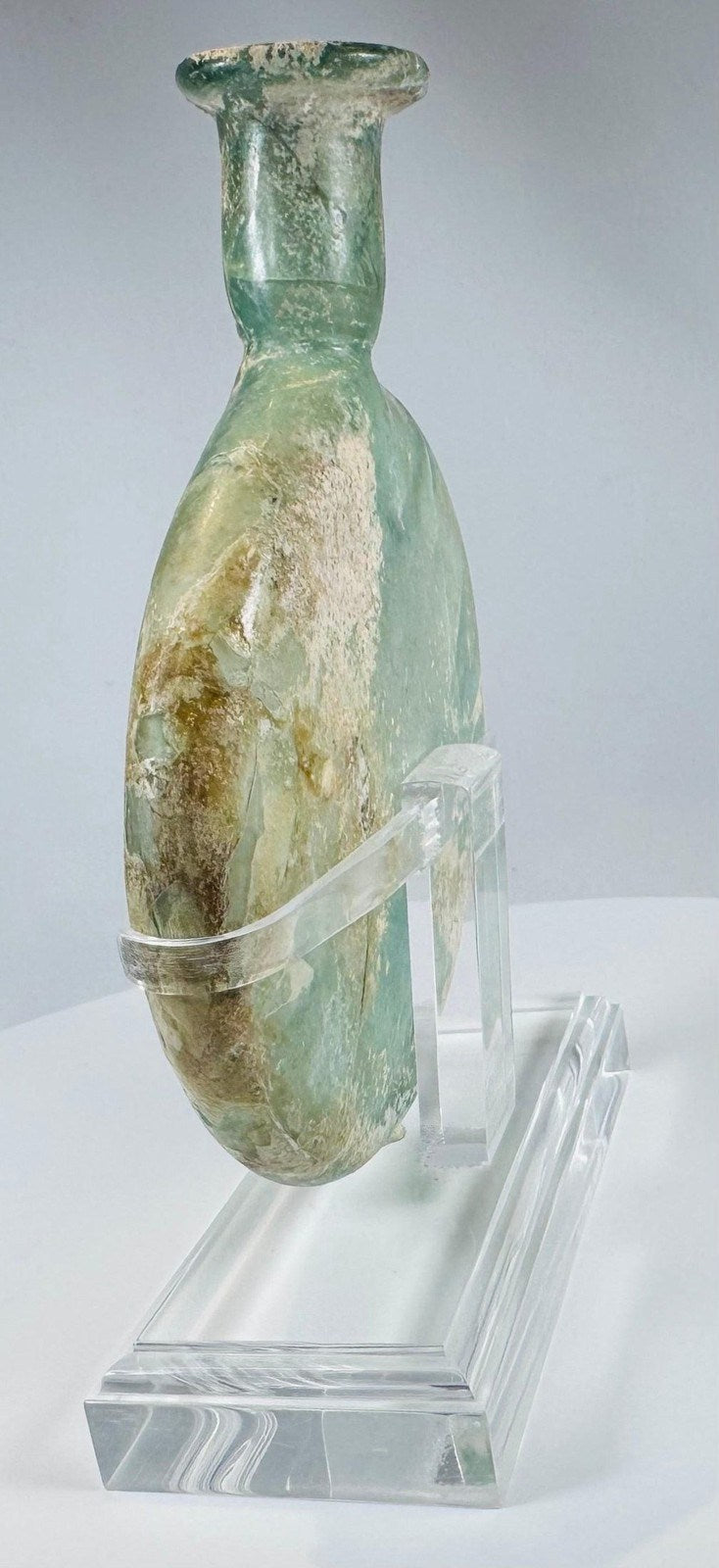
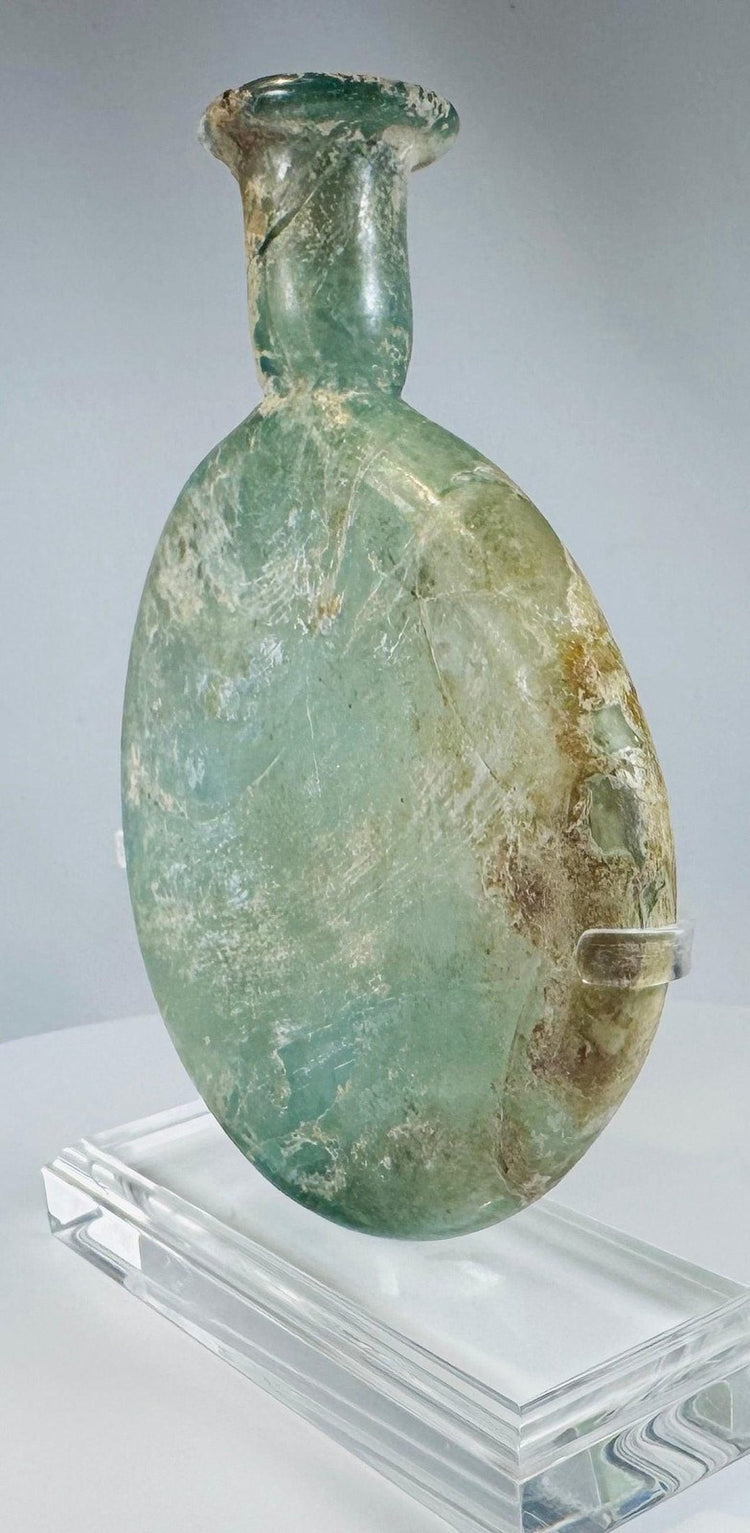
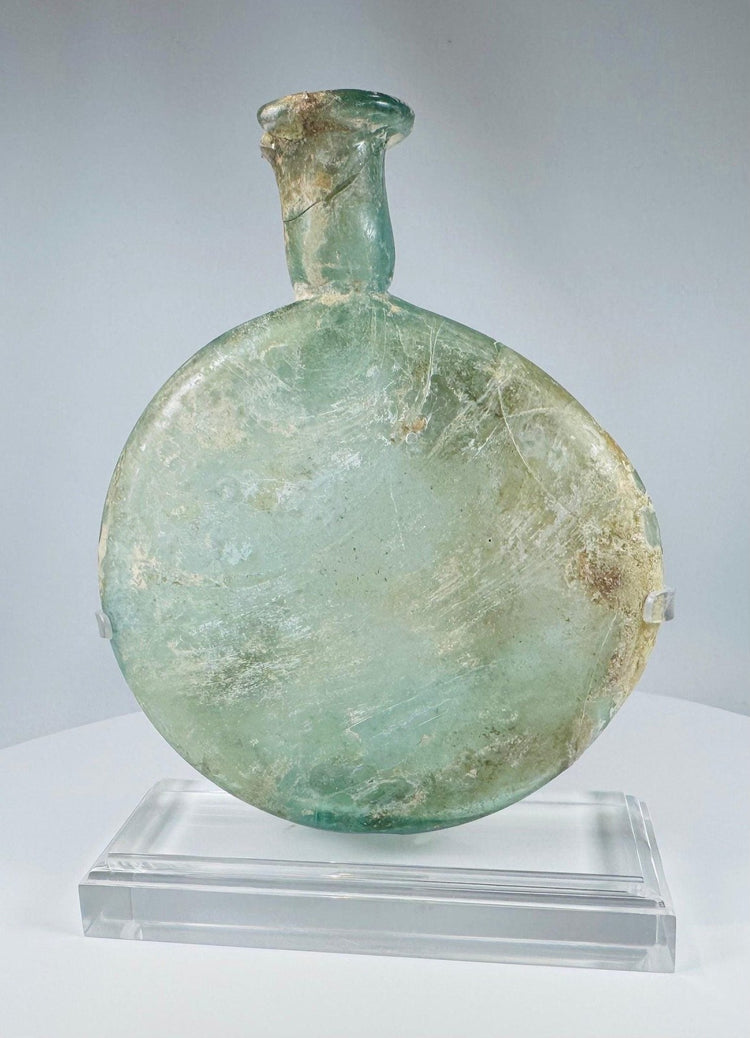
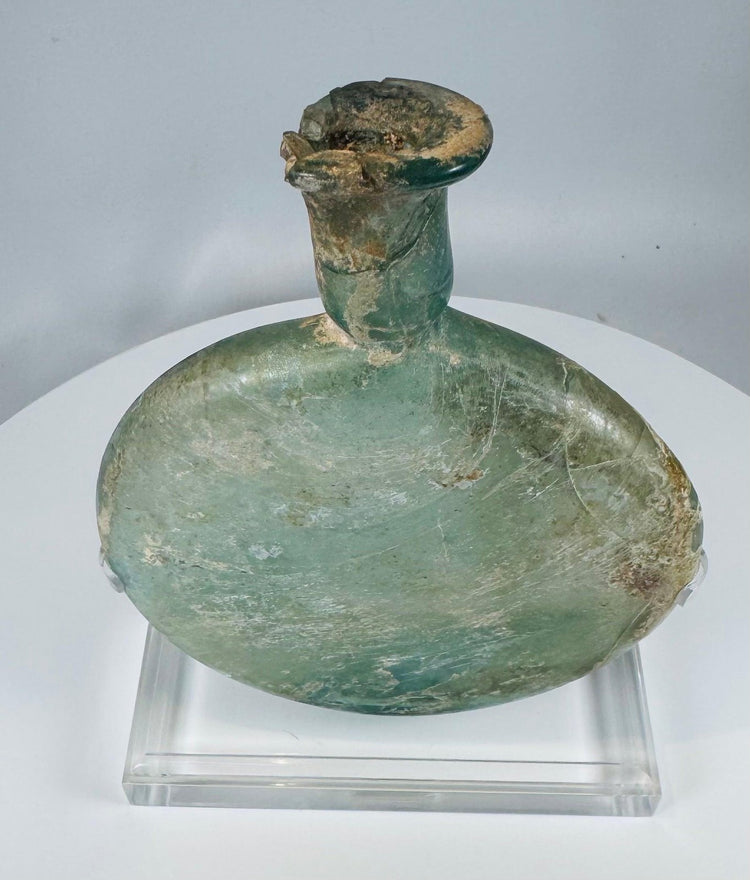
Cette ancienne fiole en verre romain est un exemple frappant de l'artisanat du verre soufflé libre, présentant un corps circulaire aplati avec un long cou cylindrique et un bord légèrement évasé. Façonné dans un verre translucide vert pâle, le récipient présente une irisation substantielle, une incrustation minérale et une altération compatibles avec un enfouissement prolongé et l'âge.
L'élégant profil aplati reflète une forme romaine bien connue utilisée pour stocker des huiles, des parfums, des liquides médicinaux ou de précieuses substances cosmétiques. Le récipient conserve des traces visibles de pontil et une asymétrie caractéristique associée aux techniques de production authentiques du verre soufflé libre ancien.
Des zones d'incrustation et d'altération de surface contribuent à l'aspect archéologique de l'artefact, tandis que des réparations historiques visibles à l'épaule et au cou stabilisent la pièce pour l'exposition. Une petite perte au niveau du bord est présente, compatible avec son âge et son historique de fouille.
Montée sur un support d'exposition en acrylique transparent sur mesure, la fiole se présente exceptionnellement bien comme objet d'exposition et exemple représentatif de la technologie de fabrication du verre romain.
Caractéristiques
- Authentique récipient en verre soufflé libre romain
- Forme de fiole circulaire aplatie
- Verre translucide vert pâle
- Traces visibles de pontil
- Incrustation de surface et altération due à l'enfouissement
- Support d'exposition personnalisé inclus
- Réparation historique à l'épaule et au cou
- Élégante forme de fiole cosmétique ou de parfum romaine antique
Signification culturelle
Les récipients en verre romains sont devenus de plus en plus répandus dans tout l'Empire romain après l'invention du soufflage de verre au 1er siècle avant notre ère. Légères et visuellement raffinées, ces fioles étaient couramment utilisées pour les parfums, les huiles, les médicaments et les liquides de luxe, reflétant à la fois un usage quotidien pratique et la sophistication de la production artisanale romaine.
Les exemples de fioles en verre aplaties comme celle-ci sont particulièrement appréciés aujourd'hui pour leurs qualités sculpturales, leur préservation archéologique et les preuves des techniques de travail du verre ancien qui ont révolutionné la fabrication antique.
Condition
Condition antique avec usure liée à l'âge, incrustation d'enfouissement, dépôts minéraux et altération attendus partout. Réparation visible au cou et à la zone de l'épaule. Petite perte au niveau du bord. État stable et exposable dans l'ensemble.
Dimensions (Approximatives)
Hauteur : 5,75 po
Âge (Approximatif)
1 700 à 2 000 ans
Provenance
Offert par Thomaston Place Auction Galleries, Thomaston, Maine, États-Unis, le 24 août 2013, sous le lot 487. Après la vente aux enchères, la pièce est entrée dans une collection privée à Windsor, Connecticut, États-Unis.
En savoir plus
Examinez un récipient en verre romain remarquablement préservé au Abbey Museum
Explorez notre Collection d'artefacts romains et grecs
Description
Contexte historique et origine
Région : Empire romain
Matériau : Verre soufflé libre de couleur vert pâle
Période : Circa 1er-3ème siècle de notre ère
Description
Cette ancienne fiole en verre romain est un exemple frappant de l'artisanat du verre soufflé libre, présentant un corps circulaire aplati avec un long cou cylindrique et un bord légèrement évasé. Façonné dans un verre translucide vert pâle, le récipient présente une irisation substantielle, une incrustation minérale et une altération compatibles avec un enfouissement prolongé et l'âge.
L'élégant profil aplati reflète une forme romaine bien connue utilisée pour stocker des huiles, des parfums, des liquides médicinaux ou de précieuses substances cosmétiques. Le récipient conserve des traces visibles de pontil et une asymétrie caractéristique associée aux techniques de production authentiques du verre soufflé libre ancien.
Des zones d'incrustation et d'altération de surface contribuent à l'aspect archéologique de l'artefact, tandis que des réparations historiques visibles à l'épaule et au cou stabilisent la pièce pour l'exposition. Une petite perte au niveau du bord est présente, compatible avec son âge et son historique de fouille.
Montée sur un support d'exposition en acrylique transparent sur mesure, la fiole se présente exceptionnellement bien comme objet d'exposition et exemple représentatif de la technologie de fabrication du verre romain.
Caractéristiques
- Authentique récipient en verre soufflé libre romain
- Forme de fiole circulaire aplatie
- Verre translucide vert pâle
- Traces visibles de pontil
- Incrustation de surface et altération due à l'enfouissement
- Support d'exposition personnalisé inclus
- Réparation historique à l'épaule et au cou
- Élégante forme de fiole cosmétique ou de parfum romaine antique
Signification culturelle
Les récipients en verre romains sont devenus de plus en plus répandus dans tout l'Empire romain après l'invention du soufflage de verre au 1er siècle avant notre ère. Légères et visuellement raffinées, ces fioles étaient couramment utilisées pour les parfums, les huiles, les médicaments et les liquides de luxe, reflétant à la fois un usage quotidien pratique et la sophistication de la production artisanale romaine.
Les exemples de fioles en verre aplaties comme celle-ci sont particulièrement appréciés aujourd'hui pour leurs qualités sculpturales, leur préservation archéologique et les preuves des techniques de travail du verre ancien qui ont révolutionné la fabrication antique.
Condition
Condition antique avec usure liée à l'âge, incrustation d'enfouissement, dépôts minéraux et altération attendus partout. Réparation visible au cou et à la zone de l'épaule. Petite perte au niveau du bord. État stable et exposable dans l'ensemble.
Dimensions (Approximatives)
Hauteur : 5,75 po
Âge (Approximatif)
1 700 à 2 000 ans
Provenance
Offert par Thomaston Place Auction Galleries, Thomaston, Maine, États-Unis, le 24 août 2013, sous le lot 487. Après la vente aux enchères, la pièce est entrée dans une collection privée à Windsor, Connecticut, États-Unis.
En savoir plus
Examinez un récipient en verre romain remarquablement préservé au Abbey Museum
Explorez notre Collection d'artefacts romains et grecs
Vous aimerez peut-être aussi
