
OVERVIEW

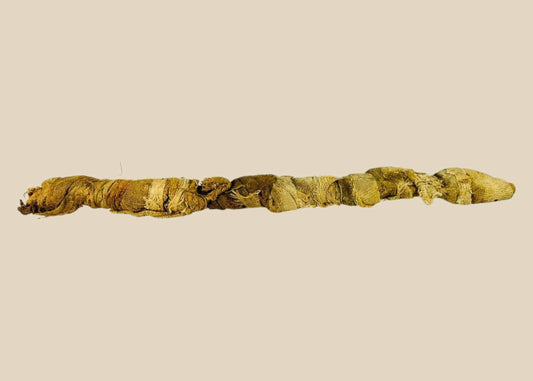
Artifact Type: Mummified Human Hand

Region: Ancient Egypt

Period: Late Period – Ptolemaic Dynasty, Circa 700–200 BCE

Material: Human tissue, resin, and linen remnants

Acquisition: Private Collection, United States

This case study outlines the complete Relic & Rarity authentication process of an Ancient Egyptian mummified human hand, detailing each step from initial examination to final evaluation.

HISTORICAL COMPARISON

The specimen was compared with documented examples of mummified human remains in major museum collections. A closely aligned reference is a mummified hand in the collection of The Metropolitan Museum of Art, dated to the Late Period–Ptolemaic era (c. 700–30 BCE), showing similar linen wrapping and preserved tissue. Additional comparisons with institutional examples, including the National Museums Liverpool, reflect consistent resin use and embalming techniques characteristic of ancient Egyptian mummification.

MATERIAL ANALYSIS

Examination of the preserved tissue and wrappings revealed:

  • Desiccated organic material consistent with ancient human remains
  • Linen fibers showing age-related fraying and oxidation
  • Resinous deposits typical of Egyptian embalming substances
  • Surface cracking and shrinkage from natural dehydration over time
  • No evidence of modern preservation materials or artificial alteration

The organic composition, linen wrapping, and resin application are consistent with known ancient Egyptian mummification practices and long-term burial conditions.

Split-screen image showing a laboratory technician in protective gear examining a bone sample from a mummified hand on the left, and a formal DNA analysis report from Lakehead University on the right detailing genetic testing and sample information.
Scientific Imaging & Analysis

DNA Testing

Paleo DNA testing conducted at Lakehead University verified the presence of ancient human genetic material, supporting the biological authenticity of the specimen
X-ray image of a mummified hand displayed beside a detailed radiographic analysis report document on a dark background
SCIENTIFIC IMAGING & ANALYSIS

X-Ray

Imaging confirmed internal structural consistency with human anatomical remains, revealing expected density patterns of desiccated tissue and layered wrappings
Curator in a laboratory carefully examining a small mummified hand artifact with a magnifying glass on a workbench surrounded by tools and notes

CURATORIAL ASSESSMENT

The mummified hand was evaluated by the Relic & Rarity curatorial team in accordance with established museum and academic standards. Focus was placed on:

- Anatomical structure and proportional accuracy
- Preservation consistent with mummification practices
- Surface condition and desiccation patterns

Comparisons with documented museum examples support consistency with authentic ancient remains. External scholarly references were consulted where appropriate.

Spanish government export permit document showing a mummified hand artifact with X-ray inset and official cultural heritage authorization details

PROVENANCE REVIEW

The mummified hand originates from a documented private collection in Spain, with earlier provenance tracing to a French private collection in Auvergne. The piece was acquired prior to 1980.

The artifact is accompanied by an official export permit issued by the Spanish government.

Expert verifying an ancient artifact in a museum-style setting representing Relic & Rarity authenticity and curatorial review

EXPERT EVALUATION

A professional opinion was provided by Dr. Robert Yohe, forensic anthropologist, based on a review of the specimen’s anatomical structure, tissue preservation, and overall characteristics.

His observations indicate consistency with mummified human remains, aligning with known preservation processes and examples documented in the field. He also offered fascinating insights based on the bone structure and finer anatomical details of the artifact.

CONCLUSION

Based on the cumulative findings:

  • Anatomical structure consistent with a human hand
  • Preservation characteristics aligned with known mummification practices
  • Surface condition and desiccation patterns indicative of significant age
  • Scientific imaging and analysis supporting authenticity
  • Verified provenance within established European private collections, with official export authorization
  • Independent expert evaluation by a forensic anthropologist confirming consistency with mummified human remains

The artifact was determined to be authentic and consistent with an ancient mummified human hand, likely originating from Egypt and dating to the Late Period or earlier.

Antique trunk and curated collector set with historical objects displayed on a warm textured background representing artifacts of distinction
CURATED COLLECTION

Exceptional Antiquities of Distinction

A curated selection of remarkable objects defined by their craftsmanship, cultural importance, and historical depth.
Browse Rare Finds Browse Rare Finds
Prehistoric ceramic cup and shallow plate with aged surface patina displayed on a neutral background
ANCIENT RELICS & ART COLLECTION

Prehistoric Wonders

Discover artifacts from early human civilizations, featuring ancient tools, vessels, and primitive forms that reflect the ingenuity, survival, and cultural expression of prehistoric societies across the world.
Unlock the Collection Unlock the Collection