

Antiguo budista de Gandhara | Fragmento de cabeza de estuco montado sobre base de exhibición | Circa siglo III-V d.C.
- Precio habitual
- $1,000.00
- Precio de venta
- $1,000.00
- Precio habitual
No se pudo cargar la disponibilidad de retiro


Antiguo budista de Gandhara | Fragmento de cabeza de estuco montado sobre base de exhibición | Circa siglo III-V d.C.
Descripción
Más
Menos
Contexto histórico y origen
Región: Región de Gandhara (Antiguo noroeste de la India, Pakistán y Afganistán)
Material: Estuco / Yeso de cal montado sobre una base de exhibición de madera
Período: Período Kushan a Post-Kushan, alrededor del siglo III-V d.C.
Descripción
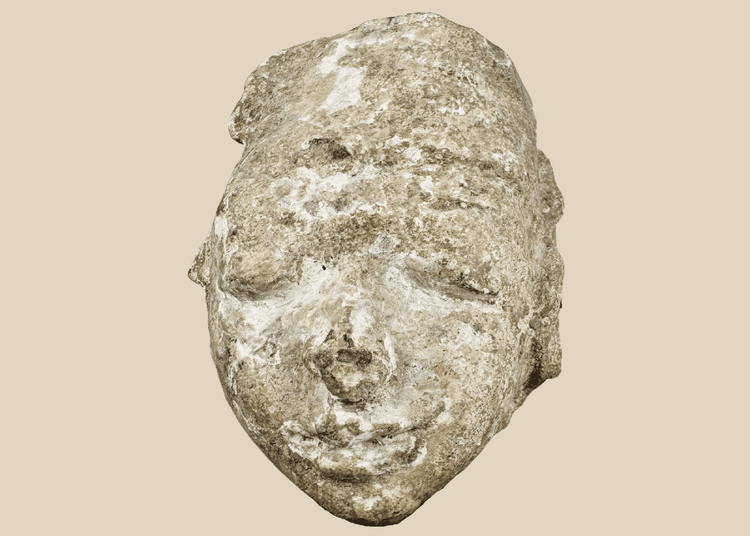
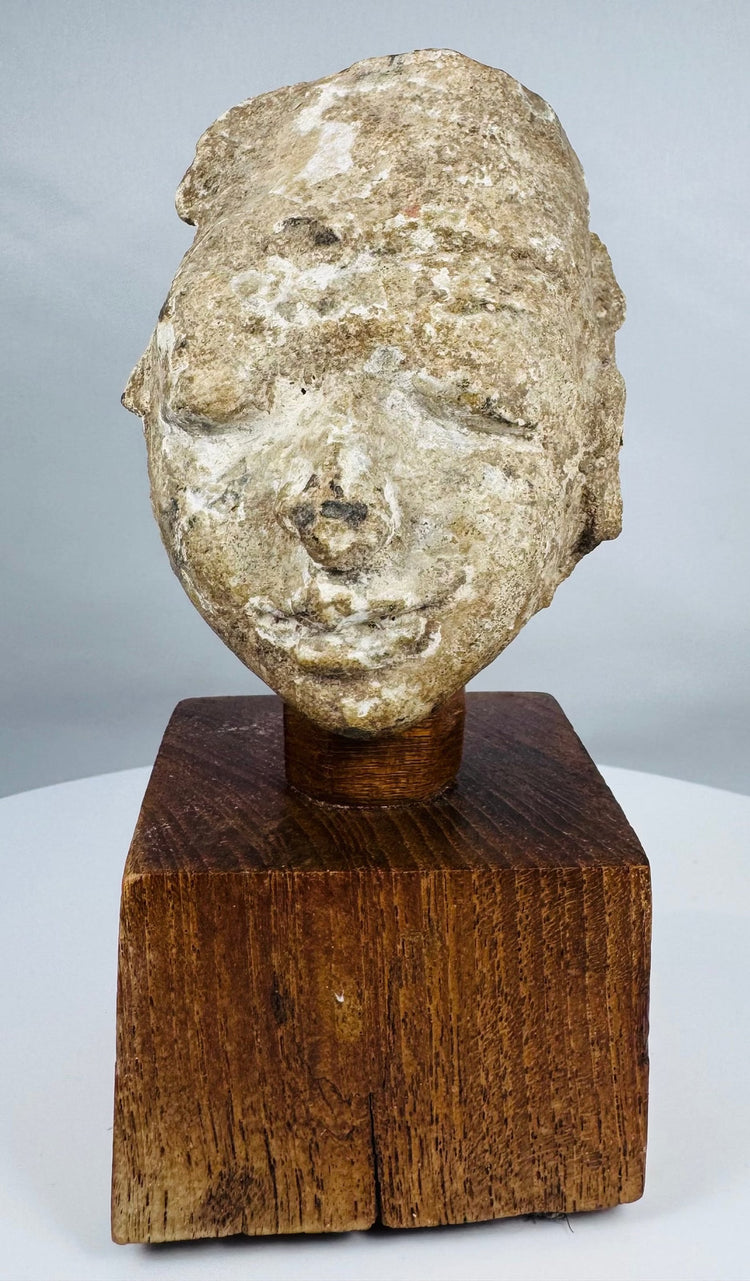
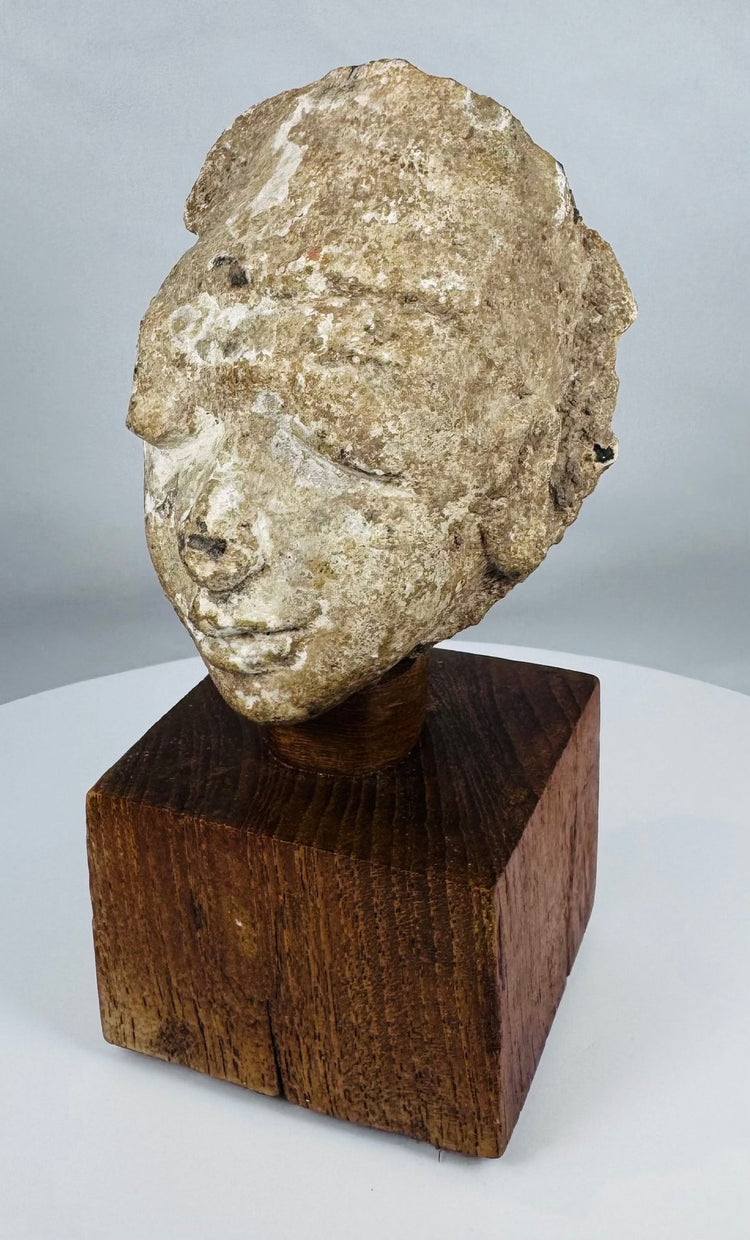
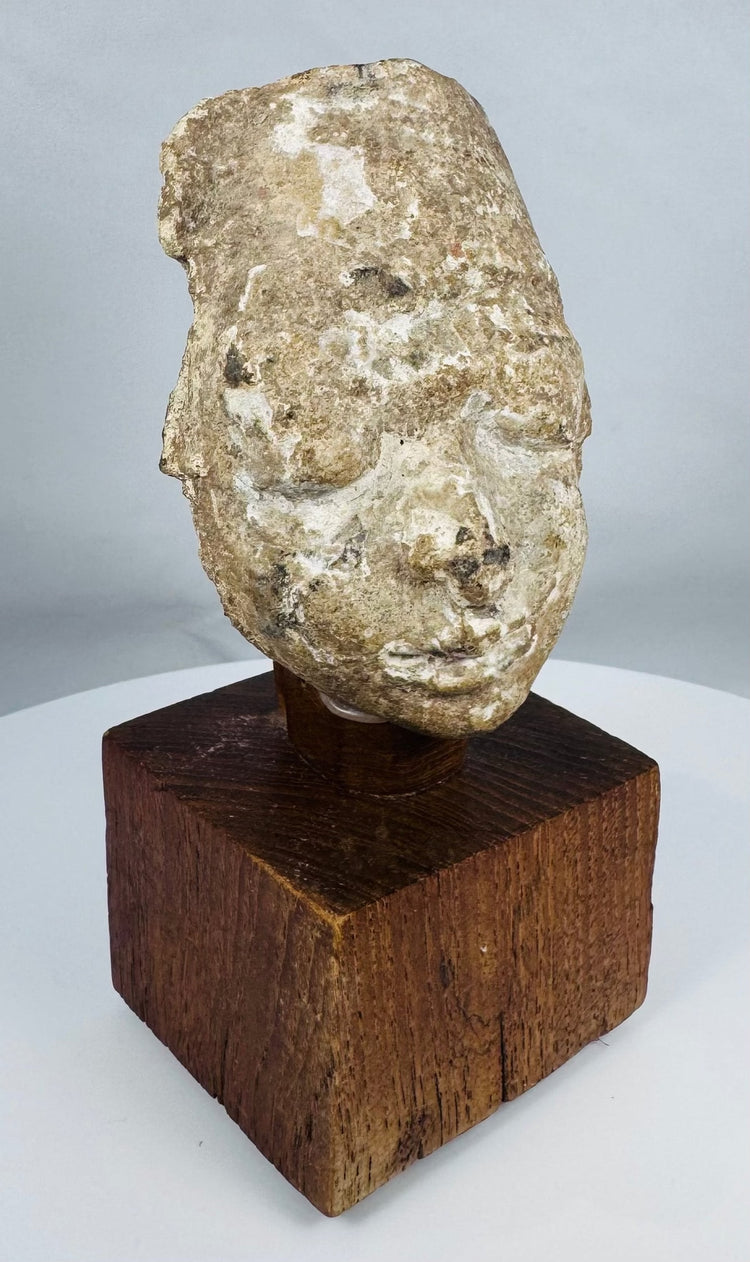
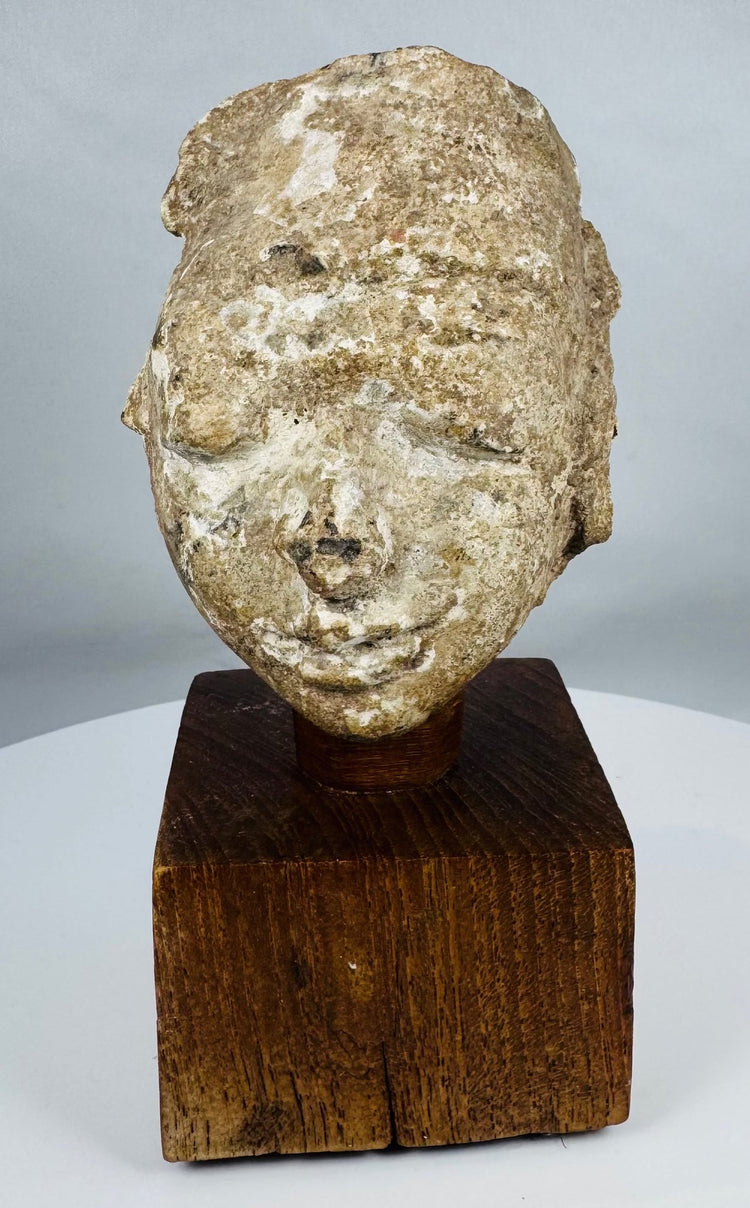
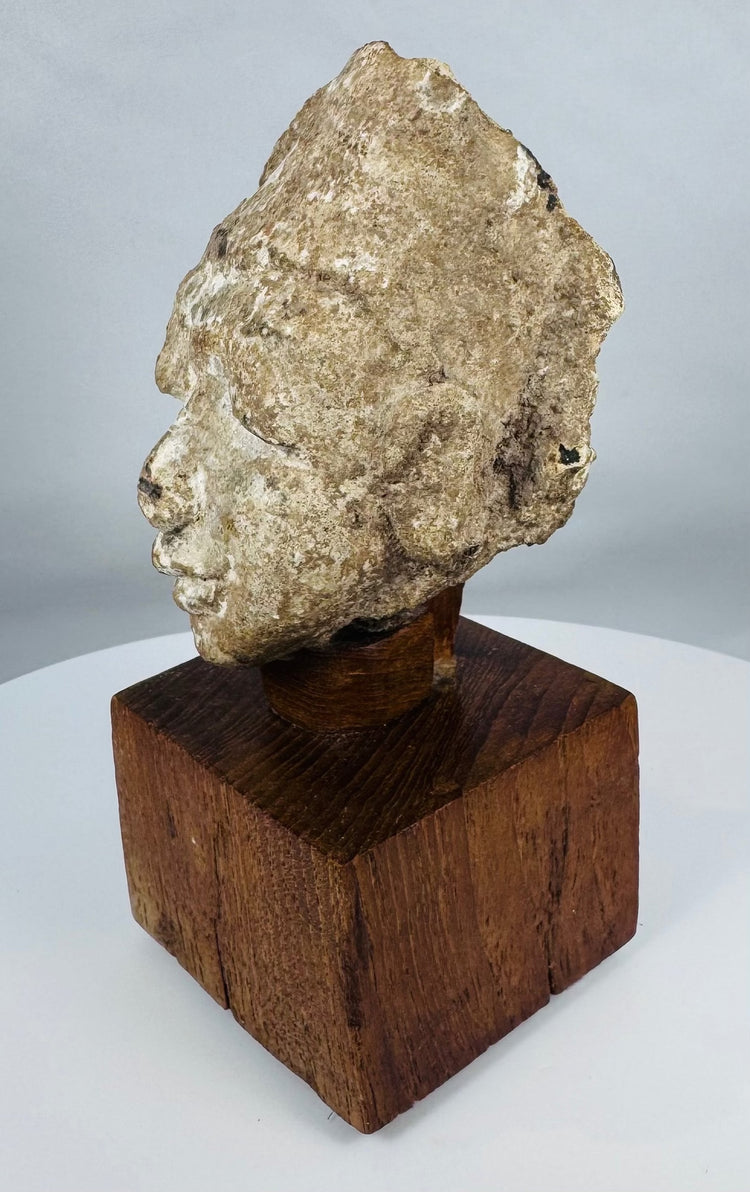
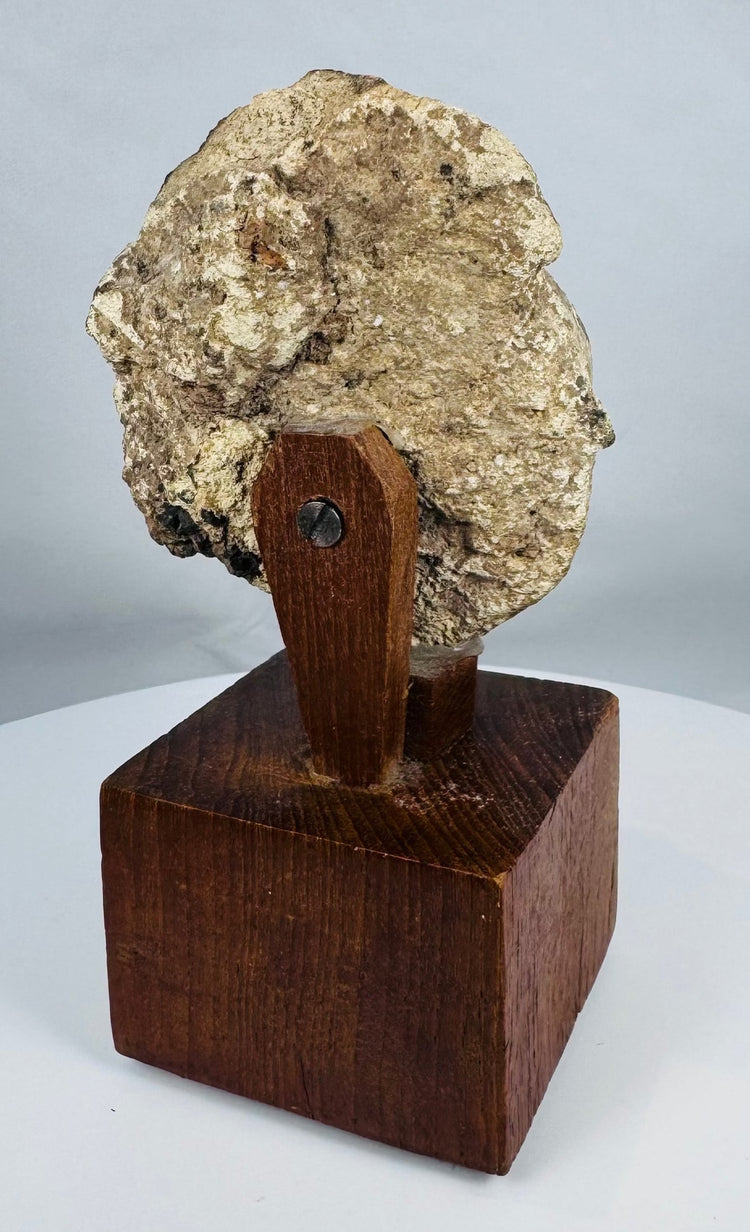
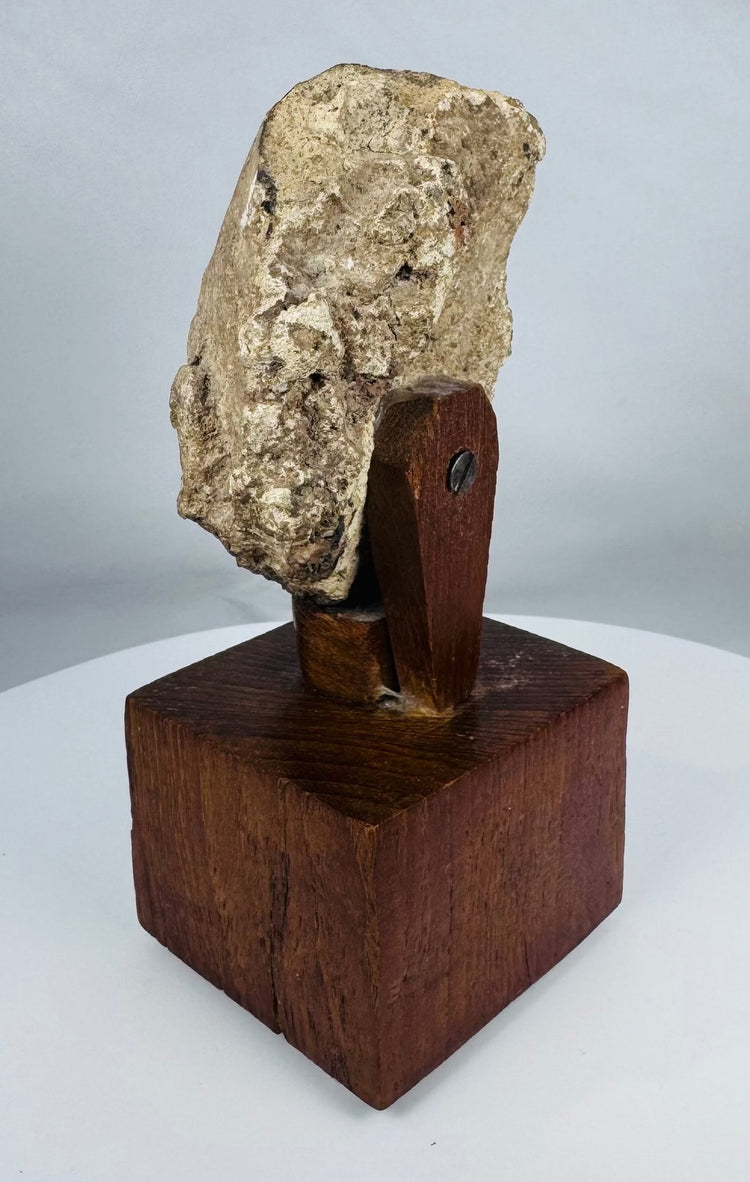
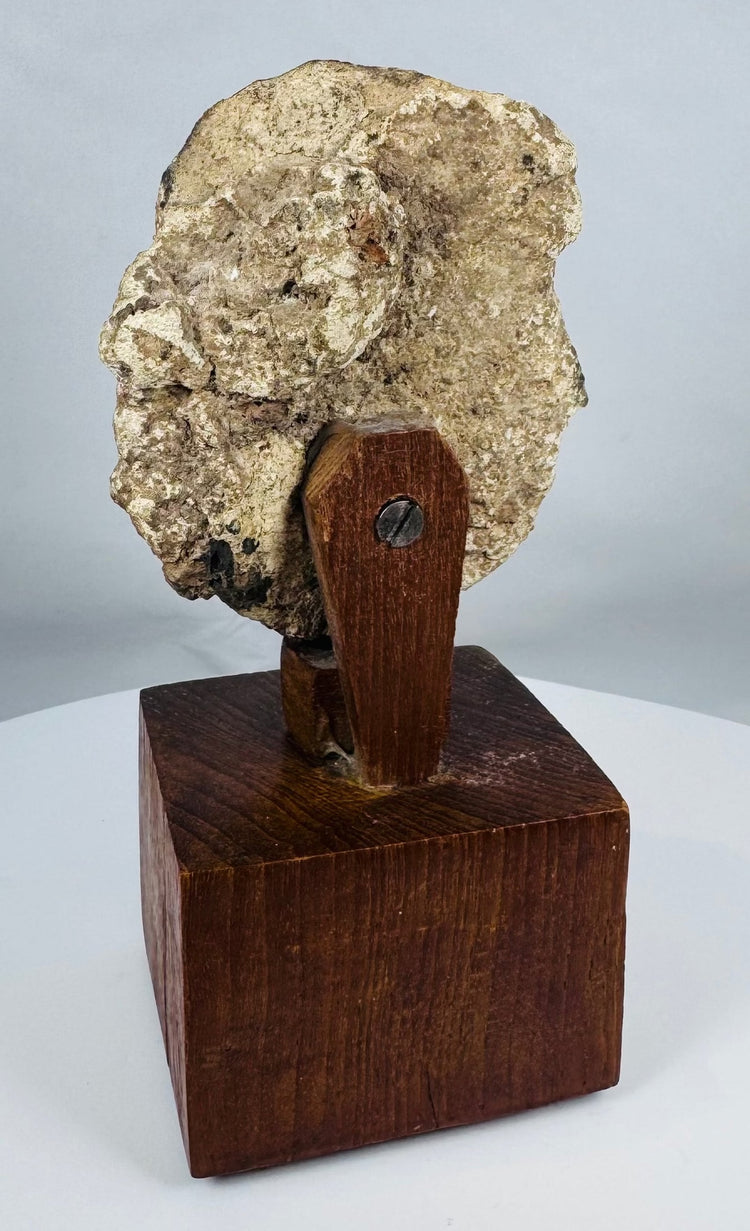
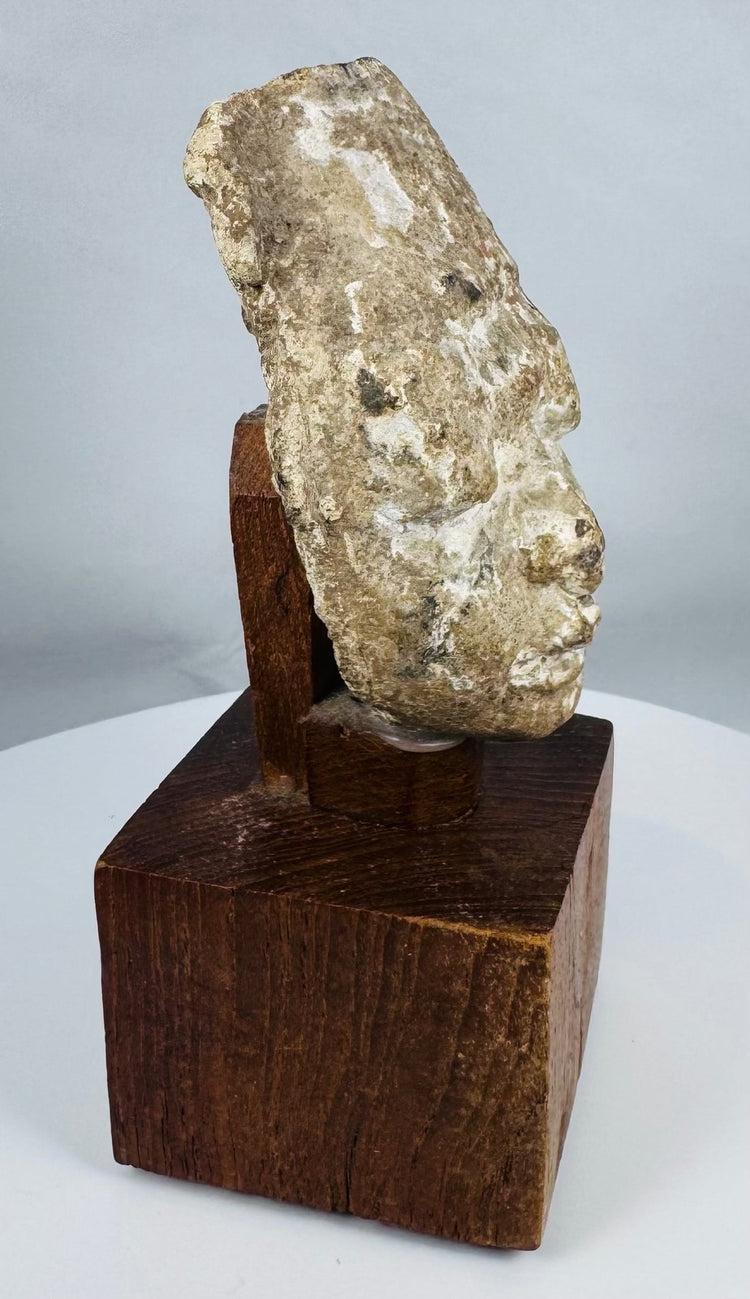
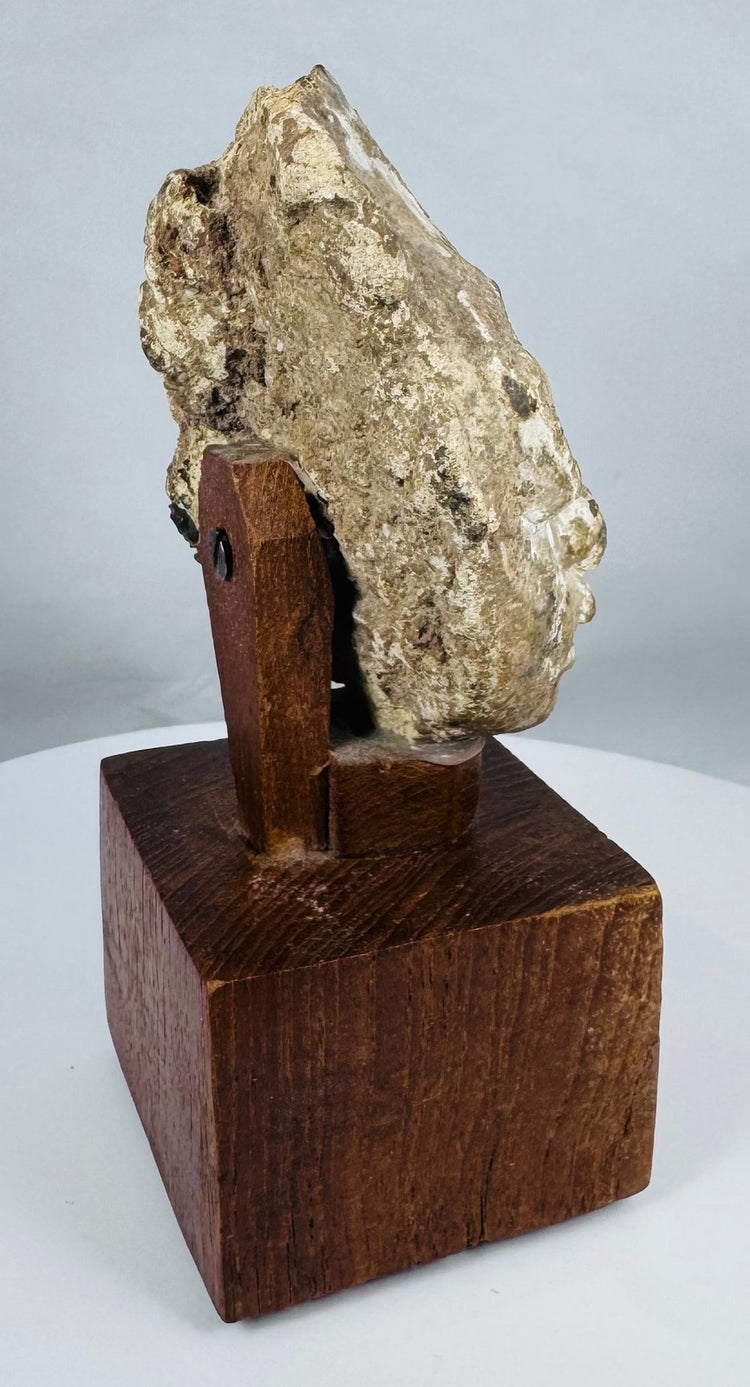
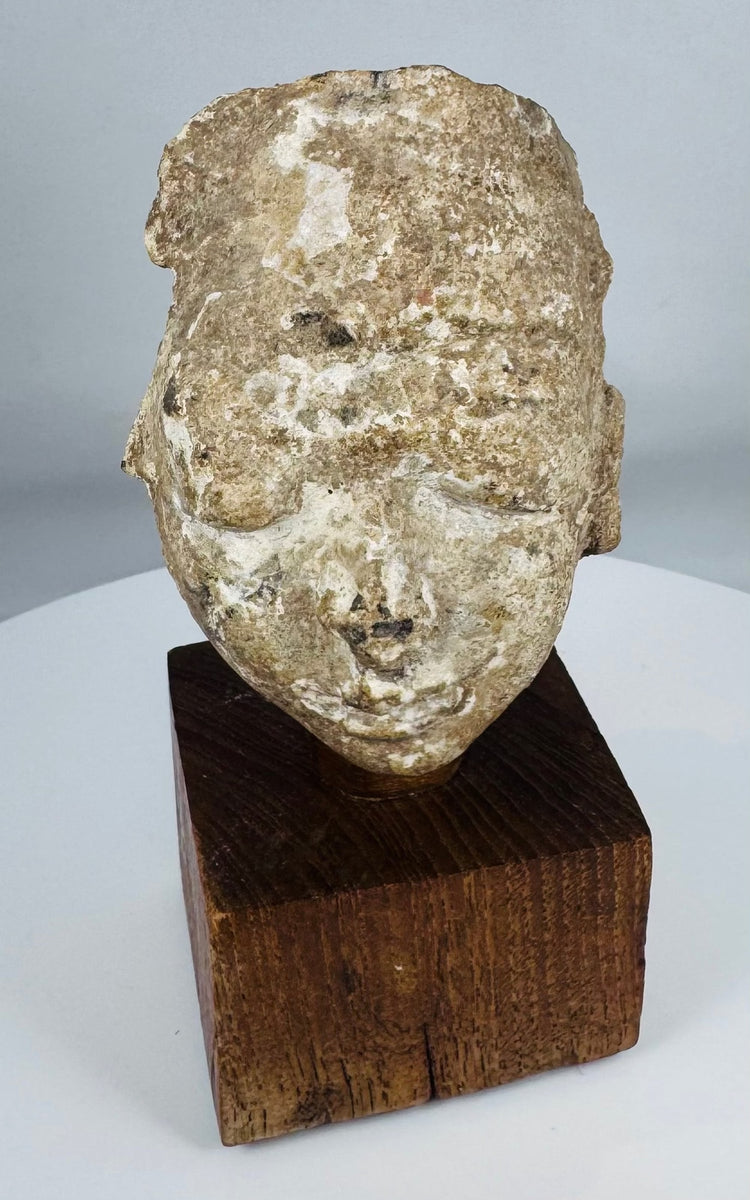
Este antiguo fragmento de cabeza de estuco de Gandhara representa una figura budista serena, que probablemente formó parte de una escultura devocional más grande. El rostro está modelado con ojos suavemente cerrados, una nariz ancha, labios suaves, mejillas redondeadas y una expresión meditativa tranquila característica de la imaginería budista producida en toda la región de Gandhara durante los períodos Kushan y Post-Kushan.
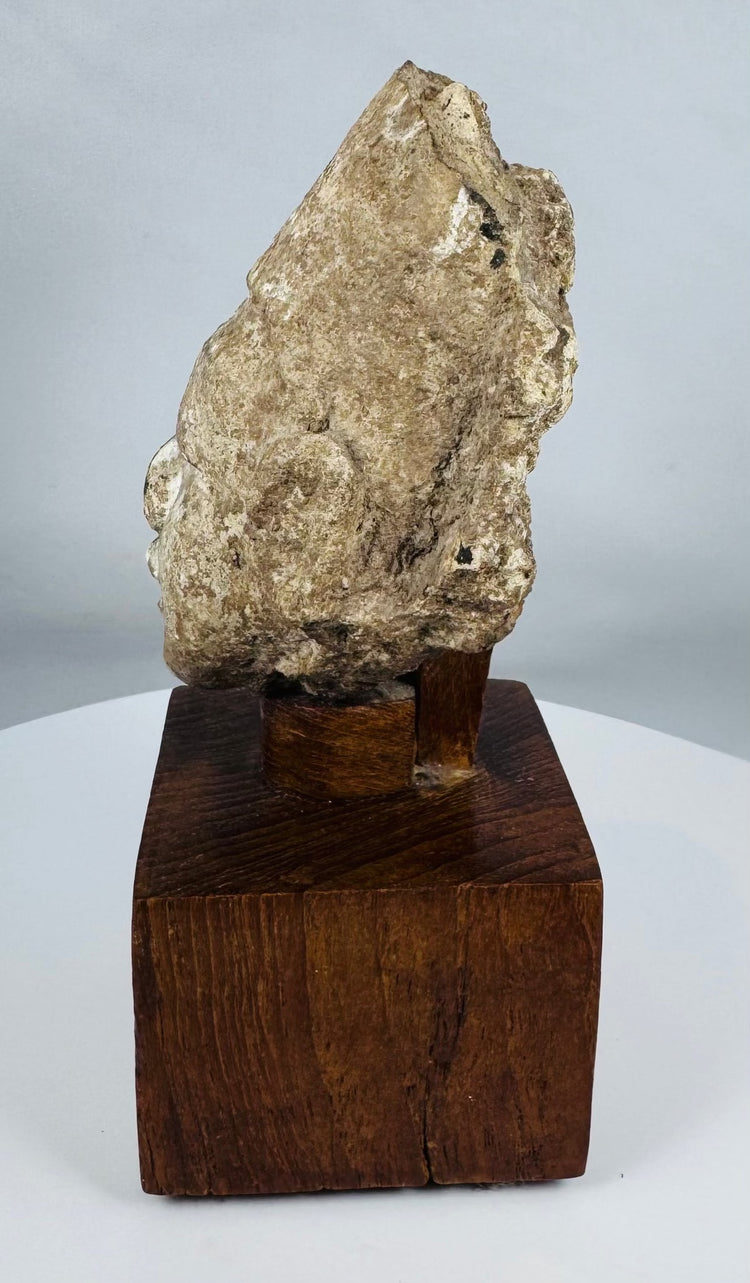
El fragmento presenta un desgaste sustancial relacionado con la edad, depósitos minerales, pérdidas y erosión en toda su superficie. La oreja y los contornos faciales restantes sugieren que la cabeza pertenecía originalmente a una figura más grande, posiblemente representando un Buda, un bodhisattva, un asistente u otra escultura devocional de templo asociada con el culto budista y la vida monástica.
Montado sobre una base de exhibición de madera posterior, el fragmento se presenta como un objeto escultórico al tiempo que conserva su carácter arqueológico. La combinación de modelado expresivo y el extenso envejecimiento de la superficie ofrece una visión fascinante de las tradiciones artísticas de la antigua Gandhara, uno de los centros más importantes del arte budista en el mundo antiguo.
Características
- Antiguo fragmento de cabeza budista
- Influencia artística y cultural de Gandhara
- Ojos suavemente cerrados y expresión meditativa serena
- Construcción de estuco o yeso de cal
- Condición arqueológica fragmentaria
- Montado sobre una base de exhibición de madera hecha a medida
- Superficie muy envejecida con depósitos minerales y erosión
Importancia cultural
La escultura budista de Gandhara se desarrolló a lo largo de las principales rutas comerciales que conectaban la India, Asia Central y el mundo helenístico. La región se hizo famosa por su distintivo estilo artístico, que fusionaba la imaginería religiosa budista con influencias grecorromanas introducidas a través de siglos de intercambio cultural.
Cabezas y fragmentos de figuras de estuco como este se incorporaban comúnmente en monasterios budistas, santuarios, templos y programas arquitectónicos. Hoy en día, los ejemplos supervivientes proporcionan una valiosa información sobre la expansión del budismo y los logros artísticos de una de las encrucijadas culturales más influyentes de la antigüedad.
Estado
Estado fragmentario con pérdidas, erosión superficial, depósitos minerales y desgaste relacionado con la edad en toda la pieza. Montado sobre una base de exhibición de madera posterior. La superficie presenta una extensa erosión consistente con la antigüedad arqueológica y el entierro o la exposición a largo plazo.
Dimensiones (Aproximadas)
Altura: 6.5 in
Ancho: 3 in
Profundidad: 2.75 in
Incluyendo el soporte
Edad (Aproximada)
1,500–1,800 años de antigüedad
Procedencia
De una colección privada en Nueva York, Nueva York, EE. UU.
Saber más
Conozca la antigua región de Gandhara, uno de los centros más importantes del arte y la cultura budista.
Explore nuestra colección curada de Reliquias Budistas e Hindúes y Estatuas Sagradas
Descripción
Contexto histórico y origen
Región: Región de Gandhara (Antiguo noroeste de la India, Pakistán y Afganistán)
Material: Estuco / Yeso de cal montado sobre una base de exhibición de madera
Período: Período Kushan a Post-Kushan, alrededor del siglo III-V d.C.
Descripción
Este antiguo fragmento de cabeza de estuco de Gandhara representa una figura budista serena, que probablemente formó parte de una escultura devocional más grande. El rostro está modelado con ojos suavemente cerrados, una nariz ancha, labios suaves, mejillas redondeadas y una expresión meditativa tranquila característica de la imaginería budista producida en toda la región de Gandhara durante los períodos Kushan y Post-Kushan.
El fragmento presenta un desgaste sustancial relacionado con la edad, depósitos minerales, pérdidas y erosión en toda su superficie. La oreja y los contornos faciales restantes sugieren que la cabeza pertenecía originalmente a una figura más grande, posiblemente representando un Buda, un bodhisattva, un asistente u otra escultura devocional de templo asociada con el culto budista y la vida monástica.
Montado sobre una base de exhibición de madera posterior, el fragmento se presenta como un objeto escultórico al tiempo que conserva su carácter arqueológico. La combinación de modelado expresivo y el extenso envejecimiento de la superficie ofrece una visión fascinante de las tradiciones artísticas de la antigua Gandhara, uno de los centros más importantes del arte budista en el mundo antiguo.
Características
- Antiguo fragmento de cabeza budista
- Influencia artística y cultural de Gandhara
- Ojos suavemente cerrados y expresión meditativa serena
- Construcción de estuco o yeso de cal
- Condición arqueológica fragmentaria
- Montado sobre una base de exhibición de madera hecha a medida
- Superficie muy envejecida con depósitos minerales y erosión
Importancia cultural
La escultura budista de Gandhara se desarrolló a lo largo de las principales rutas comerciales que conectaban la India, Asia Central y el mundo helenístico. La región se hizo famosa por su distintivo estilo artístico, que fusionaba la imaginería religiosa budista con influencias grecorromanas introducidas a través de siglos de intercambio cultural.
Cabezas y fragmentos de figuras de estuco como este se incorporaban comúnmente en monasterios budistas, santuarios, templos y programas arquitectónicos. Hoy en día, los ejemplos supervivientes proporcionan una valiosa información sobre la expansión del budismo y los logros artísticos de una de las encrucijadas culturales más influyentes de la antigüedad.
Estado
Estado fragmentario con pérdidas, erosión superficial, depósitos minerales y desgaste relacionado con la edad en toda la pieza. Montado sobre una base de exhibición de madera posterior. La superficie presenta una extensa erosión consistente con la antigüedad arqueológica y el entierro o la exposición a largo plazo.
Dimensiones (Aproximadas)
Altura: 6.5 in
Ancho: 3 in
Profundidad: 2.75 in
Incluyendo el soporte
Edad (Aproximada)
1,500–1,800 años de antigüedad
Procedencia
De una colección privada en Nueva York, Nueva York, EE. UU.
Saber más
Conozca la antigua región de Gandhara, uno de los centros más importantes del arte y la cultura budista.
Explore nuestra colección curada de Reliquias Budistas e Hindúes y Estatuas Sagradas
También te puede interesar
