
Meseta iraní antigua | Puntas de proyectil de bronce sobre expositor | Bronce Final – Hierro Temprano | Circa 1400 – 1000 a.C.
- Precio habitual
- $300.00
- Precio de venta
- $300.00
- Precio habitual
No se pudo cargar la disponibilidad de retiro


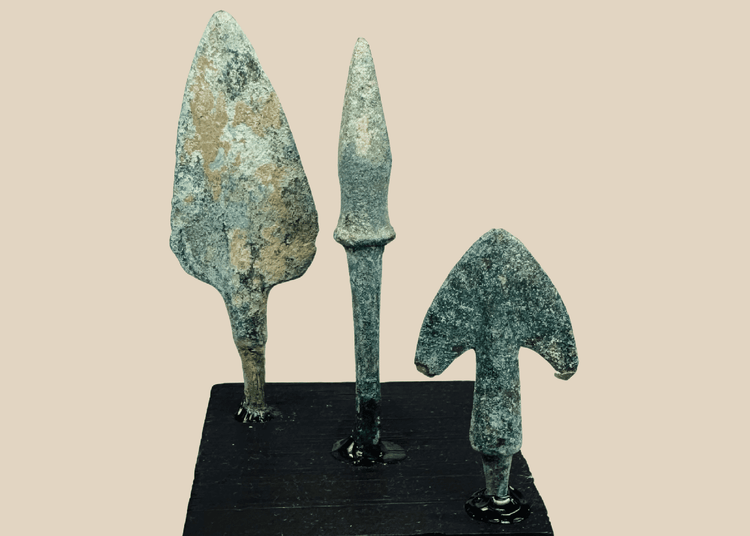
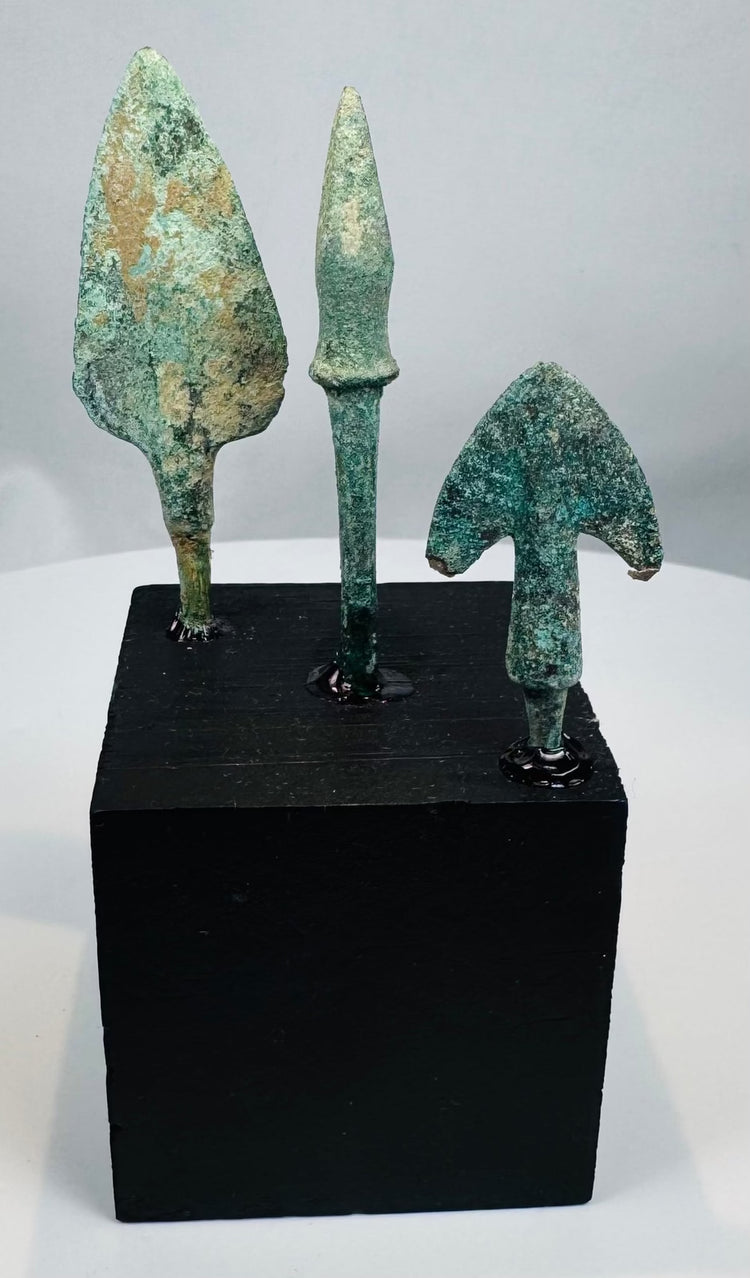
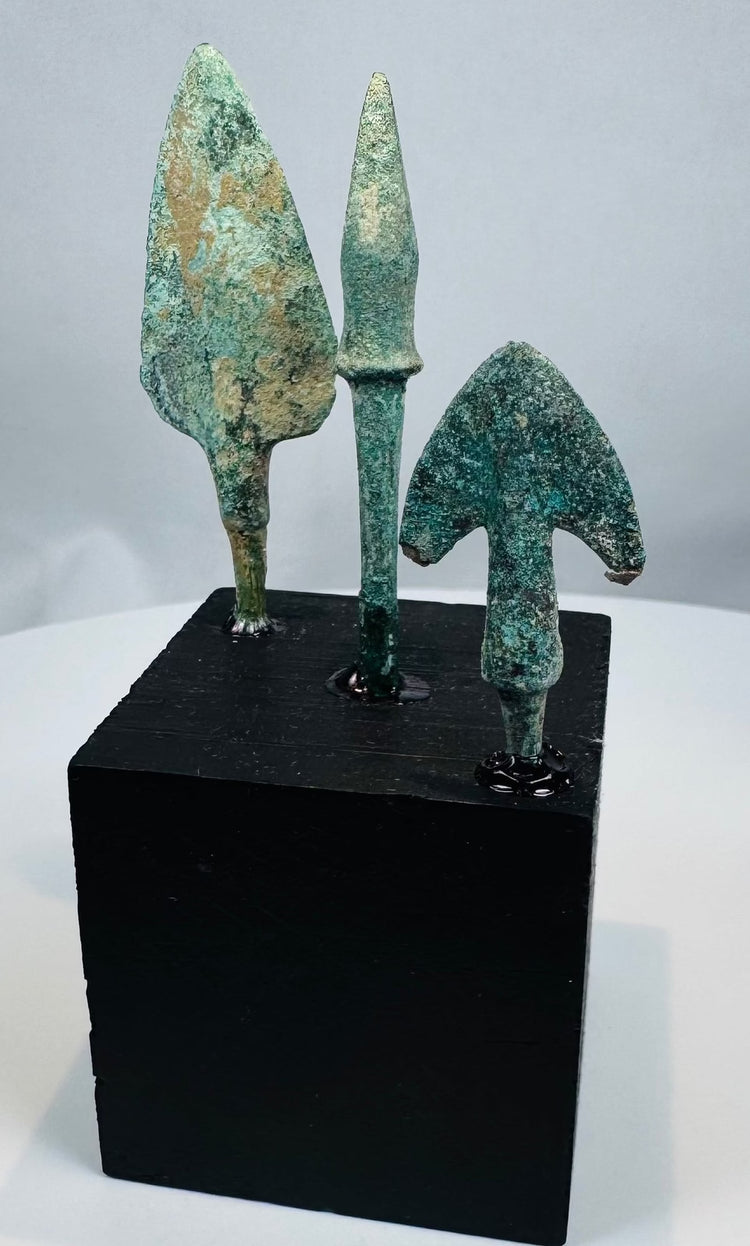
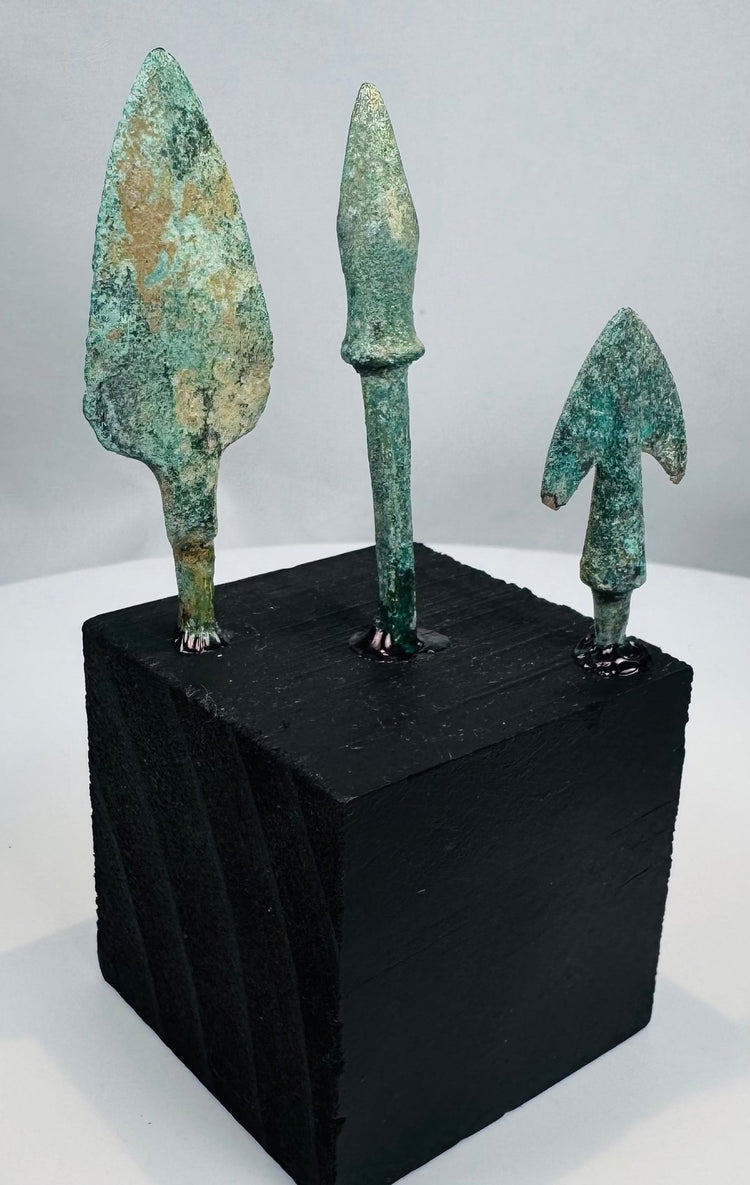
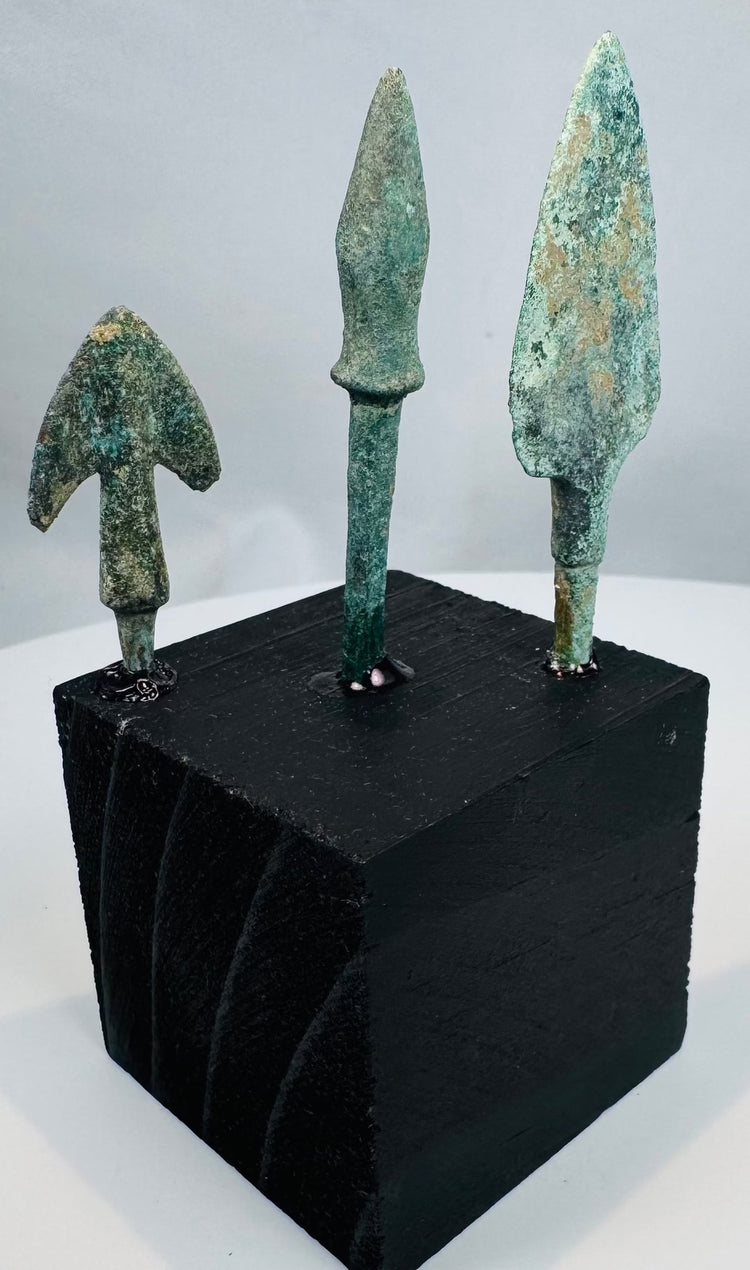
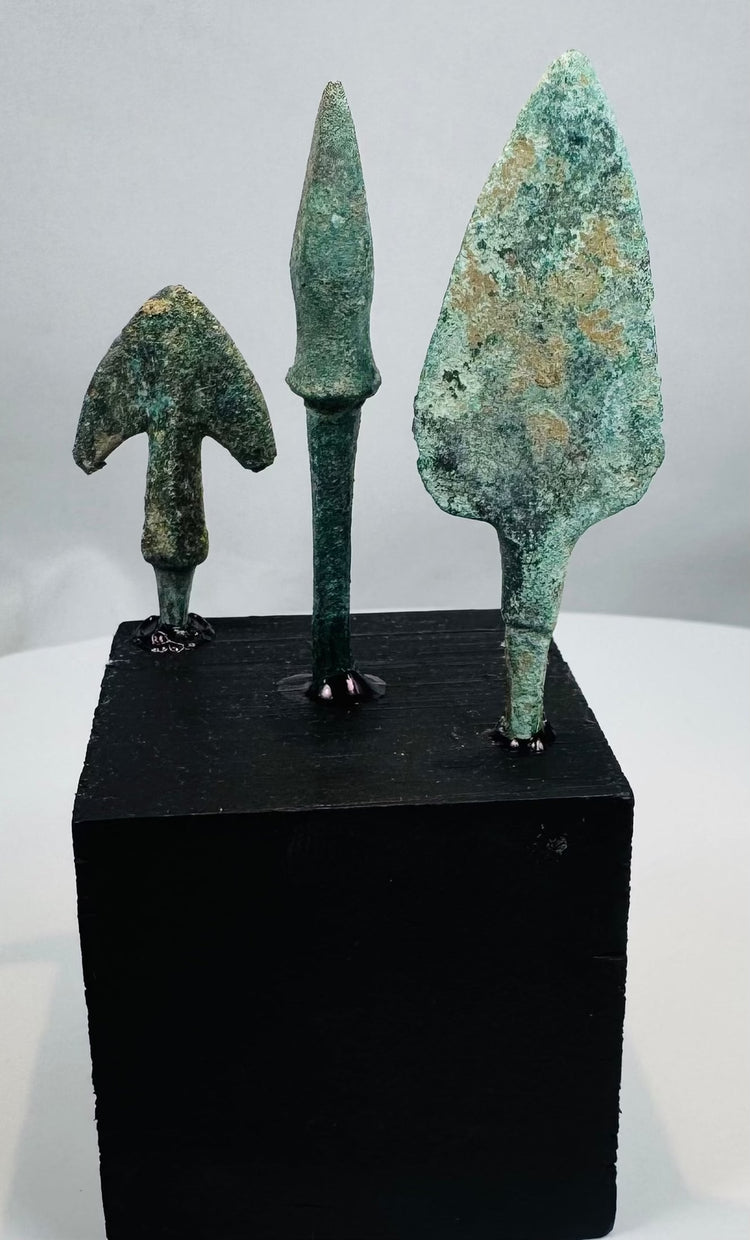
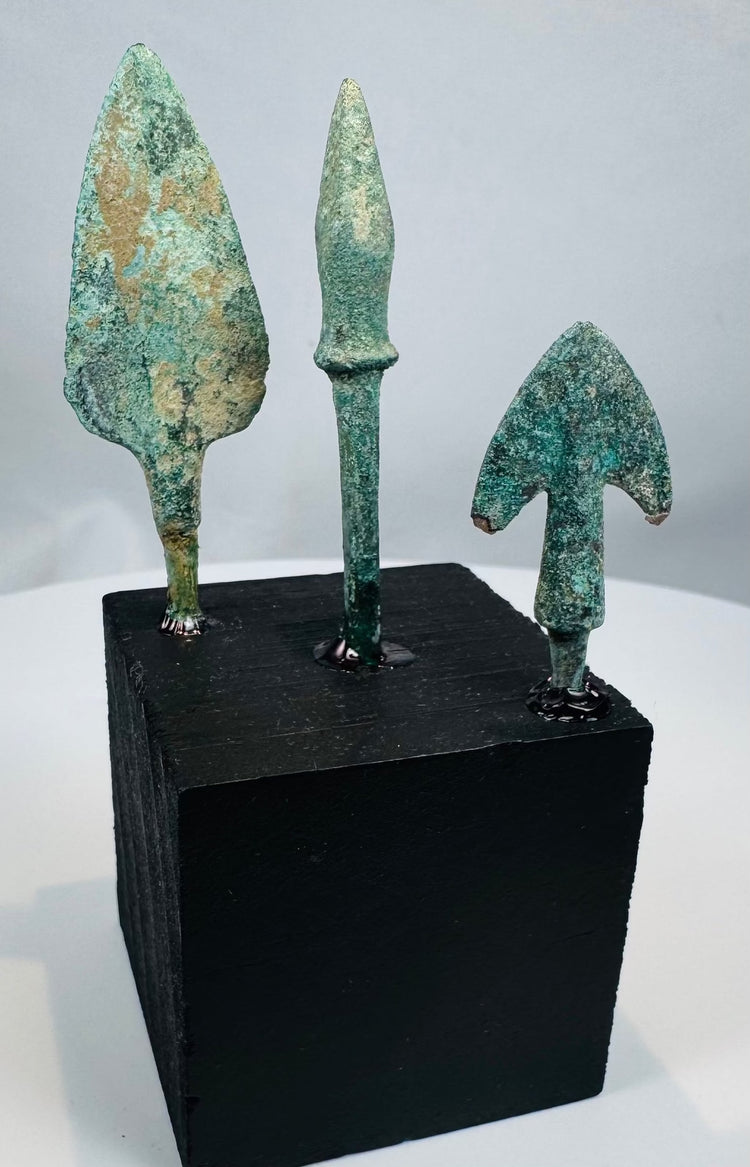
Meseta iraní antigua | Puntas de proyectil de bronce sobre expositor | Bronce Final – Hierro Temprano | Circa 1400 – 1000 a.C.
Descripción
Más
Menos
Contexto histórico y origen
Región: Asia occidental, probablemente la meseta iraní
Material: Bronce fundido / aleación de cobre
Periodo: Edad del Bronce tardía – Edad del Hierro temprana, c. siglo XIV-X a. C.
Descripción
Este grupo montado comprende tres puntas de proyectil de bronce de Asia Occidental que datan ampliamente de la Edad del Bronce tardía hasta la Edad del Hierro temprana. La colección incluye una punta ancha en forma de hoja, una punta lanceolada larga y estrecha, y una distintiva punta de flecha con púas o alada, cada una conservando una espiga superviviente y ahora presentadas juntas en una moderna base de exhibición de madera negra.
El ejemplo más grande está formado por una hoja ancha y alargada en forma de hoja que se estrecha hacia una punta redondeada. Su amplia superficie de corte y sus proporciones sustanciales sugieren que pudo haber funcionado como una pesada punta de flecha, una ligera punta de jabalina o una compacta punta de lanza. La parte inferior se estrecha en una espiga plana que originalmente se habría insertado en un asta de madera y asegurado con ataduras o adhesivo.
El ejemplo central muestra una esbelta hoja lanceolada que se eleva sobre un cuello pronunciado y una espiga rectangular extendida. Su perfil estrecho fue diseñado para concentrar la fuerza del impacto en un área pequeña, lo que lo hace adecuado para la penetración. Esta forma podría haber servido como punta de flecha, punta de dardo o componente de lanza ligera, dependiendo del tamaño y la construcción de su asta original.
El ejemplo más pequeño es una punta de flecha triangular ancha con hombros profundamente empotrados que crean dos alas laterales o púas sobresalientes. Su contorno se asemeja a un pájaro estilizado en vuelo, una forma distintiva documentada entre las antiguas puntas de flecha de bronce de Asia Occidental y particularmente asociada con tipos encontrados en la meseta iraní. Los hombros sobresalientes habrían hecho que la cabeza fuera más difícil de quitar después del impacto.
Características
- Fundido en bronce o aleación de cobre
- Incluye formas anchas en forma de hoja, lanceoladas y con púas
- El ejemplo más grande con una cuchilla de corte sustancial y espiga plana
- El ejemplo central con perfil penetrante estrecho y collar pronunciado
- El ejemplo más pequeño con distintivos hombros en forma de pájaro o cola de golondrina
- Espigas supervivientes originalmente destinadas a ser insertadas en astas de madera
- Pátina mineral verde, azul-verde, marrón y pálida en toda la superficie
- Selección representativa de un conjunto más grande de dieciséis puntas de flecha
- Montadas juntas en una moderna base de exhibición de madera negra
Significado cultural
Las puntas de proyectil de bronce fueron armas esenciales en todo el antiguo Oriente Próximo, sirviendo en la guerra, la caza y la defensa personal. Sus variadas formas reflejan diferentes requisitos funcionales, incluyendo la penetración, la capacidad de corte, la estabilidad de vuelo y la resistencia a la extracción después del impacto.
Las puntas anchas en forma de hoja ofrecían una mayor superficie de corte y eran efectivas contra objetivos sin armadura o animales de caza. Las formas lanceoladas largas y estrechas concentraban el impacto en un área más pequeña y eran más adecuadas para la penetración. Las puntas de flecha con púas o aladas estaban diseñadas para permanecer incrustadas en el objetivo, aumentando la gravedad de la herida y dificultando su extracción.
La distintiva forma alada representada por el ejemplo más pequeño es característica de ciertos tipos de proyectiles antiguos iraníes y de Asia Occidental. Su silueta se asemeja a una golondrina o un pájaro estilizado en vuelo, combinando la función práctica con una forma visualmente distintiva. Ejemplos de este tipo se asocian con frecuencia con las tradiciones militares de la Edad del Bronce tardía y la Edad del Hierro de la meseta iraní.
La armamento de bronce siguió siendo importante durante la transición de la Edad del Bronce a la Edad del Hierro. Aunque el hierro se volvió gradualmente más común, el bronce continuó usándose para puntas de flecha, puntas de lanza, dagas y otros equipos militares debido a sus propiedades de fundición, durabilidad y tradiciones de fabricación establecidas.
Condición
Las tres puntas de proyectil se mantienen en buenas condiciones arqueológicas y muestran una extensa alteración superficial relacionada con la edad. Cada una exhibe incrustaciones minerales, picaduras, depósitos superficiales, decoloración, irregularidades de fundición, desgaste de los bordes y pérdidas localizadas consistentes con el entierro antiguo y la conservación a largo plazo.
El ejemplo ancho en forma de hoja conserva su forma general, pero muestra una extensa pátina verde, depósitos terrosos pálidos, irregularidad de los bordes y áreas de pérdida superficial. La punta lanceolada central permanece sustancialmente completa, con mineralización, oxidación y desgaste visibles a lo largo de su hoja, cuello y espiga. El ejemplo con púas conserva su distintivo perfil alado, pero muestra desgaste, astillado localizado, irregularidades en los hombros sobresalientes y una fuerte pátina.
Los objetos se han fijado permanentemente a una base de exhibición de madera negra moderna con material de montaje visible. La base exhibe pequeños arañazos, desgaste por manipulación e irregularidades superficiales.
Dimensiones (aproximadas)
Altura total de la exhibición: 4.5 in
Edad (aproximada)
3.025–3.425 años de antigüedad
Procedencia
Anteriormente parte de una colección privada de Londres, Reino Unido, reunida durante la década de 1990.
Más información
Vea una punta de flecha de bronce antigua relacionada en la colección de El Museo Metropolitano de Arte
Explore nuestra Colección de Armas, Armaduras y Armamento Histórico
Descripción
Contexto histórico y origen
Región: Asia occidental, probablemente la meseta iraní
Material: Bronce fundido / aleación de cobre
Periodo: Edad del Bronce tardía – Edad del Hierro temprana, c. siglo XIV-X a. C.
Descripción
Este grupo montado comprende tres puntas de proyectil de bronce de Asia Occidental que datan ampliamente de la Edad del Bronce tardía hasta la Edad del Hierro temprana. La colección incluye una punta ancha en forma de hoja, una punta lanceolada larga y estrecha, y una distintiva punta de flecha con púas o alada, cada una conservando una espiga superviviente y ahora presentadas juntas en una moderna base de exhibición de madera negra.
El ejemplo más grande está formado por una hoja ancha y alargada en forma de hoja que se estrecha hacia una punta redondeada. Su amplia superficie de corte y sus proporciones sustanciales sugieren que pudo haber funcionado como una pesada punta de flecha, una ligera punta de jabalina o una compacta punta de lanza. La parte inferior se estrecha en una espiga plana que originalmente se habría insertado en un asta de madera y asegurado con ataduras o adhesivo.
El ejemplo central muestra una esbelta hoja lanceolada que se eleva sobre un cuello pronunciado y una espiga rectangular extendida. Su perfil estrecho fue diseñado para concentrar la fuerza del impacto en un área pequeña, lo que lo hace adecuado para la penetración. Esta forma podría haber servido como punta de flecha, punta de dardo o componente de lanza ligera, dependiendo del tamaño y la construcción de su asta original.
El ejemplo más pequeño es una punta de flecha triangular ancha con hombros profundamente empotrados que crean dos alas laterales o púas sobresalientes. Su contorno se asemeja a un pájaro estilizado en vuelo, una forma distintiva documentada entre las antiguas puntas de flecha de bronce de Asia Occidental y particularmente asociada con tipos encontrados en la meseta iraní. Los hombros sobresalientes habrían hecho que la cabeza fuera más difícil de quitar después del impacto.
Características
- Fundido en bronce o aleación de cobre
- Incluye formas anchas en forma de hoja, lanceoladas y con púas
- El ejemplo más grande con una cuchilla de corte sustancial y espiga plana
- El ejemplo central con perfil penetrante estrecho y collar pronunciado
- El ejemplo más pequeño con distintivos hombros en forma de pájaro o cola de golondrina
- Espigas supervivientes originalmente destinadas a ser insertadas en astas de madera
- Pátina mineral verde, azul-verde, marrón y pálida en toda la superficie
- Selección representativa de un conjunto más grande de dieciséis puntas de flecha
- Montadas juntas en una moderna base de exhibición de madera negra
Significado cultural
Las puntas de proyectil de bronce fueron armas esenciales en todo el antiguo Oriente Próximo, sirviendo en la guerra, la caza y la defensa personal. Sus variadas formas reflejan diferentes requisitos funcionales, incluyendo la penetración, la capacidad de corte, la estabilidad de vuelo y la resistencia a la extracción después del impacto.
Las puntas anchas en forma de hoja ofrecían una mayor superficie de corte y eran efectivas contra objetivos sin armadura o animales de caza. Las formas lanceoladas largas y estrechas concentraban el impacto en un área más pequeña y eran más adecuadas para la penetración. Las puntas de flecha con púas o aladas estaban diseñadas para permanecer incrustadas en el objetivo, aumentando la gravedad de la herida y dificultando su extracción.
La distintiva forma alada representada por el ejemplo más pequeño es característica de ciertos tipos de proyectiles antiguos iraníes y de Asia Occidental. Su silueta se asemeja a una golondrina o un pájaro estilizado en vuelo, combinando la función práctica con una forma visualmente distintiva. Ejemplos de este tipo se asocian con frecuencia con las tradiciones militares de la Edad del Bronce tardía y la Edad del Hierro de la meseta iraní.
La armamento de bronce siguió siendo importante durante la transición de la Edad del Bronce a la Edad del Hierro. Aunque el hierro se volvió gradualmente más común, el bronce continuó usándose para puntas de flecha, puntas de lanza, dagas y otros equipos militares debido a sus propiedades de fundición, durabilidad y tradiciones de fabricación establecidas.
Condición
Las tres puntas de proyectil se mantienen en buenas condiciones arqueológicas y muestran una extensa alteración superficial relacionada con la edad. Cada una exhibe incrustaciones minerales, picaduras, depósitos superficiales, decoloración, irregularidades de fundición, desgaste de los bordes y pérdidas localizadas consistentes con el entierro antiguo y la conservación a largo plazo.
El ejemplo ancho en forma de hoja conserva su forma general, pero muestra una extensa pátina verde, depósitos terrosos pálidos, irregularidad de los bordes y áreas de pérdida superficial. La punta lanceolada central permanece sustancialmente completa, con mineralización, oxidación y desgaste visibles a lo largo de su hoja, cuello y espiga. El ejemplo con púas conserva su distintivo perfil alado, pero muestra desgaste, astillado localizado, irregularidades en los hombros sobresalientes y una fuerte pátina.
Los objetos se han fijado permanentemente a una base de exhibición de madera negra moderna con material de montaje visible. La base exhibe pequeños arañazos, desgaste por manipulación e irregularidades superficiales.
Dimensiones (aproximadas)
Altura total de la exhibición: 4.5 in
Edad (aproximada)
3.025–3.425 años de antigüedad
Procedencia
Anteriormente parte de una colección privada de Londres, Reino Unido, reunida durante la década de 1990.
Más información
Vea una punta de flecha de bronce antigua relacionada en la colección de El Museo Metropolitano de Arte
Explore nuestra Colección de Armas, Armaduras y Armamento Histórico
También te puede interesar
