


Fragmento Escultórico del Antiguo Mesoamérica | Figura Adornada con Nariguera | Circa 300 a. C. – 600 d. C.
- Precio habitual
- $350.00
- Precio de venta
- $350.00
- Precio habitual
No se pudo cargar la disponibilidad de retiro







Fragmento Escultórico del Antiguo Mesoamérica | Figura Adornada con Nariguera | Circa 300 a. C. – 600 d. C.
Descripción
Más
Menos
Contexto histórico y origen
Región: Mesoamérica, probablemente Veracruz o Región de la Costa del Golfo, México
Material: Terracota con vestigios de depósitos minerales e incrustaciones de tierra
Periodo: Periodo Precolombino Tardío, ca. 300 a. C. – 600 d. C.
Descripción
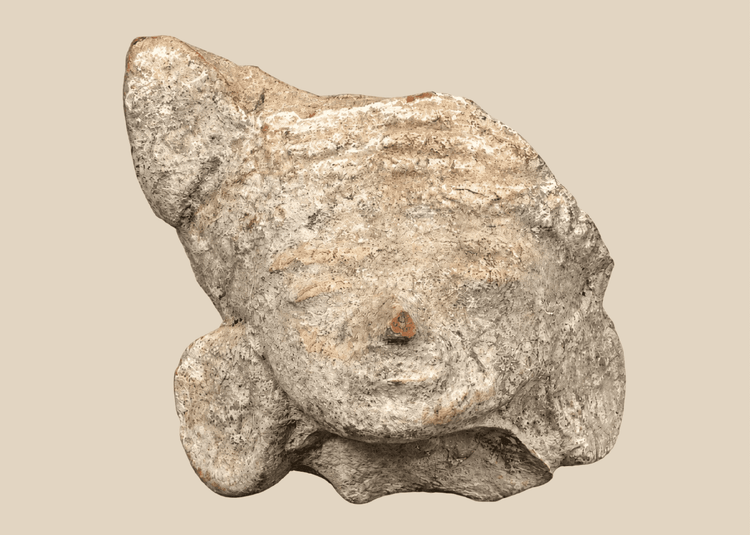
Este intrigante fragmento de cabeza de terracota precolombina representa la parte superviviente de una figura ceremonial o funeraria más grande del antiguo Mesoamérica. El fragmento muestra un rostro humano estilizado con los ojos cerrados, una nariz ancha y una boca sutil enmarcada por grandes orejeras circulares. Sobre el rostro se eleva un elaborado tocado o peinado que alguna vez formó un elemento importante de la escultura completa.
El escultor empleó un estilo muy abstracto pero expresivo, enfatizando los rasgos faciales y las orejeras, mientras simplificaba otros detalles. Los ojos cerrados y la expresión serena sugieren una figura asociada con el ritual, la conmemoración ancestral o las tradiciones funerarias. Estas esculturas se colocaban con frecuencia en tumbas, ofrendas ceremoniales o entornos arquitectónicos sagrados donde cumplían funciones simbólicas y espirituales.
Aunque fragmentario, los rasgos supervivientes muestran las convenciones artísticas comúnmente asociadas con las culturas antiguas de la Costa del Golfo y las mesoamericanas vecinas, donde los elaborados tocados y adornos para las orejas a menudo significaban estatus, linaje o autoridad religiosa. La superficie muy erosionada y las concreciones minerales atestiguan además la considerable antigüedad del objeto y su larga historia de entierro.
Características
- Auténtico fragmento de cabeza de terracota precolombina
- Rostro humano estilizado con ojos cerrados y expresión serena
- Grandes adornos circulares para las orejas
- Tocado o peinado elaborado aún visible
- Atractivo desgaste arqueológico y depósitos de entierro
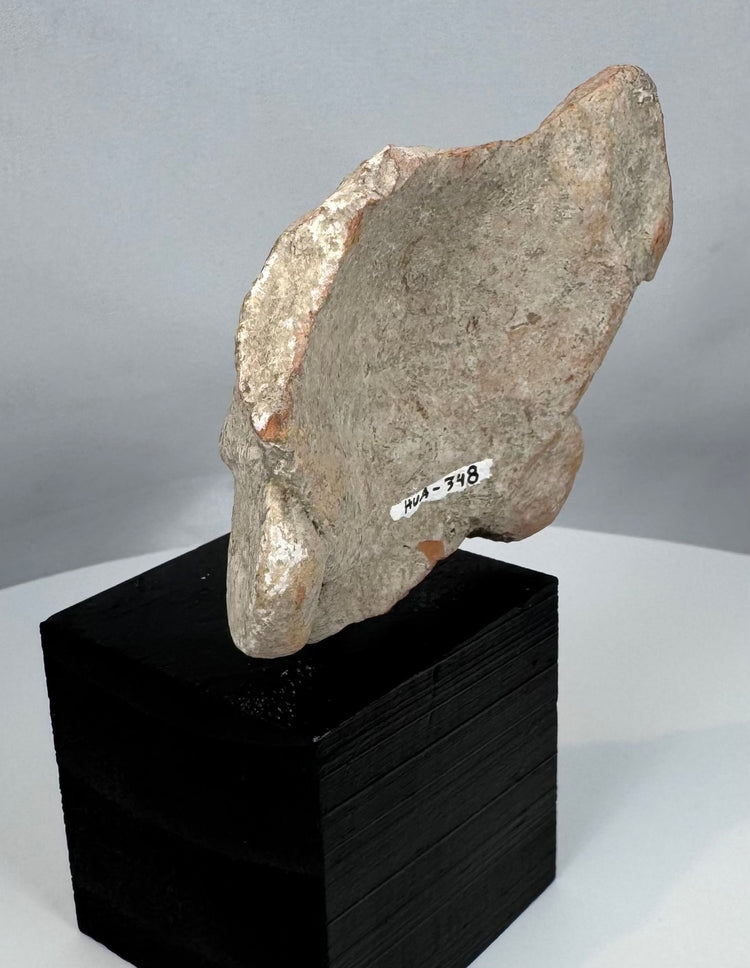
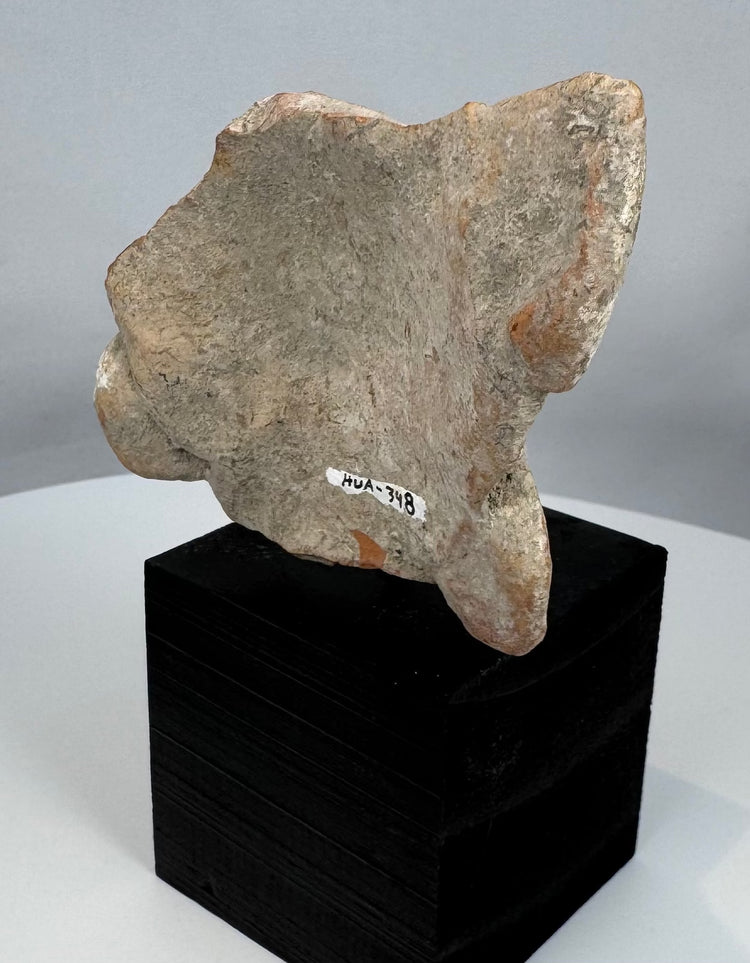
- Montado en un soporte de exhibición personalizado
Importancia histórica
Las figuras de terracota y las esculturas de efigies desempeñaron un papel importante en toda la antigua Mesoamérica, sirviendo como ofrendas funerarias, objetos rituales, representaciones ancestrales y expresiones de identidad social. Los tocados y las orejeras se usaban con frecuencia para denotar rango, estatus o autoridad espiritual, lo que los convertía en marcadores importantes dentro de la cultura visual antigua.
Fragmentos como este brindan información valiosa sobre las tradiciones artísticas y las creencias religiosas de las sociedades precolombinas.
Condición
Estado fragmentario como se esperaba. La escultura original presenta pérdidas. Desgaste de la superficie, depósitos minerales, abrasiones, astillas y áreas de incrustación consistentes con la edad y el entierro. Montado para una exhibición estable.
Dimensiones (aproximadas)
Altura: 4,75 pulgadas
Ancho: 2 pulgadas
Profundidad: 2 pulgadas
Edad (aproximada)
1.400–2.300 años de antigüedad
Procedencia
De una colección privada en Fayetteville, Arkansas, EE. UU. Adquirido de una finca privada de Fayetteville reunida entre 1960 y 2024. Anteriormente en la colección de Artemis Fine Arts Gallery.
Más información
Descubra la historia, las culturas y las civilizaciones de la antigua Mesoamérica a través de la Biblioteca de recursos de National Geographic
Explore nuestra Colección de artefactos precolombinos antiguos
Descripción
Contexto histórico y origen
Región: Mesoamérica, probablemente Veracruz o Región de la Costa del Golfo, México
Material: Terracota con vestigios de depósitos minerales e incrustaciones de tierra
Periodo: Periodo Precolombino Tardío, ca. 300 a. C. – 600 d. C.
Descripción
Este intrigante fragmento de cabeza de terracota precolombina representa la parte superviviente de una figura ceremonial o funeraria más grande del antiguo Mesoamérica. El fragmento muestra un rostro humano estilizado con los ojos cerrados, una nariz ancha y una boca sutil enmarcada por grandes orejeras circulares. Sobre el rostro se eleva un elaborado tocado o peinado que alguna vez formó un elemento importante de la escultura completa.
El escultor empleó un estilo muy abstracto pero expresivo, enfatizando los rasgos faciales y las orejeras, mientras simplificaba otros detalles. Los ojos cerrados y la expresión serena sugieren una figura asociada con el ritual, la conmemoración ancestral o las tradiciones funerarias. Estas esculturas se colocaban con frecuencia en tumbas, ofrendas ceremoniales o entornos arquitectónicos sagrados donde cumplían funciones simbólicas y espirituales.
Aunque fragmentario, los rasgos supervivientes muestran las convenciones artísticas comúnmente asociadas con las culturas antiguas de la Costa del Golfo y las mesoamericanas vecinas, donde los elaborados tocados y adornos para las orejas a menudo significaban estatus, linaje o autoridad religiosa. La superficie muy erosionada y las concreciones minerales atestiguan además la considerable antigüedad del objeto y su larga historia de entierro.
Características
- Auténtico fragmento de cabeza de terracota precolombina
- Rostro humano estilizado con ojos cerrados y expresión serena
- Grandes adornos circulares para las orejas
- Tocado o peinado elaborado aún visible
- Atractivo desgaste arqueológico y depósitos de entierro
- Montado en un soporte de exhibición personalizado
Importancia histórica
Las figuras de terracota y las esculturas de efigies desempeñaron un papel importante en toda la antigua Mesoamérica, sirviendo como ofrendas funerarias, objetos rituales, representaciones ancestrales y expresiones de identidad social. Los tocados y las orejeras se usaban con frecuencia para denotar rango, estatus o autoridad espiritual, lo que los convertía en marcadores importantes dentro de la cultura visual antigua.
Fragmentos como este brindan información valiosa sobre las tradiciones artísticas y las creencias religiosas de las sociedades precolombinas.
Condición
Estado fragmentario como se esperaba. La escultura original presenta pérdidas. Desgaste de la superficie, depósitos minerales, abrasiones, astillas y áreas de incrustación consistentes con la edad y el entierro. Montado para una exhibición estable.
Dimensiones (aproximadas)
Altura: 4,75 pulgadas
Ancho: 2 pulgadas
Profundidad: 2 pulgadas
Edad (aproximada)
1.400–2.300 años de antigüedad
Procedencia
De una colección privada en Fayetteville, Arkansas, EE. UU. Adquirido de una finca privada de Fayetteville reunida entre 1960 y 2024. Anteriormente en la colección de Artemis Fine Arts Gallery.
Más información
Descubra la historia, las culturas y las civilizaciones de la antigua Mesoamérica a través de la Biblioteca de recursos de National Geographic
Explore nuestra Colección de artefactos precolombinos antiguos
También te puede interesar
