

Copa con asa de cerámica gris del Antiguo Cercano Oriente | Vasija de cerámica de la Edad del Hierro | Circa 1000 – 500 a. C.
- Precio habitual
- $500.00
- Precio de venta
- $500.00
- Precio habitual
No se pudo cargar la disponibilidad de retiro


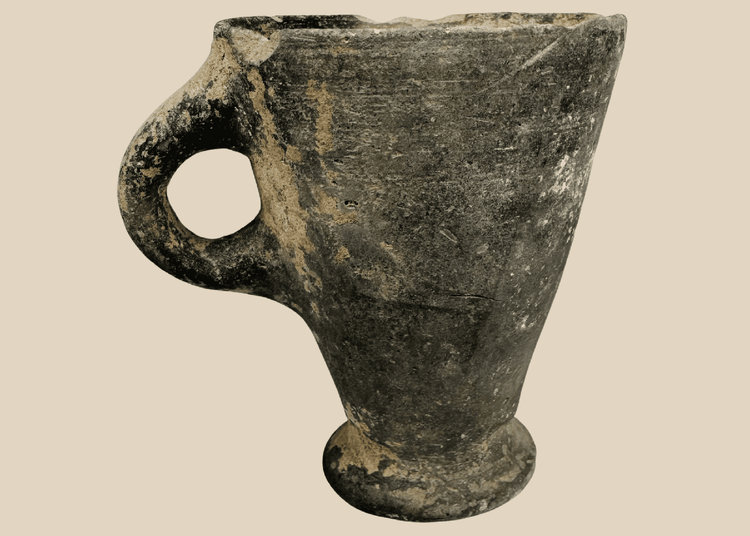
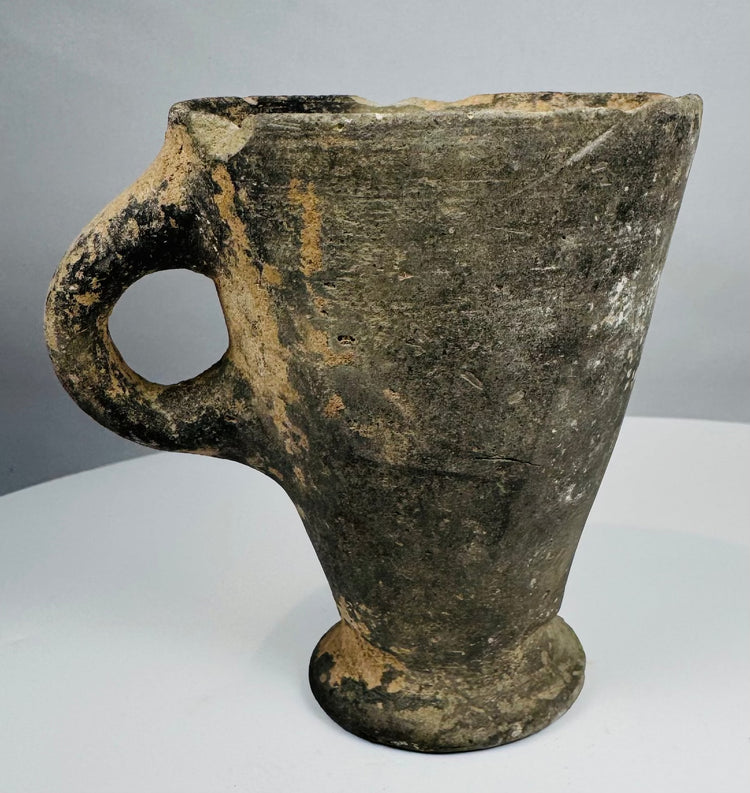
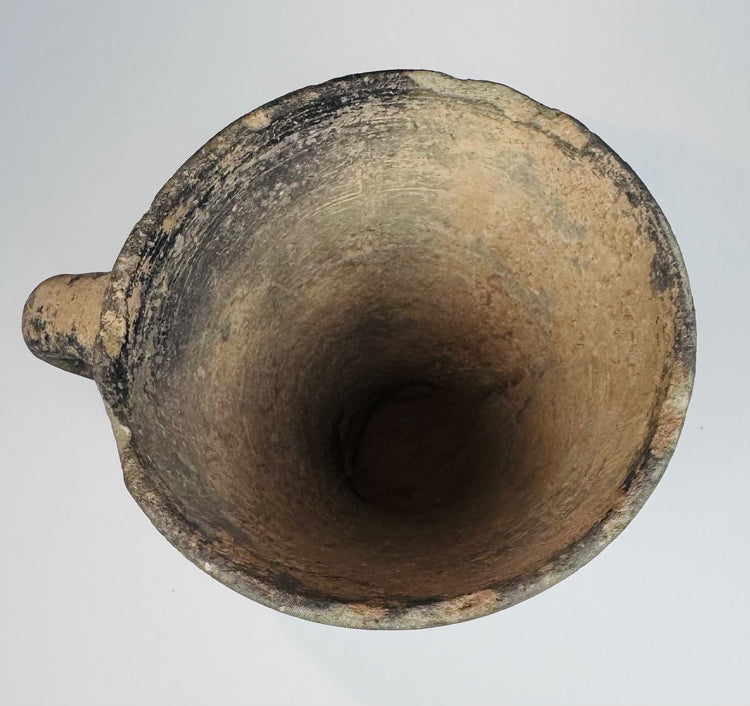
Copa con asa de cerámica gris del Antiguo Cercano Oriente | Vasija de cerámica de la Edad del Hierro | Circa 1000 – 500 a. C.
Descripción
Más
Menos
Contexto histórico y origen
Región: Cercano Oriente antiguo, posiblemente Irán o una región vecina de Asia occidental
Material: Terracota de gres con superficie bruñida oscura y concreciones minerales
Período: Edad del Hierro, primer milenio a. C., circa 1000–500 a. C.
Descripción
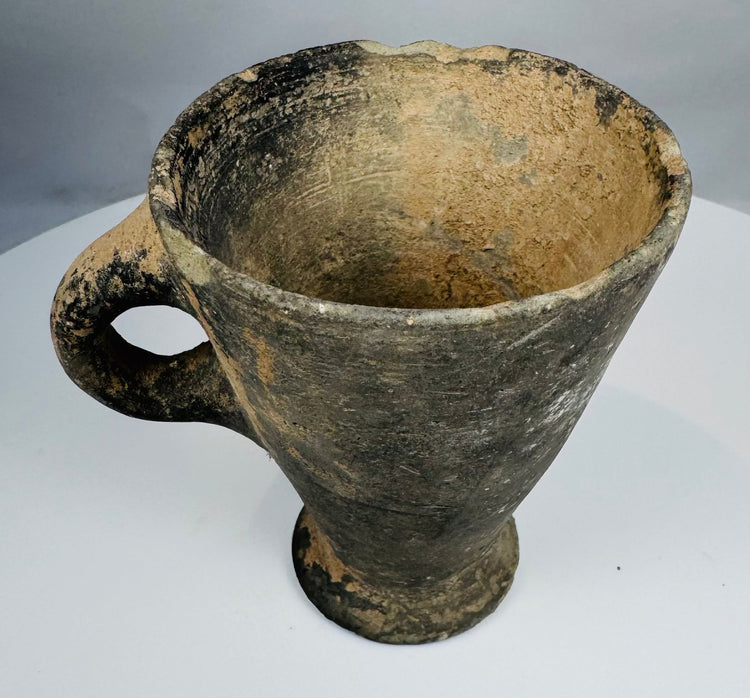
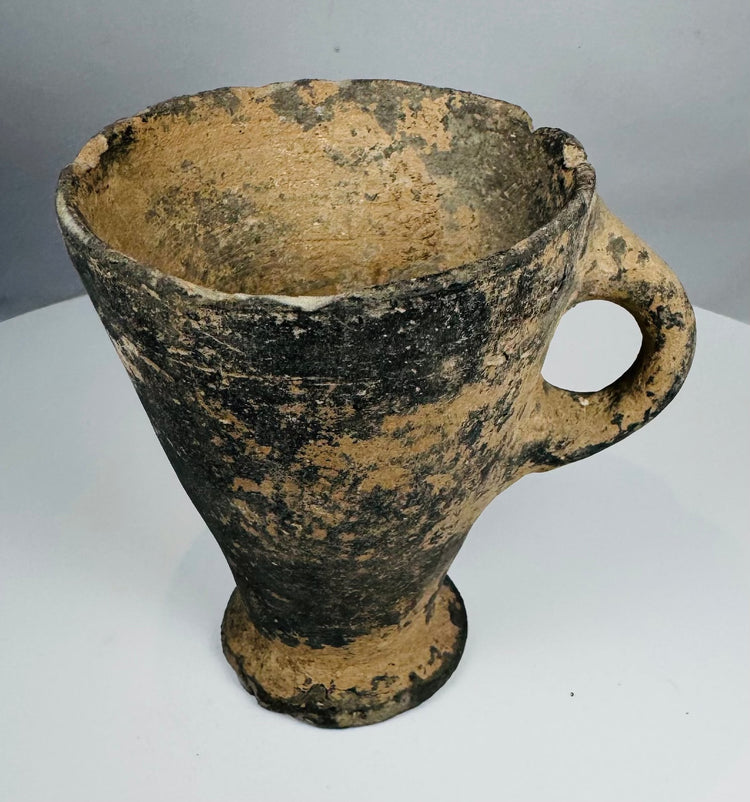
Este antiguo recipiente de cerámica de gres es una copa o cáliz cónico compacto con asa que data del primer milenio a. C.
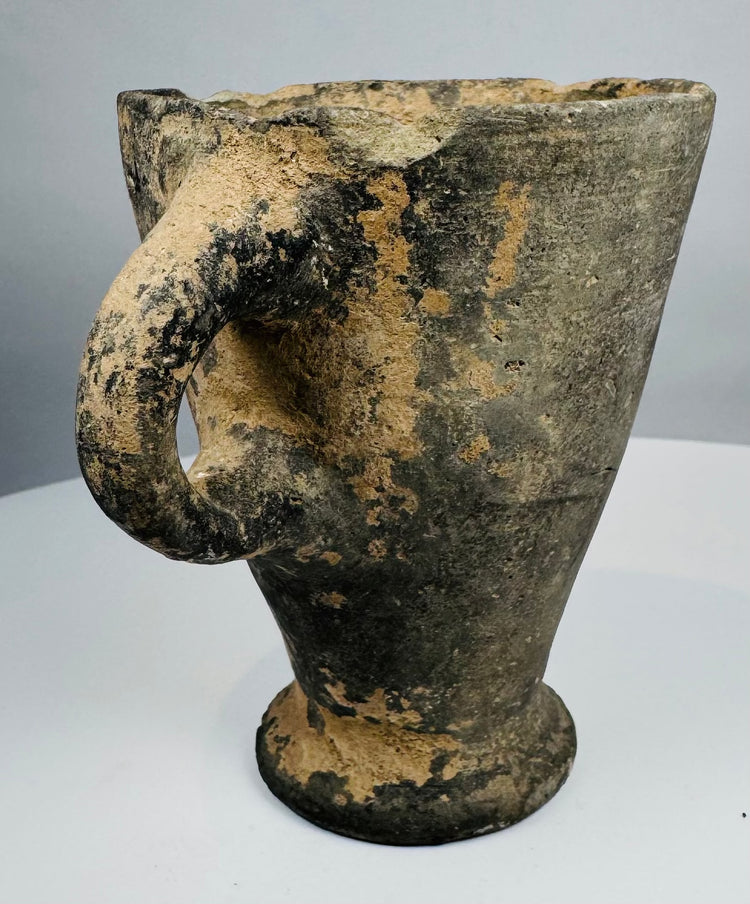
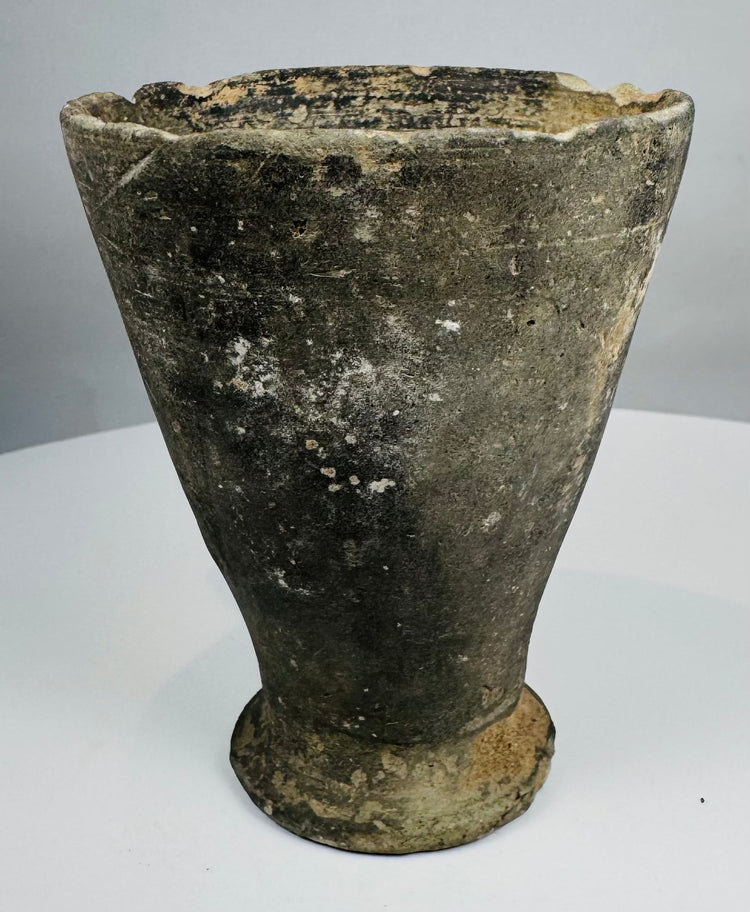
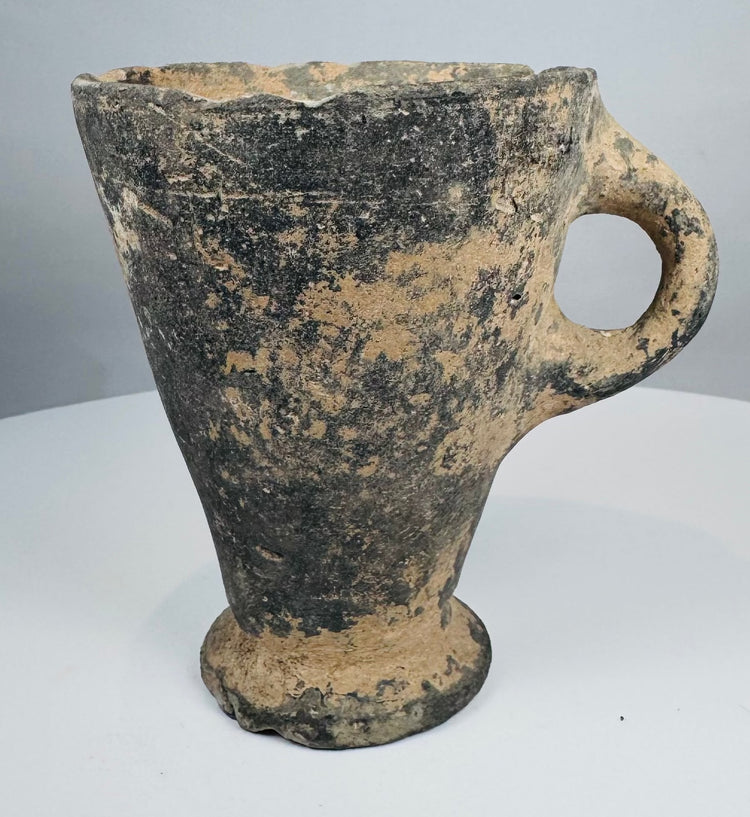
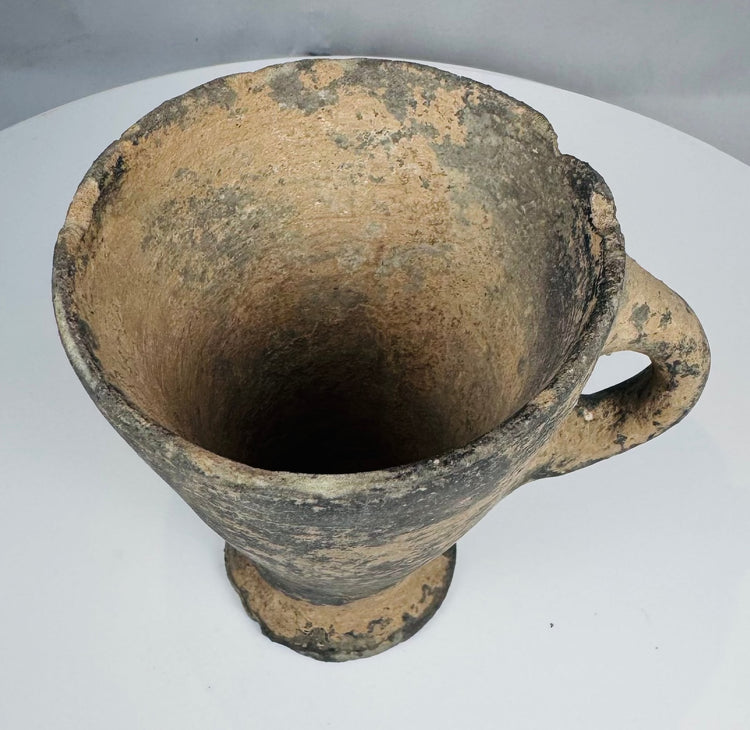
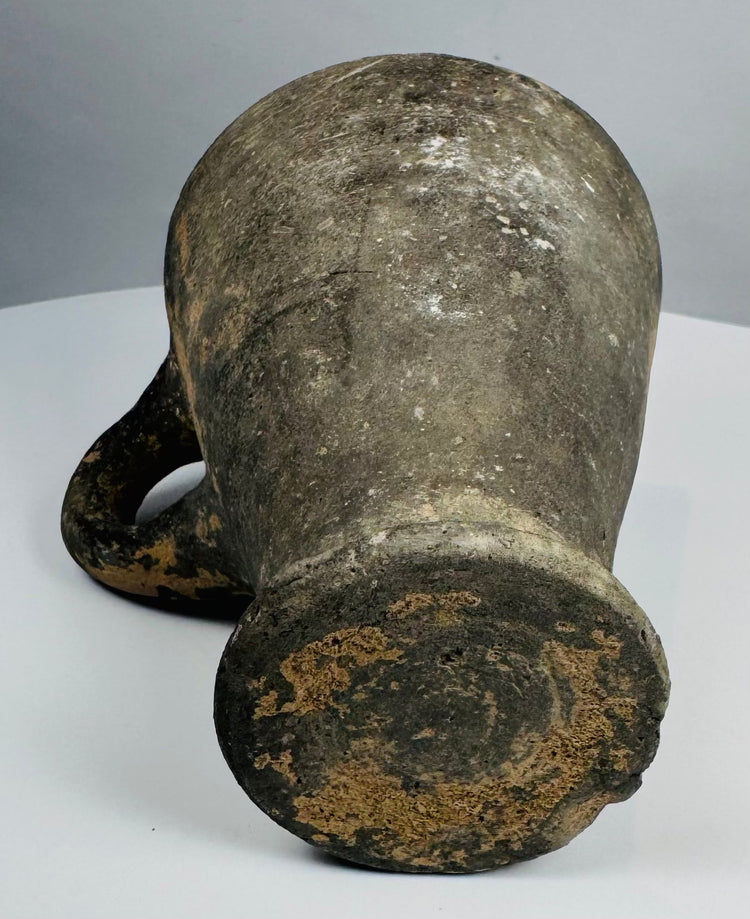
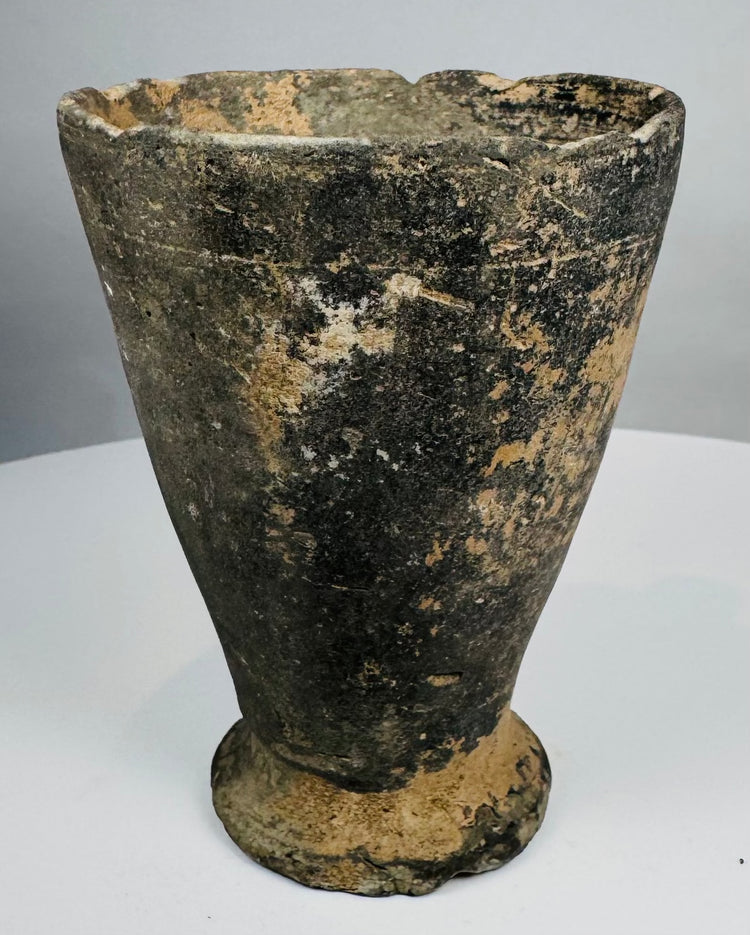
La forma consiste en un cuenco profundo y ampliamente abocinado que se estrecha hacia la parte inferior del cuerpo y descansa sobre un pie de pedestal circular elevado. Un asa de lazo sustancial se extiende desde inmediatamente debajo del borde hasta la parte superior del recipiente, proporcionando un agarre práctico y creando un perfil fuerte y distintivo.
La copa parece haber sido formada en un torno de alfarero, con sutiles marcas de torneado horizontal que permanecen visibles en el cuerpo y el interior. Su tejido cerámico subyacente es de un color gris pálido, mientras que gran parte del exterior conserva una superficie de color gris oscuro a casi negro.
Esta apariencia más oscura puede representar un acabado de gres bruñido original, condiciones de cocción, manchas de entierro acumuladas o una combinación de estos factores.
La boca ancha y el interior profundo habrían hecho que el recipiente fuera adecuado para beber, servir, medir o transferir líquidos. El pie elevado permitía que la copa se mantuviera segura mientras separaba visualmente el cuenco de la superficie debajo de él.
Aunque no se puede confirmar su uso original preciso, la forma pertenece a una larga tradición de prácticos recipientes para beber y servir con asa producidos en todo el antiguo Cercano Oriente.
Características
- Construcción de terracota de gres
- Cuenco cónico profundo y abocinado
- Asa de lazo grande aplicada
- Pie de pedestal circular elevado
- Superficie bruñida de color gris oscuro a negro
- Marcas visibles de formación con torno
- Extensos depósitos minerales y de entierro
- Tamaño compacto y fácil de exhibir
Importancia cultural
La cerámica de gres es una importante tradición cerámica asociada con varias culturas arqueológicas del antiguo Irán y del Cercano Oriente en general. Dichos recipientes se produjeron en numerosas formas funcionales, desde copas y cuencos hasta elaboradas jarras con pico, y con frecuencia se terminaban con superficies oscuras lisas o bruñidas.
Las copas con asa eran objetos domésticos prácticos utilizados en actividades relacionadas con la comida, la bebida, la preparación y el servicio. Su construcción sencilla y sus formas duraderas reflejan la vida cotidiana más directamente que los artefactos monumentales o ceremoniales.
El pie de pedestal de este ejemplo añade estabilidad y refinamiento visual, lo que indica que incluso los recipientes utilitarios ordinarios podían producirse con una cuidadosa atención a la proporción y la forma.
Condición
La vasija permanece sustancialmente intacta y estructuralmente estable, con el desgaste esperado relacionado con la edad en todas partes. El borde presenta varias astillas, pérdidas y áreas de irregularidad, incluida una pérdida más pronunciada cerca de la fijación del asa.
Se presentan astillas y abrasiones menores adicionales alrededor del pie del pedestal y el asa.
La superficie exhibe extensas concreciones minerales pálidas, depósitos de tierra, decoloración, arañazos, picaduras y pérdidas del acabado oscuro original. Se observa una grieta superficial corta, aparentemente estable, o una fisura de cocción en la parte inferior del cuerpo.
Se presentan irregularidades naturales de cocción y contornos irregulares en todas partes, consistentes con la cerámica antigua hecha a mano.
Dimensiones (aproximadas)
Altura: 4 pulgadas
Diámetro: 3 pulgadas
Edad (aproximada)
2.500–3.000 años de antigüedad
Procedencia
Anteriormente en la colección de Jack Guevrekian, Manhasset, Nueva York, un conocido numismático y coleccionista de Nueva York con un interés particular en la numismática armenia, antigüedades y material antiguo. Guevrekian reunió una extensa colección durante varias décadas, una parte significativa de la cual fue ofrecida públicamente como The Jack Guevrekian Collection por la Numismatic & Antiquarian Service Corporation of America en Nueva York en 1977.
Posteriormente conservada en una colección privada de la ciudad de Nueva York.
Más tarde fue manejada por la Howard S. Rose Gallery / Arte Primitivo en Nueva York, una galería y casa de subastas especializada de larga trayectoria en antigüedades y obras de arte precolombinas, clásicas, egipcias, asiáticas y etnográficas. La galería ha realizado subastas, exposiciones y ventas privadas especializadas desde sus instalaciones en Nueva York.
Posteriormente manejada por Artemis Fine Arts / Artemis Gallery, un especialista con sede en Colorado en antigüedades, arte antiguo, material etnográfico y bellas artes que ha estado activo en el campo desde 1993.
Luego pasó a formar parte de una colección privada en Toronto, Ontario, Canadá.
Más información
Descubra una copa de gres de la Edad del Hierro relacionada de Irán en la colección de El Museo Metropolitano de Arte
Explore nuestra Colección de Cerámica, Alfarería y Arte del Patrimonio Antiguo
Descripción
Contexto histórico y origen
Región: Cercano Oriente antiguo, posiblemente Irán o una región vecina de Asia occidental
Material: Terracota de gres con superficie bruñida oscura y concreciones minerales
Período: Edad del Hierro, primer milenio a. C., circa 1000–500 a. C.
Descripción
Este antiguo recipiente de cerámica de gres es una copa o cáliz cónico compacto con asa que data del primer milenio a. C.
La forma consiste en un cuenco profundo y ampliamente abocinado que se estrecha hacia la parte inferior del cuerpo y descansa sobre un pie de pedestal circular elevado. Un asa de lazo sustancial se extiende desde inmediatamente debajo del borde hasta la parte superior del recipiente, proporcionando un agarre práctico y creando un perfil fuerte y distintivo.
La copa parece haber sido formada en un torno de alfarero, con sutiles marcas de torneado horizontal que permanecen visibles en el cuerpo y el interior. Su tejido cerámico subyacente es de un color gris pálido, mientras que gran parte del exterior conserva una superficie de color gris oscuro a casi negro.
Esta apariencia más oscura puede representar un acabado de gres bruñido original, condiciones de cocción, manchas de entierro acumuladas o una combinación de estos factores.
La boca ancha y el interior profundo habrían hecho que el recipiente fuera adecuado para beber, servir, medir o transferir líquidos. El pie elevado permitía que la copa se mantuviera segura mientras separaba visualmente el cuenco de la superficie debajo de él.
Aunque no se puede confirmar su uso original preciso, la forma pertenece a una larga tradición de prácticos recipientes para beber y servir con asa producidos en todo el antiguo Cercano Oriente.
Características
- Construcción de terracota de gres
- Cuenco cónico profundo y abocinado
- Asa de lazo grande aplicada
- Pie de pedestal circular elevado
- Superficie bruñida de color gris oscuro a negro
- Marcas visibles de formación con torno
- Extensos depósitos minerales y de entierro
- Tamaño compacto y fácil de exhibir
Importancia cultural
La cerámica de gres es una importante tradición cerámica asociada con varias culturas arqueológicas del antiguo Irán y del Cercano Oriente en general. Dichos recipientes se produjeron en numerosas formas funcionales, desde copas y cuencos hasta elaboradas jarras con pico, y con frecuencia se terminaban con superficies oscuras lisas o bruñidas.
Las copas con asa eran objetos domésticos prácticos utilizados en actividades relacionadas con la comida, la bebida, la preparación y el servicio. Su construcción sencilla y sus formas duraderas reflejan la vida cotidiana más directamente que los artefactos monumentales o ceremoniales.
El pie de pedestal de este ejemplo añade estabilidad y refinamiento visual, lo que indica que incluso los recipientes utilitarios ordinarios podían producirse con una cuidadosa atención a la proporción y la forma.
Condición
La vasija permanece sustancialmente intacta y estructuralmente estable, con el desgaste esperado relacionado con la edad en todas partes. El borde presenta varias astillas, pérdidas y áreas de irregularidad, incluida una pérdida más pronunciada cerca de la fijación del asa.
Se presentan astillas y abrasiones menores adicionales alrededor del pie del pedestal y el asa.
La superficie exhibe extensas concreciones minerales pálidas, depósitos de tierra, decoloración, arañazos, picaduras y pérdidas del acabado oscuro original. Se observa una grieta superficial corta, aparentemente estable, o una fisura de cocción en la parte inferior del cuerpo.
Se presentan irregularidades naturales de cocción y contornos irregulares en todas partes, consistentes con la cerámica antigua hecha a mano.
Dimensiones (aproximadas)
Altura: 4 pulgadas
Diámetro: 3 pulgadas
Edad (aproximada)
2.500–3.000 años de antigüedad
Procedencia
Anteriormente en la colección de Jack Guevrekian, Manhasset, Nueva York, un conocido numismático y coleccionista de Nueva York con un interés particular en la numismática armenia, antigüedades y material antiguo. Guevrekian reunió una extensa colección durante varias décadas, una parte significativa de la cual fue ofrecida públicamente como The Jack Guevrekian Collection por la Numismatic & Antiquarian Service Corporation of America en Nueva York en 1977.
Posteriormente conservada en una colección privada de la ciudad de Nueva York.
Más tarde fue manejada por la Howard S. Rose Gallery / Arte Primitivo en Nueva York, una galería y casa de subastas especializada de larga trayectoria en antigüedades y obras de arte precolombinas, clásicas, egipcias, asiáticas y etnográficas. La galería ha realizado subastas, exposiciones y ventas privadas especializadas desde sus instalaciones en Nueva York.
Posteriormente manejada por Artemis Fine Arts / Artemis Gallery, un especialista con sede en Colorado en antigüedades, arte antiguo, material etnográfico y bellas artes que ha estado activo en el campo desde 1993.
Luego pasó a formar parte de una colección privada en Toronto, Ontario, Canadá.
Más información
Descubra una copa de gres de la Edad del Hierro relacionada de Irán en la colección de El Museo Metropolitano de Arte
Explore nuestra Colección de Cerámica, Alfarería y Arte del Patrimonio Antiguo
También te puede interesar
