


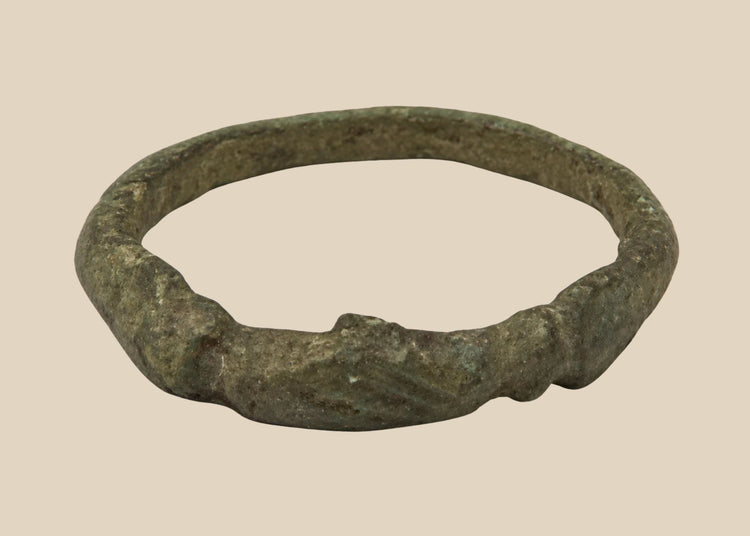
Ancient Roman Bronze Finger Ring with Incised Palm Branch | Circa 2nd–4th Century CE
- Precio habitual
- $275.00
- Precio de venta
- $275.00
- Precio habitual
No se pudo cargar la disponibilidad de retiro


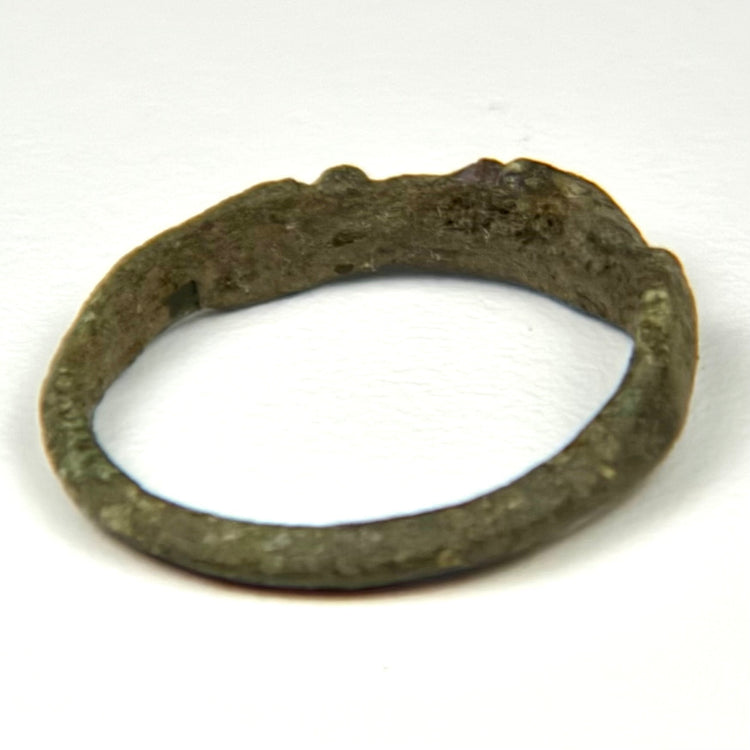
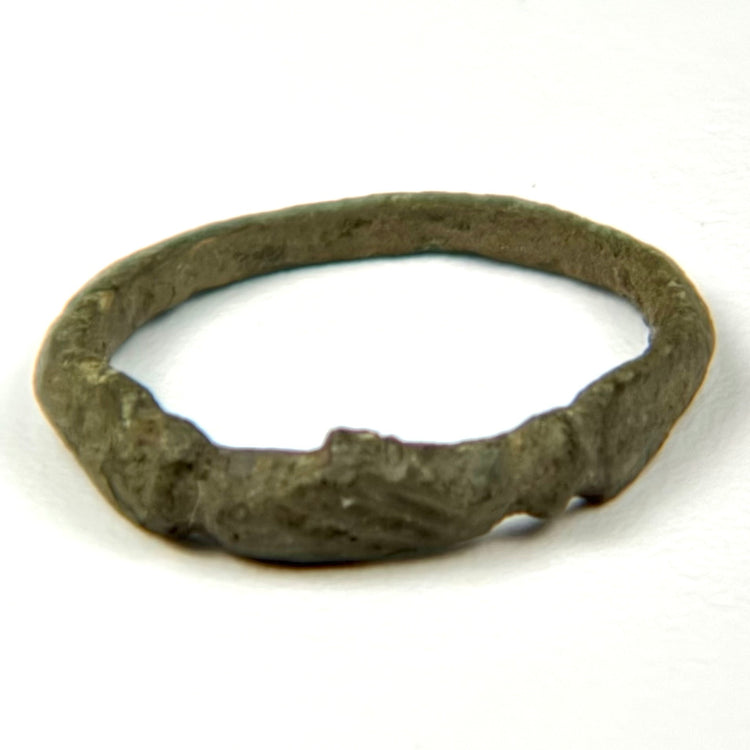
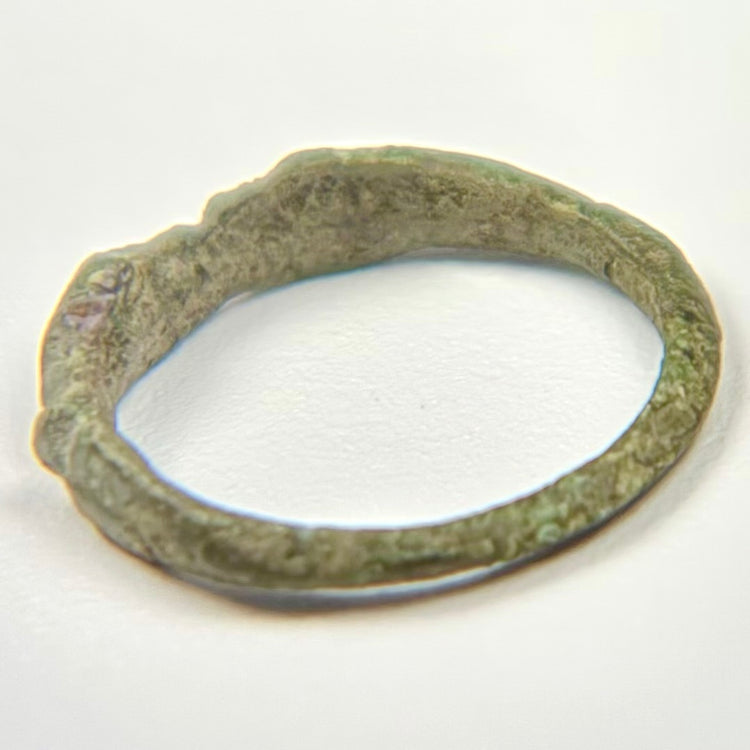
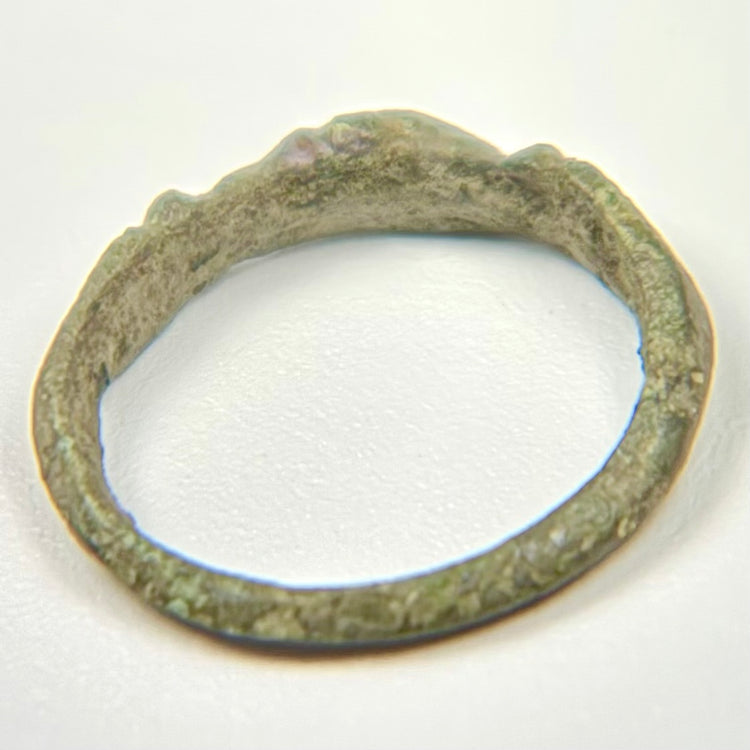
Ancient Roman Bronze Finger Ring with Incised Palm Branch | Circa 2nd–4th Century CE
Descripción
Más
Menos
Historical Context & Origin
Region: Roman Empire, Mediterranean World
Material: Bronze (copper alloy)
Period: Roman Imperial to Late Roman Period, circa 2nd–4th century CE
Description
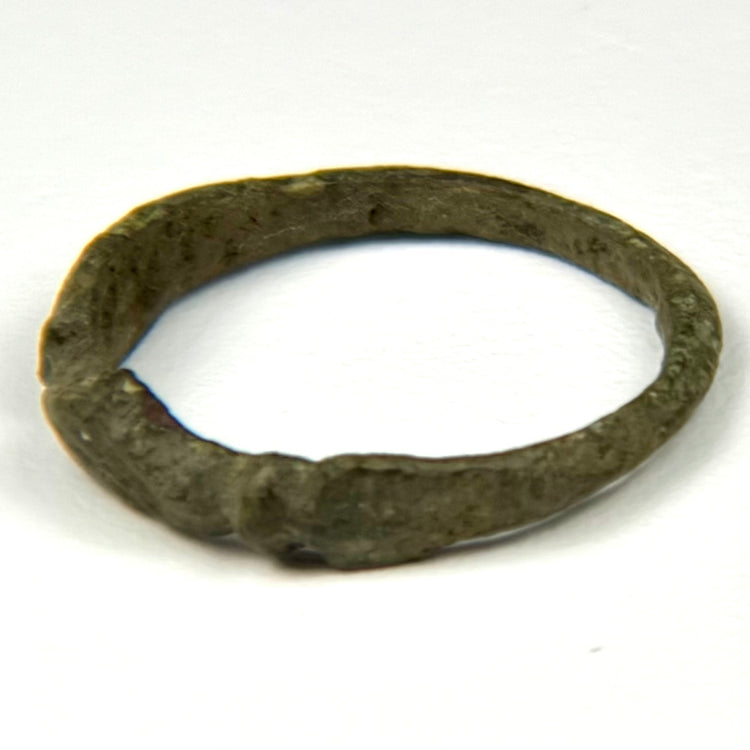
An ancient Roman bronze finger ring formed with a continuous oval hoop that broadens gradually toward the shoulders and central decorative bezel.
The front of the ring features a low, elongated bezel with a surviving incised linear motif. Although softened by centuries of wear and mineralization, the decoration appears to form a stylized palm branch or palm-frond design, composed of a central stem with diagonal engraved strokes extending outward. Comparable palm motifs are documented on Roman finger rings of the Imperial and Late Roman periods.
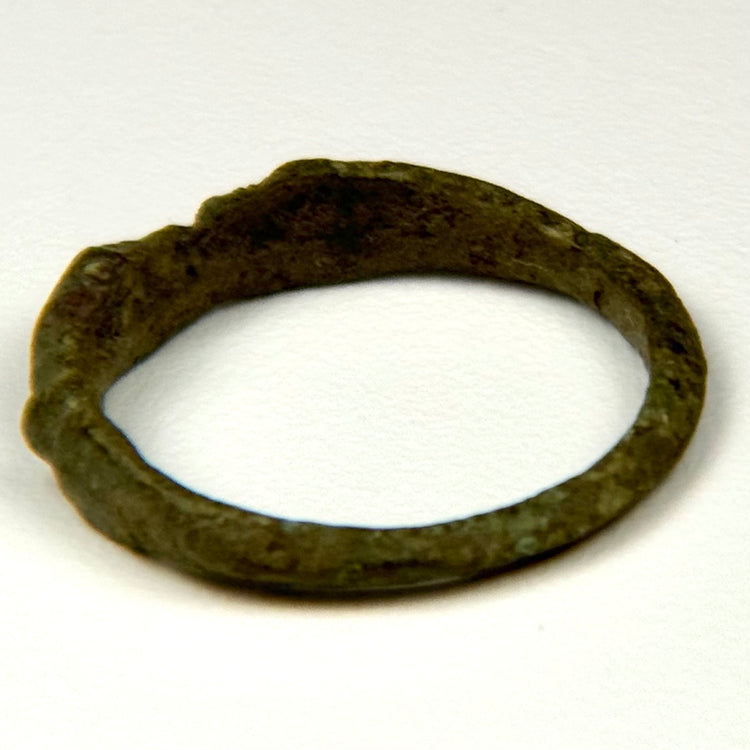
The shoulders merge directly into the bezel rather than supporting a separately mounted stone, creating a simple integrated construction characteristic of many utilitarian bronze rings from the Roman world. The hoop is slightly irregular in profile, reflecting ancient manufacture, extended use, and subsequent burial or archaeological aging.
The surface displays muted olive-brown, dark green, and earthy bronze tones with naturally developed oxidation, mineral deposits, pitting, and age-related wear. Despite the softened engraving, the surviving design remains visible and gives the ring a distinctive decorative character.
Features
- Flattened integral bezel with surviving incised decoration
- Stylized palm-branch or palm-frond motif across the bezel
- Broadening shoulders transitioning into a narrower oval hoop
- Cast copper-alloy construction
- Low-profile bezel without a separately mounted gemstone
- Natural olive-green, brown, and dark aged patina
- Surface mineralization, oxidation, and archaeological wear
- Hand-worked irregularities preserved from ancient manufacture and use
Cultural Significance
Finger rings were widely worn throughout the Roman Empire and served as personal ornaments, status objects, seals, and carriers of symbolic imagery. Bronze examples provided a more accessible alternative to precious-metal rings while still allowing their owners to display engraved motifs and personal decoration.
The palm branch was a familiar symbol in Roman visual culture and was associated with victory, triumph, honor, and achievement. Palm imagery continued into Late Antiquity, where it could acquire additional religious associations.
Condition
Ancient condition consistent with age and archaeological preservation. The ring shows substantial surface wear, oxidation, mineral deposits, patination, minor pitting, and irregularity to the hoop and bezel. The engraved palm-frond motif is worn but remains partially visible. The hoop remains substantially complete.
Dimensions (Approximate)
US Ring Size: 8.25
Age (Approximate)
1,600–1,900 years old
Provenance
Acquired in London during the 1970s. The artifact later entered the collection of Dr. Arnold Saslow, a noted numismatist and antiquarian who handled ancient coins, antiquities, and other historic objects over several decades, and was associated with Ye Olde Curiosity Shoppe in New Jersey. It was subsequently handled by Artemis Fine Arts, a U.S.-based gallery specializing in ancient, Classical, Pre-Columbian, and ethnographic art.
Learn More
Discover a comparable Roman finger ring engraved with a stylized palm branch in the collection of the British Museum
Browse our collection of Ancient Rings and Jewelry
Descripción
Historical Context & Origin
Region: Roman Empire, Mediterranean World
Material: Bronze (copper alloy)
Period: Roman Imperial to Late Roman Period, circa 2nd–4th century CE
Description
An ancient Roman bronze finger ring formed with a continuous oval hoop that broadens gradually toward the shoulders and central decorative bezel.
The front of the ring features a low, elongated bezel with a surviving incised linear motif. Although softened by centuries of wear and mineralization, the decoration appears to form a stylized palm branch or palm-frond design, composed of a central stem with diagonal engraved strokes extending outward. Comparable palm motifs are documented on Roman finger rings of the Imperial and Late Roman periods.
The shoulders merge directly into the bezel rather than supporting a separately mounted stone, creating a simple integrated construction characteristic of many utilitarian bronze rings from the Roman world. The hoop is slightly irregular in profile, reflecting ancient manufacture, extended use, and subsequent burial or archaeological aging.
The surface displays muted olive-brown, dark green, and earthy bronze tones with naturally developed oxidation, mineral deposits, pitting, and age-related wear. Despite the softened engraving, the surviving design remains visible and gives the ring a distinctive decorative character.
Features
- Flattened integral bezel with surviving incised decoration
- Stylized palm-branch or palm-frond motif across the bezel
- Broadening shoulders transitioning into a narrower oval hoop
- Cast copper-alloy construction
- Low-profile bezel without a separately mounted gemstone
- Natural olive-green, brown, and dark aged patina
- Surface mineralization, oxidation, and archaeological wear
- Hand-worked irregularities preserved from ancient manufacture and use
Cultural Significance
Finger rings were widely worn throughout the Roman Empire and served as personal ornaments, status objects, seals, and carriers of symbolic imagery. Bronze examples provided a more accessible alternative to precious-metal rings while still allowing their owners to display engraved motifs and personal decoration.
The palm branch was a familiar symbol in Roman visual culture and was associated with victory, triumph, honor, and achievement. Palm imagery continued into Late Antiquity, where it could acquire additional religious associations.
Condition
Ancient condition consistent with age and archaeological preservation. The ring shows substantial surface wear, oxidation, mineral deposits, patination, minor pitting, and irregularity to the hoop and bezel. The engraved palm-frond motif is worn but remains partially visible. The hoop remains substantially complete.
Dimensions (Approximate)
US Ring Size: 8.25
Age (Approximate)
1,600–1,900 years old
Provenance
Acquired in London during the 1970s. The artifact later entered the collection of Dr. Arnold Saslow, a noted numismatist and antiquarian who handled ancient coins, antiquities, and other historic objects over several decades, and was associated with Ye Olde Curiosity Shoppe in New Jersey. It was subsequently handled by Artemis Fine Arts, a U.S.-based gallery specializing in ancient, Classical, Pre-Columbian, and ethnographic art.
Learn More
Discover a comparable Roman finger ring engraved with a stylized palm branch in the collection of the British Museum
Browse our collection of Ancient Rings and Jewelry
También te puede interesar
