

Ancient Roman Bronze Finger Ring with Plain Circular Bezel | 2nd–4th Century CE
- Precio habitual
- $250.00
- Precio de venta
- $250.00
- Precio habitual
No se pudo cargar la disponibilidad de retiro




Ancient Roman Bronze Finger Ring with Plain Circular Bezel | 2nd–4th Century CE
Descripción
Más
Menos
Historical Context & Origin
Region: Eastern Mediterranean
Material: Bronze (copper alloy)
Period: Roman Imperial Period, circa 2nd–4th century CE
Description
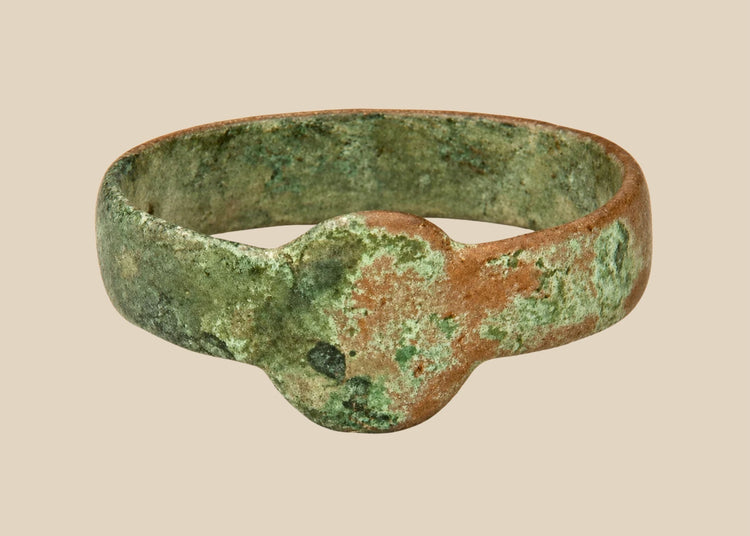
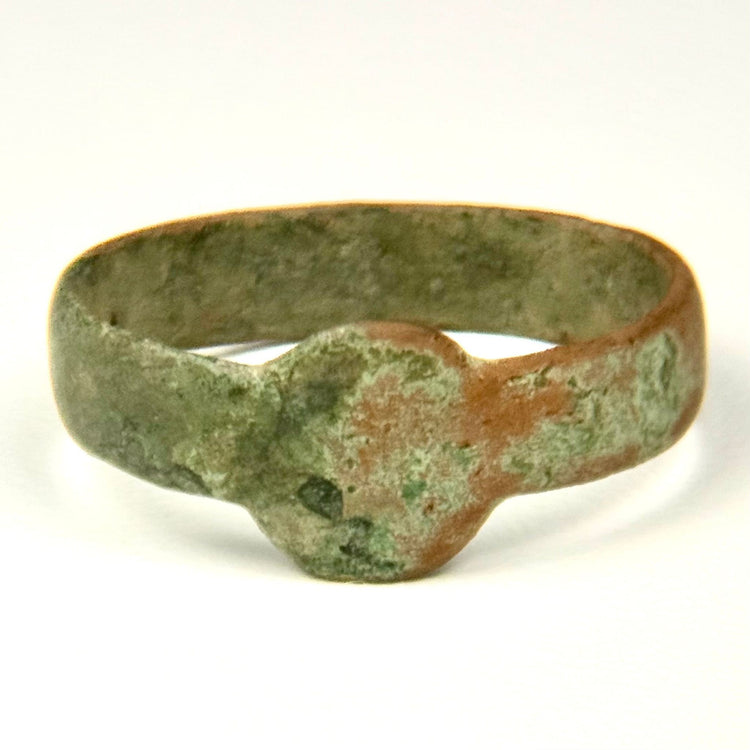
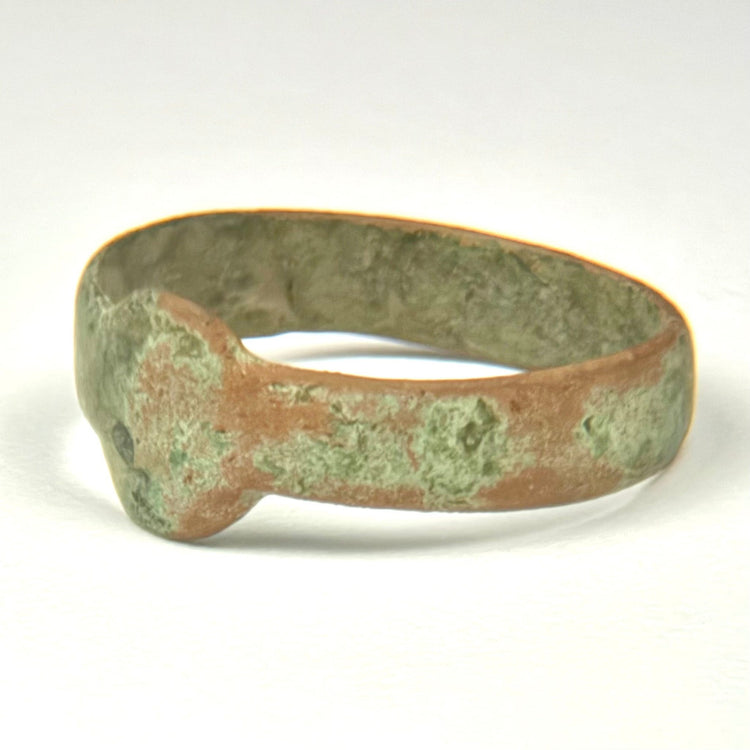
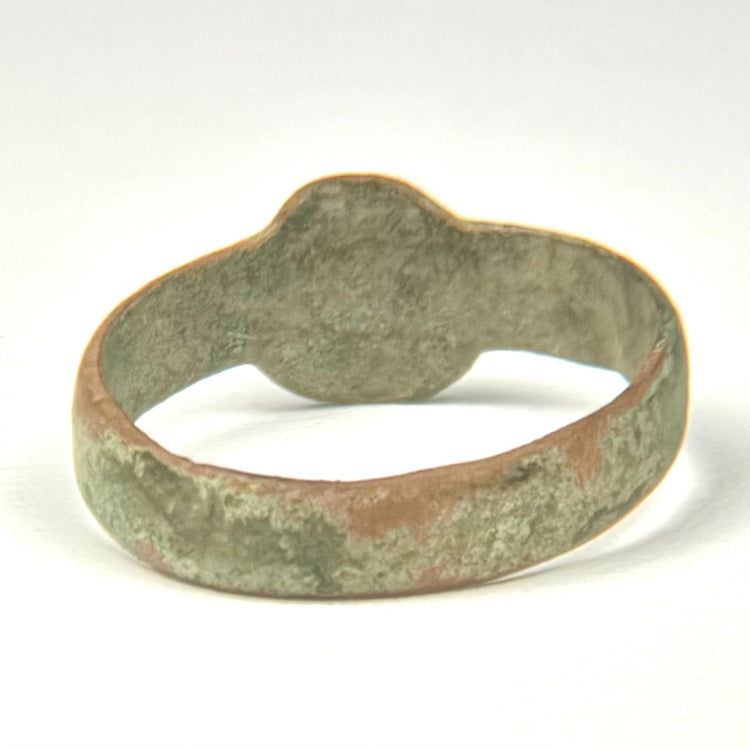
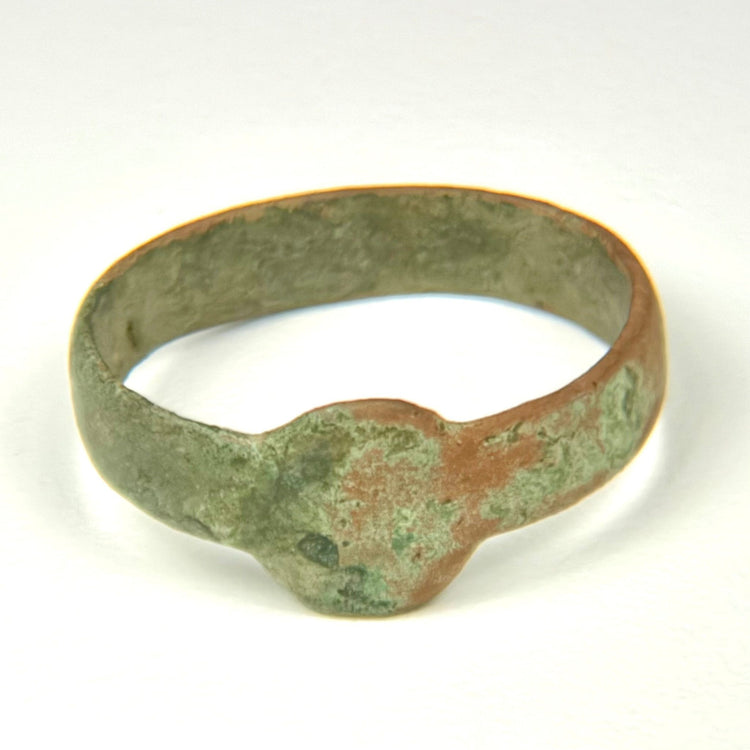
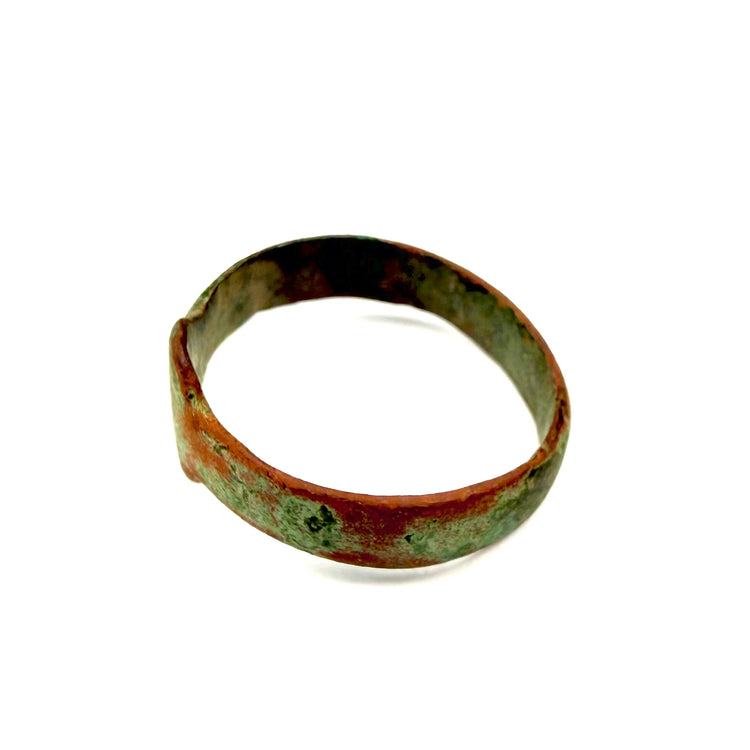
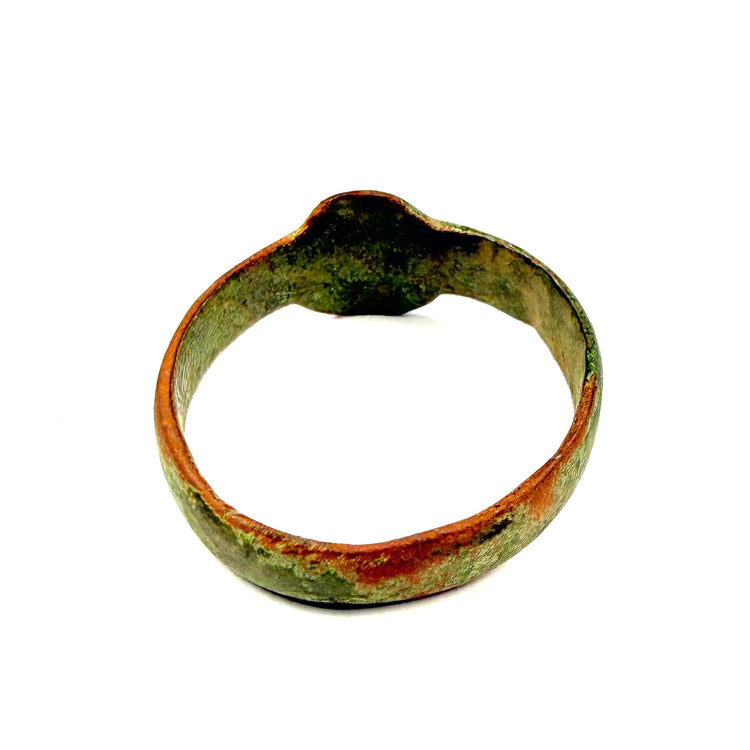
An ancient Roman bronze finger ring distinguished by a broad, substantial hoop that expands smoothly toward a small integral circular-to-oval bezel. Cast as a single piece, the ring displays the simple and durable construction associated with everyday Roman personal adornment during the Imperial period.
The broad band is relatively flat in section and maintains considerable width around much of the circumference before rising gently toward the shoulders. At the front, the metal forms a rounded projecting bezel with a plain, slightly worn surface. No securely identifiable inscription, figural device, or engraved symbol is presently visible, suggesting that the face may originally have been undecorated or that any shallow surface detail has been lost through prolonged wear and archaeological burial.
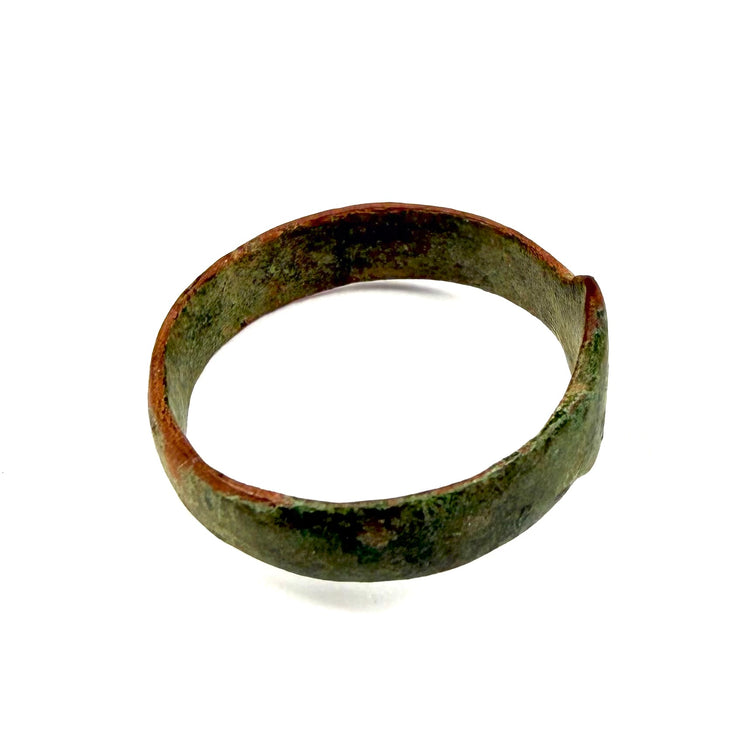
The ring displays a particularly attractive combination of reddish-brown exposed bronze and extensive pale to medium green mineral patination. Irregular patches of green oxidation extend across the bezel, shoulders, exterior hoop, and interior surface, creating a naturally mottled archaeological appearance. Several small darker mineral accretions are also visible on the bezel.
The interior reveals the substantial width of the original cast band and further green-grey patination associated with long-term oxidation of the copper alloy. Despite its considerable age, the ring retains a complete and easily recognizable form.
Features
- Small circular-to-oval integral bezel
- Broad flat-section bronze hoop
- Shoulders widening smoothly toward the bezel
- Solid one-piece cast construction
- Plain bezel without a securely identifiable surviving device
- Reddish-brown exposed bronze coloration
- Extensive pale and medium green archaeological patina
- Natural mineralization and oxidation throughout
Cultural Significance
Finger rings were common personal objects throughout the Roman Empire and were made in materials ranging from gold and silver to iron and bronze. Bronze rings offered a durable and comparatively accessible form of personal adornment and survive in a wide variety of shapes, from simple bands to examples with engraved or gem-set bezels.
Rings with expanded or projecting bezels could serve several purposes. Some carried engraved personal devices or inscriptions and functioned as seals, while others were worn primarily as ornament. On this example, the bezel is now essentially plain, and there is insufficient surviving evidence to determine whether it originally carried a shallow engraved design or was intentionally left undecorated.
Its straightforward construction and substantial bronze band provide a tangible example of the personal jewelry worn by individuals across the Roman world, where even modest objects could combine practicality, personal identity, and decorative appeal.
Condition
Good ancient condition consistent with age and archaeological burial. The ring remains complete and structurally intact. Extensive green mineral patination and oxidation are present across the exterior and interior surfaces, accompanied by areas of exposed reddish-brown bronze, localized darker deposits, minor pitting, and general surface wear. The bezel is heavily worn and presently displays no securely identifiable engraved device.
Dimensions (Approximate)
Ring Size: US 9.5
Age (Approximate)
1,600–1,800 years old
Provenance
Acquired in London during the 1970s. The artifact later entered the collection of Dr. Arnold Saslow, a noted numismatist and antiquarian who handled ancient coins, antiquities, and other historic objects over several decades, and was associated with Ye Olde Curiosity Shoppe in New Jersey. It was subsequently handled by Artemis Fine Arts, a U.S.-based gallery specializing in ancient, Classical, Pre-Columbian, and ethnographic art.
Learn More
Explore a related Roman bronze finger ring in the collection of the British Museum
Browse our collection of Ancient Rings & Jewelry
Descripción
Historical Context & Origin
Region: Eastern Mediterranean
Material: Bronze (copper alloy)
Period: Roman Imperial Period, circa 2nd–4th century CE
Description
An ancient Roman bronze finger ring distinguished by a broad, substantial hoop that expands smoothly toward a small integral circular-to-oval bezel. Cast as a single piece, the ring displays the simple and durable construction associated with everyday Roman personal adornment during the Imperial period.
The broad band is relatively flat in section and maintains considerable width around much of the circumference before rising gently toward the shoulders. At the front, the metal forms a rounded projecting bezel with a plain, slightly worn surface. No securely identifiable inscription, figural device, or engraved symbol is presently visible, suggesting that the face may originally have been undecorated or that any shallow surface detail has been lost through prolonged wear and archaeological burial.
The ring displays a particularly attractive combination of reddish-brown exposed bronze and extensive pale to medium green mineral patination. Irregular patches of green oxidation extend across the bezel, shoulders, exterior hoop, and interior surface, creating a naturally mottled archaeological appearance. Several small darker mineral accretions are also visible on the bezel.
The interior reveals the substantial width of the original cast band and further green-grey patination associated with long-term oxidation of the copper alloy. Despite its considerable age, the ring retains a complete and easily recognizable form.
Features
- Small circular-to-oval integral bezel
- Broad flat-section bronze hoop
- Shoulders widening smoothly toward the bezel
- Solid one-piece cast construction
- Plain bezel without a securely identifiable surviving device
- Reddish-brown exposed bronze coloration
- Extensive pale and medium green archaeological patina
- Natural mineralization and oxidation throughout
Cultural Significance
Finger rings were common personal objects throughout the Roman Empire and were made in materials ranging from gold and silver to iron and bronze. Bronze rings offered a durable and comparatively accessible form of personal adornment and survive in a wide variety of shapes, from simple bands to examples with engraved or gem-set bezels.
Rings with expanded or projecting bezels could serve several purposes. Some carried engraved personal devices or inscriptions and functioned as seals, while others were worn primarily as ornament. On this example, the bezel is now essentially plain, and there is insufficient surviving evidence to determine whether it originally carried a shallow engraved design or was intentionally left undecorated.
Its straightforward construction and substantial bronze band provide a tangible example of the personal jewelry worn by individuals across the Roman world, where even modest objects could combine practicality, personal identity, and decorative appeal.
Condition
Good ancient condition consistent with age and archaeological burial. The ring remains complete and structurally intact. Extensive green mineral patination and oxidation are present across the exterior and interior surfaces, accompanied by areas of exposed reddish-brown bronze, localized darker deposits, minor pitting, and general surface wear. The bezel is heavily worn and presently displays no securely identifiable engraved device.
Dimensions (Approximate)
Ring Size: US 9.5
Age (Approximate)
1,600–1,800 years old
Provenance
Acquired in London during the 1970s. The artifact later entered the collection of Dr. Arnold Saslow, a noted numismatist and antiquarian who handled ancient coins, antiquities, and other historic objects over several decades, and was associated with Ye Olde Curiosity Shoppe in New Jersey. It was subsequently handled by Artemis Fine Arts, a U.S.-based gallery specializing in ancient, Classical, Pre-Columbian, and ethnographic art.
Learn More
Explore a related Roman bronze finger ring in the collection of the British Museum
Browse our collection of Ancient Rings & Jewelry
También te puede interesar
