

Colgante Kuchi afgano antiguo | Adorno tribal de tubo de oración Hirz | Circa finales del siglo XIX - principios del siglo XX
- Precio habitual
- $500.00
- Precio de venta
- $500.00
- Precio habitual
No se pudo cargar la disponibilidad de retiro


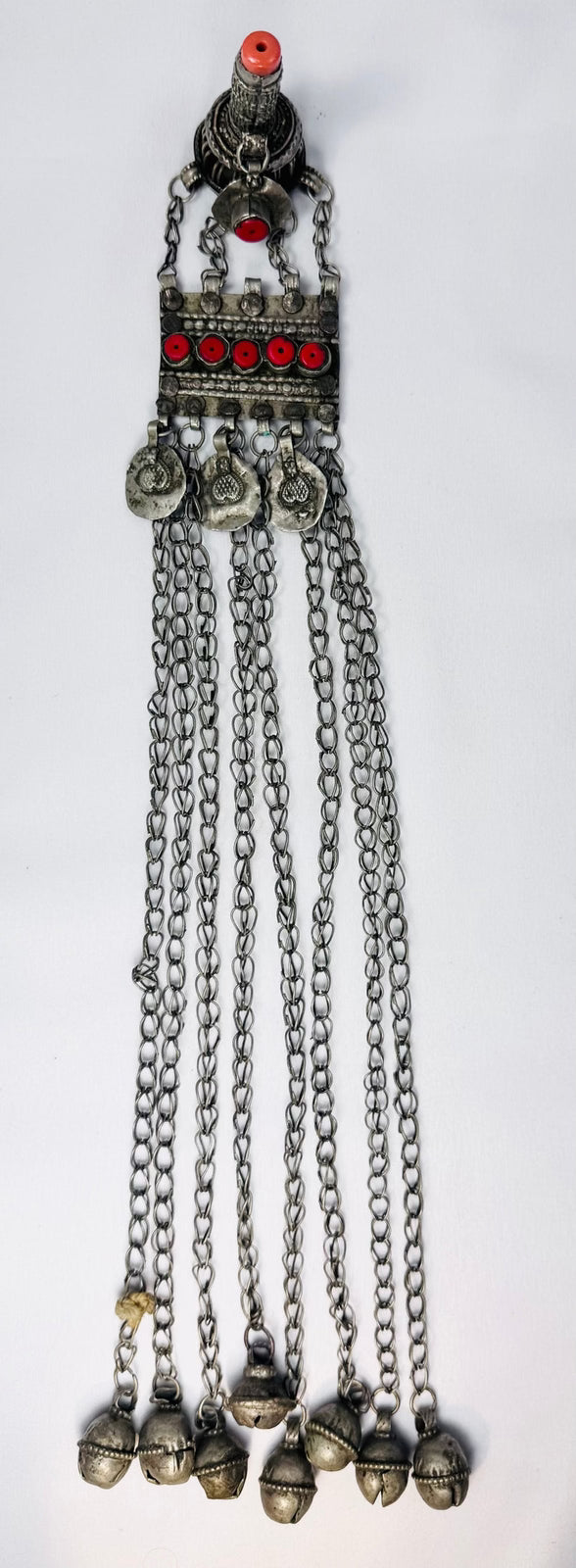
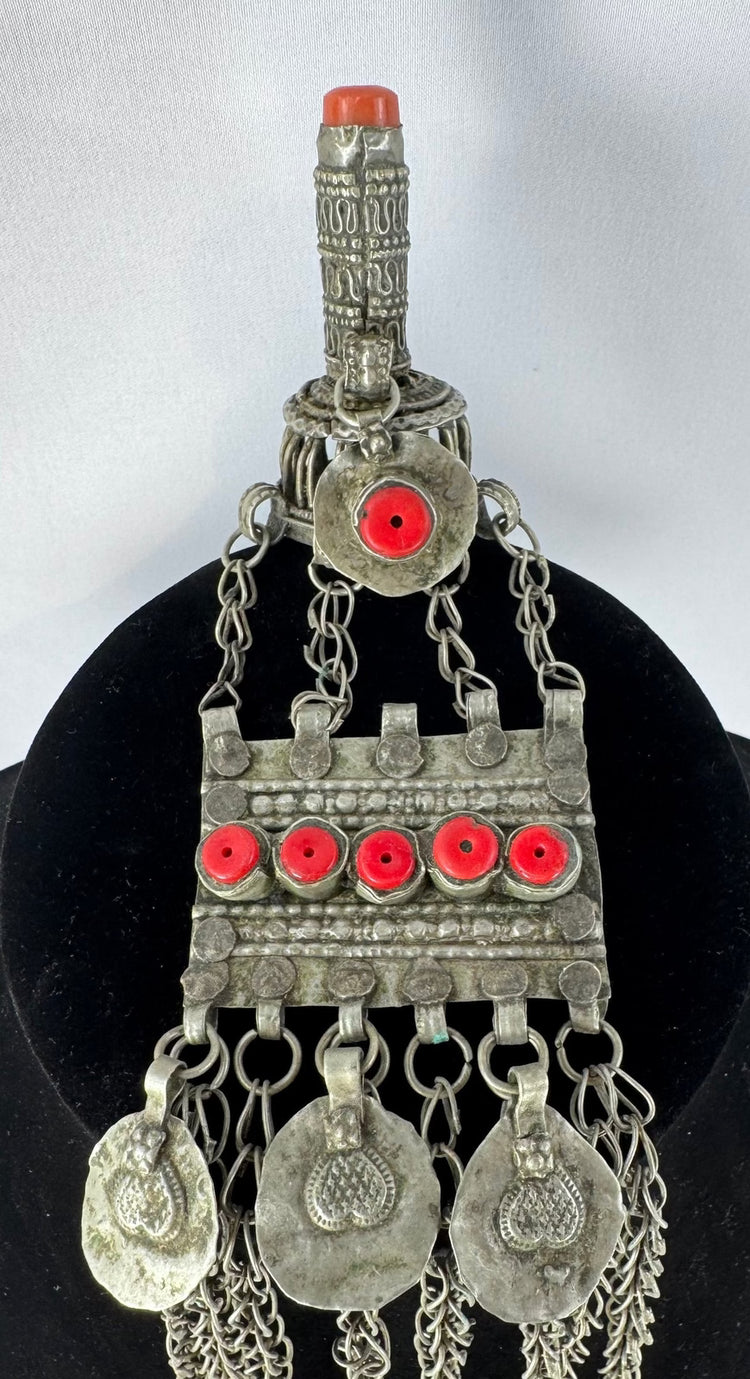
Colgante Kuchi afgano antiguo | Adorno tribal de tubo de oración Hirz | Circa finales del siglo XIX - principios del siglo XX
Descripción
Más
Menos
Contexto histórico y origen
Región: Afganistán (probablemente tradición tribal Kuchi)
Material: Aleaciones de metales mixtos con acabado plateado, cabujones de vidrio rojo, elementos de cadena y campana suspendidos
Período: Finales del siglo XIX - principios del siglo XX
Descripción
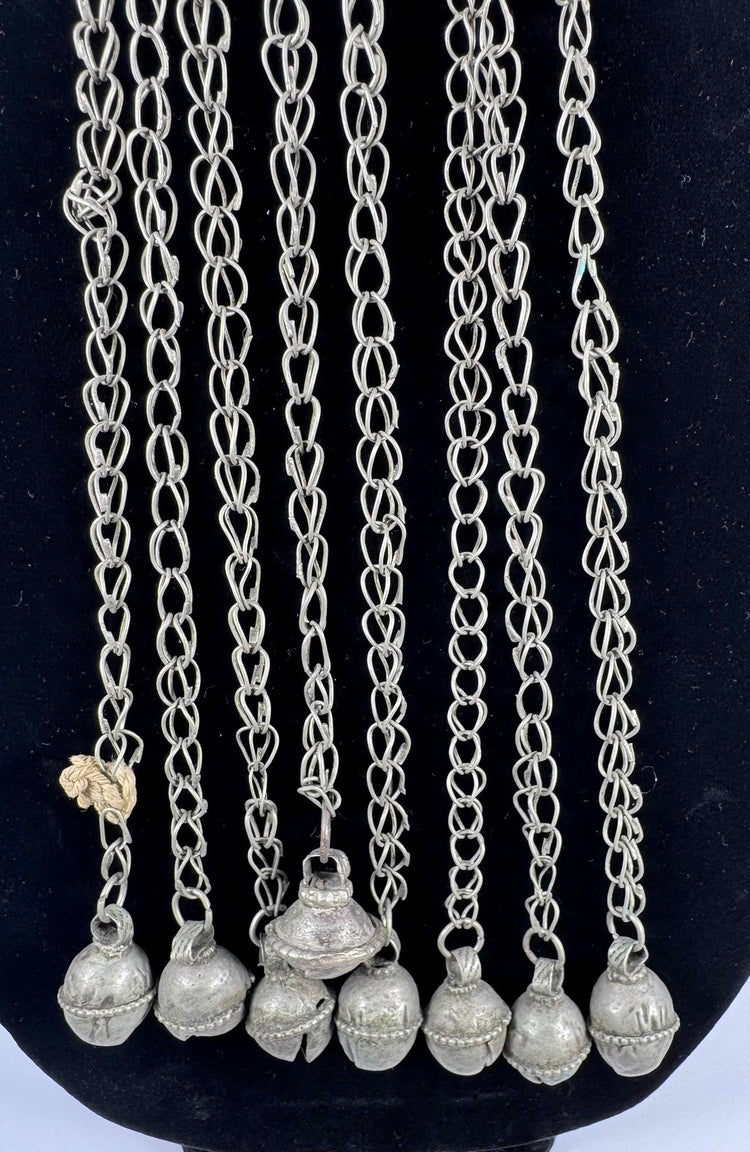
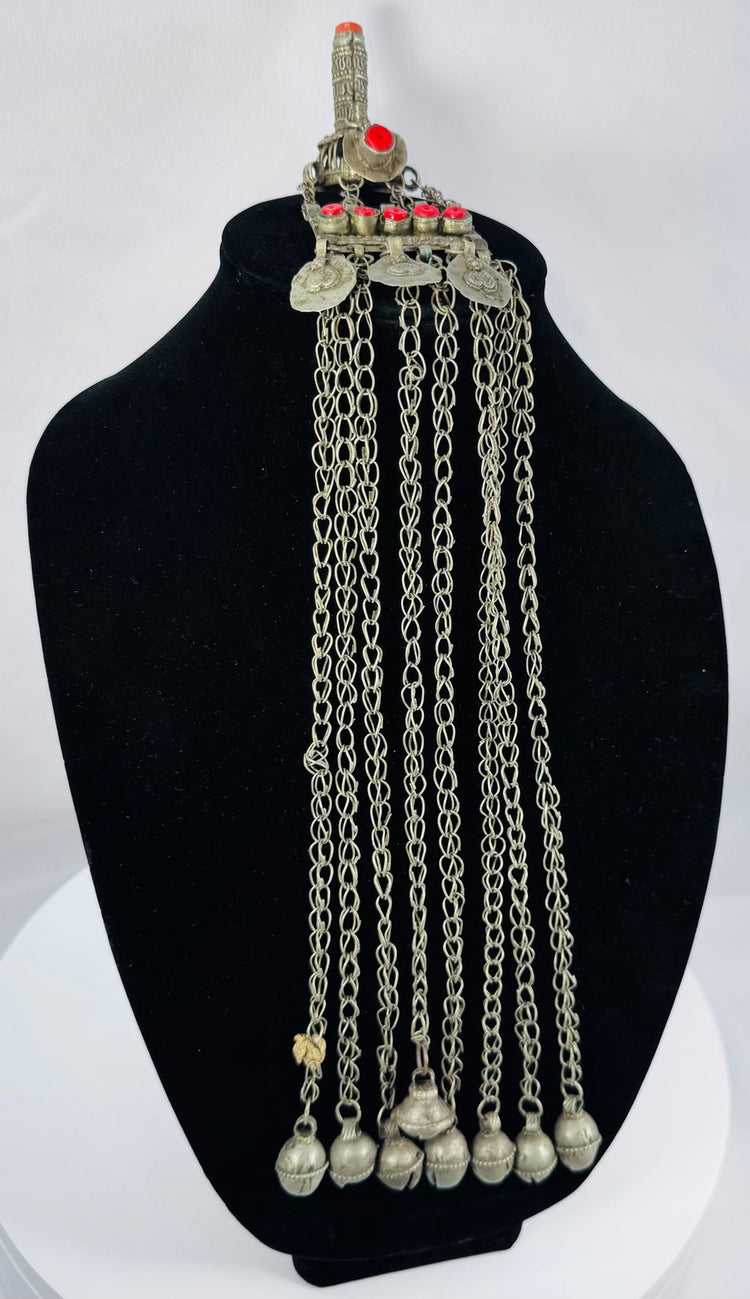
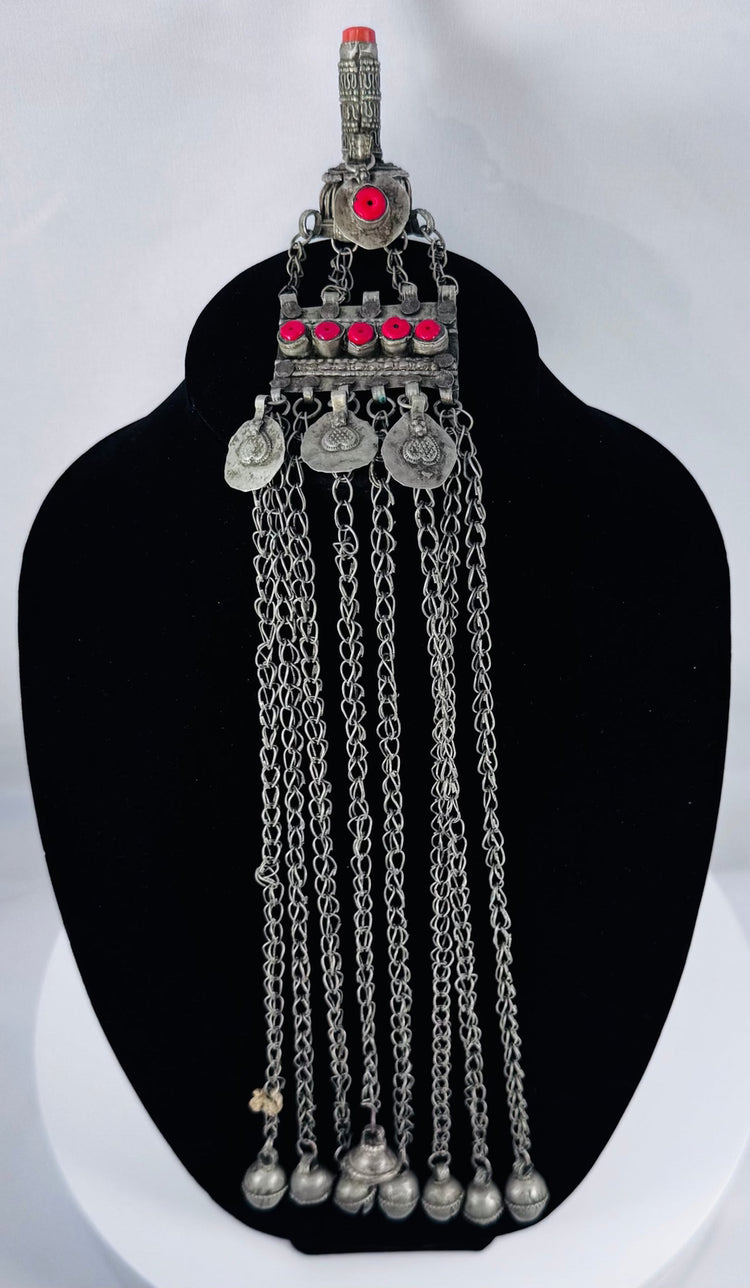
Este antiguo adorno de colgante tribal afgano es un sorprendente ejemplo de la artesanía de joyería Kuchi tradicional. Construida a partir de componentes de metal mixto plateado y vibrantes cabujones de vidrio rojo, la pieza presenta una elaborada composición vertical que consta de un amuleto de tubo de oración cilíndrico, un panel decorativo rectangular, medallones aplicados y numerosas borlas de cadena en cascada que terminan en colgantes en forma de campana.
El elemento cilíndrico superior probablemente funcionó como un tubo de oración hirz (también conocido como ta'wiz), un amuleto protector tradicionalmente usado para contener versos escritos del Corán u otros textos sagrados. Se creía que tales amuletos proporcionaban protección espiritual y se incorporaban comúnmente a las joyas Kuchi junto con ornamentos de plata altamente decorativos.
El panel central rectangular está adornado con elementos decorativos aplicados y vibrantes cabujones de vidrio rojo, mientras que las largas cadenas suspendidas y los terminales en forma de campana crean movimiento y sonido al usarse. Estos elaborados ornamentos formaban una parte importante del vestuario ceremonial Kuchi tradicional, particularmente durante bodas, festivales y otras celebraciones culturales significativas.
Piezas de este tipo se usaban como componentes de atuendos nupciales, tocados u ornamentos de pecho, donde servían no solo como adorno personal sino también como expresiones visibles de la riqueza familiar, la identidad cultural y la artesanía tradicional.
Características
- Auténtico y antiguo adorno de colgante tribal afgano
- Probable tradición tribal Kuchi
- Construcción de metal mixto plateado
- Amuleto de tubo de oración cilíndrico hirz (ta'wiz)
- Múltiples acentos de cabujones de vidrio rojo
- Medallones decorativos aplicados
- Borlas de cadena largas suspendidas
- Colgantes terminales en forma de campana
- Construcción artesanal tradicional
Significado cultural
Entre las comunidades Kuchi de Afganistán, las elaboradas joyas de plata formaban una parte importante del atuendo ceremonial y nupcial. Más allá de su atractivo decorativo, se creía que las piezas que incorporaban tubos de oración, campanas, borlas de cadena y vibrante vidrio rojo proporcionaban protección espiritual al mismo tiempo que demostraban la prosperidad familiar y la identidad tribal. La combinación de simbolismo amuletico y orfebrería intrincada refleja generaciones de artesanía preservadas dentro de las ricas tradiciones nómadas de Afganistán.
Estado
Buen estado antiguo con el desgaste propio de la edad, oxidación, patinado superficial, ligera deformación y desgaste del acabado, todo ello consistente con la edad y el uso. Los elementos de vidrio rojo se mantienen en gran parte intactos, mientras que las cadenas suspendidas y los colgantes en forma de campana están presentes y en general se exhiben bien.
Dimensiones (aproximadas)
Altura: 14 pulgadas (incluyendo las borlas de la cadena)
Edad (aproximada)
80–130 años
Procedencia
De una colección privada en Toronto, Ontario, Canadá. El adorno formó parte de una colección de larga data de joyas etnográficas, adornos tribales y artefactos culturales reunidos durante muchos años por un coleccionista especializado en cultura material de Asia Central, Afganistán y Oriente Medio.
Saber más
Explora los orígenes y las tradiciones culturales de las joyas Kuchi a través de ¿Qué es la joyería Kuchi? por Bedouin Silver
Ver nuestra Colección de Anillos Antiguos y Joyas Históricas
Descripción
Contexto histórico y origen
Región: Afganistán (probablemente tradición tribal Kuchi)
Material: Aleaciones de metales mixtos con acabado plateado, cabujones de vidrio rojo, elementos de cadena y campana suspendidos
Período: Finales del siglo XIX - principios del siglo XX
Descripción
Este antiguo adorno de colgante tribal afgano es un sorprendente ejemplo de la artesanía de joyería Kuchi tradicional. Construida a partir de componentes de metal mixto plateado y vibrantes cabujones de vidrio rojo, la pieza presenta una elaborada composición vertical que consta de un amuleto de tubo de oración cilíndrico, un panel decorativo rectangular, medallones aplicados y numerosas borlas de cadena en cascada que terminan en colgantes en forma de campana.
El elemento cilíndrico superior probablemente funcionó como un tubo de oración hirz (también conocido como ta'wiz), un amuleto protector tradicionalmente usado para contener versos escritos del Corán u otros textos sagrados. Se creía que tales amuletos proporcionaban protección espiritual y se incorporaban comúnmente a las joyas Kuchi junto con ornamentos de plata altamente decorativos.
El panel central rectangular está adornado con elementos decorativos aplicados y vibrantes cabujones de vidrio rojo, mientras que las largas cadenas suspendidas y los terminales en forma de campana crean movimiento y sonido al usarse. Estos elaborados ornamentos formaban una parte importante del vestuario ceremonial Kuchi tradicional, particularmente durante bodas, festivales y otras celebraciones culturales significativas.
Piezas de este tipo se usaban como componentes de atuendos nupciales, tocados u ornamentos de pecho, donde servían no solo como adorno personal sino también como expresiones visibles de la riqueza familiar, la identidad cultural y la artesanía tradicional.
Características
- Auténtico y antiguo adorno de colgante tribal afgano
- Probable tradición tribal Kuchi
- Construcción de metal mixto plateado
- Amuleto de tubo de oración cilíndrico hirz (ta'wiz)
- Múltiples acentos de cabujones de vidrio rojo
- Medallones decorativos aplicados
- Borlas de cadena largas suspendidas
- Colgantes terminales en forma de campana
- Construcción artesanal tradicional
Significado cultural
Entre las comunidades Kuchi de Afganistán, las elaboradas joyas de plata formaban una parte importante del atuendo ceremonial y nupcial. Más allá de su atractivo decorativo, se creía que las piezas que incorporaban tubos de oración, campanas, borlas de cadena y vibrante vidrio rojo proporcionaban protección espiritual al mismo tiempo que demostraban la prosperidad familiar y la identidad tribal. La combinación de simbolismo amuletico y orfebrería intrincada refleja generaciones de artesanía preservadas dentro de las ricas tradiciones nómadas de Afganistán.
Estado
Buen estado antiguo con el desgaste propio de la edad, oxidación, patinado superficial, ligera deformación y desgaste del acabado, todo ello consistente con la edad y el uso. Los elementos de vidrio rojo se mantienen en gran parte intactos, mientras que las cadenas suspendidas y los colgantes en forma de campana están presentes y en general se exhiben bien.
Dimensiones (aproximadas)
Altura: 14 pulgadas (incluyendo las borlas de la cadena)
Edad (aproximada)
80–130 años
Procedencia
De una colección privada en Toronto, Ontario, Canadá. El adorno formó parte de una colección de larga data de joyas etnográficas, adornos tribales y artefactos culturales reunidos durante muchos años por un coleccionista especializado en cultura material de Asia Central, Afganistán y Oriente Medio.
Saber más
Explora los orígenes y las tradiciones culturales de las joyas Kuchi a través de ¿Qué es la joyería Kuchi? por Bedouin Silver
Ver nuestra Colección de Anillos Antiguos y Joyas Históricas
También te puede interesar
