


Antique Burr Walnut Octagonal Snuff Box | Circa 1820–1860
- Precio habitual
- $325.00
- Precio de venta
- $325.00
- Precio habitual
No se pudo cargar la disponibilidad de retiro


Antique Burr Walnut Octagonal Snuff Box | Circa 1820–1860
Descripción
Más
Menos
Historical Context & Origin
Region: Britain, likely England
Material: Figured burr walnut with dark wood, likely ebony, stringing and inset decoration
Period: Early–Mid 19th Century, circa 1820–1860
Description
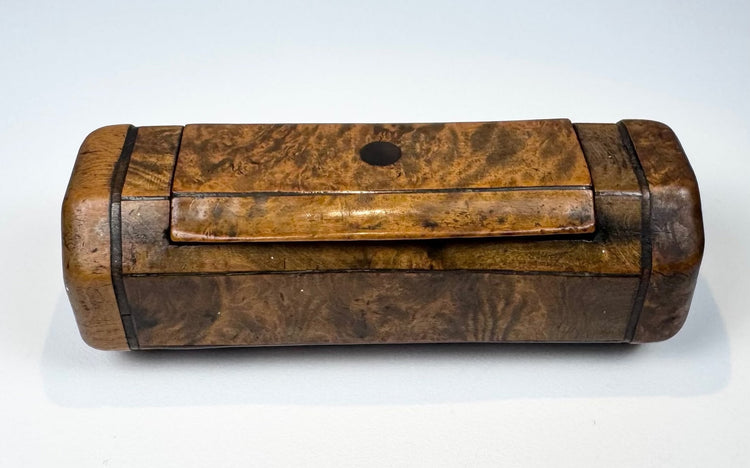
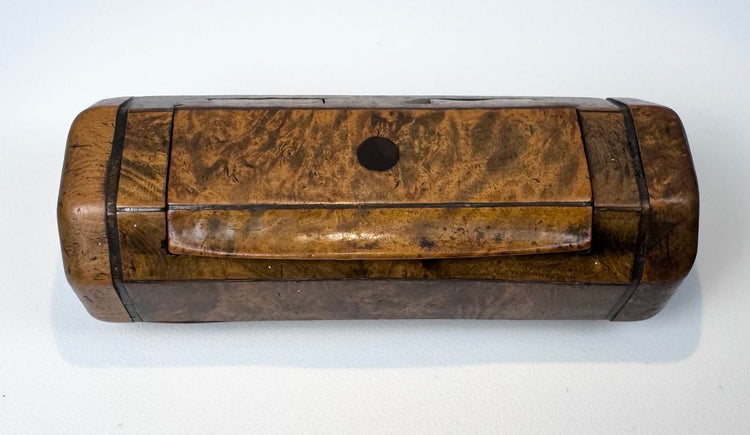
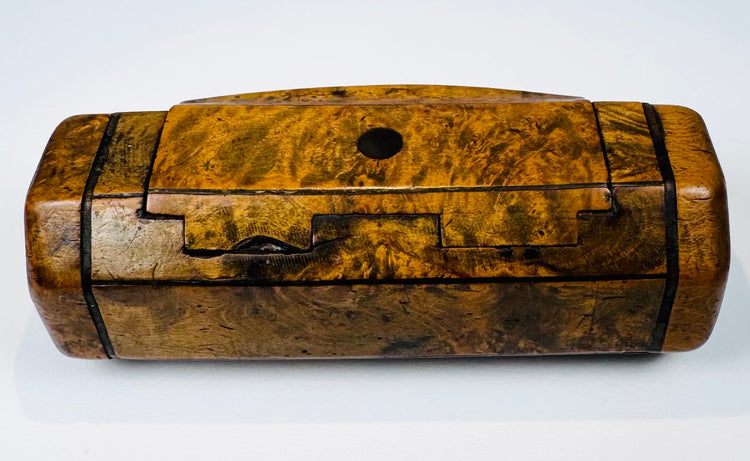
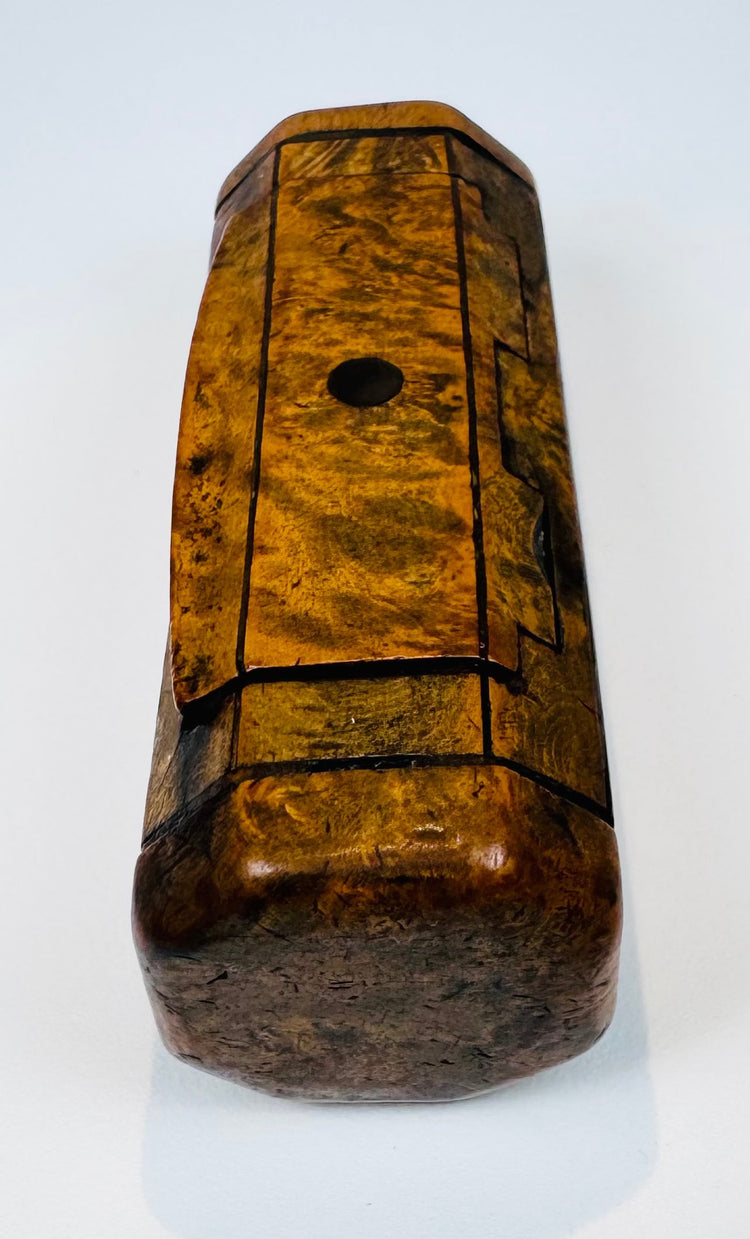
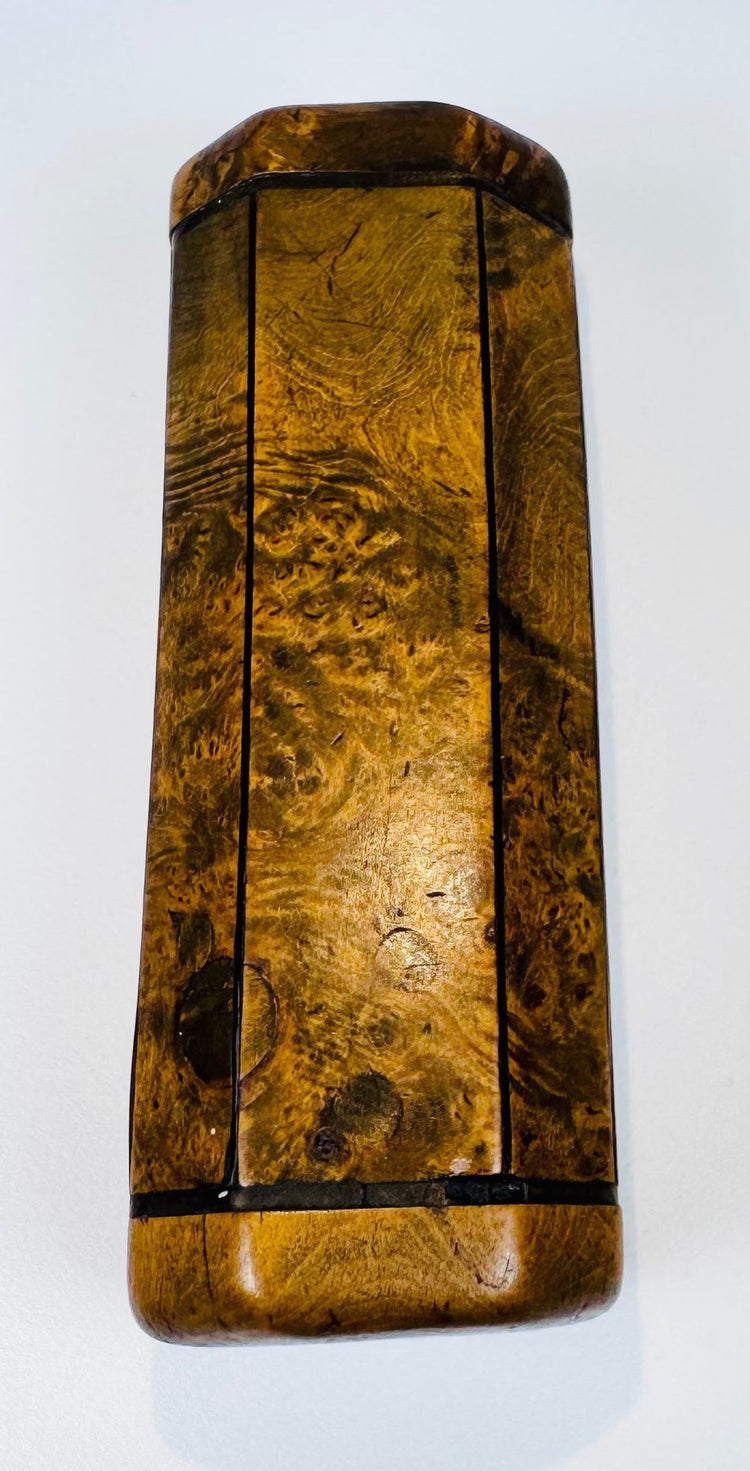
A handsome early-to-mid 19th-century pocket snuff box of elongated octagonal form, finely constructed from richly figured burr walnut and accented with contrasting dark stringing.
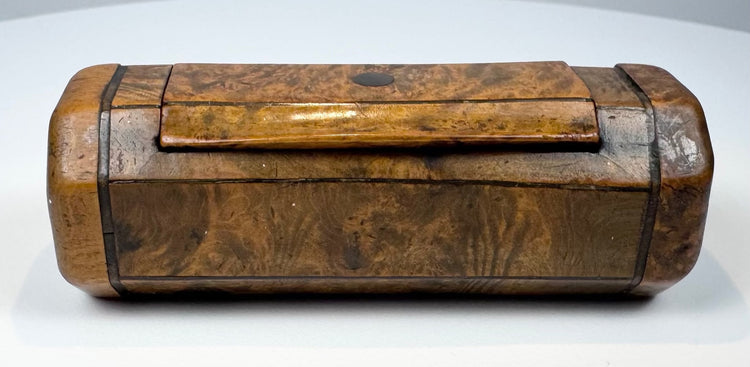
The compact rectangular body is formed with canted corners, producing the characteristic faceted or octagonal cross-section. Each surface displays strongly figured timber with swirling grain, knots and naturally mottled coloration ranging from golden honey and amber to deep brown.
Narrow dark bands, likely ebony stringing, articulate the edges and terminal sections of the box, providing an elegant contrast against the warm walnut. The upper surface incorporates a long fitted hinged lid, itself selected from particularly attractive figured wood and centered by a small circular dark inset, apparently ebony or another contrasting hardwood.
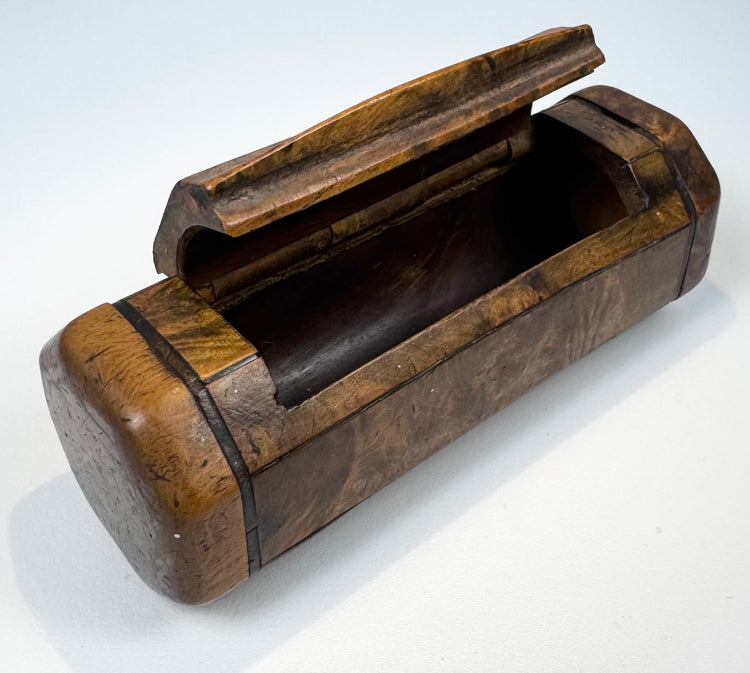
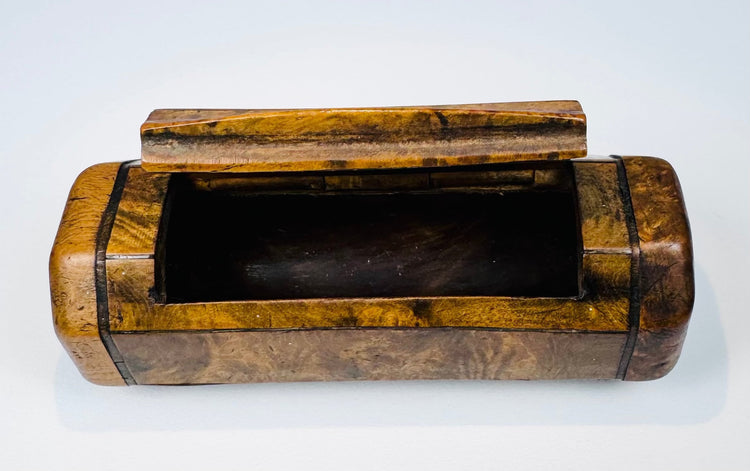
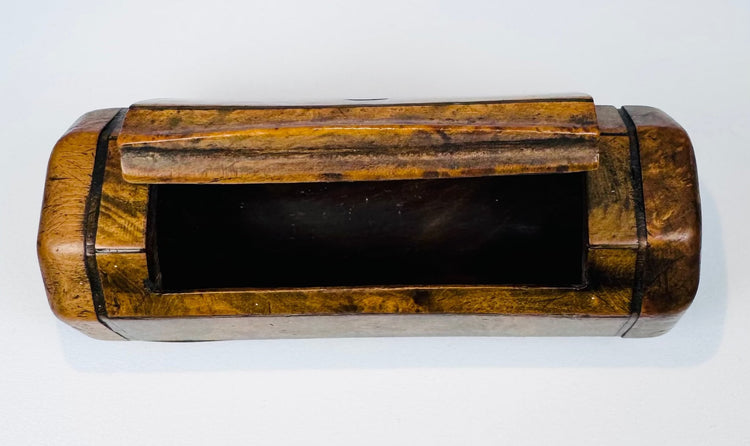
The lid lifts to reveal a deep, elongated single compartment with a darkened interior. Its uncomplicated interior and convenient pocket-sized proportions are consistent with its original function as a personal snuff box, intended to hold a quantity of finely powdered tobacco while protecting it from moisture and accidental loss.
The lid and body were carefully shaped so that the exterior reads as a continuous architectural form when closed, with rounded terminal sections softening the otherwise geometric construction. The combination of burr walnut, dark stringing and faceted construction gives this diminutive utilitarian object considerably greater visual refinement than an ordinary tobacco container.
Features
- Elongated octagonal or canted rectangular form
- Richly figured burr walnut construction
- Contrasting dark wood stringing, likely ebony
- Small circular dark inset to the lid
- Hinged lift-up cover
- Deep single snuff compartment
- Rounded terminal sections
- Attractive golden-brown natural patina
- Compact pocket-sized proportions
- Fine example of British decorative treen
- Strong natural figuring throughout the timber
Cultural Significance
Snuff-taking became deeply embedded in European social culture from the 18th century onward. A snuff box therefore served not merely as a container but as a personal accessory, frequently reflecting the owner's taste and social position.
Wooden snuff boxes occupy a particularly interesting place within the tradition of treen—the collective term used for small functional objects fashioned principally from wood. Figured burr timbers were valued because no two sections produced identical patterns, allowing even a relatively modest everyday object to possess a distinctive decorative character.
Condition
Good antique condition with wear consistent with age and historical use. The exterior displays scattered surface scratches, small marks, minor abrasions and areas of finish wear, together with the warm patination expected of a handled wooden object of this age.
Some minor separation, irregularity and wear are visible around the stringing, joints and edges. The interior exhibits darkening and wear consistent with prolonged use. The hinged lid remains present and functional. Natural variations, knots and imperfections within the burr timber are characteristic of the material.
Dimensions (Approximate)
Length: 3.25 in
Width: 1.2 in
Depth: 1.2 in
Age (Approximate)
165–205 years old
Provenance
From the Estate of Henry and Ann Soukup. Henry L. “Hank” Soukup and his wife, Ann Butler Soukup, were longtime antiques enthusiasts who founded The Lair Antiques together in 1965, establishing a decades-long connection with the antiques trade and collecting.
Subsequently handled by Diederich Auction Gallery, Winchester, Kentucky, an auction house specializing in fine antiques, estate collections, fine art, and other historically significant material.
Learn More
See a comparable English walnut snuff box in the collection of the Science Museum Group
Browse our Collection of Functional Tools, Ancient Implements & Historic Craft
Descripción
Historical Context & Origin
Region: Britain, likely England
Material: Figured burr walnut with dark wood, likely ebony, stringing and inset decoration
Period: Early–Mid 19th Century, circa 1820–1860
Description
A handsome early-to-mid 19th-century pocket snuff box of elongated octagonal form, finely constructed from richly figured burr walnut and accented with contrasting dark stringing.
The compact rectangular body is formed with canted corners, producing the characteristic faceted or octagonal cross-section. Each surface displays strongly figured timber with swirling grain, knots and naturally mottled coloration ranging from golden honey and amber to deep brown.
Narrow dark bands, likely ebony stringing, articulate the edges and terminal sections of the box, providing an elegant contrast against the warm walnut. The upper surface incorporates a long fitted hinged lid, itself selected from particularly attractive figured wood and centered by a small circular dark inset, apparently ebony or another contrasting hardwood.
The lid lifts to reveal a deep, elongated single compartment with a darkened interior. Its uncomplicated interior and convenient pocket-sized proportions are consistent with its original function as a personal snuff box, intended to hold a quantity of finely powdered tobacco while protecting it from moisture and accidental loss.
The lid and body were carefully shaped so that the exterior reads as a continuous architectural form when closed, with rounded terminal sections softening the otherwise geometric construction. The combination of burr walnut, dark stringing and faceted construction gives this diminutive utilitarian object considerably greater visual refinement than an ordinary tobacco container.
Features
- Elongated octagonal or canted rectangular form
- Richly figured burr walnut construction
- Contrasting dark wood stringing, likely ebony
- Small circular dark inset to the lid
- Hinged lift-up cover
- Deep single snuff compartment
- Rounded terminal sections
- Attractive golden-brown natural patina
- Compact pocket-sized proportions
- Fine example of British decorative treen
- Strong natural figuring throughout the timber
Cultural Significance
Snuff-taking became deeply embedded in European social culture from the 18th century onward. A snuff box therefore served not merely as a container but as a personal accessory, frequently reflecting the owner's taste and social position.
Wooden snuff boxes occupy a particularly interesting place within the tradition of treen—the collective term used for small functional objects fashioned principally from wood. Figured burr timbers were valued because no two sections produced identical patterns, allowing even a relatively modest everyday object to possess a distinctive decorative character.
Condition
Good antique condition with wear consistent with age and historical use. The exterior displays scattered surface scratches, small marks, minor abrasions and areas of finish wear, together with the warm patination expected of a handled wooden object of this age.
Some minor separation, irregularity and wear are visible around the stringing, joints and edges. The interior exhibits darkening and wear consistent with prolonged use. The hinged lid remains present and functional. Natural variations, knots and imperfections within the burr timber are characteristic of the material.
Dimensions (Approximate)
Length: 3.25 in
Width: 1.2 in
Depth: 1.2 in
Age (Approximate)
165–205 years old
Provenance
From the Estate of Henry and Ann Soukup. Henry L. “Hank” Soukup and his wife, Ann Butler Soukup, were longtime antiques enthusiasts who founded The Lair Antiques together in 1965, establishing a decades-long connection with the antiques trade and collecting.
Subsequently handled by Diederich Auction Gallery, Winchester, Kentucky, an auction house specializing in fine antiques, estate collections, fine art, and other historically significant material.
Learn More
See a comparable English walnut snuff box in the collection of the Science Museum Group
Browse our Collection of Functional Tools, Ancient Implements & Historic Craft
También te puede interesar
