

Antigua cerradura de embutir con llave tipo esqueleto | Exhibición de herrajes arquitectónicos montados | Aproximadamente del siglo XIX
- Precio habitual
- $400.00
- Precio de venta
- $400.00
- Precio habitual
No se pudo cargar la disponibilidad de retiro


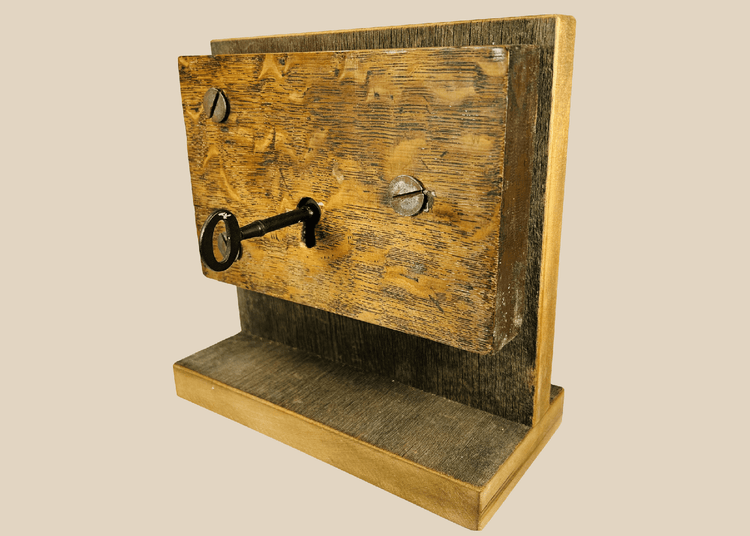
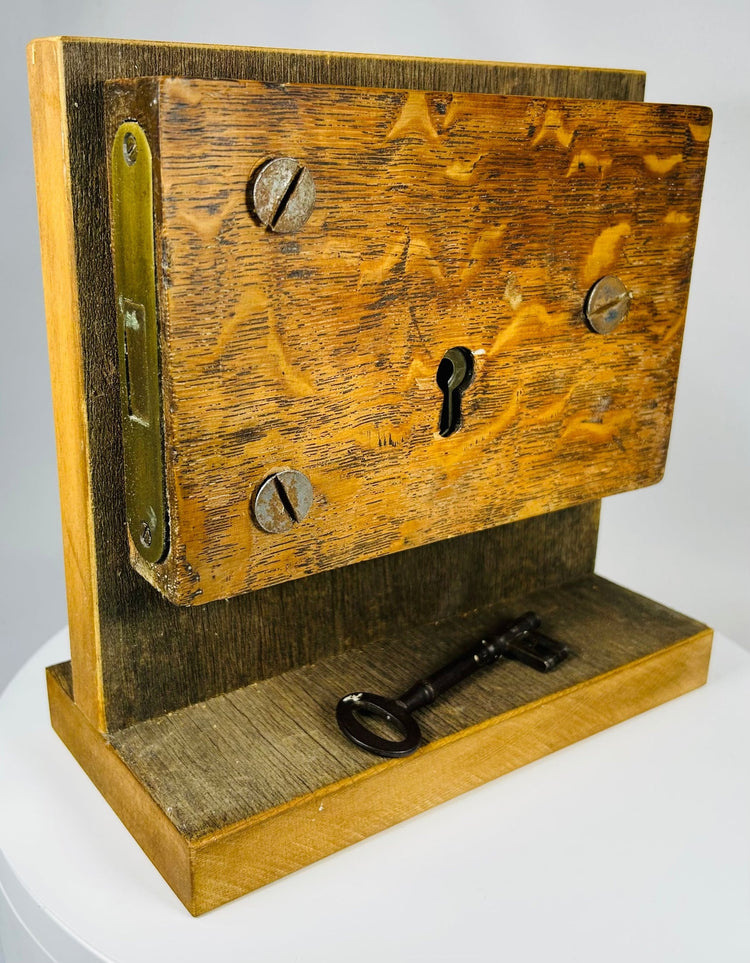






Antigua cerradura de embutir con llave tipo esqueleto | Exhibición de herrajes arquitectónicos montados | Aproximadamente del siglo XIX
Descripción
Más
Menos
Contexto histórico y origen
Región: Europa o Norteamérica
Material: Madera, hierro y herrajes de latón
Período: Alrededor del siglo XIX
Descripción
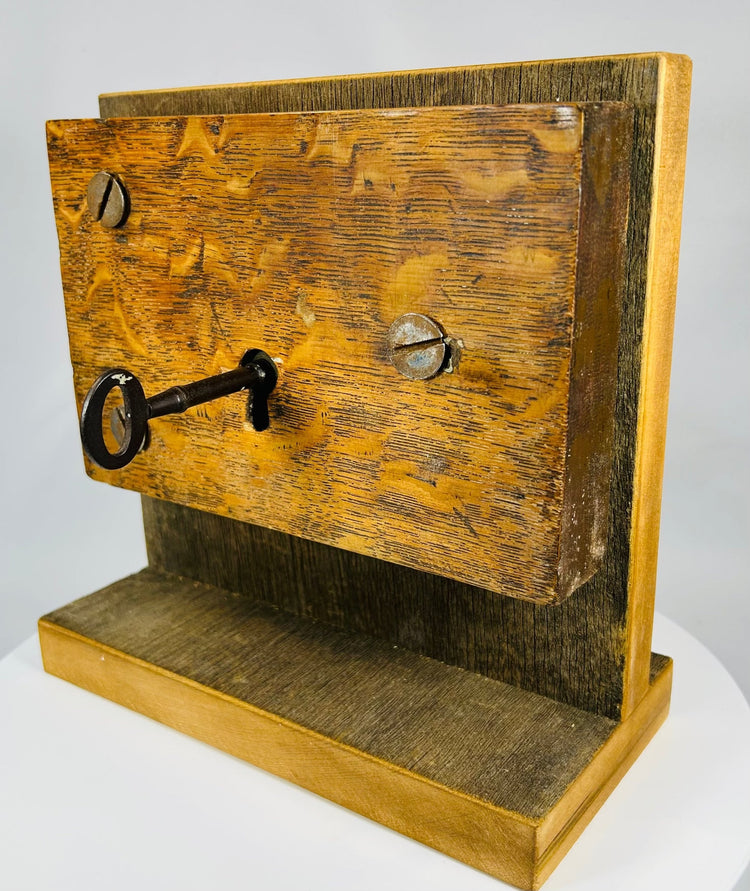
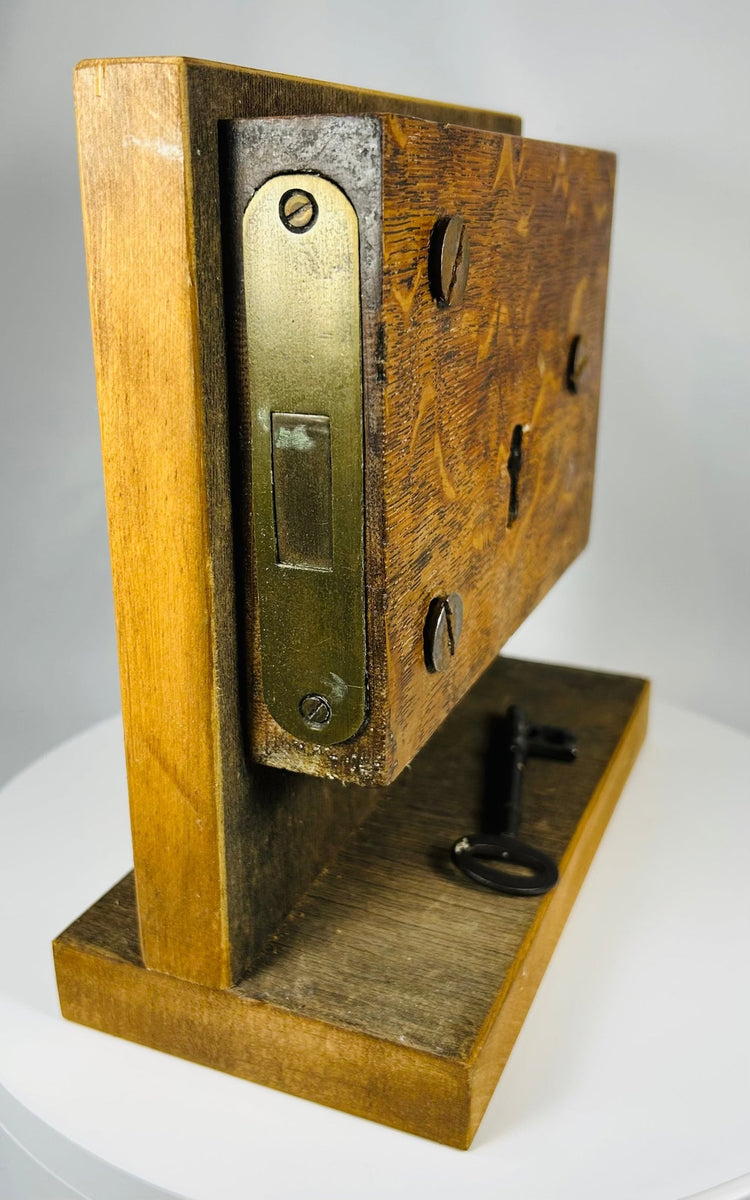
Esta intrigante exhibición montada presenta un antiguo mecanismo de cerradura de embutir con su llave esqueleto correspondiente, presentado en un soporte de madera posterior para un atractivo decorativo y coleccionable. La caja de la cerradura está construida en madera y equipada con grandes tornillos de hierro forjados a mano, con un clásico escudo de ojo de cerradura en su centro.
La llave de hierro que la acompaña, con su vástago alargado y su paletón calado, es característica de los sistemas de cierre de guardas tradicionales utilizados a lo largo de los siglos XVIII y XIX. Cuando se insertaba, la llave accionaba las guardas internas de la cerradura, un mecanismo sencillo pero eficaz ampliamente utilizado en la arquitectura doméstica e institucional de la época.
La carcasa de madera de la cerradura muestra una pátina rica y cálida con vetas visibles y desgaste por el paso del tiempo, mientras que los herrajes de hierro presentan oxidación y variaciones superficiales consistentes con un uso prolongado. La pieza ha sido montada sobre una base y un panel trasero de madera hechos a medida, lo que permite exhibirla de pie como objeto histórico y como tema de conversación.
Características
- Cerradura de embutir antigua original con ojo de cerradura de estilo funcional
- Incluye una gran llave esqueleto de hierro con paletón calado
- Tornillos y herrajes de hierro forjados a mano
- Montado sobre un soporte de exhibición de madera hecho a medida
- Rica pátina envejecida en las superficies de madera y metal
- Diseño funcional que ilustra los primeros mecanismos de cierre
Importancia cultural
Las cerraduras de embutir y las llaves esqueleto se utilizaron ampliamente en edificios residenciales e institucionales antes de la llegada de las modernas cerraduras de cilindro de pines. Estos sistemas se basaban en guardas internas y llaves de formas únicas, lo que los convirtió en un paso importante en la evolución de la seguridad y el diseño mecánico.
Hoy en día, estas piezas se aprecian no solo por su ingenio funcional, sino también por su valor estético e histórico como artefactos de la vida cotidiana.
Condición
Buen estado antiguo con desgaste visible en toda la pieza. La madera presenta desgaste superficial, arañazos y pátina relacionada con la edad. Los componentes de hierro muestran oxidación y corrosión menor consistente con la edad. El expositor montado es estable y apto para su presentación.
Dimensiones (aproximadas)
Alto: 8.8 pulg.
Ancho: 8.75 pulg.
Profundidad: 4.35 pulg.
Edad (aproximada)
150-200 años
Procedencia
Antiguamente formó parte del Elmer’s Lock and Safe Museum, un importante museo y colección privada dedicada a cerraduras, llaves, cajas fuertes y dispositivos de seguridad mecánica históricos. La colección se dispersó en 2026. Posteriormente, la pieza pasó a formar parte de una colección privada en Valparaíso, Indiana, Estados Unidos.
Más información
Siga el desarrollo de las cerraduras de embutir y los primeros mecanismos de seguridad a través de Keys4U Locksmith
Explore nuestra Colección seleccionada de herramientas funcionales e implementos antiguos
Descripción
Contexto histórico y origen
Región: Europa o Norteamérica
Material: Madera, hierro y herrajes de latón
Período: Alrededor del siglo XIX
Descripción
Esta intrigante exhibición montada presenta un antiguo mecanismo de cerradura de embutir con su llave esqueleto correspondiente, presentado en un soporte de madera posterior para un atractivo decorativo y coleccionable. La caja de la cerradura está construida en madera y equipada con grandes tornillos de hierro forjados a mano, con un clásico escudo de ojo de cerradura en su centro.
La llave de hierro que la acompaña, con su vástago alargado y su paletón calado, es característica de los sistemas de cierre de guardas tradicionales utilizados a lo largo de los siglos XVIII y XIX. Cuando se insertaba, la llave accionaba las guardas internas de la cerradura, un mecanismo sencillo pero eficaz ampliamente utilizado en la arquitectura doméstica e institucional de la época.
La carcasa de madera de la cerradura muestra una pátina rica y cálida con vetas visibles y desgaste por el paso del tiempo, mientras que los herrajes de hierro presentan oxidación y variaciones superficiales consistentes con un uso prolongado. La pieza ha sido montada sobre una base y un panel trasero de madera hechos a medida, lo que permite exhibirla de pie como objeto histórico y como tema de conversación.
Características
- Cerradura de embutir antigua original con ojo de cerradura de estilo funcional
- Incluye una gran llave esqueleto de hierro con paletón calado
- Tornillos y herrajes de hierro forjados a mano
- Montado sobre un soporte de exhibición de madera hecho a medida
- Rica pátina envejecida en las superficies de madera y metal
- Diseño funcional que ilustra los primeros mecanismos de cierre
Importancia cultural
Las cerraduras de embutir y las llaves esqueleto se utilizaron ampliamente en edificios residenciales e institucionales antes de la llegada de las modernas cerraduras de cilindro de pines. Estos sistemas se basaban en guardas internas y llaves de formas únicas, lo que los convirtió en un paso importante en la evolución de la seguridad y el diseño mecánico.
Hoy en día, estas piezas se aprecian no solo por su ingenio funcional, sino también por su valor estético e histórico como artefactos de la vida cotidiana.
Condición
Buen estado antiguo con desgaste visible en toda la pieza. La madera presenta desgaste superficial, arañazos y pátina relacionada con la edad. Los componentes de hierro muestran oxidación y corrosión menor consistente con la edad. El expositor montado es estable y apto para su presentación.
Dimensiones (aproximadas)
Alto: 8.8 pulg.
Ancho: 8.75 pulg.
Profundidad: 4.35 pulg.
Edad (aproximada)
150-200 años
Procedencia
Antiguamente formó parte del Elmer’s Lock and Safe Museum, un importante museo y colección privada dedicada a cerraduras, llaves, cajas fuertes y dispositivos de seguridad mecánica históricos. La colección se dispersó en 2026. Posteriormente, la pieza pasó a formar parte de una colección privada en Valparaíso, Indiana, Estados Unidos.
Más información
Siga el desarrollo de las cerraduras de embutir y los primeros mecanismos de seguridad a través de Keys4U Locksmith
Explore nuestra Colección seleccionada de herramientas funcionales e implementos antiguos
También te puede interesar
