


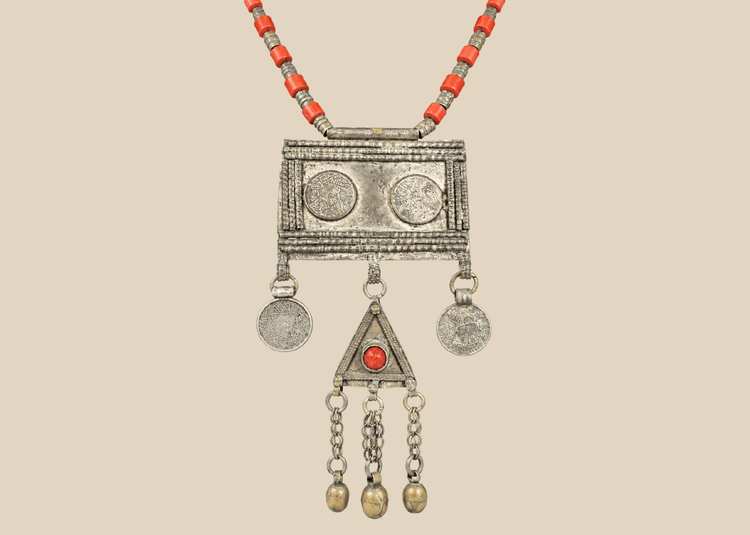
Collar tribal turcomano antiguo con amuleto Tumar | Joyería de Asia Central | Finales del siglo XIX - Principios del siglo XX
- Precio habitual
- $500.00
- Precio de venta
- $500.00
- Precio habitual
No se pudo cargar la disponibilidad de retiro


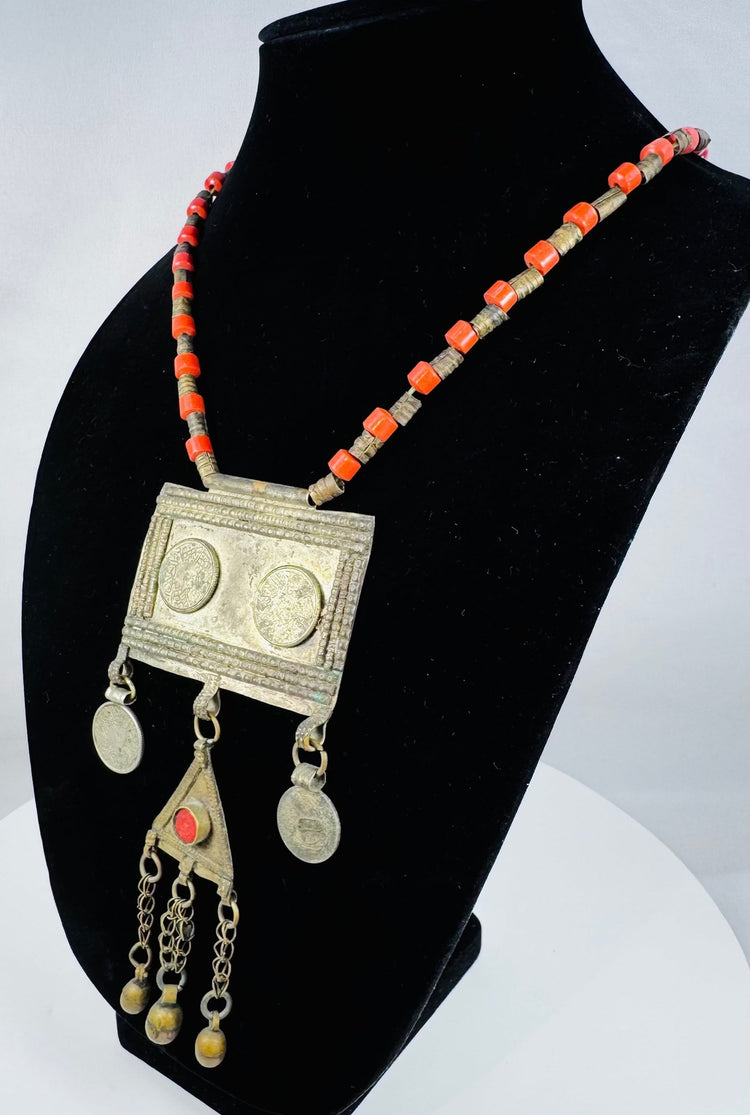
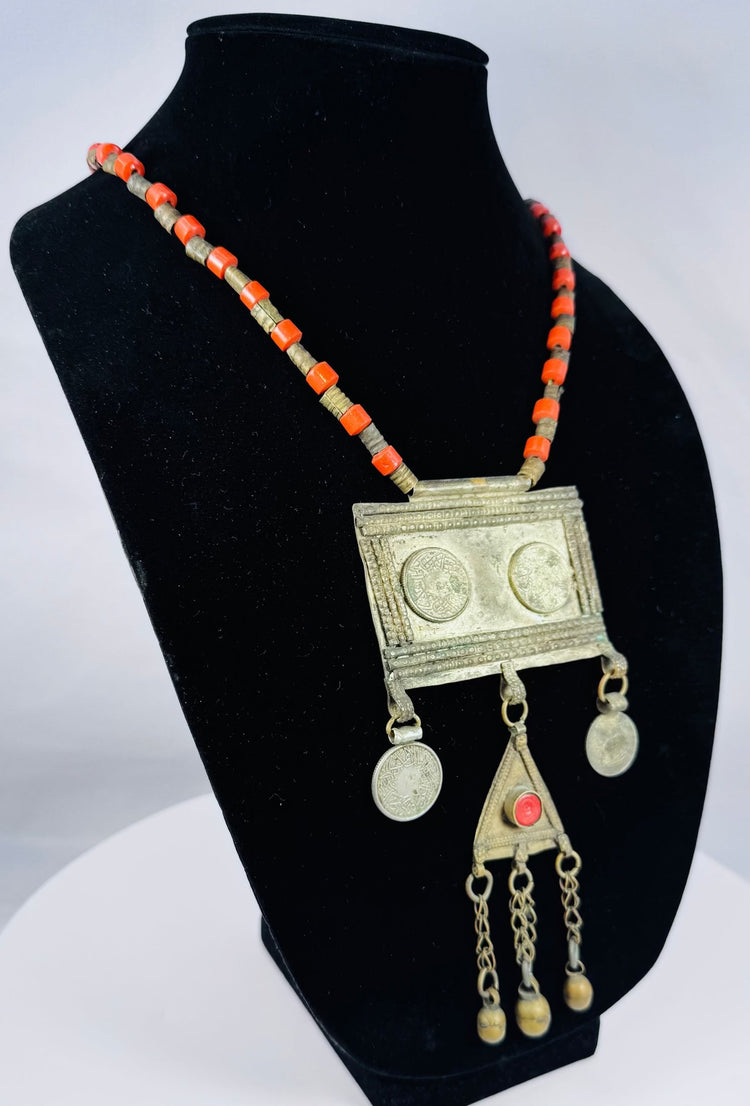
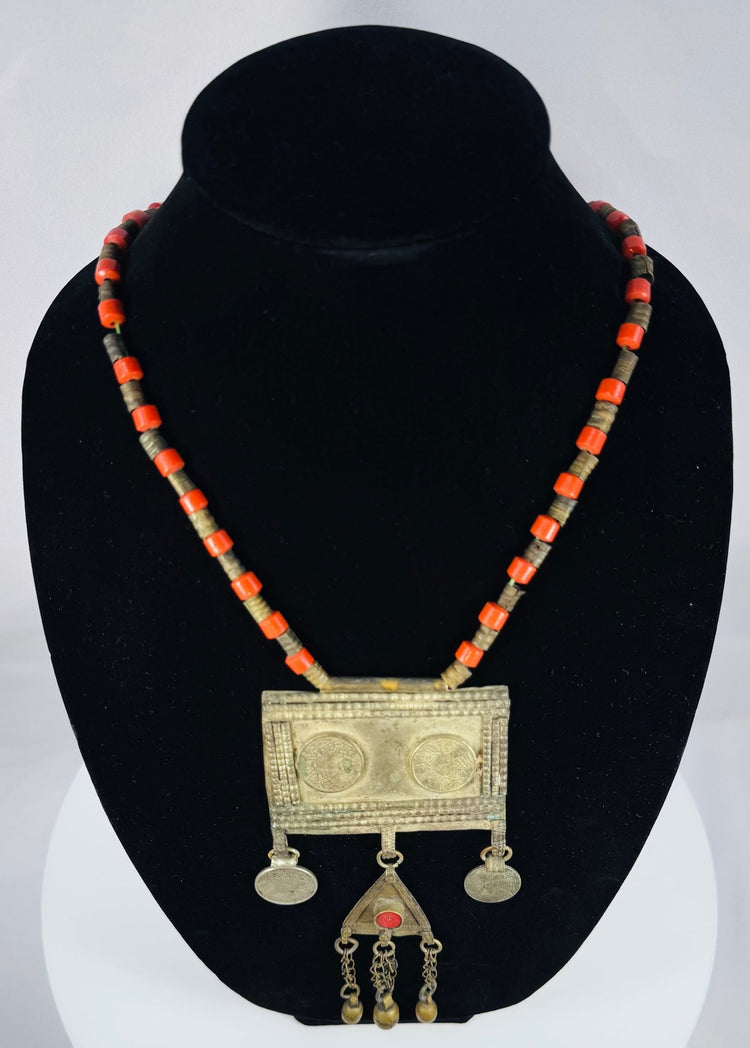
Collar tribal turcomano antiguo con amuleto Tumar | Joyería de Asia Central | Finales del siglo XIX - Principios del siglo XX
Descripción
Más
Menos
Contexto histórico y origen
Región: Asia Central (probablemente tradición tribal turkmena)
Material: Aleaciones de metales mixtos con acabado en tono plateado, cuentas de vidrio rojo, elementos de monedas suspendidas
Período: Finales del siglo XIX – principios del siglo XX
Descripción
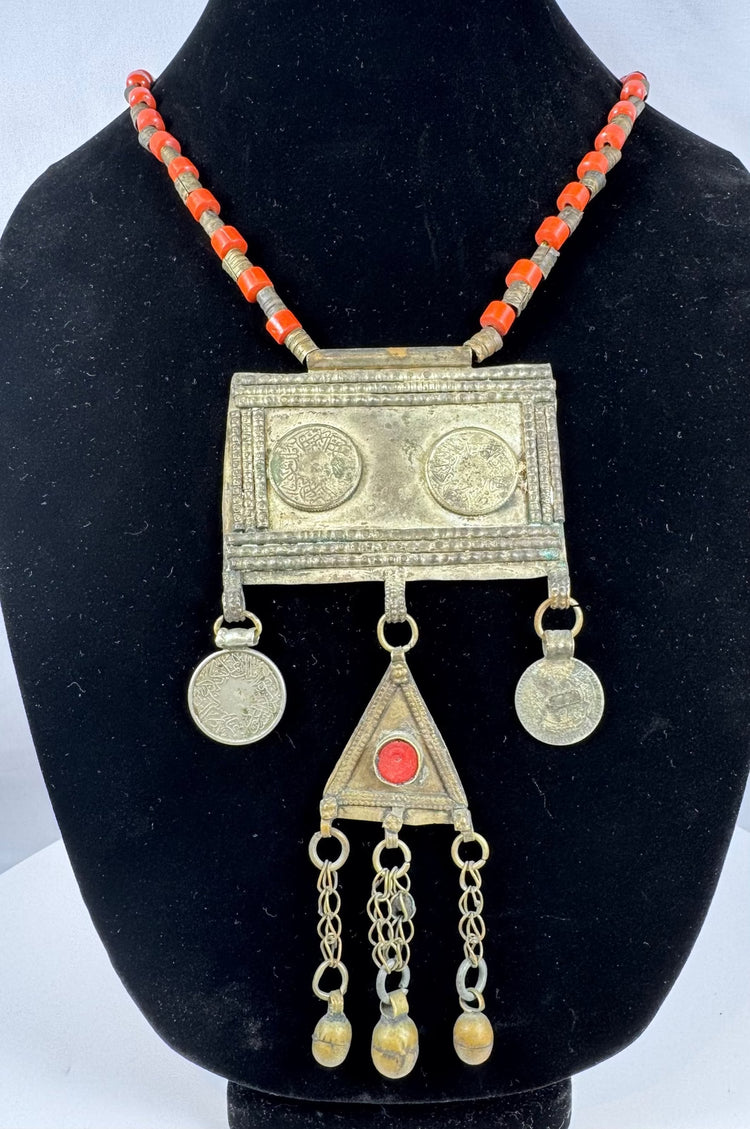
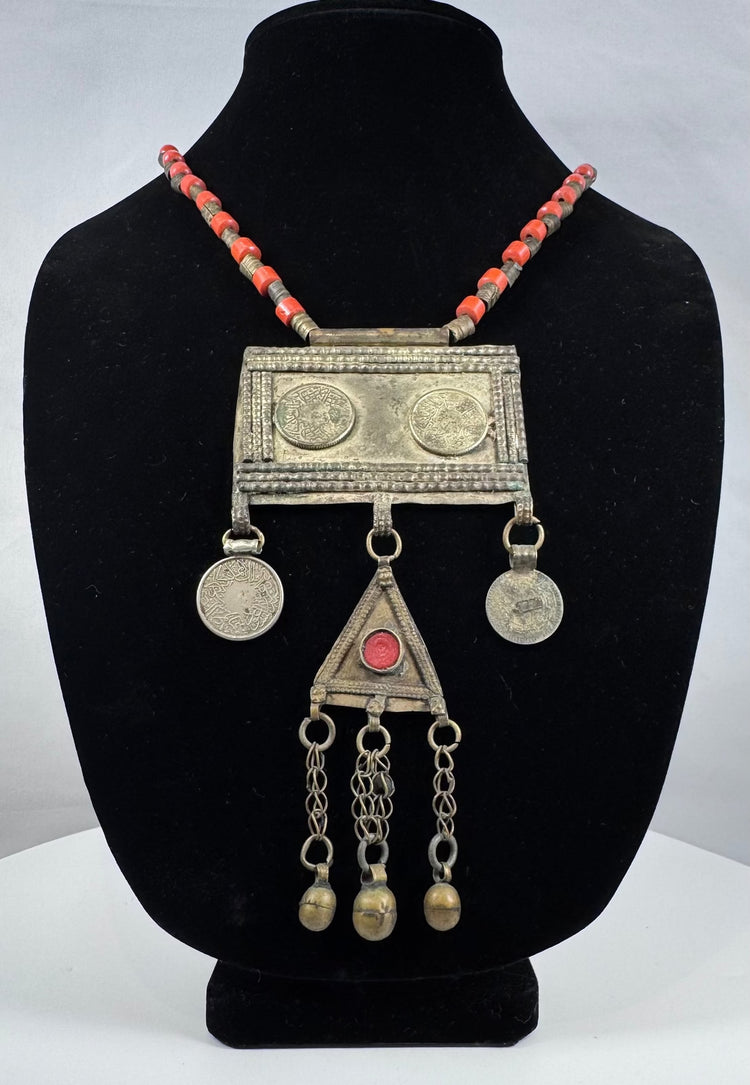
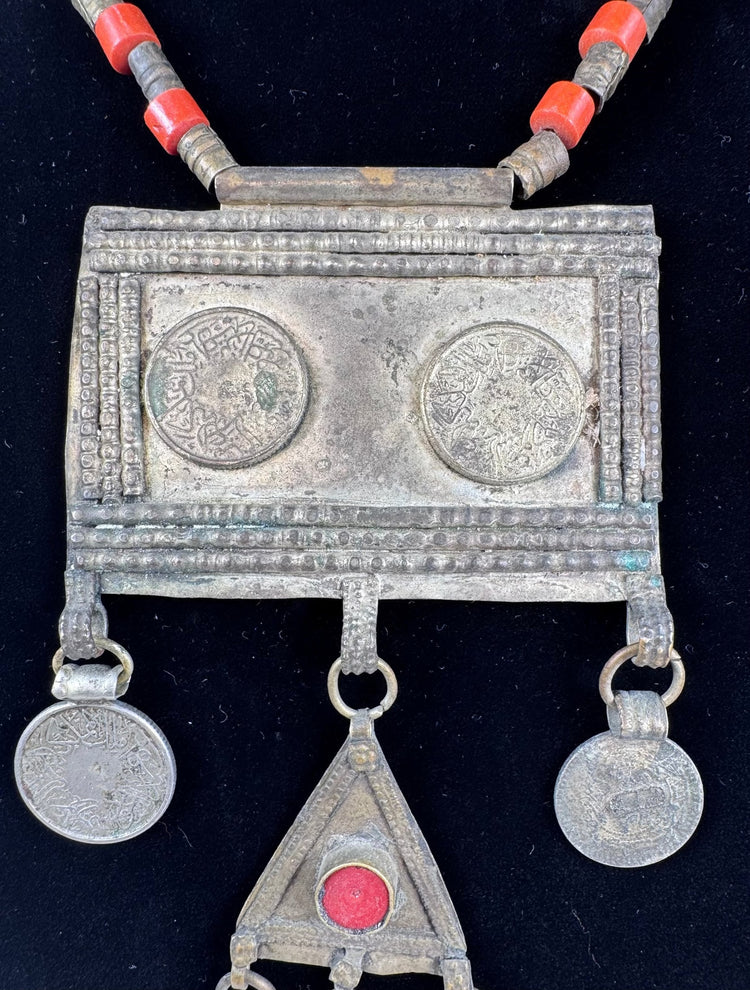
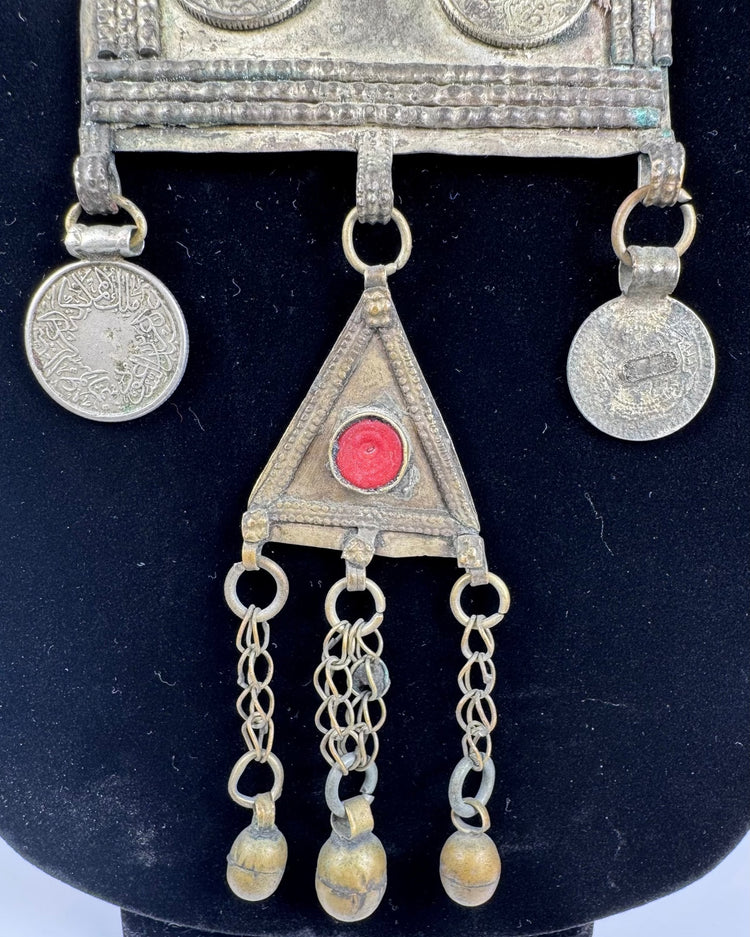
Este collar tribal antiguo de Asia Central es un notable ejemplo de la artesanía joyera tradicional turkmena. Construido con componentes de metal mixto en tono plateado y vibrantes cuentas de vidrio rojo, el collar tiene como centro un gran colgante pectoral rectangular adornado con motivos de monedas aplicadas, medallones suspendidos y un prominente elemento amuleto triangular.
La pieza central rectangular está decorada con bordes geométricos y ornamentos de monedas montadas con escritura árabe, lo que refleja la larga tradición de incorporar monedas en la joyería tribal turkmena. Históricamente, las monedas servían no solo como elementos decorativos, sino también como reservas portátiles de riqueza, símbolos de prosperidad e indicadores de estatus familiar.
Suspendido del panel central hay un colgante amuleto triangular con una cabujón de vidrio rojo y que termina en cadenas con ornamentos colgantes en forma de campana. Formas triangulares similares, a menudo denominadas amuletos tumar, se creía que proporcionaban protección espiritual al tiempo que añadían movimiento y riqueza visual a la vestimenta ceremonial. Las vibrantes cuentas de vidrio rojo reflejan aún más las preferencias estéticas tradicionales turkmenas y pueden haber simbolizado vitalidad, prosperidad y protección.
Joyería de este tipo era comúnmente usada durante bodas, festivales y ocasiones sociales importantes en toda Asia Central. Más allá del adorno personal, estos elaborados ornamentos servían como expresiones visibles de riqueza, identidad, afiliación tribal y herencia familiar, al mismo tiempo que mostraban las excepcionales tradiciones metalúrgicas de los artesanos turkmenos.
Características
- Collar tribal antiguo auténtico
- Probablemente de tradición tribal turkmena
- Construcción de metal mixto en tono plateado
- Elementos de monedas montadas con escritura árabe
- Collar de cuentas de vidrio rojo
- Gran colgante pectoral rectangular
- Colgante amuleto tumar triangular central
- Múltiples cadenas suspendidas y campanillas colgantes
- Construcción artesanal tradicional
Significado cultural
Entre los pueblos turkmenos de Asia Central, las joyas elaboradas eran mucho más que un adorno personal. Los ornamentos de plata se consideraban símbolos de prosperidad, protección y estatus social, mientras que los collares de este tipo a menudo formaban parte del atuendo ceremonial de una mujer. Se incorporaban amuletos, colgantes, elementos de monedas e incrustaciones de piedras o vidrios rojos tanto por sus cualidades decorativas como por sus percibidos poderes protectores. Hoy en día, los ejemplos que sobreviven son valorados por su arte y por la visión que proporcionan de las ricas tradiciones culturales de Asia Central.
Estado
Buen estado antiguo con el desgaste esperado por la edad, oxidación superficial, patinado, pérdidas menores en el acabado y ligera deformación consistente con la edad y el uso. El collar conserva sus elementos de monedas suspendidas, colgante triangular, colgantes de cadena y componentes de cuentas de vidrio rojo.
Dimensiones (aproximadas)
Longitud: 16 in
Ancho del colgante: 3 in
Antigüedad (aproximada)
80–130 años de antigüedad
Procedencia
De una colección privada en Toronto, Ontario, Canadá. El collar formó parte de una colección de joyas etnográficas, adornos tribales y artefactos culturales mantenida durante mucho tiempo por un coleccionista especializado en cultura material de Asia Central, Oriente Medio y África del Norte.
Saber más
Descubra la historia, el simbolismo y la artesanía de la joyería tribal turkmena a través de El Museo Metropolitano de Arte
Explore nuestra Colección de anillos antiguos y joyas históricas
Descripción
Contexto histórico y origen
Región: Asia Central (probablemente tradición tribal turkmena)
Material: Aleaciones de metales mixtos con acabado en tono plateado, cuentas de vidrio rojo, elementos de monedas suspendidas
Período: Finales del siglo XIX – principios del siglo XX
Descripción
Este collar tribal antiguo de Asia Central es un notable ejemplo de la artesanía joyera tradicional turkmena. Construido con componentes de metal mixto en tono plateado y vibrantes cuentas de vidrio rojo, el collar tiene como centro un gran colgante pectoral rectangular adornado con motivos de monedas aplicadas, medallones suspendidos y un prominente elemento amuleto triangular.
La pieza central rectangular está decorada con bordes geométricos y ornamentos de monedas montadas con escritura árabe, lo que refleja la larga tradición de incorporar monedas en la joyería tribal turkmena. Históricamente, las monedas servían no solo como elementos decorativos, sino también como reservas portátiles de riqueza, símbolos de prosperidad e indicadores de estatus familiar.
Suspendido del panel central hay un colgante amuleto triangular con una cabujón de vidrio rojo y que termina en cadenas con ornamentos colgantes en forma de campana. Formas triangulares similares, a menudo denominadas amuletos tumar, se creía que proporcionaban protección espiritual al tiempo que añadían movimiento y riqueza visual a la vestimenta ceremonial. Las vibrantes cuentas de vidrio rojo reflejan aún más las preferencias estéticas tradicionales turkmenas y pueden haber simbolizado vitalidad, prosperidad y protección.
Joyería de este tipo era comúnmente usada durante bodas, festivales y ocasiones sociales importantes en toda Asia Central. Más allá del adorno personal, estos elaborados ornamentos servían como expresiones visibles de riqueza, identidad, afiliación tribal y herencia familiar, al mismo tiempo que mostraban las excepcionales tradiciones metalúrgicas de los artesanos turkmenos.
Características
- Collar tribal antiguo auténtico
- Probablemente de tradición tribal turkmena
- Construcción de metal mixto en tono plateado
- Elementos de monedas montadas con escritura árabe
- Collar de cuentas de vidrio rojo
- Gran colgante pectoral rectangular
- Colgante amuleto tumar triangular central
- Múltiples cadenas suspendidas y campanillas colgantes
- Construcción artesanal tradicional
Significado cultural
Entre los pueblos turkmenos de Asia Central, las joyas elaboradas eran mucho más que un adorno personal. Los ornamentos de plata se consideraban símbolos de prosperidad, protección y estatus social, mientras que los collares de este tipo a menudo formaban parte del atuendo ceremonial de una mujer. Se incorporaban amuletos, colgantes, elementos de monedas e incrustaciones de piedras o vidrios rojos tanto por sus cualidades decorativas como por sus percibidos poderes protectores. Hoy en día, los ejemplos que sobreviven son valorados por su arte y por la visión que proporcionan de las ricas tradiciones culturales de Asia Central.
Estado
Buen estado antiguo con el desgaste esperado por la edad, oxidación superficial, patinado, pérdidas menores en el acabado y ligera deformación consistente con la edad y el uso. El collar conserva sus elementos de monedas suspendidas, colgante triangular, colgantes de cadena y componentes de cuentas de vidrio rojo.
Dimensiones (aproximadas)
Longitud: 16 in
Ancho del colgante: 3 in
Antigüedad (aproximada)
80–130 años de antigüedad
Procedencia
De una colección privada en Toronto, Ontario, Canadá. El collar formó parte de una colección de joyas etnográficas, adornos tribales y artefactos culturales mantenida durante mucho tiempo por un coleccionista especializado en cultura material de Asia Central, Oriente Medio y África del Norte.
Saber más
Descubra la historia, el simbolismo y la artesanía de la joyería tribal turkmena a través de El Museo Metropolitano de Arte
Explore nuestra Colección de anillos antiguos y joyas históricas
También te puede interesar
