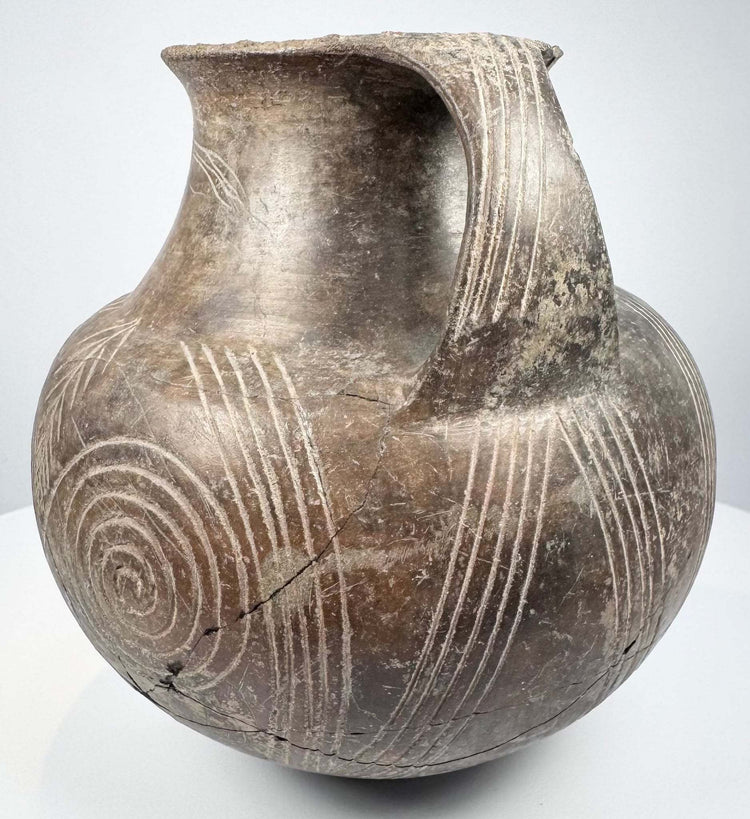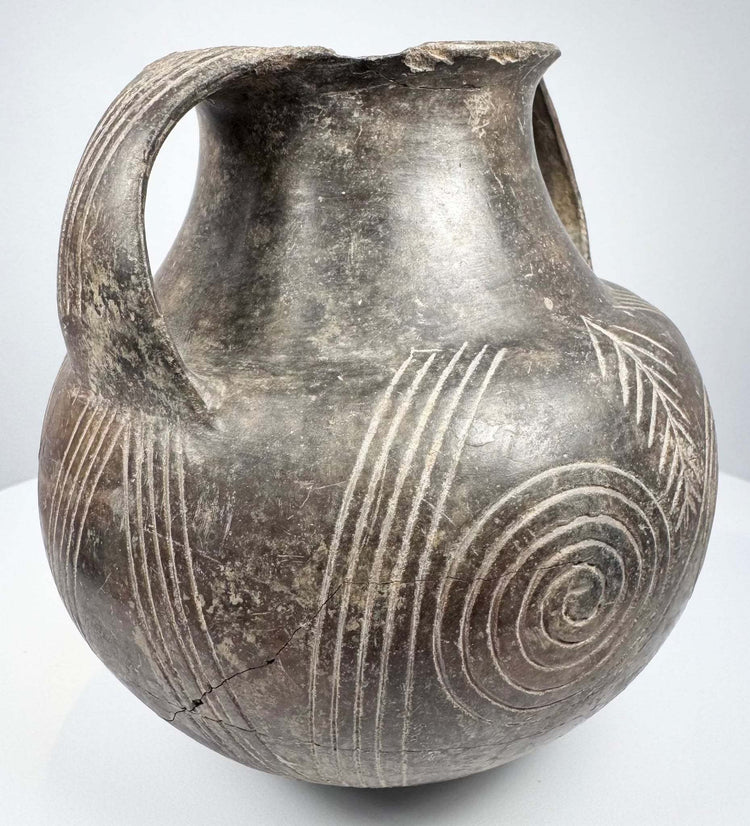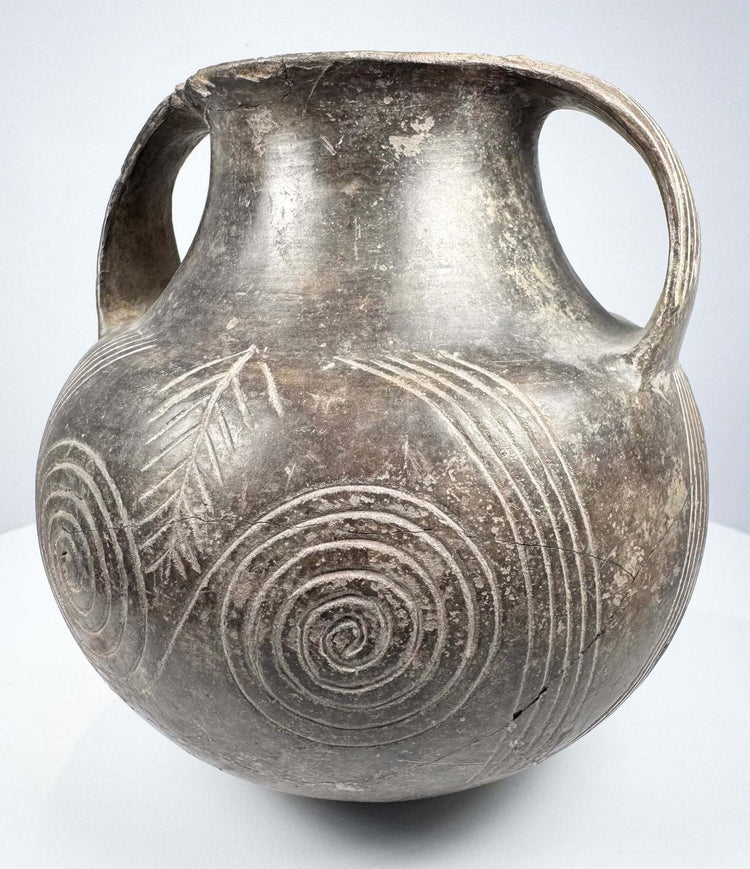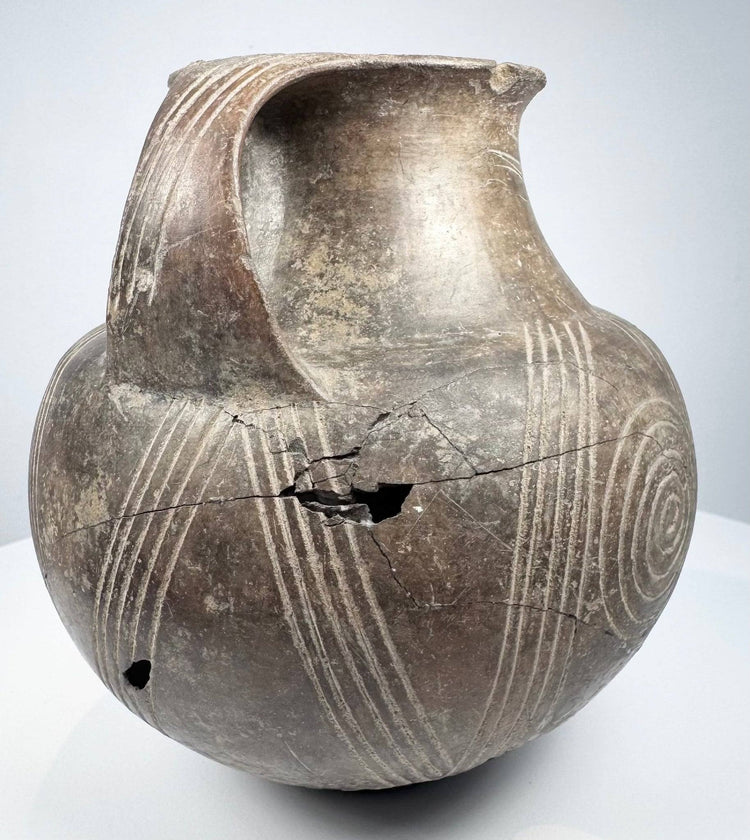
Jarra de cerámica del Neolítico-Edad del Bronce Temprano | Vasija ritual de doble asa | Europa Central y Oriental | Circa 3000-2000 a. C.

Historial de procedencia y propiedad

Anteriormente en una colección privada en Princeton, Nueva Jersey, EE. UU., que abarcaba una extensa colección de cerámica antigua y artefactos relacionados.

Precio habitual
$1,500.00
Precio de venta
$1,500.00
Precio habitual
Envío calculado al finalizar la compra.

This is a one-of-a-kind historical object. Once sold, this exact piece will not be restocked.

Questions before acquiring? Additional photographs, condition details, documentation, shipping information or a private viewing are available upon request.
Early Etruscan impasto spiral amphora, circa 700–650 BCE, with double handles and deeply incised concentric decoration.
Rotating 360-degree video of an early Etruscan impasto spiral amphora, circa 700–650 BCE, showing its double handles, rounded body, incised spiral decoration, rim, base, and ancient surface patina.
Ancient Etruscan terracotta amphora showing its rounded body, high loop handles, short neck, and dark impasto surface.
Early Etruscan impasto amphora with twin loop handles, flared rim, rounded body, and large incised spiral motifs across the front.
Straight-on photograph of the Etruscan impasto amphora showing both loop handles and symmetrical concentric spiral decoration.
Etruscan terracotta amphora angled to show one handle opening, the short neck, rounded shoulder, and deeply incised spiral patterns.
Early Etruscan amphora showing both handles, broad shoulder, and radiating geometric decoration between the large spiral motifs.
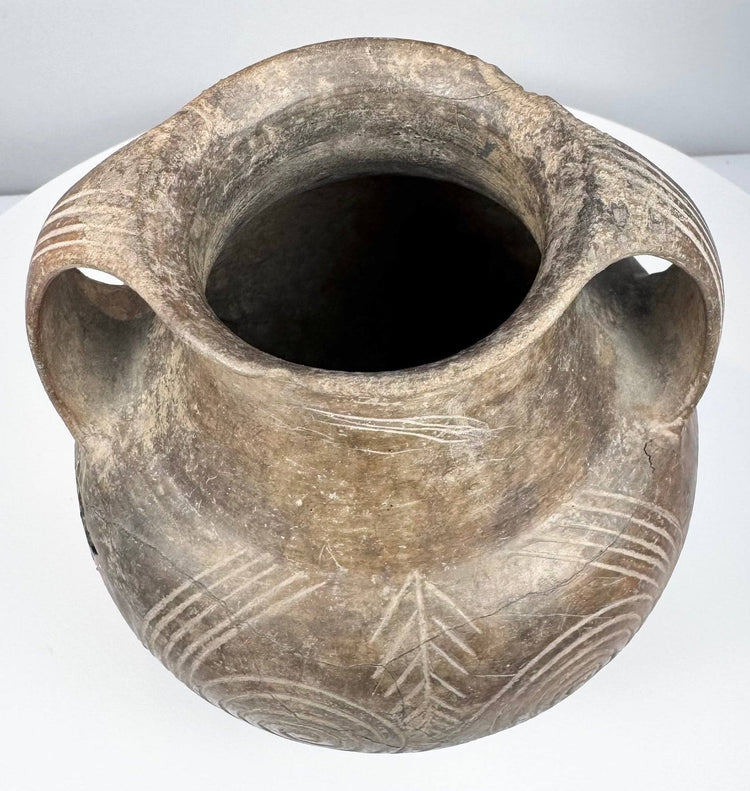
Upper angle of the Etruscan impasto vessel showing the open mouth, thick rim, twin handles, and incised decoration across the shoulder.
Side of the ancient Etruscan amphora showing one prominent loop handle and spiral ornament continuing around the rounded body.
Opposite side of the impasto amphora with one handle prominent and concentric spirals extending across the lower body.
Rear-side angle of the Etruscan vessel showing both handle attachments and a large incised spiral decorating the rounded body.
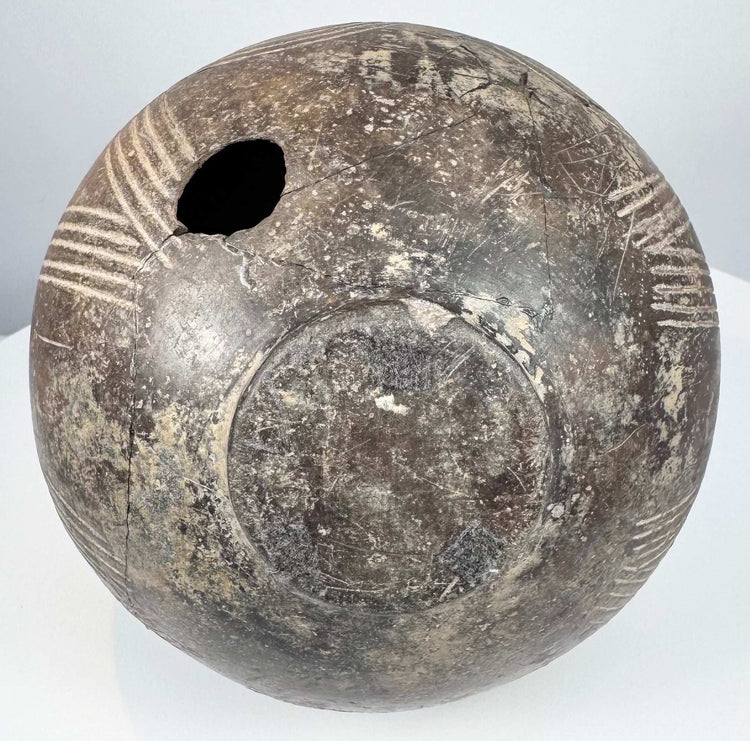
Ancient impasto amphora showing a side section with linear incisions, aged terracotta surface, and a visible vertical crack on the body.
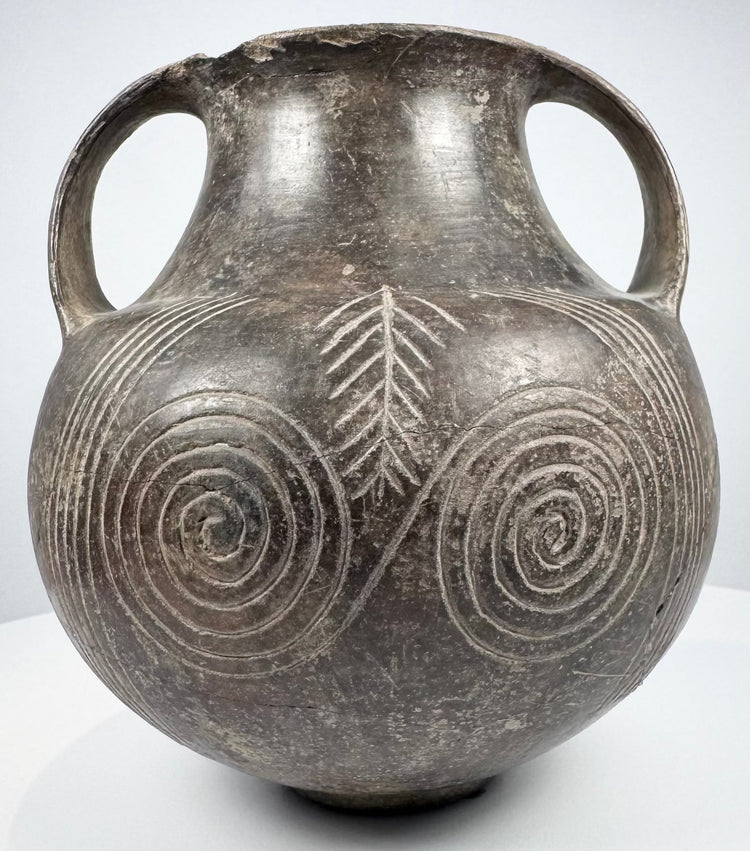
Etruscan spiral amphora with both loop handles visible and two large concentric spiral motifs dominating the darker ancient surface.
  • Early Etruscan impasto spiral amphora, circa 700–650 BCE, with double handles and deeply incised concentric decoration.
  • Rotating 360-degree video of an early Etruscan impasto spiral amphora, circa 700–650 BCE, showing its double handles, rounded body, incised spiral decoration, rim, base, and ancient surface patina.
  • Ancient Etruscan terracotta amphora showing its rounded body, high loop handles, short neck, and dark impasto surface.
  • Early Etruscan impasto amphora with twin loop handles, flared rim, rounded body, and large incised spiral motifs across the front.
  • Straight-on photograph of the Etruscan impasto amphora showing both loop handles and symmetrical concentric spiral decoration.
  • Etruscan terracotta amphora angled to show one handle opening, the short neck, rounded shoulder, and deeply incised spiral patterns.
  • Early Etruscan amphora showing both handles, broad shoulder, and radiating geometric decoration between the large spiral motifs.
  • Upper angle of the Etruscan impasto vessel showing the open mouth, thick rim, twin handles, and incised decoration across the shoulder.
  • Side of the ancient Etruscan amphora showing one prominent loop handle and spiral ornament continuing around the rounded body.
  • Opposite side of the impasto amphora with one handle prominent and concentric spirals extending across the lower body.
  • Rear-side angle of the Etruscan vessel showing both handle attachments and a large incised spiral decorating the rounded body.
  • Ancient impasto amphora showing a side section with linear incisions, aged terracotta surface, and a visible vertical crack on the body.
  • Etruscan spiral amphora with both loop handles visible and two large concentric spiral motifs dominating the darker ancient surface.
Early Etruscan impasto spiral amphora, circa 700–650 BCE, with double handles and deeply incised concentric decoration.
Rotating 360-degree video of an early Etruscan impasto spiral amphora, circa 700–650 BCE, showing its double handles, rounded body, incised spiral decoration, rim, base, and ancient surface patina.
Ancient Etruscan terracotta amphora showing its rounded body, high loop handles, short neck, and dark impasto surface.
Early Etruscan impasto amphora with twin loop handles, flared rim, rounded body, and large incised spiral motifs across the front.
Straight-on photograph of the Etruscan impasto amphora showing both loop handles and symmetrical concentric spiral decoration.
Etruscan terracotta amphora angled to show one handle opening, the short neck, rounded shoulder, and deeply incised spiral patterns.
Early Etruscan amphora showing both handles, broad shoulder, and radiating geometric decoration between the large spiral motifs.
Upper angle of the Etruscan impasto vessel showing the open mouth, thick rim, twin handles, and incised decoration across the shoulder.
Side of the ancient Etruscan amphora showing one prominent loop handle and spiral ornament continuing around the rounded body.
Opposite side of the impasto amphora with one handle prominent and concentric spirals extending across the lower body.
Rear-side angle of the Etruscan vessel showing both handle attachments and a large incised spiral decorating the rounded body.
Ancient impasto amphora showing a side section with linear incisions, aged terracotta surface, and a visible vertical crack on the body.
Etruscan spiral amphora with both loop handles visible and two large concentric spiral motifs dominating the darker ancient surface.
Authenticity and secure checkout guarantee

Jarra de cerámica del Neolítico-Edad del Bronce Temprano | Vasija ritual de doble asa | Europa Central y Oriental | Circa 3000-2000 a. C.

Descripción

Contexto histórico y origen

Región: Europa Central u Oriental
Material: Terracota (cerámica hecha a mano)
Período: Neolítico a principios de la Edad del Bronce, circa 3000-2000 a. C.

Descripción

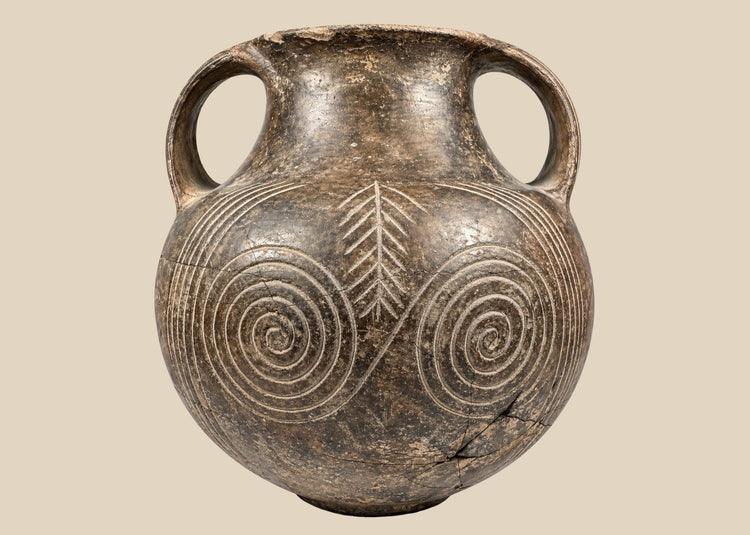
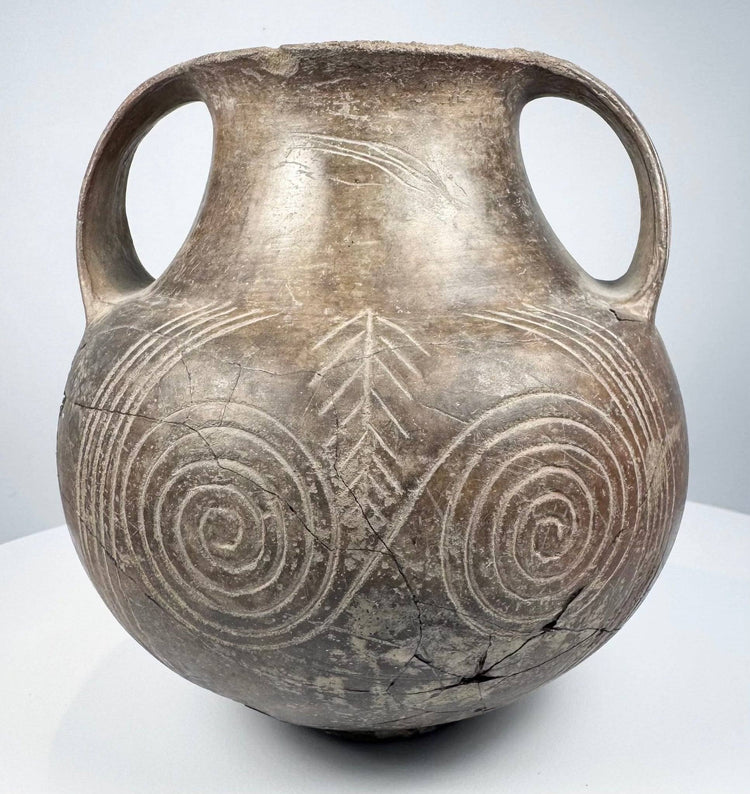
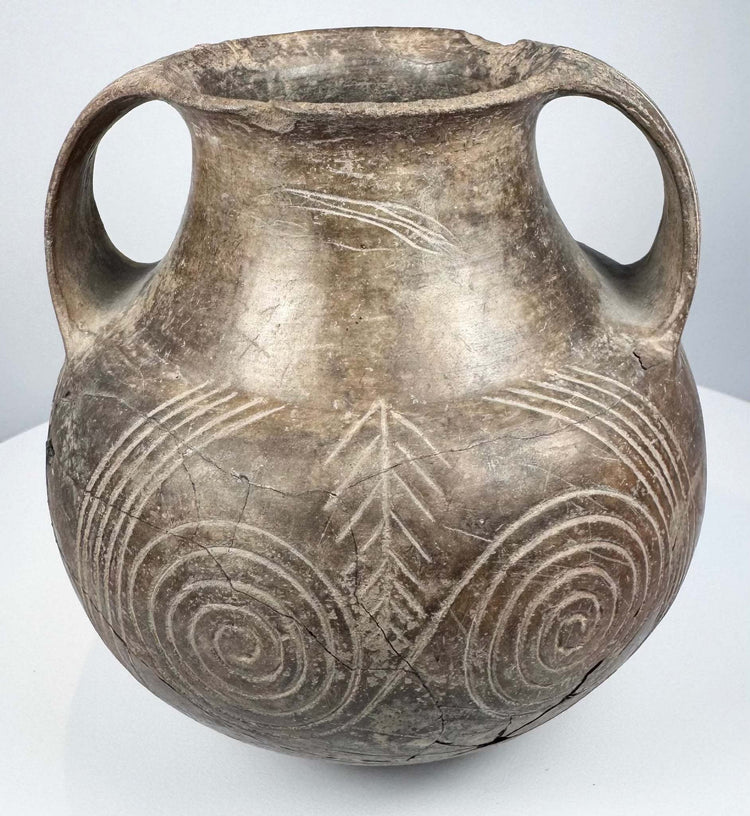
Esta antigua jarra de cerámica es un raro y fascinante ejemplo de la temprana artesanía europea durante la transición de las sociedades nómadas a las agrícolas. Hecha a mano y decorada con patrones lineales y circulares incisos, la jarra encarna tanto el diseño funcional como el arte simbólico. Su forma de doble asa sugiere que pudo haber sido utilizada en contextos rituales, para libaciones u ofrendas, además del almacenamiento diario de líquidos preciosos como aceites, hidromiel o agua.

Características

- Motivos geométricos incisos que incluyen diseños lineales y de círculos concéntricos

- Construcción de doble asa, probablemente para uso ceremonial

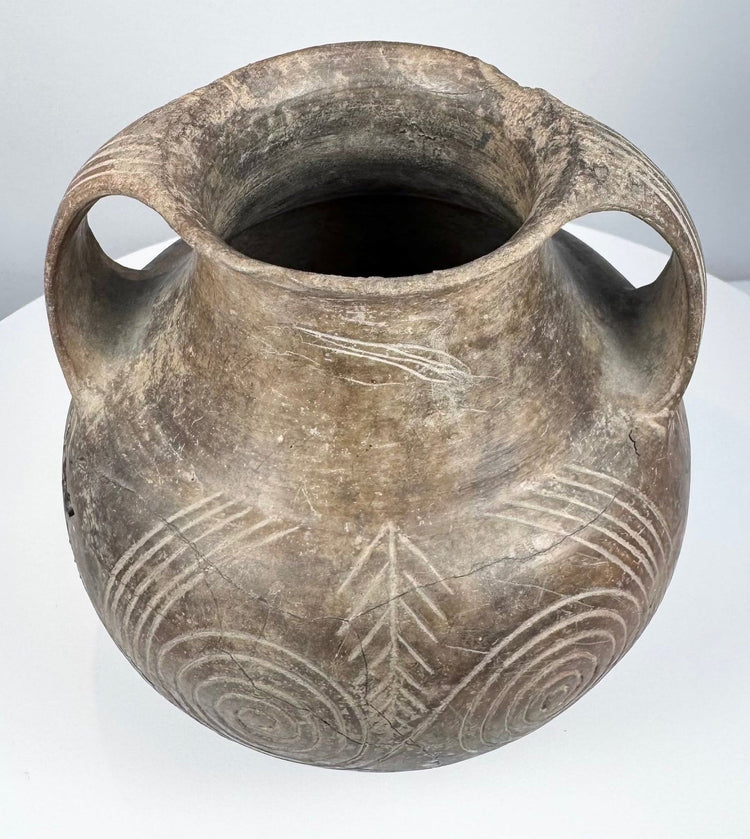
- Cuerpo compacto con boca ancha, funcional tanto para el almacenamiento como para el vertido ritual

- Desgaste natural y pátina superficial desarrollados a lo largo de milenios

Significado cultural

Las vasijas de este tipo no solo eran utilitarias, sino que también tenían un fuerte significado simbólico. Los patrones geométricos pudieron haber representado la fertilidad, la espiritualidad o las creencias cosmológicas centrales para las culturas neolíticas y de la Edad del Bronce. La presencia de asas dobles se asocia a menudo con ofrendas rituales o prácticas ceremoniales, enfatizando el probable papel espiritual, además del práctico, de la jarra.

Estado

Buen estado antiguo con desgaste superficial visible, grietas y pérdidas menores consistentes con la edad. La jarra permanece estructuralmente sólida, y la pátina resalta su autenticidad y significado arqueológico.

Dimensiones (aproximadas)

Altura: 5.5 pulgadas
Ancho: 5.5 pulgadas

Edad (aproximada)

4,025–5,025 años

Procedencia 

Anteriormente en una colección privada en Princeton, Nueva Jersey, EE. UU., que comprendía una extensa colección de cerámica antigua y artefactos relacionados.

Más información

Vea un ejemplo relacionado de la Edad del Bronce temprana en El Museo Metropolitano de Arte

Explore nuestra Colección de Jarras Antiguas y Vasijas Rituales

Descripción

Contexto histórico y origen

Región: Europa Central u Oriental
Material: Terracota (cerámica hecha a mano)
Período: Neolítico a principios de la Edad del Bronce, circa 3000-2000 a. C.

Descripción

Esta antigua jarra de cerámica es un raro y fascinante ejemplo de la temprana artesanía europea durante la transición de las sociedades nómadas a las agrícolas. Hecha a mano y decorada con patrones lineales y circulares incisos, la jarra encarna tanto el diseño funcional como el arte simbólico. Su forma de doble asa sugiere que pudo haber sido utilizada en contextos rituales, para libaciones u ofrendas, además del almacenamiento diario de líquidos preciosos como aceites, hidromiel o agua.

Características

- Motivos geométricos incisos que incluyen diseños lineales y de círculos concéntricos

- Construcción de doble asa, probablemente para uso ceremonial

- Cuerpo compacto con boca ancha, funcional tanto para el almacenamiento como para el vertido ritual

- Desgaste natural y pátina superficial desarrollados a lo largo de milenios

Significado cultural

Las vasijas de este tipo no solo eran utilitarias, sino que también tenían un fuerte significado simbólico. Los patrones geométricos pudieron haber representado la fertilidad, la espiritualidad o las creencias cosmológicas centrales para las culturas neolíticas y de la Edad del Bronce. La presencia de asas dobles se asocia a menudo con ofrendas rituales o prácticas ceremoniales, enfatizando el probable papel espiritual, además del práctico, de la jarra.

Estado

Buen estado antiguo con desgaste superficial visible, grietas y pérdidas menores consistentes con la edad. La jarra permanece estructuralmente sólida, y la pátina resalta su autenticidad y significado arqueológico.

Dimensiones (aproximadas)

Altura: 5.5 pulgadas
Ancho: 5.5 pulgadas

Edad (aproximada)

4,025–5,025 años

Procedencia 

Anteriormente en una colección privada en Princeton, Nueva Jersey, EE. UU., que comprendía una extensa colección de cerámica antigua y artefactos relacionados.

Más información

Vea un ejemplo relacionado de la Edad del Bronce temprana en El Museo Metropolitano de Arte

Explore nuestra Colección de Jarras Antiguas y Vasijas Rituales

También te puede interesar