

Escudo de la Corte de África Oriental con Monturas Repujadas y Doradas | Circa 1870 – 1900
- Precio habitual
- $1,750.00
- Precio de venta
- $1,750.00
- Precio habitual
No se pudo cargar la disponibilidad de retiro


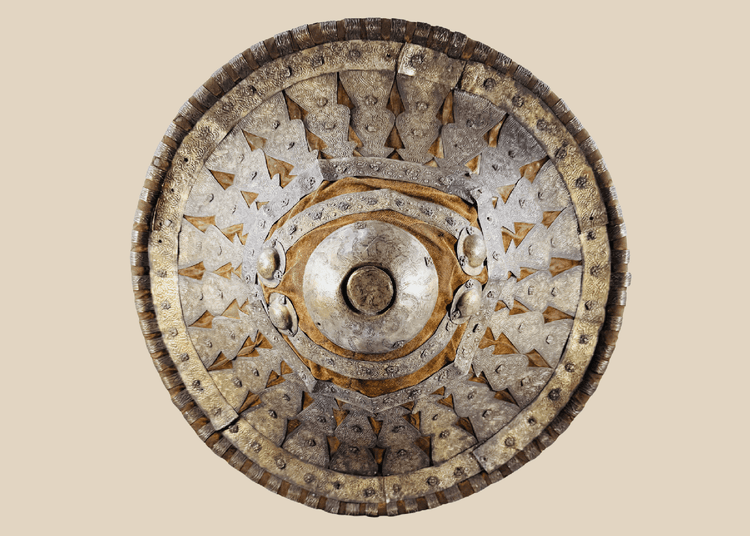

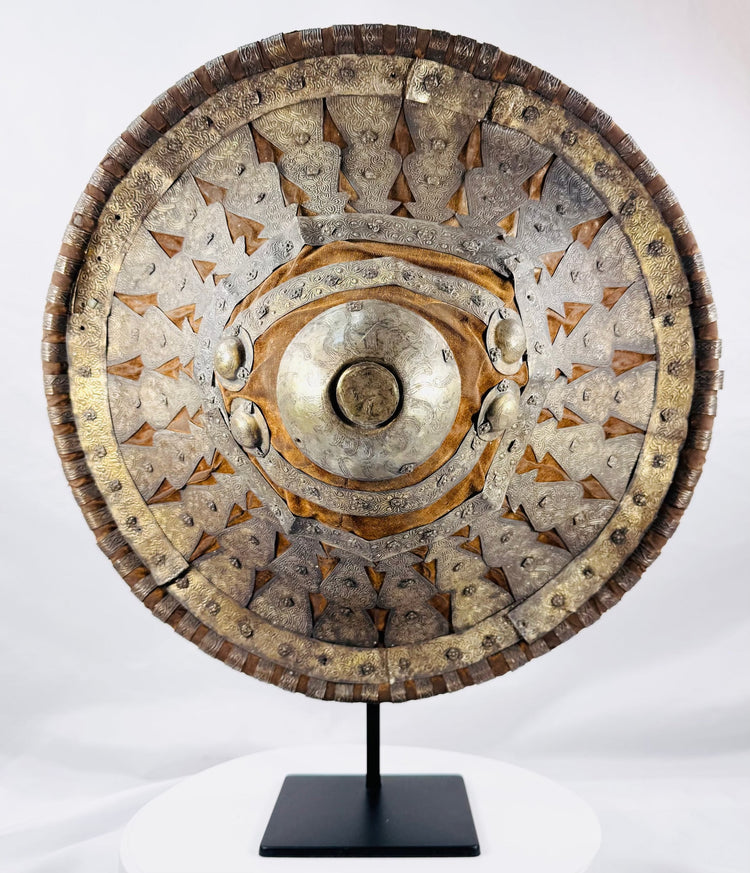
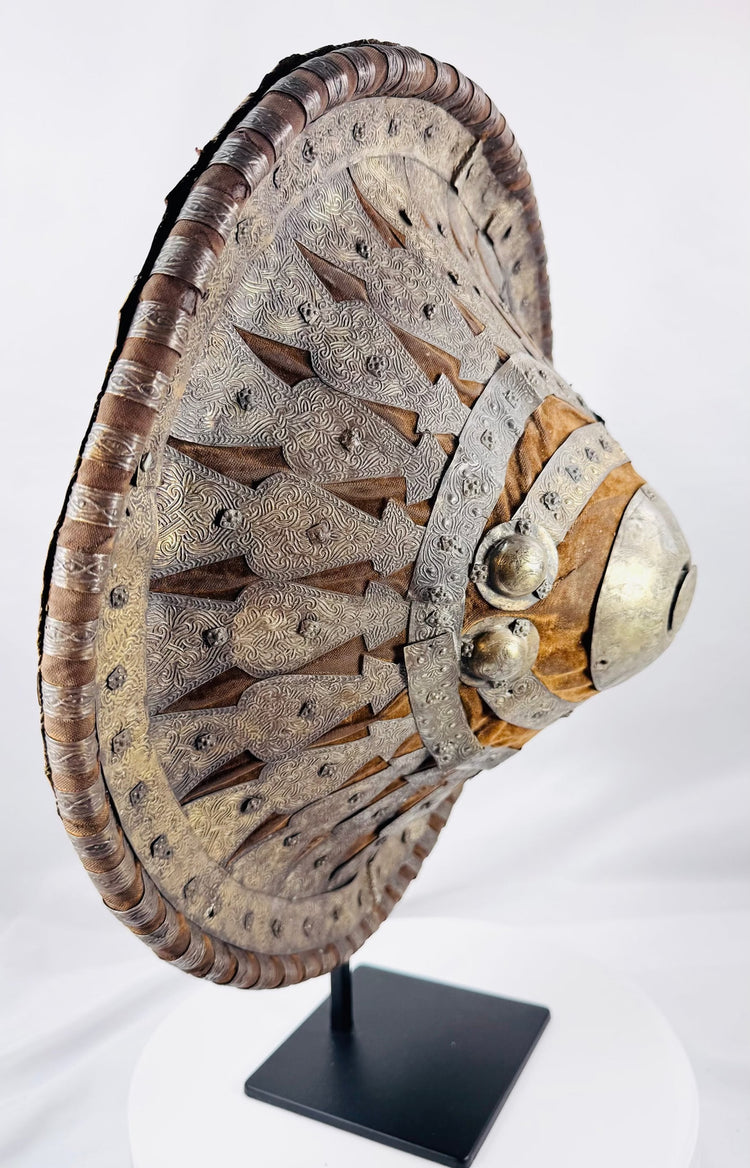
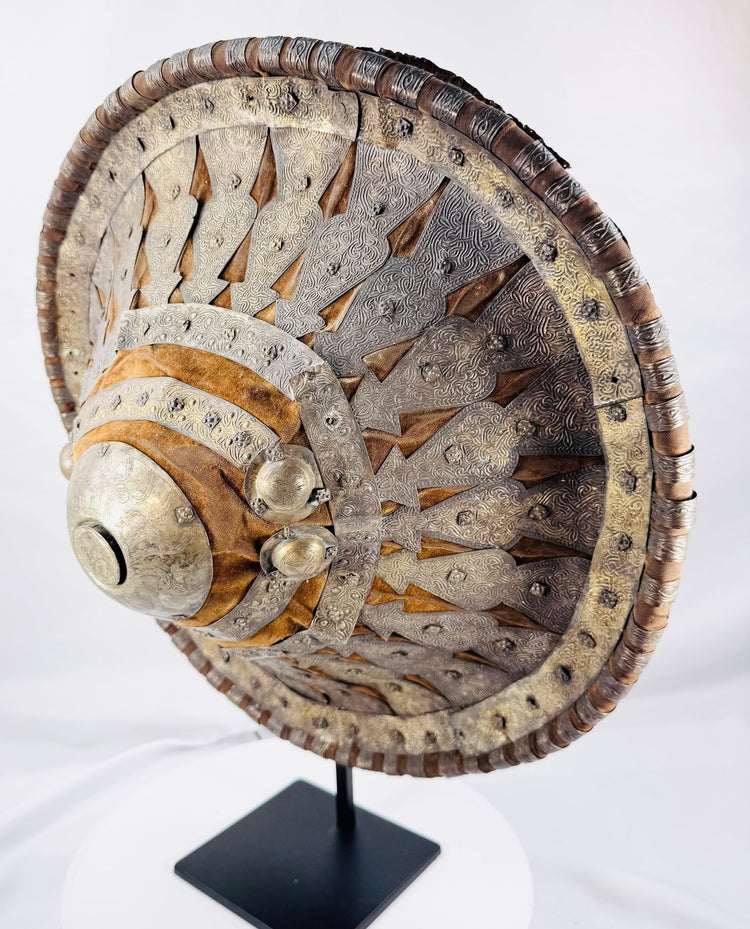
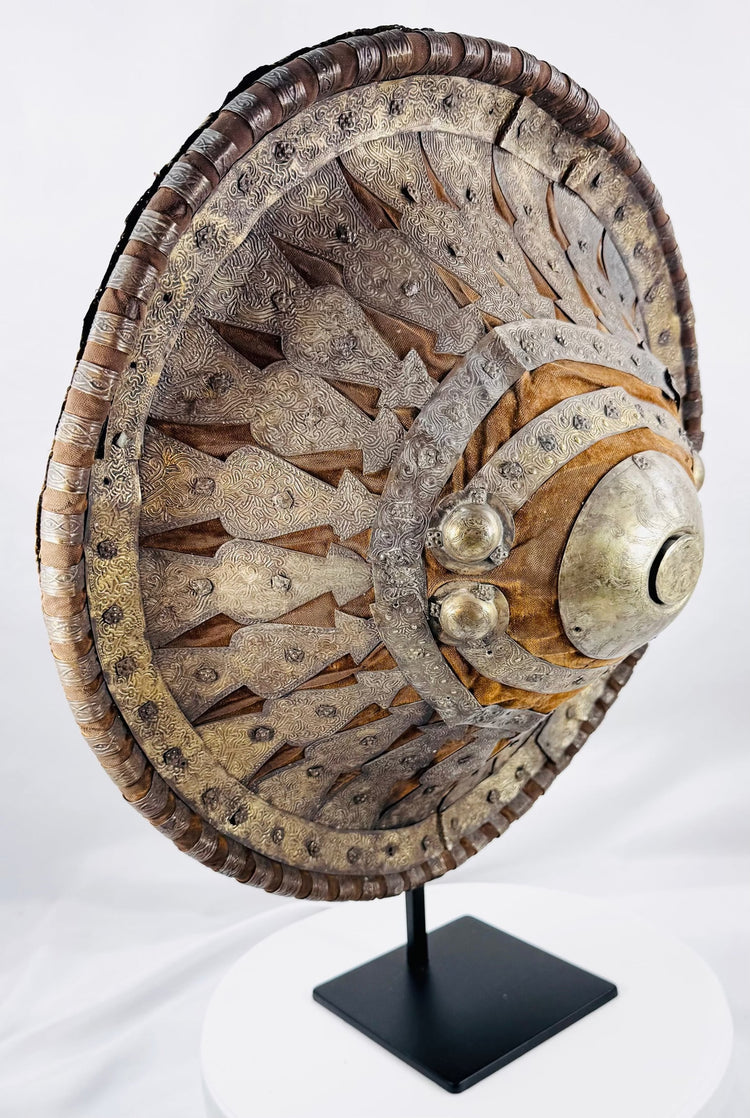
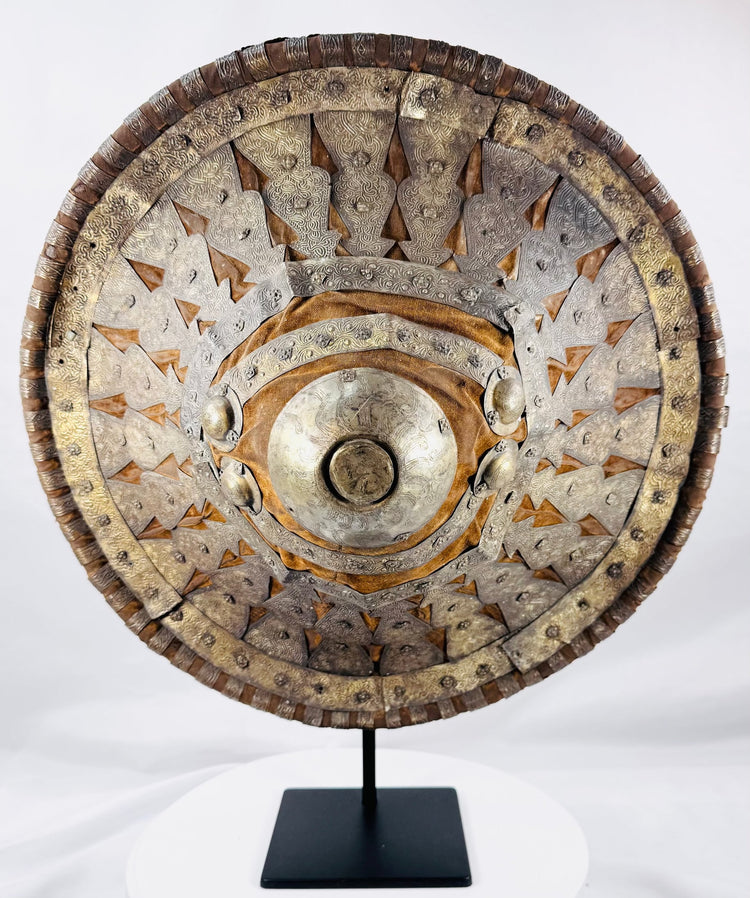
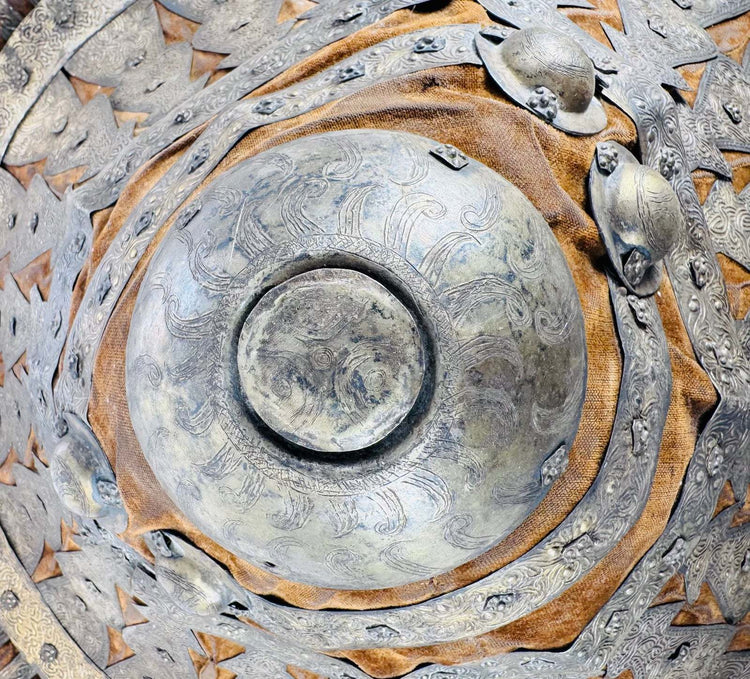
Escudo de la Corte de África Oriental con Monturas Repujadas y Doradas | Circa 1870 – 1900
Descripción
Más
Menos
Contexto histórico y origen
Región: Etiopía, África Oriental
Material: Piel, terciopelo, herrajes de metal plateado y dorado, cuero y tejido
Periodo: Finales del siglo XIX d. C., alrededor de 1870-1900
Descripción
Este excepcional escudo circular etíope es un ejemplo de alta calidad de los escudos de prestigio elaboradamente ornamentados, tradicionalmente asociados con la corte imperial y los miembros de alto rango de la nobleza etíope. Los escudos de este tipo ricamente decorados son comúnmente identificados en el ámbito del coleccionismo como escudos Ras, en referencia al título aristocrático y militar etíope Ras.
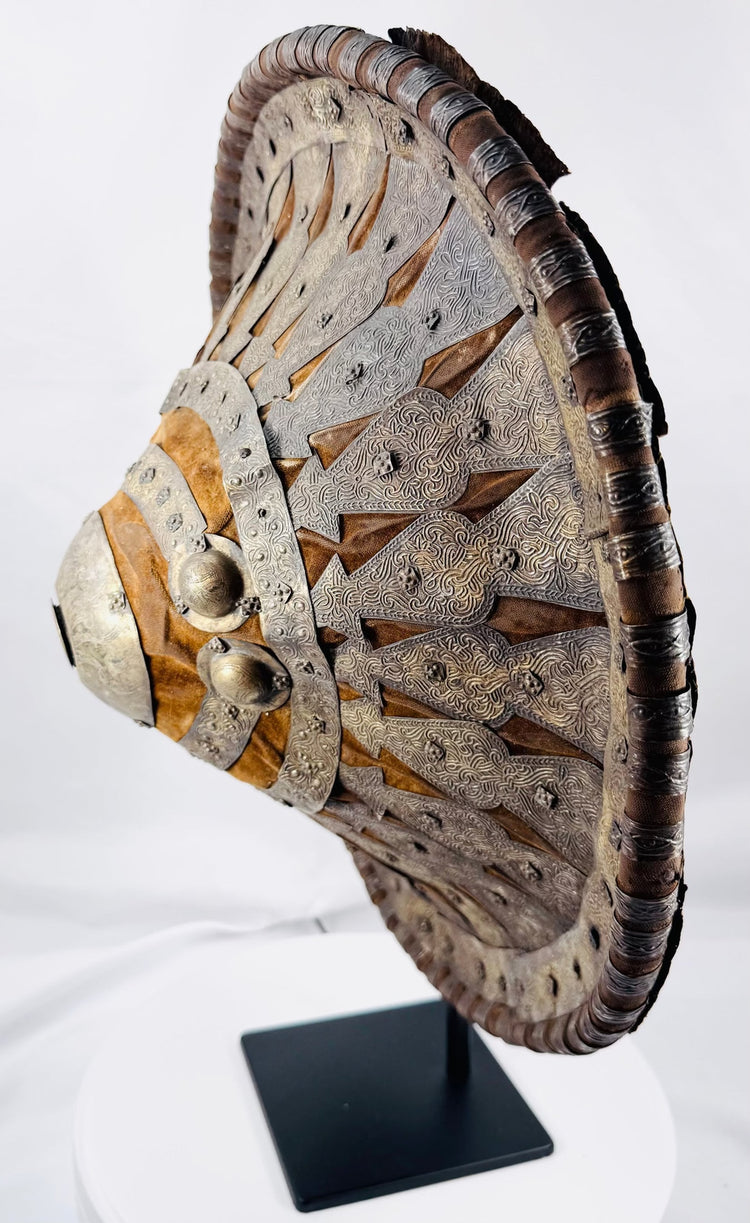
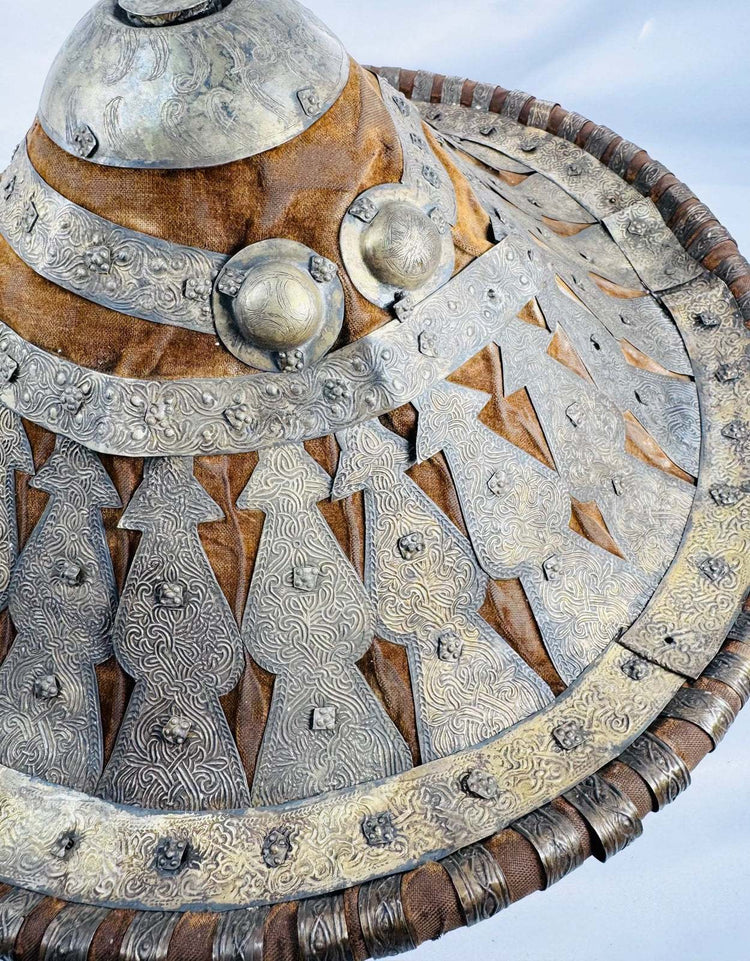
El escudo está construido con un cuerpo de piel grueso y convexo cubierto en la parte frontal con terciopelo de color marrón dorado y una extraordinaria disposición de herrajes de metal perforados, repujados, grabados y parcialmente dorados. Numerosas placas radiantes se extienden hacia afuera desde el centro en filas superpuestas, cada una cortada en forma estilizada de punta de lanza o de jarrón y densamente trabajada con volutas entrelazadas, ornamentos lineales y patrones repetitivos intrincados.
Anchas bandas concéntricas de metal refuerzan y decoran el escudo, mientras que una serie de protuberancias hemisféricas elevadas rodean el área central. El centro está dominado por una gran protuberancia convexa circular grabada con ornamentos foliares y en forma de llama radiantes alrededor de un disco central más pequeño y elevado. Este prominente arreglo similar al sol es característico de los escudos etíopes muy decorados, creando un poderoso punto focal y enfatizando el aspecto ceremonial y simbólico del escudo.
El perímetro exterior está reforzado por una ancha banda metálica decorada, asegurada con numerosos pequeños herrajes. Más allá de esto, el borde está firmemente envuelto en secciones alternas de textil y metal repujado, creando un borde sustancial y visualmente impactante. Los patrones grabados repetidos, el trabajo de metal en capas, las protuberancias elevadas y el contraste del fondo de terciopelo demuestran el considerable trabajo involucrado en su construcción.
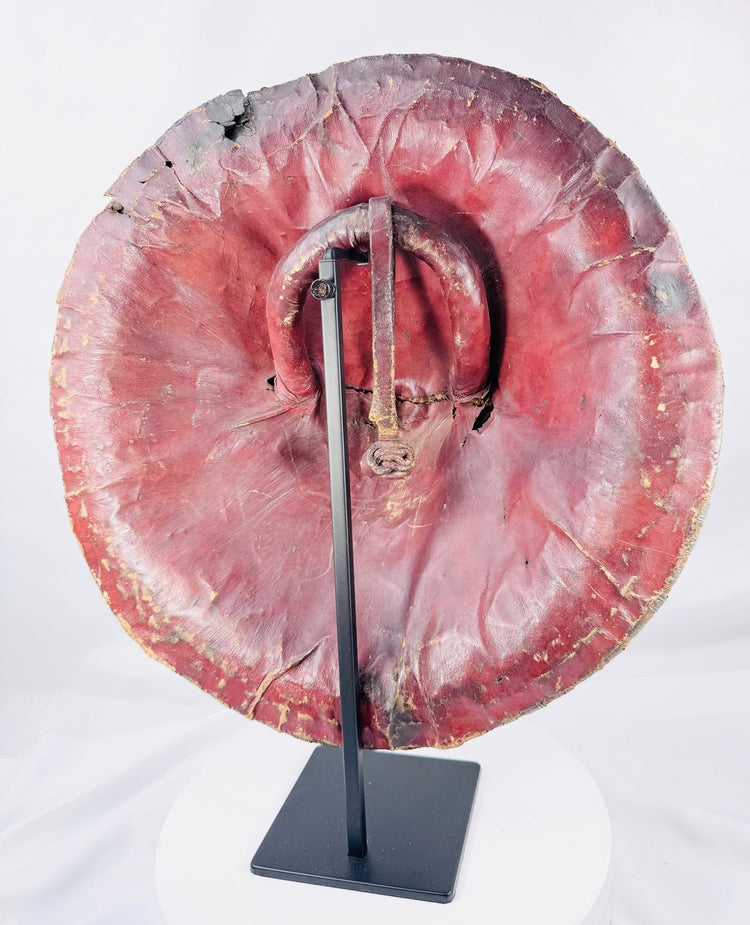
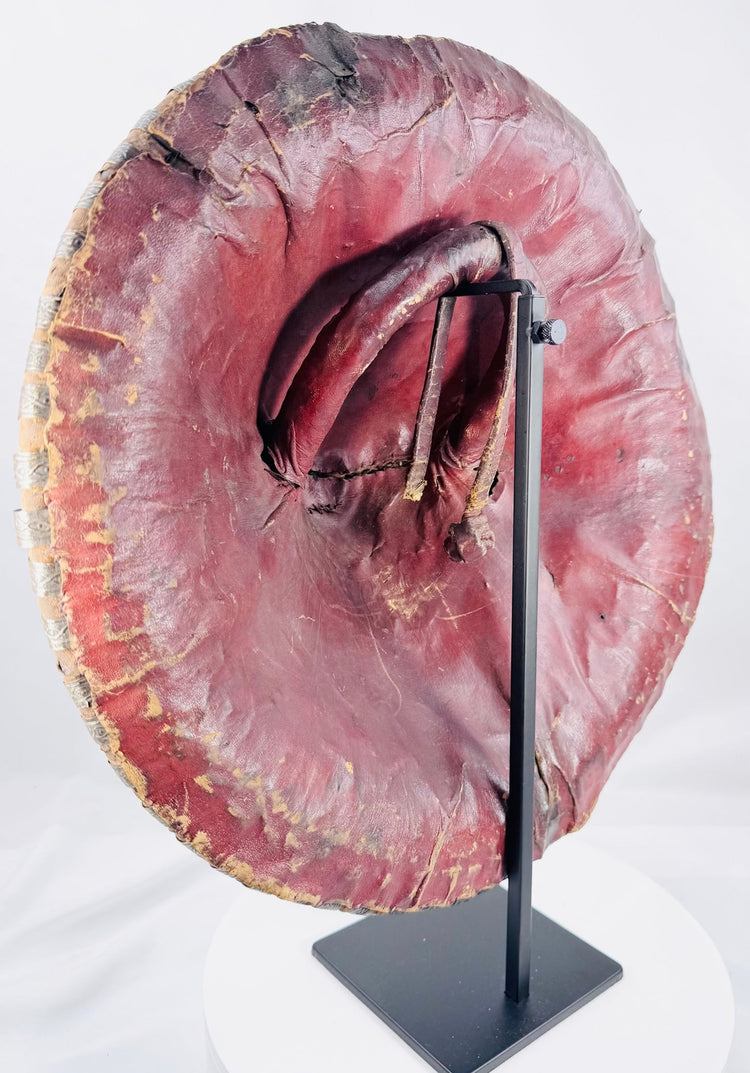
El reverso está completamente cubierto de cuero teñido de rojo y conserva su empuñadura de cuero acolchada original y la correa de sujeción asociada. El perfil profundamente convexo y la robusta construcción de cuero conservan la forma funcional de un escudo defensivo, aunque la extensa ornamentación metálica indica que este ejemplo también sirvió como objeto de rango, exhibición ceremonial y prestigio cortesano.
Características
- Forma cortesana tradicionalmente asociada con un Ras o noble de alto rango
- Cuerpo convexo circular construido con piel gruesa
- Frente cubierto de terciopelo marrón dorado
- Elaboradamente engastado con numerosos herrajes de metal perforados y repujados
- Densa decoración grabada entrelazada y en espiral en toda la pieza
- Aplicaciones radiantes en forma de punta de lanza y jarrón
- Gran protuberancia central convexa con ornamento grabado similar al sol
- Múltiples protuberancias hemisféricas elevadas que rodean el centro
- Envoltura alternada de textil y metal repujado alrededor del borde exterior
- Reverso completamente cubierto de cuero teñido de rojo
- Empuñadura de cuero acolchada original intacta
Significado cultural
En la Etiopía imperial, los escudos eran importantes armas defensivas, así como símbolos muy visibles de estatus militar, riqueza y autoridad política. Los ejemplos funcionales se solían fabricar con cuero animal grueso, que proporcionaba resistencia y era más ligero que un escudo totalmente metálico. Los ejemplos de prestigio destinados a nobles, comandantes y miembros de la corte imperial se solían realzar con cubiertas de terciopelo, monturas plateadas o doradas, protuberancias grabadas y complejos esquemas decorativos.
El título de Ras se otorgaba a nobles poderosos, gobernadores provinciales y altos mandos militares. Aunque no todos los escudos etíopes ornamentados pueden vincularse a un Ras específico, el término escudo Ras se utiliza ampliamente para distinguir los suntuosos ejemplos cortesanos de los escudos de cuero más utilitarios que llevaban los soldados comunes. Escudos comparables cubiertos de terciopelo y ornamentados con monturas de metales preciosos se han asociado con miembros de las cortes de los emperadores etíopes, incluida la corte del emperador Menelik II.
La disposición radiante de los soportes y el prominente saliente central evocan la forma del sol, un diseño visualmente poderoso que realza la presencia ceremonial del escudo. Objetos de esta calidad habrían comunicado el rango y el estatus de sus propietarios durante procesiones militares, comparecencias judiciales, ceremonias públicas y reuniones formales.
Condición
El escudo permanece estructuralmente intacto y presenta un extenso desgaste relacionado con la edad, consistente con su fecha de finales del siglo XIX. Los herrajes metálicos exhiben deslustre, oxidación, roces, patinado oscurecido, pequeñas abolladuras, abrasiones superficiales y pérdidas localizadas del acabado plateado o dorado original. Varios herrajes muestran pequeños orificios, cierres faltantes, doblado, separación e irregularidades resultantes de la edad y el uso.
La cubierta frontal de terciopelo presenta decoloración, manchas, compresión, alteración del color y desgaste localizado debajo y entre los herrajes metálicos. El revestimiento textil exterior está desgastado y deshilachado en varias áreas, con pérdidas dispersas y material subyacente expuesto.
El reverso de cuero rojo presenta extensos roces, grietas, pliegues, pérdidas superficiales, abrasiones, desgarros antiguos y áreas de separación alrededor del perímetro. La empuñadura acolchada original y la correa de sujeción permanecen presentes pero muestran una considerable sequedad, agrietamiento, desgaste y pérdidas parciales.
Dimensiones (aproximadas)
Diámetro: 17.3 in
Antigüedad (aproximada)
126-156 años de antigüedad
Procedencia
Anteriormente parte de una colección privada de Cheyenne, Wyoming, EE. UU., especializada en armas, armaduras y objetos militares antiguos. La colección se reunió durante muchos años con un énfasis particular en armas históricas, accesorios de pólvora, armaduras y objetos marciales.
Más información
Conozca la importancia ceremonial e histórica de los escudos etíopes a través de The Royal Ethiopian Trust
Explore nuestra colección de artefactos culturales y etnográficos
Descripción
Contexto histórico y origen
Región: Etiopía, África Oriental
Material: Piel, terciopelo, herrajes de metal plateado y dorado, cuero y tejido
Periodo: Finales del siglo XIX d. C., alrededor de 1870-1900
Descripción
Este excepcional escudo circular etíope es un ejemplo de alta calidad de los escudos de prestigio elaboradamente ornamentados, tradicionalmente asociados con la corte imperial y los miembros de alto rango de la nobleza etíope. Los escudos de este tipo ricamente decorados son comúnmente identificados en el ámbito del coleccionismo como escudos Ras, en referencia al título aristocrático y militar etíope Ras.
El escudo está construido con un cuerpo de piel grueso y convexo cubierto en la parte frontal con terciopelo de color marrón dorado y una extraordinaria disposición de herrajes de metal perforados, repujados, grabados y parcialmente dorados. Numerosas placas radiantes se extienden hacia afuera desde el centro en filas superpuestas, cada una cortada en forma estilizada de punta de lanza o de jarrón y densamente trabajada con volutas entrelazadas, ornamentos lineales y patrones repetitivos intrincados.
Anchas bandas concéntricas de metal refuerzan y decoran el escudo, mientras que una serie de protuberancias hemisféricas elevadas rodean el área central. El centro está dominado por una gran protuberancia convexa circular grabada con ornamentos foliares y en forma de llama radiantes alrededor de un disco central más pequeño y elevado. Este prominente arreglo similar al sol es característico de los escudos etíopes muy decorados, creando un poderoso punto focal y enfatizando el aspecto ceremonial y simbólico del escudo.
El perímetro exterior está reforzado por una ancha banda metálica decorada, asegurada con numerosos pequeños herrajes. Más allá de esto, el borde está firmemente envuelto en secciones alternas de textil y metal repujado, creando un borde sustancial y visualmente impactante. Los patrones grabados repetidos, el trabajo de metal en capas, las protuberancias elevadas y el contraste del fondo de terciopelo demuestran el considerable trabajo involucrado en su construcción.
El reverso está completamente cubierto de cuero teñido de rojo y conserva su empuñadura de cuero acolchada original y la correa de sujeción asociada. El perfil profundamente convexo y la robusta construcción de cuero conservan la forma funcional de un escudo defensivo, aunque la extensa ornamentación metálica indica que este ejemplo también sirvió como objeto de rango, exhibición ceremonial y prestigio cortesano.
Características
- Forma cortesana tradicionalmente asociada con un Ras o noble de alto rango
- Cuerpo convexo circular construido con piel gruesa
- Frente cubierto de terciopelo marrón dorado
- Elaboradamente engastado con numerosos herrajes de metal perforados y repujados
- Densa decoración grabada entrelazada y en espiral en toda la pieza
- Aplicaciones radiantes en forma de punta de lanza y jarrón
- Gran protuberancia central convexa con ornamento grabado similar al sol
- Múltiples protuberancias hemisféricas elevadas que rodean el centro
- Envoltura alternada de textil y metal repujado alrededor del borde exterior
- Reverso completamente cubierto de cuero teñido de rojo
- Empuñadura de cuero acolchada original intacta
Significado cultural
En la Etiopía imperial, los escudos eran importantes armas defensivas, así como símbolos muy visibles de estatus militar, riqueza y autoridad política. Los ejemplos funcionales se solían fabricar con cuero animal grueso, que proporcionaba resistencia y era más ligero que un escudo totalmente metálico. Los ejemplos de prestigio destinados a nobles, comandantes y miembros de la corte imperial se solían realzar con cubiertas de terciopelo, monturas plateadas o doradas, protuberancias grabadas y complejos esquemas decorativos.
El título de Ras se otorgaba a nobles poderosos, gobernadores provinciales y altos mandos militares. Aunque no todos los escudos etíopes ornamentados pueden vincularse a un Ras específico, el término escudo Ras se utiliza ampliamente para distinguir los suntuosos ejemplos cortesanos de los escudos de cuero más utilitarios que llevaban los soldados comunes. Escudos comparables cubiertos de terciopelo y ornamentados con monturas de metales preciosos se han asociado con miembros de las cortes de los emperadores etíopes, incluida la corte del emperador Menelik II.
La disposición radiante de los soportes y el prominente saliente central evocan la forma del sol, un diseño visualmente poderoso que realza la presencia ceremonial del escudo. Objetos de esta calidad habrían comunicado el rango y el estatus de sus propietarios durante procesiones militares, comparecencias judiciales, ceremonias públicas y reuniones formales.
Condición
El escudo permanece estructuralmente intacto y presenta un extenso desgaste relacionado con la edad, consistente con su fecha de finales del siglo XIX. Los herrajes metálicos exhiben deslustre, oxidación, roces, patinado oscurecido, pequeñas abolladuras, abrasiones superficiales y pérdidas localizadas del acabado plateado o dorado original. Varios herrajes muestran pequeños orificios, cierres faltantes, doblado, separación e irregularidades resultantes de la edad y el uso.
La cubierta frontal de terciopelo presenta decoloración, manchas, compresión, alteración del color y desgaste localizado debajo y entre los herrajes metálicos. El revestimiento textil exterior está desgastado y deshilachado en varias áreas, con pérdidas dispersas y material subyacente expuesto.
El reverso de cuero rojo presenta extensos roces, grietas, pliegues, pérdidas superficiales, abrasiones, desgarros antiguos y áreas de separación alrededor del perímetro. La empuñadura acolchada original y la correa de sujeción permanecen presentes pero muestran una considerable sequedad, agrietamiento, desgaste y pérdidas parciales.
Dimensiones (aproximadas)
Diámetro: 17.3 in
Antigüedad (aproximada)
126-156 años de antigüedad
Procedencia
Anteriormente parte de una colección privada de Cheyenne, Wyoming, EE. UU., especializada en armas, armaduras y objetos militares antiguos. La colección se reunió durante muchos años con un énfasis particular en armas históricas, accesorios de pólvora, armaduras y objetos marciales.
Más información
Conozca la importancia ceremonial e histórica de los escudos etíopes a través de The Royal Ethiopian Trust
Explore nuestra colección de artefactos culturales y etnográficos
También te puede interesar
