

Provincial inglés | Silla lateral de roble con respaldo alto | Circa 1680–1720
- Precio habitual
- $1,750.00
- Precio de venta
- $1,750.00
- Precio habitual
No se pudo cargar la disponibilidad de retiro


Provincial inglés | Silla lateral de roble con respaldo alto | Circa 1680–1720
Descripción
Más
Menos
Contexto Histórico y Origen
Región: Inglaterra o Gales, probablemente provincial
Material: Roble
Período: Finales del siglo XVII a principios del XVIII, c. 1680–1720
Estilo: Vernáculo de la época de Cromwell / Guillermo y María
Descripción
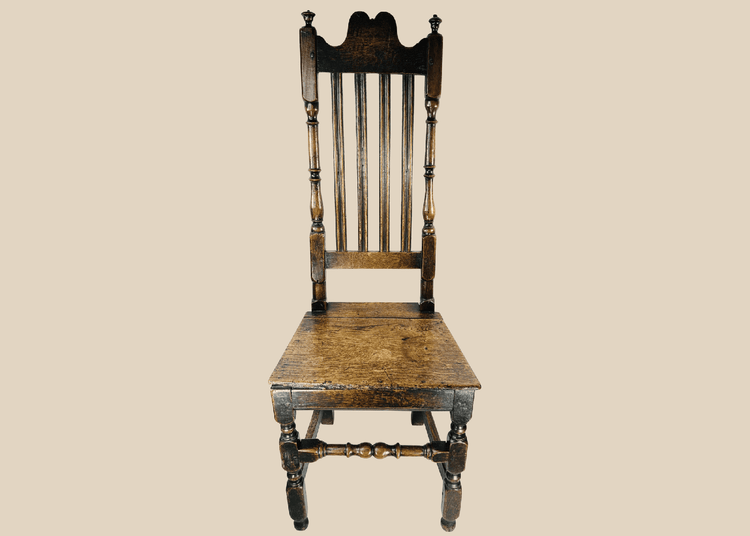
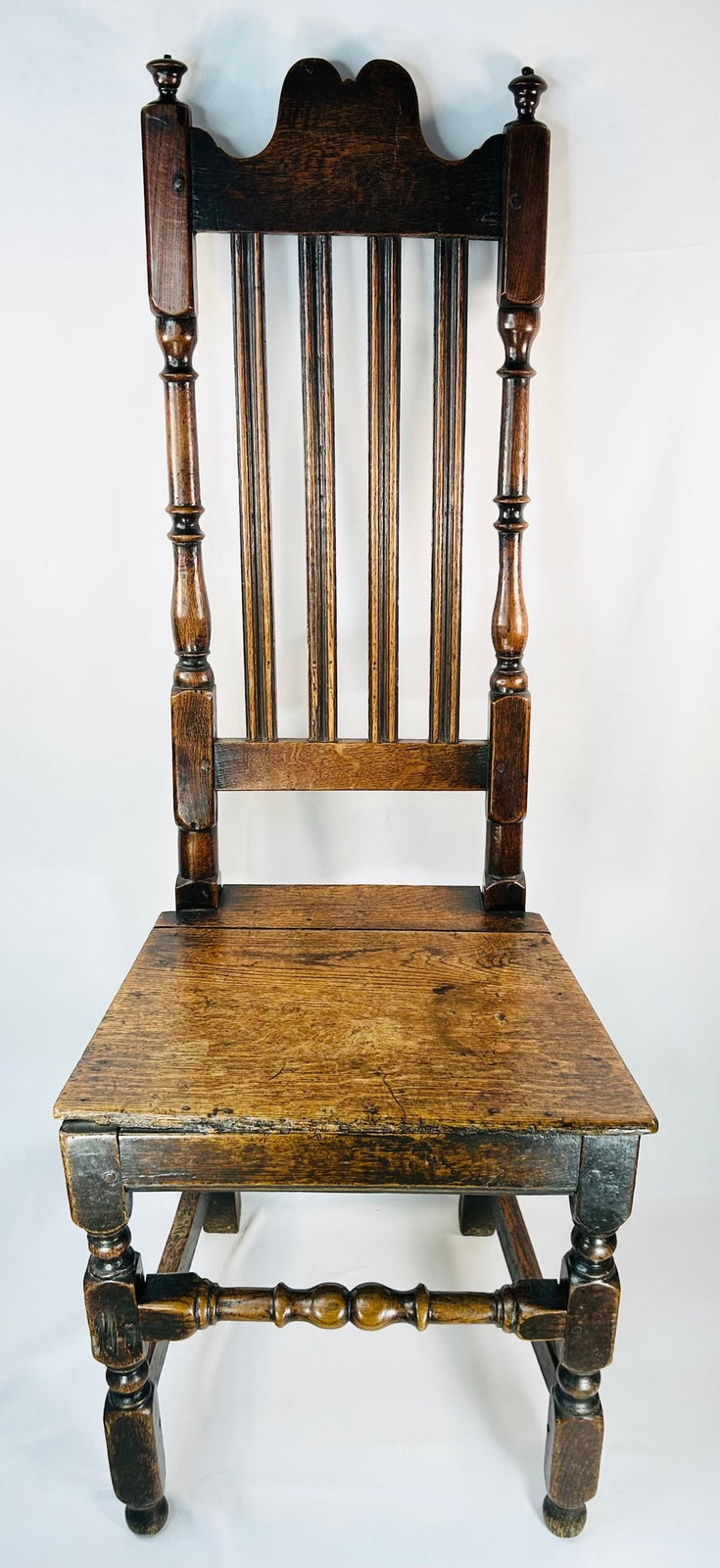
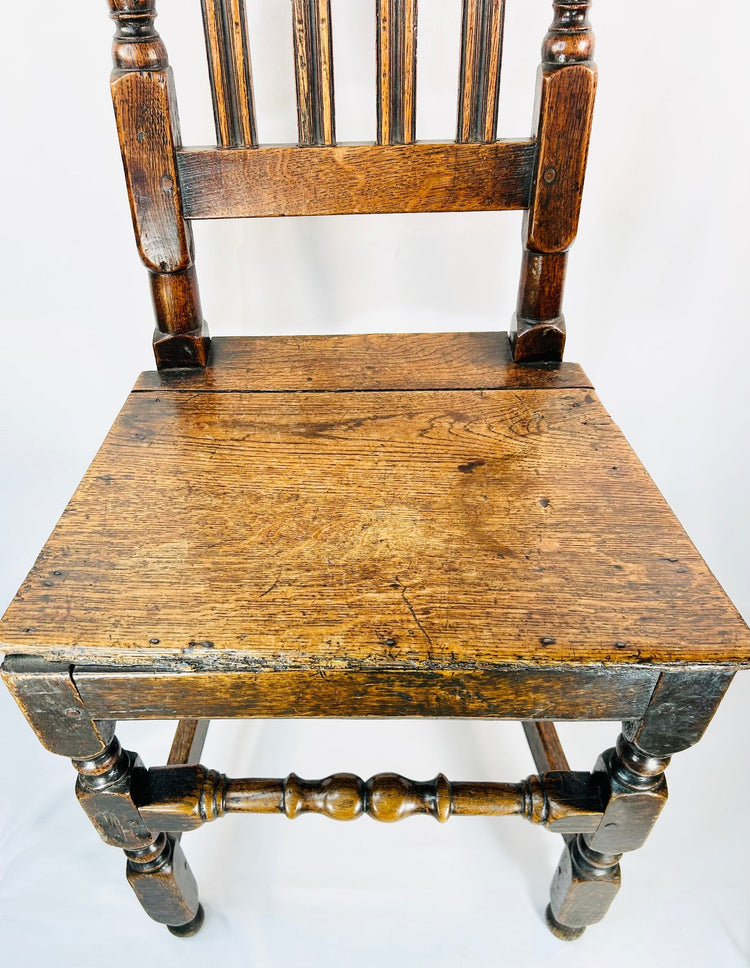
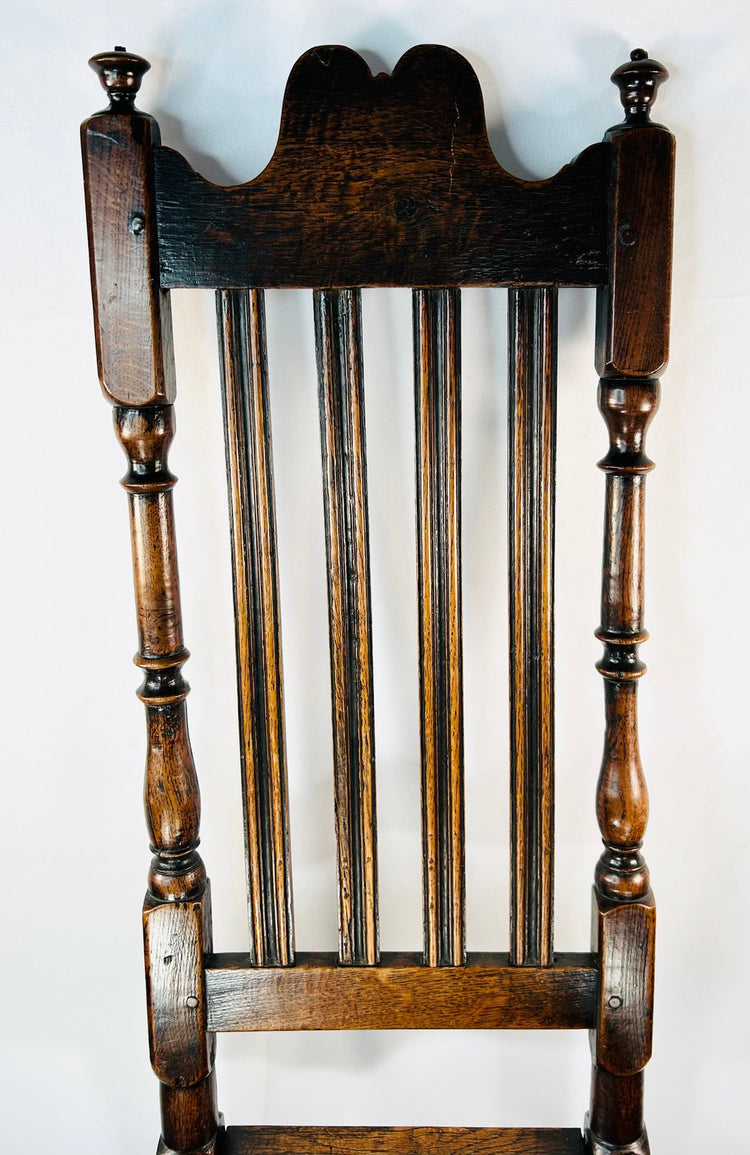
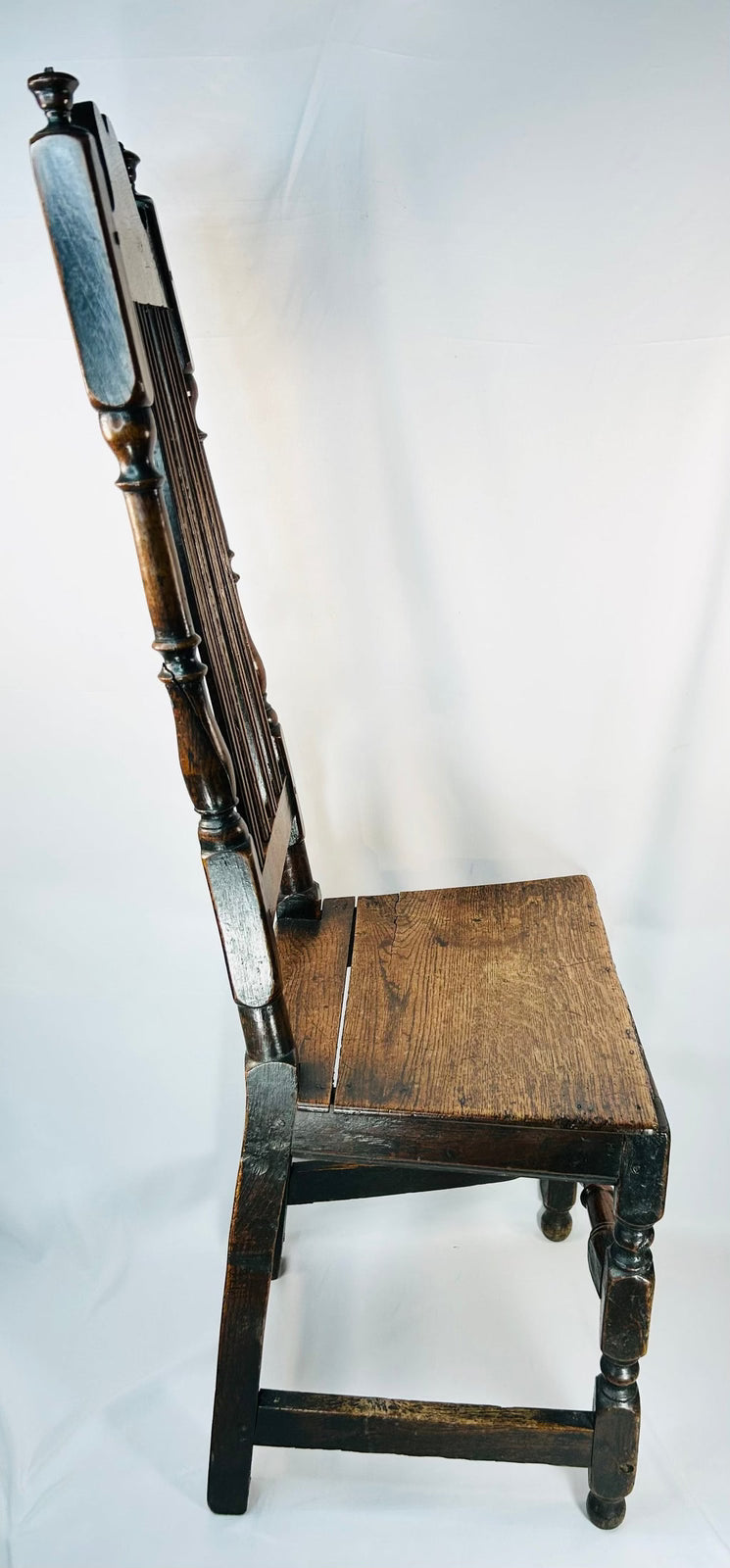
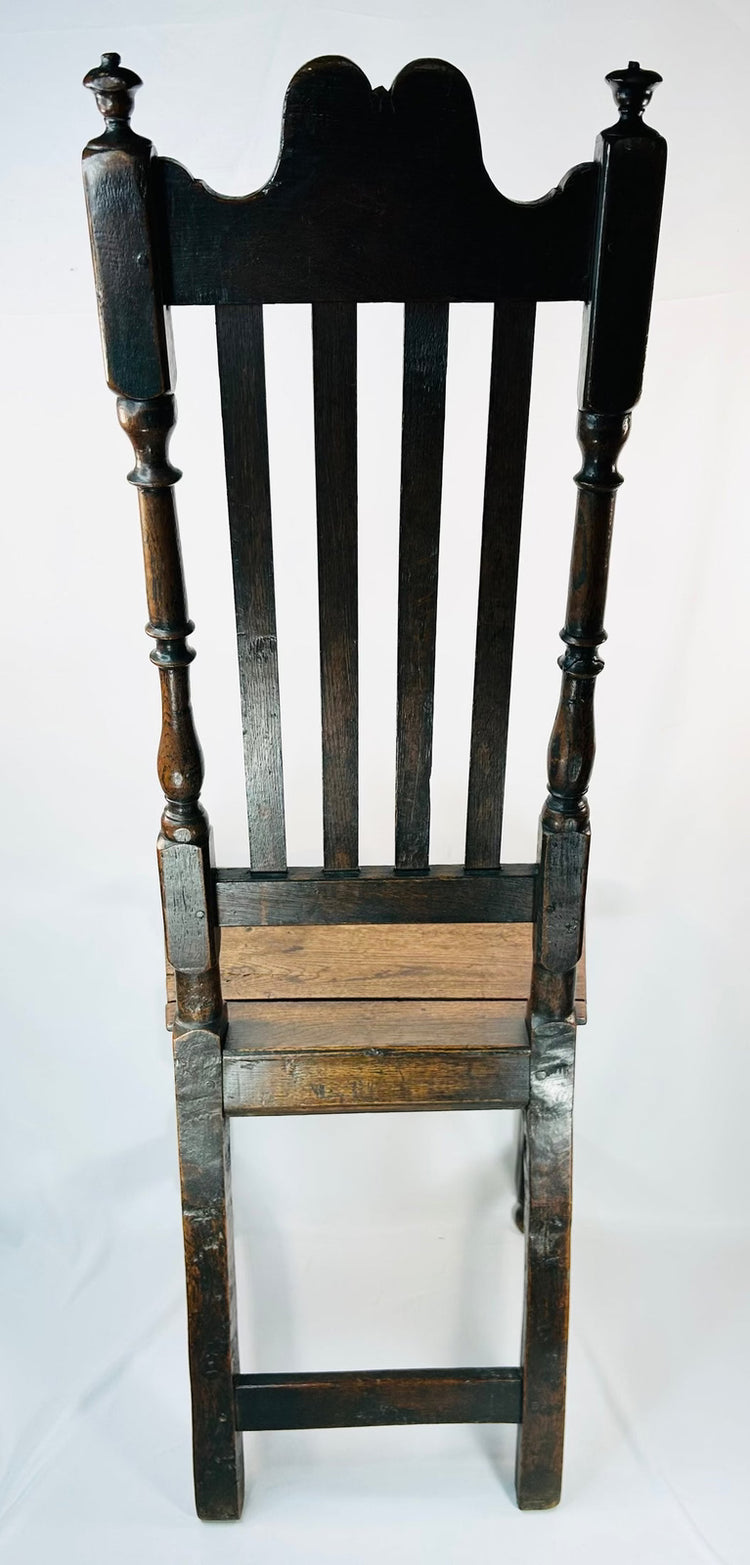
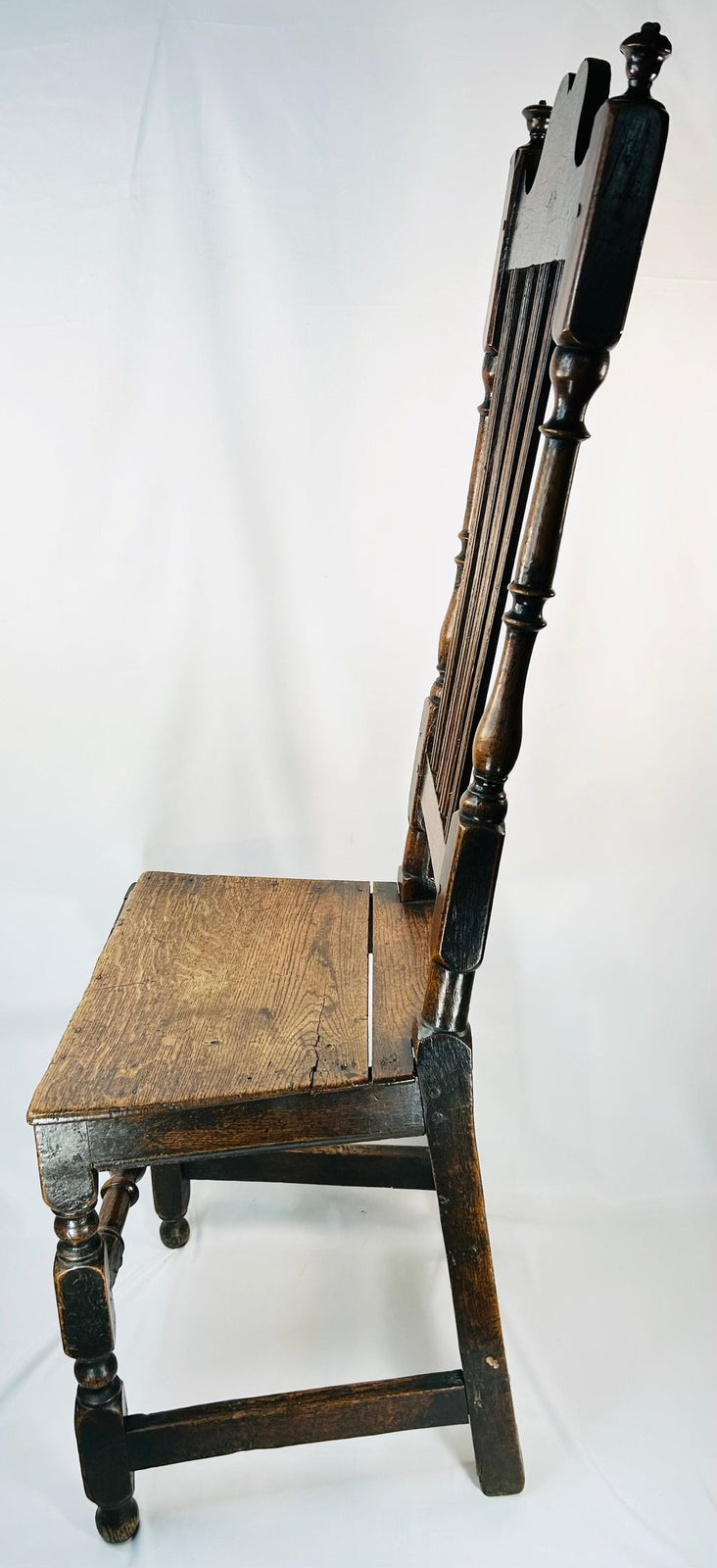
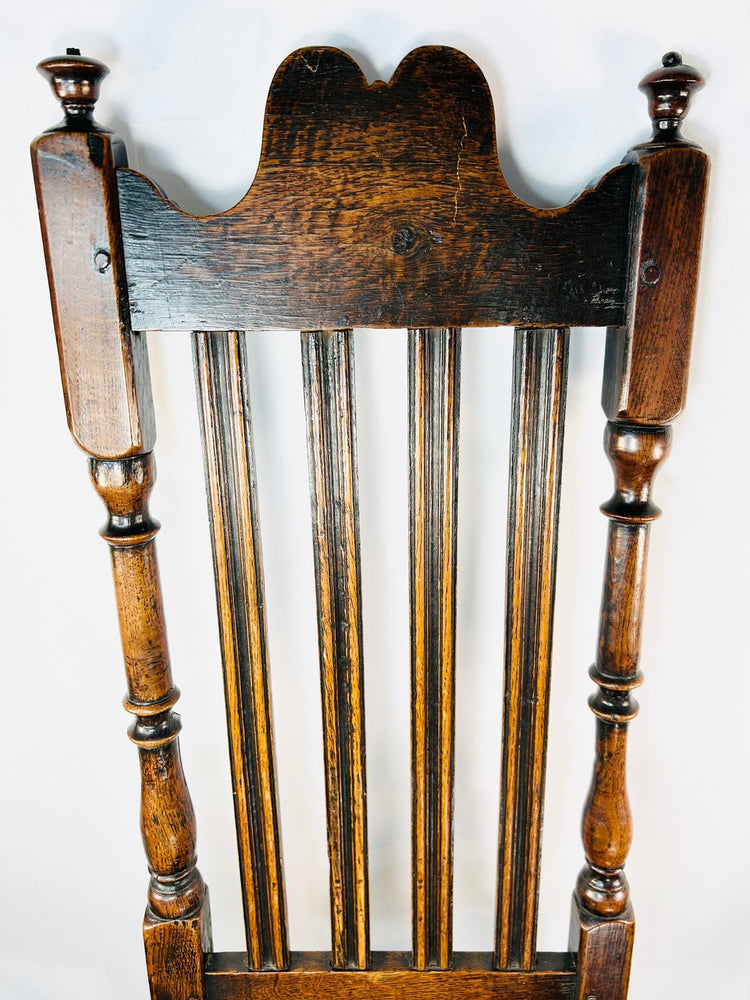
Esta hermosa silla auxiliar provincial de roble encarna la fuerza contenida y la elegancia práctica asociadas con los muebles de asiento ingleses de finales del siglo XVII. Alta y de perfil imponente, la silla presenta un respaldo con remate contorneado sobre una disposición vertical de cinco delgados listones, enmarcados por robustos montantes con transiciones torneadas y talladas en bloques. La silueta es arquitectónica pero funcional, reflejando las perdurables tradiciones vernáculas de la carpintería inglesa y galesa durante los períodos cromwelliano y principios de Guillermo y María.
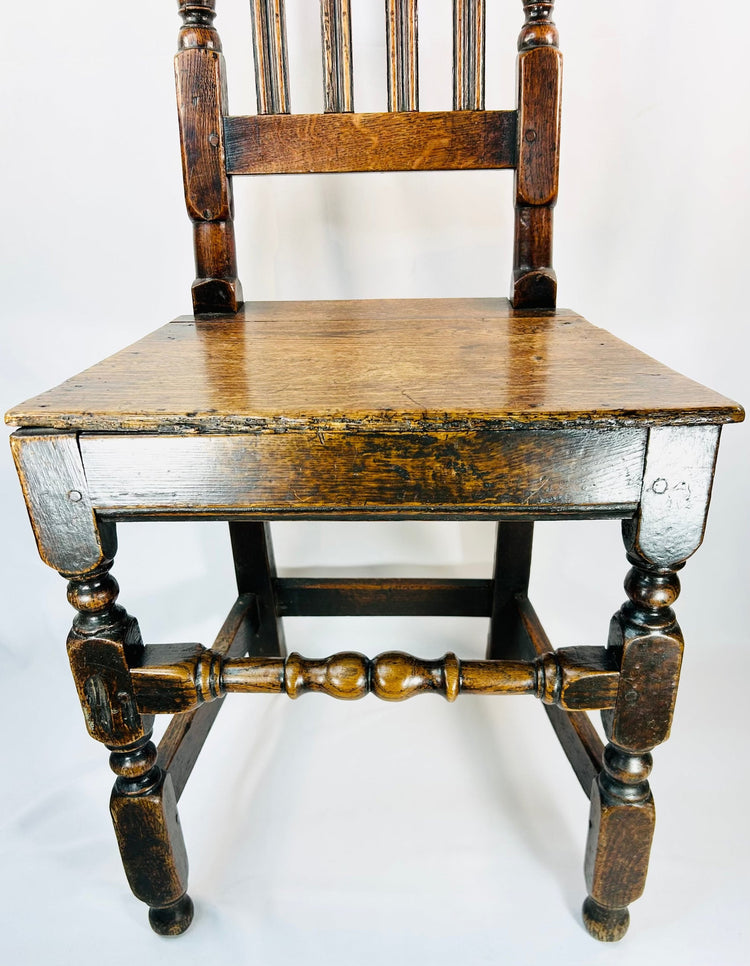
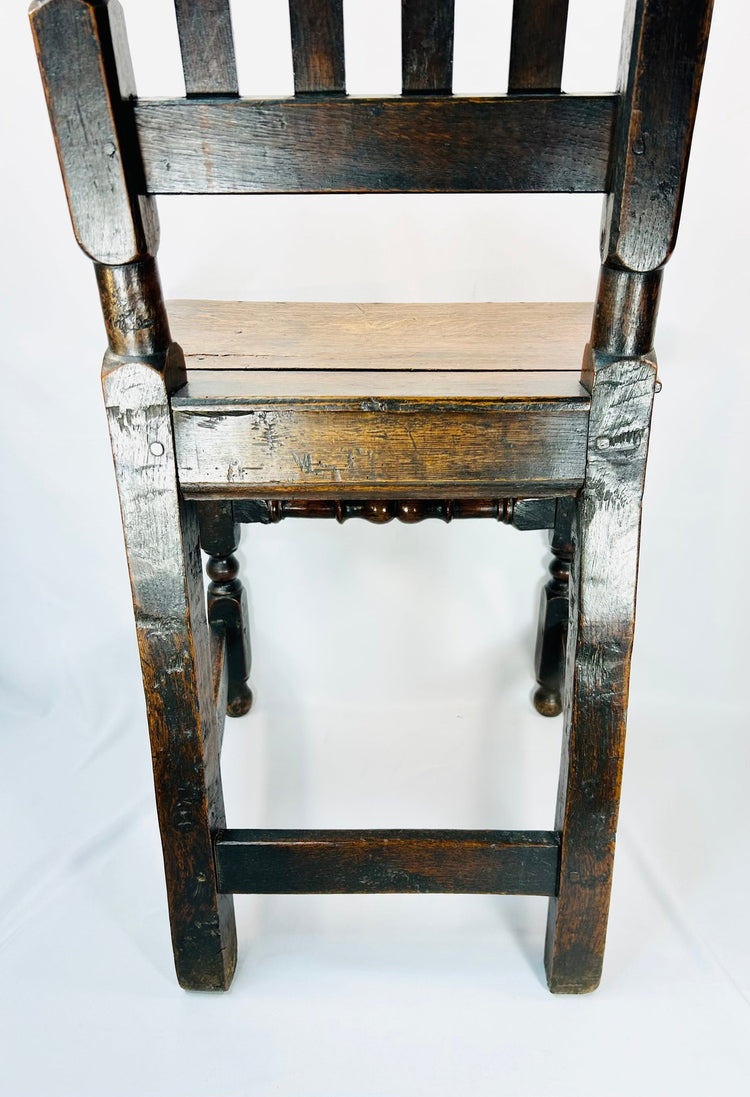
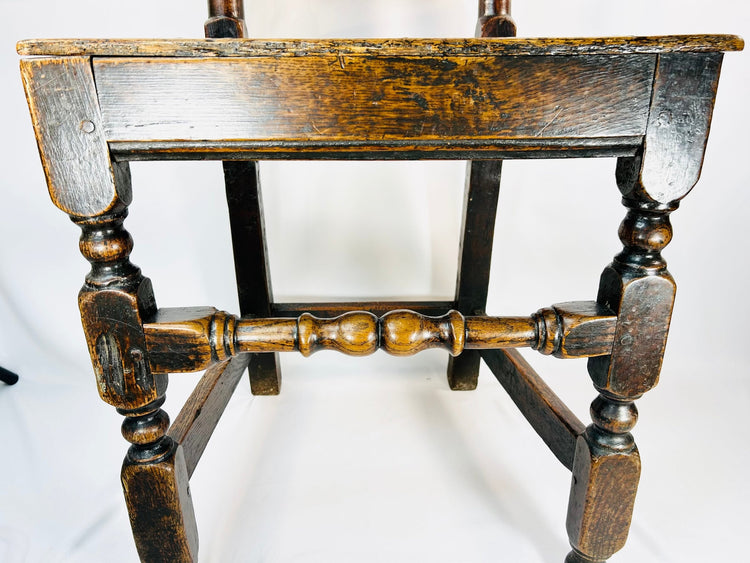
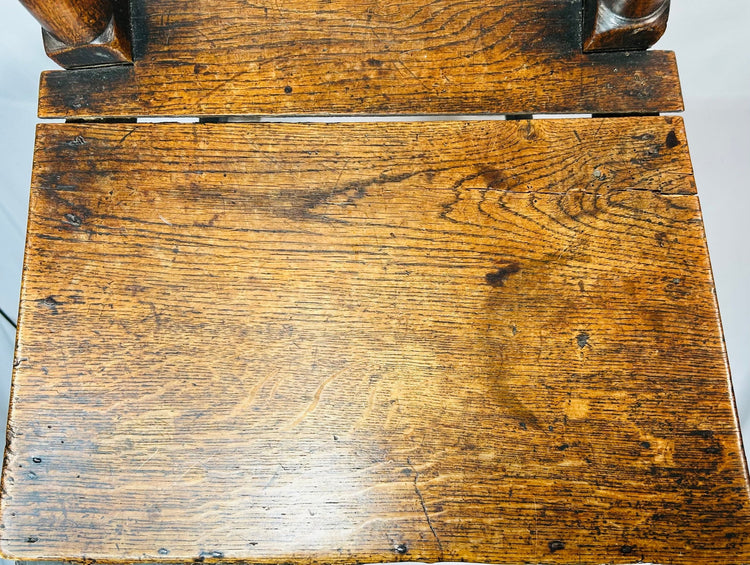
La silla se apoya sobre patas delanteras torneadas en forma de bloque y esfera y soportes traseros de montantes, unidos por un travesaño delantero alto torneado en forma de esfera y filete con rieles laterales y traseros lisos, creando una base sólida y equilibrada. El asiento está formado por dos anchas tablas de roble, una característica común en las sillas rurales antiguas, y el marco presenta una construcción de mortaja y espiga con clavijas en toda su extensión. El trabajo de clavijas visible, los montantes sustanciales y las superficies acabadas a mano contribuyen a su carácter auténtico de época.
El respaldo es especialmente atractivo, con su remate contorneado y largos listones verticales que le confieren a la pieza una presencia fuerte, casi eclesiástica. Los torneados son sobrios en lugar de excesivamente refinados, lo que sugiere un taller provincial en lugar de un ebanista metropolitano. Esto le da a la silla una calidad particularmente auténtica de casa de campo.
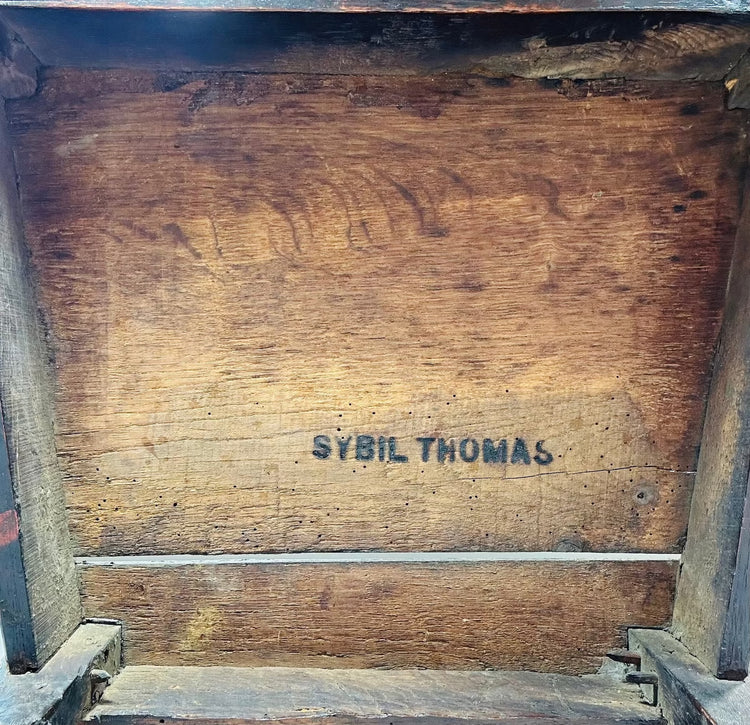
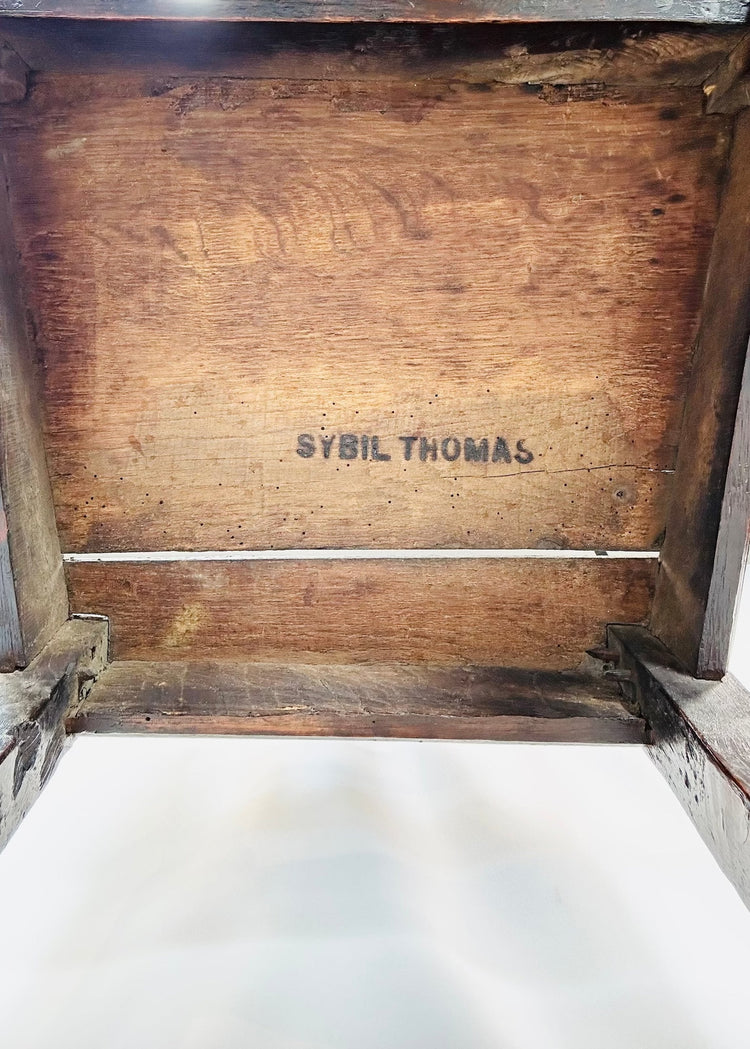
En lugar de un ornamento excesivo, la silla se basa en la proporción, la sólida carpintería y la belleza natural del roble envejecido. La pátina desgastada, los bordes suavizados y la evidencia de siglos de uso aumentan su atractivo como un genuino superviviente de la vida doméstica temprana. El sello en la parte inferior que dice "SYBIL THOMAS" es probablemente una marca posterior de propiedad o inventario.
Detalles de Construcción
- Respaldo con remate contorneado sobre un respaldo alto rectangular
- Cinco delgados listones verticales mortajados en el remate y el riel inferior del respaldo
- Montantes traseros que se extienden desde las patas traseras con transiciones torneadas y en bloque
- Asiento ancho de dos tablas dentro de un robusto marco de asiento
- Patas delanteras torneadas en forma de bloque y esfera
- Travesaño delantero alto torneado en forma de esfera y filete
- Travesaños laterales lisos y travesaño trasero liso
- Uniones de mortaja y espiga con clavijas visibles en las principales uniones
- Construcción pesada de roble provincial con superficies acabadas a mano
Características
- Forma alta de respaldo en la tradición cromwelliana
- Roble envejecido con una pátina profunda y desarrollada naturalmente
- Travesaño delantero y detalles de las patas torneados a mano
- Construcción de asiento de tablones vernácula temprana
- Fuerte presencia arquitectónica adecuada para interiores rústicos, primitivos o de época
- Parte inferior estampada "SYBIL THOMAS"
Significado Cultural
Sillas de este tipo reflejan la robusta artesanía de la fabricación de muebles provincial británica a principios del siglo XVIII. A diferencia de ejemplos urbanos más elaborados, los asientos de fabricación rural valoraban la durabilidad, la utilidad y la proporción sobre el ornamento. Hoy en día, tales sillas son valoradas por sus siluetas esculturales, su construcción honesta y su conexión directa con la vida doméstica cotidiana en la Gran Bretaña moderna temprana.
Condición
Buen estado antiguo, acorde con la edad y el uso prolongado. Desgaste superficial, abrasiones, pérdidas en los bordes, encogimiento, pequeñas separaciones y marcas antiguas en toda la pieza. Desgaste esperado en el asiento, los travesaños y las patas inferiores debido a siglos de manipulación y uso. El acabado se ha suavizado atractivamente con la edad. La parte inferior lleva un sello de nombre posterior que dice "SYBIL THOMAS". En general, la silla presenta un buen aspecto con un fuerte impacto decorativo y una agradable integridad estructural, aunque debe entenderse como una pieza vernácula temprana con el desgaste típico relacionado con la edad.
Dimensiones (Aproximadas)
Altura del asiento: 19.5 in
Ancho: 18.5 in
Profundidad: 14 in
Altura total: 49 in
Edad (Aproximada)
305–345 años de antigüedad
Procedencia
Más Información
Explore la evolución de los estilos de muebles británicos e irlandeses, incluyendo diseños provinciales y del período Guillermo y María
Explore nuestra Colección de Artefactos del Siglo XVIII
Descripción
Contexto Histórico y Origen
Región: Inglaterra o Gales, probablemente provincial
Material: Roble
Período: Finales del siglo XVII a principios del XVIII, c. 1680–1720
Estilo: Vernáculo de la época de Cromwell / Guillermo y María
Descripción
Esta hermosa silla auxiliar provincial de roble encarna la fuerza contenida y la elegancia práctica asociadas con los muebles de asiento ingleses de finales del siglo XVII. Alta y de perfil imponente, la silla presenta un respaldo con remate contorneado sobre una disposición vertical de cinco delgados listones, enmarcados por robustos montantes con transiciones torneadas y talladas en bloques. La silueta es arquitectónica pero funcional, reflejando las perdurables tradiciones vernáculas de la carpintería inglesa y galesa durante los períodos cromwelliano y principios de Guillermo y María.
La silla se apoya sobre patas delanteras torneadas en forma de bloque y esfera y soportes traseros de montantes, unidos por un travesaño delantero alto torneado en forma de esfera y filete con rieles laterales y traseros lisos, creando una base sólida y equilibrada. El asiento está formado por dos anchas tablas de roble, una característica común en las sillas rurales antiguas, y el marco presenta una construcción de mortaja y espiga con clavijas en toda su extensión. El trabajo de clavijas visible, los montantes sustanciales y las superficies acabadas a mano contribuyen a su carácter auténtico de época.
El respaldo es especialmente atractivo, con su remate contorneado y largos listones verticales que le confieren a la pieza una presencia fuerte, casi eclesiástica. Los torneados son sobrios en lugar de excesivamente refinados, lo que sugiere un taller provincial en lugar de un ebanista metropolitano. Esto le da a la silla una calidad particularmente auténtica de casa de campo.
En lugar de un ornamento excesivo, la silla se basa en la proporción, la sólida carpintería y la belleza natural del roble envejecido. La pátina desgastada, los bordes suavizados y la evidencia de siglos de uso aumentan su atractivo como un genuino superviviente de la vida doméstica temprana. El sello en la parte inferior que dice "SYBIL THOMAS" es probablemente una marca posterior de propiedad o inventario.
Detalles de Construcción
- Respaldo con remate contorneado sobre un respaldo alto rectangular
- Cinco delgados listones verticales mortajados en el remate y el riel inferior del respaldo
- Montantes traseros que se extienden desde las patas traseras con transiciones torneadas y en bloque
- Asiento ancho de dos tablas dentro de un robusto marco de asiento
- Patas delanteras torneadas en forma de bloque y esfera
- Travesaño delantero alto torneado en forma de esfera y filete
- Travesaños laterales lisos y travesaño trasero liso
- Uniones de mortaja y espiga con clavijas visibles en las principales uniones
- Construcción pesada de roble provincial con superficies acabadas a mano
Características
- Forma alta de respaldo en la tradición cromwelliana
- Roble envejecido con una pátina profunda y desarrollada naturalmente
- Travesaño delantero y detalles de las patas torneados a mano
- Construcción de asiento de tablones vernácula temprana
- Fuerte presencia arquitectónica adecuada para interiores rústicos, primitivos o de época
- Parte inferior estampada "SYBIL THOMAS"
Significado Cultural
Sillas de este tipo reflejan la robusta artesanía de la fabricación de muebles provincial británica a principios del siglo XVIII. A diferencia de ejemplos urbanos más elaborados, los asientos de fabricación rural valoraban la durabilidad, la utilidad y la proporción sobre el ornamento. Hoy en día, tales sillas son valoradas por sus siluetas esculturales, su construcción honesta y su conexión directa con la vida doméstica cotidiana en la Gran Bretaña moderna temprana.
Condición
Buen estado antiguo, acorde con la edad y el uso prolongado. Desgaste superficial, abrasiones, pérdidas en los bordes, encogimiento, pequeñas separaciones y marcas antiguas en toda la pieza. Desgaste esperado en el asiento, los travesaños y las patas inferiores debido a siglos de manipulación y uso. El acabado se ha suavizado atractivamente con la edad. La parte inferior lleva un sello de nombre posterior que dice "SYBIL THOMAS". En general, la silla presenta un buen aspecto con un fuerte impacto decorativo y una agradable integridad estructural, aunque debe entenderse como una pieza vernácula temprana con el desgaste típico relacionado con la edad.
Dimensiones (Aproximadas)
Altura del asiento: 19.5 in
Ancho: 18.5 in
Profundidad: 14 in
Altura total: 49 in
Edad (Aproximada)
305–345 años de antigüedad
Procedencia
Más Información
Explore la evolución de los estilos de muebles británicos e irlandeses, incluyendo diseños provinciales y del período Guillermo y María
Explore nuestra Colección de Artefactos del Siglo XVIII
También te puede interesar
