
Zischägge (casco de langosta) alemán u holandés | Casco de hierro forjado con barra nasal | Circa 1630-1670
- Precio habitual
- $5,000.00
- Precio de venta
- $5,000.00
- Precio habitual
No se pudo cargar la disponibilidad de retiro


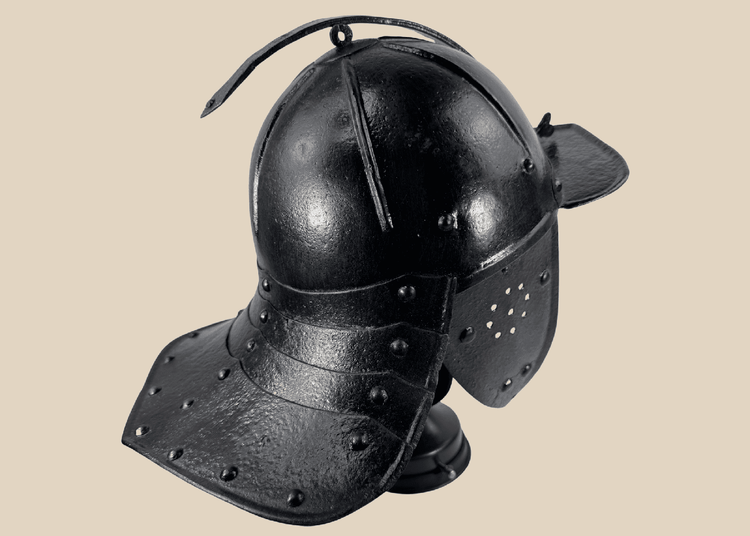
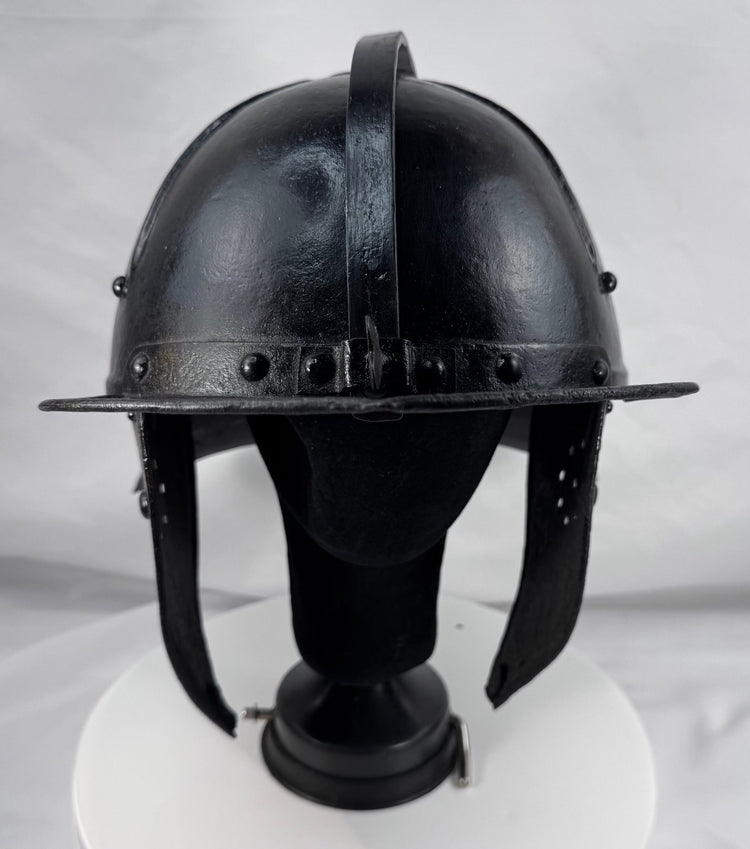
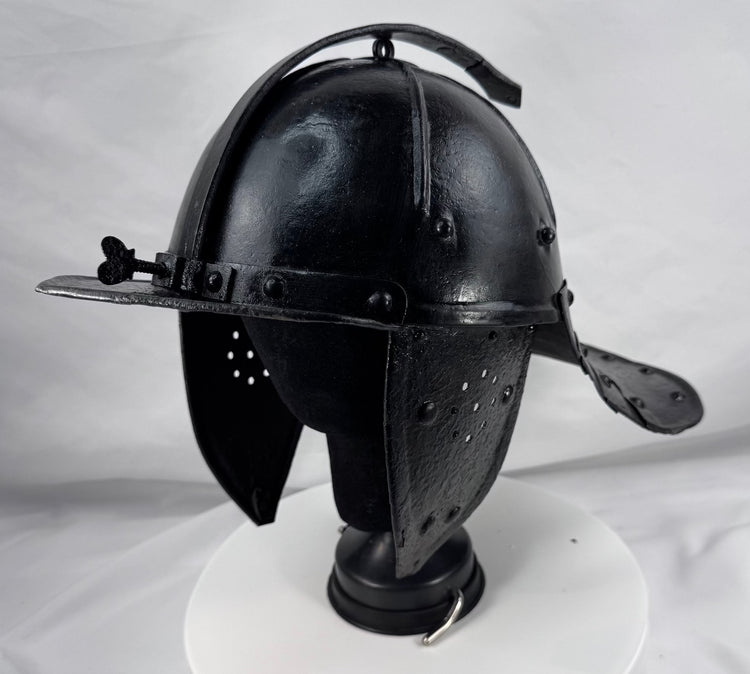
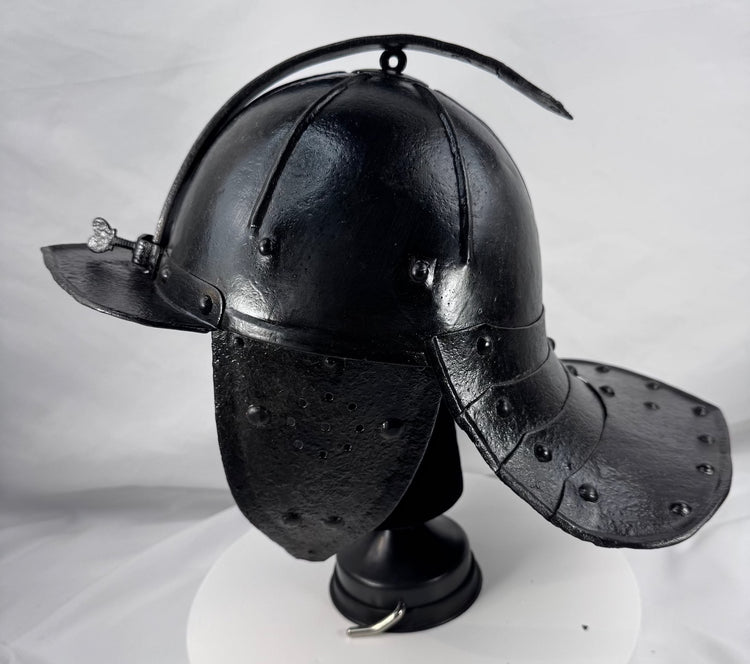
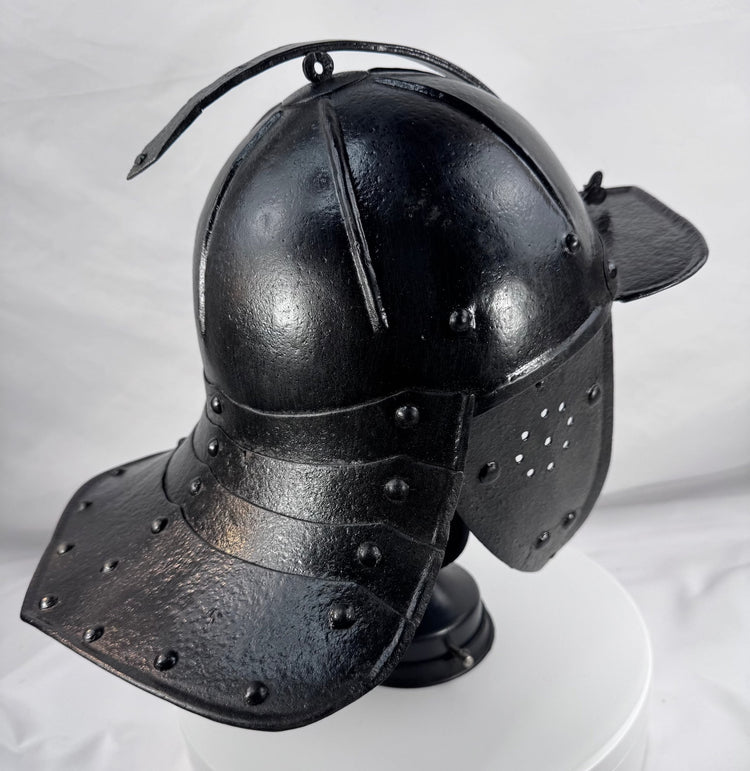
Zischägge (casco de langosta) alemán u holandés | Casco de hierro forjado con barra nasal | Circa 1630-1670
Descripción
Más
Menos
Contexto histórico y origen
Región: Europa del Norte (estados alemanes u holandeses)
Material: Hierro forjado con acabado de pintura negra
Período: Mediados del siglo XVII d.C., circa 1630-1670
Descripción
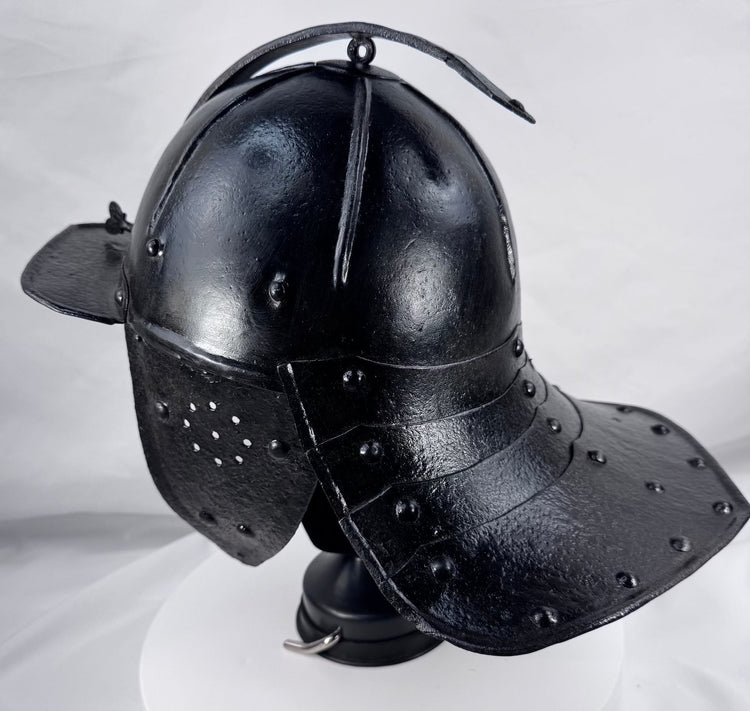
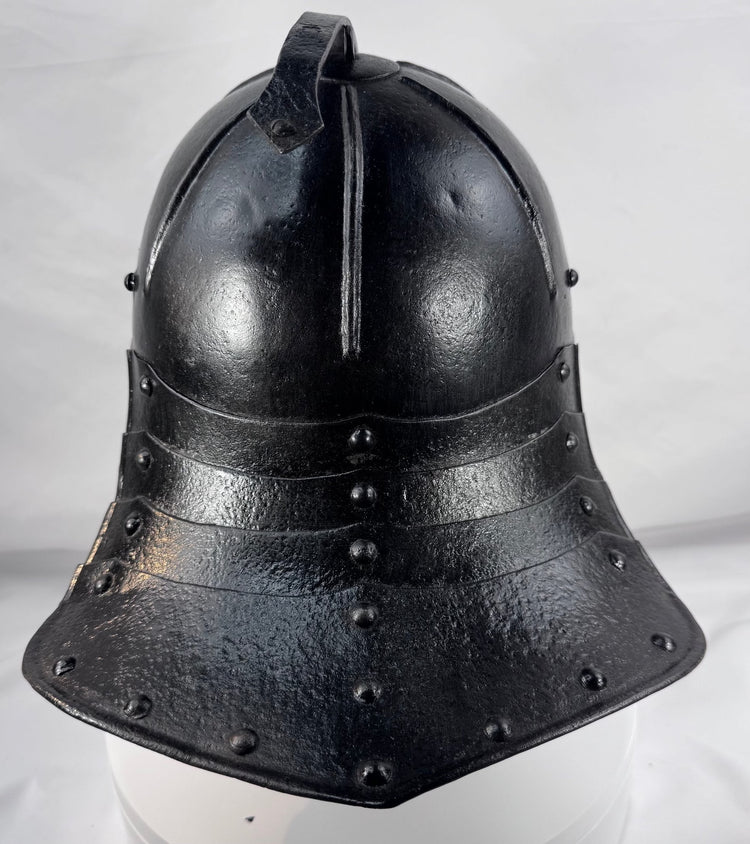
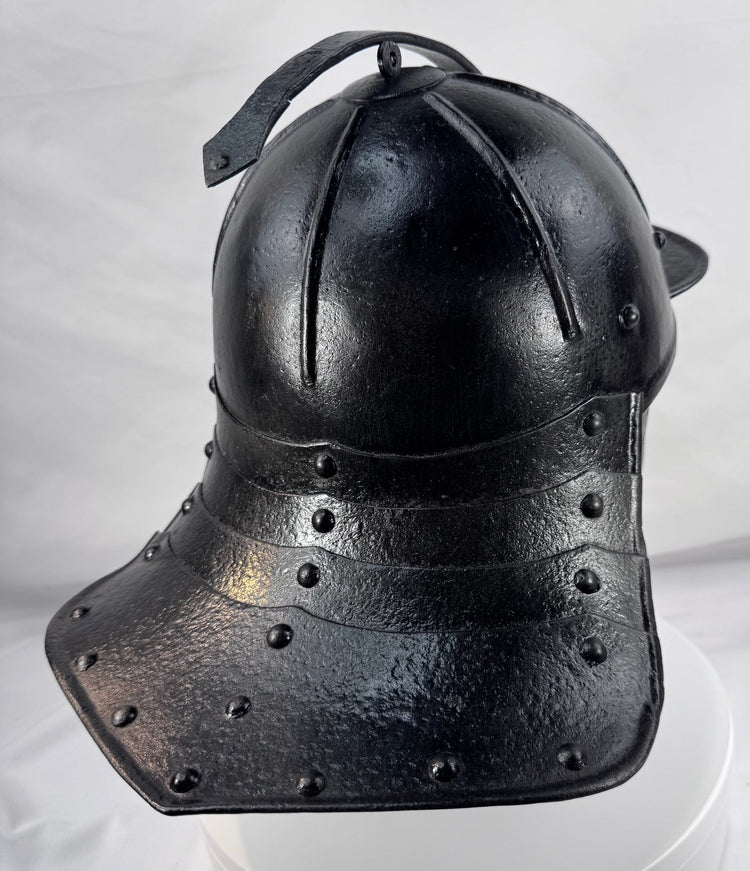
Este impresionante casco militar de hierro forjado es un ejemplo clásico de casco de cola de langosta, una forma de armadura de caballería del siglo XVII estrechamente asociada con el Zischägge (Zischagge) alemán y los cascos militares holandeses relacionados. Los cascos de este tipo fueron ampliamente empleados en los estados alemanes y holandeses durante la era de la Guerra de los Treinta Años (1618-1648) y los numerosos conflictos militares que dieron forma a Europa durante el siglo XVII.
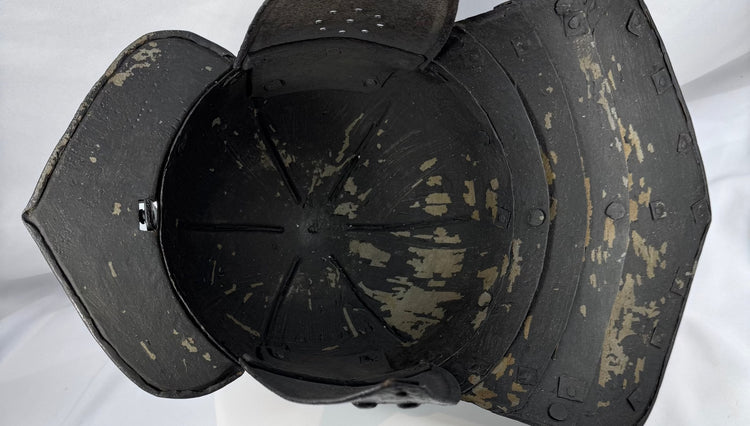
Construido a partir de múltiples placas de hierro forjado, el casco redondeado está reforzado por prominentes estrías radiantes que convergen en la corona, debajo de un distintivo remate en forma de anillo montado a través de una placa superior circular. El casco conserva su visera aplicada por separado junto con su barra nasal ajustable original, asegurada por un gran tornillo de ajuste en forma de ala que permitía al usuario subir o bajar la protección facial según fuera necesario. Grandes protectores de orejas perforados proporcionaban ventilación al tiempo que mantenían la audición, mientras que el sustancial protector de cuello articulado de cuatro láminas —comúnmente conocido como "cola de langosta"— protegía el cuello y los hombros superiores sin restringir el movimiento. Los bordes enrollados en todo el casco demuestran las técnicas tradicionales de fabricación de armaduras del siglo XVII, destinadas a reforzar los bordes expuestos y mejorar la durabilidad durante el servicio militar.
Características
- Auténtico casco de cola de langosta de mediados del siglo XVII
- Forma de Zischägge (Zischagge) alemán
- Probable fabricación alemana u holandesa
- Casco de hierro forjado con estrías radiantes de refuerzo
- Remate en forma de anillo montado a través de la placa circular de la corona
- Barra nasal ajustable original con tornillo de ajuste en forma de ala
- Protectores de orejas perforados para audición y ventilación
- Protector de cuello articulado de cuatro láminas tipo "cola de langosta"
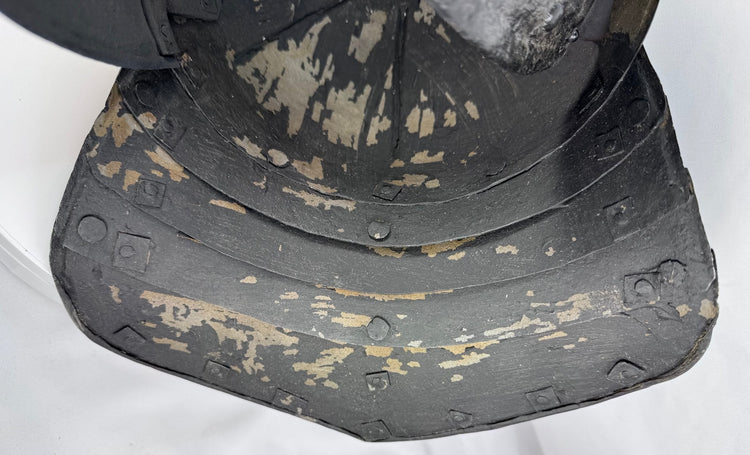
- Conserva el acabado de pintura negra envejecida
- Asociado con el período de la Guerra de los Treinta Años
Importancia cultural
El casco de cola de langosta, conocido comúnmente en Europa continental como Zischägge, se convirtió en uno de los cascos militares definitorios del siglo XVII. Influenciado en parte por diseños de cascos otomanos turcos y refinado por armeros europeos, este estilo fue ampliamente usado por caballeros, arcabuceros montados, harquebuseros y soldados de infantería en toda Europa del Norte. Su práctica combinación de protección facial, defensa del cuello, visibilidad y movilidad lo hizo excepcionalmente adecuado para una era en la que las armas de fuego dominaban cada vez más el campo de batalla, mientras que el combate cuerpo a cuerpo seguía siendo común. Hoy en día, estos cascos se encuentran entre las formas más reconocibles y buscadas de armadura europea de principios de la Edad Moderna.
Estado
El casco se mantiene estructuralmente sólido y muestra el desgaste esperado por la edad. El acabado original de pintura negra presenta un extenso roce, descamación y áreas de pérdida consistentes con siglos de uso y preservación. Se observan oxidación superficial menor, desgaste por manipulación e imperfecciones dispersas. El protector de cuello articulado, las defensas de las orejas, la barra nasal ajustable y el mecanismo de ajuste en forma de ala permanecen intactos.
Dimensiones (aproximadas)
Altura: 11.03 pulgadas
Antigüedad (aproximada)
355–395 años
Procedencia
Anteriormente parte de una colección privada de Cheyenne, Wyoming, EE. UU., especializada en armas antiguas, armaduras y artefactos militares. La colección fue reunida durante muchos años con un énfasis particular en cascos europeos, armas blancas, armaduras y objetos marciales que datan de los períodos medieval y de principios de la Edad Moderna. Este casco formó parte de esa colección cuidadosamente curada.
Más información
Explore un ejemplo de museo de un casco de olla con cola de langosta del siglo XVII en el National Army Museum
Explore nuestra Colección de armas, armaduras y armamento histórico
Descripción
Contexto histórico y origen
Región: Europa del Norte (estados alemanes u holandeses)
Material: Hierro forjado con acabado de pintura negra
Período: Mediados del siglo XVII d.C., circa 1630-1670
Descripción
Este impresionante casco militar de hierro forjado es un ejemplo clásico de casco de cola de langosta, una forma de armadura de caballería del siglo XVII estrechamente asociada con el Zischägge (Zischagge) alemán y los cascos militares holandeses relacionados. Los cascos de este tipo fueron ampliamente empleados en los estados alemanes y holandeses durante la era de la Guerra de los Treinta Años (1618-1648) y los numerosos conflictos militares que dieron forma a Europa durante el siglo XVII.
Construido a partir de múltiples placas de hierro forjado, el casco redondeado está reforzado por prominentes estrías radiantes que convergen en la corona, debajo de un distintivo remate en forma de anillo montado a través de una placa superior circular. El casco conserva su visera aplicada por separado junto con su barra nasal ajustable original, asegurada por un gran tornillo de ajuste en forma de ala que permitía al usuario subir o bajar la protección facial según fuera necesario. Grandes protectores de orejas perforados proporcionaban ventilación al tiempo que mantenían la audición, mientras que el sustancial protector de cuello articulado de cuatro láminas —comúnmente conocido como "cola de langosta"— protegía el cuello y los hombros superiores sin restringir el movimiento. Los bordes enrollados en todo el casco demuestran las técnicas tradicionales de fabricación de armaduras del siglo XVII, destinadas a reforzar los bordes expuestos y mejorar la durabilidad durante el servicio militar.
Características
- Auténtico casco de cola de langosta de mediados del siglo XVII
- Forma de Zischägge (Zischagge) alemán
- Probable fabricación alemana u holandesa
- Casco de hierro forjado con estrías radiantes de refuerzo
- Remate en forma de anillo montado a través de la placa circular de la corona
- Barra nasal ajustable original con tornillo de ajuste en forma de ala
- Protectores de orejas perforados para audición y ventilación
- Protector de cuello articulado de cuatro láminas tipo "cola de langosta"
- Conserva el acabado de pintura negra envejecida
- Asociado con el período de la Guerra de los Treinta Años
Importancia cultural
El casco de cola de langosta, conocido comúnmente en Europa continental como Zischägge, se convirtió en uno de los cascos militares definitorios del siglo XVII. Influenciado en parte por diseños de cascos otomanos turcos y refinado por armeros europeos, este estilo fue ampliamente usado por caballeros, arcabuceros montados, harquebuseros y soldados de infantería en toda Europa del Norte. Su práctica combinación de protección facial, defensa del cuello, visibilidad y movilidad lo hizo excepcionalmente adecuado para una era en la que las armas de fuego dominaban cada vez más el campo de batalla, mientras que el combate cuerpo a cuerpo seguía siendo común. Hoy en día, estos cascos se encuentran entre las formas más reconocibles y buscadas de armadura europea de principios de la Edad Moderna.
Estado
El casco se mantiene estructuralmente sólido y muestra el desgaste esperado por la edad. El acabado original de pintura negra presenta un extenso roce, descamación y áreas de pérdida consistentes con siglos de uso y preservación. Se observan oxidación superficial menor, desgaste por manipulación e imperfecciones dispersas. El protector de cuello articulado, las defensas de las orejas, la barra nasal ajustable y el mecanismo de ajuste en forma de ala permanecen intactos.
Dimensiones (aproximadas)
Altura: 11.03 pulgadas
Antigüedad (aproximada)
355–395 años
Procedencia
Anteriormente parte de una colección privada de Cheyenne, Wyoming, EE. UU., especializada en armas antiguas, armaduras y artefactos militares. La colección fue reunida durante muchos años con un énfasis particular en cascos europeos, armas blancas, armaduras y objetos marciales que datan de los períodos medieval y de principios de la Edad Moderna. Este casco formó parte de esa colección cuidadosamente curada.
Más información
Explore un ejemplo de museo de un casco de olla con cola de langosta del siglo XVII en el National Army Museum
Explore nuestra Colección de armas, armaduras y armamento histórico
También te puede interesar
