



Creta de danza Igbo Janus nigeriana | Tocado de mascarada ceremonial | Mediados del siglo XX
- Precio habitual
- $1,200.00
- Precio de venta
- $1,200.00
- Precio habitual
No se pudo cargar la disponibilidad de retiro


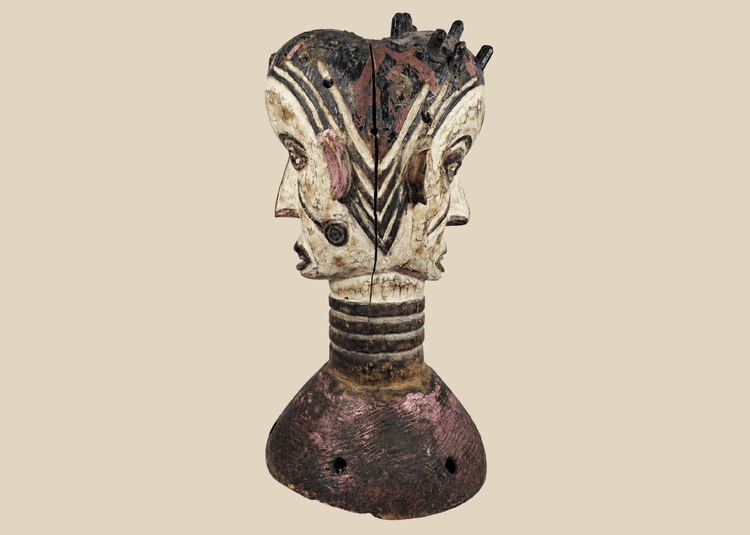
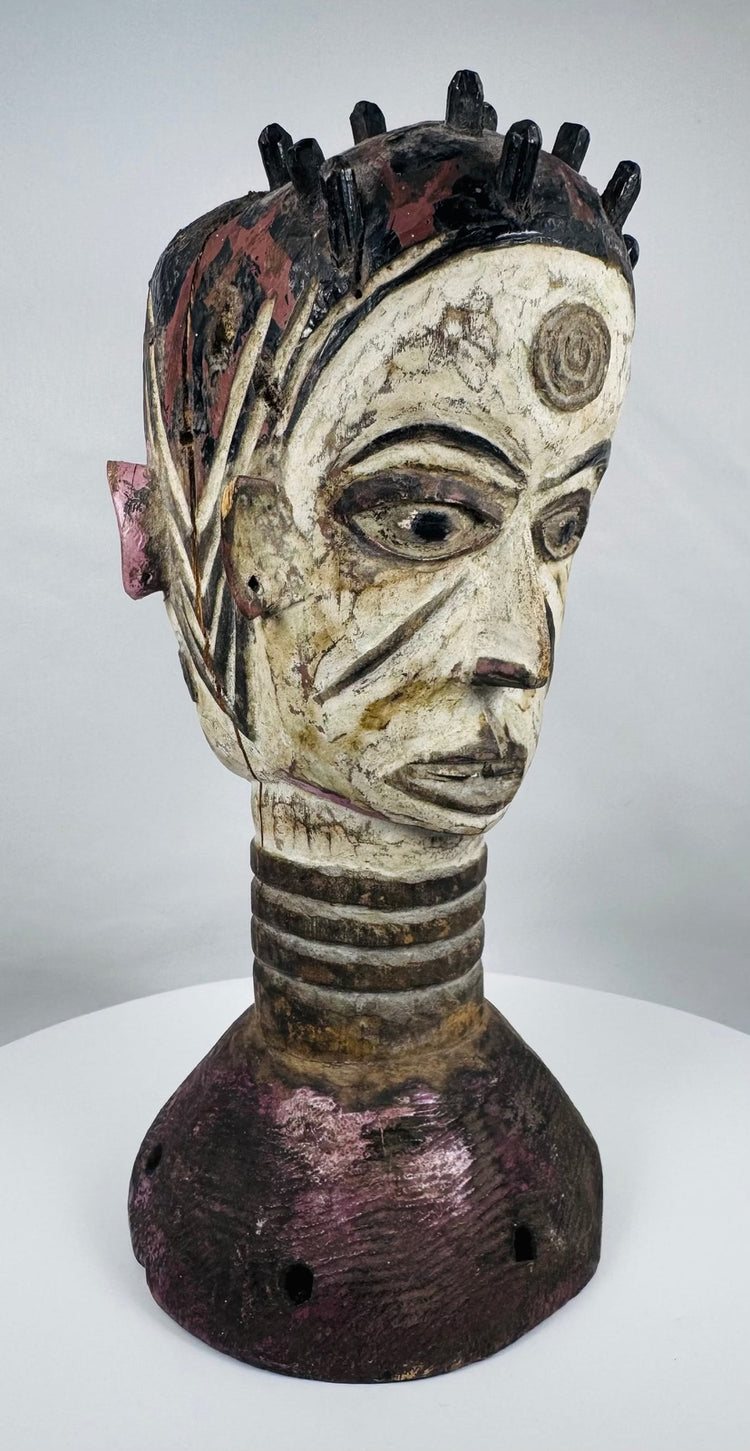
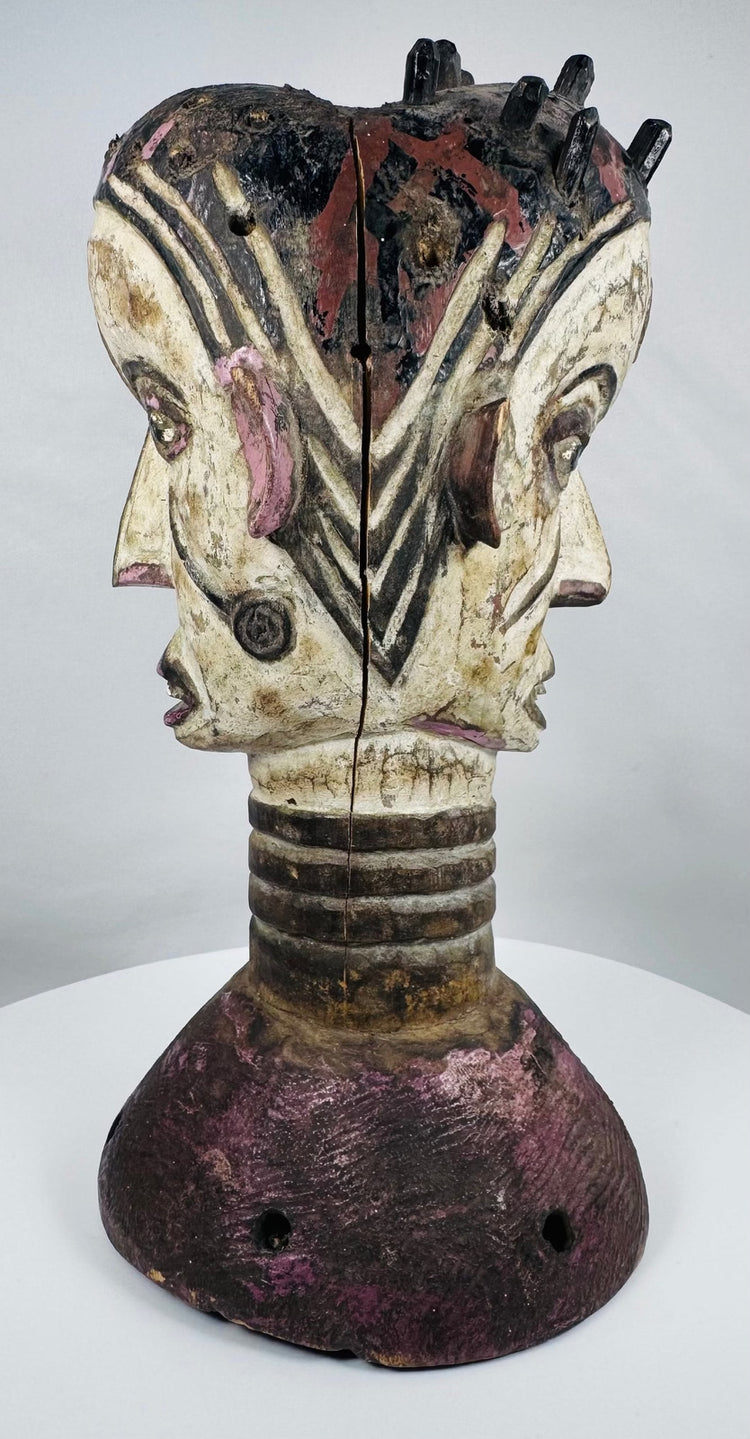
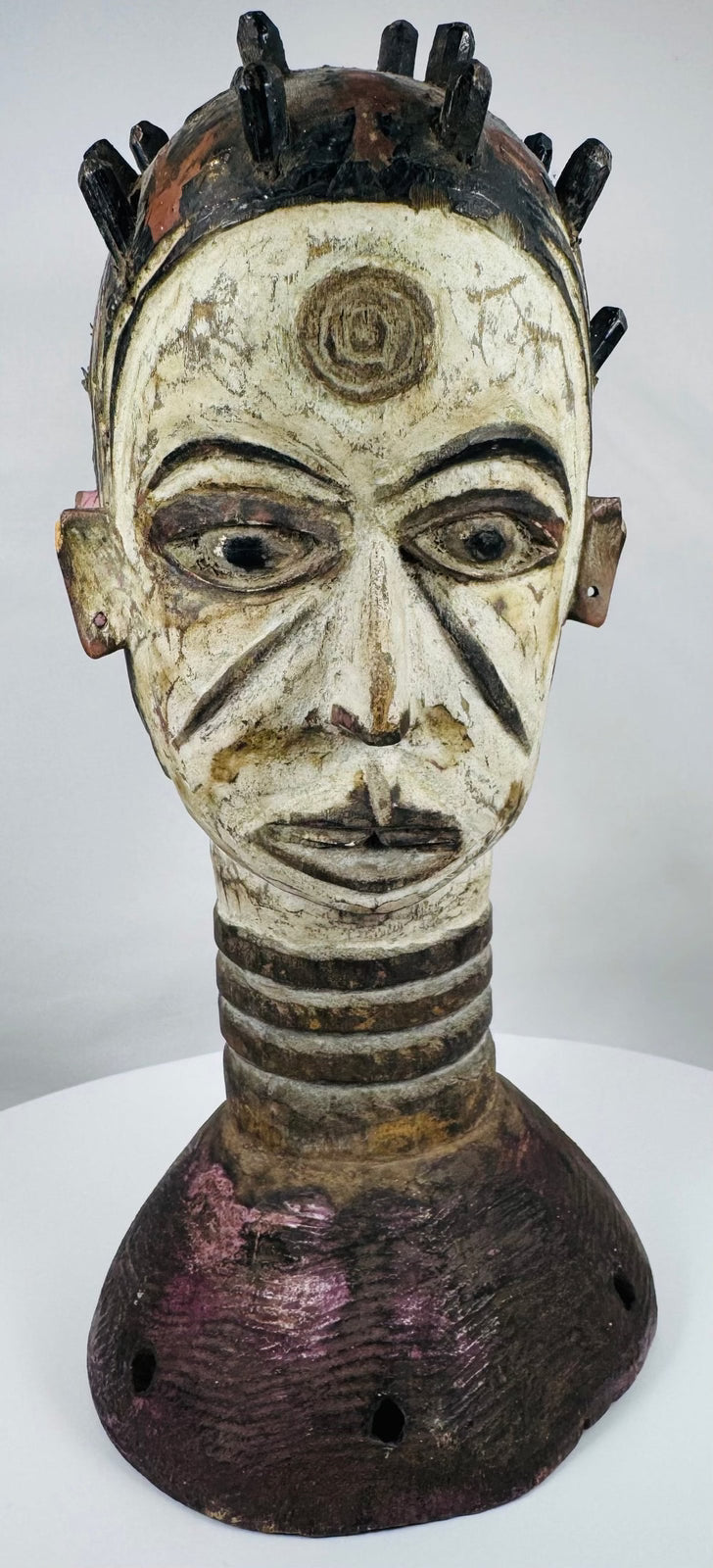
Creta de danza Igbo Janus nigeriana | Tocado de mascarada ceremonial | Mediados del siglo XX
Descripción
Más
Menos
Contexto Histórico y Origen
Región: Nigeria (Pueblo Igbo)
Material: Madera tallada a mano con pigmentos blancos, negros, rojos y morados
Período: Mediados del siglo XX
Descripción
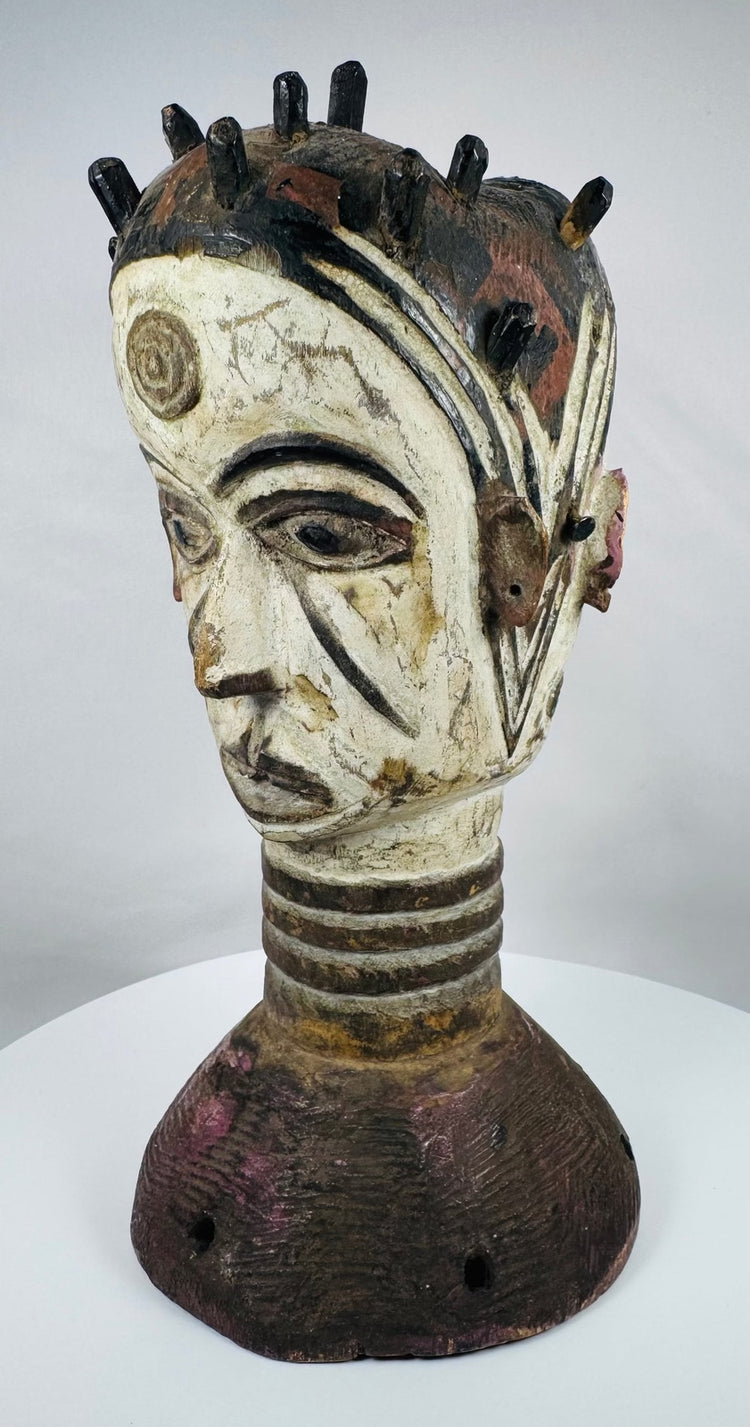
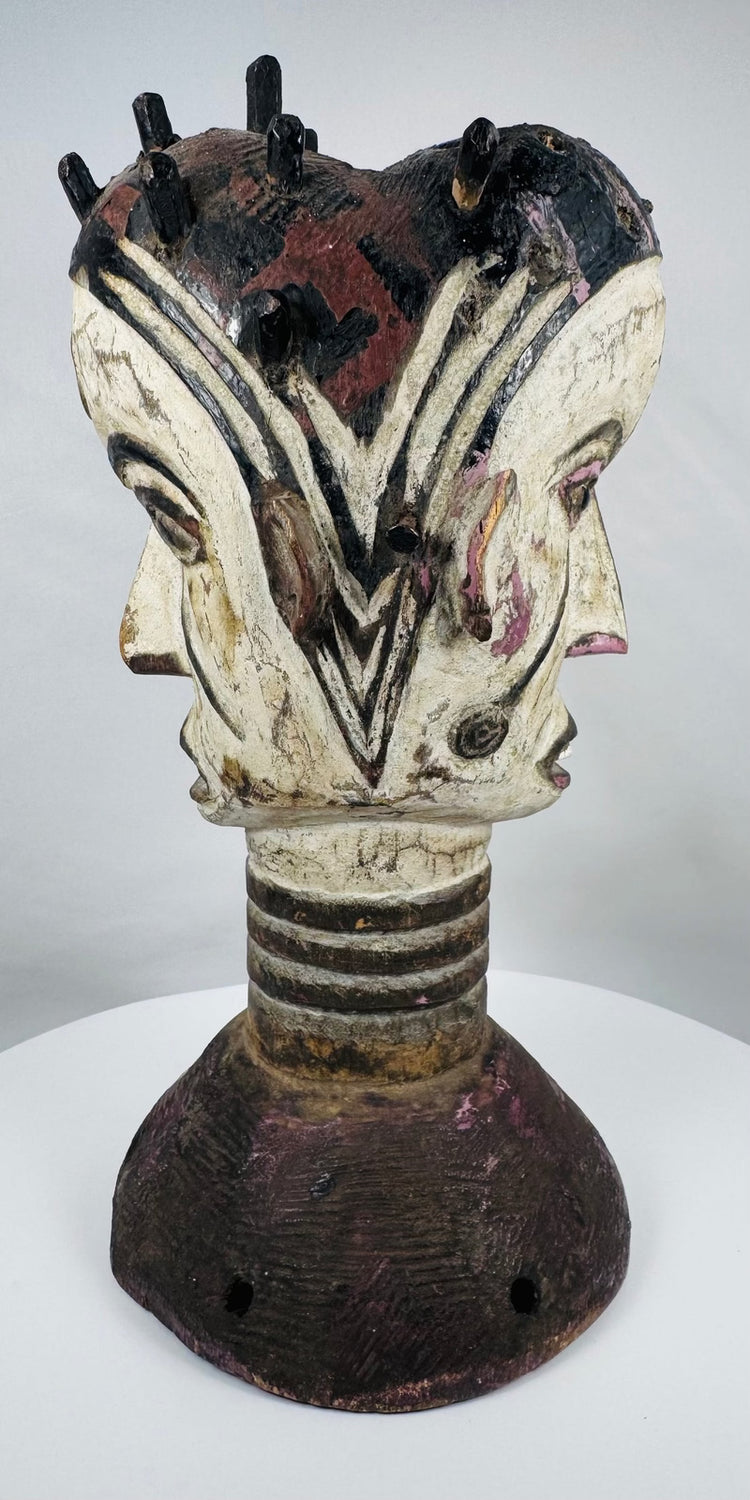
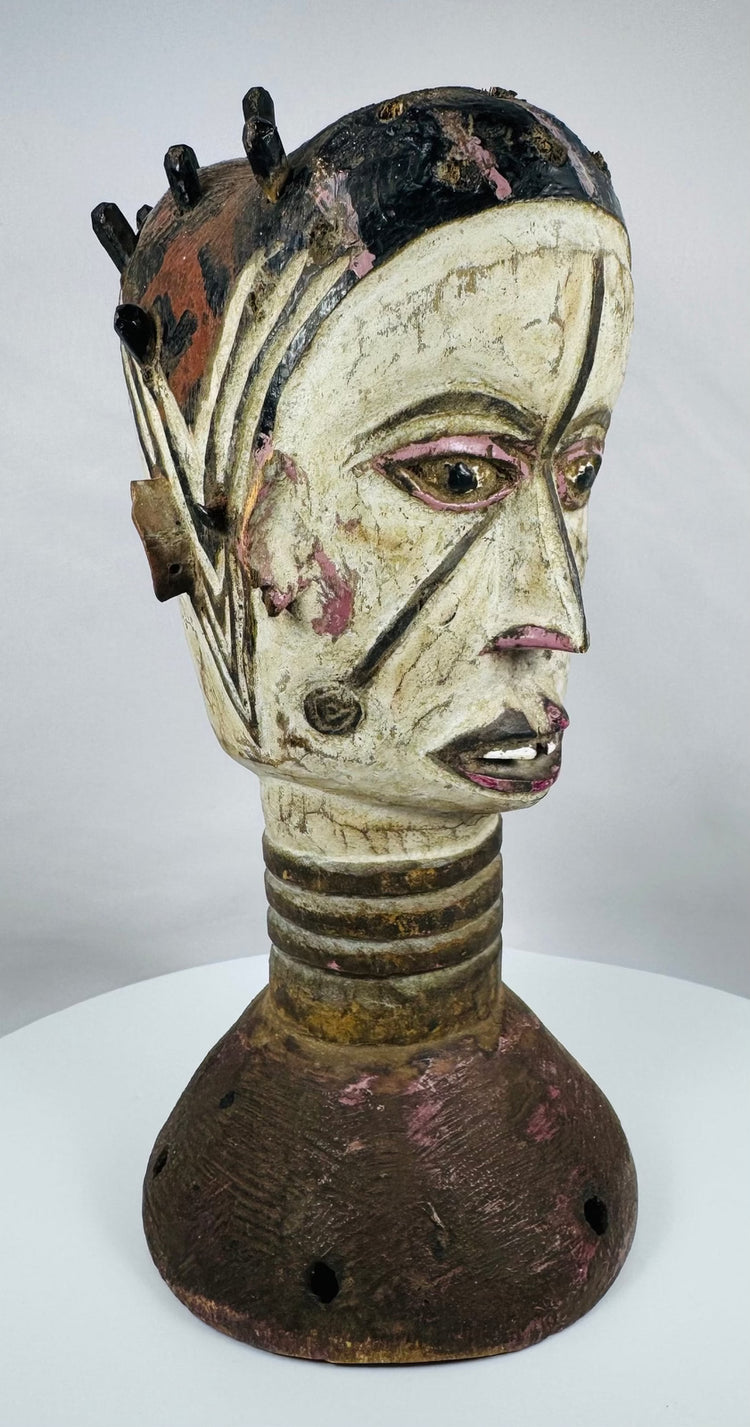
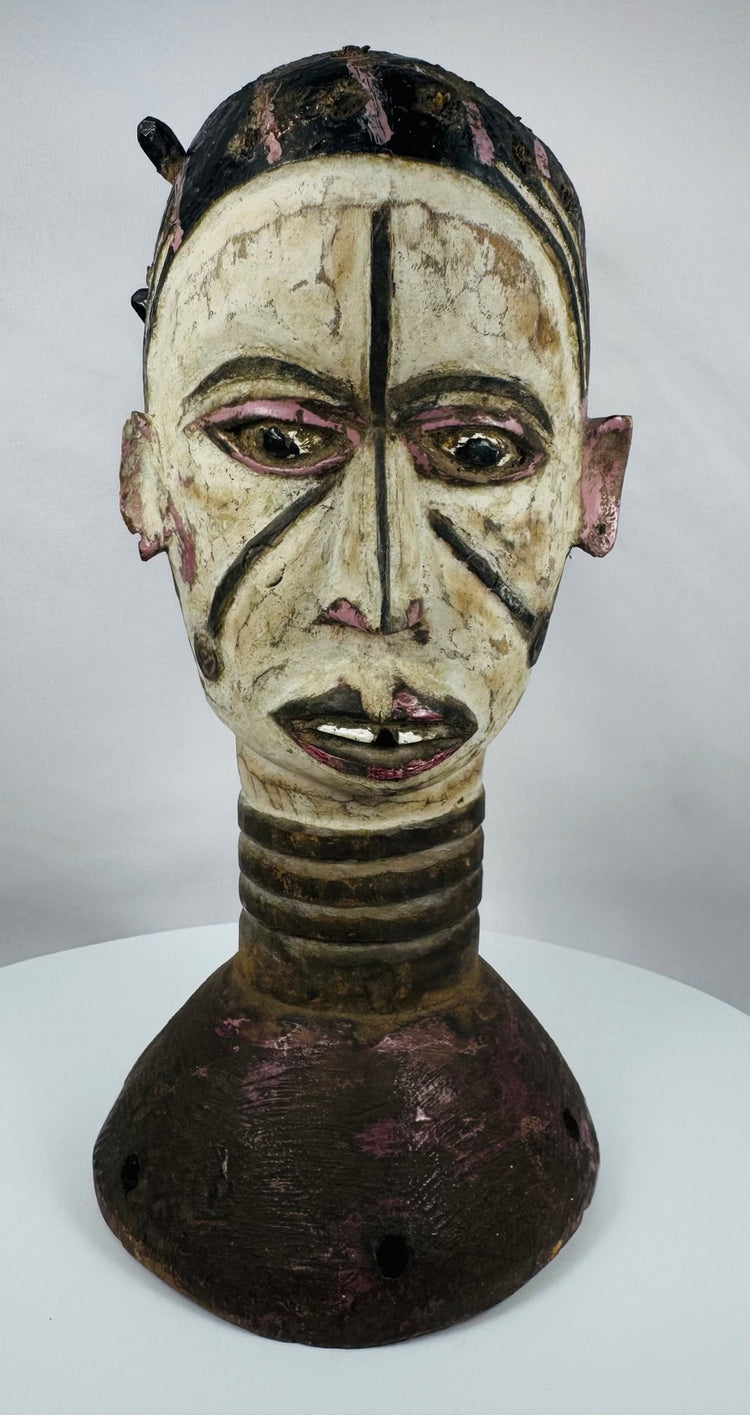
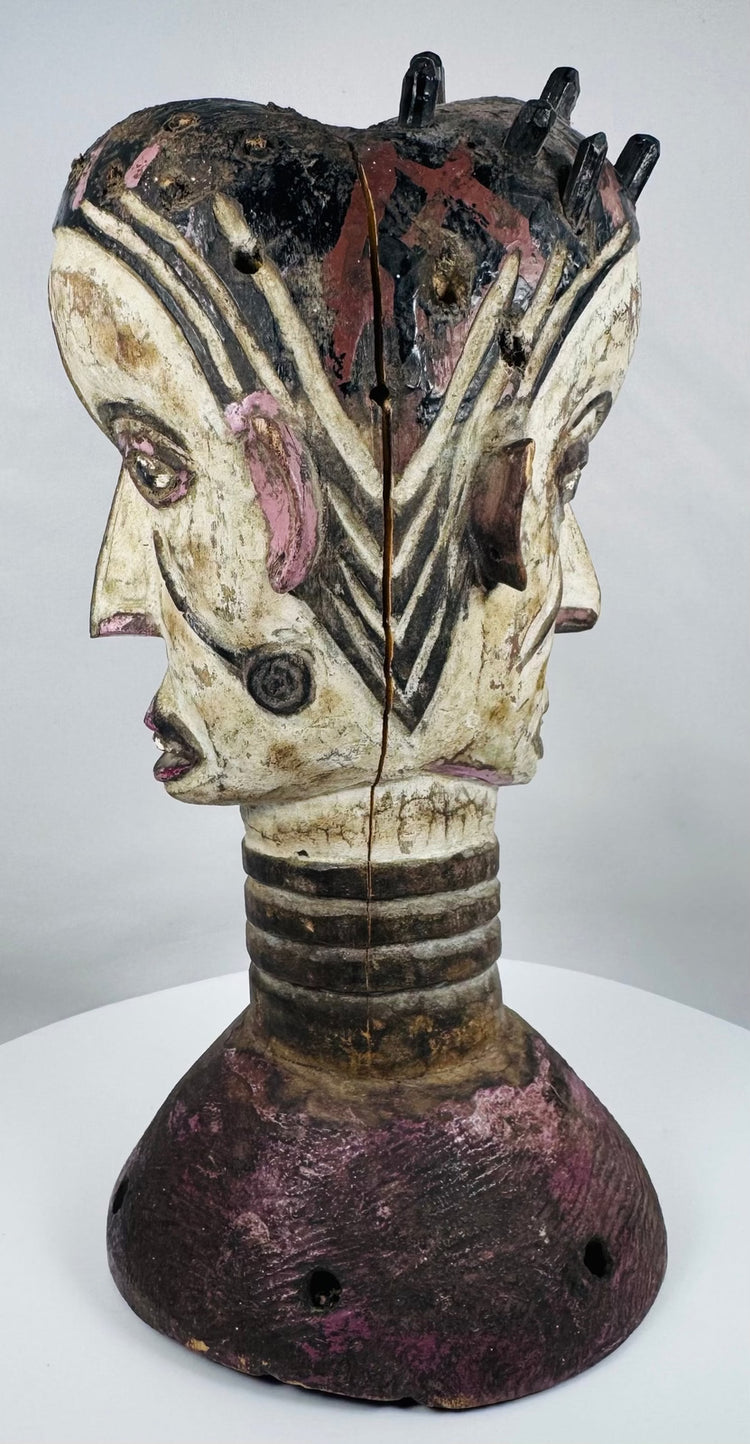
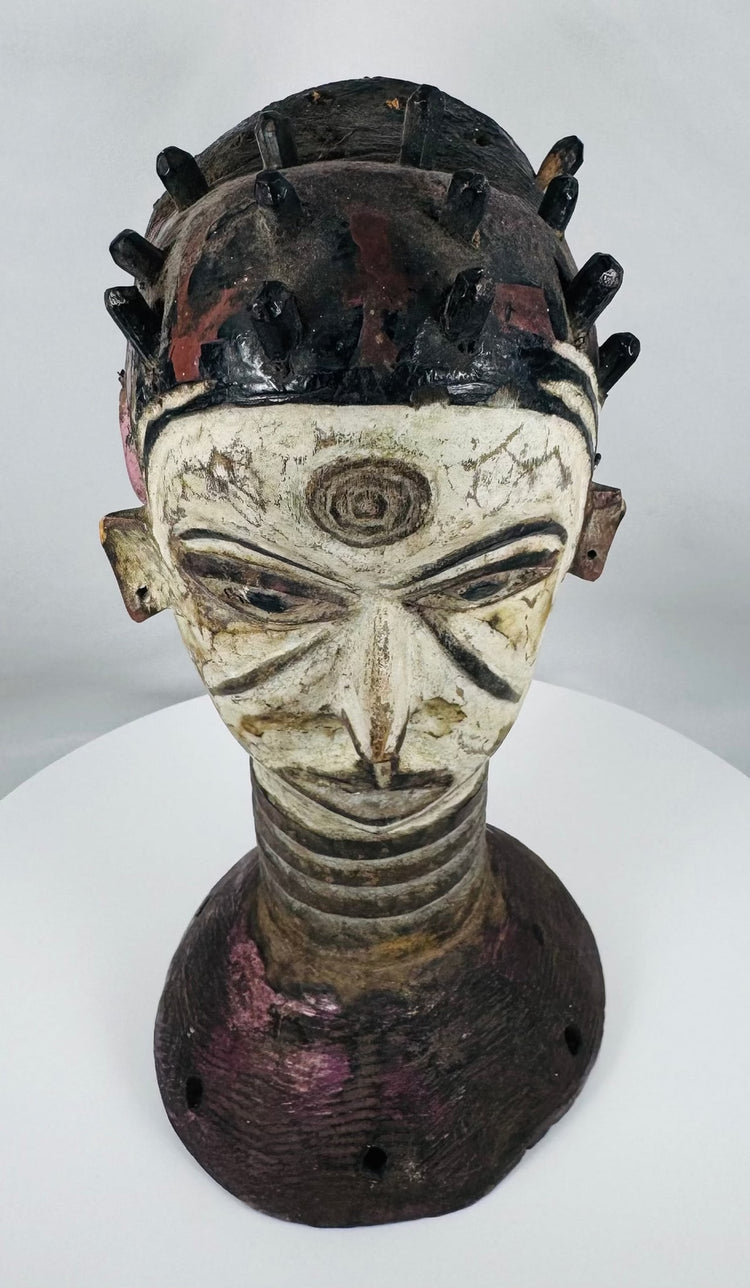
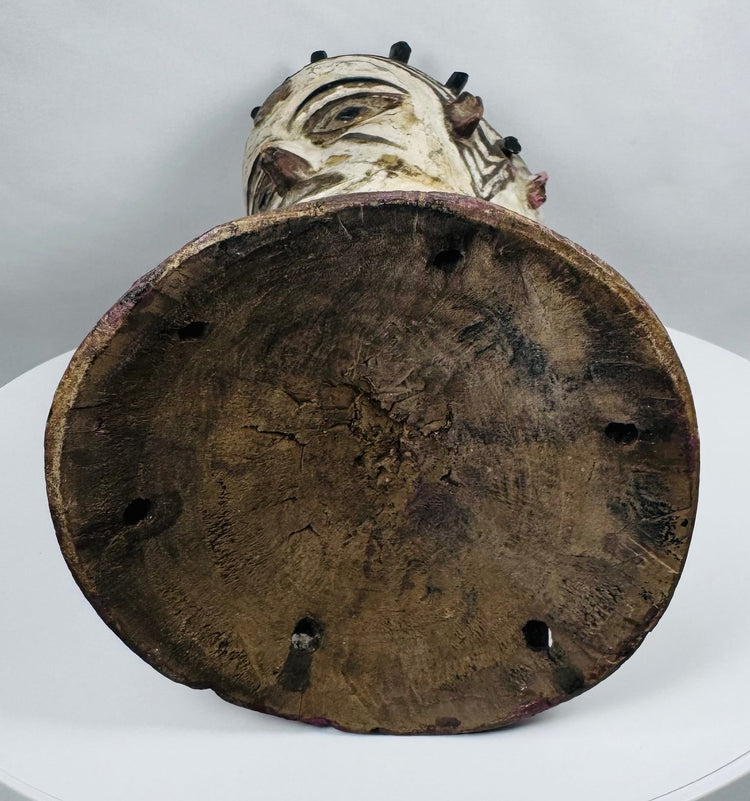
Esta llamativa cresta de danza Janus de madera tallada proviene del pueblo Igbo de Nigeria y representa una forma distintiva de arte ceremonial de mascarada. Tallada de una sola pieza de madera, la escultura presenta dos rostros humanos opuestos unidos espalda con espalda sobre un cuello cilíndrico anillado y una base perforada acampanada. Los rostros están decorados con pigmento blanco, motivos lineales negros y rastros de coloración roja y morada, mientras que la corona está adornada con elementos de peinado proyectados que contribuyen a su dramática apariencia ceremonial.
Las crestas de danza de este tipo se asociaban tradicionalmente con actuaciones de mascaradas, celebraciones comunitarias e importantes ocasiones ceremoniales. La forma de doble cara o Janus simboliza la vigilancia, el equilibrio y la capacidad de interactuar simultáneamente con múltiples reinos de experiencia. Tales imágenes reflejan temas más amplios de presencia ancestral, autoridad espiritual y la interconexión de mundos visibles e invisibles dentro de los sistemas de creencias tradicionales.
El cuello alargado, los rasgos faciales estilizados y la decoración geométrica pintada son característicos de la escultura creada para la representación en lugar de para la exhibición estática. Durante los eventos de mascarada, las crestas de este tipo se habrían movido dinámicamente sobre el portador, transformando al intérprete en una encarnación viva de fuerzas espirituales, ancestrales o simbólicas.
Características
- Cresta de danza Janus Igbo de madera tallada a mano
- Diseño ceremonial de doble cara opuesta
- Decoración original de pigmentos blancos, negros, rojos y morados
- Elementos de peinado proyectados en la corona
- Cuello anillado y base acampanada perforada
- Forma tradicional asociada a las mascaradas
- Superficie envejecida fuerte con pátina deseable
- Montado para exhibición
Importancia histórica
Las tradiciones de mascarada han desempeñado durante mucho tiempo un papel importante en la vida ceremonial y social Igbo. Las crestas de danza y las formas de tocados relacionados se utilizaban durante festivales, iniciaciones, observancias funerarias y celebraciones comunitarias, donde los artistas encarnaban fuerzas ancestrales, protectoras o simbólicas. La forma Janus es particularmente significativa, representando la dualidad, la vigilancia, la sabiduría y la capacidad de mediar entre múltiples reinos de existencia.
Estos objetos no eran meramente esculturas decorativas, sino implementos ceremoniales activos que comunicaban valores culturales, creencias espirituales e identidad comunitaria a través de la representación.
Condición
Buen estado antiguo en general. Se presentan desgaste relacionado con la edad, abrasiones superficiales, pérdida de pigmento, grietas por contracción y áreas de intemperie en toda la pieza, consistentes con la edad y el uso ceremonial. La superficie conserva una rica pátina envejecida que realza el carácter y la autenticidad de la pieza.
Dimensiones (aproximadas)
Altura: 10 pulg
Ancho: 5.5 pulg
Edad (aproximada)
60-90 años
Procedencia
Adquirido de la herencia del Dr. Jacques S. Gansler (1934-2018), ex Subsecretario de Defensa de Adquisiciones, Tecnología y Logística de los Estados Unidos y reconocido académico de política de defensa. Posteriormente se mantuvo en una colección privada en Kinzers, Pensilvania, EE. UU.
Saber más
Vea una cresta ceremonial Igbo relacionada en la colección del Museo Metropolitano de Arte
Explore nuestra Colección de Artefactos Tribales e Indígenas
Descripción
Contexto Histórico y Origen
Región: Nigeria (Pueblo Igbo)
Material: Madera tallada a mano con pigmentos blancos, negros, rojos y morados
Período: Mediados del siglo XX
Descripción
Esta llamativa cresta de danza Janus de madera tallada proviene del pueblo Igbo de Nigeria y representa una forma distintiva de arte ceremonial de mascarada. Tallada de una sola pieza de madera, la escultura presenta dos rostros humanos opuestos unidos espalda con espalda sobre un cuello cilíndrico anillado y una base perforada acampanada. Los rostros están decorados con pigmento blanco, motivos lineales negros y rastros de coloración roja y morada, mientras que la corona está adornada con elementos de peinado proyectados que contribuyen a su dramática apariencia ceremonial.
Las crestas de danza de este tipo se asociaban tradicionalmente con actuaciones de mascaradas, celebraciones comunitarias e importantes ocasiones ceremoniales. La forma de doble cara o Janus simboliza la vigilancia, el equilibrio y la capacidad de interactuar simultáneamente con múltiples reinos de experiencia. Tales imágenes reflejan temas más amplios de presencia ancestral, autoridad espiritual y la interconexión de mundos visibles e invisibles dentro de los sistemas de creencias tradicionales.
El cuello alargado, los rasgos faciales estilizados y la decoración geométrica pintada son característicos de la escultura creada para la representación en lugar de para la exhibición estática. Durante los eventos de mascarada, las crestas de este tipo se habrían movido dinámicamente sobre el portador, transformando al intérprete en una encarnación viva de fuerzas espirituales, ancestrales o simbólicas.
Características
- Cresta de danza Janus Igbo de madera tallada a mano
- Diseño ceremonial de doble cara opuesta
- Decoración original de pigmentos blancos, negros, rojos y morados
- Elementos de peinado proyectados en la corona
- Cuello anillado y base acampanada perforada
- Forma tradicional asociada a las mascaradas
- Superficie envejecida fuerte con pátina deseable
- Montado para exhibición
Importancia histórica
Las tradiciones de mascarada han desempeñado durante mucho tiempo un papel importante en la vida ceremonial y social Igbo. Las crestas de danza y las formas de tocados relacionados se utilizaban durante festivales, iniciaciones, observancias funerarias y celebraciones comunitarias, donde los artistas encarnaban fuerzas ancestrales, protectoras o simbólicas. La forma Janus es particularmente significativa, representando la dualidad, la vigilancia, la sabiduría y la capacidad de mediar entre múltiples reinos de existencia.
Estos objetos no eran meramente esculturas decorativas, sino implementos ceremoniales activos que comunicaban valores culturales, creencias espirituales e identidad comunitaria a través de la representación.
Condición
Buen estado antiguo en general. Se presentan desgaste relacionado con la edad, abrasiones superficiales, pérdida de pigmento, grietas por contracción y áreas de intemperie en toda la pieza, consistentes con la edad y el uso ceremonial. La superficie conserva una rica pátina envejecida que realza el carácter y la autenticidad de la pieza.
Dimensiones (aproximadas)
Altura: 10 pulg
Ancho: 5.5 pulg
Edad (aproximada)
60-90 años
Procedencia
Adquirido de la herencia del Dr. Jacques S. Gansler (1934-2018), ex Subsecretario de Defensa de Adquisiciones, Tecnología y Logística de los Estados Unidos y reconocido académico de política de defensa. Posteriormente se mantuvo en una colección privada en Kinzers, Pensilvania, EE. UU.
Saber más
Vea una cresta ceremonial Igbo relacionada en la colección del Museo Metropolitano de Arte
Explore nuestra Colección de Artefactos Tribales e Indígenas
También te puede interesar
