

Anillo indogriego con bisel tallado | Hacia los siglos II-I a. C.
- Precio habitual
- $600.00
- Precio de venta
- $600.00
- Precio habitual
No se pudo cargar la disponibilidad de retiro


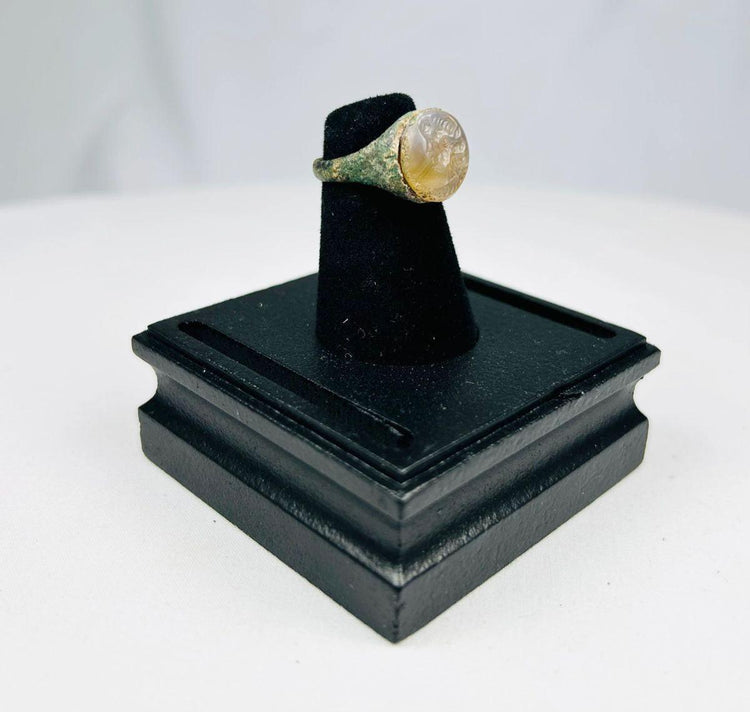
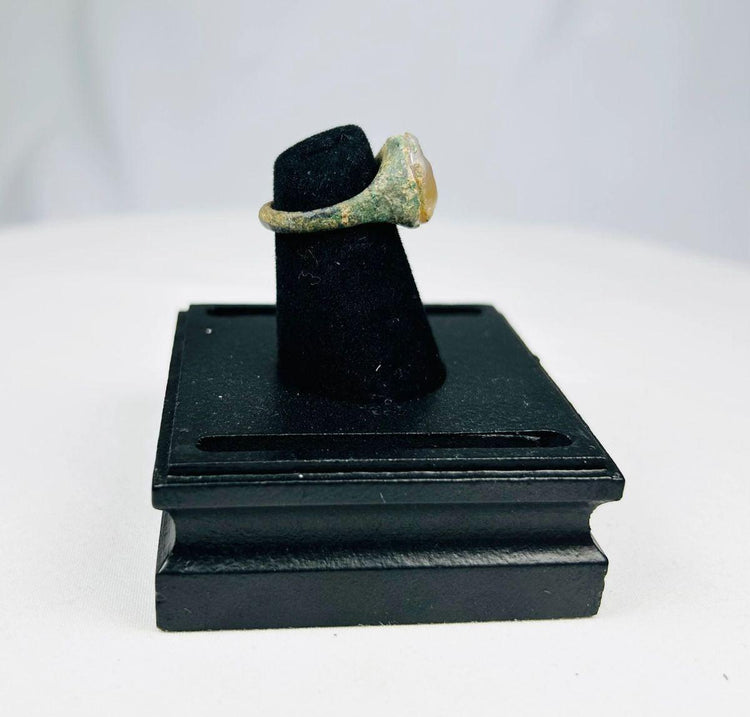
Anillo indogriego con bisel tallado | Hacia los siglos II-I a. C.
Descripción
Más
Menos
Contexto histórico y origen
Región: Reino Indogriego (Afganistán, Pakistán, norte de la India modernos)
Material: Banda de metal con bisel de granate tallado (piedra semipreciosa)
Período: C. siglos II-I a.C.
Descripción
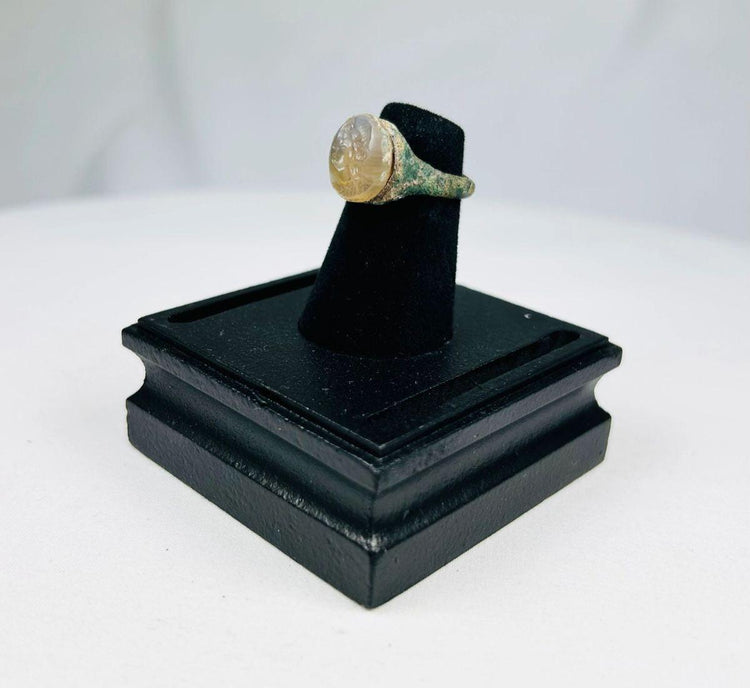
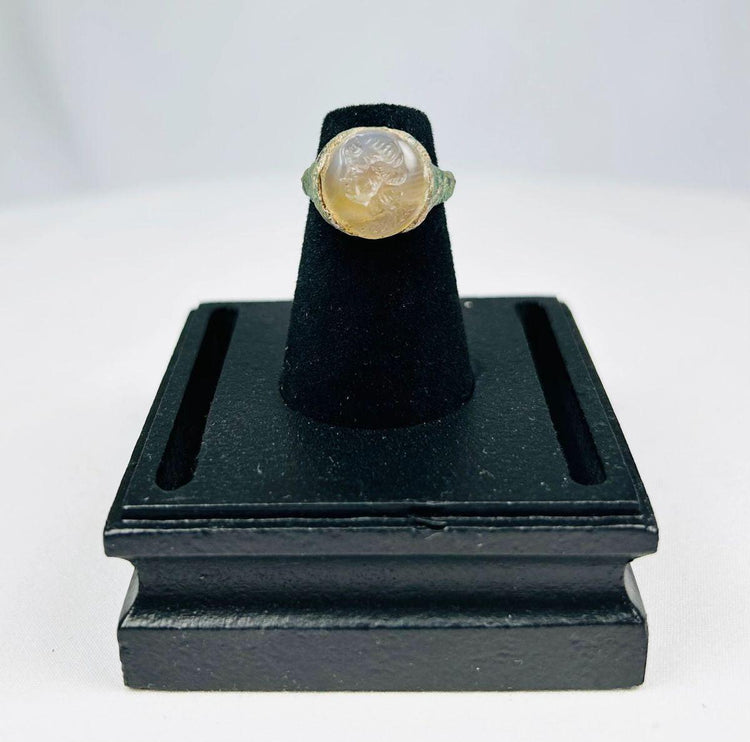
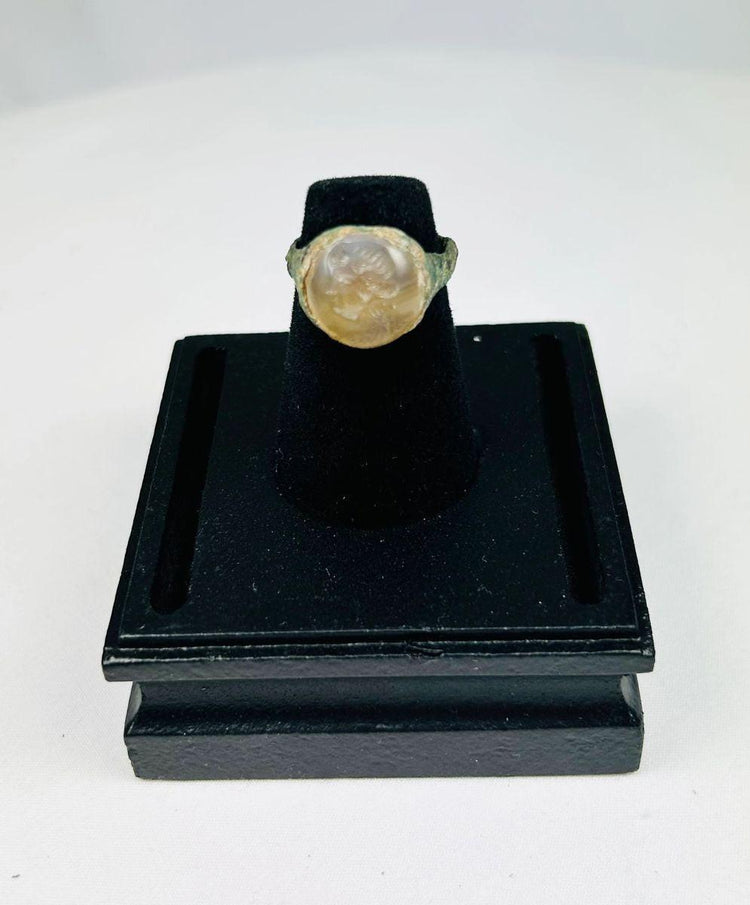
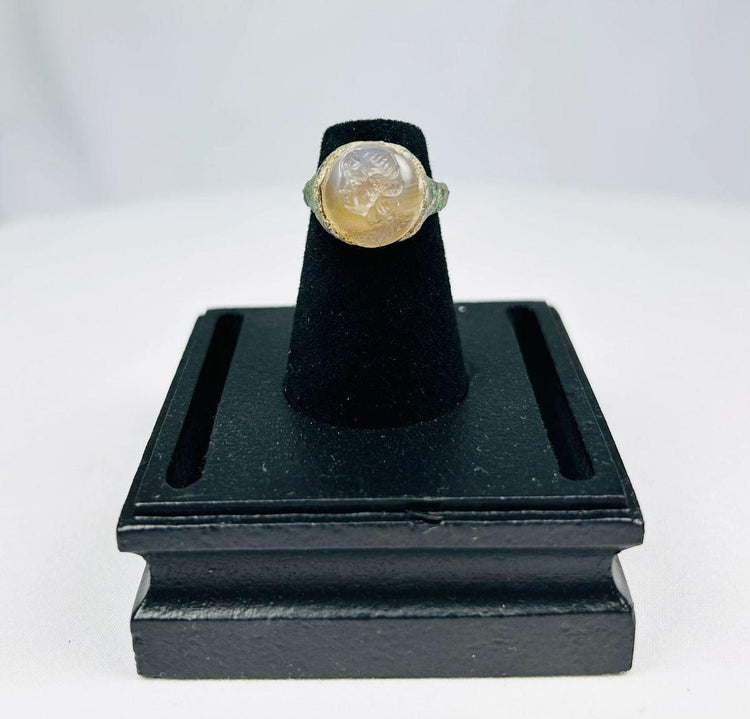
Este extraordinario anillo antiguo, que data del período indogriego, presenta un bisel finamente tallado que representa el perfil de un busto masculino barbudo. La iconografía refleja la fusión cultural y artística de la influencia griega helenística con la artesanía india, un sello distintivo importante del Reino Indogriego. El anillo encarna la síntesis de las tradiciones artísticas orientales y occidentales que florecieron durante esta época histórica crucial.
Características
• Bisel de granate tallado que representa un busto masculino barbudo de perfil
• Banda de metal con una rica pátina envejecida desarrollada a lo largo de los siglos
• Forma elegante y sencilla que enfatiza el detallado tallado del bisel
• Desgaste natural consistente con un artefacto de más de dos milenios de antigüedad
Significado cultural
El Reino Indogriego representó una encrucijada cultural única donde las tradiciones artísticas griegas se fusionaron con las influencias culturales y religiosas indias. Las imágenes de retratos —ya sea que representen gobernantes, deidades o figuras simbólicas— a menudo transmitían autoridad, identidad y afiliación cultural. Los anillos de esta naturaleza reflejan el notable intercambio artístico que definió el mundo indogriego y sirvieron tanto como adorno personal como representación simbólica.
Estado
Bien conservado con signos visibles de la edad. El bisel de granate conserva sus detalles tallados, mientras que la banda permanece estructuralmente estable con una atractiva pátina natural desarrollada a lo largo de siglos de antigüedad.
Dimensiones (aproximadas)
Talla del anillo: 10 EE. UU.
Edad (aproximada)
2025–2225 años
Más información
Explore la historia del Reino Indogriego en World History Encyclopedia
Explore nuestra Colección de anillos antiguos y artefactos portátiles
Descripción
Contexto histórico y origen
Región: Reino Indogriego (Afganistán, Pakistán, norte de la India modernos)
Material: Banda de metal con bisel de granate tallado (piedra semipreciosa)
Período: C. siglos II-I a.C.
Descripción
Este extraordinario anillo antiguo, que data del período indogriego, presenta un bisel finamente tallado que representa el perfil de un busto masculino barbudo. La iconografía refleja la fusión cultural y artística de la influencia griega helenística con la artesanía india, un sello distintivo importante del Reino Indogriego. El anillo encarna la síntesis de las tradiciones artísticas orientales y occidentales que florecieron durante esta época histórica crucial.
Características
• Bisel de granate tallado que representa un busto masculino barbudo de perfil
• Banda de metal con una rica pátina envejecida desarrollada a lo largo de los siglos
• Forma elegante y sencilla que enfatiza el detallado tallado del bisel
• Desgaste natural consistente con un artefacto de más de dos milenios de antigüedad
Significado cultural
El Reino Indogriego representó una encrucijada cultural única donde las tradiciones artísticas griegas se fusionaron con las influencias culturales y religiosas indias. Las imágenes de retratos —ya sea que representen gobernantes, deidades o figuras simbólicas— a menudo transmitían autoridad, identidad y afiliación cultural. Los anillos de esta naturaleza reflejan el notable intercambio artístico que definió el mundo indogriego y sirvieron tanto como adorno personal como representación simbólica.
Estado
Bien conservado con signos visibles de la edad. El bisel de granate conserva sus detalles tallados, mientras que la banda permanece estructuralmente estable con una atractiva pátina natural desarrollada a lo largo de siglos de antigüedad.
Dimensiones (aproximadas)
Talla del anillo: 10 EE. UU.
Edad (aproximada)
2025–2225 años
Más información
Explore la historia del Reino Indogriego en World History Encyclopedia
Explore nuestra Colección de anillos antiguos y artefactos portátiles
También te puede interesar
