



Tinaja indígena grande de Timor con decoración geométrica pintada a mano | Circa siglo XIX–XX
- Precio habitual
- $400.00
- Precio de venta
- $400.00
- Precio habitual
No se pudo cargar la disponibilidad de retiro


Tinaja indígena grande de Timor con decoración geométrica pintada a mano | Circa siglo XIX–XX
Descripción
Más
Menos
Contexto histórico y origen
Región: Región de la Isla de Timor (Timor-Leste / Indonesia Oriental)
Material: Cerámica de barro moldeada a mano con decoración de pigmentos minerales
Período: Probablemente entre el siglo XIX y principios del XX
Descripción
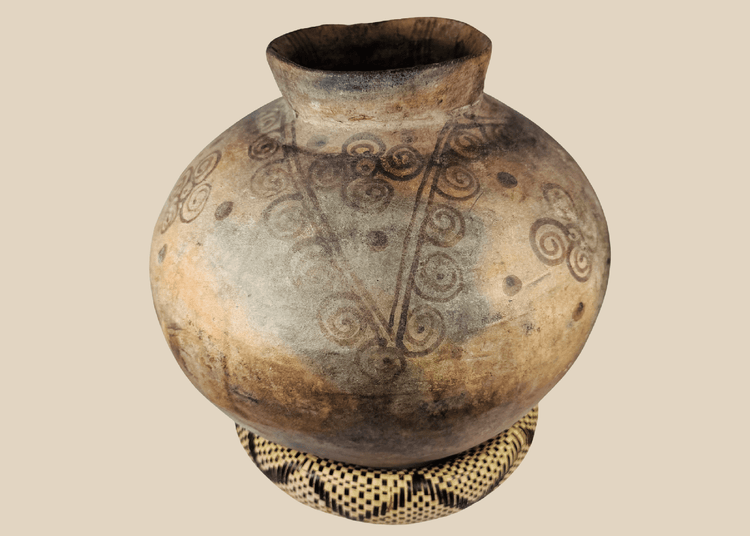
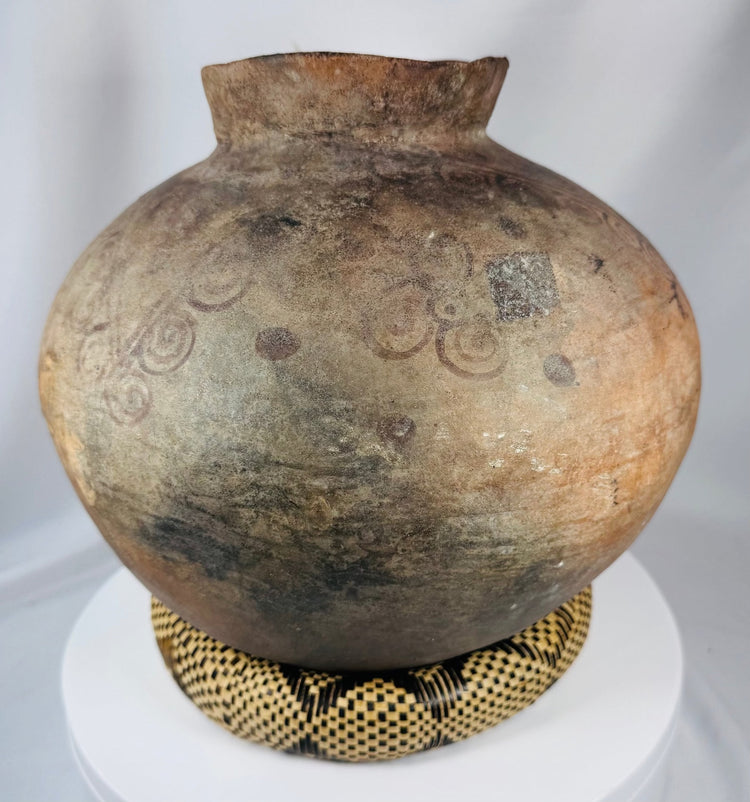
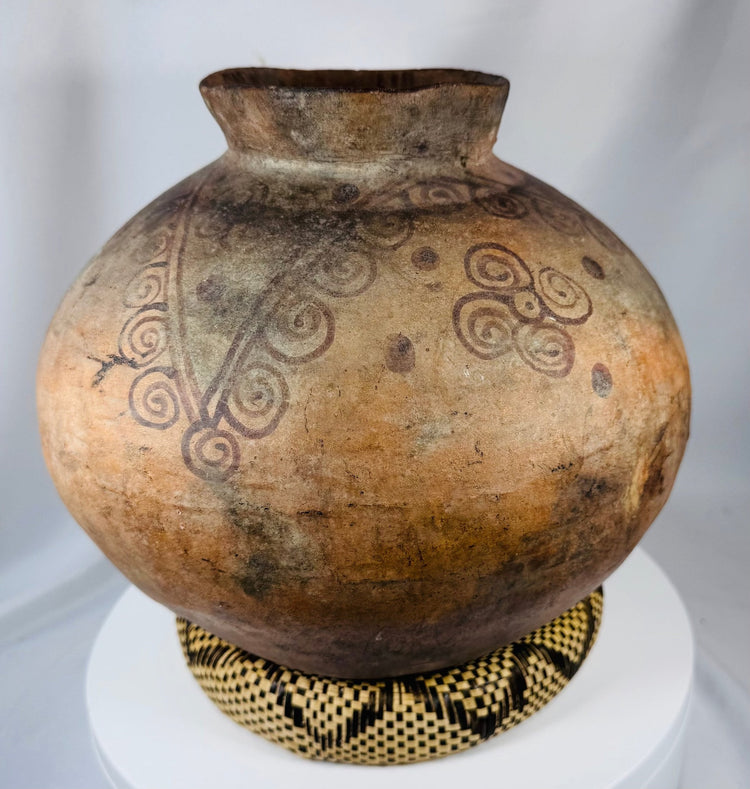
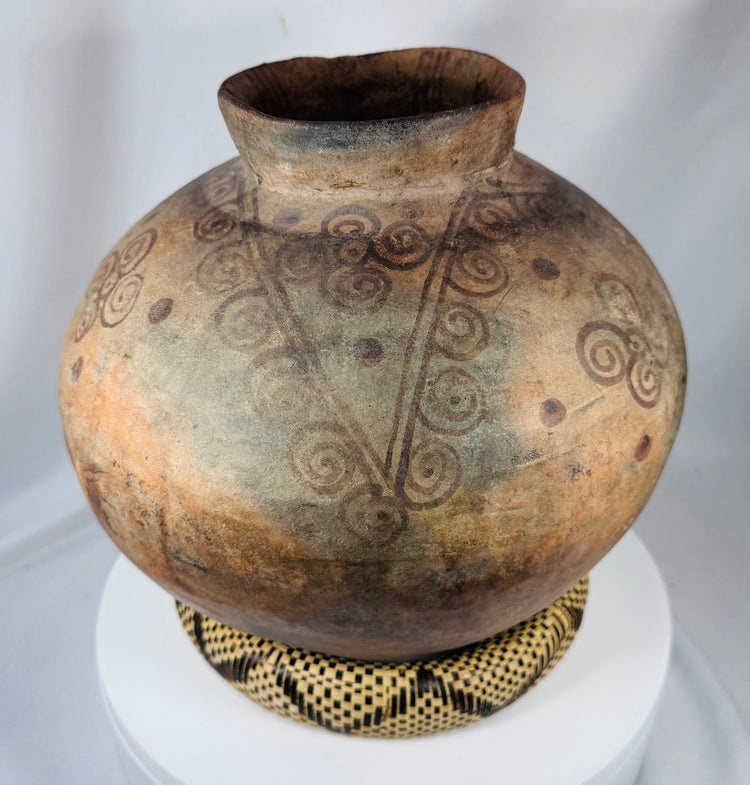
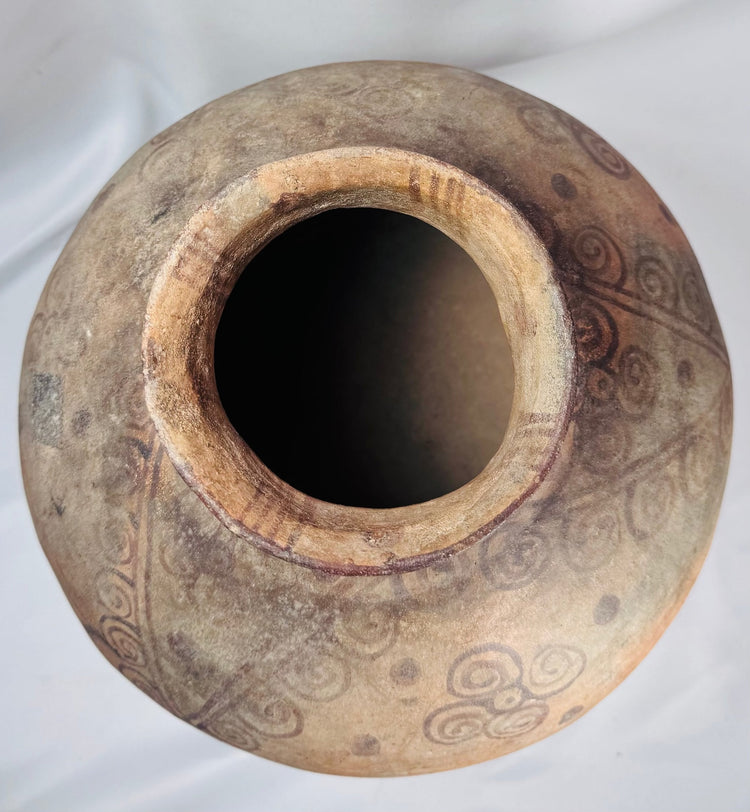
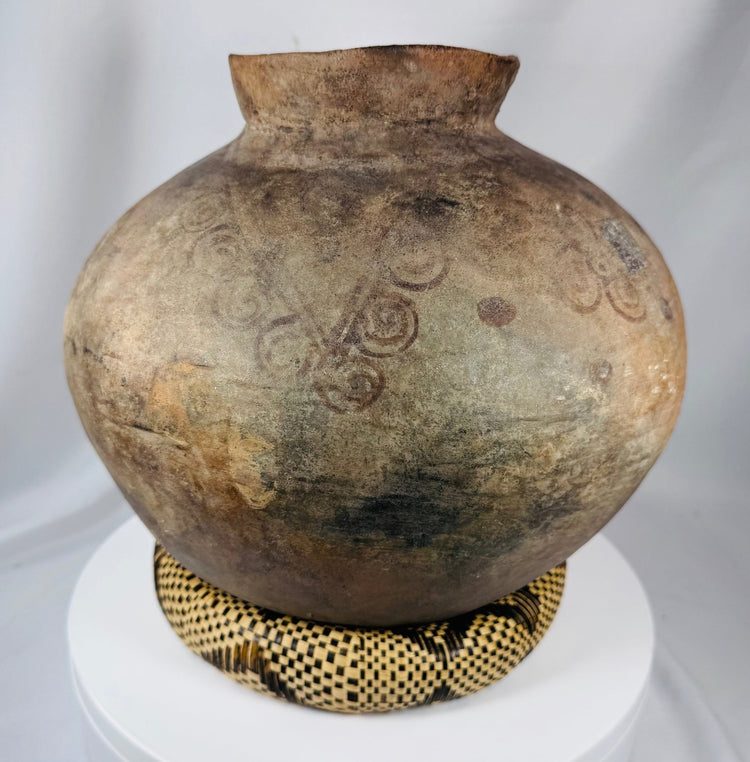
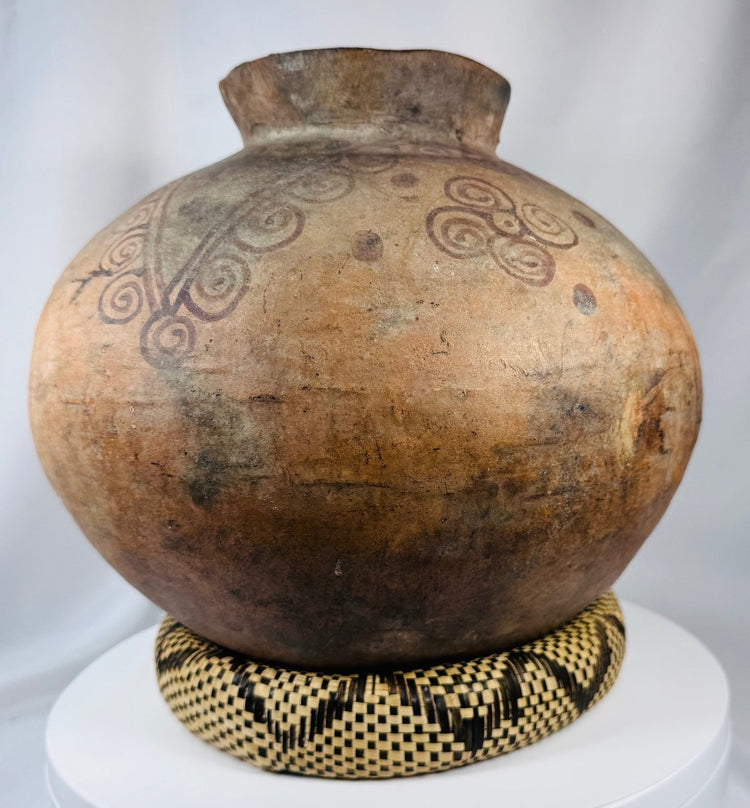
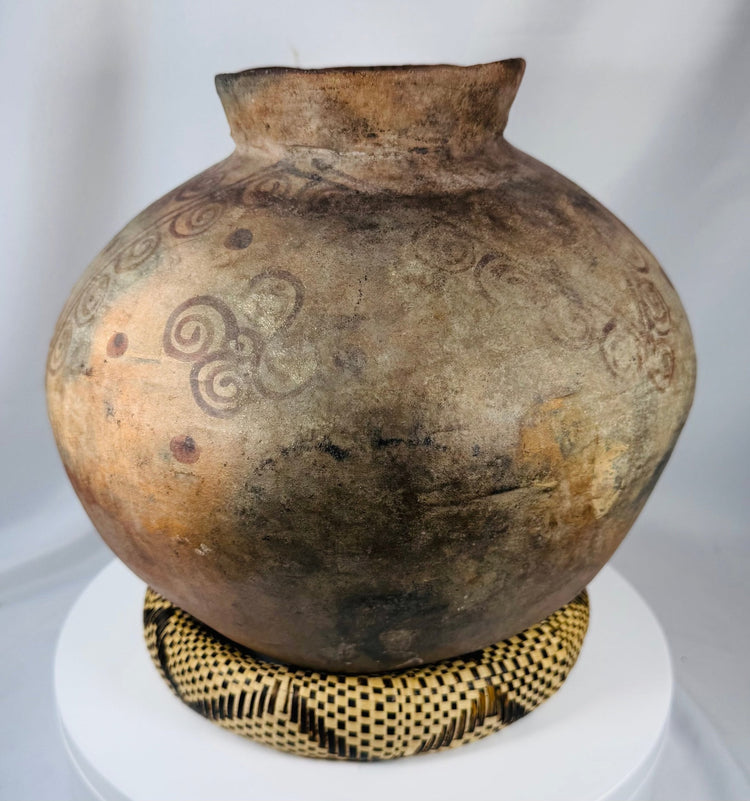
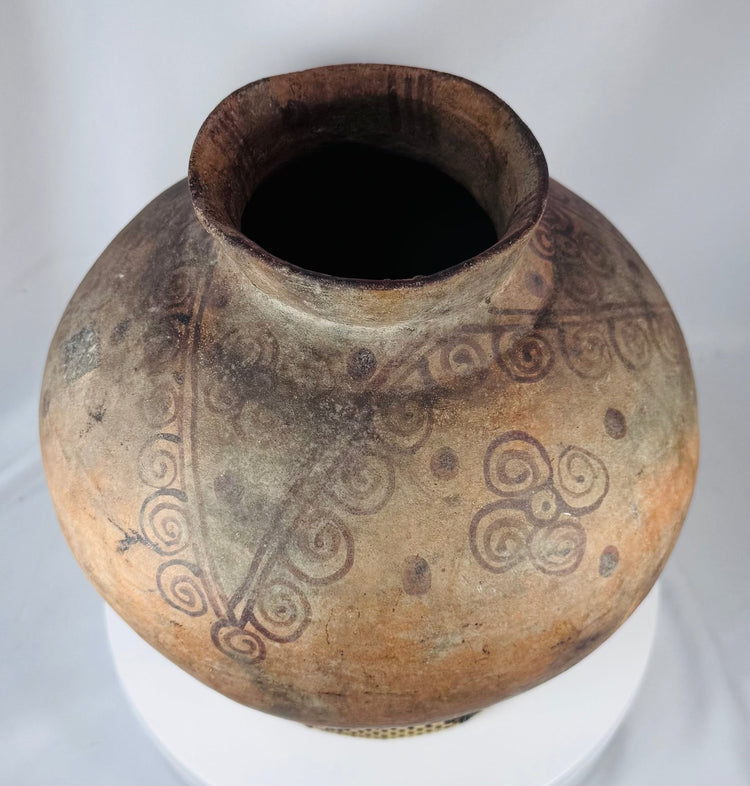
Este impresionante recipiente de almacenamiento de barro a gran escala probablemente proviene de la isla de Timor, situada en el actual Timor-Leste y el este de Indonesia. El recipiente presenta un cuerpo globular sustancial con un cuello corto y erguido y muestra motivos geométricos y espirales tradicionales pintados a mano con pigmentos minerales oscuros en la parte superior del hombro.
Los diseños de espirales y volutas repetidas son muy característicos de las tradiciones decorativas indígenas de Timor, lo que refleja la estética cerámica regional de larga data asociada con los recipientes de almacenamiento domésticos, la cerámica ceremonial y las formas de cerámica utilitaria producidas en todas las Islas de la Sonda Menores. La superficie suavemente bruñida y la forma asimétrica e irregular respaldan aún más las técnicas de producción tradicionales hechas a mano en lugar de la fabricación moderna moldeada.
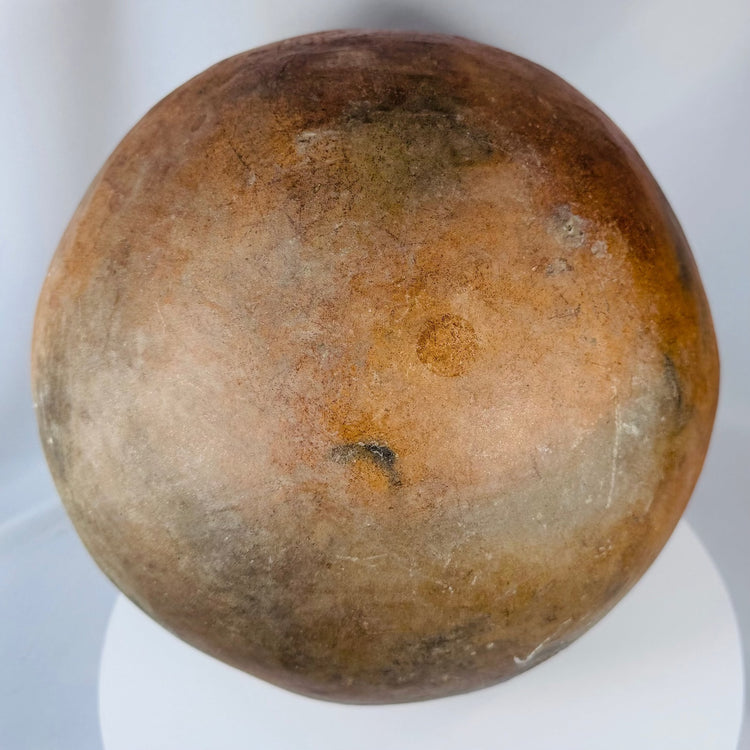
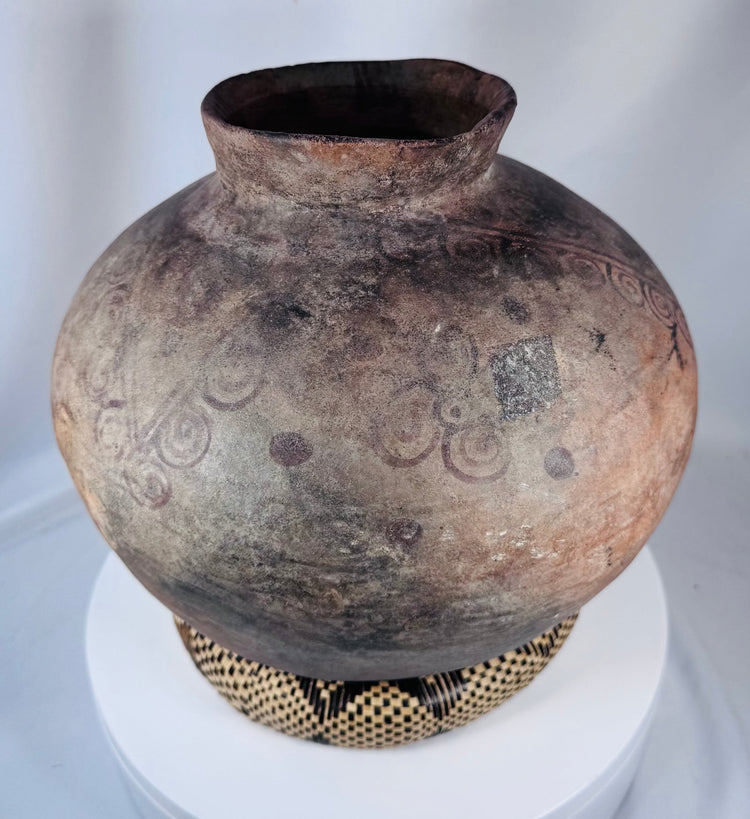
El recipiente presenta una superficie de tierra cálida con una extensa pátina relacionada con la edad, variaciones de cocción, acreciones minerales, desgaste superficial y áreas oscurecidas consistentes con la edad y el uso prolongados. El cuerpo ancho y redondeado le da a la pieza una fuerte presencia escultórica, mientras que los motivos pintados proporcionan un contraste decorativo visualmente impactante contra el cuerpo de arcilla natural.
Grandes recipientes de cerámica de este tipo se utilizaron históricamente para el almacenamiento de agua, granos, alimentos fermentados, aceites o contenidos ceremoniales en entornos de aldeas y hogares en toda la región de Timor. Hoy en día, los ejemplos son cada vez más buscados por su importancia etnográfica, sus cualidades decorativas orgánicas y su fuerte atractivo de exhibición.
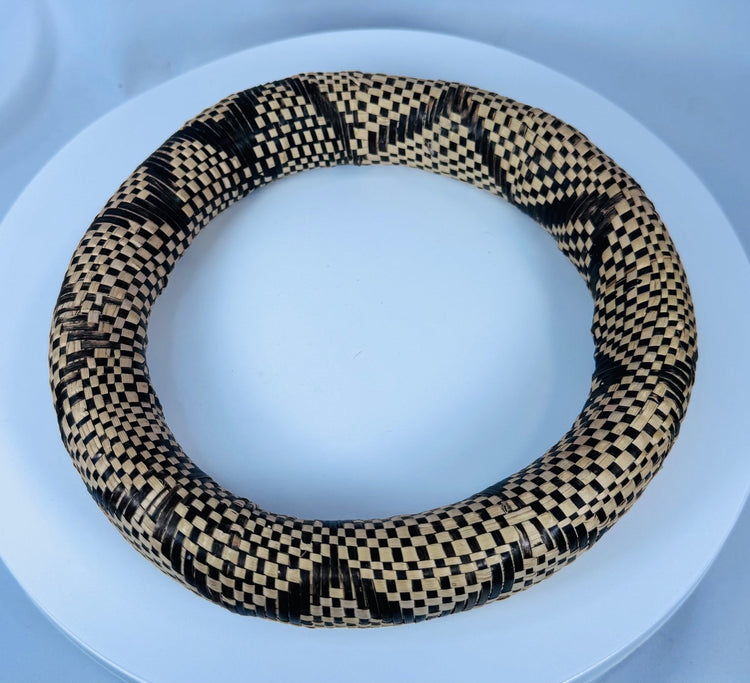
Montado en un anillo de exhibición tejido, el recipiente se presenta excepcionalmente bien como una pieza central etnográfica independiente o dentro de una colección de arte tribal e indígena del sudeste asiático.
Características
- Forma de vasija de barro timorense grande y redondeada
- Motivos decorativos espirales y geométricos pintados a mano
- Construcción cerámica tradicional hecha a mano
- Rica superficie envejecida con variación de cocción natural y pátina
- Fuerte presencia etnográfica y decorativa
- Probablemente utilizado históricamente para almacenamiento doméstico o ceremonial
- Incluye anillo de soporte de exhibición tejido que se muestra en las fotografías
Significado cultural
La producción tradicional de cerámica en Timor ha desempeñado durante mucho tiempo un papel importante en la vida doméstica, ceremonial y agrícola. Muchas tradiciones cerámicas regionales fueron producidas por artesanos de aldea utilizando arcillas de origen local y técnicas de cocción al aire libre transmitidas de generación en generación. Los motivos decorativos como espirales, puntos y patrones geométricos repetidos a menudo tenían un significado simbólico o regional vinculado a las tradiciones ancestrales y la identidad local.
Condición
Muestra desgaste relacionado con la edad, abrasiones superficiales, irregularidades de cocción, áreas oscurecidas, acreciones minerales y pérdidas superficiales dispersas consistentes con la edad y el uso tradicional. En general, bien conservado con una fuerte presentación decorativa.
Dimensiones (aproximadas)
Altura: 10.5 pulgadas
Ancho: 10 pulgadas
Profundidad: 10 pulgadas
Edad (aproximada)
100–150 años
Resumen de procedencia
De una colección privada en Filadelfia, Pensilvania, EE. UU.
Más información
Conozca la historia, las tradiciones y el patrimonio cultural de Timor y las Islas de la Sonda Menores en Historia y cultura de Timor
Explore nuestra Colección de artefactos culturales y etnográficos
Descripción
Contexto histórico y origen
Región: Región de la Isla de Timor (Timor-Leste / Indonesia Oriental)
Material: Cerámica de barro moldeada a mano con decoración de pigmentos minerales
Período: Probablemente entre el siglo XIX y principios del XX
Descripción
Este impresionante recipiente de almacenamiento de barro a gran escala probablemente proviene de la isla de Timor, situada en el actual Timor-Leste y el este de Indonesia. El recipiente presenta un cuerpo globular sustancial con un cuello corto y erguido y muestra motivos geométricos y espirales tradicionales pintados a mano con pigmentos minerales oscuros en la parte superior del hombro.
Los diseños de espirales y volutas repetidas son muy característicos de las tradiciones decorativas indígenas de Timor, lo que refleja la estética cerámica regional de larga data asociada con los recipientes de almacenamiento domésticos, la cerámica ceremonial y las formas de cerámica utilitaria producidas en todas las Islas de la Sonda Menores. La superficie suavemente bruñida y la forma asimétrica e irregular respaldan aún más las técnicas de producción tradicionales hechas a mano en lugar de la fabricación moderna moldeada.
El recipiente presenta una superficie de tierra cálida con una extensa pátina relacionada con la edad, variaciones de cocción, acreciones minerales, desgaste superficial y áreas oscurecidas consistentes con la edad y el uso prolongados. El cuerpo ancho y redondeado le da a la pieza una fuerte presencia escultórica, mientras que los motivos pintados proporcionan un contraste decorativo visualmente impactante contra el cuerpo de arcilla natural.
Grandes recipientes de cerámica de este tipo se utilizaron históricamente para el almacenamiento de agua, granos, alimentos fermentados, aceites o contenidos ceremoniales en entornos de aldeas y hogares en toda la región de Timor. Hoy en día, los ejemplos son cada vez más buscados por su importancia etnográfica, sus cualidades decorativas orgánicas y su fuerte atractivo de exhibición.
Montado en un anillo de exhibición tejido, el recipiente se presenta excepcionalmente bien como una pieza central etnográfica independiente o dentro de una colección de arte tribal e indígena del sudeste asiático.
Características
- Forma de vasija de barro timorense grande y redondeada
- Motivos decorativos espirales y geométricos pintados a mano
- Construcción cerámica tradicional hecha a mano
- Rica superficie envejecida con variación de cocción natural y pátina
- Fuerte presencia etnográfica y decorativa
- Probablemente utilizado históricamente para almacenamiento doméstico o ceremonial
- Incluye anillo de soporte de exhibición tejido que se muestra en las fotografías
Significado cultural
La producción tradicional de cerámica en Timor ha desempeñado durante mucho tiempo un papel importante en la vida doméstica, ceremonial y agrícola. Muchas tradiciones cerámicas regionales fueron producidas por artesanos de aldea utilizando arcillas de origen local y técnicas de cocción al aire libre transmitidas de generación en generación. Los motivos decorativos como espirales, puntos y patrones geométricos repetidos a menudo tenían un significado simbólico o regional vinculado a las tradiciones ancestrales y la identidad local.
Condición
Muestra desgaste relacionado con la edad, abrasiones superficiales, irregularidades de cocción, áreas oscurecidas, acreciones minerales y pérdidas superficiales dispersas consistentes con la edad y el uso tradicional. En general, bien conservado con una fuerte presentación decorativa.
Dimensiones (aproximadas)
Altura: 10.5 pulgadas
Ancho: 10 pulgadas
Profundidad: 10 pulgadas
Edad (aproximada)
100–150 años
Resumen de procedencia
De una colección privada en Filadelfia, Pensilvania, EE. UU.
Más información
Conozca la historia, las tradiciones y el patrimonio cultural de Timor y las Islas de la Sonda Menores en Historia y cultura de Timor
Explore nuestra Colección de artefactos culturales y etnográficos
También te puede interesar
