



Late Roman–Early Byzantine Bronze Finger Ring with Engraved Circular Bezel | Circa 4th–8th Century CE
- Precio habitual
- $250.00
- Precio de venta
- $250.00
- Precio habitual
No se pudo cargar la disponibilidad de retiro


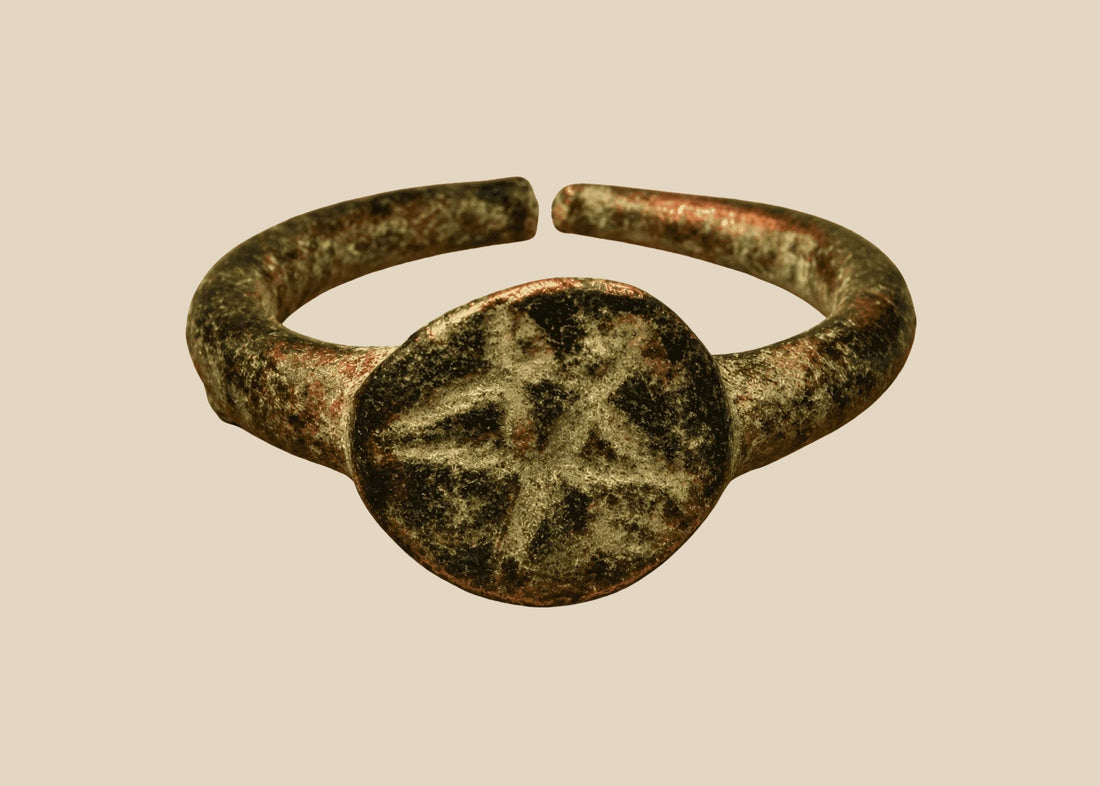
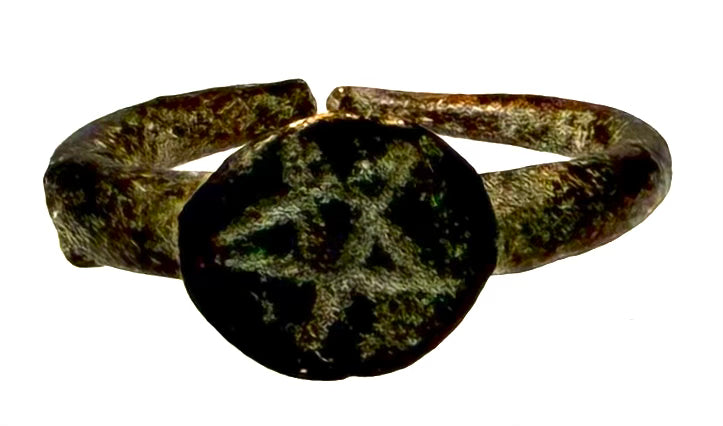
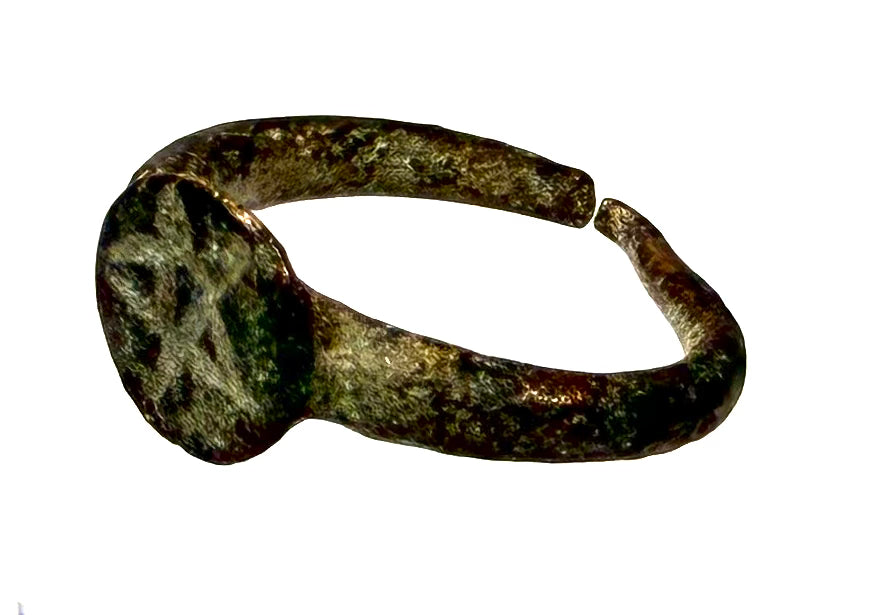
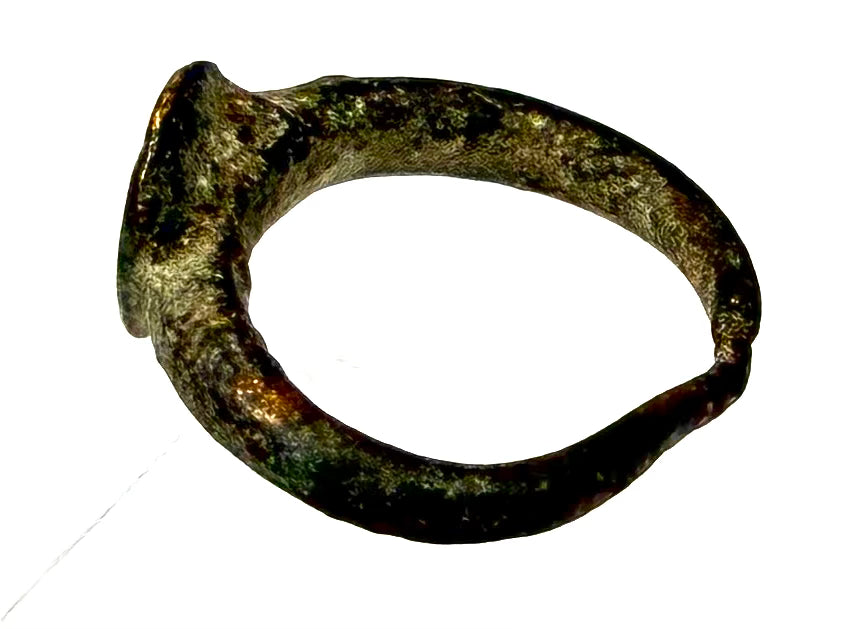
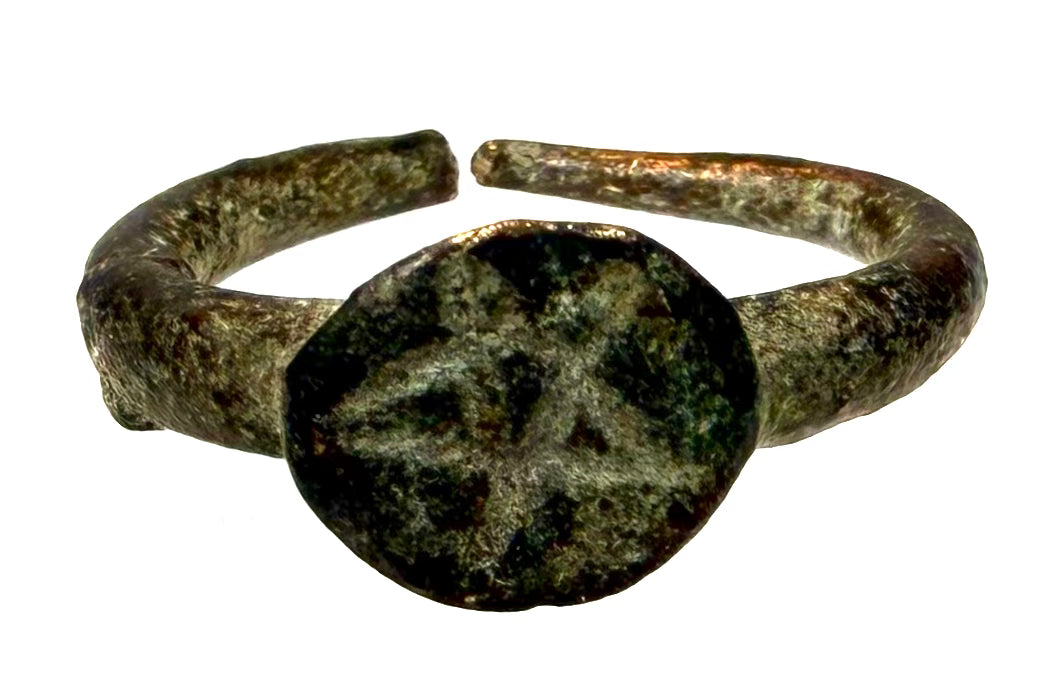
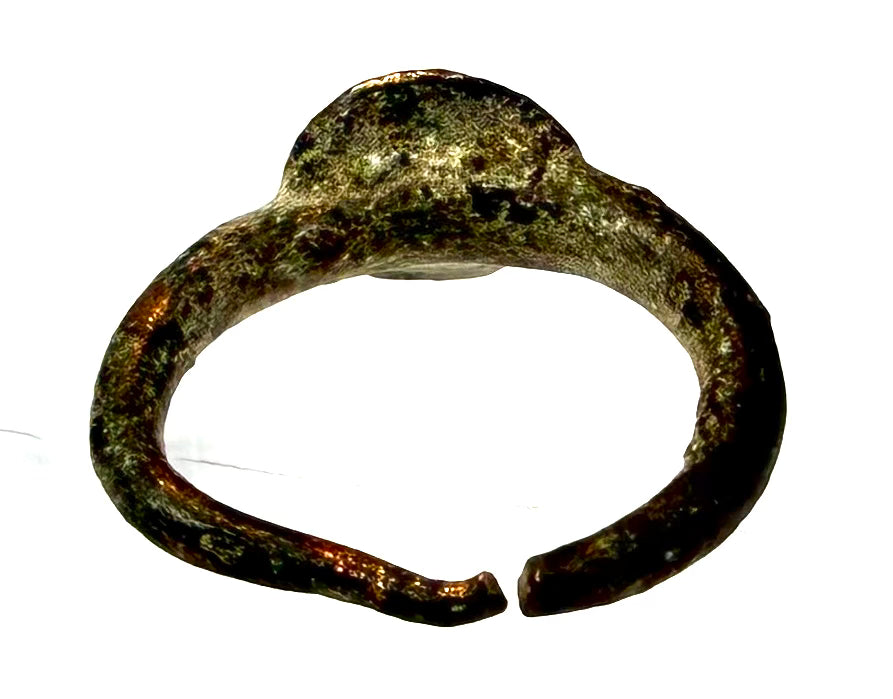
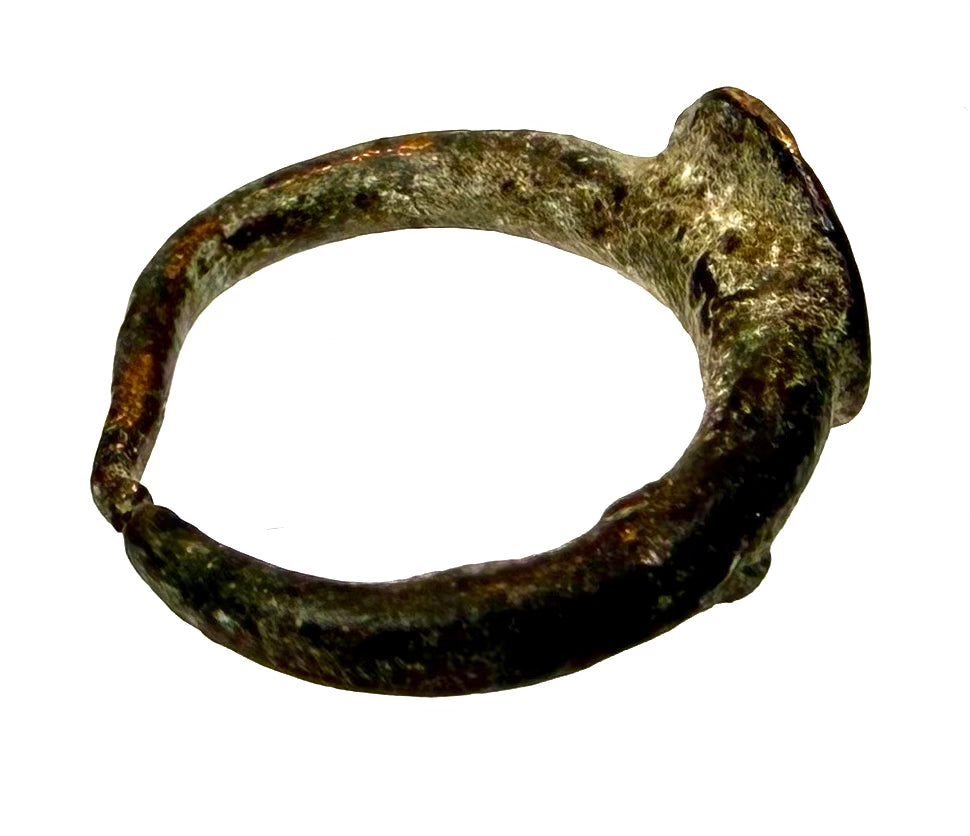
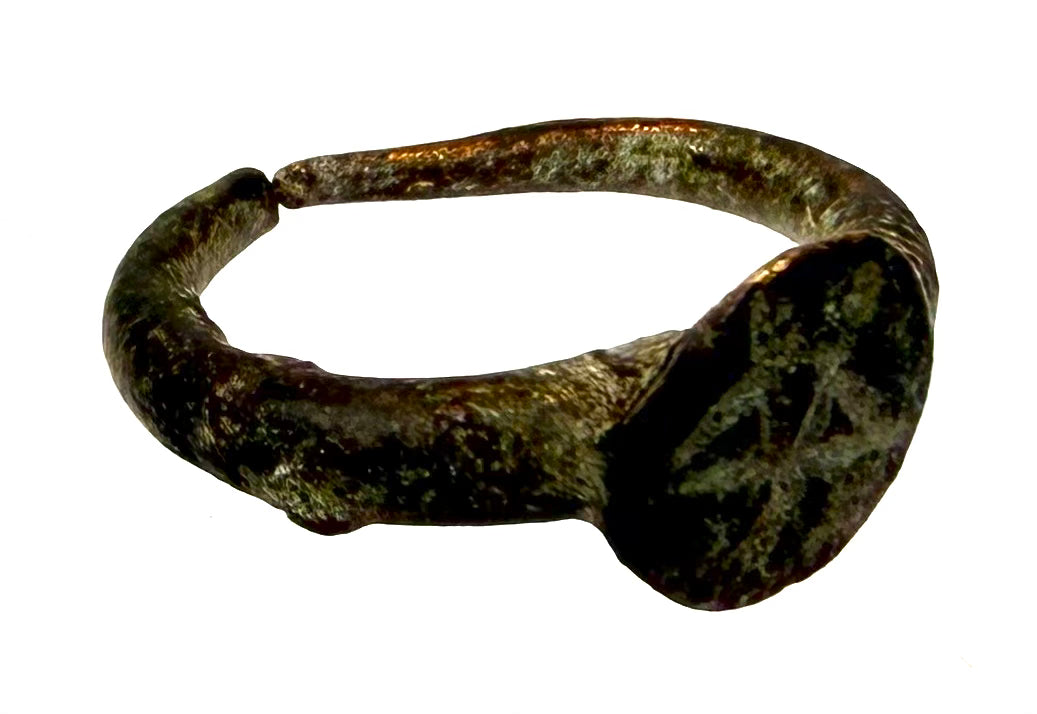
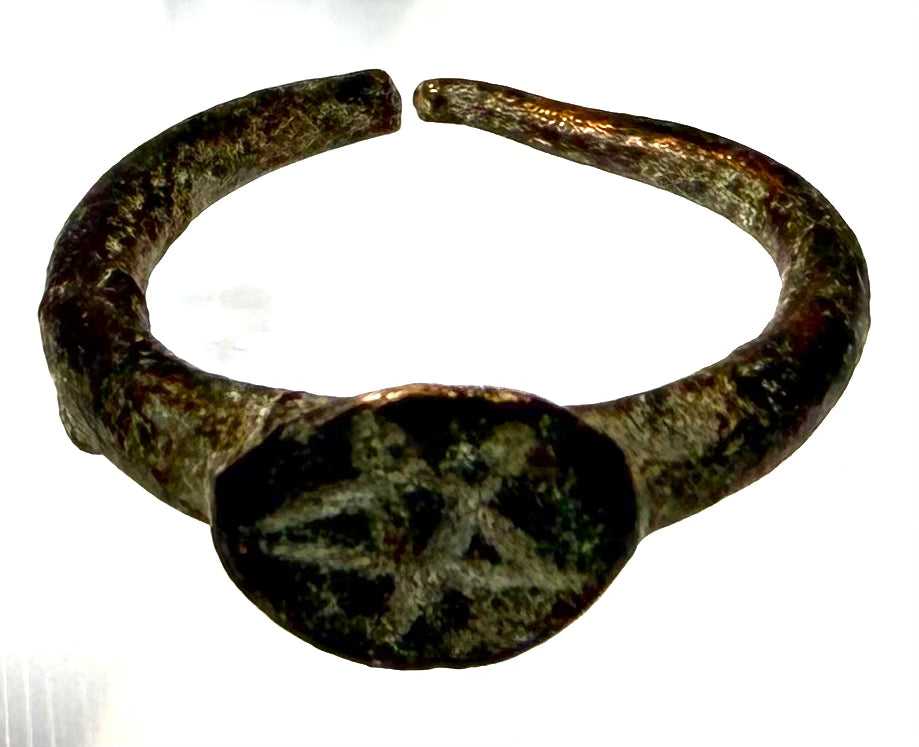
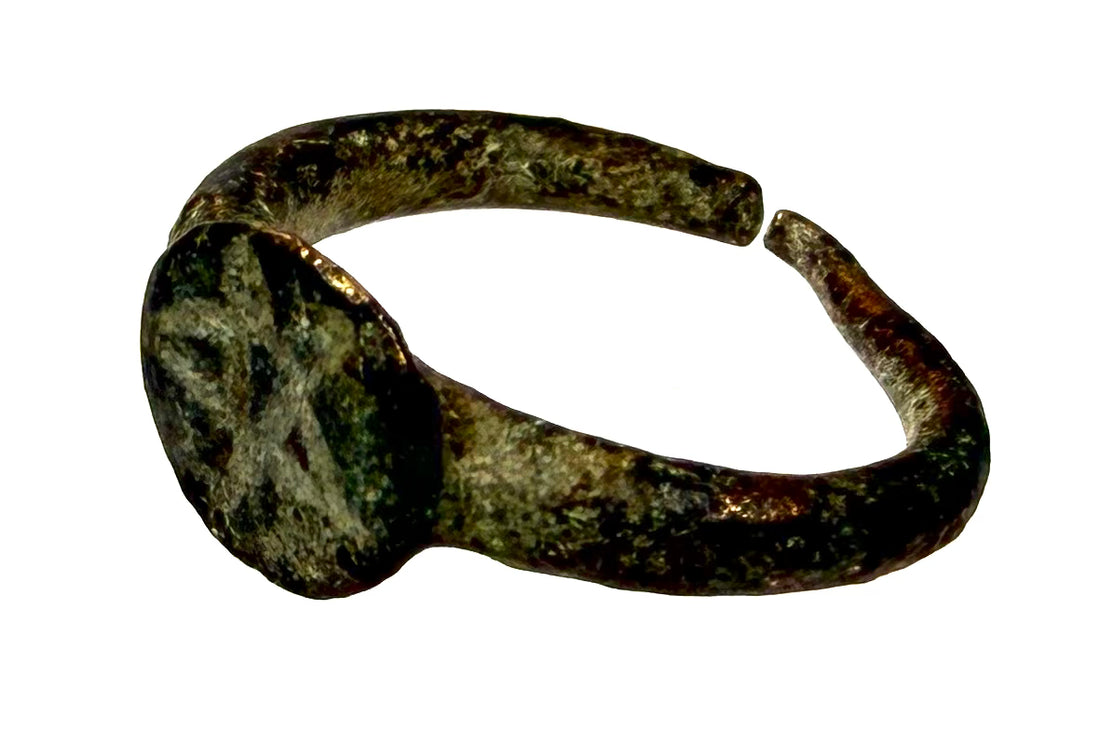
Late Roman–Early Byzantine Bronze Finger Ring with Engraved Circular Bezel | Circa 4th–8th Century CE
Descripción
Más
Menos
Historical Context & Origin
Region: Eastern Mediterranean or Europe
Material: Bronze (copper alloy)
Period: Late Roman–Early Byzantine style, circa 4th–8th Century CE
Description
This distinctive Late Roman–Early Byzantine-style bronze finger ring features a prominent circular bezel decorated with an engraved geometric motif, a gently tapering band, and a richly aged surface displaying dark olive-green, brown, and charcoal tones. Its compact proportions, raised bezel, and ornamental engraving reflect decorative traditions encountered in historical metalwork and personal jewellery during Late Antiquity and the early Byzantine era.
The circular bezel forms the central decorative feature, displaying a series of intersecting incised lines arranged into an abstract cross-like or radiating geometric composition. Although softened by extensive surface wear, portions of the original engraving remain recognizable beneath the dark patination. The bezel rises above the adjoining shoulders, which gradually taper into a relatively narrow, rounded bronze hoop. The band is open at the reverse, with separated terminals and a slightly irregular curvature. Its unusually small proportions, approximately US ring size 1 in its present condition, distinguish it from larger surviving bronze finger rings.
The bronze surface exhibits a mottled combination of deep brown, charcoal, and olive-green patination, with scattered lighter mineral-like deposits and areas of exposed metal. Fine scratches, localized pitting, and surface irregularities are visible across the bezel and band, contributing to its weathered appearance. The ring's raised circular bezel, engraved geometric decoration, and simple bronze construction are comparable to ornamental features documented on Late Roman and Early Byzantine finger rings.
Features
- Small bronze finger ring with prominent raised circular bezel
- Engraved geometric design featuring intersecting incised lines
- Abstract cross-like or radiating decorative composition
- Broad shoulders gradually tapering into a narrower bronze hoop
- Open-ended band with visible separation at the reverse
- Rich dark olive-green, charcoal, and earthy brown surface patination
- Extensive oxidation, localized pitting, and mineral-like surface deposits
Cultural Significance
Finger rings were widely worn throughout the Roman Empire and continued to serve important decorative, personal, and symbolic functions during the Byzantine period. These objects reflected individual identity, artistic preferences, and, in certain contexts, social standing. While precious-metal jewellery was often associated with wealth and prestige, bronze and other copper-alloy rings provided a more accessible form of personal adornment and were produced in numerous decorative styles.
Engraved bezels were a recognizable feature of Late Roman and Byzantine jewellery, providing prominent surfaces for geometric ornamentation, inscriptions, religious imagery, and personal symbols. Circular bezels could incorporate intersecting lines, radiating patterns, rosettes, and other decorative compositions. Some engraved rings also served as personal seals, although many were worn primarily as ornamental accessories. The geometric design of this example reflects the broader decorative vocabulary encountered in historical European and Mediterranean metalwork.
During Late Antiquity and the early Byzantine era, jewellery traditions continued to develop through the interaction of Roman craftsmanship, regional artistic practices, and emerging cultural influences. Cross-like and radiating patterns appeared in various decorative and religious contexts, although their specific meanings depended upon the individual object and its historical setting. The present ring's engraved circular bezel, compact construction, and weathered bronze surface illustrate the enduring appeal of geometric decoration in personal jewellery.
Condition
The ring retains its overall form, including the prominent circular bezel, engraved decorative face, adjoining shoulders, and substantial portions of the bronze hoop. Extensive surface wear and oxidation are visible throughout, producing a mottled combination of dark olive-green, charcoal, brown, and greyish coloration. The bezel retains portions of its intersecting geometric engraving, although the original design has been softened by abrasion, localized pitting, and accumulated surface deposits. The bronze band is open at the reverse, with separated terminals, slight distortion, and irregular curvature. Fine scratches, mineral-like deposits, and scattered areas of exposed metal are visible across the outer surfaces and interior. Despite these areas of wear, the ring retains its distinctive raised bezel and recognizable geometric decoration.
Dimensions (Approximate)
Ring Size: US 1
Age (Approximate)
1,200–1,700 years old
Provenance
Formerly part of the Moneta Collection, a Tucson-based numismatic dealership specializing in collectible coins. Moneta is listed among professional dealers on the VCoins marketplace and participated in the 2017 U.S. Mexican Numismatic Association convention.
Subsequently handled by Palmyra Heritage Gallery, a third-generation family business specializing in ancient coins, antiquities, and historical artifacts, with a New York gallery operating since 1995. The gallery deals in Egyptian, Greek, Roman, Byzantine, Islamic, and Pre-Columbian material and is affiliated with the American Numismatic Society and Florida Numismatic Association.
Learn More
Explore comparable Late Roman and Early Byzantine bronze finger rings featuring circular engraved bezels, geometric ornamentation, and traditional metalworking techniques through the St. Olaf College Classics Coin Collection
Discover additional ancient bronze rings, historical jewellery, and decorative metalwork in our Ancient Rings & Jewelry Collection
Descripción
Historical Context & Origin
Region: Eastern Mediterranean or Europe
Material: Bronze (copper alloy)
Period: Late Roman–Early Byzantine style, circa 4th–8th Century CE
Description
This distinctive Late Roman–Early Byzantine-style bronze finger ring features a prominent circular bezel decorated with an engraved geometric motif, a gently tapering band, and a richly aged surface displaying dark olive-green, brown, and charcoal tones. Its compact proportions, raised bezel, and ornamental engraving reflect decorative traditions encountered in historical metalwork and personal jewellery during Late Antiquity and the early Byzantine era.
The circular bezel forms the central decorative feature, displaying a series of intersecting incised lines arranged into an abstract cross-like or radiating geometric composition. Although softened by extensive surface wear, portions of the original engraving remain recognizable beneath the dark patination. The bezel rises above the adjoining shoulders, which gradually taper into a relatively narrow, rounded bronze hoop. The band is open at the reverse, with separated terminals and a slightly irregular curvature. Its unusually small proportions, approximately US ring size 1 in its present condition, distinguish it from larger surviving bronze finger rings.
The bronze surface exhibits a mottled combination of deep brown, charcoal, and olive-green patination, with scattered lighter mineral-like deposits and areas of exposed metal. Fine scratches, localized pitting, and surface irregularities are visible across the bezel and band, contributing to its weathered appearance. The ring's raised circular bezel, engraved geometric decoration, and simple bronze construction are comparable to ornamental features documented on Late Roman and Early Byzantine finger rings.
Features
- Small bronze finger ring with prominent raised circular bezel
- Engraved geometric design featuring intersecting incised lines
- Abstract cross-like or radiating decorative composition
- Broad shoulders gradually tapering into a narrower bronze hoop
- Open-ended band with visible separation at the reverse
- Rich dark olive-green, charcoal, and earthy brown surface patination
- Extensive oxidation, localized pitting, and mineral-like surface deposits
Cultural Significance
Finger rings were widely worn throughout the Roman Empire and continued to serve important decorative, personal, and symbolic functions during the Byzantine period. These objects reflected individual identity, artistic preferences, and, in certain contexts, social standing. While precious-metal jewellery was often associated with wealth and prestige, bronze and other copper-alloy rings provided a more accessible form of personal adornment and were produced in numerous decorative styles.
Engraved bezels were a recognizable feature of Late Roman and Byzantine jewellery, providing prominent surfaces for geometric ornamentation, inscriptions, religious imagery, and personal symbols. Circular bezels could incorporate intersecting lines, radiating patterns, rosettes, and other decorative compositions. Some engraved rings also served as personal seals, although many were worn primarily as ornamental accessories. The geometric design of this example reflects the broader decorative vocabulary encountered in historical European and Mediterranean metalwork.
During Late Antiquity and the early Byzantine era, jewellery traditions continued to develop through the interaction of Roman craftsmanship, regional artistic practices, and emerging cultural influences. Cross-like and radiating patterns appeared in various decorative and religious contexts, although their specific meanings depended upon the individual object and its historical setting. The present ring's engraved circular bezel, compact construction, and weathered bronze surface illustrate the enduring appeal of geometric decoration in personal jewellery.
Condition
The ring retains its overall form, including the prominent circular bezel, engraved decorative face, adjoining shoulders, and substantial portions of the bronze hoop. Extensive surface wear and oxidation are visible throughout, producing a mottled combination of dark olive-green, charcoal, brown, and greyish coloration. The bezel retains portions of its intersecting geometric engraving, although the original design has been softened by abrasion, localized pitting, and accumulated surface deposits. The bronze band is open at the reverse, with separated terminals, slight distortion, and irregular curvature. Fine scratches, mineral-like deposits, and scattered areas of exposed metal are visible across the outer surfaces and interior. Despite these areas of wear, the ring retains its distinctive raised bezel and recognizable geometric decoration.
Dimensions (Approximate)
Ring Size: US 1
Age (Approximate)
1,200–1,700 years old
Provenance
Formerly part of the Moneta Collection, a Tucson-based numismatic dealership specializing in collectible coins. Moneta is listed among professional dealers on the VCoins marketplace and participated in the 2017 U.S. Mexican Numismatic Association convention.
Subsequently handled by Palmyra Heritage Gallery, a third-generation family business specializing in ancient coins, antiquities, and historical artifacts, with a New York gallery operating since 1995. The gallery deals in Egyptian, Greek, Roman, Byzantine, Islamic, and Pre-Columbian material and is affiliated with the American Numismatic Society and Florida Numismatic Association.
Learn More
Explore comparable Late Roman and Early Byzantine bronze finger rings featuring circular engraved bezels, geometric ornamentation, and traditional metalworking techniques through the St. Olaf College Classics Coin Collection
Discover additional ancient bronze rings, historical jewellery, and decorative metalwork in our Ancient Rings & Jewelry Collection
También te puede interesar
