


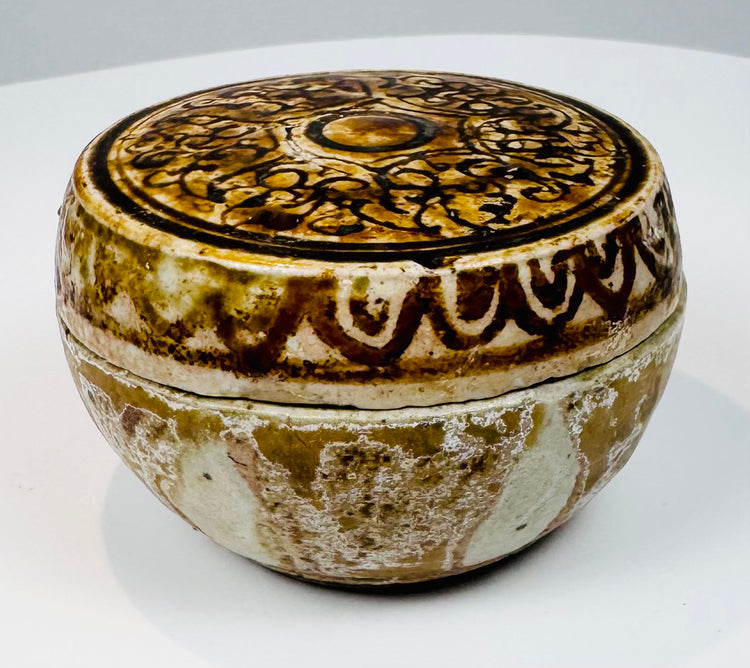
Medieval Thai Sawankhalok Foliate Covered Stoneware Box | Circa 1400 – 1550 CE
- Precio habitual
- $400.00
- Precio de venta
- $400.00
- Precio habitual
No se pudo cargar la disponibilidad de retiro



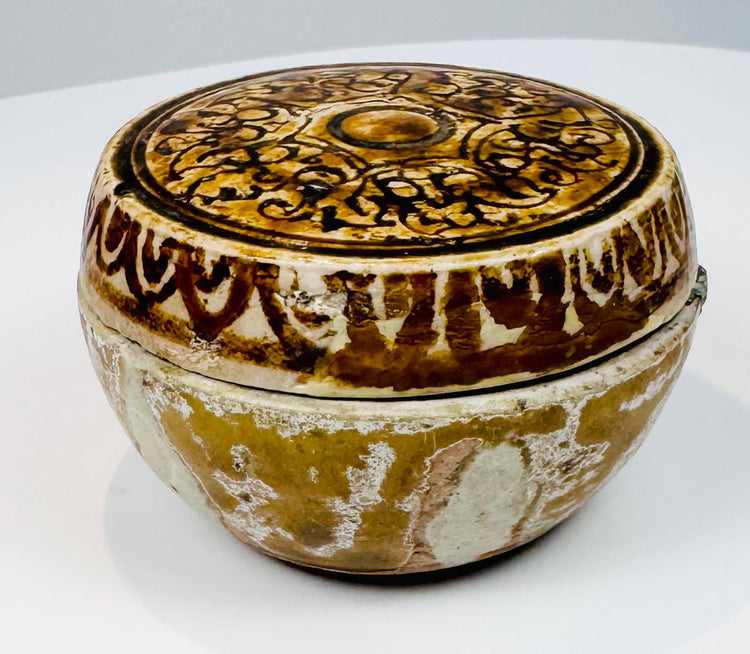
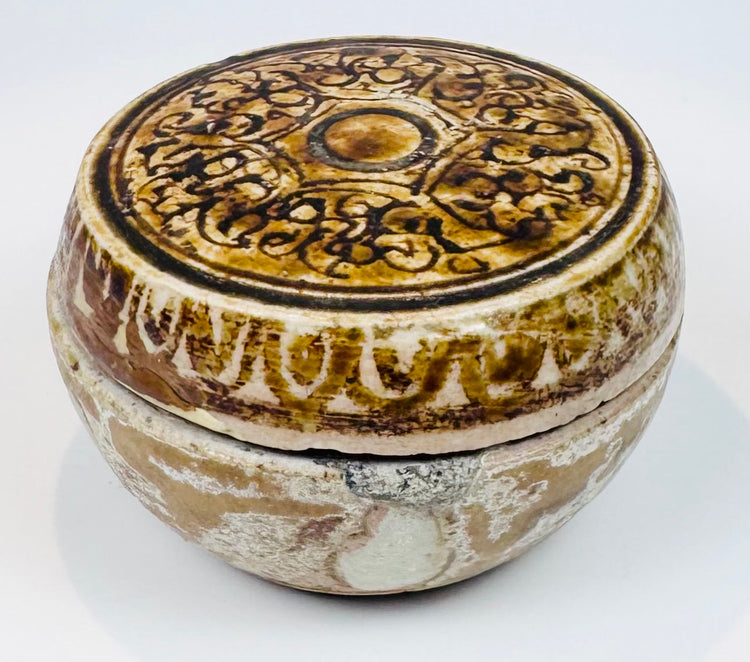

Medieval Thai Sawankhalok Foliate Covered Stoneware Box | Circa 1400 – 1550 CE
Descripción
Más
Menos
Historical Context & Origin
Region: Si Satchanalai, north-central Thailand, Southeast Asia
Material: Wheel-thrown stoneware with cream slip, iron-brown underglaze decoration, and translucent glaze
Period: Ayutthaya Period, circa 1400–1550 CE
Description
A small medieval Thai covered ceramic box attributed to the celebrated Sawankhalok kilns of Si Satchanalai.
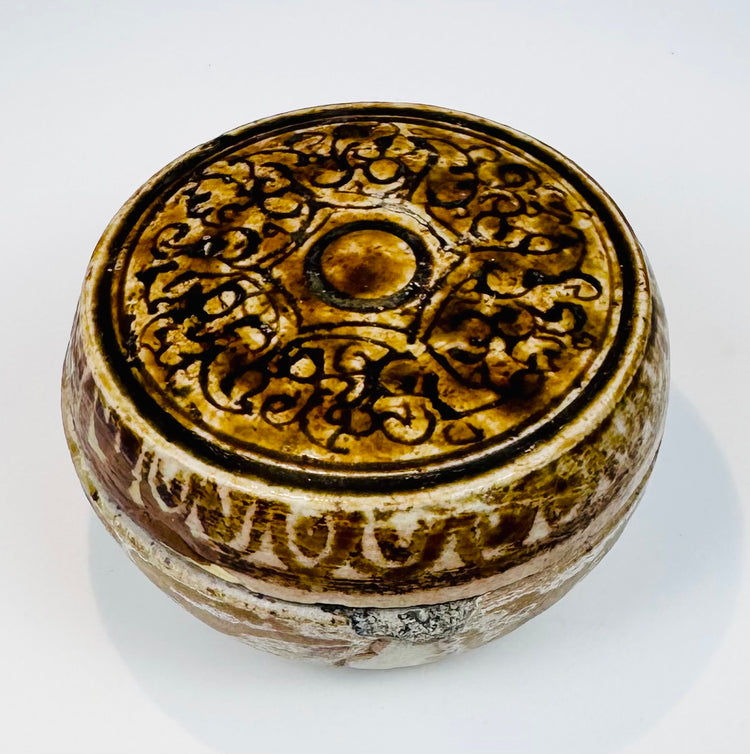
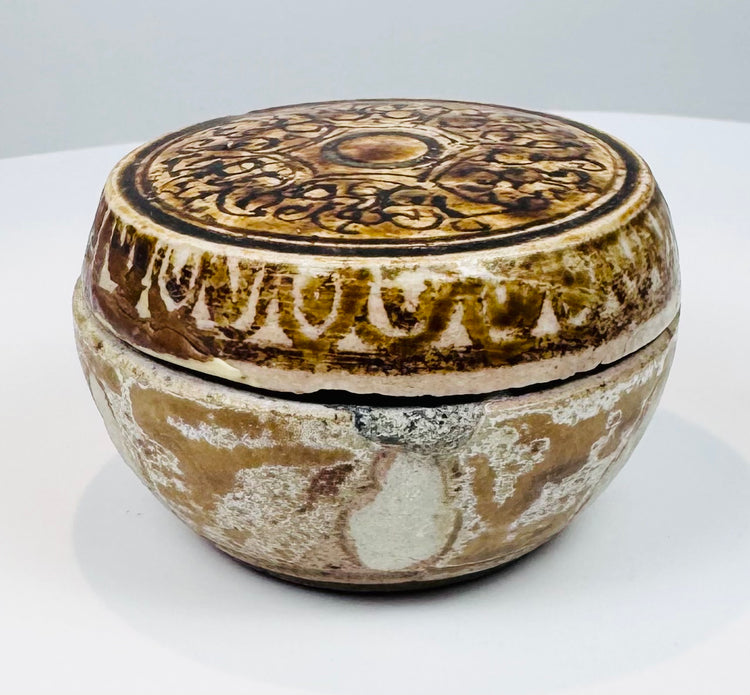
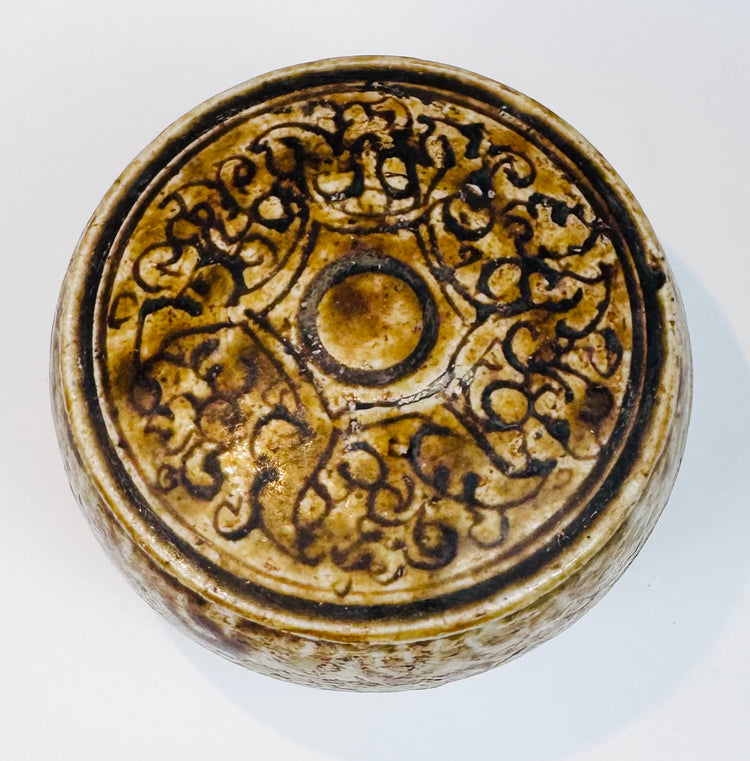
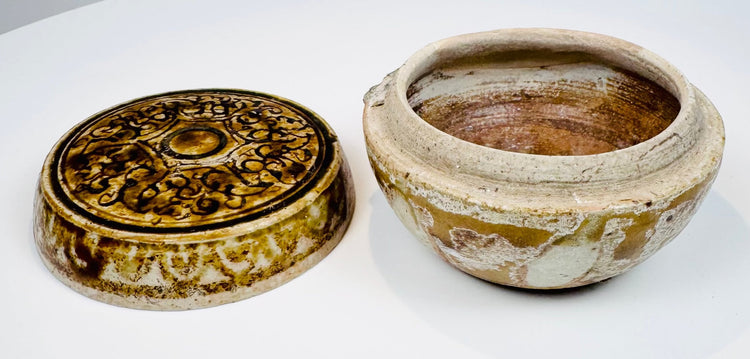
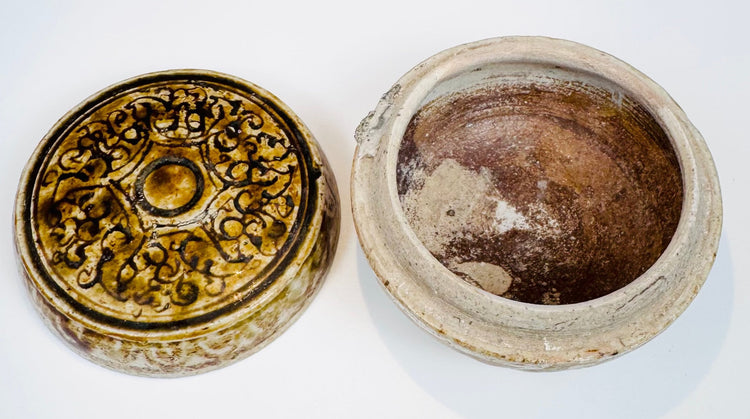
The vessel comprises a squat, rounded container and closely fitted domed cover. The lid is surmounted by a low circular knob and decorated in iron-brown pigment with foliate forms arranged symmetrically among scrolling vegetation. Concentric dark-brown borders frame the design, while a repeating painted meander ornaments the sides of the cover.
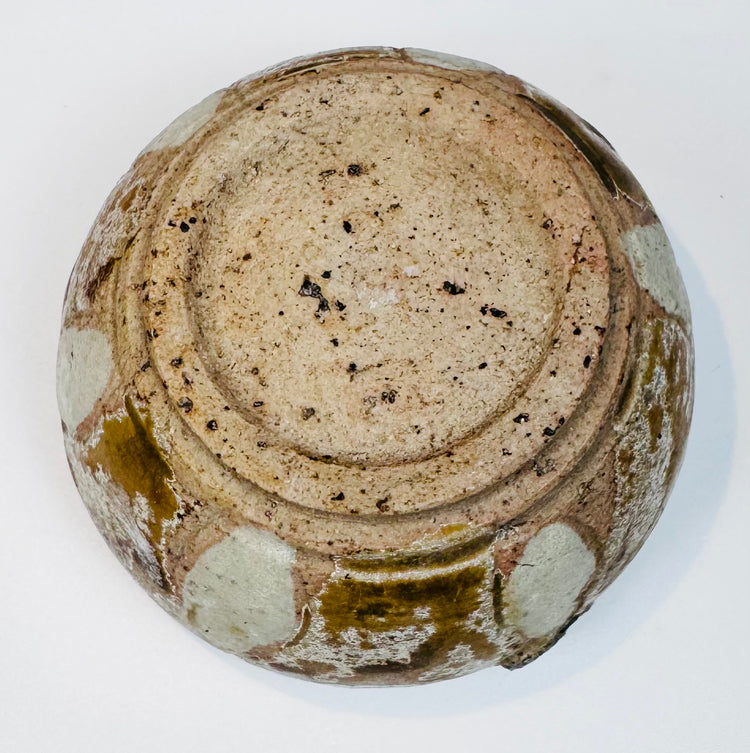
The rounded lower body retains fragmentary cream and amber-toned glaze, with extensive areas of loss revealing the pale buff ceramic beneath. The interior preserves a thin brownish glaze, while the joining rim, underside of the lid, and recessed foot remain largely unglazed—features consistent with the manufacture and firing of early Sawankhalok covered vessels.
Compact boxes of this kind were used to contain cosmetics, medicines, fragrant substances, jewelry, or other valued personal materials. Their portable size also made them desirable trade goods throughout maritime Southeast Asia.
Features
- Wheel-thrown rounded body and fitted cover
- Cream-slipped exterior
- Iron-brown underglaze painted decoration
- Foliate forms upon the lid
- Scrolling vegetation and meander borders
- Low circular central knob
- Brown-glazed interior
- Unglazed joining surfaces and recessed foot
- Extensive age-related glaze loss and deposits
- Compact cosmetic, medicinal, or valuables box form
Historical & Cultural Significance
Sawankhalok ware takes its name from the important ceramic-producing region surrounding Si Satchanalai in north-central Thailand. Between the 14th and 16th centuries, its kilns produced celadon, brown-glazed, and iron-painted ceramics that were distributed throughout Southeast Asia.
Although influenced by Chinese ceramic traditions, Sawankhalok potters developed distinctive forms and decorative techniques of their own. Cream-slipped vessels painted with iron-rich brown pigment became an important category of Thai export ware, particularly during the 15th and early 16th centuries.
Comparable covered boxes have been recovered from terrestrial and maritime archaeological contexts across Southeast Asia, demonstrating the extensive commercial networks through which Thai ceramics circulated.
Condition
Archaeological condition with extensive glaze loss, surface abrasion, flaking, discoloration, mineral deposits, and encrustation. The lid exhibits a visible crack or connected hairlines extending through the central decorated field, with possible old stabilization. There are chips and losses along the joining rims, including a more noticeable loss to the body rim, together with smaller edge imperfections. The lid remains removable and continues to seat upon the body.
Dimensions (Approximate)
Diameter: 2.5 in
Height: 1.7 in
Age (Approximate)
475–625 years old
Provenance
From a private collection in Los Angeles, California, USA.
Subsequently handled by Andrew Jones Auctions of Los Angeles, a full-service auction and appraisal firm specializing in fine art, antiques, and Asian works of art. The auction house is supported by specialists with extensive international experience and regularly presents diverse collections and estates spanning several centuries.
Learn More
View a closely comparable iron-brown decorated covered box from Si Satchanalai, dating from the 14th to mid-16th century, in the collection of The Metropolitan Museum of Art
Explore our Collection of Eastern Antiquities & Cultural Relics
Descripción
Historical Context & Origin
Region: Si Satchanalai, north-central Thailand, Southeast Asia
Material: Wheel-thrown stoneware with cream slip, iron-brown underglaze decoration, and translucent glaze
Period: Ayutthaya Period, circa 1400–1550 CE
Description
A small medieval Thai covered ceramic box attributed to the celebrated Sawankhalok kilns of Si Satchanalai.
The vessel comprises a squat, rounded container and closely fitted domed cover. The lid is surmounted by a low circular knob and decorated in iron-brown pigment with foliate forms arranged symmetrically among scrolling vegetation. Concentric dark-brown borders frame the design, while a repeating painted meander ornaments the sides of the cover.
The rounded lower body retains fragmentary cream and amber-toned glaze, with extensive areas of loss revealing the pale buff ceramic beneath. The interior preserves a thin brownish glaze, while the joining rim, underside of the lid, and recessed foot remain largely unglazed—features consistent with the manufacture and firing of early Sawankhalok covered vessels.
Compact boxes of this kind were used to contain cosmetics, medicines, fragrant substances, jewelry, or other valued personal materials. Their portable size also made them desirable trade goods throughout maritime Southeast Asia.
Features
- Wheel-thrown rounded body and fitted cover
- Cream-slipped exterior
- Iron-brown underglaze painted decoration
- Foliate forms upon the lid
- Scrolling vegetation and meander borders
- Low circular central knob
- Brown-glazed interior
- Unglazed joining surfaces and recessed foot
- Extensive age-related glaze loss and deposits
- Compact cosmetic, medicinal, or valuables box form
Historical & Cultural Significance
Sawankhalok ware takes its name from the important ceramic-producing region surrounding Si Satchanalai in north-central Thailand. Between the 14th and 16th centuries, its kilns produced celadon, brown-glazed, and iron-painted ceramics that were distributed throughout Southeast Asia.
Although influenced by Chinese ceramic traditions, Sawankhalok potters developed distinctive forms and decorative techniques of their own. Cream-slipped vessels painted with iron-rich brown pigment became an important category of Thai export ware, particularly during the 15th and early 16th centuries.
Comparable covered boxes have been recovered from terrestrial and maritime archaeological contexts across Southeast Asia, demonstrating the extensive commercial networks through which Thai ceramics circulated.
Condition
Archaeological condition with extensive glaze loss, surface abrasion, flaking, discoloration, mineral deposits, and encrustation. The lid exhibits a visible crack or connected hairlines extending through the central decorated field, with possible old stabilization. There are chips and losses along the joining rims, including a more noticeable loss to the body rim, together with smaller edge imperfections. The lid remains removable and continues to seat upon the body.
Dimensions (Approximate)
Diameter: 2.5 in
Height: 1.7 in
Age (Approximate)
475–625 years old
Provenance
From a private collection in Los Angeles, California, USA.
Subsequently handled by Andrew Jones Auctions of Los Angeles, a full-service auction and appraisal firm specializing in fine art, antiques, and Asian works of art. The auction house is supported by specialists with extensive international experience and regularly presents diverse collections and estates spanning several centuries.
Learn More
View a closely comparable iron-brown decorated covered box from Si Satchanalai, dating from the 14th to mid-16th century, in the collection of The Metropolitan Museum of Art
Explore our Collection of Eastern Antiquities & Cultural Relics
También te puede interesar
