

Antigua Mesopotamia | Figurilla votiva femenina de terracota | Circa 1000–500 a.C.
- Precio habitual
- $550.00
- Precio de venta
- $550.00
- Precio habitual
No se pudo cargar la disponibilidad de retiro


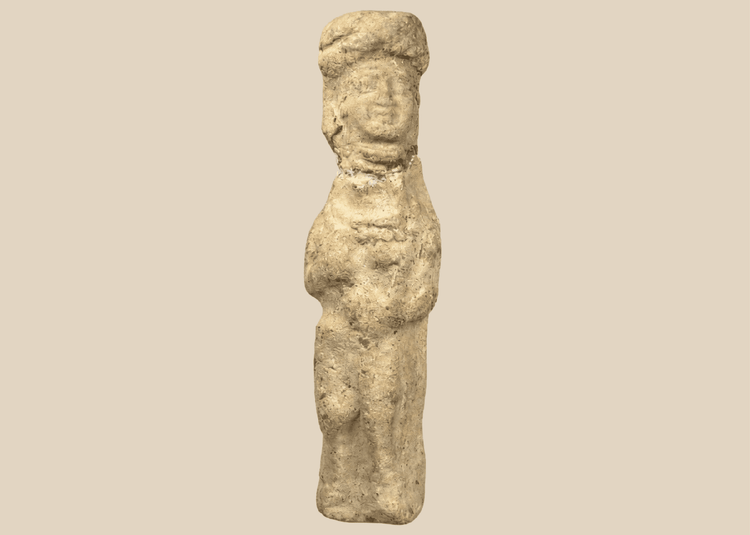
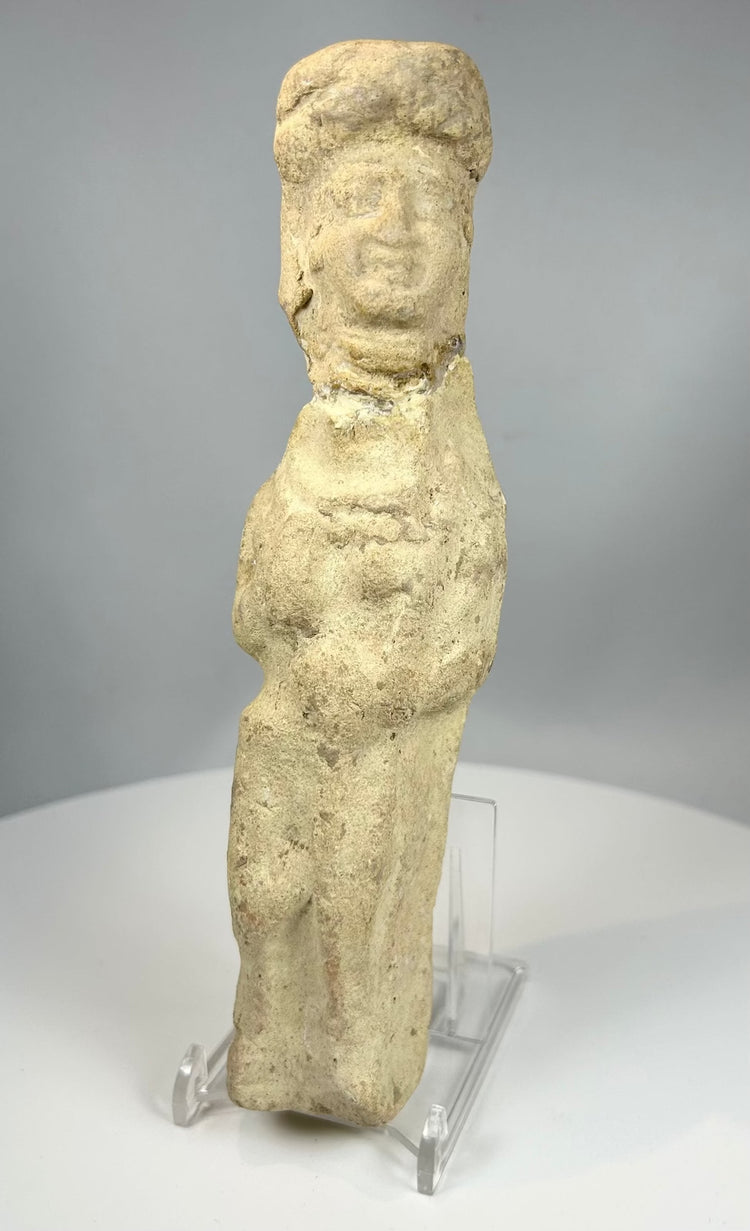
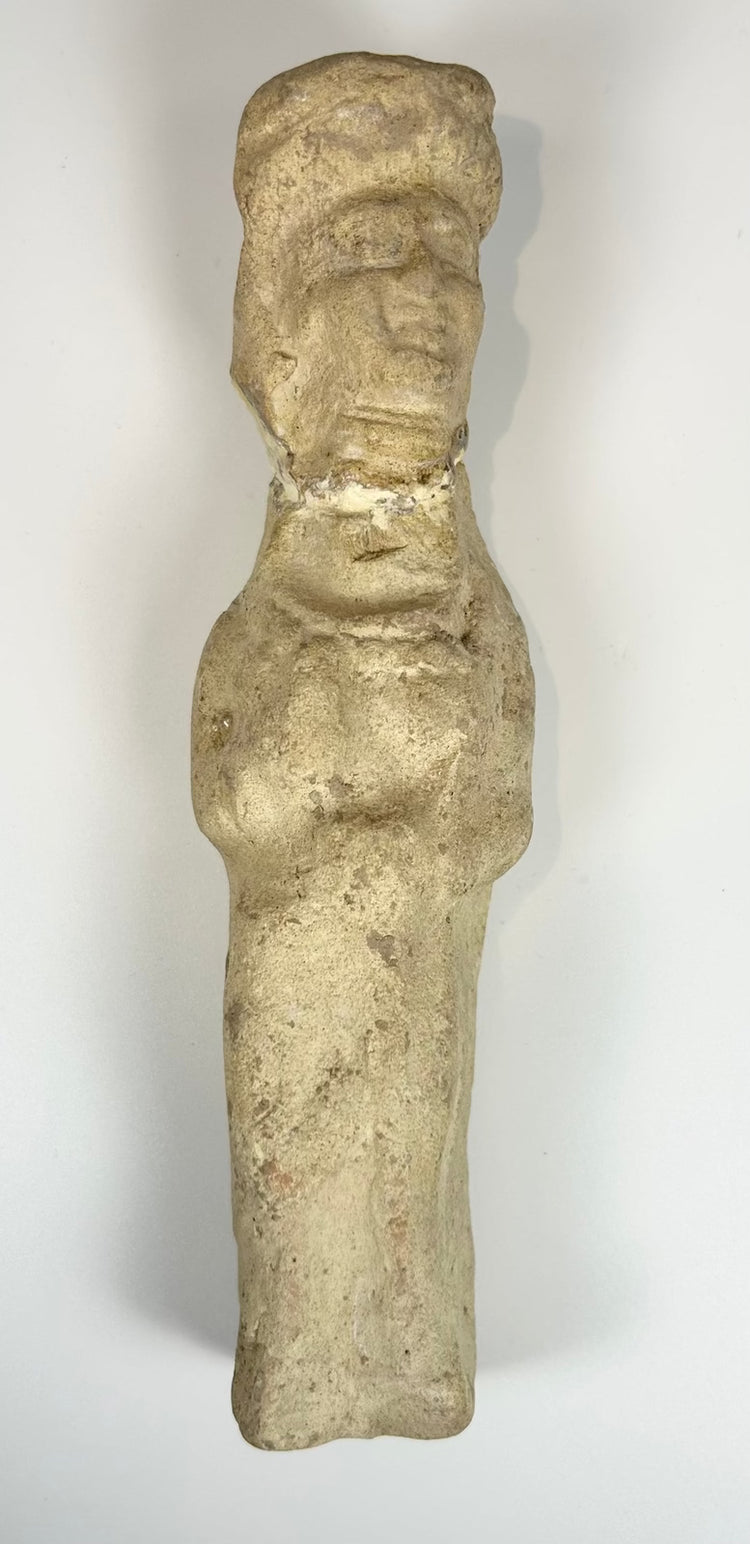
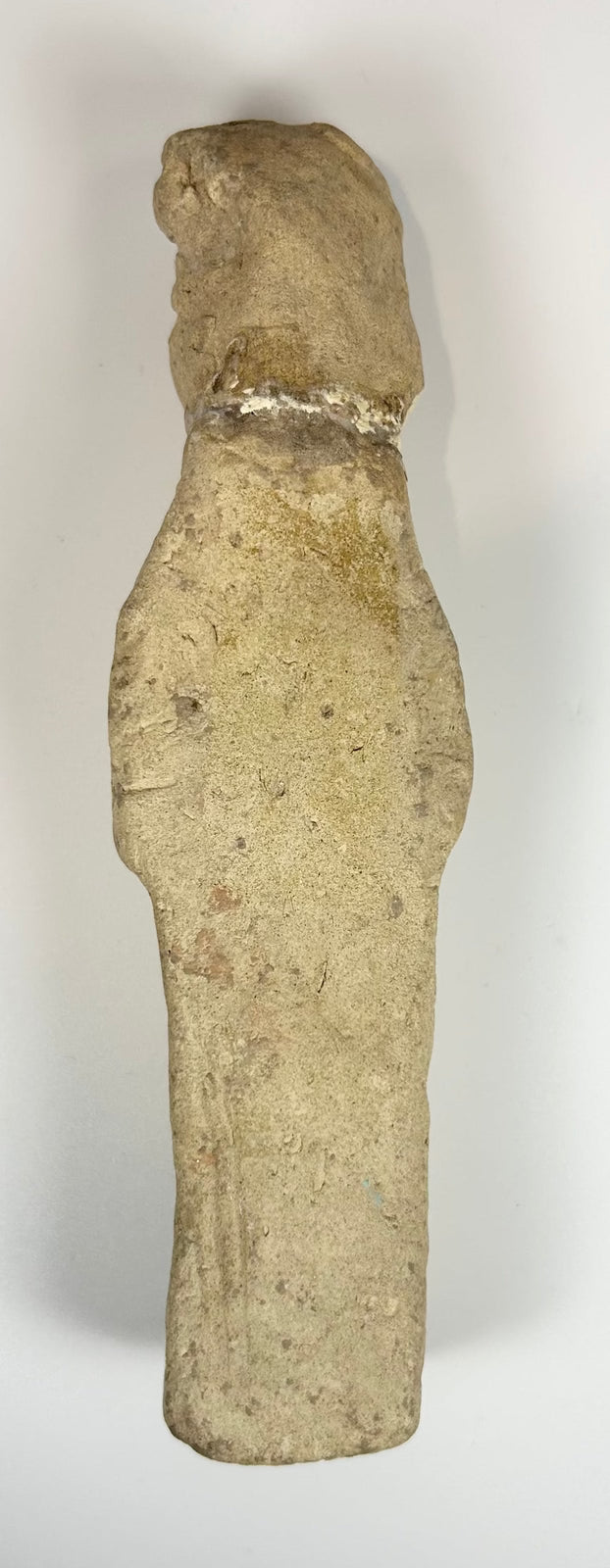
Antigua Mesopotamia | Figurilla votiva femenina de terracota | Circa 1000–500 a.C.
Descripción
Más
Menos
Contexto histórico y origen
Región: Mesopotamia (Antiguo Oriente Próximo)
Material: Terracota cocida / loza
Periodo: Periodo neoasirio a neobabilónico, circa 1000–500 a.C.
Descripción
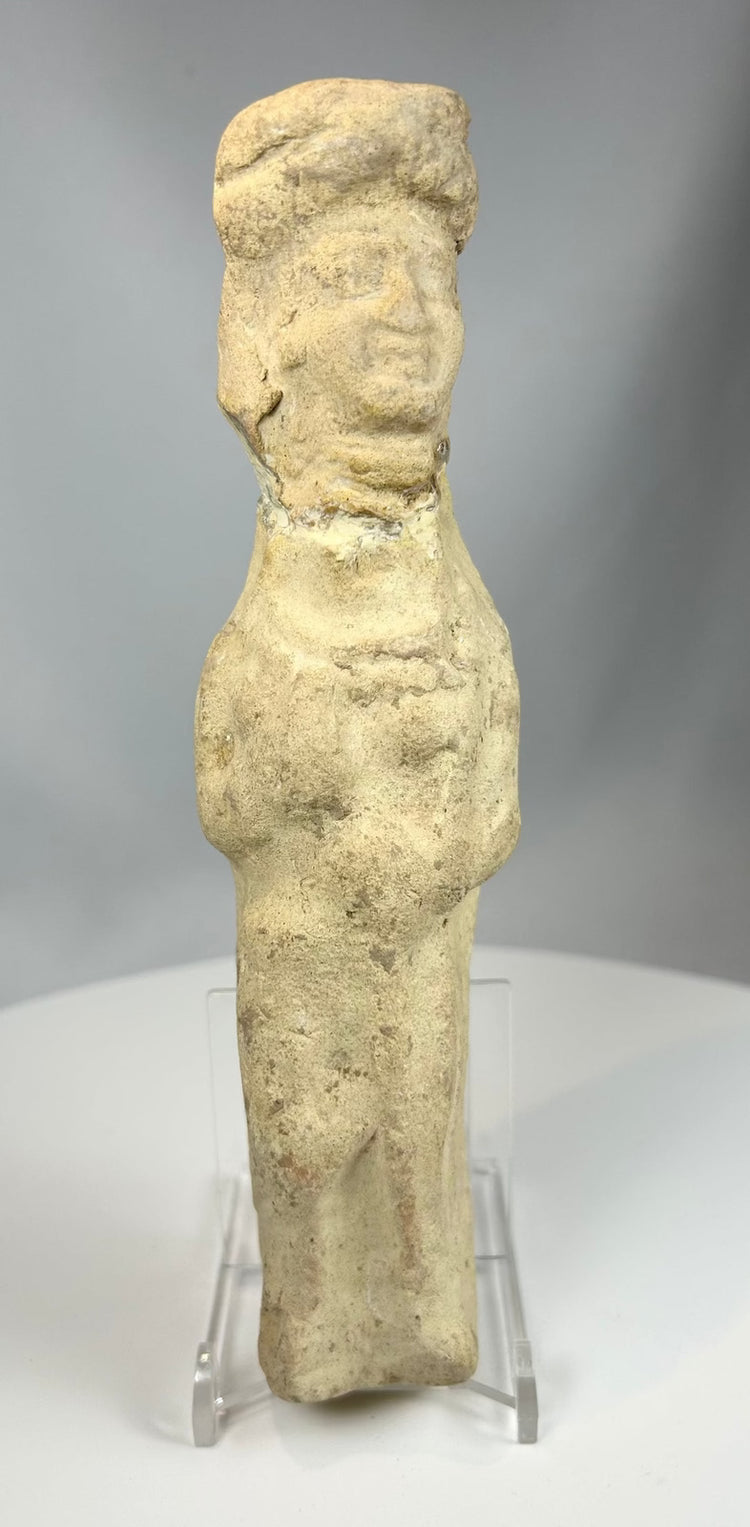
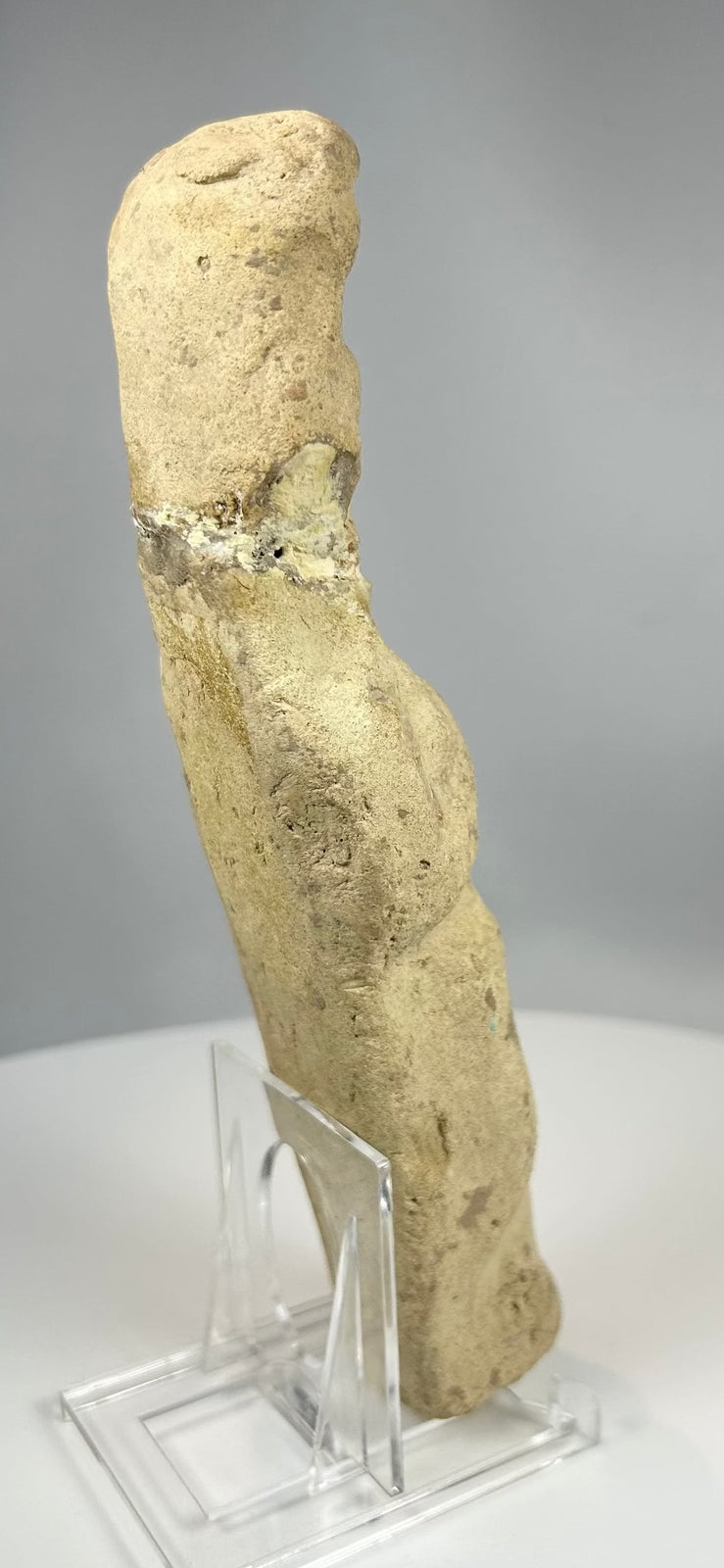
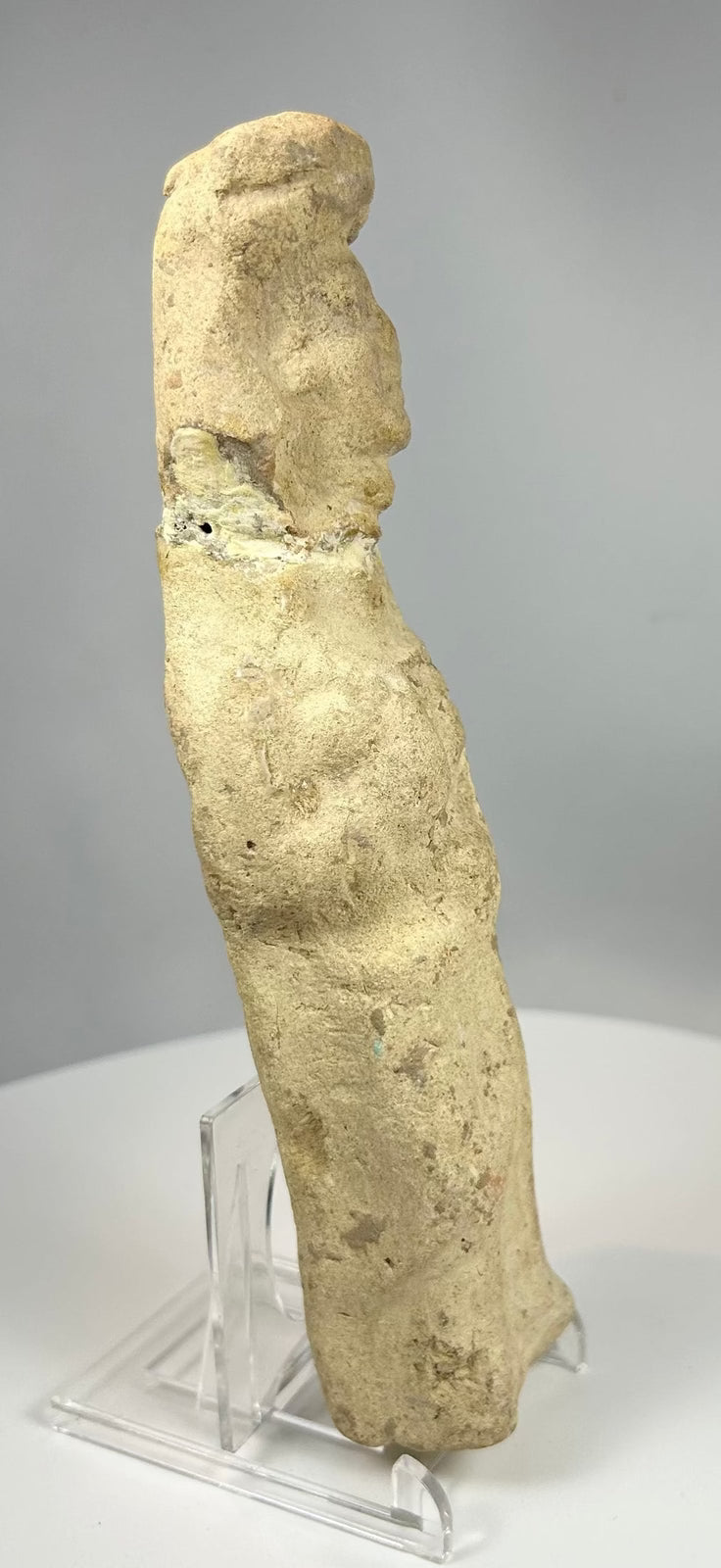
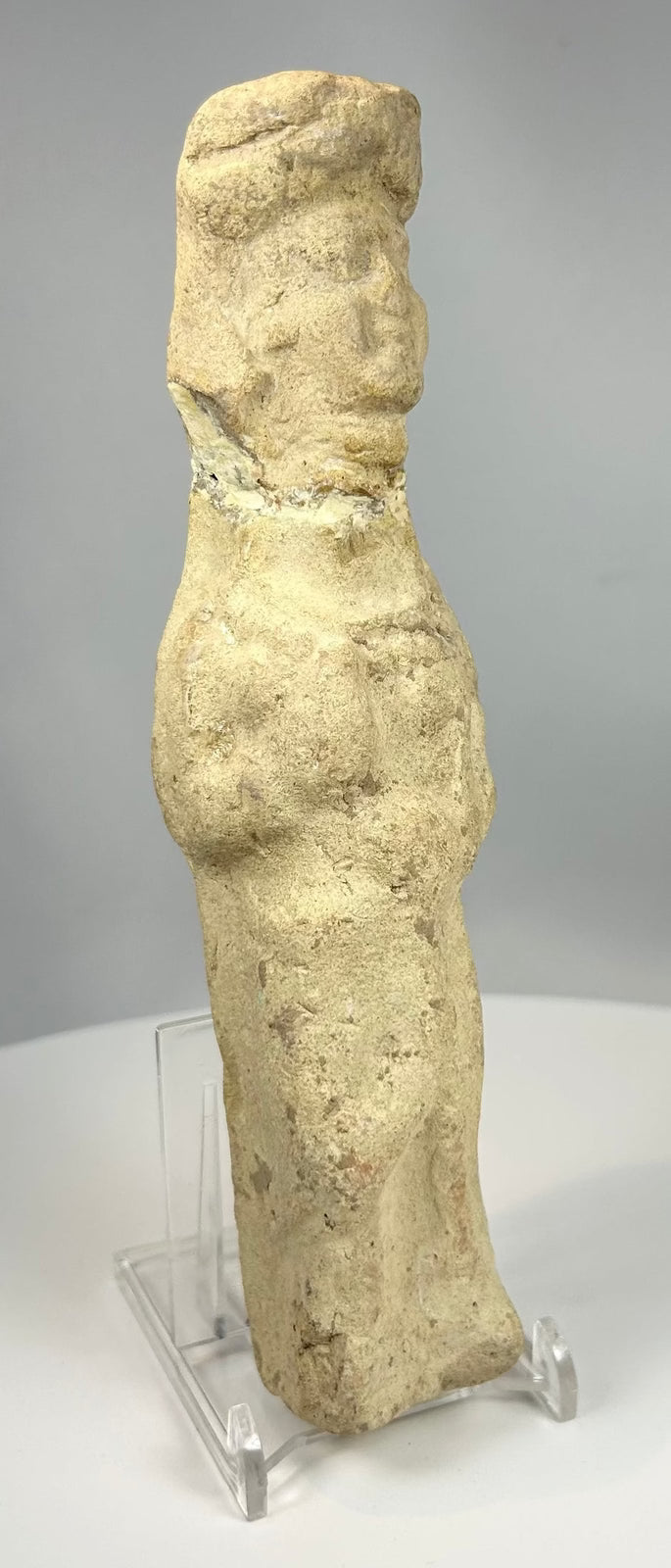
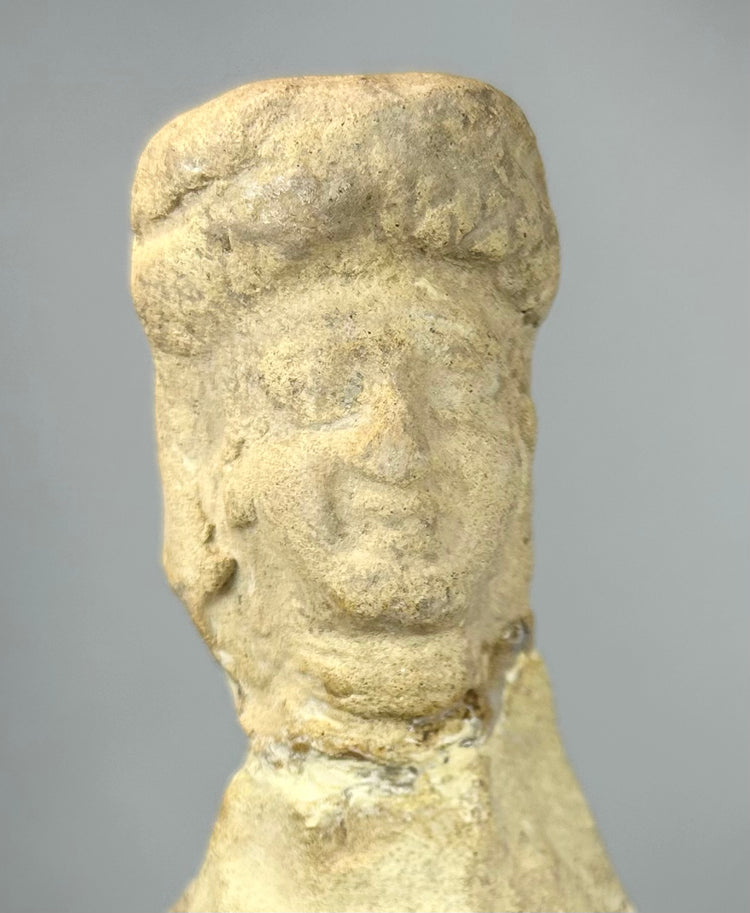
Esta antigua estatuilla de terracota representa una figura femenina estilizada de pie, realizada en una forma escultórica simplificada pero expresiva. La figura se alza erguida con un cuerpo inferior columnar y un torso suavemente modelado, con los brazos cruzados sobre el pecho. El rostro se caracteriza por ojos suavemente definidos, una nariz recta y una boca sutil debajo de un gran tocado o peinado que enmarca la cabeza.
Pequeñas estatuillas de terracota de este tipo fueron ampliamente producidas en Mesopotamia y el Antiguo Oriente Próximo. Se utilizaban comúnmente como objetos devocionales domésticos, amuletos protectores u ofrendas votivas colocadas en santuarios y espacios domésticos. Se creía que estas figuras encarnaban espíritus protectores, simbolismo de fertilidad o representaciones de deidades femeninas veneradas.
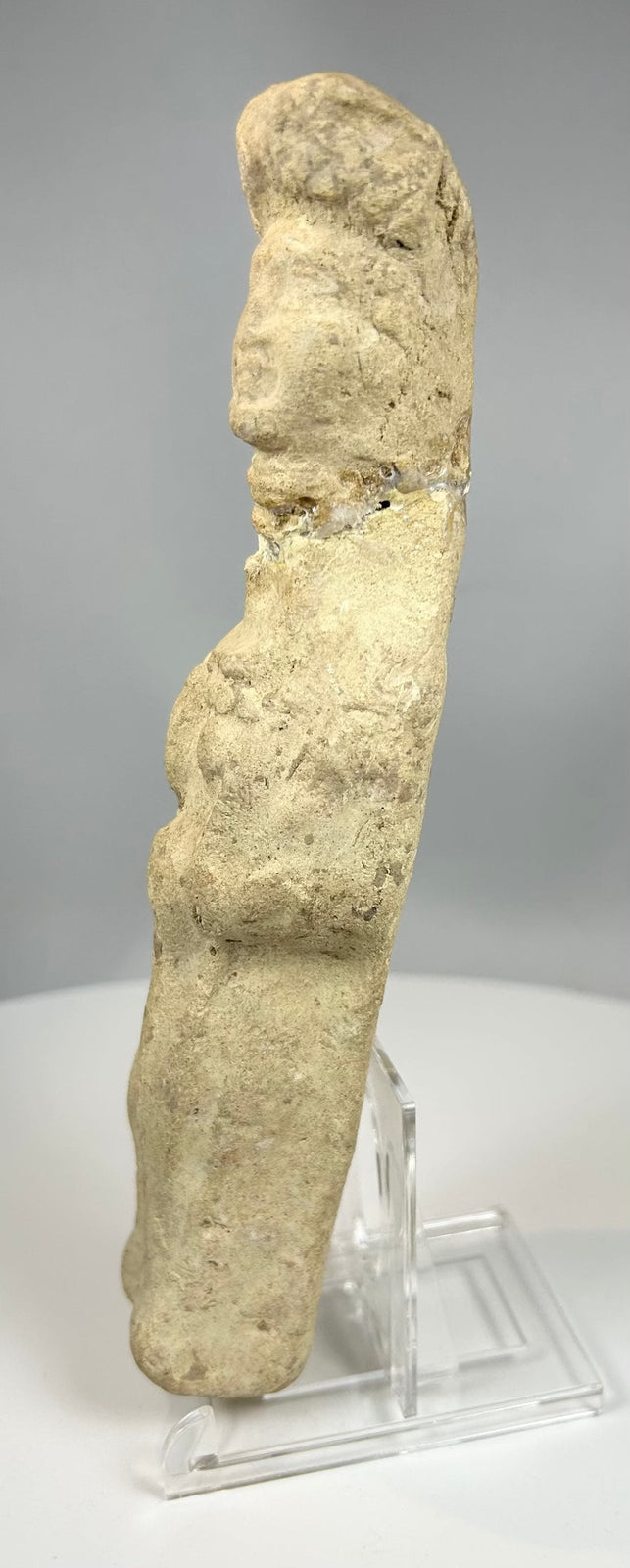
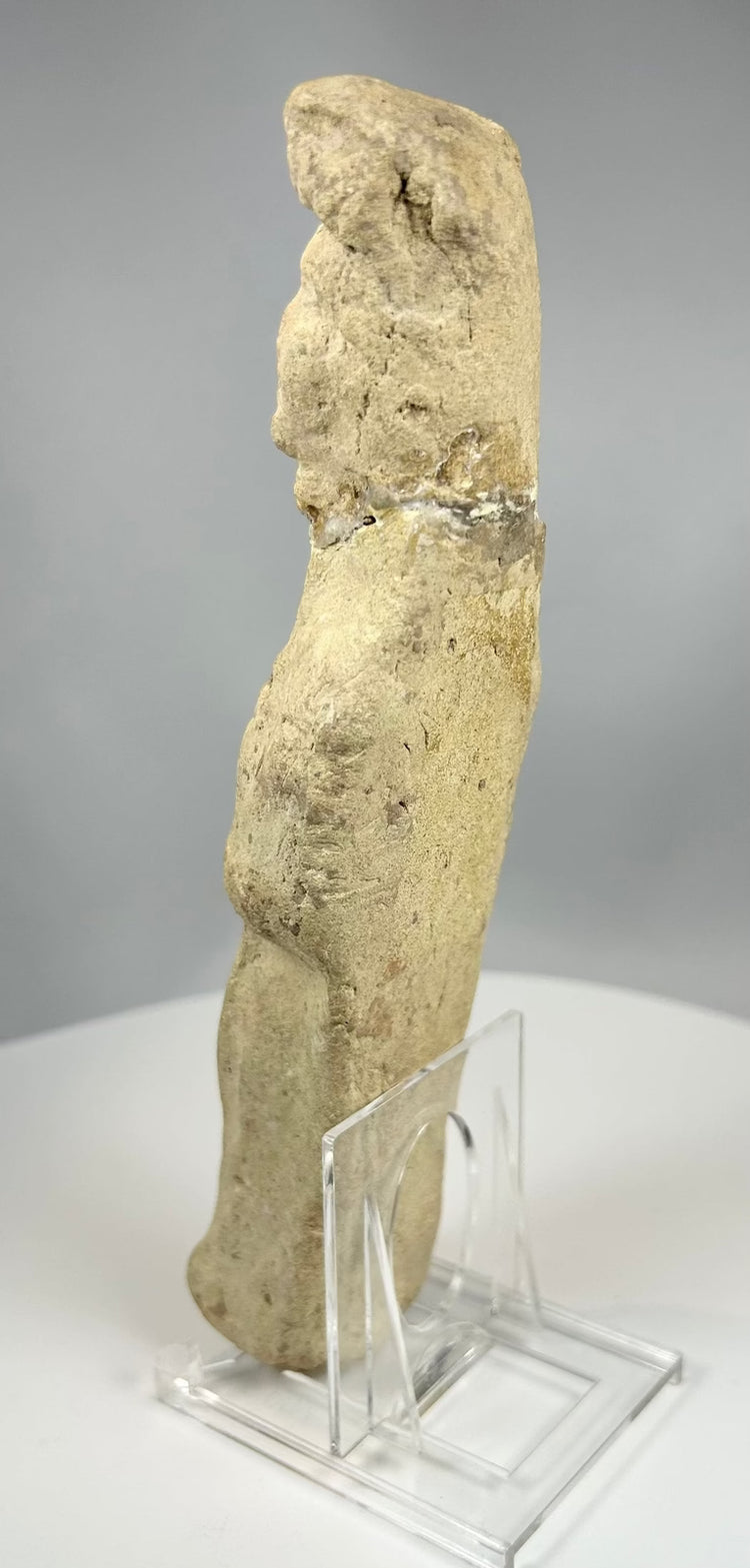
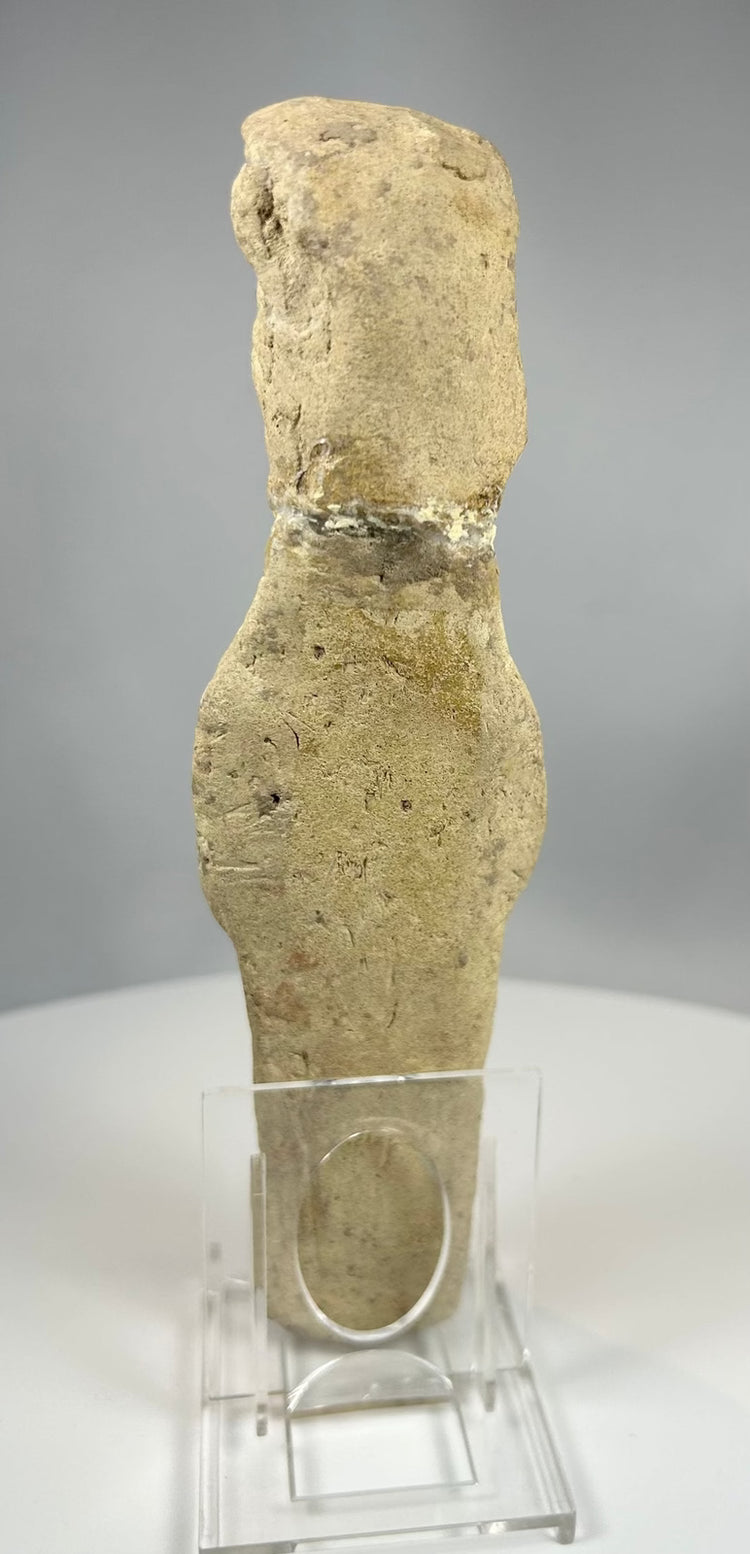
La superficie exhibe un tono terroso pálido con concreciones minerales y pátina de enterramiento, consistente con la antigüedad. El modelado escultórico, la anatomía estilizada y las proporciones simplificadas reflejan la estética simbólica, más que naturalista, común en las figuras rituales del Cercano Oriente.
Características
- Forma femenina estilizada de pie con cuerpo columnar
- Brazos cruzados sobre el pecho en una postura votiva tradicional
- Gran tocado o peinado enmarcando la cabeza
- Construcción de terracota modelada a mano
- Depósitos minerales naturales y pátina de enterramiento en toda la superficie
Significado cultural
Las figurillas de terracota se encontraban entre los objetos rituales más comunes en la antigua Mesopotamia. Cumplían una variedad de propósitos, incluyendo la protección del hogar, el simbolismo de la fertilidad y las ofrendas devocionales a dioses y diosas. Las figuras femeninas, en particular, se asociaban a menudo con la fertilidad, la protección del hogar y lo divino femenino dentro de las tradiciones religiosas mesopotámicas.
Estado
Condición antigua con desgaste superficial, depósitos minerales y áreas de restauración visibles en el cuello. Abrasiones superficiales menores y pérdidas consistentes con la edad y el enterramiento. Estructuralmente estable y bien conservada en general.
Dimensiones (aproximadas)
Altura: 17,78 cm
Ancho: 5,08 cm
Profundidad: 3,81 cm
Edad (aproximada)
2.500–3.000 años de antigüedad
Procedencia
Anteriormente parte de la colección de un coleccionista de antigüedades de toda la vida en South Paris, Maine, Estados Unidos. El coleccionista reunió un amplio y variado grupo de objetos históricos y decorativos durante muchas décadas. Tras el fallecimiento del coleccionista, la colección del patrimonio se dispersó en su totalidad, y esta pieza entró posteriormente en el mercado del arte.
Más información
Examine una figura de terracota antigua comparable en la colección del Museo de Arte Walters
Descubra nuestra Colección de Civilizaciones Perdidas: Artefactos de Culturas Olvidadas
Descripción
Contexto histórico y origen
Región: Mesopotamia (Antiguo Oriente Próximo)
Material: Terracota cocida / loza
Periodo: Periodo neoasirio a neobabilónico, circa 1000–500 a.C.
Descripción
Esta antigua estatuilla de terracota representa una figura femenina estilizada de pie, realizada en una forma escultórica simplificada pero expresiva. La figura se alza erguida con un cuerpo inferior columnar y un torso suavemente modelado, con los brazos cruzados sobre el pecho. El rostro se caracteriza por ojos suavemente definidos, una nariz recta y una boca sutil debajo de un gran tocado o peinado que enmarca la cabeza.
Pequeñas estatuillas de terracota de este tipo fueron ampliamente producidas en Mesopotamia y el Antiguo Oriente Próximo. Se utilizaban comúnmente como objetos devocionales domésticos, amuletos protectores u ofrendas votivas colocadas en santuarios y espacios domésticos. Se creía que estas figuras encarnaban espíritus protectores, simbolismo de fertilidad o representaciones de deidades femeninas veneradas.
La superficie exhibe un tono terroso pálido con concreciones minerales y pátina de enterramiento, consistente con la antigüedad. El modelado escultórico, la anatomía estilizada y las proporciones simplificadas reflejan la estética simbólica, más que naturalista, común en las figuras rituales del Cercano Oriente.
Características
- Forma femenina estilizada de pie con cuerpo columnar
- Brazos cruzados sobre el pecho en una postura votiva tradicional
- Gran tocado o peinado enmarcando la cabeza
- Construcción de terracota modelada a mano
- Depósitos minerales naturales y pátina de enterramiento en toda la superficie
Significado cultural
Las figurillas de terracota se encontraban entre los objetos rituales más comunes en la antigua Mesopotamia. Cumplían una variedad de propósitos, incluyendo la protección del hogar, el simbolismo de la fertilidad y las ofrendas devocionales a dioses y diosas. Las figuras femeninas, en particular, se asociaban a menudo con la fertilidad, la protección del hogar y lo divino femenino dentro de las tradiciones religiosas mesopotámicas.
Estado
Condición antigua con desgaste superficial, depósitos minerales y áreas de restauración visibles en el cuello. Abrasiones superficiales menores y pérdidas consistentes con la edad y el enterramiento. Estructuralmente estable y bien conservada en general.
Dimensiones (aproximadas)
Altura: 17,78 cm
Ancho: 5,08 cm
Profundidad: 3,81 cm
Edad (aproximada)
2.500–3.000 años de antigüedad
Procedencia
Anteriormente parte de la colección de un coleccionista de antigüedades de toda la vida en South Paris, Maine, Estados Unidos. El coleccionista reunió un amplio y variado grupo de objetos históricos y decorativos durante muchas décadas. Tras el fallecimiento del coleccionista, la colección del patrimonio se dispersó en su totalidad, y esta pieza entró posteriormente en el mercado del arte.
Más información
Examine una figura de terracota antigua comparable en la colección del Museo de Arte Walters
Descubra nuestra Colección de Civilizaciones Perdidas: Artefactos de Culturas Olvidadas
También te puede interesar
