


Figuras de pan de jengibre de Colima precolombino (2) | Efigies de terracota variante Teco | Procedencia detallada | Circa 100 a. C. - 300 d. C.
- Precio habitual
- $1,250.00
- Precio de venta
- $1,250.00
- Precio habitual
No se pudo cargar la disponibilidad de retiro


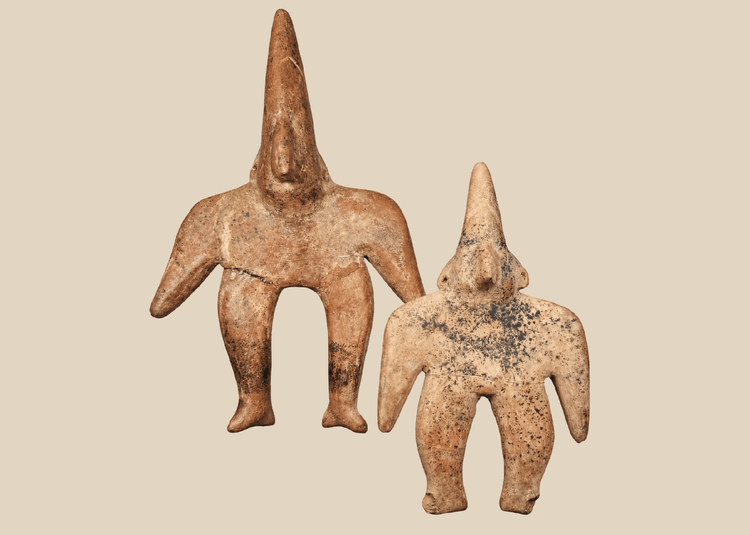
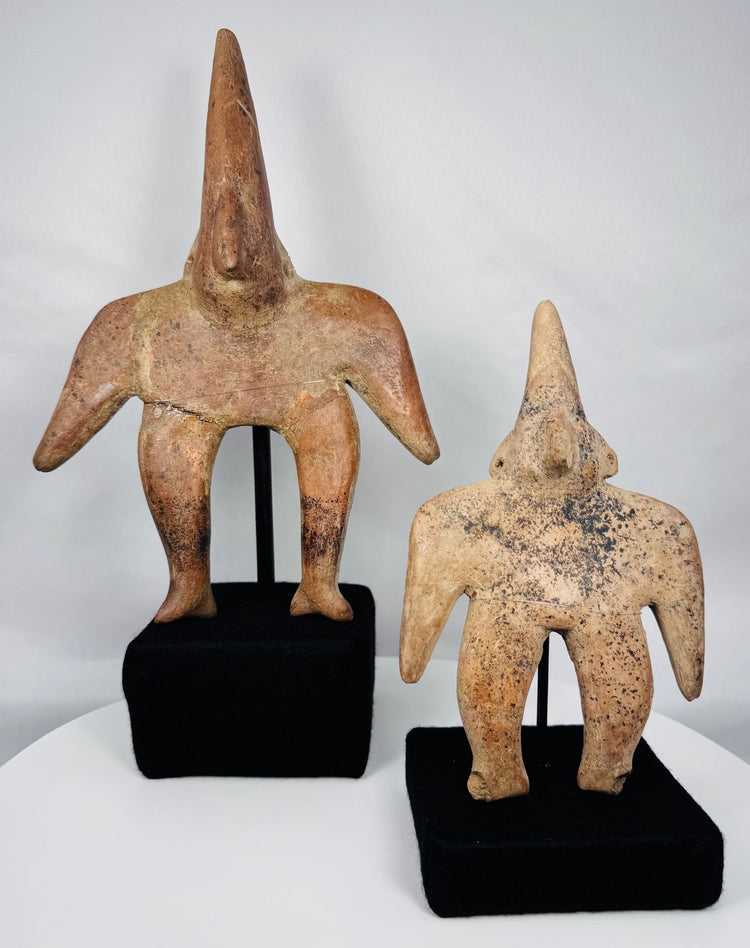
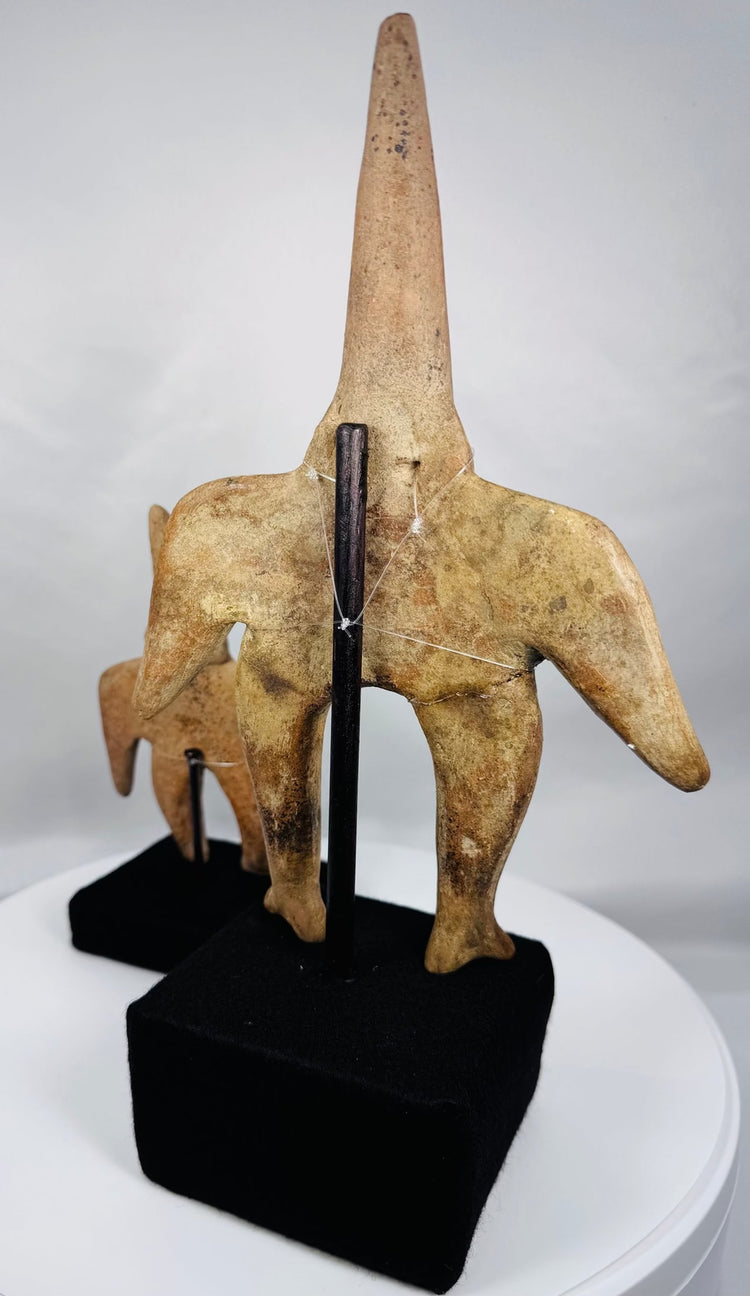
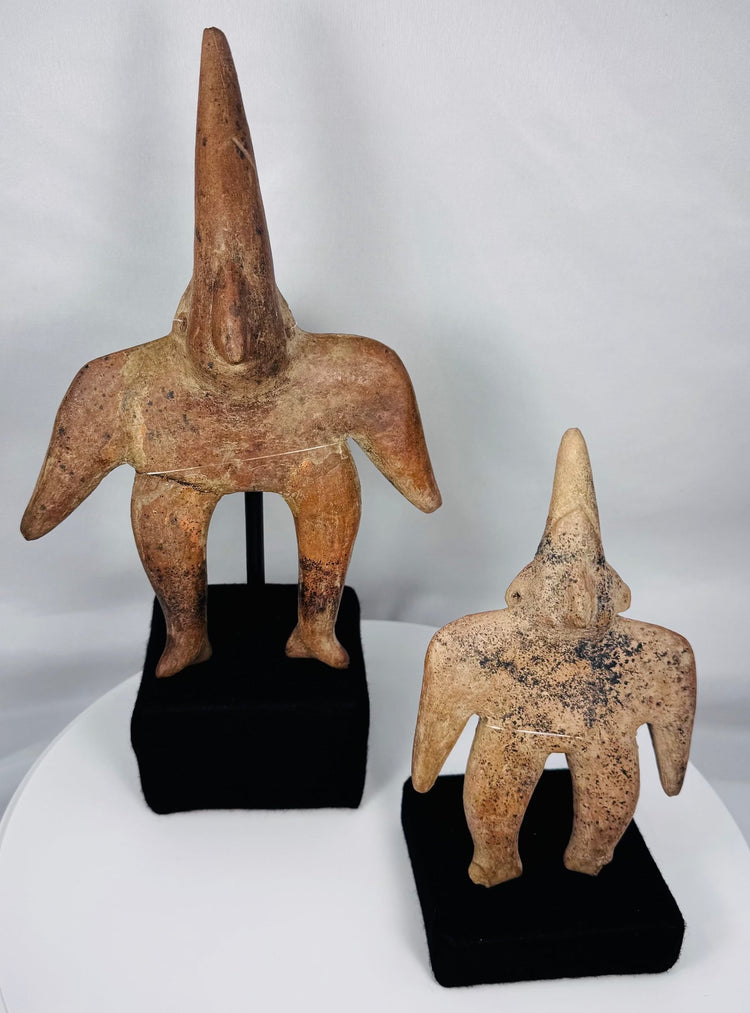
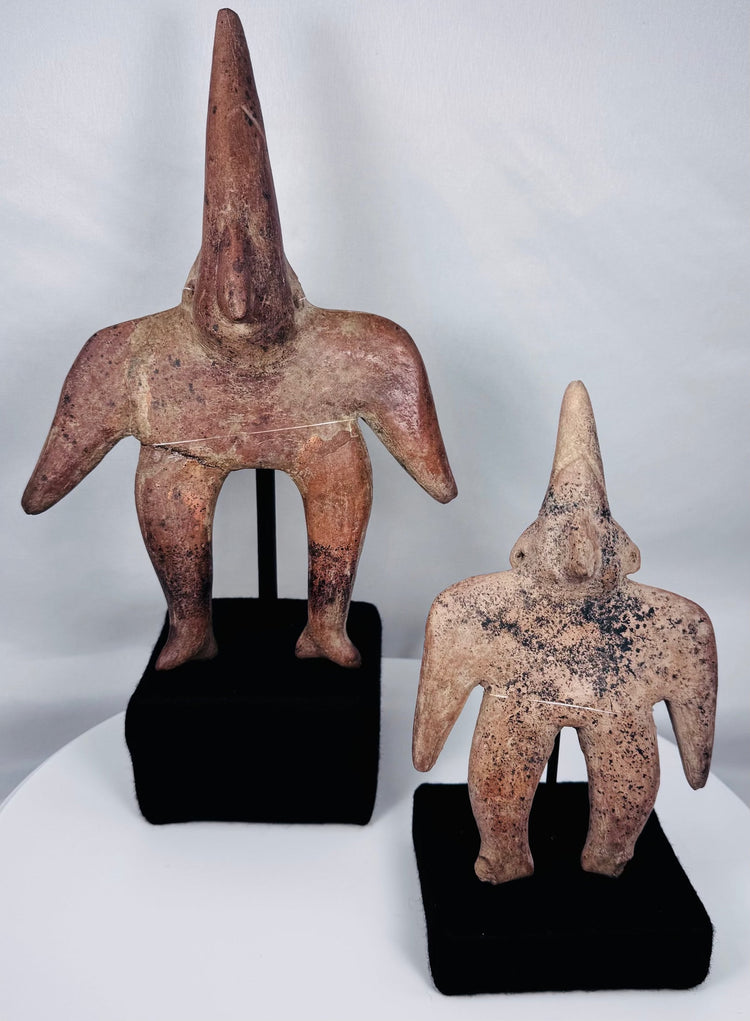
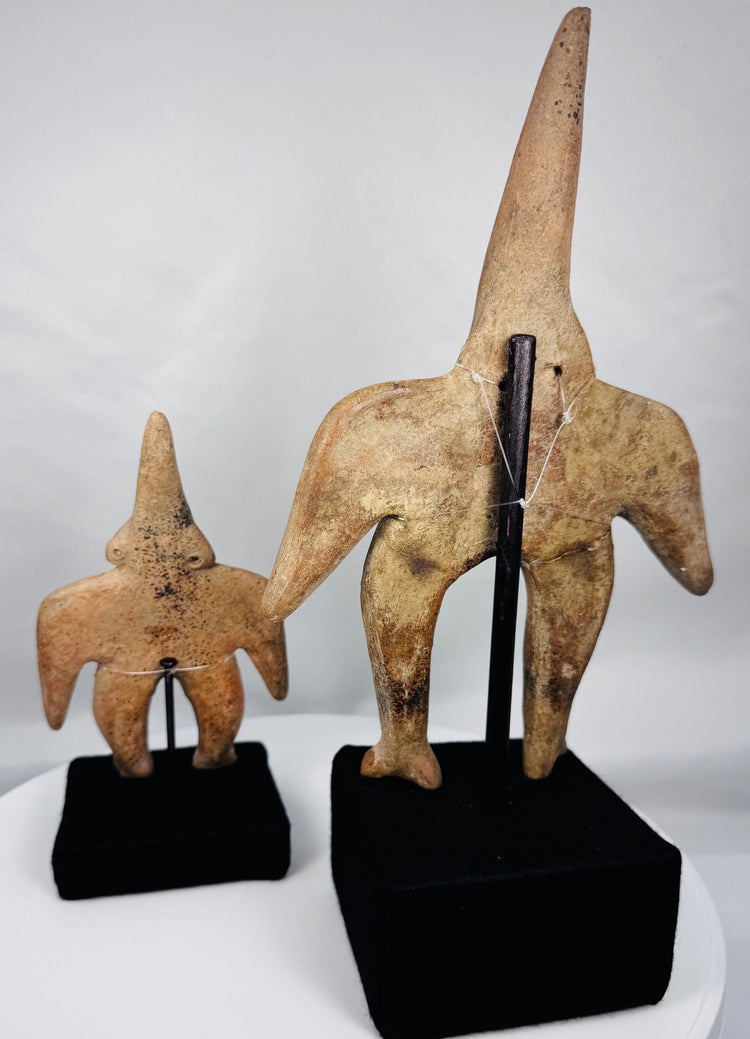
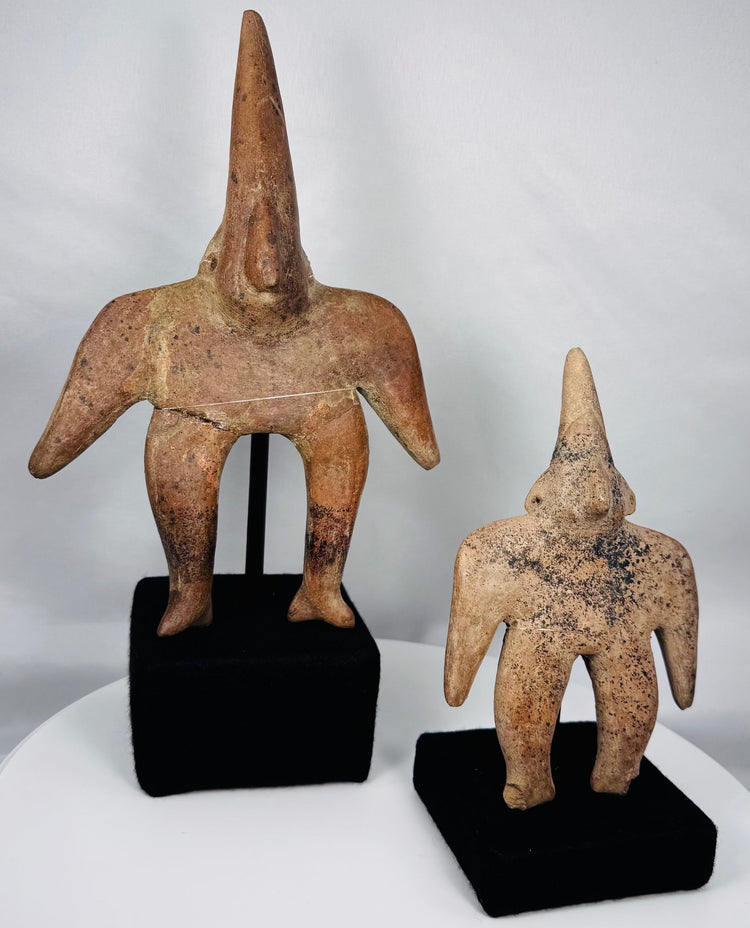
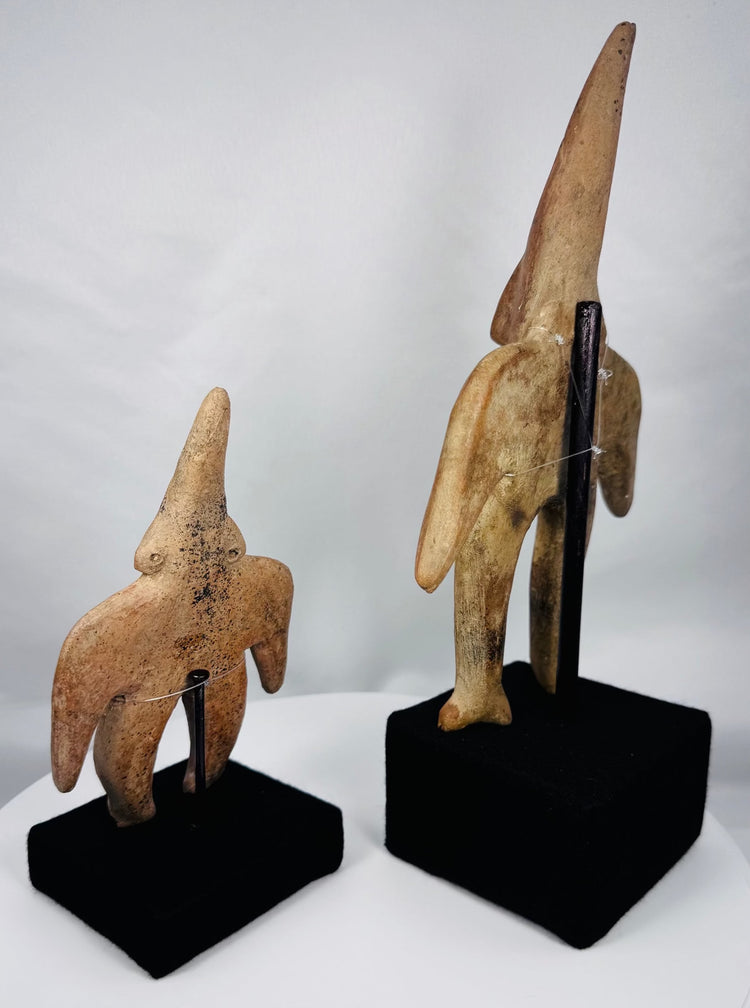
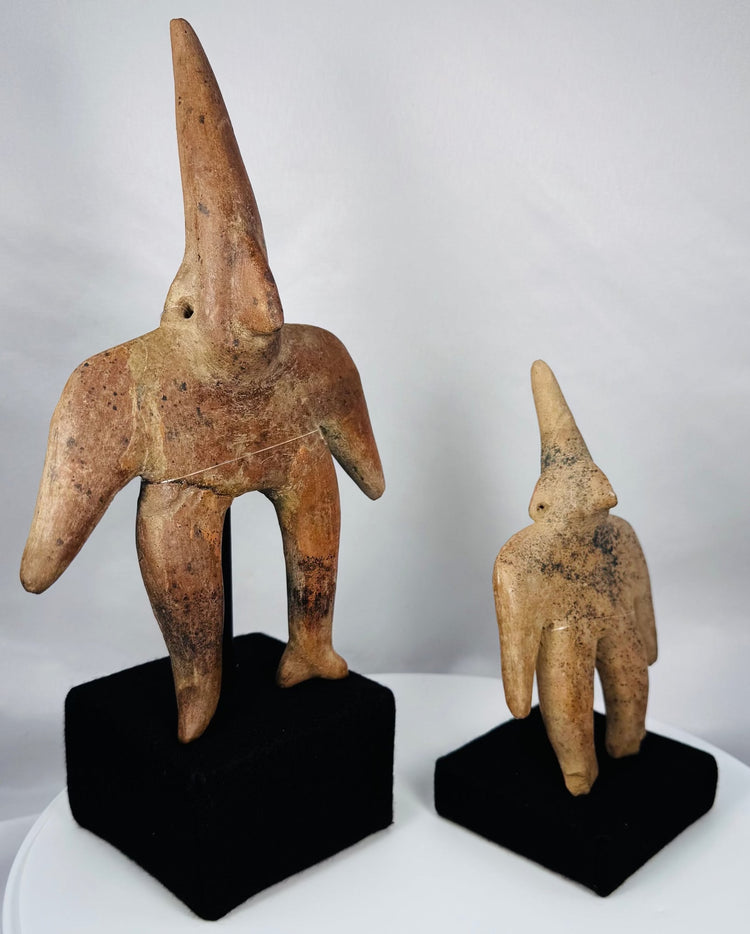
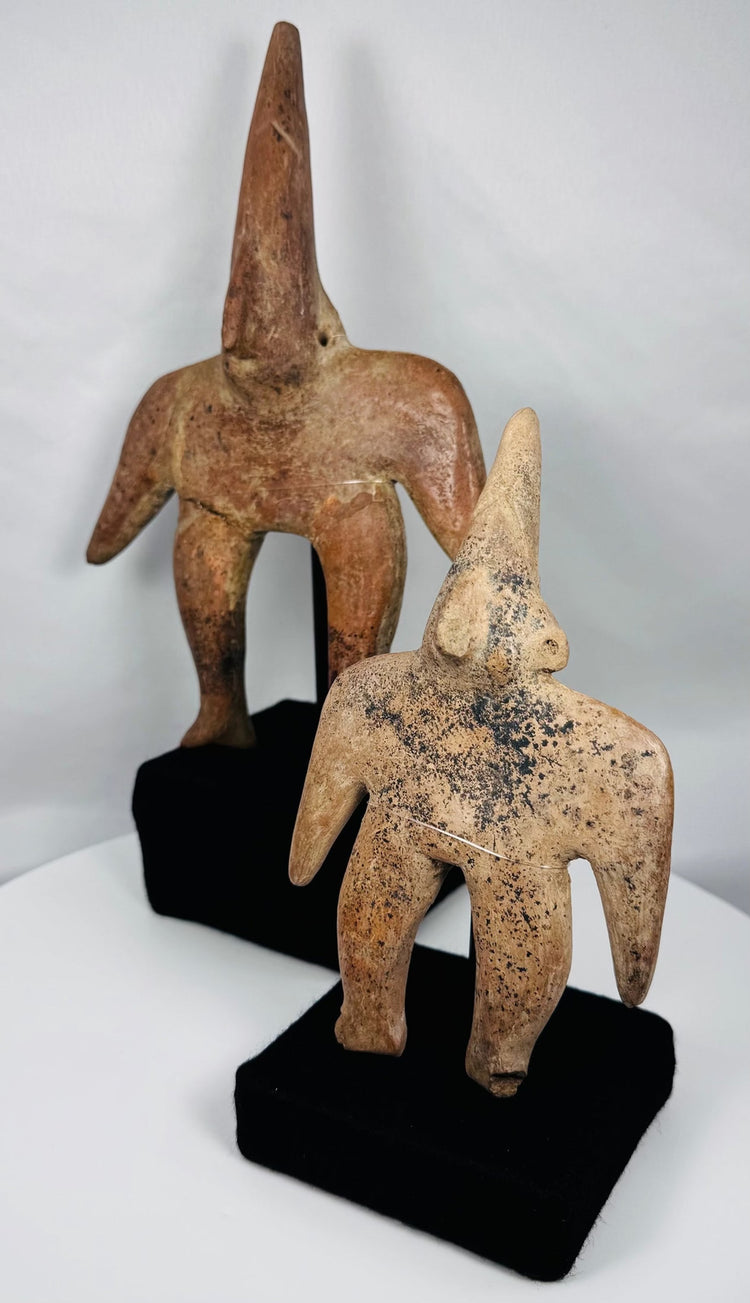
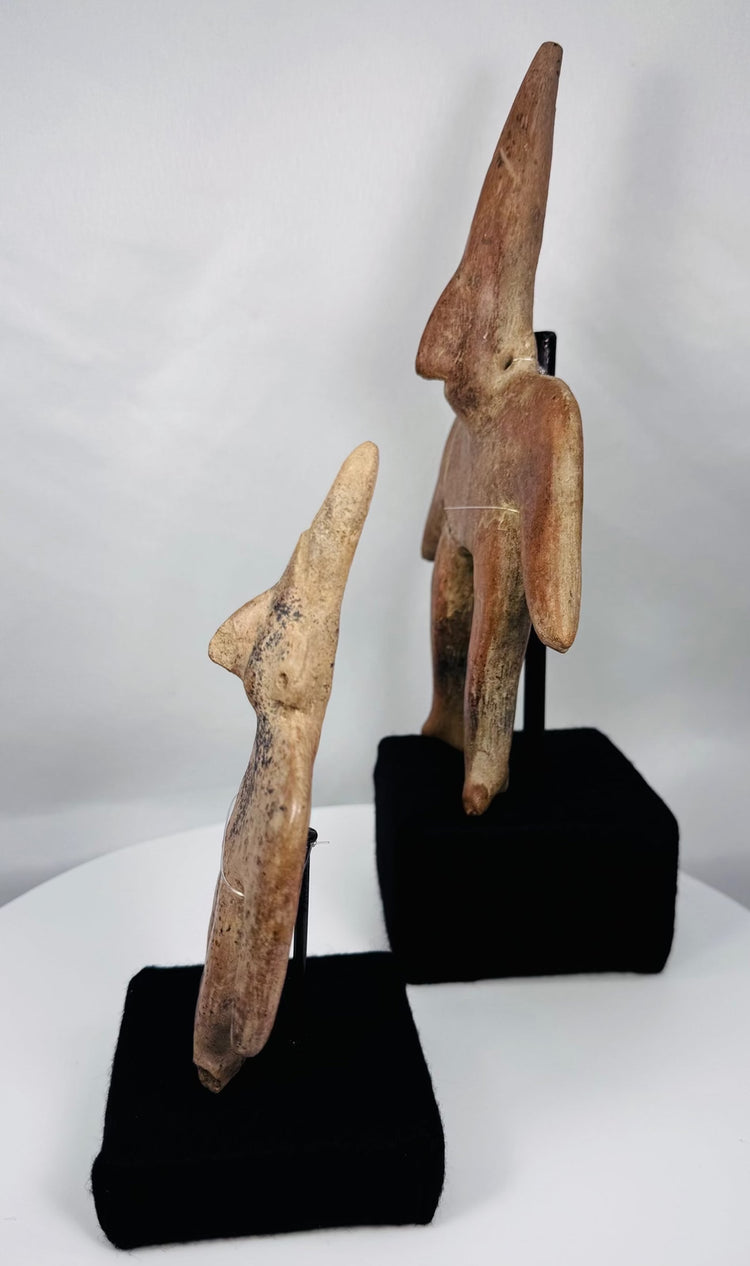
Figuras de pan de jengibre de Colima precolombino (2) | Efigies de terracota variante Teco | Procedencia detallada | Circa 100 a. C. - 300 d. C.
Descripción
Más
Menos
Contexto histórico y origen
Región: México Occidental (Cultura Colima), México
Material: Terracota con depósitos minerales e incrustaciones terrosas
Período: Protoclásico a Clásico Temprano, ca. 100 a.C. – 300 d.C.
Descripción
Este raro grupo de dos figuras precolombinas de terracota de Colima pertenece a la distintiva tradición "Gingerbread" de la antigua escultura del occidente de México. Caracterizadas por sus cuerpos altamente estilizados y aplanados, hombros anchos, extremidades simplificadas y cabezas cónicas dramáticamente alargadas, estas figuras representan una de las formas artísticas más reconocibles producidas por los pueblos antiguos de Colima durante el período Protoclásico.
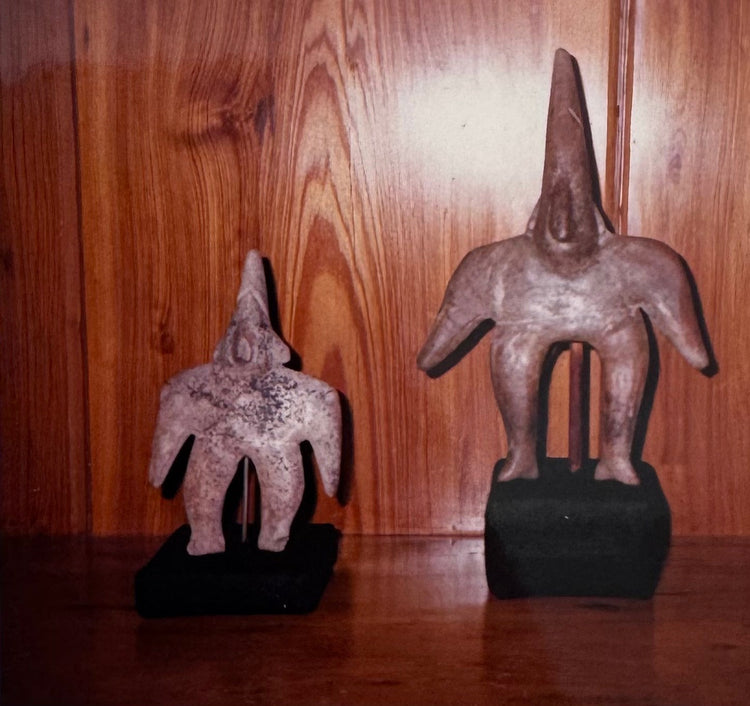
El ejemplo más grande muestra la clásica forma angular asociada con las figuras de la variante Teco, presentando una cabeza puntiaguda y elevada, hombros anchos y piernas robustas. La figura más pequeña sigue la misma tradición, pero exhibe una forma más compacta y una coloración más clara debido a siglos de entierro y mineralización. Ambas figuras conservan su característico aspecto abstracto, con solo mínimas características faciales representadas por una nariz proyectada y pequeños ojos aplicados.
Figuras de este tipo eran comúnmente colocadas dentro de tumbas de tiro y cámaras funerarias en todo el occidente de México, donde acompañaban al difunto como ofrendas rituales. Su significado exacto sigue siendo debatido, aunque los estudiosos creen que pueden representar ancestros, seres sobrenaturales, guardianes o asistentes simbólicos relacionados con el más allá.
El sorprendente diseño geométrico y la estética casi modernista de estas esculturas han atraído durante mucho tiempo a coleccionistas y museos, haciendo de las figuras Gingerbread una de las formas más codiciadas del antiguo arte del occidente de México.
Características
- Auténticas figuras precolombinas de terracota de Colima
- Raro grupo a juego de dos ejemplos
- Estilo clásico "Gingerbread" con cabezas cónicas alargadas
- Variante Teco / tradición Tuxcacuesco-Ortices
- Forma escultórica abstracta y angular distintiva
- Atractivos depósitos de entierro e incrustaciones minerales
- Montadas profesionalmente para exhibición
- Amplia procedencia documentada e historial de colección
Significado histórico
Las culturas de tumbas de tiro del occidente de México produjeron algunas de las tradiciones escultóricas más distintivas de las antiguas Américas. Las figuras Gingerbread representan una convención artística altamente estilizada y única de Colima y las regiones vecinas durante el período precolombino tardío.
En lugar de buscar la representación naturalista, los artesanos enfatizaron la forma simbólica y el significado ritual a través de formas geométricas y características exageradas. Estas figuras se enterraban con frecuencia como ofrendas funerarias y probablemente sirvieron como representaciones de ancestros, seres espirituales o compañeros para el difunto en el más allá.
Estado
Ambas figuras se encuentran en estado fragmentario antiguo con estabilización y montaje profesionales. Presentan las esperadas reparaciones, restauraciones, pérdidas, astillas, desgaste superficial, depósitos minerales, incrustaciones de enterramiento y envejecimiento relacionados con la edad. La figura más grande exhibe una restauración y estabilización visibles consistentes con artefactos arqueológicos de terracota.
Dimensiones (aproximadas)
Figura más grande
Altura: 12 pulgadas
Figura más pequeña
Altura: 7.5 pulgadas
Edad (aproximada)
1,700–2,100 años
Procedencia
Adquiridas el 8 de abril de 1986, en Harmer Rooke Galleries, Nueva York, EE. UU., y posteriormente conservadas en la Colección McMillan, Minnesota, EE. UU., durante aproximadamente cuatro décadas.
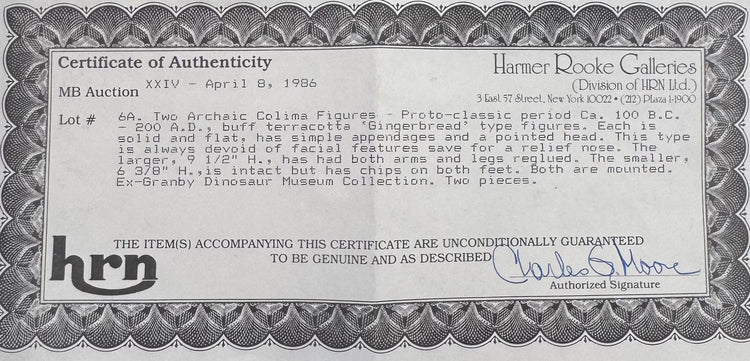
Las figuras están acompañadas de la documentación original de Harmer Rooke Galleries, incluido un Certificado de Autenticidad emitido para la Subasta XXIV (8 de abril de 1986), identificando el par como "Dos Figuras Arcaicas de Colima" datadas aproximadamente entre el 100 a.C. y el 200 d.C. El certificado registra además su atribución como figuras de terracota pulida tipo "Gingerbread" y señala su procedencia anterior de la Colección del Museo de Dinosaurios Granby.
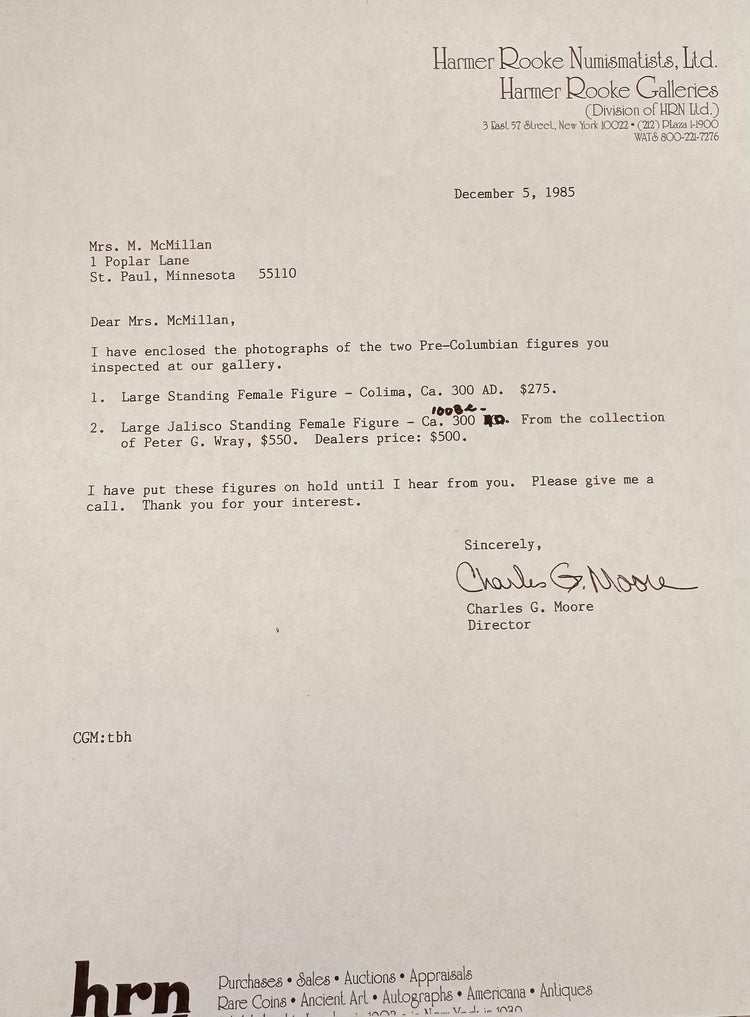
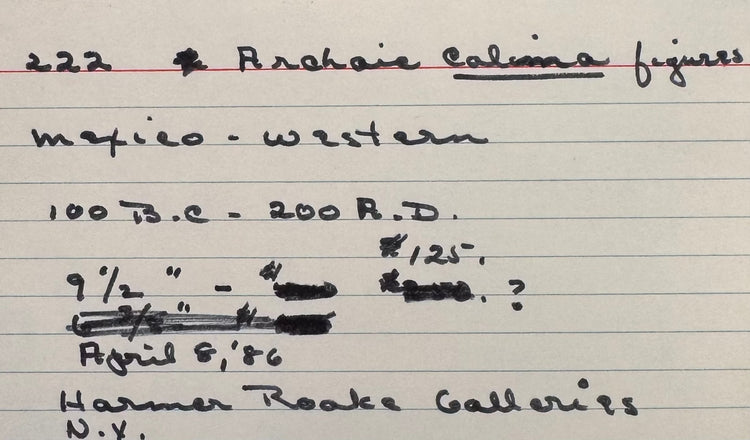
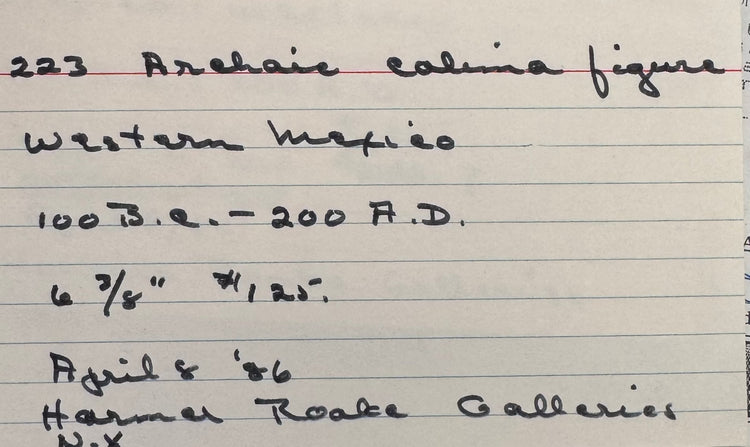
La documentación adicional adjunta incluye una carta original de 1985 de Charles G. Moore, director de Harmer Rooke Galleries, dirigida a la Sra. McMillan con respecto a figuras de Colima relacionadas vistas en la galería, e incluye una foto de la época de las dos figuras en la Galería Harmer en 1985. También se incluyen dos tarjetas de inventario originales de la Colección McMillan que registran las dimensiones, la datación y los detalles de adquisición.
Saber más
Explora las antiguas esculturas de Colima en la colección del Museo de Arte Walters
Explora nuestra Colección de Cerámicas y Alfarería Antiguas
Descripción
Contexto histórico y origen
Región: México Occidental (Cultura Colima), México
Material: Terracota con depósitos minerales e incrustaciones terrosas
Período: Protoclásico a Clásico Temprano, ca. 100 a.C. – 300 d.C.
Descripción
Este raro grupo de dos figuras precolombinas de terracota de Colima pertenece a la distintiva tradición "Gingerbread" de la antigua escultura del occidente de México. Caracterizadas por sus cuerpos altamente estilizados y aplanados, hombros anchos, extremidades simplificadas y cabezas cónicas dramáticamente alargadas, estas figuras representan una de las formas artísticas más reconocibles producidas por los pueblos antiguos de Colima durante el período Protoclásico.
El ejemplo más grande muestra la clásica forma angular asociada con las figuras de la variante Teco, presentando una cabeza puntiaguda y elevada, hombros anchos y piernas robustas. La figura más pequeña sigue la misma tradición, pero exhibe una forma más compacta y una coloración más clara debido a siglos de entierro y mineralización. Ambas figuras conservan su característico aspecto abstracto, con solo mínimas características faciales representadas por una nariz proyectada y pequeños ojos aplicados.
Figuras de este tipo eran comúnmente colocadas dentro de tumbas de tiro y cámaras funerarias en todo el occidente de México, donde acompañaban al difunto como ofrendas rituales. Su significado exacto sigue siendo debatido, aunque los estudiosos creen que pueden representar ancestros, seres sobrenaturales, guardianes o asistentes simbólicos relacionados con el más allá.
El sorprendente diseño geométrico y la estética casi modernista de estas esculturas han atraído durante mucho tiempo a coleccionistas y museos, haciendo de las figuras Gingerbread una de las formas más codiciadas del antiguo arte del occidente de México.
Características
- Auténticas figuras precolombinas de terracota de Colima
- Raro grupo a juego de dos ejemplos
- Estilo clásico "Gingerbread" con cabezas cónicas alargadas
- Variante Teco / tradición Tuxcacuesco-Ortices
- Forma escultórica abstracta y angular distintiva
- Atractivos depósitos de entierro e incrustaciones minerales
- Montadas profesionalmente para exhibición
- Amplia procedencia documentada e historial de colección
Significado histórico
Las culturas de tumbas de tiro del occidente de México produjeron algunas de las tradiciones escultóricas más distintivas de las antiguas Américas. Las figuras Gingerbread representan una convención artística altamente estilizada y única de Colima y las regiones vecinas durante el período precolombino tardío.
En lugar de buscar la representación naturalista, los artesanos enfatizaron la forma simbólica y el significado ritual a través de formas geométricas y características exageradas. Estas figuras se enterraban con frecuencia como ofrendas funerarias y probablemente sirvieron como representaciones de ancestros, seres espirituales o compañeros para el difunto en el más allá.
Estado
Ambas figuras se encuentran en estado fragmentario antiguo con estabilización y montaje profesionales. Presentan las esperadas reparaciones, restauraciones, pérdidas, astillas, desgaste superficial, depósitos minerales, incrustaciones de enterramiento y envejecimiento relacionados con la edad. La figura más grande exhibe una restauración y estabilización visibles consistentes con artefactos arqueológicos de terracota.
Dimensiones (aproximadas)
Figura más grande
Altura: 12 pulgadas
Figura más pequeña
Altura: 7.5 pulgadas
Edad (aproximada)
1,700–2,100 años
Procedencia
Adquiridas el 8 de abril de 1986, en Harmer Rooke Galleries, Nueva York, EE. UU., y posteriormente conservadas en la Colección McMillan, Minnesota, EE. UU., durante aproximadamente cuatro décadas.
Las figuras están acompañadas de la documentación original de Harmer Rooke Galleries, incluido un Certificado de Autenticidad emitido para la Subasta XXIV (8 de abril de 1986), identificando el par como "Dos Figuras Arcaicas de Colima" datadas aproximadamente entre el 100 a.C. y el 200 d.C. El certificado registra además su atribución como figuras de terracota pulida tipo "Gingerbread" y señala su procedencia anterior de la Colección del Museo de Dinosaurios Granby.
La documentación adicional adjunta incluye una carta original de 1985 de Charles G. Moore, director de Harmer Rooke Galleries, dirigida a la Sra. McMillan con respecto a figuras de Colima relacionadas vistas en la galería, e incluye una foto de la época de las dos figuras en la Galería Harmer en 1985. También se incluyen dos tarjetas de inventario originales de la Colección McMillan que registran las dimensiones, la datación y los detalles de adquisición.
Saber más
Explora las antiguas esculturas de Colima en la colección del Museo de Arte Walters
Explora nuestra Colección de Cerámicas y Alfarería Antiguas
También te puede interesar
