

Vasija ceremonial precolombina de terracota con pedestal | Cuenco de loza pintada | Cerca de 500 a. C. - 1200 d. C.
- Precio habitual
- $600.00
- Precio de venta
- $600.00
- Precio habitual
No se pudo cargar la disponibilidad de retiro


Vasija ceremonial precolombina de terracota con pedestal | Cuenco de loza pintada | Cerca de 500 a. C. - 1200 d. C.
Descripción
Más
Menos
Contexto y origen histórico
Región: Probablemente Mesoamérica precolombina o el norte de Sudamérica
Material: Terracota/cerámica de barro moldeada a mano
Período: Circa 500 a. C. - 1200 d. C.
Descripción
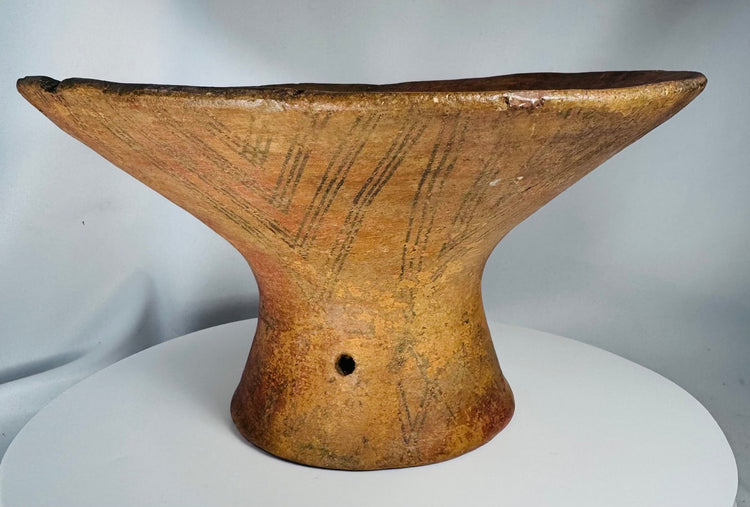
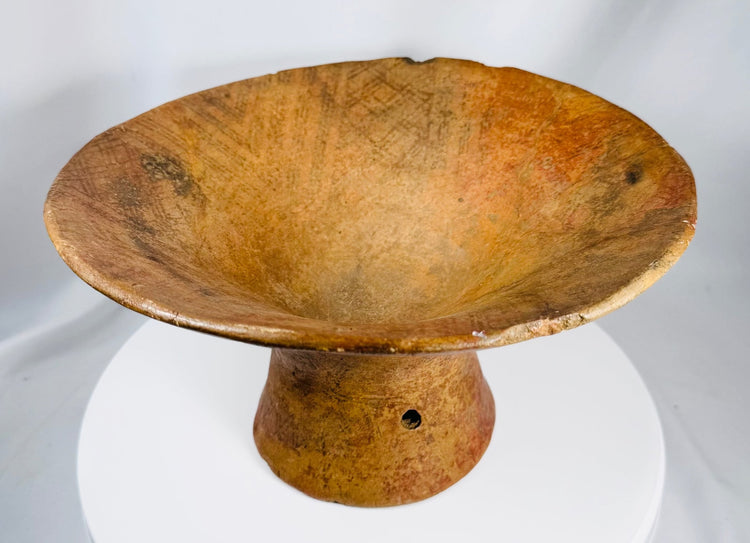
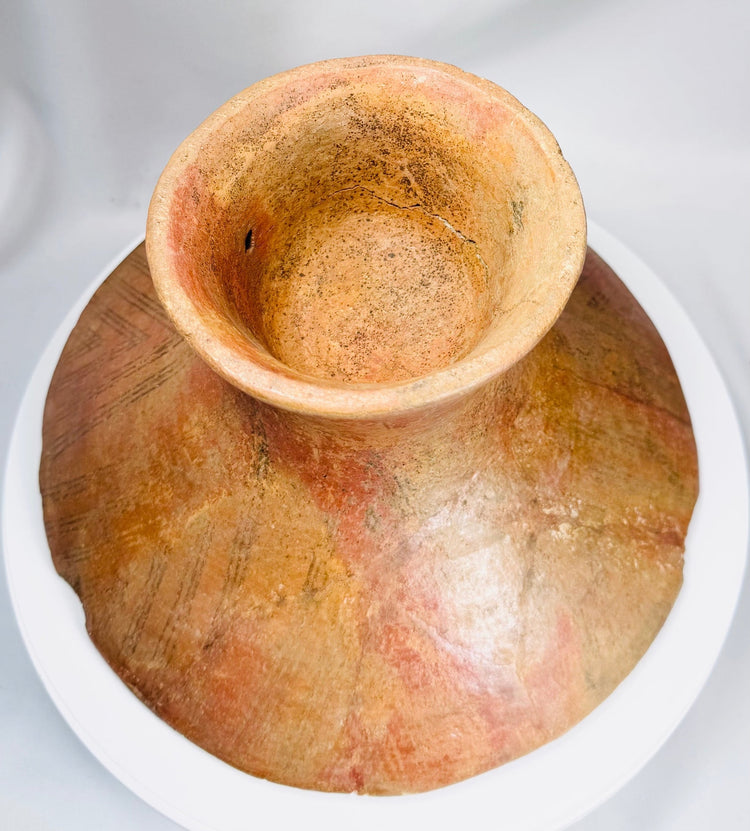
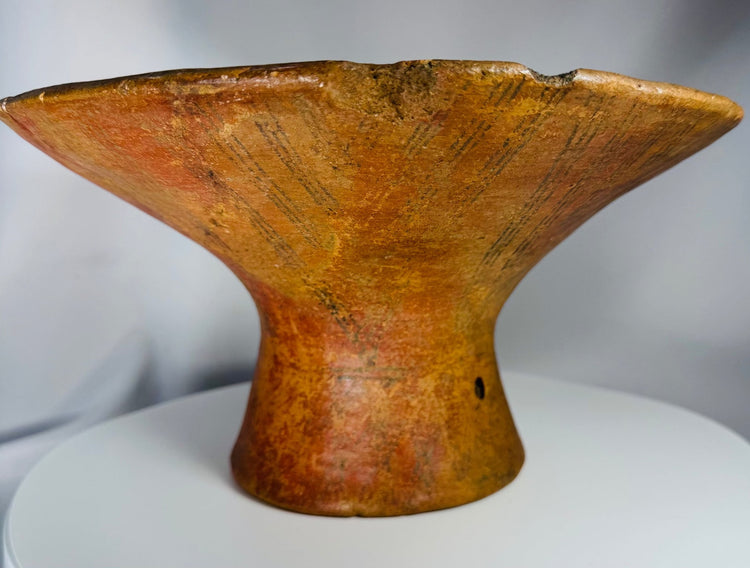
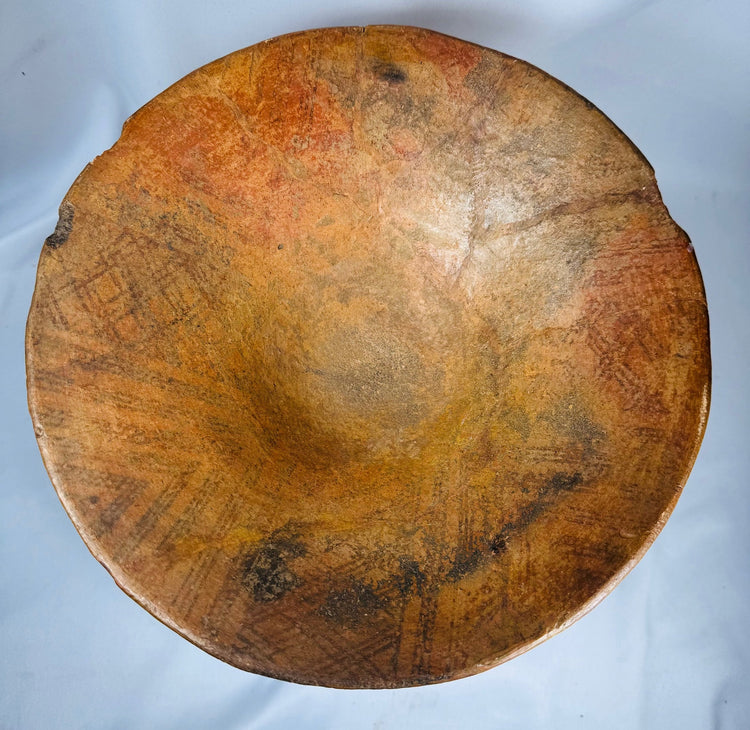
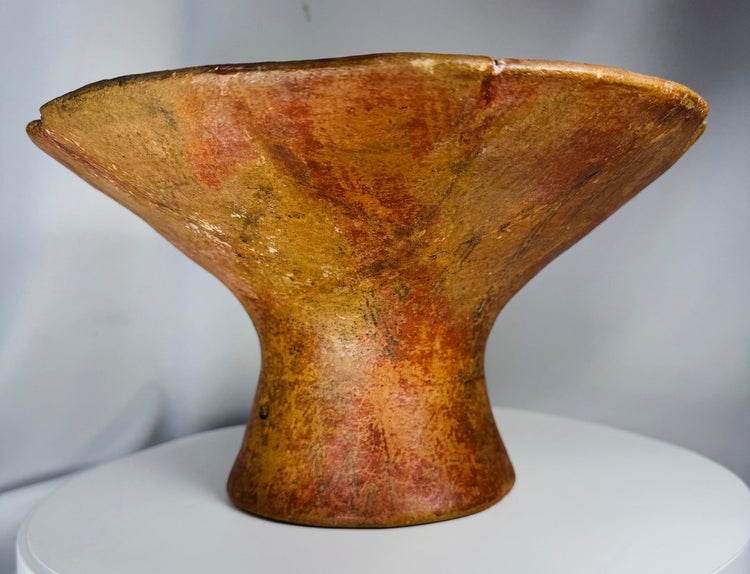
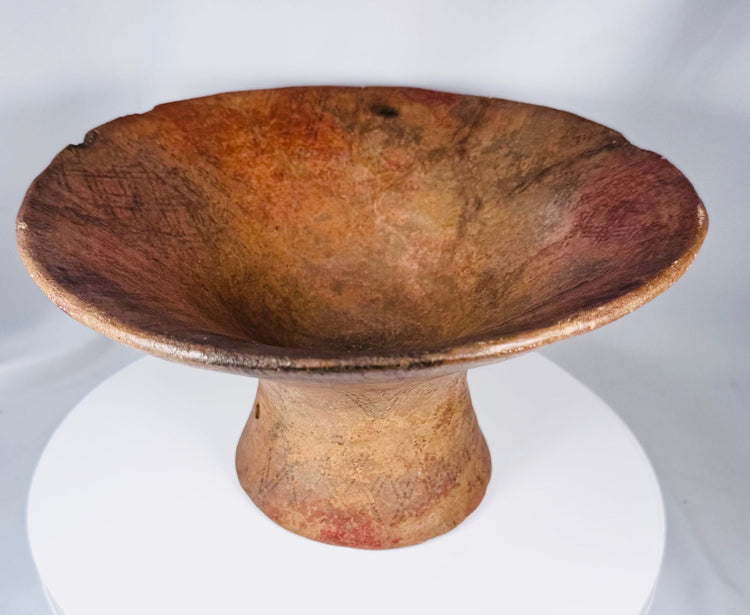
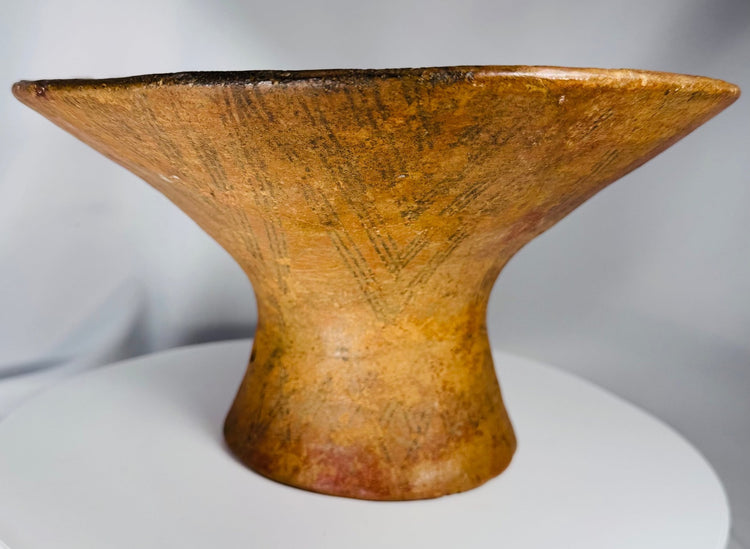
Esta sorprendente vasija de cerámica precolombina presenta un inusual cuenco ancho con forma de plato acampanado, elevado sobre un pie de pedestal, creando una silueta ceremonial dramática que rara vez se encuentra en las formas de cerámica utilitaria estándar. La vasija muestra una extensa decoración geométrica lineal aplicada a mano, ejecutada con pigmento mineral oscuro sobre una superficie de barro cocido de color ante a rojo cálido, con variaciones de cocción visibles y depósitos minerales consistentes con una edad considerable.
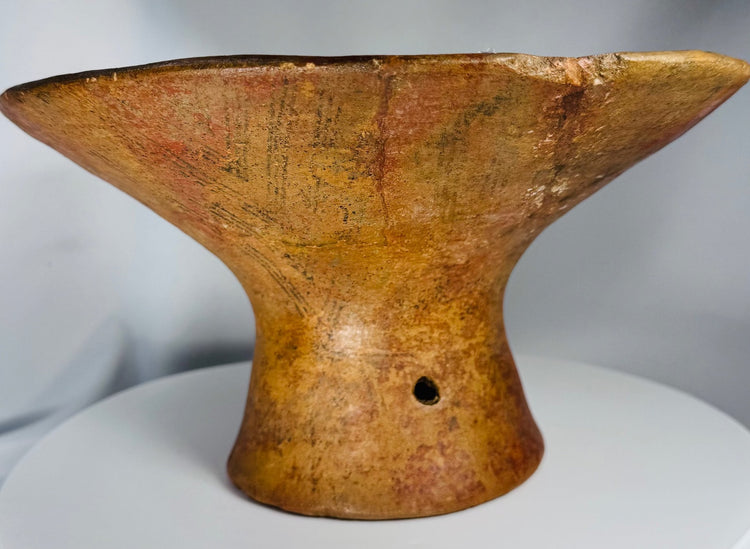
La cuenca ancha y poco profunda transiciona en un soporte de pedestal constreñido con una pequeña perforación cerca del cuerpo inferior, posiblemente asociada con la cocción, la suspensión, la ventilación o el uso ritual. La forma general sugiere fuertemente una funcionalidad ceremonial o de presentación en lugar de un uso de almacenamiento doméstico convencional. Se conocen vasijas elevadas similares de varias culturas precolombinas en Mesoamérica y partes de América Central y del Sur, donde las vasijas de pedestal y los soportes de ofrendas se utilizaban en contextos rituales, festivos, relacionados con el incienso o ceremoniales.
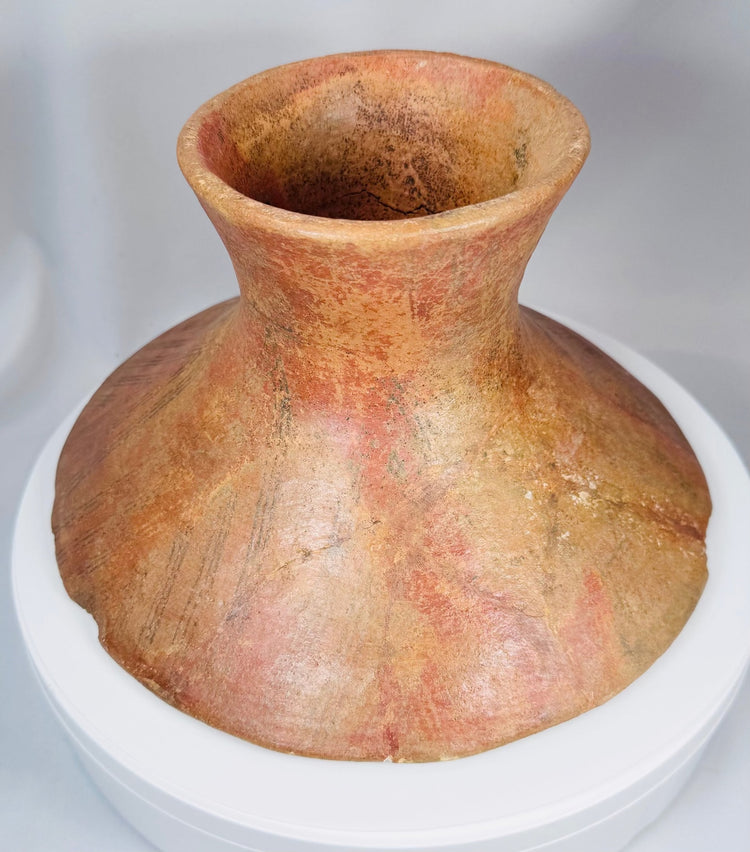
La vasija conserva una atractiva superficie arqueológica con áreas dispersas de mineralización, meteorización y pátina relacionada con la edad en toda su extensión. Se mantienen visibles tenues motivos geométricos y bandas lineales alrededor del exterior, lo que añade al atractivo visual y etnográfico del objeto. El borde ancho y acampanado y las proporciones cuidadosamente equilibradas crean una presentación altamente escultórica adecuada para exhibirse en colecciones centradas en antigüedades precolombinas y cerámica ceremonial antigua.
Características
- Forma de cuenco ceremonial ancho y acampanado
- Construcción de base de pedestal elevada
- Decoración geométrica pintada a mano
- Cerámica de barro con pátina natural envejecida
- Pequeña perforación incorporada en el cuerpo inferior
- Fuerte presencia escultórica y de exhibición
- Auténticas características de construcción moldeadas a mano
- Excelente ejemplo de las tradiciones de la cerámica ceremonial precolombina
Significado cultural
Las vasijas con pedestal tuvieron importancia ceremonial en muchas culturas americanas antiguas y con frecuencia se asociaban con ofrendas, presentación de alimentos, actividades rituales, quema de incienso o reuniones ceremoniales de élite. La forma elevada probablemente servía tanto para propósitos simbólicos como funcionales, elevando el contenido durante el uso ritual mientras enfatizaba la importancia ceremonial de la vasija.
Condición
Presenta desgaste relacionado con la edad, abrasión superficial, depósitos minerales dispersos, irregularidades de cocción, pérdidas en el borde, agrietamiento superficial estable y áreas de restauración consistentes con la edad y la excavación arqueológica. En general, bien conservado con una fuerte presentación visual.
Dimensiones (aproximadas)
Altura: 5.5 pulgadas
Diámetro: 10 pulgadas
Antigüedad (Aproximada)
800–2,500 años de antigüedad
Resumen de procedencia
De una colección privada en Filadelfia, Pensilvania, EE. UU.
Más información
Aprenda sobre el arte y las tradiciones culturales de las civilizaciones precolombinas a través del Museo de Historia Natural y Arqueología
Vea nuestra Colección de Artefactos Precolombinos Antiguos
Descripción
Contexto y origen histórico
Región: Probablemente Mesoamérica precolombina o el norte de Sudamérica
Material: Terracota/cerámica de barro moldeada a mano
Período: Circa 500 a. C. - 1200 d. C.
Descripción
Esta sorprendente vasija de cerámica precolombina presenta un inusual cuenco ancho con forma de plato acampanado, elevado sobre un pie de pedestal, creando una silueta ceremonial dramática que rara vez se encuentra en las formas de cerámica utilitaria estándar. La vasija muestra una extensa decoración geométrica lineal aplicada a mano, ejecutada con pigmento mineral oscuro sobre una superficie de barro cocido de color ante a rojo cálido, con variaciones de cocción visibles y depósitos minerales consistentes con una edad considerable.
La cuenca ancha y poco profunda transiciona en un soporte de pedestal constreñido con una pequeña perforación cerca del cuerpo inferior, posiblemente asociada con la cocción, la suspensión, la ventilación o el uso ritual. La forma general sugiere fuertemente una funcionalidad ceremonial o de presentación en lugar de un uso de almacenamiento doméstico convencional. Se conocen vasijas elevadas similares de varias culturas precolombinas en Mesoamérica y partes de América Central y del Sur, donde las vasijas de pedestal y los soportes de ofrendas se utilizaban en contextos rituales, festivos, relacionados con el incienso o ceremoniales.
La vasija conserva una atractiva superficie arqueológica con áreas dispersas de mineralización, meteorización y pátina relacionada con la edad en toda su extensión. Se mantienen visibles tenues motivos geométricos y bandas lineales alrededor del exterior, lo que añade al atractivo visual y etnográfico del objeto. El borde ancho y acampanado y las proporciones cuidadosamente equilibradas crean una presentación altamente escultórica adecuada para exhibirse en colecciones centradas en antigüedades precolombinas y cerámica ceremonial antigua.
Características
- Forma de cuenco ceremonial ancho y acampanado
- Construcción de base de pedestal elevada
- Decoración geométrica pintada a mano
- Cerámica de barro con pátina natural envejecida
- Pequeña perforación incorporada en el cuerpo inferior
- Fuerte presencia escultórica y de exhibición
- Auténticas características de construcción moldeadas a mano
- Excelente ejemplo de las tradiciones de la cerámica ceremonial precolombina
Significado cultural
Las vasijas con pedestal tuvieron importancia ceremonial en muchas culturas americanas antiguas y con frecuencia se asociaban con ofrendas, presentación de alimentos, actividades rituales, quema de incienso o reuniones ceremoniales de élite. La forma elevada probablemente servía tanto para propósitos simbólicos como funcionales, elevando el contenido durante el uso ritual mientras enfatizaba la importancia ceremonial de la vasija.
Condición
Presenta desgaste relacionado con la edad, abrasión superficial, depósitos minerales dispersos, irregularidades de cocción, pérdidas en el borde, agrietamiento superficial estable y áreas de restauración consistentes con la edad y la excavación arqueológica. En general, bien conservado con una fuerte presentación visual.
Dimensiones (aproximadas)
Altura: 5.5 pulgadas
Diámetro: 10 pulgadas
Antigüedad (Aproximada)
800–2,500 años de antigüedad
Resumen de procedencia
De una colección privada en Filadelfia, Pensilvania, EE. UU.
Más información
Aprenda sobre el arte y las tradiciones culturales de las civilizaciones precolombinas a través del Museo de Historia Natural y Arqueología
Vea nuestra Colección de Artefactos Precolombinos Antiguos
También te puede interesar
