

Imperial Romano | Frasco de perfume de cristal turquesa con anillos en espiral | Hacia los siglos I-III d. C.
- Precio habitual
- $800.00
- Precio de venta
- $800.00
- Precio habitual
No se pudo cargar la disponibilidad de retiro


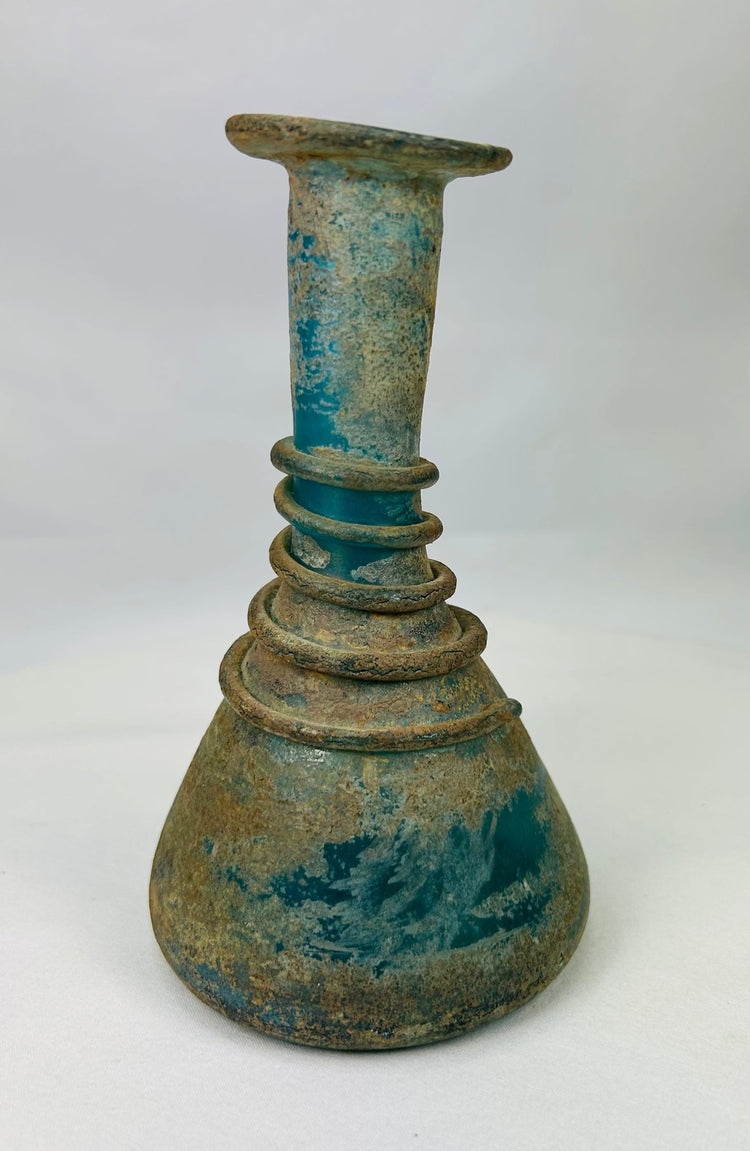
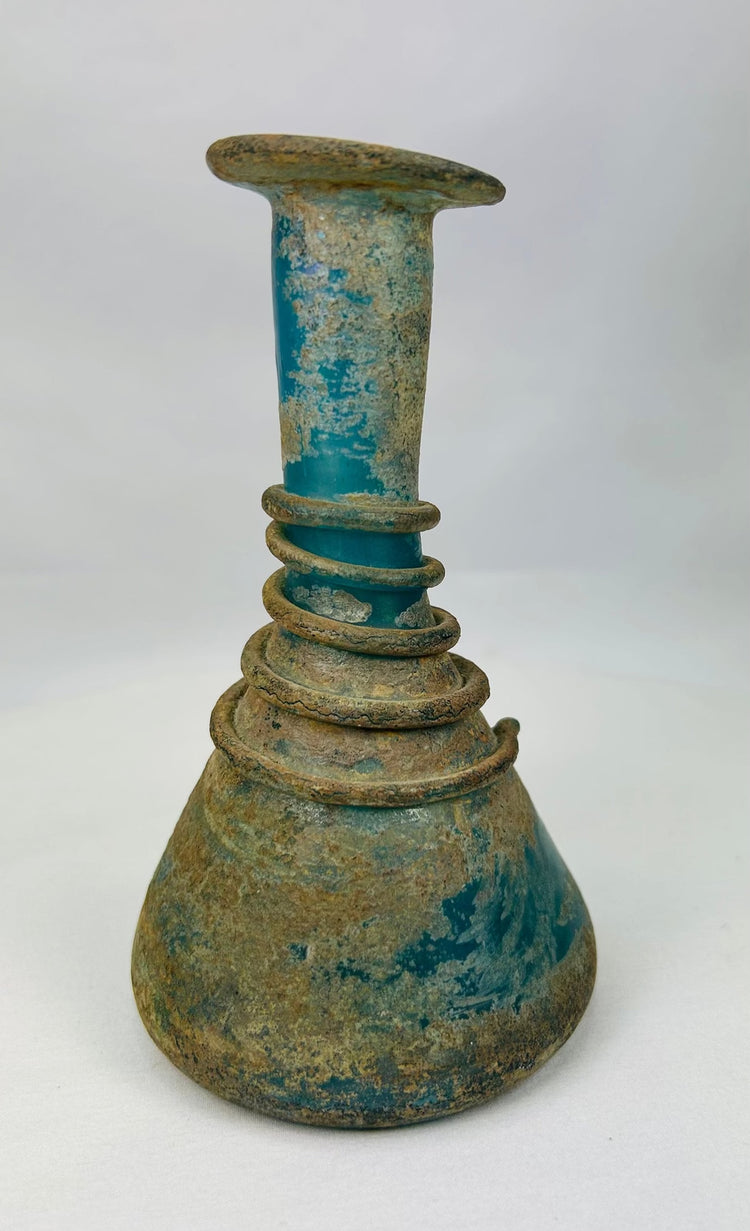
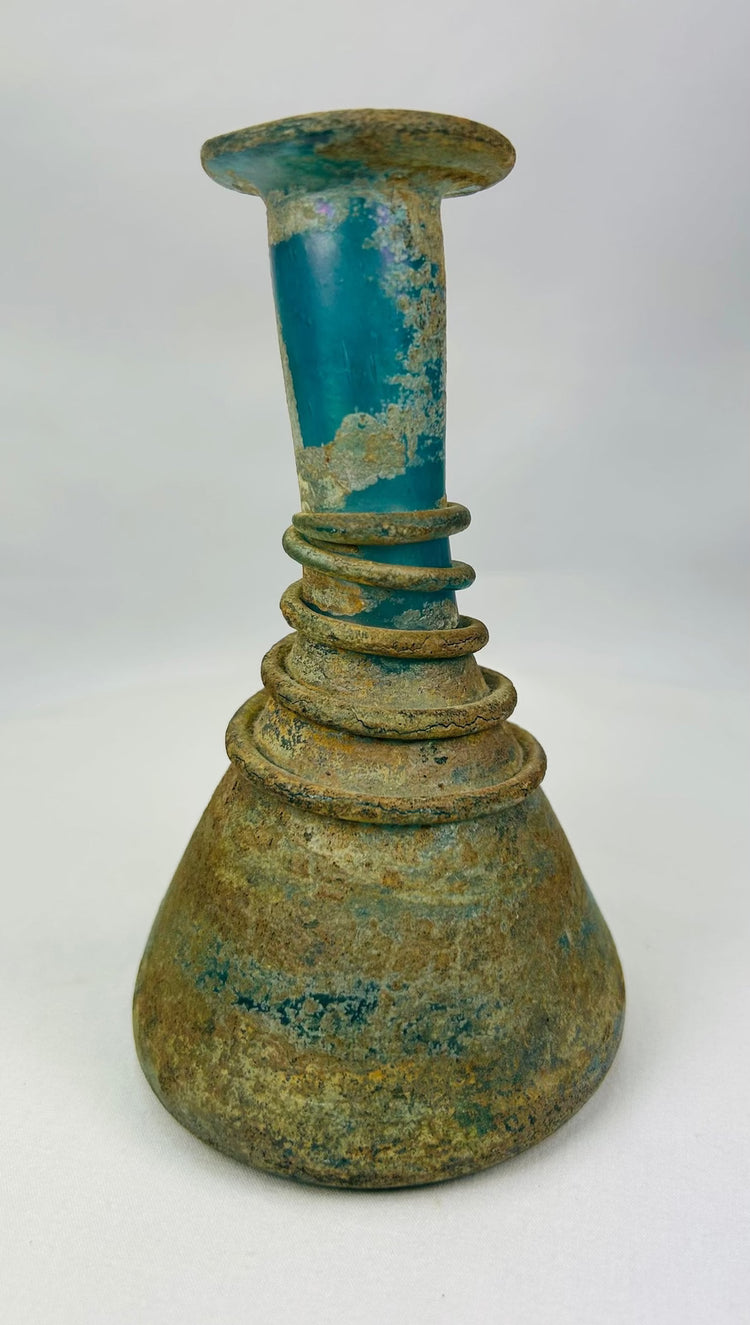

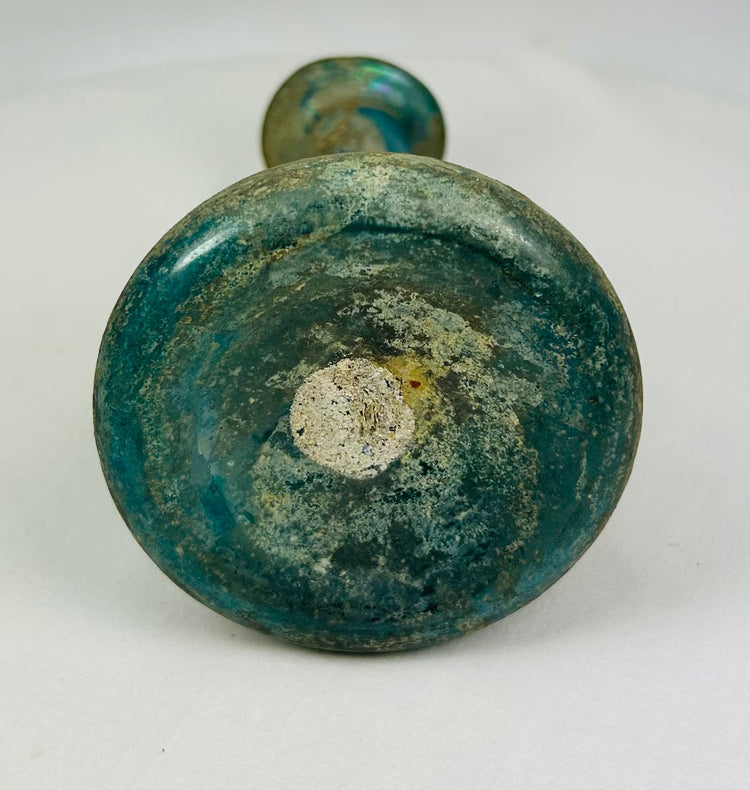
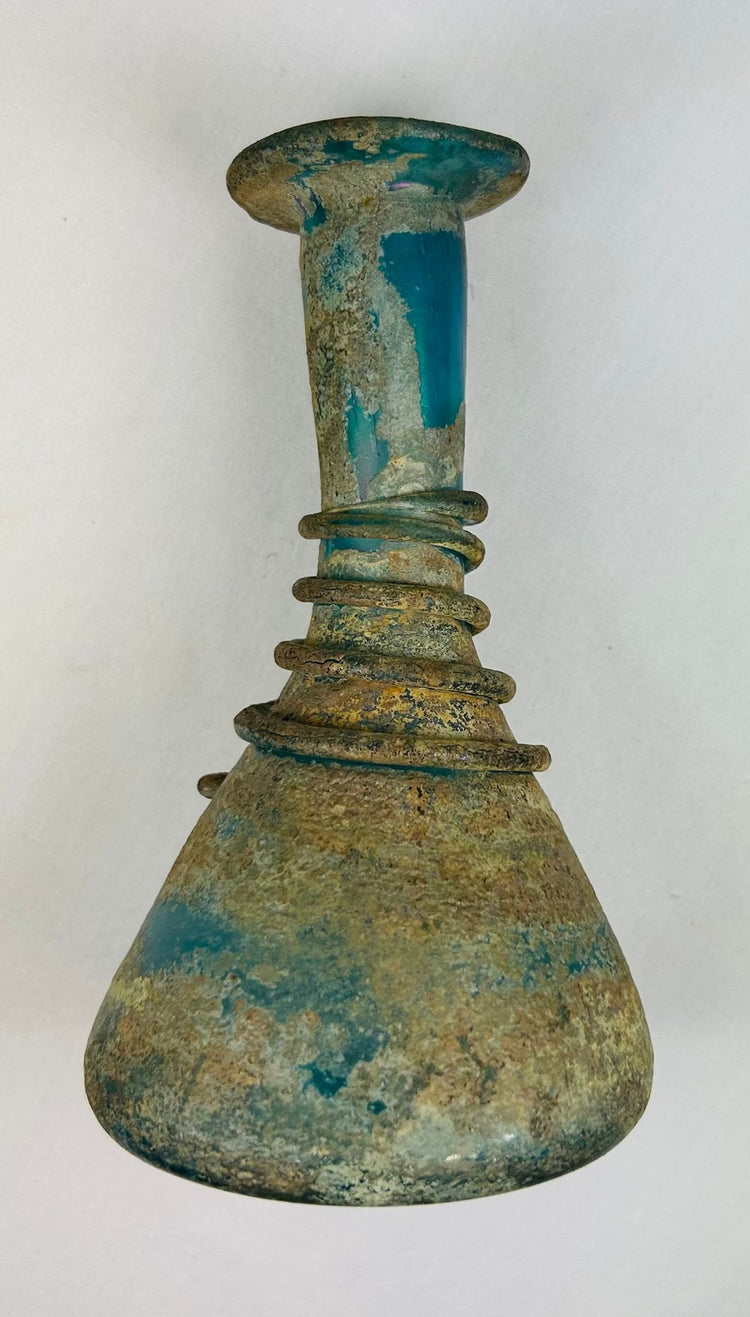
Imperial Romano | Frasco de perfume de cristal turquesa con anillos en espiral | Hacia los siglos I-III d. C.
Descripción
Más
Menos
Contexto histórico y origen
Región: Mediterráneo oriental, Imperio romano
Material: Vidrio soplado a mano con pátina mineral natural
Período: Período imperial romano, c. siglos I-III d. C.
Descripción
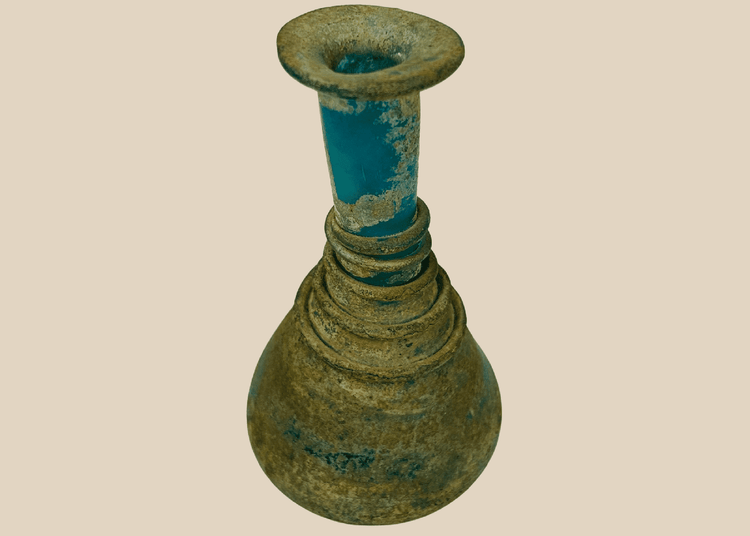
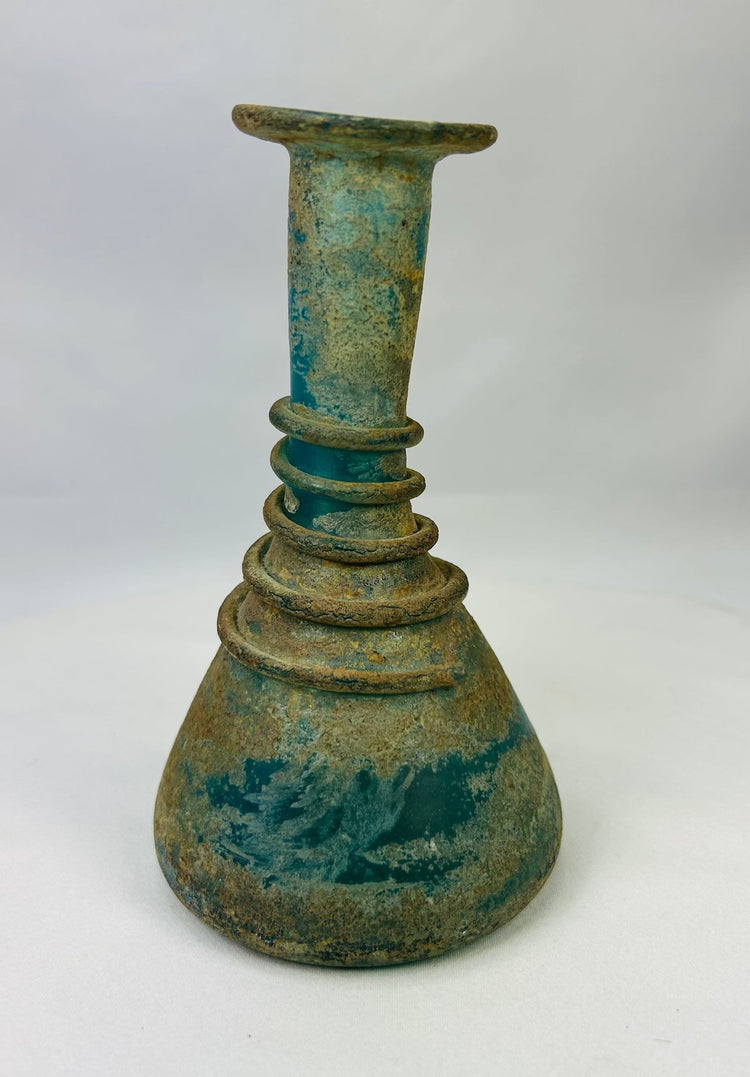
Un unguentarium de vidrio romano antiguo bellamente conservado, tradicionalmente utilizado para almacenar perfumes, aceites y preciosas sustancias cosméticas. Soplado a mano con maestría en un llamativo tono turquesa oscuro, el recipiente presenta un borde ancho y acampanado, un elegante cuello alargado y un cuerpo cónico realzado con un trazo espiral aplicado alrededor del hombro, un adorno decorativo asociado con los recipientes cosméticos romanos de mayor calidad.
Siglos de enterramiento han dotado a la superficie de una extraordinaria pátina arqueológica y alteración mineral, creando una auténtica presencia antigua que solo el tiempo puede producir. Este es un ejemplo excepcional de la artesanía en vidrio romano y la cultura del lujo personal.
Características
- Forma clásica de recipiente cosmético romano
- Rica coloración turquesa
- Rara decoración de trazo espiral aplicado
- Hermosa pátina natural con iridiscencia mineral en la superficie
Significado cultural
Los perfumes y los aceites perfumados desempeñaron un papel importante en la sociedad romana, utilizándose en rituales de baño, aseo personal, medicina y ofrendas funerarias. Unguentaria como esta eran artículos de lujo muy valorados, a menudo asociados con la vida doméstica de la élite romana y las tradiciones funerarias, simbolizando el refinamiento, el estatus social y la importancia ritual.
Condición
Bien conservado para su antigüedad, exhibiendo una atractiva pátina superficial, depósitos de tierra, concreciones minerales y el desgaste antiguo esperado, consistente con la recuperación arqueológica. No se observa restauración moderna. Presenta un aspecto excepcionalmente bueno para exhibición y estudio.
Dimensiones (aproximadas)
Altura: 5.63 pulgadas
Diámetro: 3.13 pulgadas
Antigüedad (aproximada)
1,800–2,000 años
Más información
Descubre los unguentaria de vidrio romano a través del Museo Metropolitano de Arte
Explora nuestra selección de Artefactos romanos y griegos y Reliquias antiguas
Descripción
Contexto histórico y origen
Región: Mediterráneo oriental, Imperio romano
Material: Vidrio soplado a mano con pátina mineral natural
Período: Período imperial romano, c. siglos I-III d. C.
Descripción
Un unguentarium de vidrio romano antiguo bellamente conservado, tradicionalmente utilizado para almacenar perfumes, aceites y preciosas sustancias cosméticas. Soplado a mano con maestría en un llamativo tono turquesa oscuro, el recipiente presenta un borde ancho y acampanado, un elegante cuello alargado y un cuerpo cónico realzado con un trazo espiral aplicado alrededor del hombro, un adorno decorativo asociado con los recipientes cosméticos romanos de mayor calidad.
Siglos de enterramiento han dotado a la superficie de una extraordinaria pátina arqueológica y alteración mineral, creando una auténtica presencia antigua que solo el tiempo puede producir. Este es un ejemplo excepcional de la artesanía en vidrio romano y la cultura del lujo personal.
Características
- Forma clásica de recipiente cosmético romano
- Rica coloración turquesa
- Rara decoración de trazo espiral aplicado
- Hermosa pátina natural con iridiscencia mineral en la superficie
Significado cultural
Los perfumes y los aceites perfumados desempeñaron un papel importante en la sociedad romana, utilizándose en rituales de baño, aseo personal, medicina y ofrendas funerarias. Unguentaria como esta eran artículos de lujo muy valorados, a menudo asociados con la vida doméstica de la élite romana y las tradiciones funerarias, simbolizando el refinamiento, el estatus social y la importancia ritual.
Condición
Bien conservado para su antigüedad, exhibiendo una atractiva pátina superficial, depósitos de tierra, concreciones minerales y el desgaste antiguo esperado, consistente con la recuperación arqueológica. No se observa restauración moderna. Presenta un aspecto excepcionalmente bueno para exhibición y estudio.
Dimensiones (aproximadas)
Altura: 5.63 pulgadas
Diámetro: 3.13 pulgadas
Antigüedad (aproximada)
1,800–2,000 años
Más información
Descubre los unguentaria de vidrio romano a través del Museo Metropolitano de Arte
Explora nuestra selección de Artefactos romanos y griegos y Reliquias antiguas
También te puede interesar
