

Cuenco de terracota del norte de África romana con engobe blanco | Túnez | Procedencia detallada | Circa 100-300 d.C.
- Precio habitual
- $600.00
- Precio de venta
- $600.00
- Precio habitual
No se pudo cargar la disponibilidad de retiro




Cuenco de terracota del norte de África romana con engobe blanco | Túnez | Procedencia detallada | Circa 100-300 d.C.
Descripción
Más
Menos
Contexto histórico y origen
Región: África romana del norte (actual Túnez)
Material: Cerámica de barro con restos de engobe blanco y depósitos minerales
Período: Período Imperial Romano, ca. 100–300 d.C.
Descripción
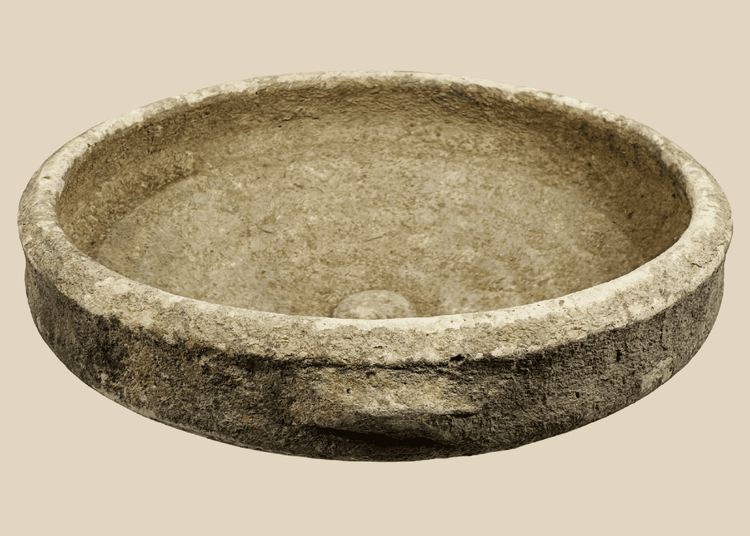
Este auténtico cuenco romano de terracota procede del norte de África, una de las regiones agrícolas y productoras de cerámica más importantes del Imperio Romano. El recipiente tiene una forma ancha y poco profunda, con un borde engrosado, paredes suavemente inclinadas y un saliente central ligeramente elevado en el interior. El exterior conserva restos de un engobe blanco pálido, un tratamiento superficial comúnmente empleado en la alfarería utilitaria y doméstica romana en todo el mundo mediterráneo.
El cuenco, elaborado con arcilla de gres tosco, presenta un diseño sencillo pero funcional destinado al uso diario. Recipientes de este tipo se utilizaban comúnmente para la preparación de alimentos, el servicio, el almacenamiento y las actividades domésticas. Se han recuperado ejemplos similares en asentamientos romanos, villas, instalaciones militares y centros urbanos de Túnez y regiones vecinas.
La superficie presenta un importante desgaste relacionado con la edad y concreciones de enterramiento, lo que le confiere un atractivo aspecto arqueológico. El engobe blanco superviviente y la extensa mineralización avalan su considerable antigüedad y su larga historia de enterramiento.
El norte de África romano se convirtió en una de las provincias más ricas del Imperio tras la destrucción de Cartago y, posteriormente, bajo la administración imperial. Los talleres de cerámica de toda la región producían vastas cantidades de artículos utilitarios que circulaban por todo el Mediterráneo, lo que convertía a los recipientes de cerámica en uno de los artefactos más reconocibles de la vida romana cotidiana.
Características
- Auténtico cuenco romano de terracota del norte de África
- Forma ancha y poco profunda con borde engrosado
- Cuerpo de loza con restos de engobe blanco
- Saliente central elevado en el interior
- Atractivo desgaste arqueológico y depósitos minerales
- Acompañado de documentación de colección
- Adquirido en Túnez a principios de la década de 1980
- Excelente pieza de exhibición que ilustra la vida romana cotidiana
Significado cultural
Las vasijas de cerámica constituyeron la columna vertebral de la vida diaria en todo el Imperio Romano. Utilizadas para la preparación, almacenamiento, transporte y servicio de alimentos, la cerámica proporciona a los arqueólogos algunas de las pruebas más importantes para comprender el comercio, la economía y la vida doméstica en la antigüedad.
El norte de África, particularmente el actual Túnez, se convirtió en una de las provincias más productivas de Roma y suministró productos agrícolas y cerámicas a todo el Mediterráneo. Vasijas como esta representan la loza práctica de uso doméstico utilizada por los romanos comunes hace casi dos mil años.
Estado
Buen estado arqueológico. Desgaste superficial, depósitos minerales, abrasiones, pérdidas en partes del engobe blanco e imperfecciones esperadas consistentes con la edad y el entierro. No se observan restauraciones importantes. Se exhibe bien.
Dimensiones (aproximadas)
Altura: 2.25 pulgadas
Diámetro: 7 pulgadas
Antigüedad (aproximada)
1,700–1,900 años de antigüedad
Procedencia
Adquirido en Túnez en 1982 y, posteriormente, conservado en la Colección McMillan, Minnesota, EE. UU., durante más de cuatro décadas.
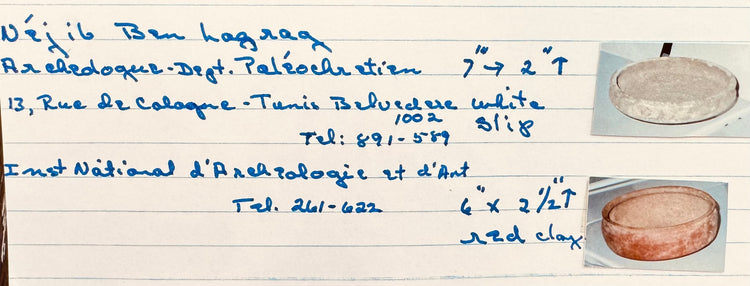
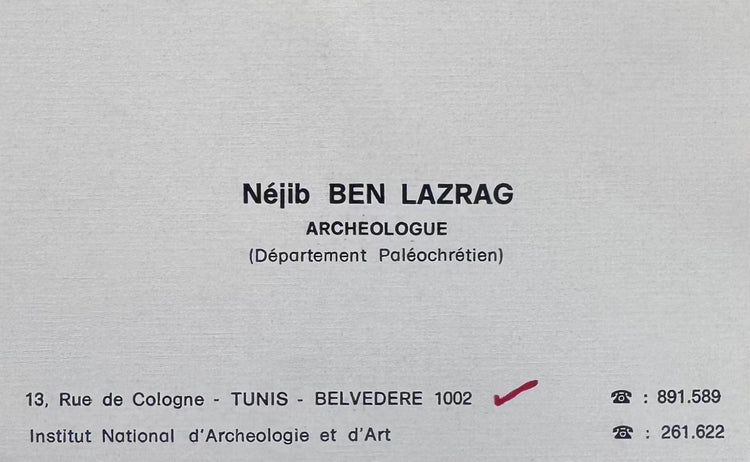
La vasija fue adquirida al arqueólogo Néjib Ben Lazrag, anteriormente asociado con el Institut National d'Archéologie et d'Art en Túnez. Los registros de la colección adjuntos identifican el objeto y hay una fotografía de época que documenta el cuenco.
La documentación adicional adjunta incluye la tarjeta de presentación original del arqueólogo, registros de inventario de la colección manuscritos y fotografías de la colección de época que muestran la vasija tal como aparecía en la colección a principios de la década de 1980.
La Colección McMillan se formó durante varias décadas y contenía una amplia gama de antigüedades adquiridas directamente de comerciantes, arqueólogos, galerías y fuentes de antigüedades de toda Europa, el norte de África, el Cercano Oriente y el Mediterráneo.
Más información
Descubra la historia de la África romana del norte y su importancia dentro del Imperio Romano.
Explore nuestra Colección de cerámica y alfarería antigua
Descripción
Contexto histórico y origen
Región: África romana del norte (actual Túnez)
Material: Cerámica de barro con restos de engobe blanco y depósitos minerales
Período: Período Imperial Romano, ca. 100–300 d.C.
Descripción
Este auténtico cuenco romano de terracota procede del norte de África, una de las regiones agrícolas y productoras de cerámica más importantes del Imperio Romano. El recipiente tiene una forma ancha y poco profunda, con un borde engrosado, paredes suavemente inclinadas y un saliente central ligeramente elevado en el interior. El exterior conserva restos de un engobe blanco pálido, un tratamiento superficial comúnmente empleado en la alfarería utilitaria y doméstica romana en todo el mundo mediterráneo.
El cuenco, elaborado con arcilla de gres tosco, presenta un diseño sencillo pero funcional destinado al uso diario. Recipientes de este tipo se utilizaban comúnmente para la preparación de alimentos, el servicio, el almacenamiento y las actividades domésticas. Se han recuperado ejemplos similares en asentamientos romanos, villas, instalaciones militares y centros urbanos de Túnez y regiones vecinas.
La superficie presenta un importante desgaste relacionado con la edad y concreciones de enterramiento, lo que le confiere un atractivo aspecto arqueológico. El engobe blanco superviviente y la extensa mineralización avalan su considerable antigüedad y su larga historia de enterramiento.
El norte de África romano se convirtió en una de las provincias más ricas del Imperio tras la destrucción de Cartago y, posteriormente, bajo la administración imperial. Los talleres de cerámica de toda la región producían vastas cantidades de artículos utilitarios que circulaban por todo el Mediterráneo, lo que convertía a los recipientes de cerámica en uno de los artefactos más reconocibles de la vida romana cotidiana.
Características
- Auténtico cuenco romano de terracota del norte de África
- Forma ancha y poco profunda con borde engrosado
- Cuerpo de loza con restos de engobe blanco
- Saliente central elevado en el interior
- Atractivo desgaste arqueológico y depósitos minerales
- Acompañado de documentación de colección
- Adquirido en Túnez a principios de la década de 1980
- Excelente pieza de exhibición que ilustra la vida romana cotidiana
Significado cultural
Las vasijas de cerámica constituyeron la columna vertebral de la vida diaria en todo el Imperio Romano. Utilizadas para la preparación, almacenamiento, transporte y servicio de alimentos, la cerámica proporciona a los arqueólogos algunas de las pruebas más importantes para comprender el comercio, la economía y la vida doméstica en la antigüedad.
El norte de África, particularmente el actual Túnez, se convirtió en una de las provincias más productivas de Roma y suministró productos agrícolas y cerámicas a todo el Mediterráneo. Vasijas como esta representan la loza práctica de uso doméstico utilizada por los romanos comunes hace casi dos mil años.
Estado
Buen estado arqueológico. Desgaste superficial, depósitos minerales, abrasiones, pérdidas en partes del engobe blanco e imperfecciones esperadas consistentes con la edad y el entierro. No se observan restauraciones importantes. Se exhibe bien.
Dimensiones (aproximadas)
Altura: 2.25 pulgadas
Diámetro: 7 pulgadas
Antigüedad (aproximada)
1,700–1,900 años de antigüedad
Procedencia
Adquirido en Túnez en 1982 y, posteriormente, conservado en la Colección McMillan, Minnesota, EE. UU., durante más de cuatro décadas.
La vasija fue adquirida al arqueólogo Néjib Ben Lazrag, anteriormente asociado con el Institut National d'Archéologie et d'Art en Túnez. Los registros de la colección adjuntos identifican el objeto y hay una fotografía de época que documenta el cuenco.
La documentación adicional adjunta incluye la tarjeta de presentación original del arqueólogo, registros de inventario de la colección manuscritos y fotografías de la colección de época que muestran la vasija tal como aparecía en la colección a principios de la década de 1980.
La Colección McMillan se formó durante varias décadas y contenía una amplia gama de antigüedades adquiridas directamente de comerciantes, arqueólogos, galerías y fuentes de antigüedades de toda Europa, el norte de África, el Cercano Oriente y el Mediterráneo.
Más información
Descubra la historia de la África romana del norte y su importancia dentro del Imperio Romano.
Explore nuestra Colección de cerámica y alfarería antigua
También te puede interesar
