

Colgante relicario tibetano antiguo con incrustaciones de turquesa y coral | Caja de amuleto | Relicario budista del Himalaya | Circa finales del siglo XIX – principios del siglo XX
- Precio habitual
- $450.00
- Precio de venta
- $450.00
- Precio habitual
No se pudo cargar la disponibilidad de retiro


Colgante relicario tibetano antiguo con incrustaciones de turquesa y coral | Caja de amuleto | Relicario budista del Himalaya | Circa finales del siglo XIX – principios del siglo XX
Descripción
Más
Menos
Contexto histórico y origen
Región: Tíbet / Región del Himalaya
Material: Aleación de cobre plateado, latón, turquesa, coral, textil y componentes metálicos mixtos
Periodo: Finales del siglo XIX – Principios del siglo XX
Descripción
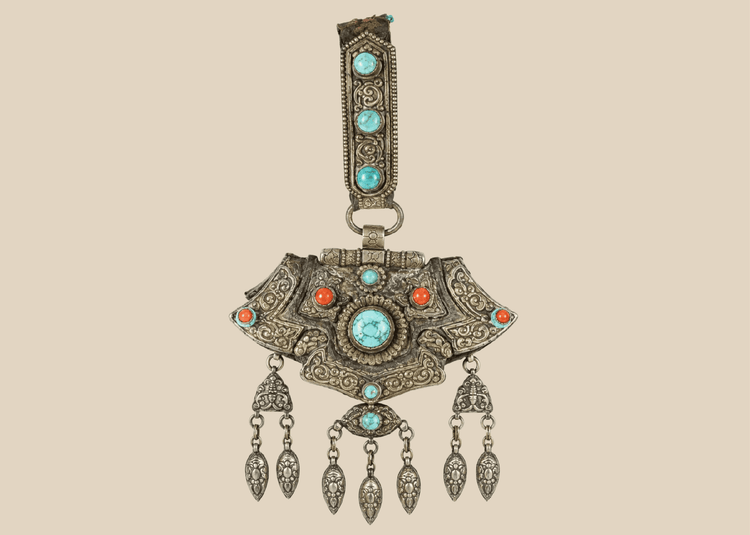
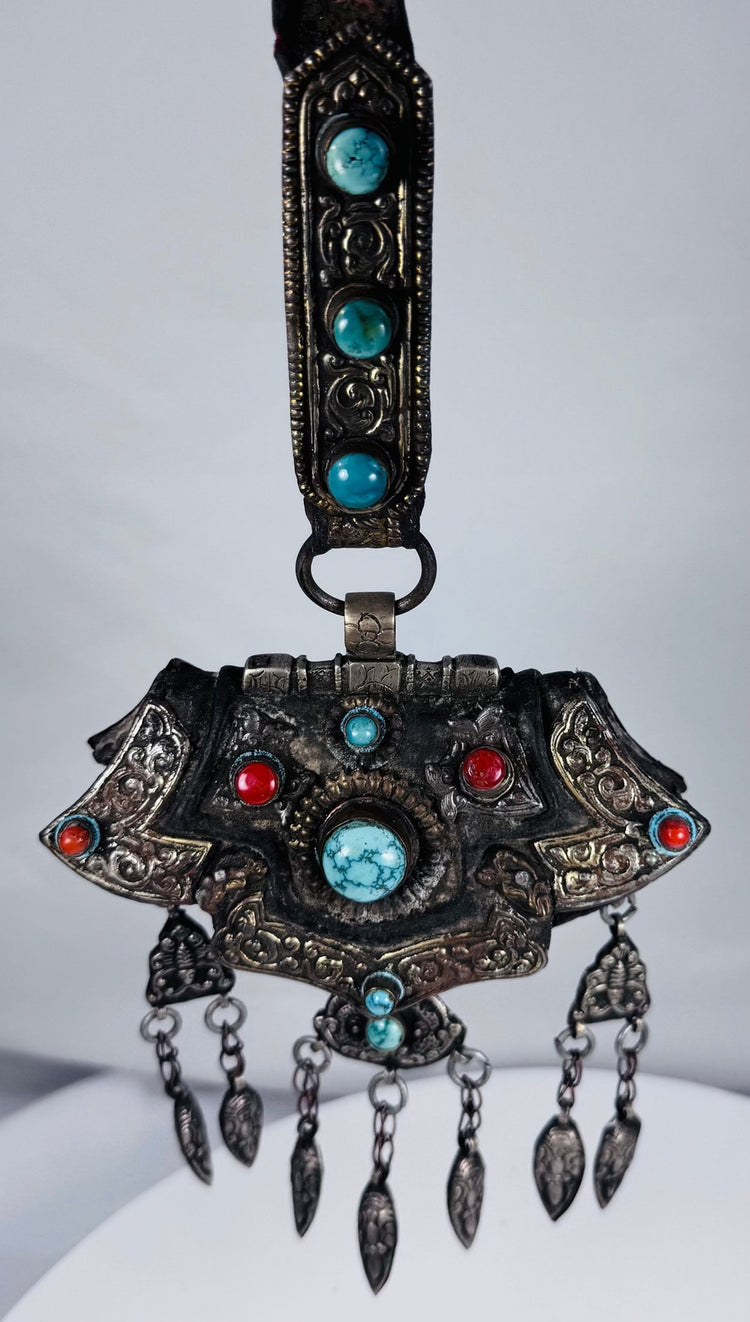
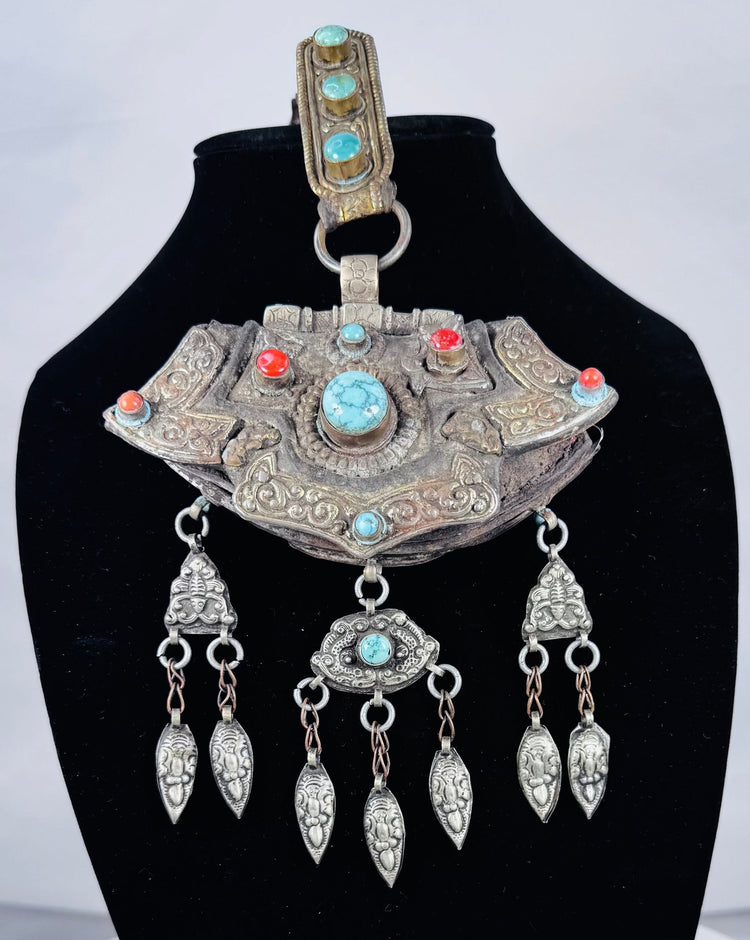
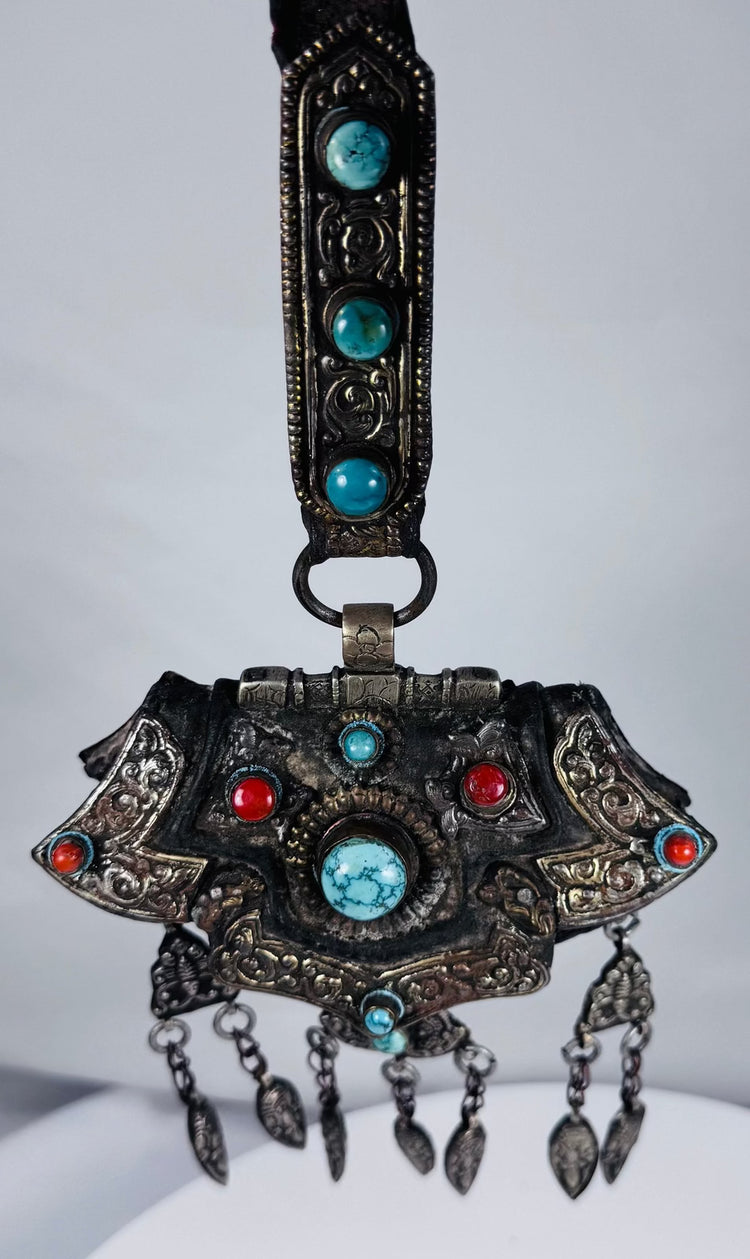
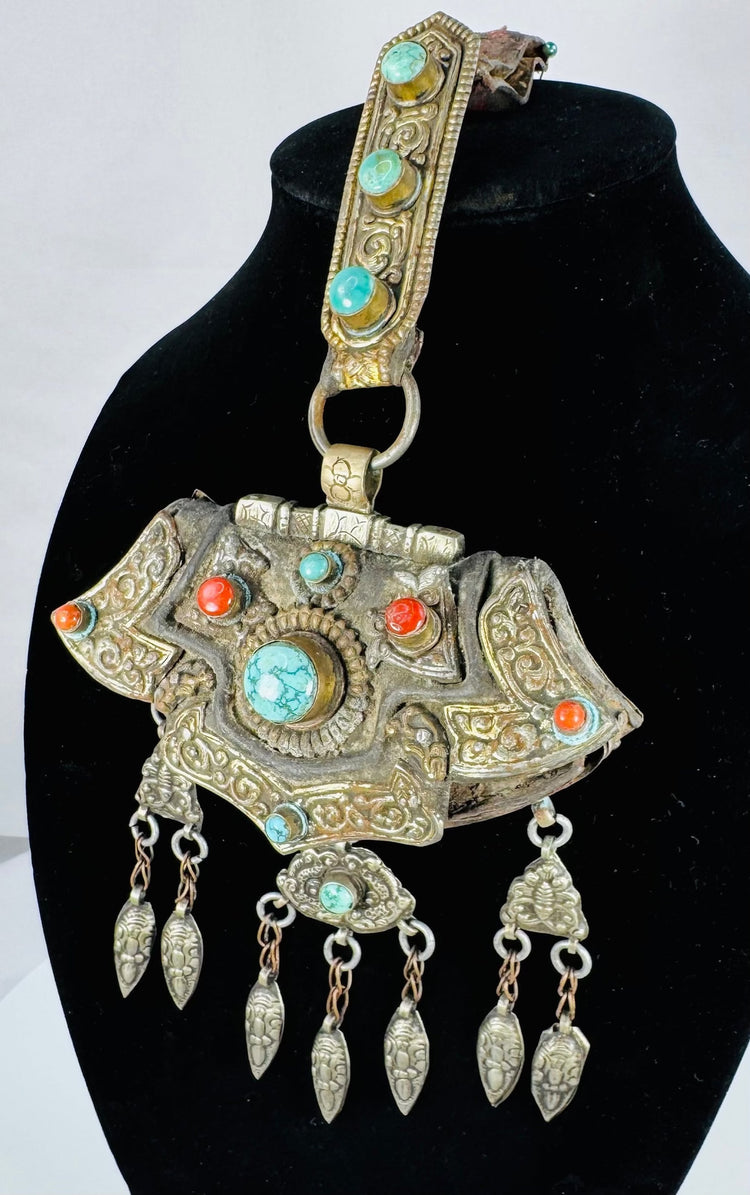
Este llamativo ornamento ceremonial del Himalaya es un ejemplo finamente elaborado de la metalistería decorativa tradicional tibetana, que combina el trabajo en metal repujado, engastes de piedras semipreciosas y elementos colgantes suspendidos. La forma se asemeja mucho a un gau (santuario portátil) tibetano tradicional o a un estuche de amuleto ornamental, aunque este ejemplo parece haber sido adaptado como colgante ceremonial u ornamento decorativo para el pecho.
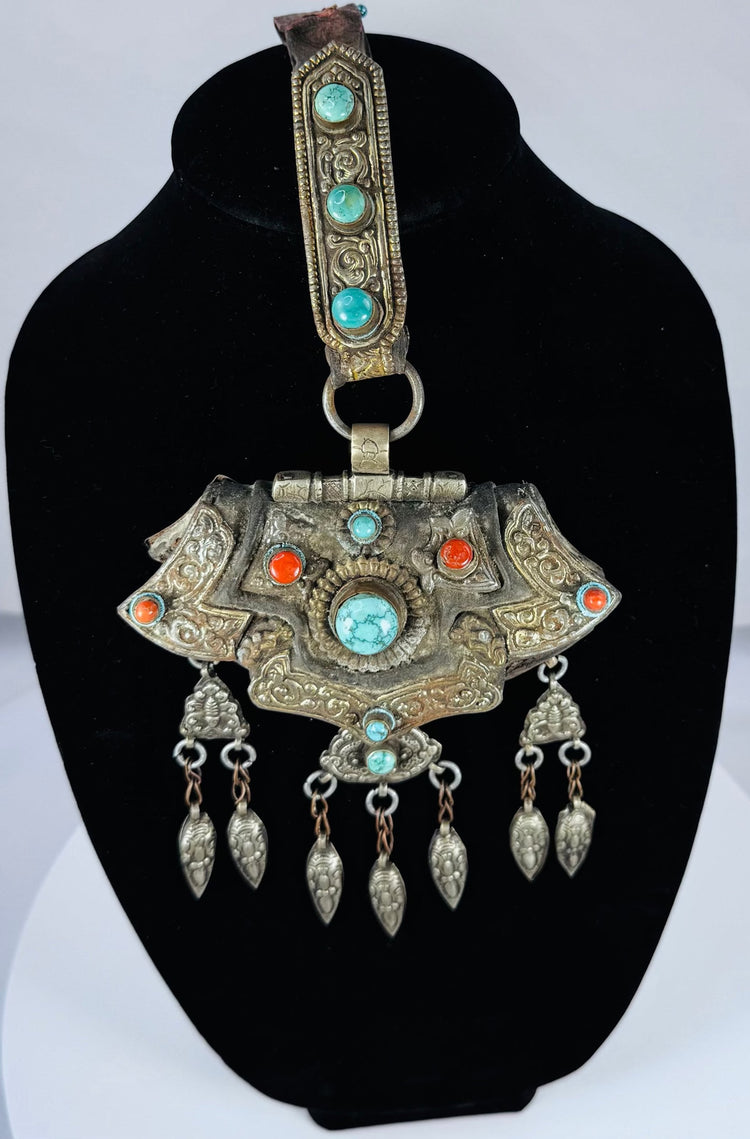
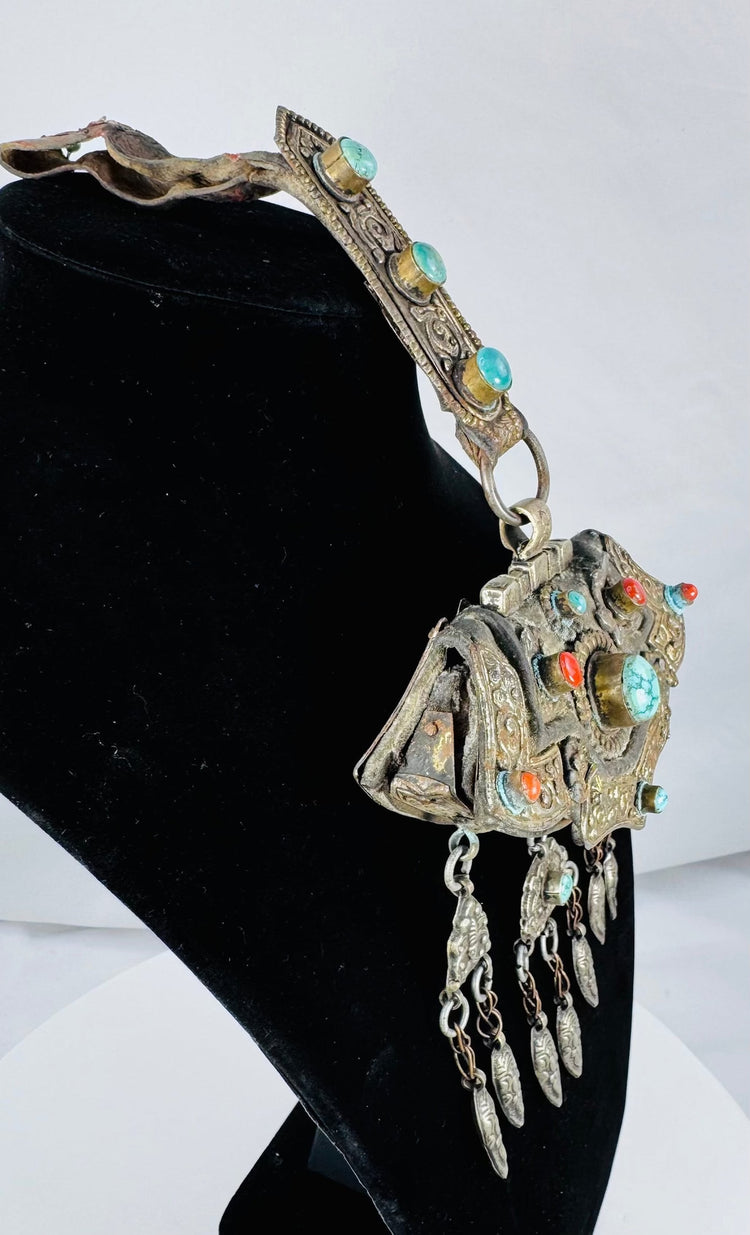
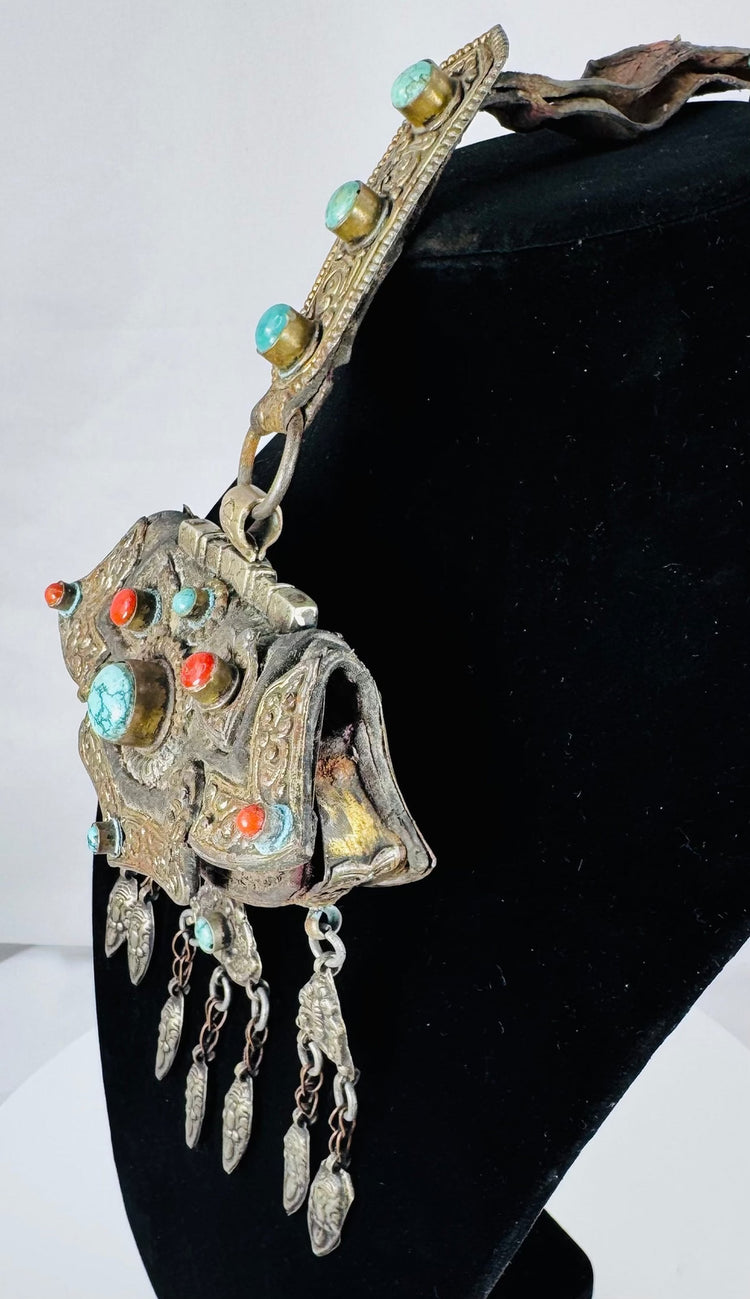
El frente está ricamente adornado con motivos florales y en espiral en relieve que rodean un cabujón central de turquesa. Otros engastes de turquesa y coral rojo decoran la superficie, creando un contraste vibrante contra el suelo de metal plateado. Dentro de la tradición budista tibetana, la turquesa y el coral han simbolizado durante mucho tiempo la protección, la prosperidad, el mérito espiritual y la longevidad. Suspendidos debajo del cuerpo principal hay múltiples colgantes articulados que terminan en gotas en forma de hoja que habrían creado un movimiento y sonido sutiles cuando se usaban durante ceremonias, festivales religiosos o como parte de la vestimenta tradicional.
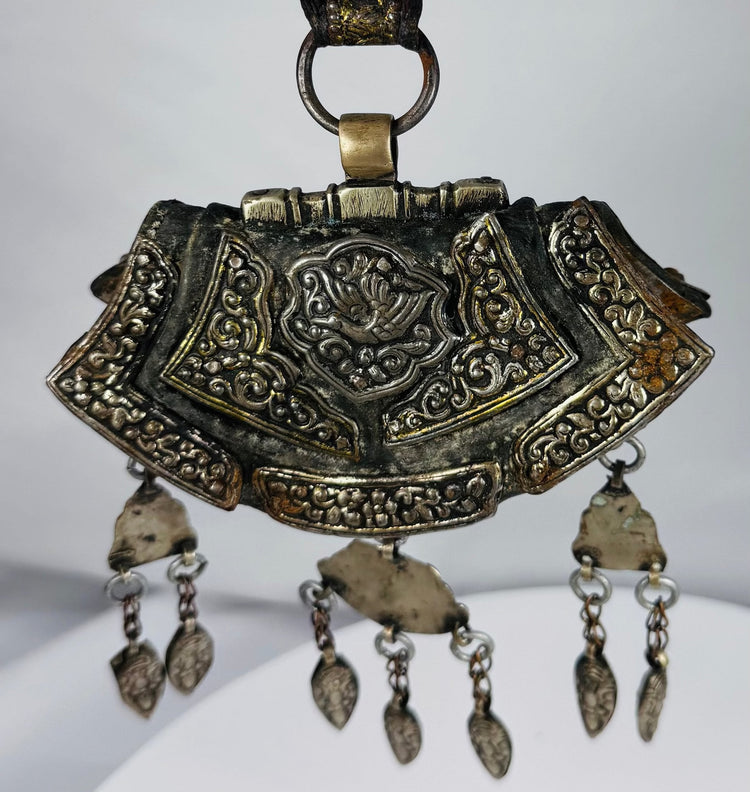
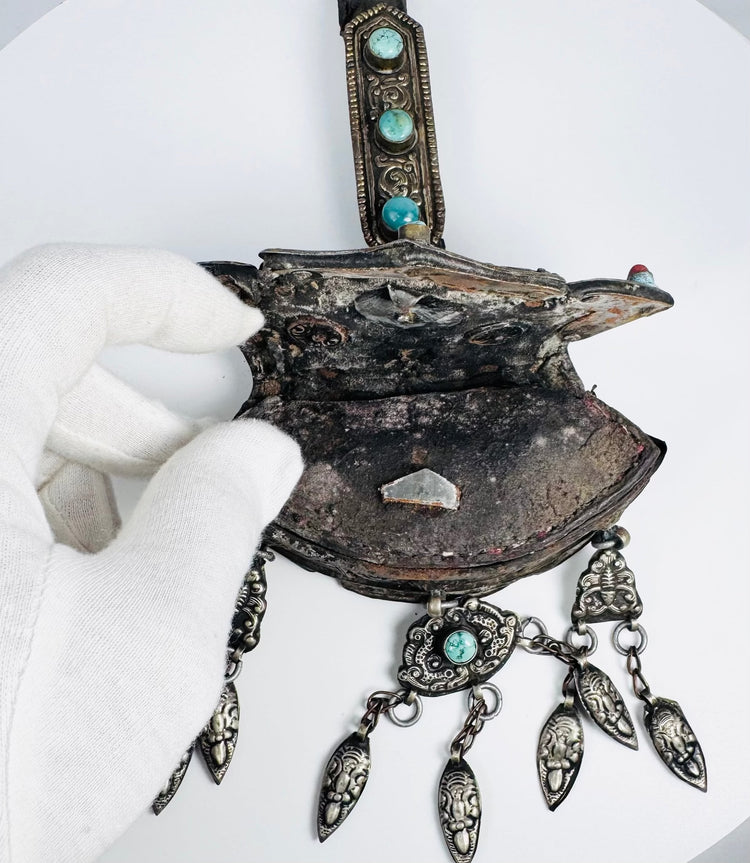
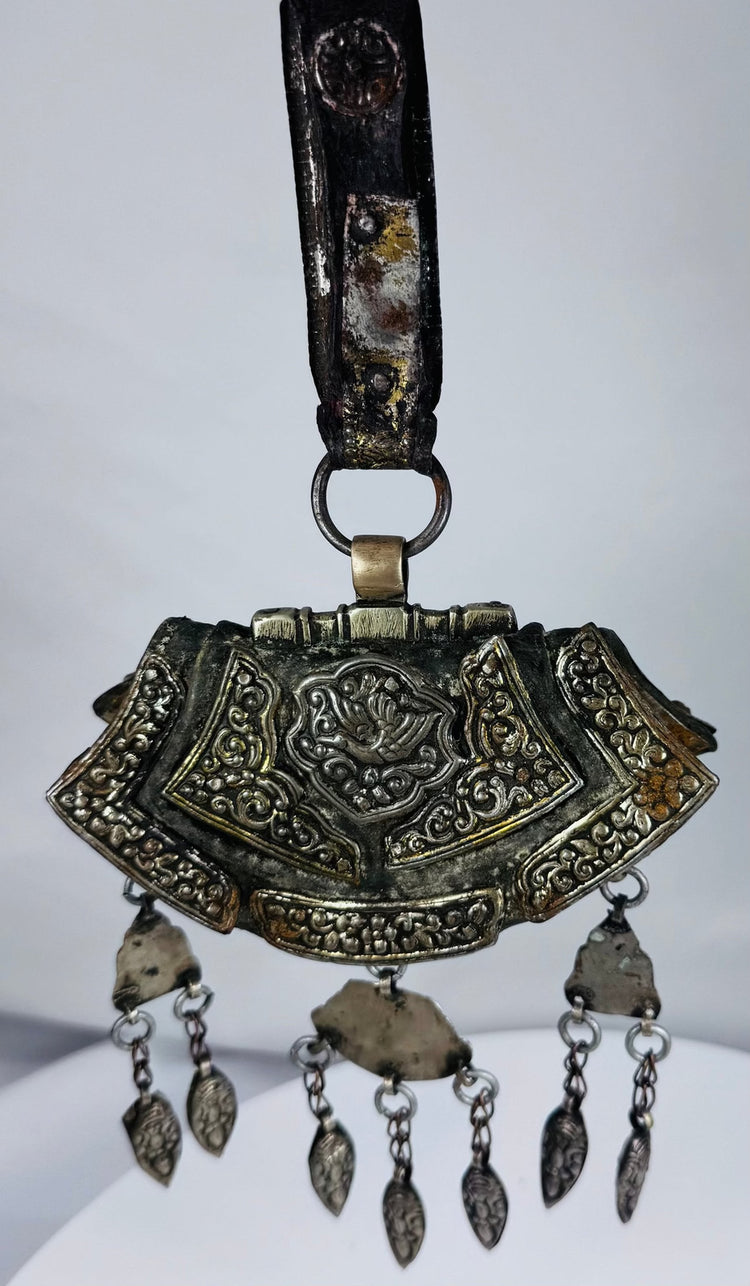
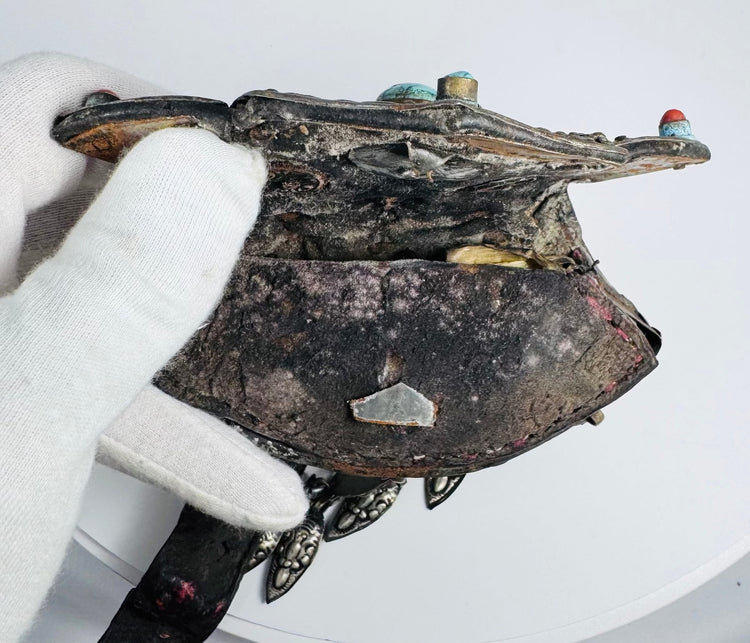
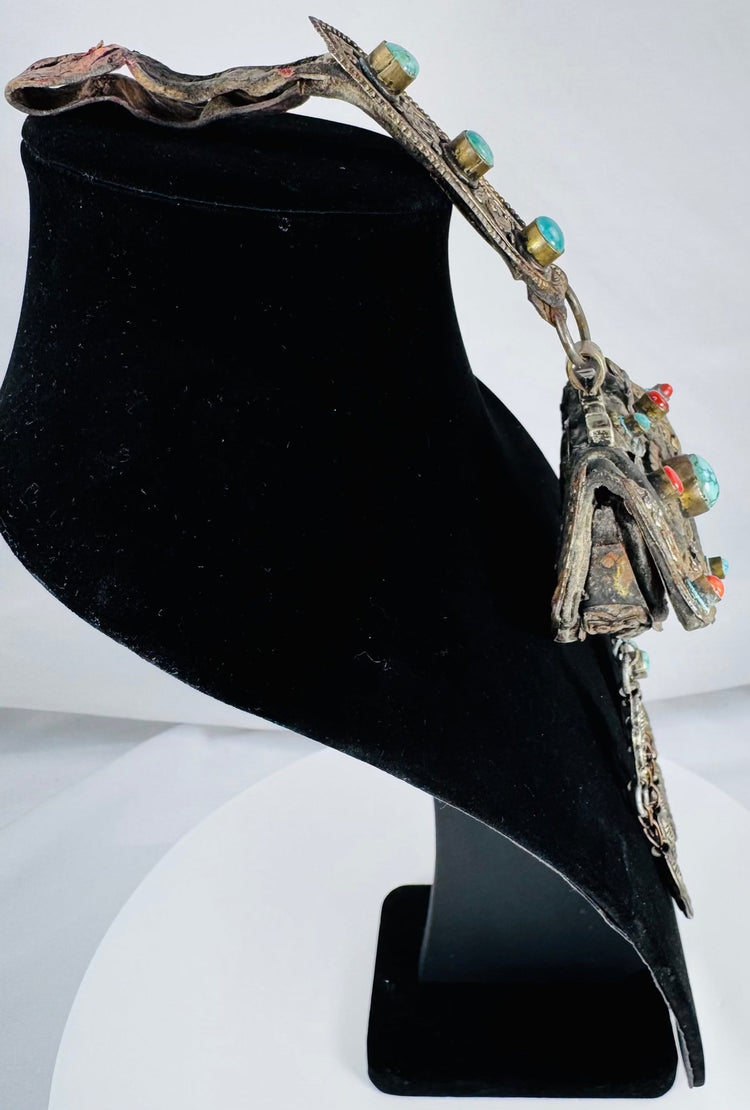
El reverso presenta un panel trasero repujado intrincadamente decorado con elementos suspendidos adicionales. La correa de suspensión textil que sobrevive conserva accesorios decorativos engastados con turquesa, mientras que el interior parece conservar restos de textiles históricos, papel o materiales devocionales, lo que sugiere que la pieza funcionó originalmente como un recipiente para amuletos o un santuario portátil destinado a albergar contenido sagrado como oraciones, reliquias u objetos benditos.
Características
- Ornamento ceremonial tradicional tibetano o del Himalaya
- Se asemeja a un santuario portátil gau tradicional o a un recipiente para amuletos
- Construcción de aleación de cobre plateado y latón
- Engastado con cabujones de turquesa y coral
- Rica decoración repujada floral y en espiral
- Múltiples colgantes articulados
- Conserva el elemento de suspensión textil original
- El interior conserva restos de contenido devocional histórico
Importancia cultural
Los santuarios portátiles conocidos como gau han ocupado durante mucho tiempo un lugar importante en la cultura budista tibetana, sirviendo tanto como objetos devocionales como amuletos protectores. Usados por monjes, peregrinos y practicantes laicos por igual, a menudo contenían oraciones sagradas, imágenes en miniatura de deidades, reliquias o materiales benditos que se creía que proporcionaban protección espiritual y buena fortuna. La incorporación de turquesa y coral realzó aún más su significado simbólico, reflejando riqueza, estatus, longevidad y devoción religiosa, al tiempo que convertía estos ornamentos en importantes expresiones tanto de la fe personal como de la tradición artística del Himalaya.
Condición
Presenta un desgaste significativo relacionado con la edad en toda la pieza, incluyendo oxidación, pérdida de superficie, deslustre, deterioro del textil, pérdidas en el revestimiento interior y desgaste en varios elementos decorativos. La suspensión textil muestra una edad y fragilidad considerables. Algunas piedras pueden representar reemplazos históricos o restauraciones posteriores. En general, la pieza conserva una apariencia envejecida atractiva, consistente con un uso ceremonial prolongado y conservación.
Dimensiones (aproximadas)
Altura: 12 in
Ancho: 5 in
Profundidad: 2 in
Edad (aproximada)
100–150 años de antigüedad
Procedencia
Anteriormente parte de una colección privada de Cheyenne, Wyoming, EE. UU. La colección se formó a lo largo de varias décadas con énfasis en el arte asiático, himalayo y etnográfico, lo que refleja una larga apreciación por los objetos devocionales tradicionales y los artefactos culturales. Este ornamento ceremonial formó parte de esa colección cuidadosamente curada antes de ser adquirido por Relic & Rarity.
Más información
Descubra la historia y el simbolismo de los santuarios portátiles tibetanos a través de Sobre el Gau: Un vistazo a los santuarios portátiles del Tíbet en el Museo Bowers
Explore nuestra Colección de Reliquias Religiosas y Espirituales
Descripción
Contexto histórico y origen
Región: Tíbet / Región del Himalaya
Material: Aleación de cobre plateado, latón, turquesa, coral, textil y componentes metálicos mixtos
Periodo: Finales del siglo XIX – Principios del siglo XX
Descripción
Este llamativo ornamento ceremonial del Himalaya es un ejemplo finamente elaborado de la metalistería decorativa tradicional tibetana, que combina el trabajo en metal repujado, engastes de piedras semipreciosas y elementos colgantes suspendidos. La forma se asemeja mucho a un gau (santuario portátil) tibetano tradicional o a un estuche de amuleto ornamental, aunque este ejemplo parece haber sido adaptado como colgante ceremonial u ornamento decorativo para el pecho.
El frente está ricamente adornado con motivos florales y en espiral en relieve que rodean un cabujón central de turquesa. Otros engastes de turquesa y coral rojo decoran la superficie, creando un contraste vibrante contra el suelo de metal plateado. Dentro de la tradición budista tibetana, la turquesa y el coral han simbolizado durante mucho tiempo la protección, la prosperidad, el mérito espiritual y la longevidad. Suspendidos debajo del cuerpo principal hay múltiples colgantes articulados que terminan en gotas en forma de hoja que habrían creado un movimiento y sonido sutiles cuando se usaban durante ceremonias, festivales religiosos o como parte de la vestimenta tradicional.
El reverso presenta un panel trasero repujado intrincadamente decorado con elementos suspendidos adicionales. La correa de suspensión textil que sobrevive conserva accesorios decorativos engastados con turquesa, mientras que el interior parece conservar restos de textiles históricos, papel o materiales devocionales, lo que sugiere que la pieza funcionó originalmente como un recipiente para amuletos o un santuario portátil destinado a albergar contenido sagrado como oraciones, reliquias u objetos benditos.
Características
- Ornamento ceremonial tradicional tibetano o del Himalaya
- Se asemeja a un santuario portátil gau tradicional o a un recipiente para amuletos
- Construcción de aleación de cobre plateado y latón
- Engastado con cabujones de turquesa y coral
- Rica decoración repujada floral y en espiral
- Múltiples colgantes articulados
- Conserva el elemento de suspensión textil original
- El interior conserva restos de contenido devocional histórico
Importancia cultural
Los santuarios portátiles conocidos como gau han ocupado durante mucho tiempo un lugar importante en la cultura budista tibetana, sirviendo tanto como objetos devocionales como amuletos protectores. Usados por monjes, peregrinos y practicantes laicos por igual, a menudo contenían oraciones sagradas, imágenes en miniatura de deidades, reliquias o materiales benditos que se creía que proporcionaban protección espiritual y buena fortuna. La incorporación de turquesa y coral realzó aún más su significado simbólico, reflejando riqueza, estatus, longevidad y devoción religiosa, al tiempo que convertía estos ornamentos en importantes expresiones tanto de la fe personal como de la tradición artística del Himalaya.
Condición
Presenta un desgaste significativo relacionado con la edad en toda la pieza, incluyendo oxidación, pérdida de superficie, deslustre, deterioro del textil, pérdidas en el revestimiento interior y desgaste en varios elementos decorativos. La suspensión textil muestra una edad y fragilidad considerables. Algunas piedras pueden representar reemplazos históricos o restauraciones posteriores. En general, la pieza conserva una apariencia envejecida atractiva, consistente con un uso ceremonial prolongado y conservación.
Dimensiones (aproximadas)
Altura: 12 in
Ancho: 5 in
Profundidad: 2 in
Edad (aproximada)
100–150 años de antigüedad
Procedencia
Anteriormente parte de una colección privada de Cheyenne, Wyoming, EE. UU. La colección se formó a lo largo de varias décadas con énfasis en el arte asiático, himalayo y etnográfico, lo que refleja una larga apreciación por los objetos devocionales tradicionales y los artefactos culturales. Este ornamento ceremonial formó parte de esa colección cuidadosamente curada antes de ser adquirido por Relic & Rarity.
Más información
Descubra la historia y el simbolismo de los santuarios portátiles tibetanos a través de Sobre el Gau: Un vistazo a los santuarios portátiles del Tíbet en el Museo Bowers
Explore nuestra Colección de Reliquias Religiosas y Espirituales
También te puede interesar
