

Lampe à huile carthaginoise antique en terre cuite en forme de soucoupe avec monnaies en bronze associées | Circa Ve siècle avant J.-C. – Ier siècle après J.-C.
- Prix habituel
- $1,000.00
- Prix soldé
- $1,000.00
- Prix habituel
Impossible de charger la disponibilité du service de retrait


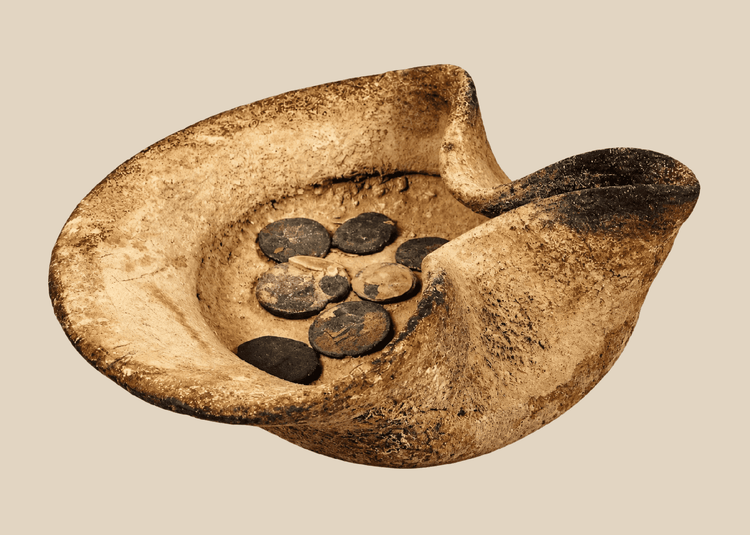
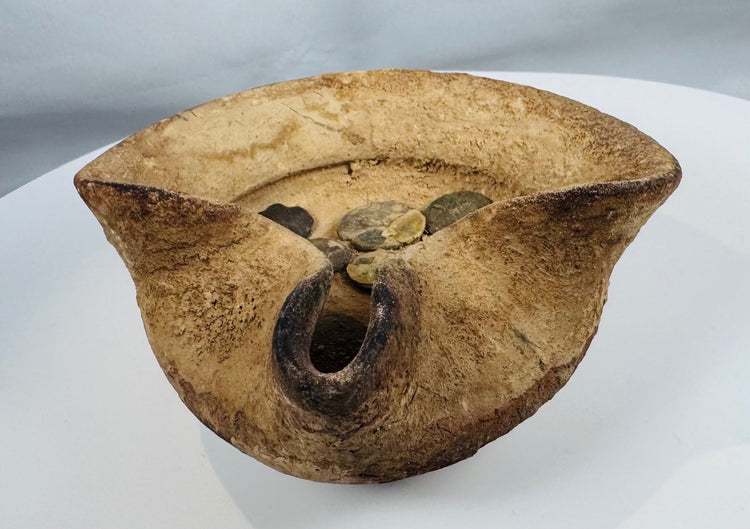
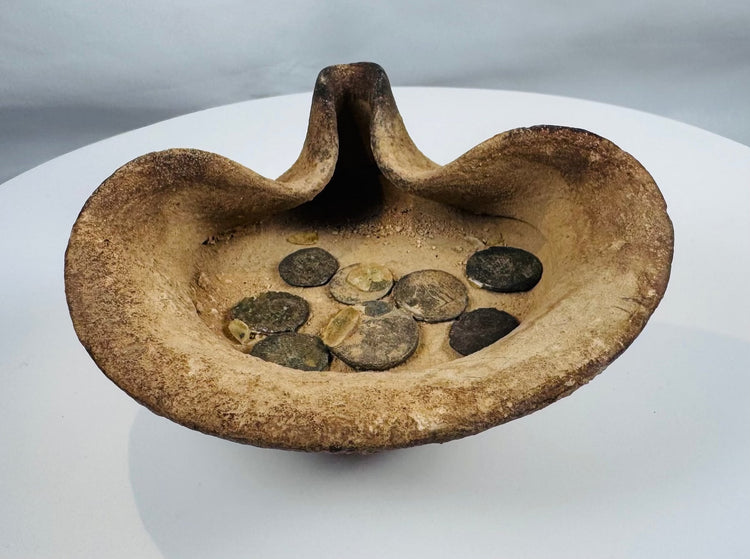
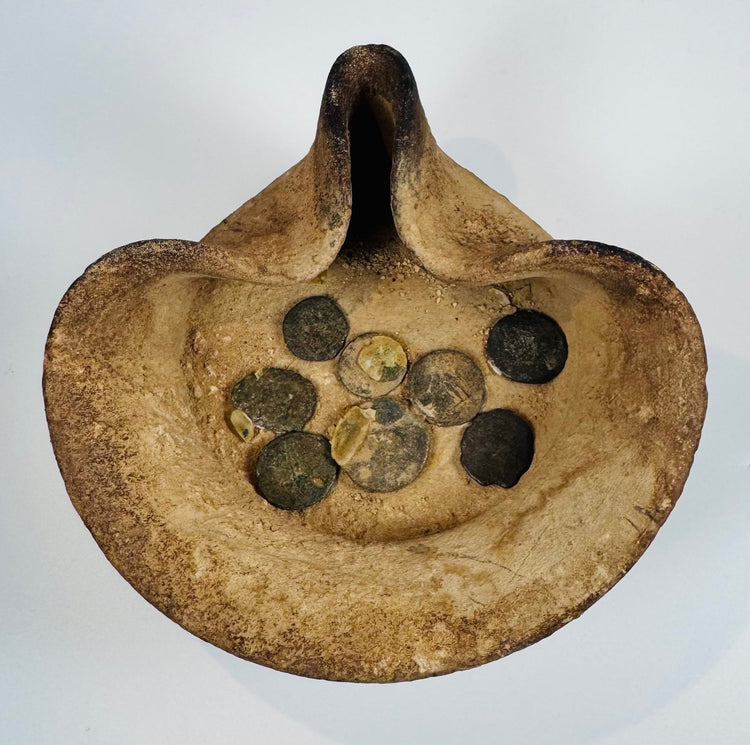

Lampe à huile carthaginoise antique en terre cuite en forme de soucoupe avec monnaies en bronze associées | Circa Ve siècle avant J.-C. – Ier siècle après J.-C.
Description
Plus
Moins
Contexte historique et origine
Région : Carthage, Afrique du Nord romaine (Tunisie actuelle)
Matériau : Poterie en terre cuite avec des pièces de monnaie en bronze associées
Période : Fin de la période punique au début de la période romaine, environ du Ve siècle avant J.-C. au Ier siècle après J.-C.
Description
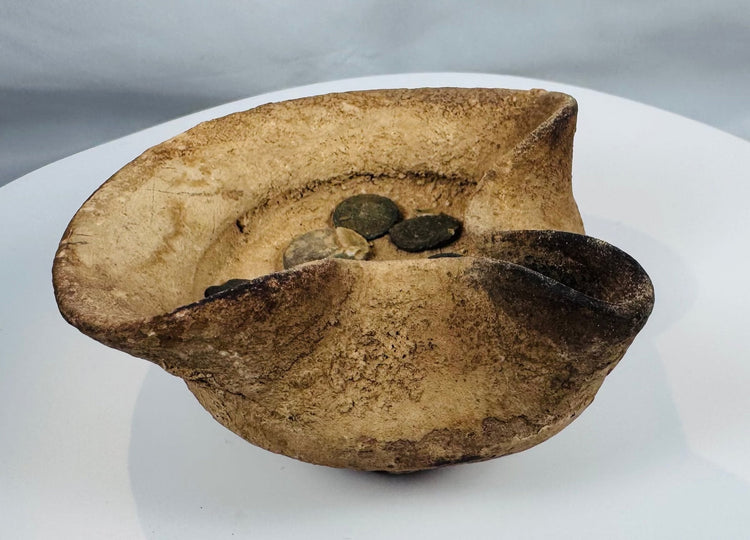
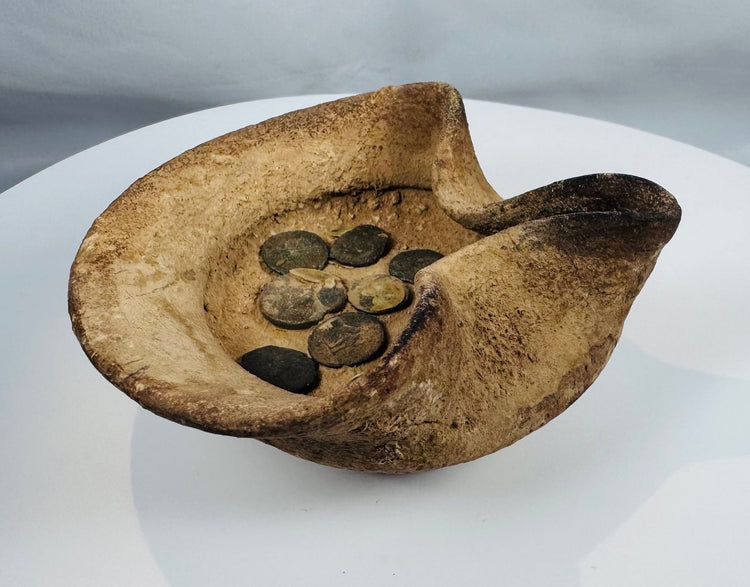
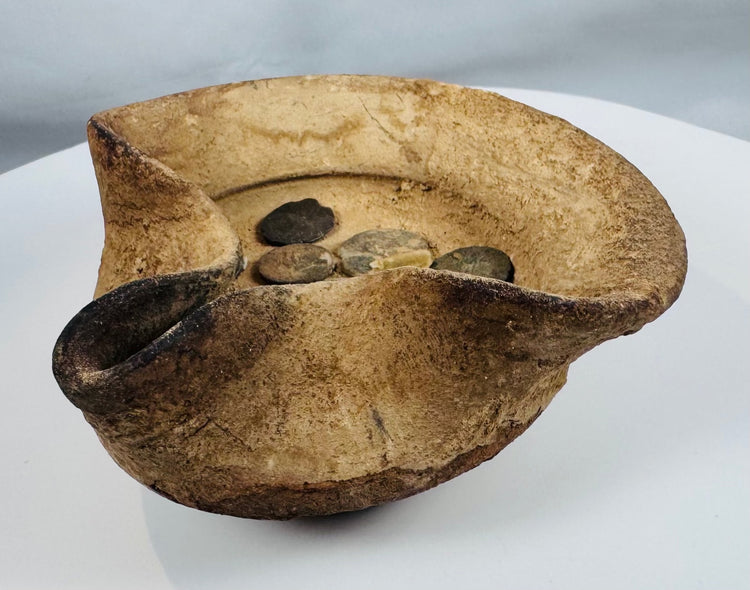
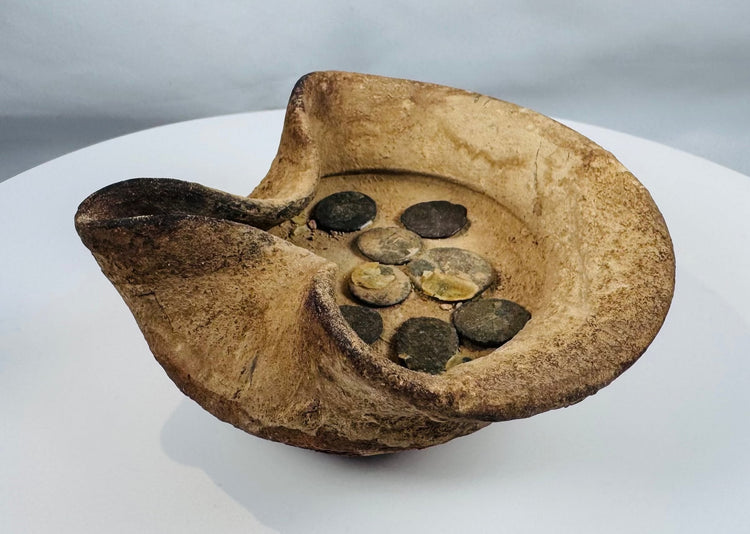
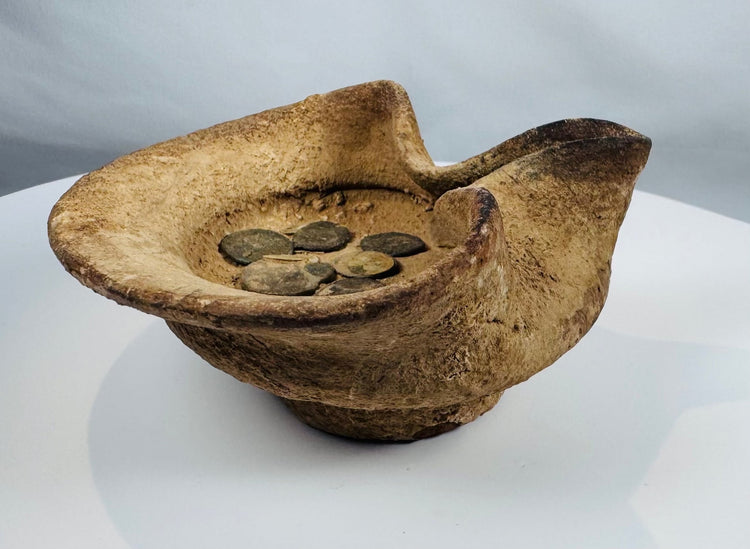
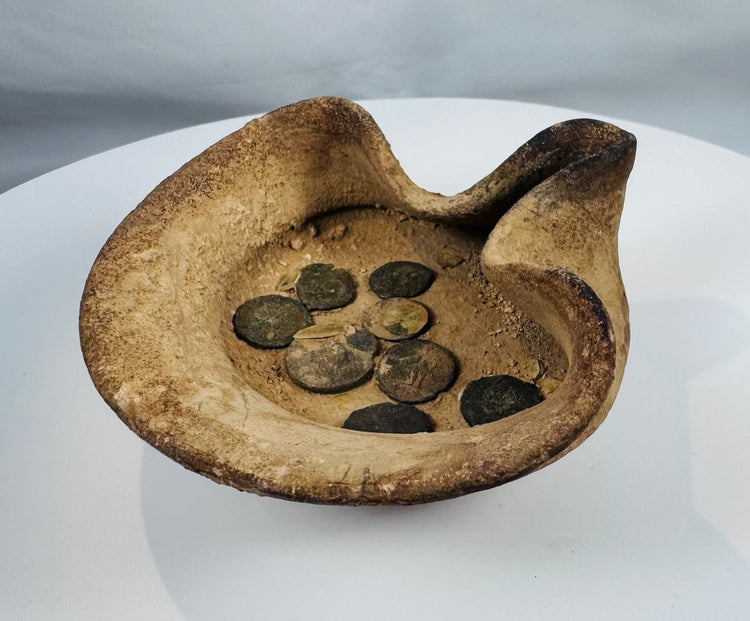
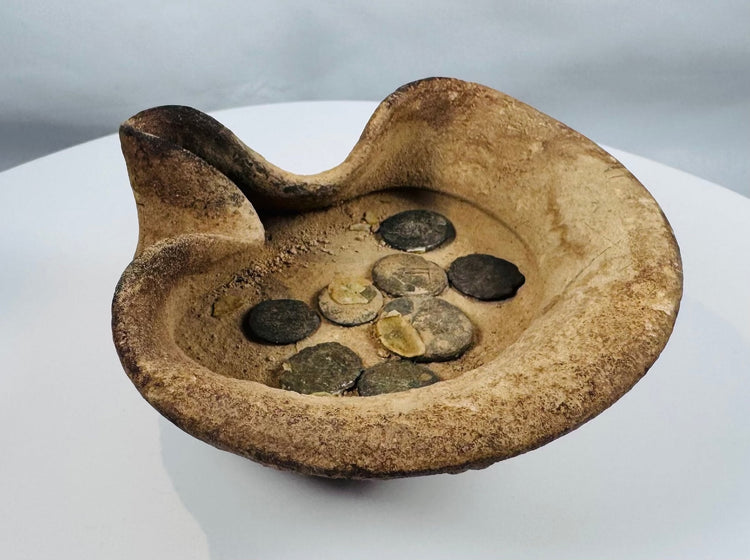
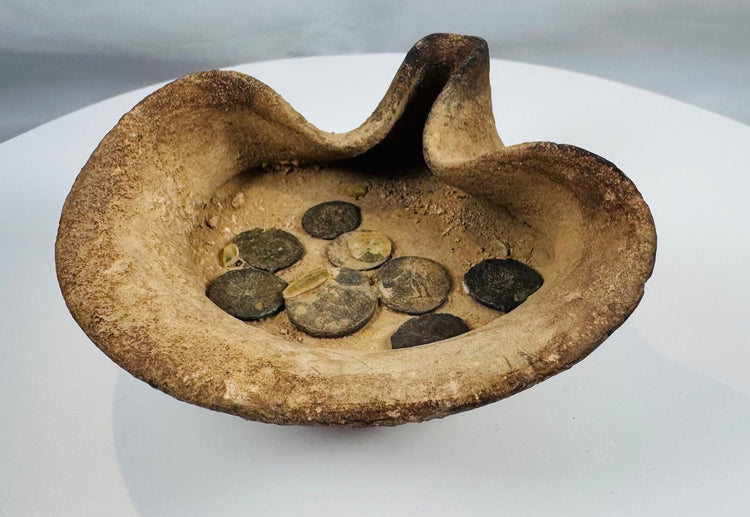
Cette ancienne lampe à huile en terre cuite en forme de soucoupe provient de la ville historique de Carthage, l'un des centres les plus influents du monde méditerranéen antique. Façonnée à la main à partir d'argile de poterie, la lampe présente un réservoir ouvert peu profond avec un rebord distinctif plié et pincé, conçu pour soutenir une mèche tout en contenant l'huile de la lampe. Cette conception simple mais efficace représente l'une des formes d'éclairage artificiel les plus anciennes et les plus durables utilisées tout au long de l'Antiquité.
Caractéristiques
- Lampe à huile romaine ancienne en terre cuite en forme de soucoupe
- Attribuée à Carthage, Afrique du Nord romaine
- Construction distinctive à rebord plié et pincé, façonnée à la main
- Accompagnée d'anciennes pièces de monnaie en bronze
- Surfaces archéologiques riches et patine terreuse
- Accompagnée d'une étiquette de collectionneur française vintage
- Excellente pièce d'exposition illustrant la vie quotidienne et le commerce romains
Signification culturelle
Avant l'adoption généralisée des lampes fermées moulées, les lampes à huile en forme de soucoupe constituaient une source d'éclairage pratique et économique dans tout le monde méditerranéen antique. Carthage était l'une des villes les plus puissantes et prospères de l'Antiquité, d'abord comme capitale de la civilisation punique, puis comme centre provincial romain majeur. Des artefacts tels que cette lampe offrent un aperçu précieux de la vie domestique, des pratiques technologiques et des réseaux commerciaux qui ont façonné l'existence quotidienne à travers des siècles d'histoire nord-africaine.
État
État ancien avec l'usure archéologique attendue, les dépôts de surface, les imperfections de cuisson, les pertes mineures et l'usure liée à l'âge. Les pièces associées présentent une patine et une usure de circulation importantes, conformes à leur âge. Stable et très présentable. Veuillez examiner attentivement les photographies pour les détails de l'état.
Dimensions (approximatives)
Largeur : 5 pouces
Profondeur : 5 pouces
Hauteur : 2,5 pouces
Âge (approximatif)
2 000–2 500 ans
Provenance
Accompagnée d'une ancienne étiquette de collectionneur français indiquant :
"Très rare plat avec monnaies, fouilles archéologiques à Carthage. Empire Romain, Ier siècle."
(Traduit : "Très rare plat avec monnaies, fouilles archéologiques à Carthage. Empire romain, 1er siècle.")
Par la suite, conservée dans une collection privée à Montréal, QC, Canada.
En savoir plus
Découvrez l'histoire et la fonction des lampes à huile anciennes en forme de soucoupe à travers Le Metropolitan Museum of Art
Explorez notre Collection d'artefacts romains et grecs
Description
Contexte historique et origine
Région : Carthage, Afrique du Nord romaine (Tunisie actuelle)
Matériau : Poterie en terre cuite avec des pièces de monnaie en bronze associées
Période : Fin de la période punique au début de la période romaine, environ du Ve siècle avant J.-C. au Ier siècle après J.-C.
Description
Cette ancienne lampe à huile en terre cuite en forme de soucoupe provient de la ville historique de Carthage, l'un des centres les plus influents du monde méditerranéen antique. Façonnée à la main à partir d'argile de poterie, la lampe présente un réservoir ouvert peu profond avec un rebord distinctif plié et pincé, conçu pour soutenir une mèche tout en contenant l'huile de la lampe. Cette conception simple mais efficace représente l'une des formes d'éclairage artificiel les plus anciennes et les plus durables utilisées tout au long de l'Antiquité.
Caractéristiques
- Lampe à huile romaine ancienne en terre cuite en forme de soucoupe
- Attribuée à Carthage, Afrique du Nord romaine
- Construction distinctive à rebord plié et pincé, façonnée à la main
- Accompagnée d'anciennes pièces de monnaie en bronze
- Surfaces archéologiques riches et patine terreuse
- Accompagnée d'une étiquette de collectionneur française vintage
- Excellente pièce d'exposition illustrant la vie quotidienne et le commerce romains
Signification culturelle
Avant l'adoption généralisée des lampes fermées moulées, les lampes à huile en forme de soucoupe constituaient une source d'éclairage pratique et économique dans tout le monde méditerranéen antique. Carthage était l'une des villes les plus puissantes et prospères de l'Antiquité, d'abord comme capitale de la civilisation punique, puis comme centre provincial romain majeur. Des artefacts tels que cette lampe offrent un aperçu précieux de la vie domestique, des pratiques technologiques et des réseaux commerciaux qui ont façonné l'existence quotidienne à travers des siècles d'histoire nord-africaine.
État
État ancien avec l'usure archéologique attendue, les dépôts de surface, les imperfections de cuisson, les pertes mineures et l'usure liée à l'âge. Les pièces associées présentent une patine et une usure de circulation importantes, conformes à leur âge. Stable et très présentable. Veuillez examiner attentivement les photographies pour les détails de l'état.
Dimensions (approximatives)
Largeur : 5 pouces
Profondeur : 5 pouces
Hauteur : 2,5 pouces
Âge (approximatif)
2 000–2 500 ans
Provenance
Accompagnée d'une ancienne étiquette de collectionneur français indiquant :
"Très rare plat avec monnaies, fouilles archéologiques à Carthage. Empire Romain, Ier siècle."
(Traduit : "Très rare plat avec monnaies, fouilles archéologiques à Carthage. Empire romain, 1er siècle.")
Par la suite, conservée dans une collection privée à Montréal, QC, Canada.
En savoir plus
Découvrez l'histoire et la fonction des lampes à huile anciennes en forme de soucoupe à travers Le Metropolitan Museum of Art
Explorez notre Collection d'artefacts romains et grecs
Vous aimerez peut-être aussi
