



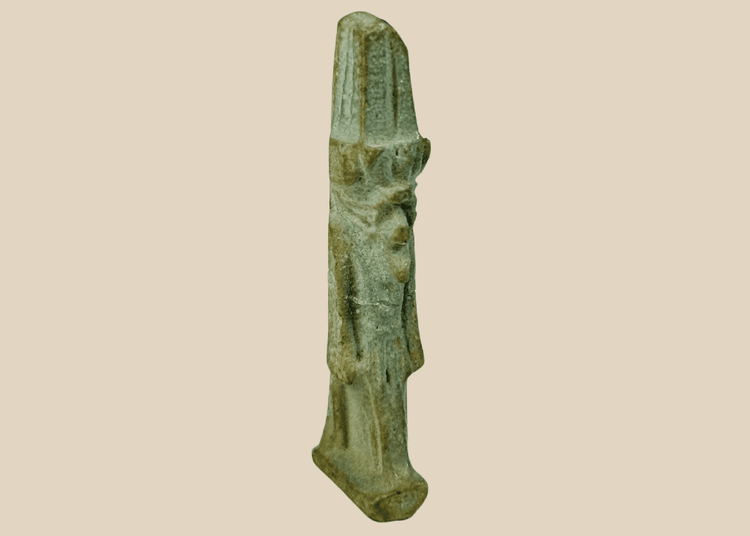
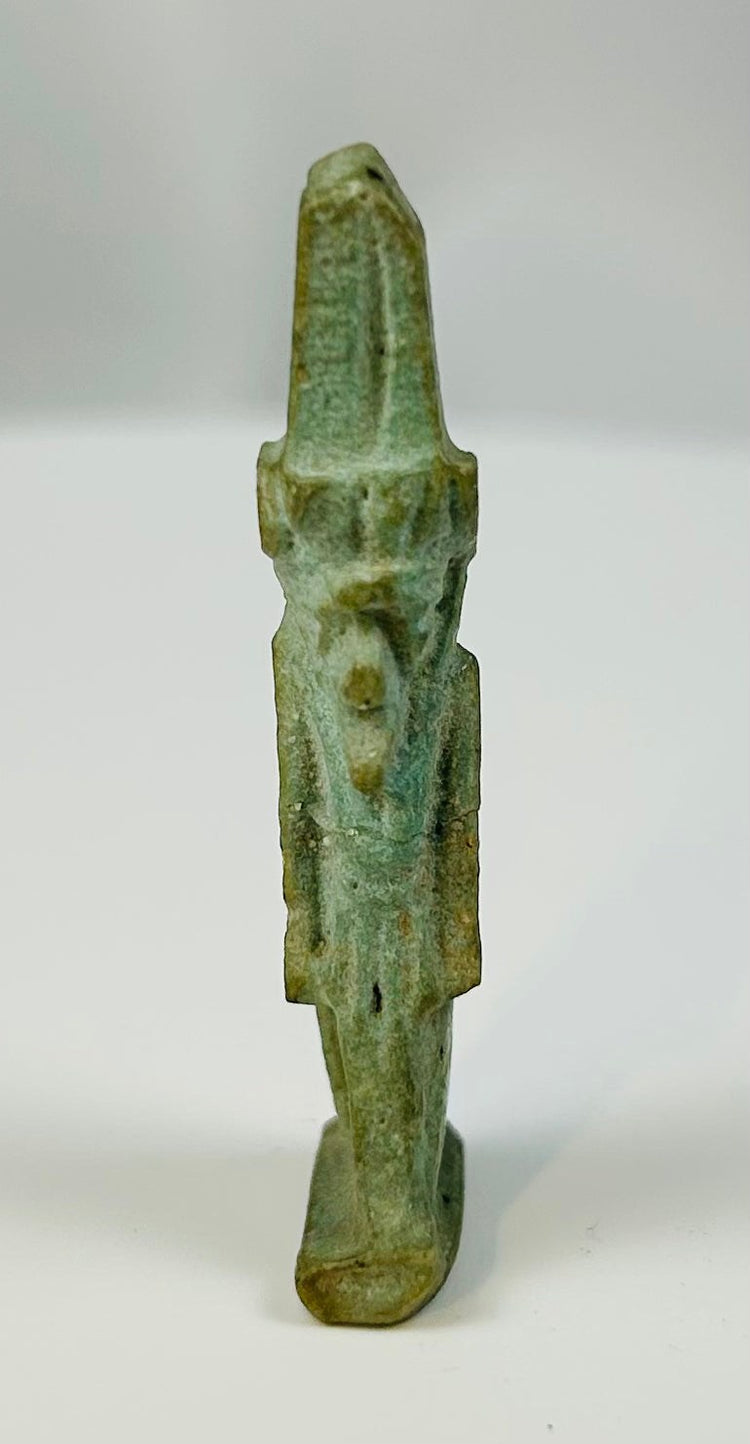
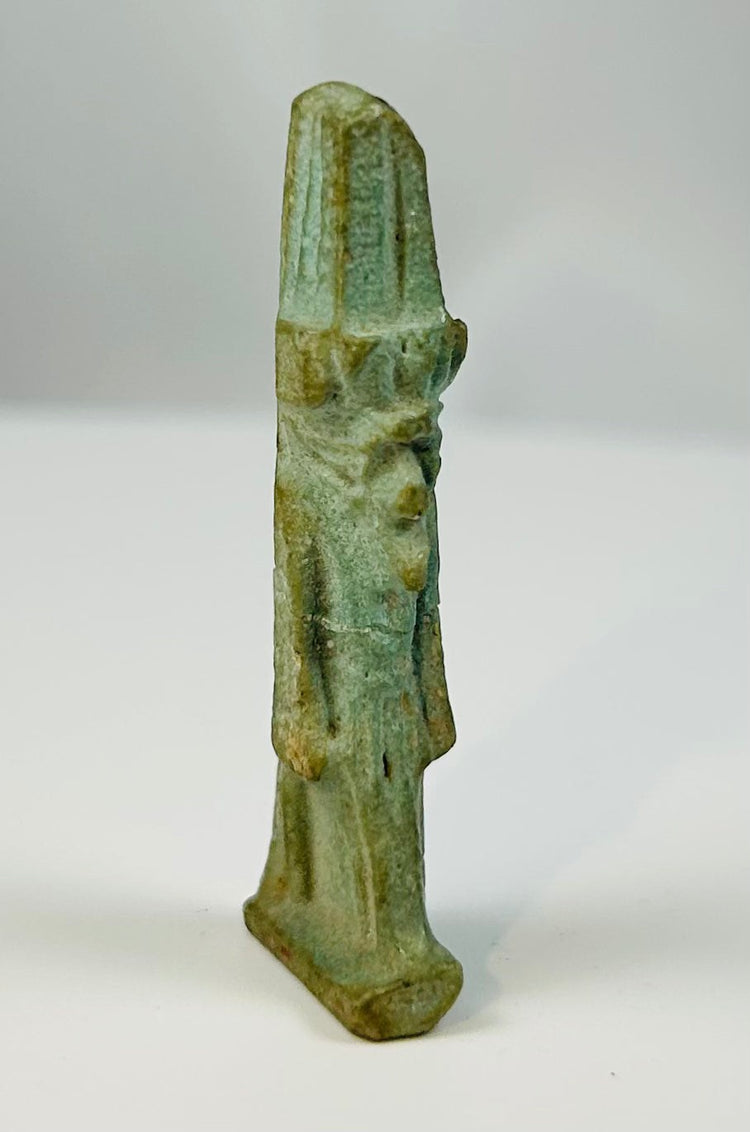
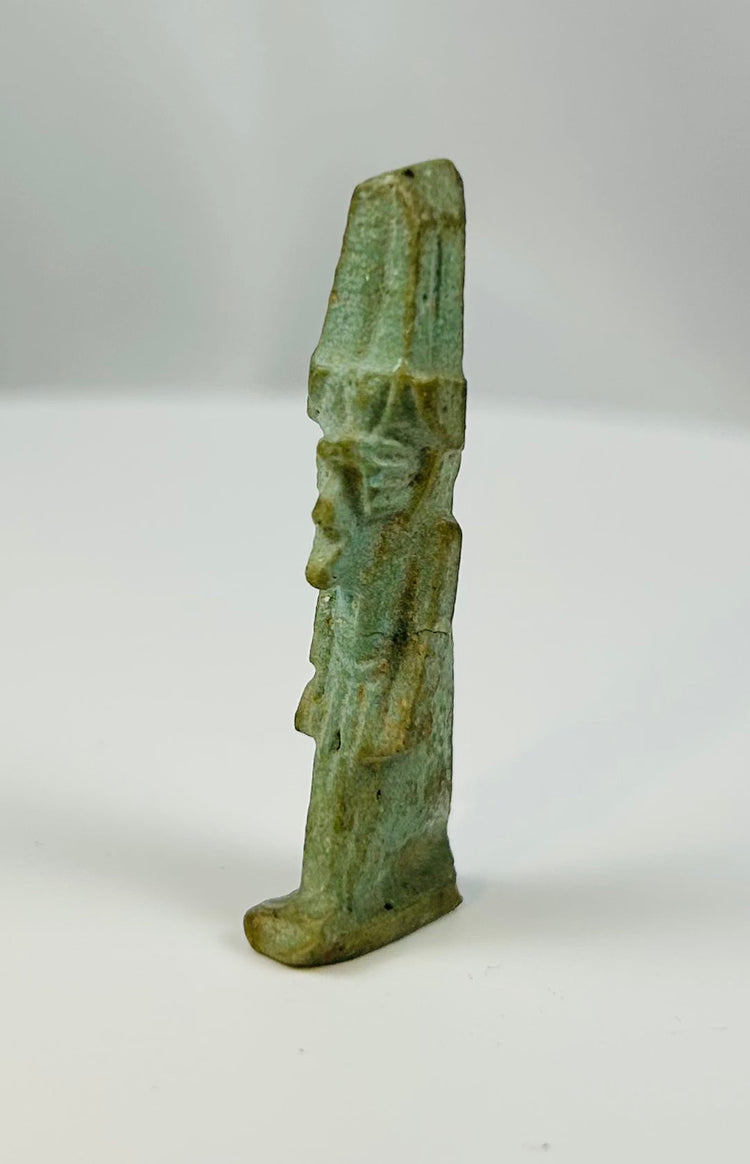
Égypte ancienne | Figurine en faïence d'une divinité couronnée de lotus | Basse Époque – Ptolémaïque | Vers 664-30 av. J.-C.
- Prix habituel
- $450.00
- Prix soldé
- $450.00
- Prix habituel
Impossible de charger la disponibilité du service de retrait


Égypte ancienne | Figurine en faïence d'une divinité couronnée de lotus | Basse Époque – Ptolémaïque | Vers 664-30 av. J.-C.
Description
Plus
Moins
Contexte historique et origine
Région : Égypte
Matériau : Faïence égyptienne (composition émaillée)
Période : Basse époque à la période ptolémaïque, 664-30 av. J.-C.
Description
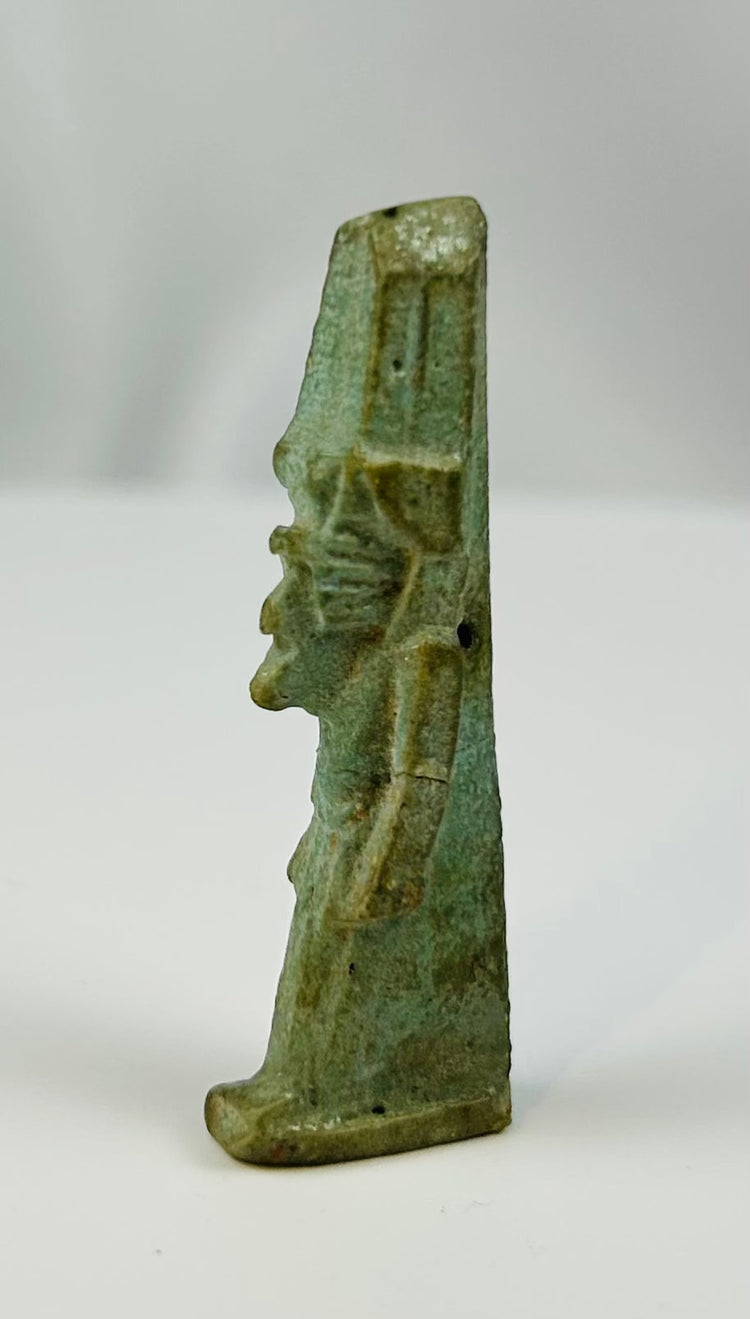
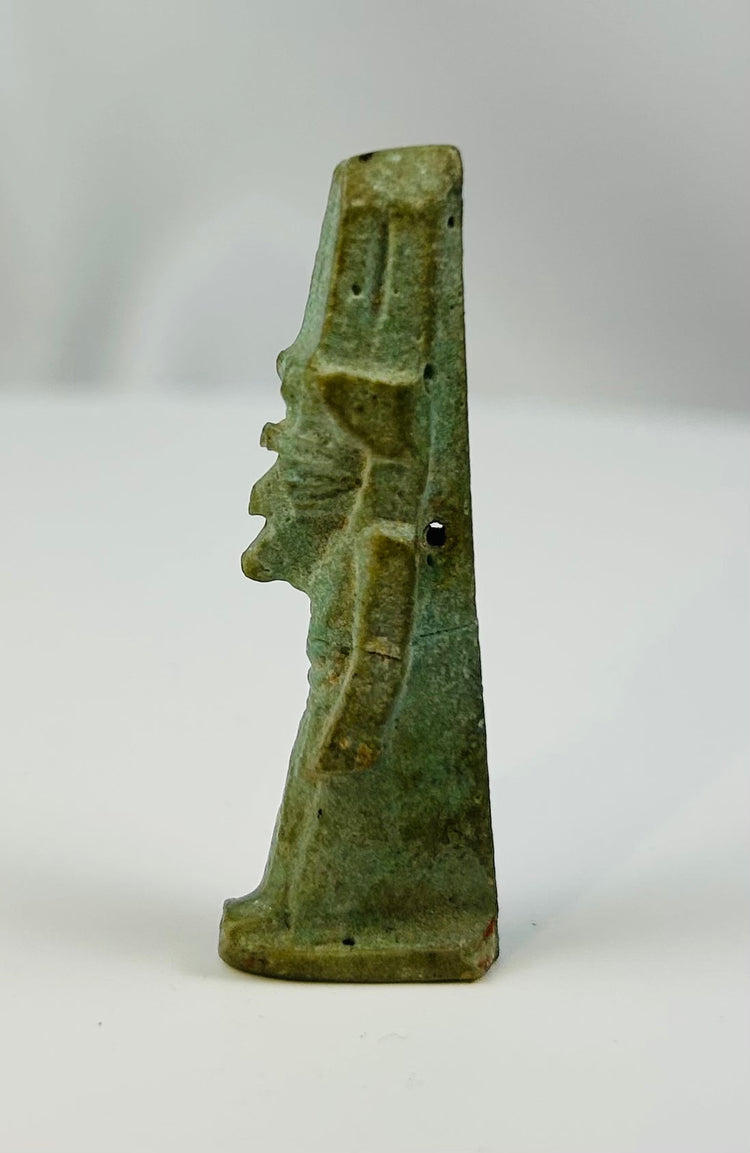
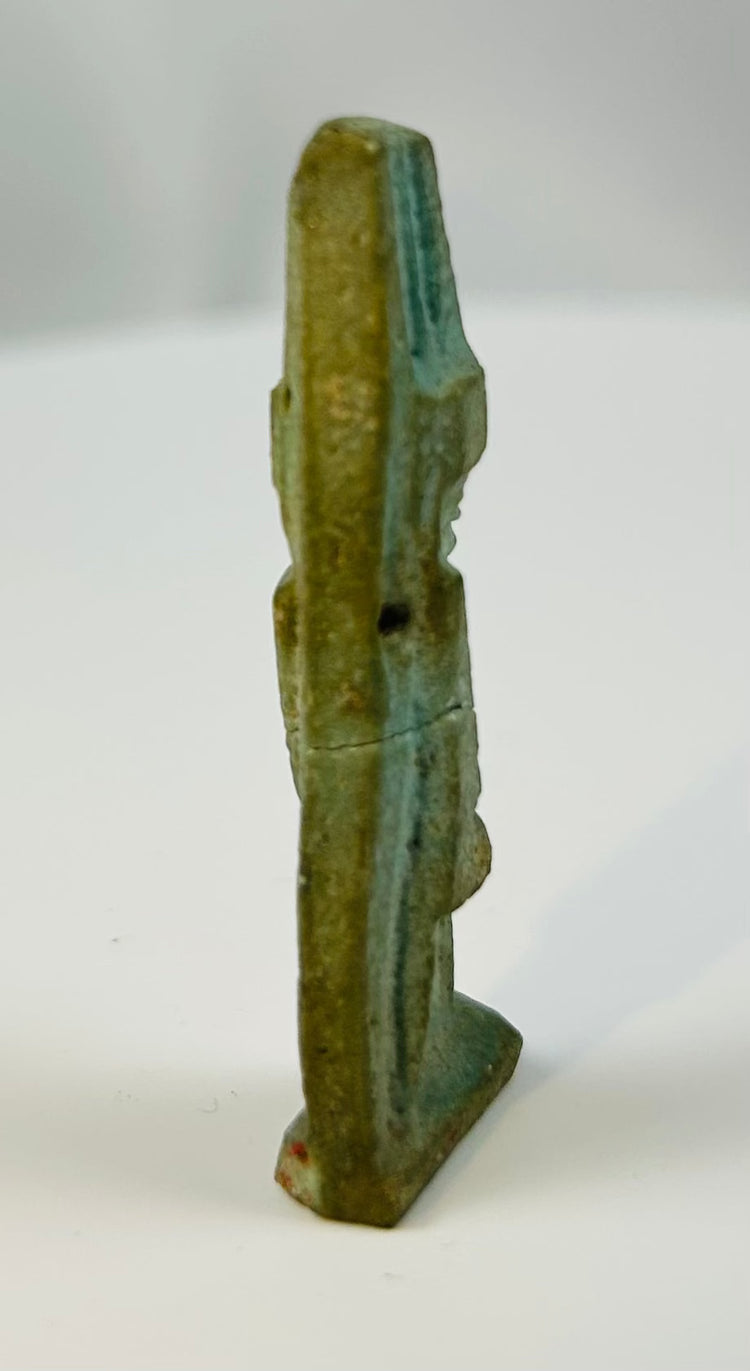
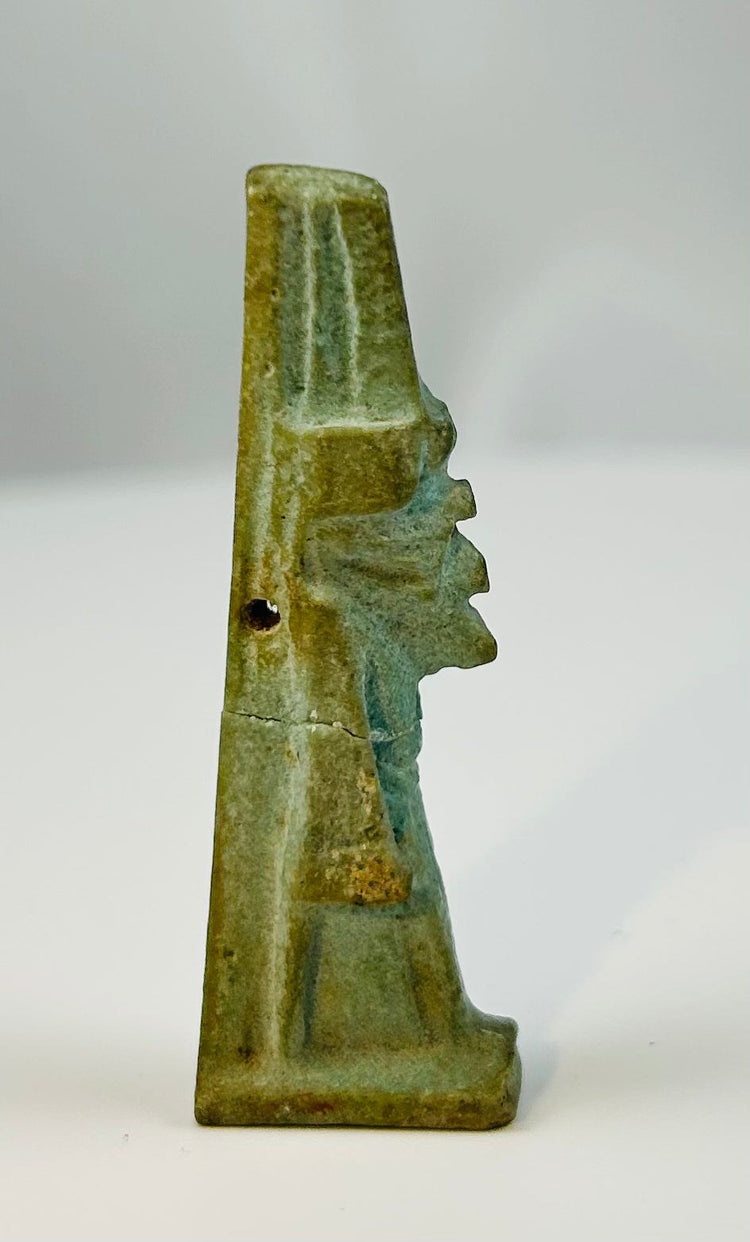
Une amulette en faïence égyptienne ancienne, finement moulée, représentant le jeune dieu Néfertoum debout dans une pose traditionnelle en marche, les bras le long du corps. La figurine est réalisée en faïence émaillée vert pâle et est soutenue par un étroit pilier de soutien, une caractéristique structurelle typique des petites figurines de culte et amulettes égyptiennes.
Néfertoum est représenté coiffé de sa coiffe de lotus distinctive, symbolisant le lotus bleu sacré d'où le soleil était censé émerger chaque matin. La couronne simplifiée mais reconnaissable s'élève de manière proéminente au-dessus de la tête, donnant à la figurine son profil vertical caractéristique. Le corps est vêtu d'un court pagne, et la posture reflète les conventions artistiques canoniques de la sculpture égyptienne.
De petites perforations visibles à l'arrière suggèrent que la pièce a pu autrefois être suspendue ou attachée comme amulette protectrice à porter.
Caractéristiques
- Figurine en faïence moulée du dieu égyptien Néfertoum
- Couronne de lotus caractéristique s'élevant au-dessus de la tête
- Posture en marche, les bras tendus le long du corps
- Pilier de soutien arrière typique des amulettes de la Basse Époque
- Traces de glaçure en faïence verte originale sur toute la surface
- Perforation probablement utilisée pour la suspension ou le montage
Signification culturelle
Néfertoum était une jeune divinité solaire associée à la fleur de lotus bleue, symbole de renaissance, de parfum et du soleil levant. Dans la mythologie égyptienne, le lotus émergeait des eaux primordiales à la création, apportant la première lumière du soleil.
Les amulettes représentant Néfertoum étaient couramment placées à l'intérieur des bandelettes de momies ou portées par les vivants comme talismans protecteurs, invoquant la régénération et le renouveau spirituel dans l'au-delà.
Condition
Bon état ancien général. Usure de surface et légère perte de glaçure conforme à l'âge. Une ligne ancienne de cuisson ou liée à l'âge visible au milieu du corps et de petites piqûres de surface typiques des objets en faïence.
Dimensions (approximatives)
Hauteur : 4,78 cm
Largeur : 2,24 cm
Profondeur : 0,64 cm
Âge (approximatif)
2 000 à 2 600 ans
En savoir plus
Découvrez une amulette en faïence du dieu Néfertoum comparable et sa symbolique dans la religion égyptienne ancienne.
Explorez notre collection d'artefacts égyptiens anciens.
Description
Contexte historique et origine
Région : Égypte
Matériau : Faïence égyptienne (composition émaillée)
Période : Basse époque à la période ptolémaïque, 664-30 av. J.-C.
Description
Une amulette en faïence égyptienne ancienne, finement moulée, représentant le jeune dieu Néfertoum debout dans une pose traditionnelle en marche, les bras le long du corps. La figurine est réalisée en faïence émaillée vert pâle et est soutenue par un étroit pilier de soutien, une caractéristique structurelle typique des petites figurines de culte et amulettes égyptiennes.
Néfertoum est représenté coiffé de sa coiffe de lotus distinctive, symbolisant le lotus bleu sacré d'où le soleil était censé émerger chaque matin. La couronne simplifiée mais reconnaissable s'élève de manière proéminente au-dessus de la tête, donnant à la figurine son profil vertical caractéristique. Le corps est vêtu d'un court pagne, et la posture reflète les conventions artistiques canoniques de la sculpture égyptienne.
De petites perforations visibles à l'arrière suggèrent que la pièce a pu autrefois être suspendue ou attachée comme amulette protectrice à porter.
Caractéristiques
- Figurine en faïence moulée du dieu égyptien Néfertoum
- Couronne de lotus caractéristique s'élevant au-dessus de la tête
- Posture en marche, les bras tendus le long du corps
- Pilier de soutien arrière typique des amulettes de la Basse Époque
- Traces de glaçure en faïence verte originale sur toute la surface
- Perforation probablement utilisée pour la suspension ou le montage
Signification culturelle
Néfertoum était une jeune divinité solaire associée à la fleur de lotus bleue, symbole de renaissance, de parfum et du soleil levant. Dans la mythologie égyptienne, le lotus émergeait des eaux primordiales à la création, apportant la première lumière du soleil.
Les amulettes représentant Néfertoum étaient couramment placées à l'intérieur des bandelettes de momies ou portées par les vivants comme talismans protecteurs, invoquant la régénération et le renouveau spirituel dans l'au-delà.
Condition
Bon état ancien général. Usure de surface et légère perte de glaçure conforme à l'âge. Une ligne ancienne de cuisson ou liée à l'âge visible au milieu du corps et de petites piqûres de surface typiques des objets en faïence.
Dimensions (approximatives)
Hauteur : 4,78 cm
Largeur : 2,24 cm
Profondeur : 0,64 cm
Âge (approximatif)
2 000 à 2 600 ans
En savoir plus
Découvrez une amulette en faïence du dieu Néfertoum comparable et sa symbolique dans la religion égyptienne ancienne.
Explorez notre collection d'artefacts égyptiens anciens.
Vous aimerez peut-être aussi
