



Égypte antique | Ouchebtis en faïence | Vers 664–300 av. J.-C.
- Prix habituel
- $500.00
- Prix soldé
- $500.00
- Prix habituel
Impossible de charger la disponibilité du service de retrait


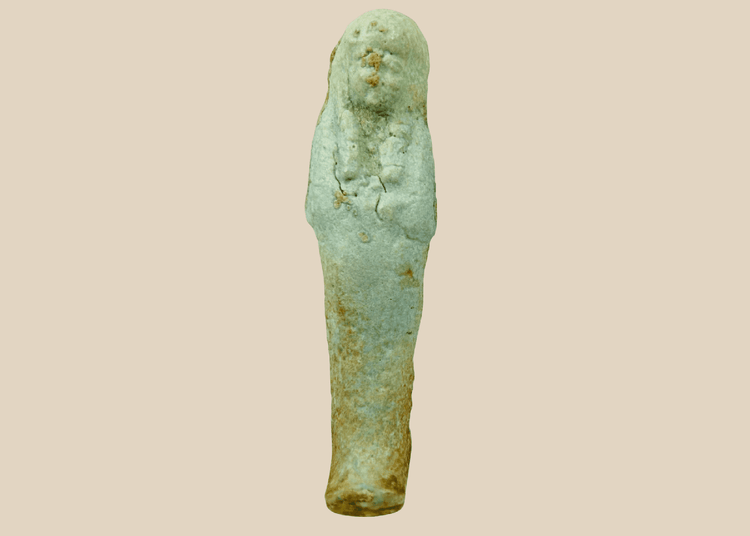


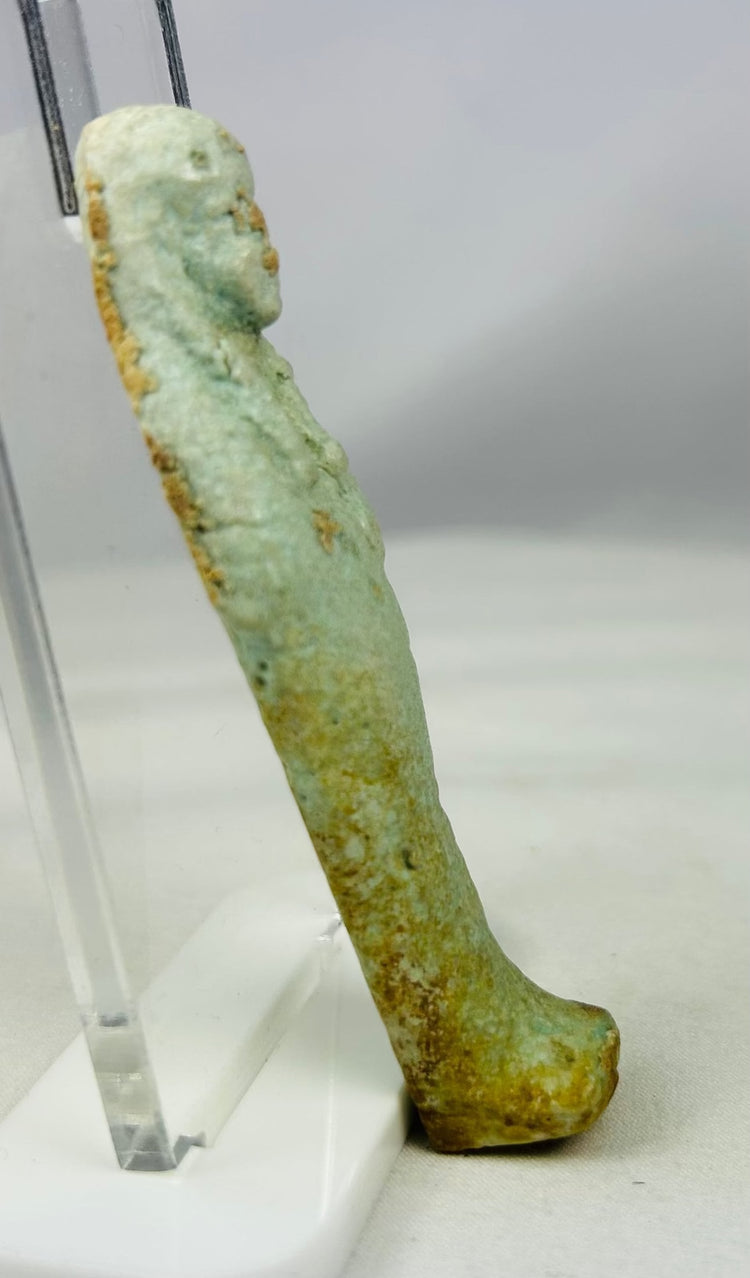


Égypte antique | Ouchebtis en faïence | Vers 664–300 av. J.-C.
Description
Plus
Moins
Contexte historique et origine
Région : Égypte ancienne
Matériau : Faïence glaçurée avec des inclusions minérales et des dépôts terrestres
Période : Période tardive au début de l'époque ptolémaïque, vers 664-300 av. J.-C.
Description
Il s'agit d'une figurine Ouchebti en faïence égyptienne ancienne magnifiquement vieillie. Affichant le profil classique en forme de momie, la figurine présente des traits faciaux pâles mais discernables, les bras croisés sur la poitrine dans la posture funéraire traditionnelle. La surface conserve une élégante glaçure en faïence bleu-vert pâle, maintenant adoucie par le temps, avec une belle adhérence terrestre et des dépôts minéraux qui témoignent de sa grande ancienneté. Le bas du corps conserve une coloration naturelle d'enfouissement, passant de l'aqua aux teintes de terre sablonneuses.
Caractéristiques
- Figurine de serviteur funéraire Ouchebti traditionnelle
- Glaçure en faïence bleu-vert pâle
- Forme distincte avec les bras croisés
- Excellents dépôts et patine d'ancien enfouissement
Signification culturelle
Les figurines Ouchebti étaient placées dans les tombes pour servir le défunt dans l'au-delà, symbolisant la préparation, la dévotion et le service éternel. Leur présence reste l'une des représentations les plus emblématiques de la croyance religieuse et des pratiques funéraires égyptiennes. Cette pièce offre un lien direct et tangible avec le profond héritage spirituel de l'Égypte.
État
Bon état ancien avec usure normale due à l'âge, adoucissement des traits, altération de surface et fissures d'âge stables. Incrustations d'enfouissement et patine de glaçure présentes. Aucune restauration moderne détectée.
Dimensions (Approximatives)
Hauteur : 3,25 po
Âge (Approximatif)
2 300–2 700 ans
En savoir plus
Découvrez les figurines ouchebtis de l'Égypte ancienne grâce au Metropolitan Museum of Art
Explorez notre Collection d'artefacts et de momies de l'Égypte ancienne
Description
Contexte historique et origine
Région : Égypte ancienne
Matériau : Faïence glaçurée avec des inclusions minérales et des dépôts terrestres
Période : Période tardive au début de l'époque ptolémaïque, vers 664-300 av. J.-C.
Description
Il s'agit d'une figurine Ouchebti en faïence égyptienne ancienne magnifiquement vieillie. Affichant le profil classique en forme de momie, la figurine présente des traits faciaux pâles mais discernables, les bras croisés sur la poitrine dans la posture funéraire traditionnelle. La surface conserve une élégante glaçure en faïence bleu-vert pâle, maintenant adoucie par le temps, avec une belle adhérence terrestre et des dépôts minéraux qui témoignent de sa grande ancienneté. Le bas du corps conserve une coloration naturelle d'enfouissement, passant de l'aqua aux teintes de terre sablonneuses.
Caractéristiques
- Figurine de serviteur funéraire Ouchebti traditionnelle
- Glaçure en faïence bleu-vert pâle
- Forme distincte avec les bras croisés
- Excellents dépôts et patine d'ancien enfouissement
Signification culturelle
Les figurines Ouchebti étaient placées dans les tombes pour servir le défunt dans l'au-delà, symbolisant la préparation, la dévotion et le service éternel. Leur présence reste l'une des représentations les plus emblématiques de la croyance religieuse et des pratiques funéraires égyptiennes. Cette pièce offre un lien direct et tangible avec le profond héritage spirituel de l'Égypte.
État
Bon état ancien avec usure normale due à l'âge, adoucissement des traits, altération de surface et fissures d'âge stables. Incrustations d'enfouissement et patine de glaçure présentes. Aucune restauration moderne détectée.
Dimensions (Approximatives)
Hauteur : 3,25 po
Âge (Approximatif)
2 300–2 700 ans
En savoir plus
Découvrez les figurines ouchebtis de l'Égypte ancienne grâce au Metropolitan Museum of Art
Explorez notre Collection d'artefacts et de momies de l'Égypte ancienne
Vous aimerez peut-être aussi
