
Ancient Egyptian Inscribed Dark Stone Shabti with Cairo Postcard | 25th–Early 26th Dynasty | Circa 700 – 600 BCE
- Prix habituel
- $10,000.00
- Prix soldé
- $10,000.00
- Prix habituel
Impossible de charger la disponibilité du service de retrait


Ancient Egyptian Inscribed Dark Stone Shabti with Cairo Postcard | 25th–Early 26th Dynasty | Circa 700 – 600 BCE
Description
Plus
Moins
Historical Context & Origin
Region: Ancient Egypt
Material: Carved dark stone, possibly serpentinite or a related hardstone, with deeply incised hieroglyphic inscription
Period: Late 25th Dynasty to Early 26th Dynasty, circa 700–600 BCE
Description
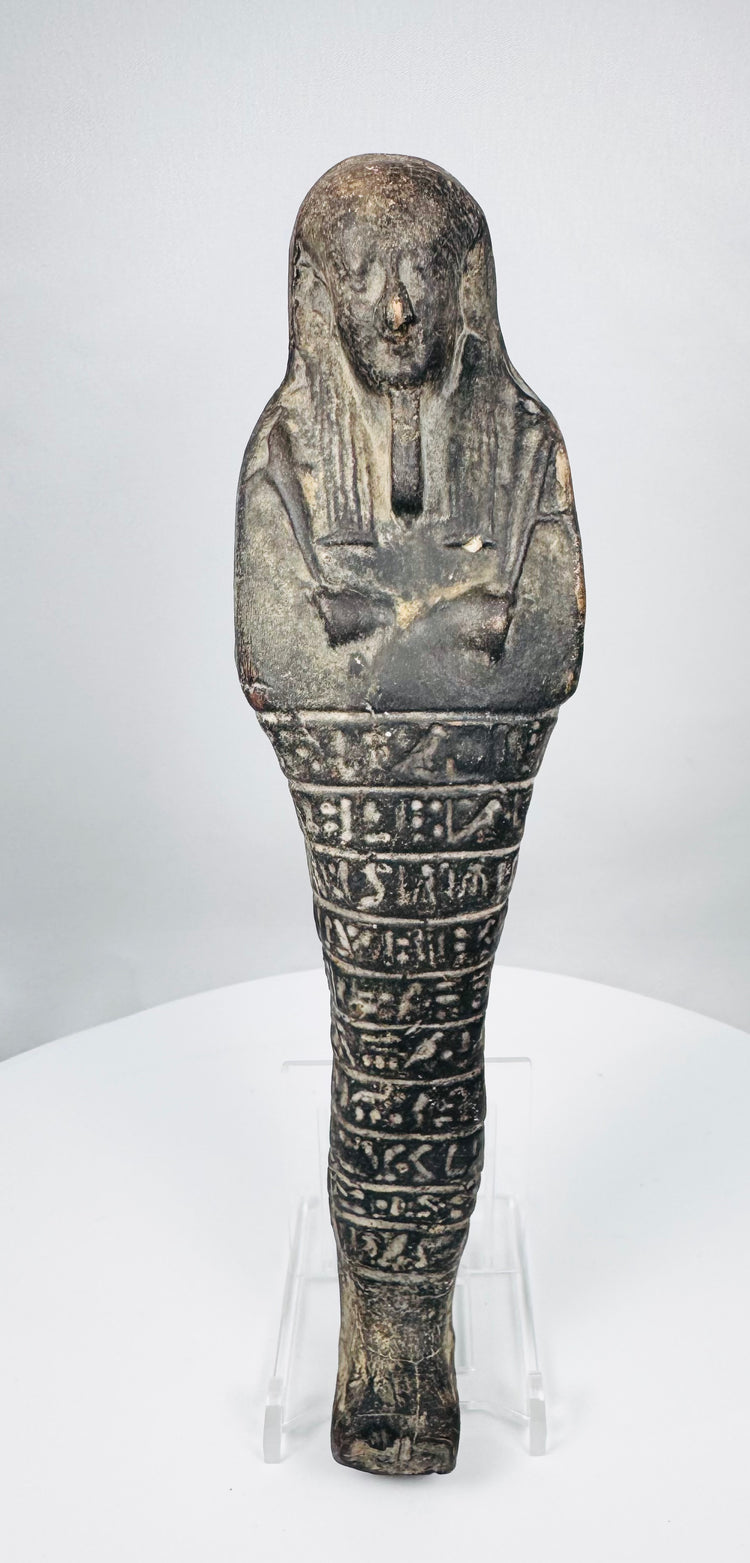
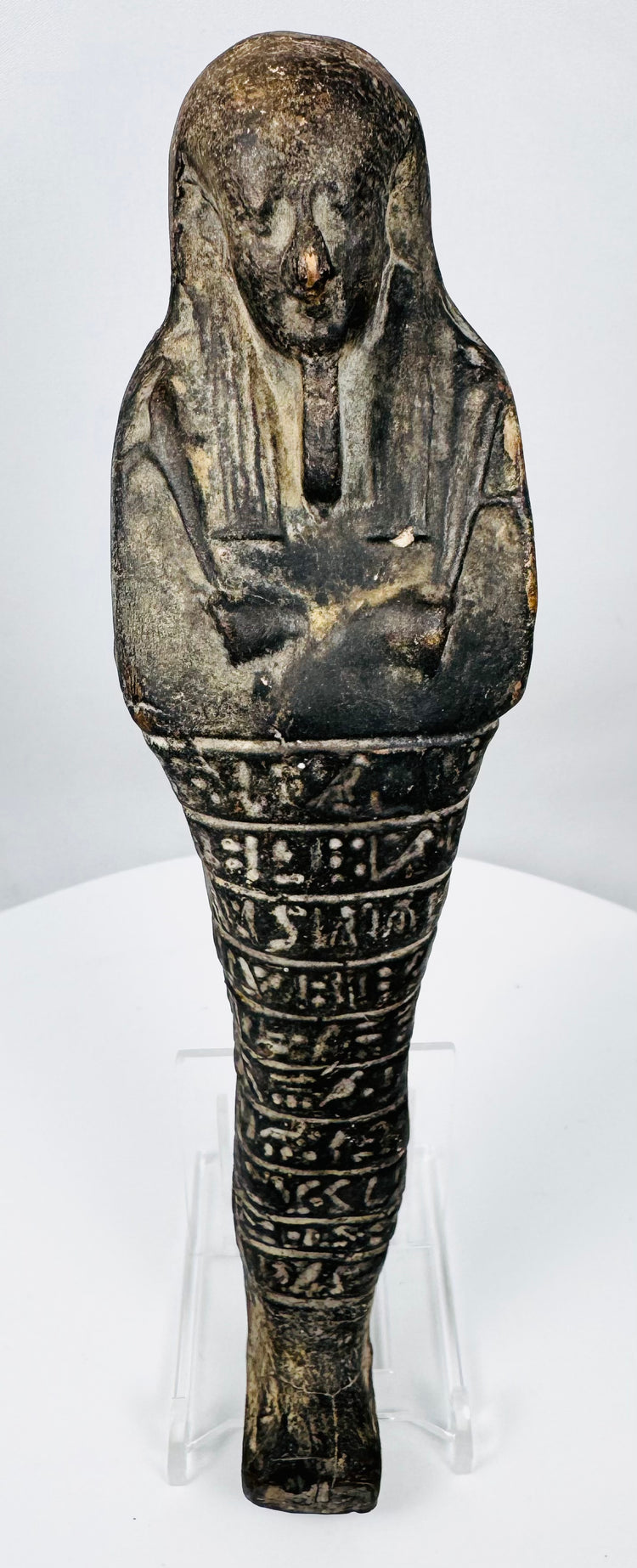
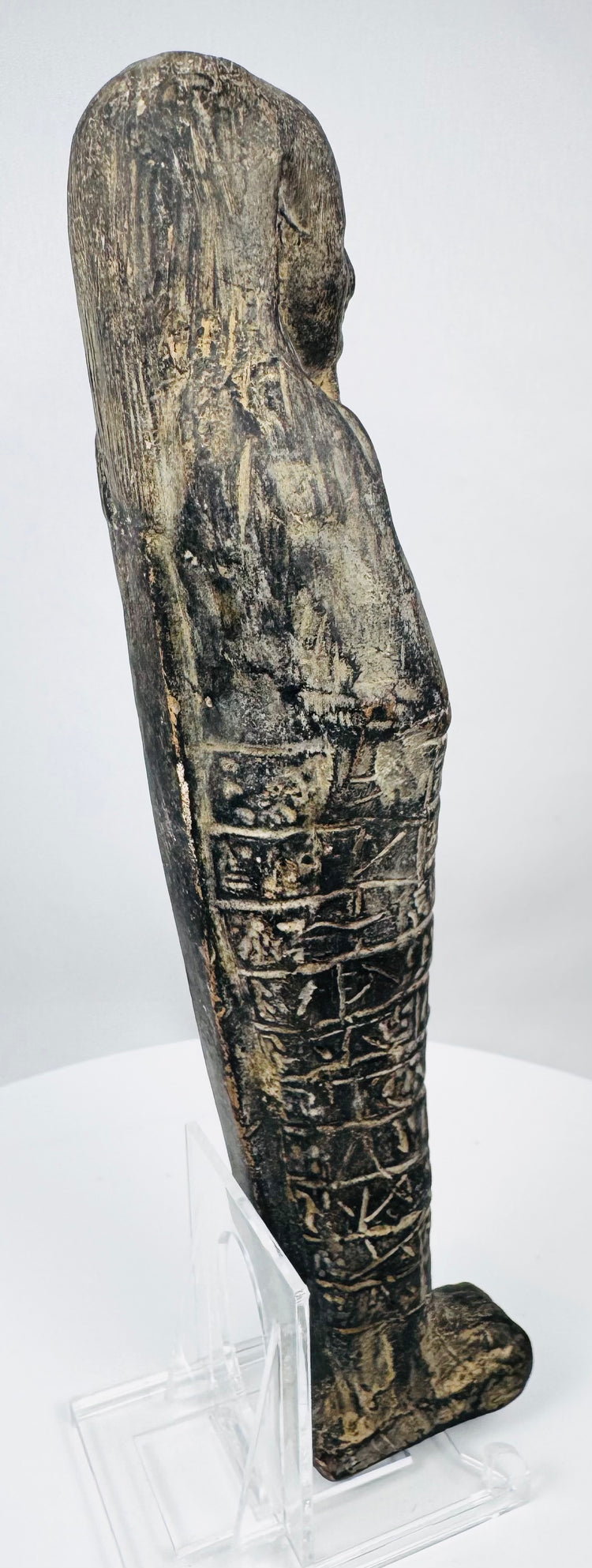
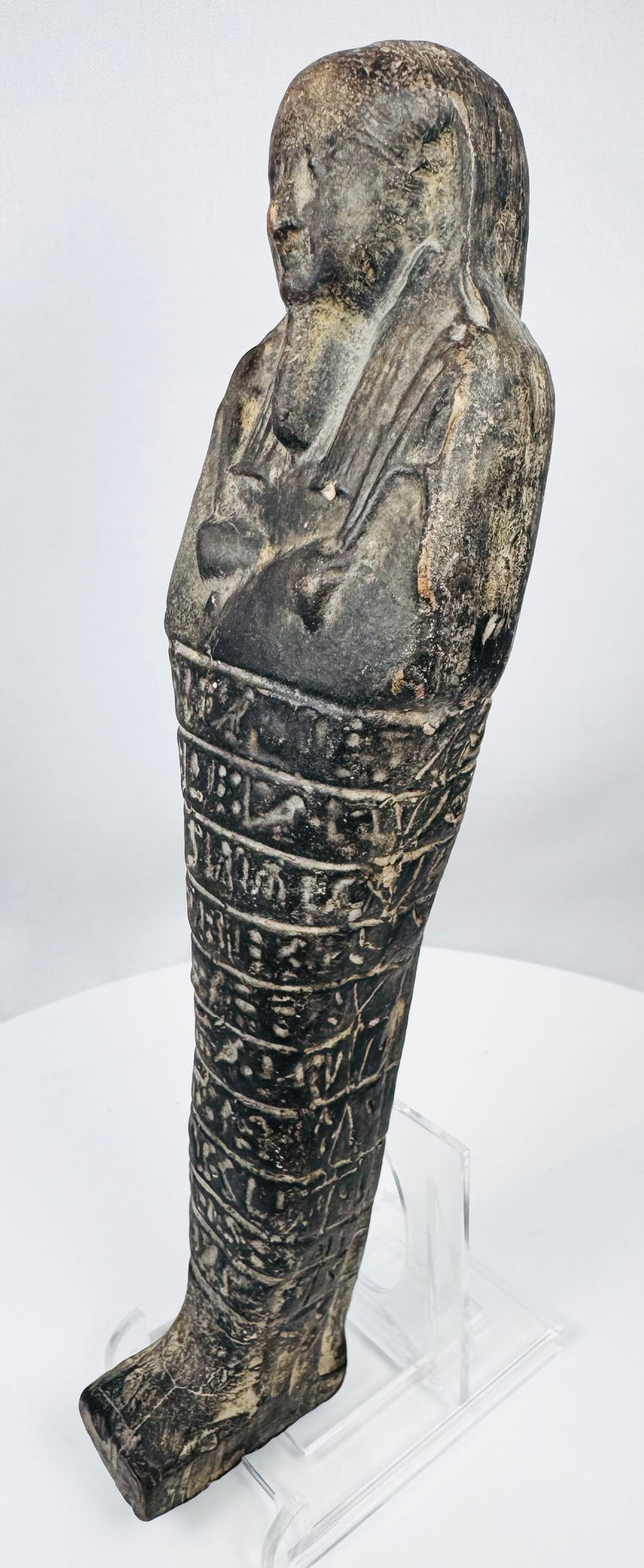
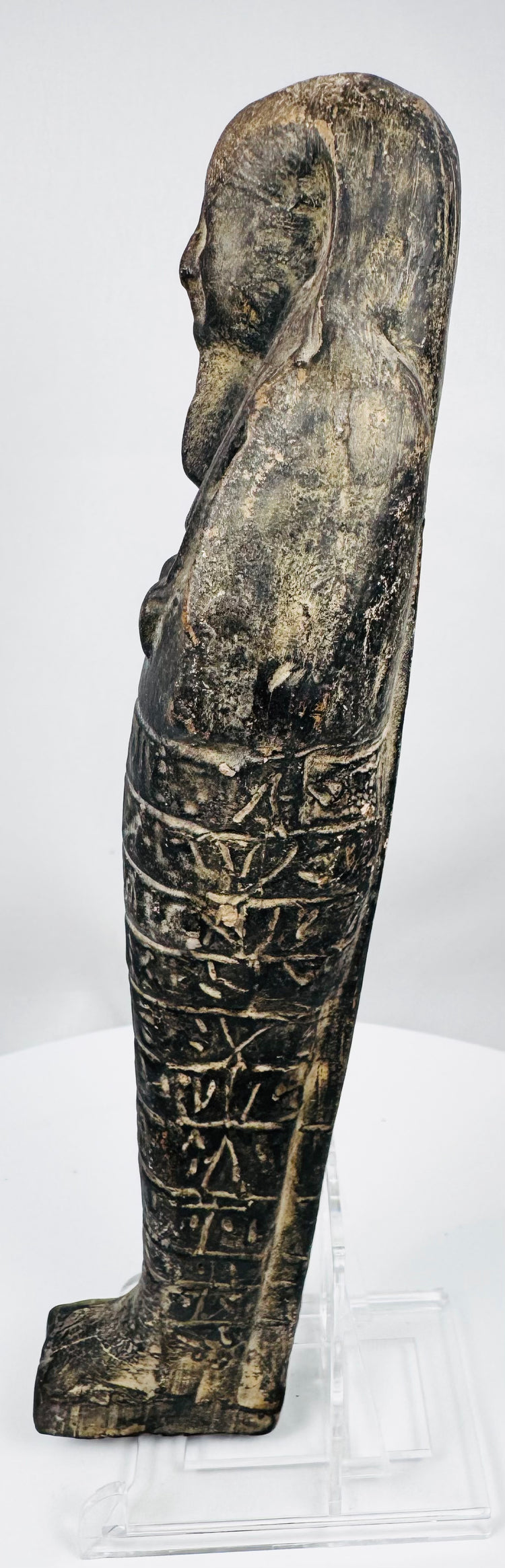
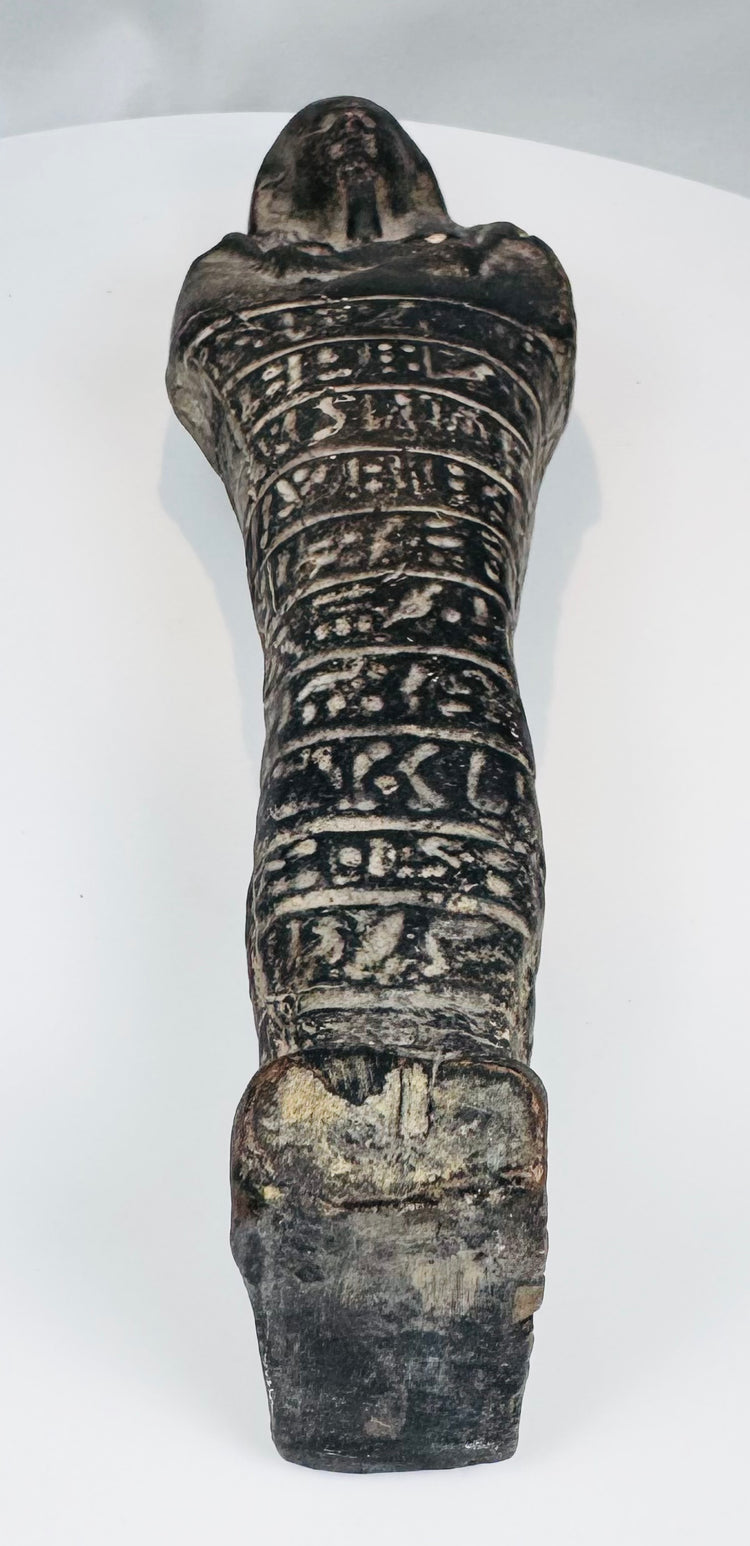
This substantial ancient Egyptian stone shabti dates from the transition between the Kushite 25th Dynasty and the early Saite 26th Dynasty, circa 700–600 BCE.
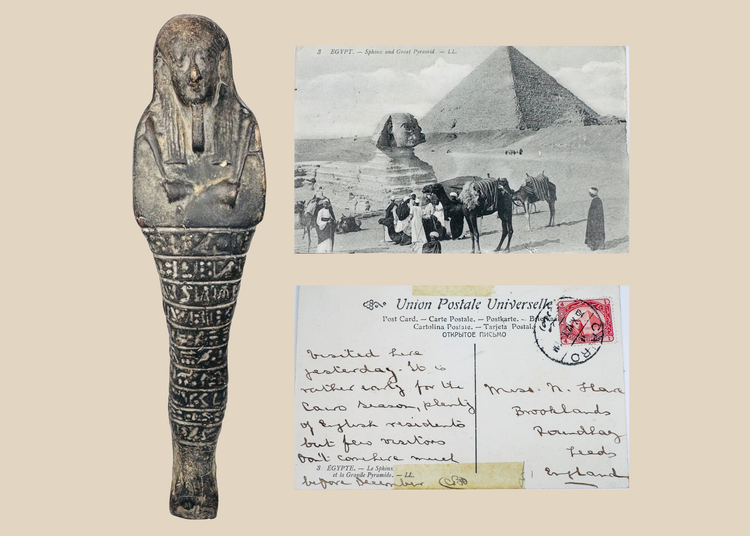
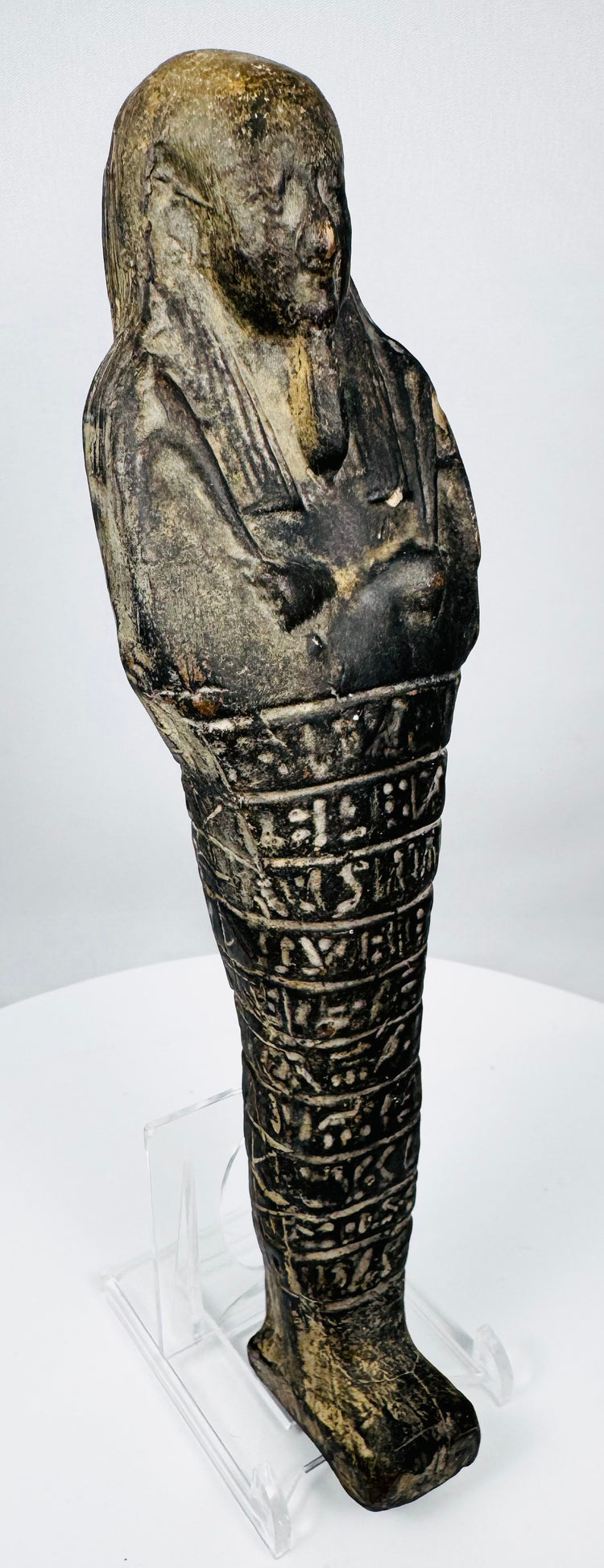
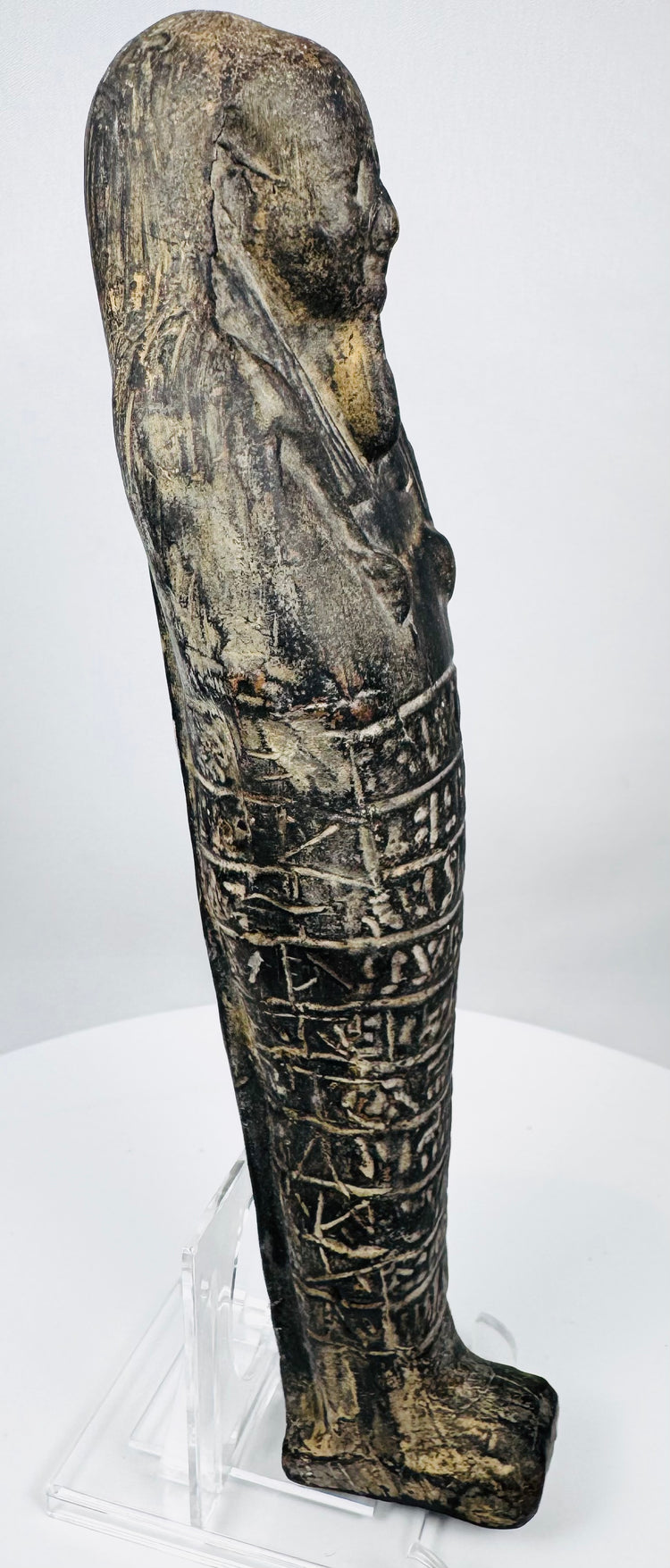
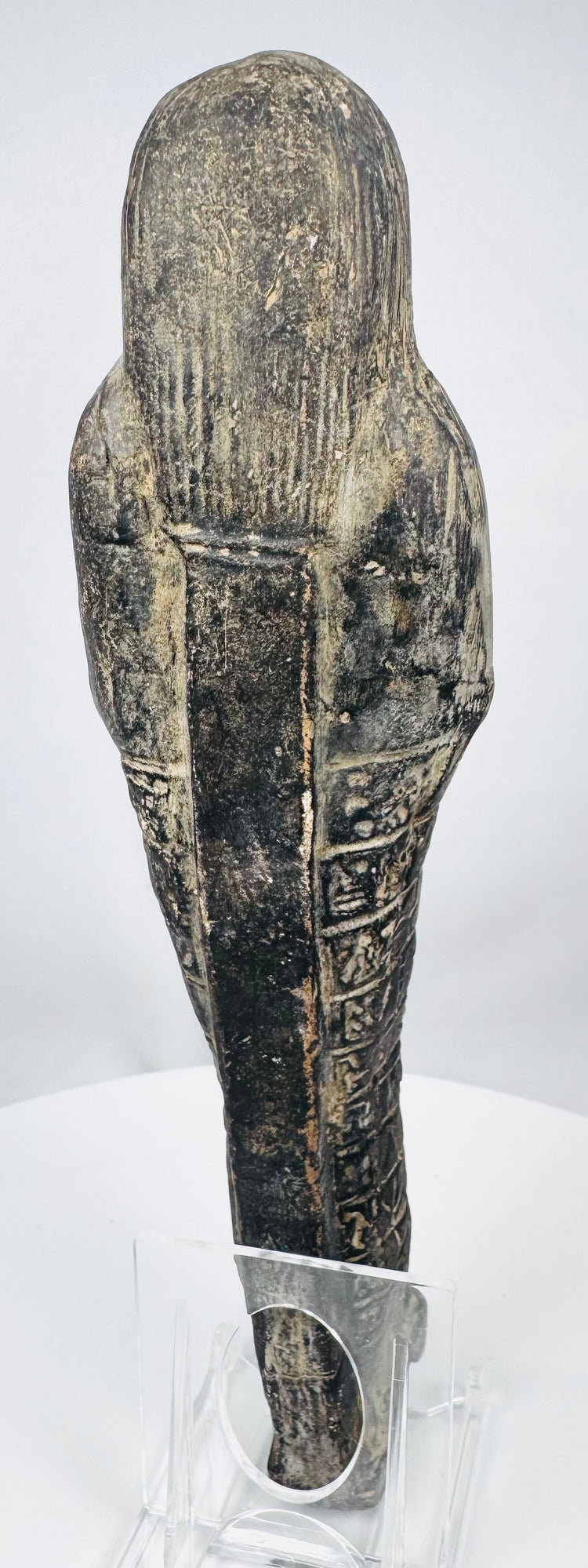
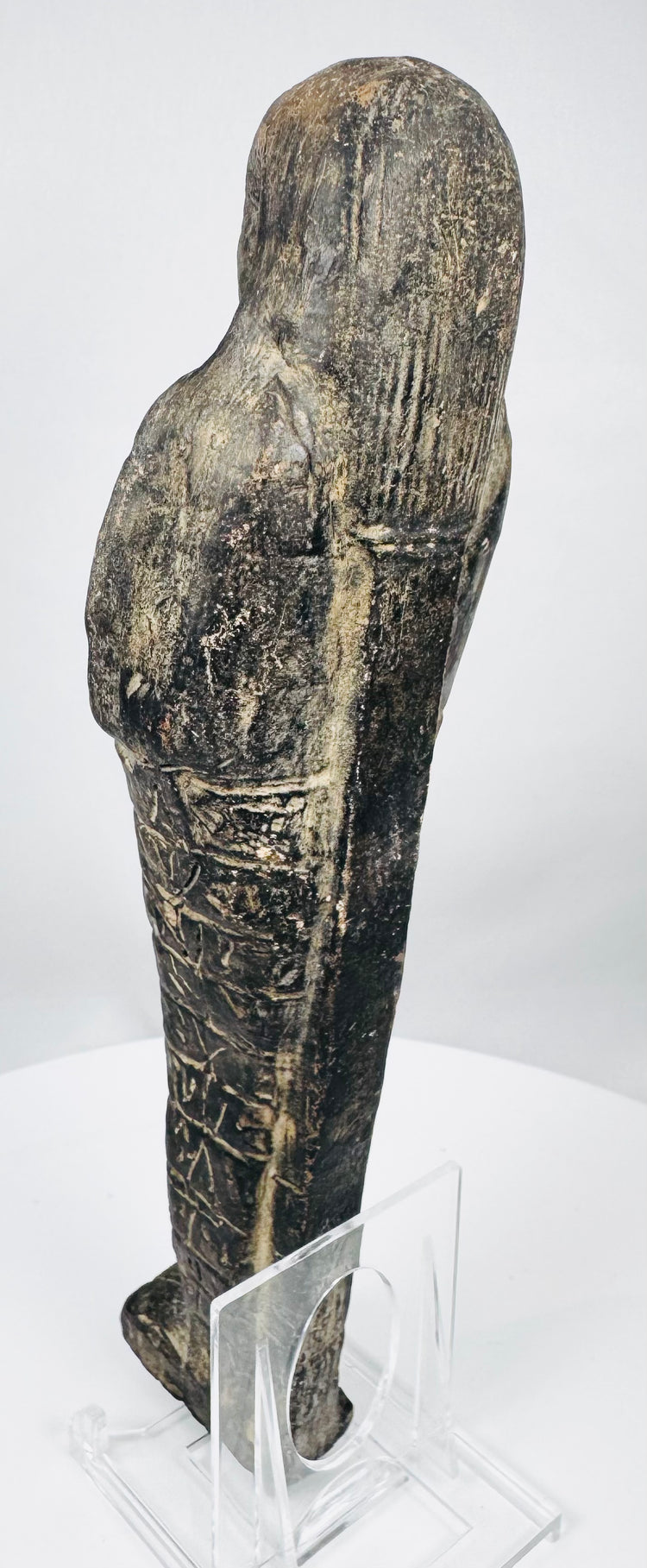
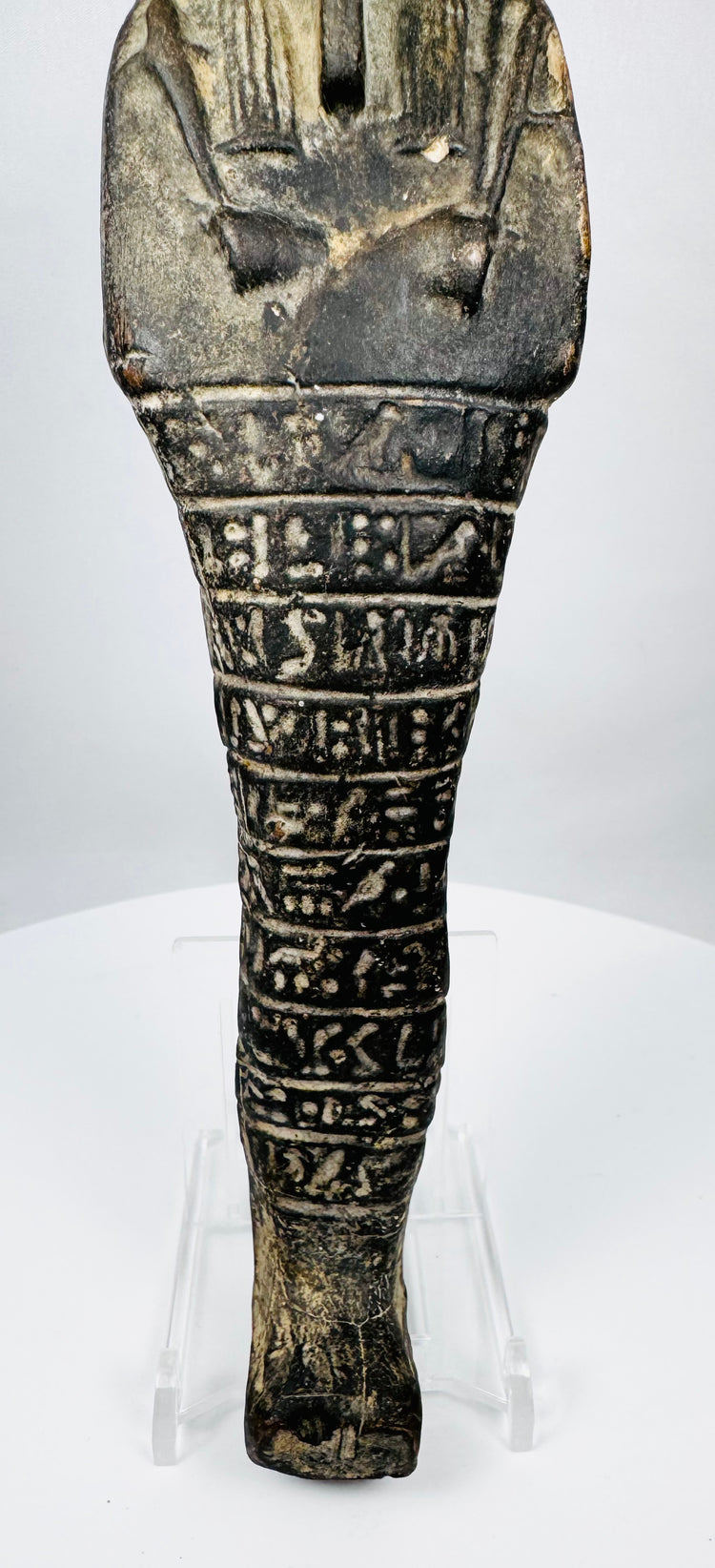
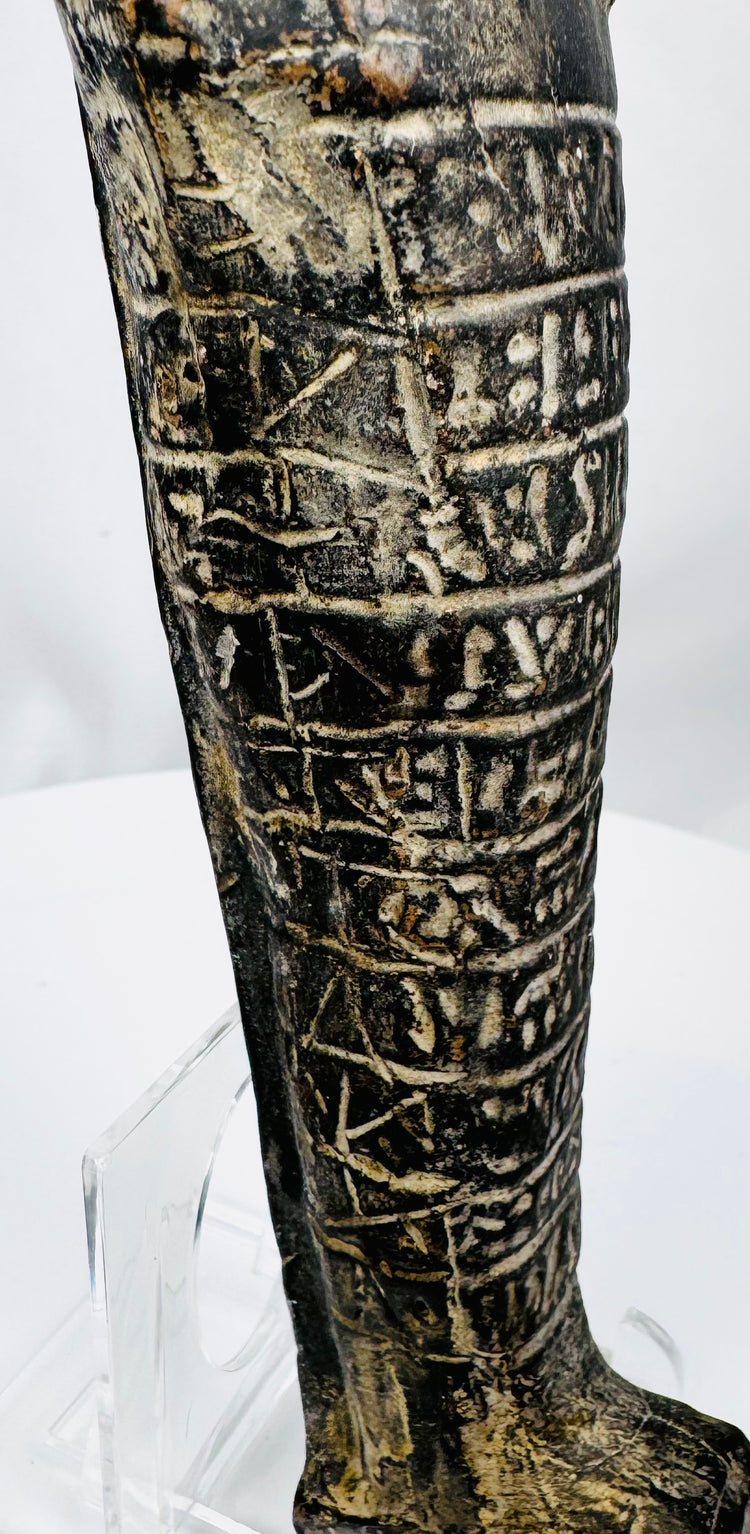
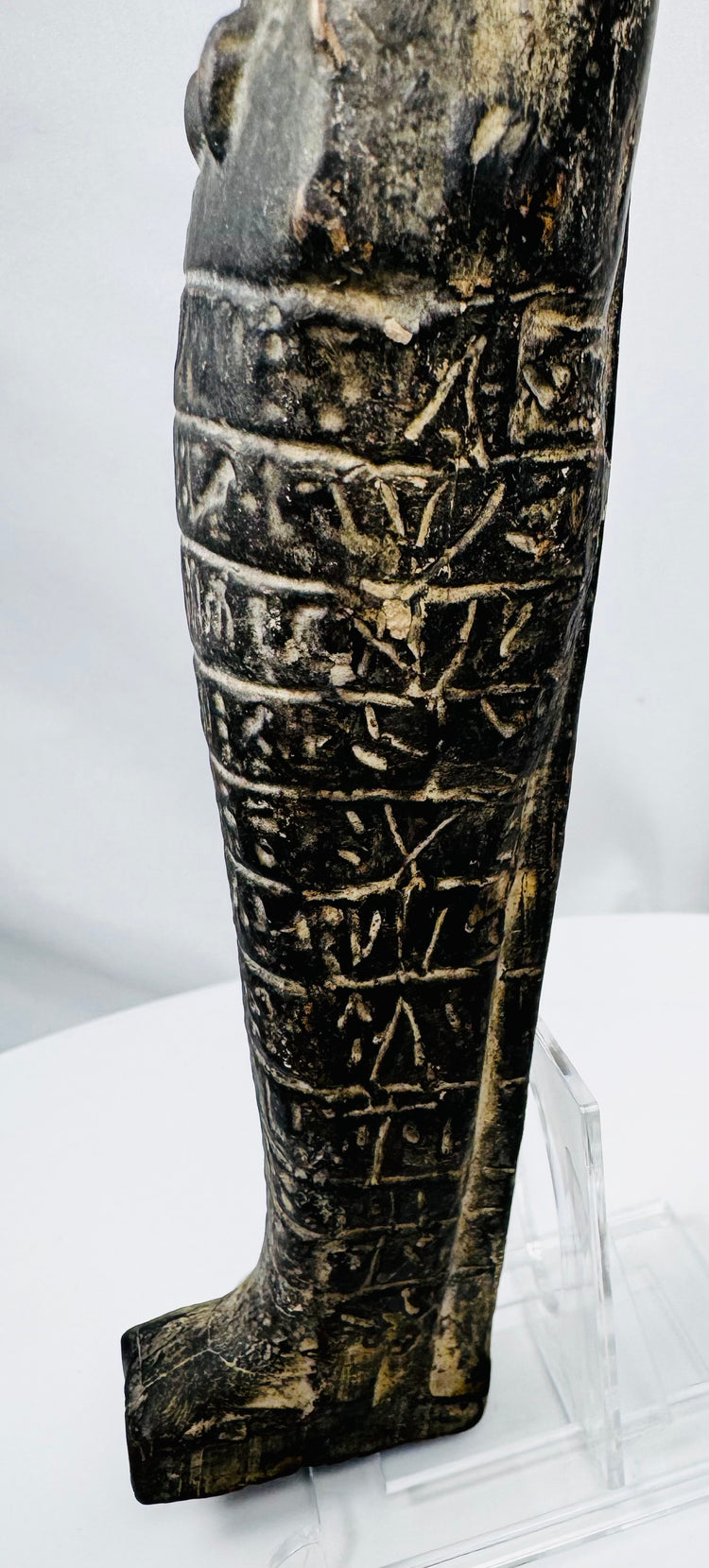
Carved in a tall mummiform form, the figure displays a vertically striated wig, elongated body, dorsal pillar, and integral base beneath the feet. Multiple horizontal registers of deeply incised hieroglyphic text extend across the front and sides, creating an unusually text-rich example of this important class of Egyptian funerary object.
The surviving inscription appears to incorporate passages associated with the traditional shabti spell from the Egyptian Book of the Dead. Such inscriptions instructed the figure to answer on behalf of the deceased when called upon to undertake agricultural or other compulsory labour in the afterlife.
The dark charcoal-black stone surface contrasts with pale mineral deposits retained within many of the incised hieroglyphs, allowing a considerable portion of the inscription to remain visible.
Large stone shabtis experienced an important revival during Egypt’s 25th Dynasty, when Kushite rulers and members of the elite consciously returned to earlier Egyptian funerary and artistic traditions. Monumental and extensively inscribed examples were produced for royalty and individuals of considerable status during this period.
A possible association with the Kushite pharaoh Taharqa, who ruled circa 690–664 BCE, was considered during previous research. However, an academic specialist in ancient Egyptian material culture noted that confirmed shabtis belonging to Taharqa generally exhibit broader bodily proportions and that the king’s name could not be identified within the surviving inscription. The figure is therefore responsibly catalogued as an unattributed late 25th- to early 26th-Dynasty shabti, with any royal attribution remaining unconfirmed.
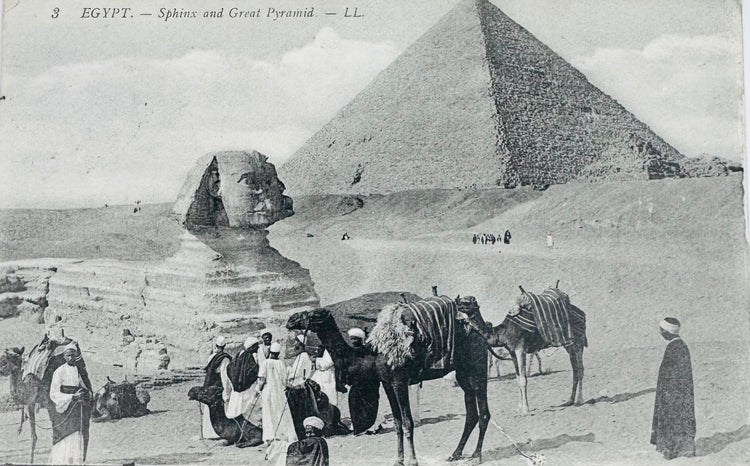
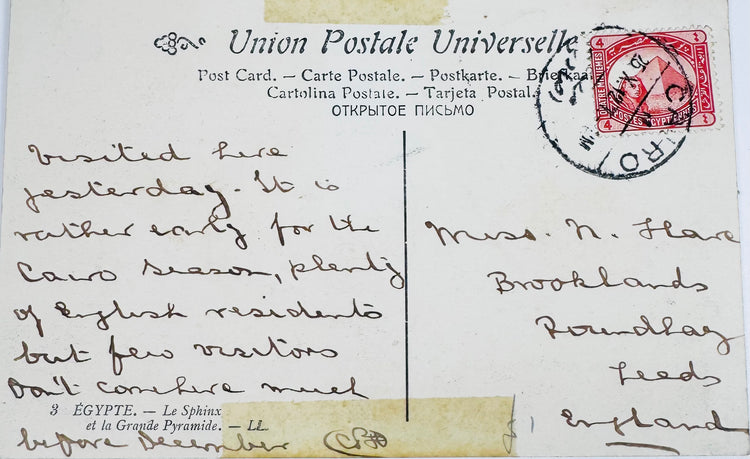
Accompanying the shabti is an original early 20th-century Egyptian postcard depicting the Great Sphinx and Great Pyramid of Giza surrounded by travellers, local guides, and camels. The reverse bears a handwritten message discussing the Cairo social season, an Egyptian four-millième postage stamp, and a Cairo postal cancellation. The card was mailed from Egypt to Roundhay, Leeds, England, circa 1906–1913.
The shabti and postcard were acquired and preserved together within the same collection. Although a direct historical relationship between the two pieces cannot be independently established, their survival together provides an evocative connection between ancient Egyptian material culture and the history of early 20th-century travel and collecting in Egypt.
Features
- Substantial ancient Egyptian mummiform stone shabti
- Late 25th Dynasty to Early 26th Dynasty, circa 700–600 BCE
- Multiple horizontal registers of deeply incised hieroglyphic text
- Inscription appears to incorporate elements of the traditional shabti spell
- Vertically striated wig
- Prominent dorsal pillar
- Integral base beneath the feet
- Dark stone surface with contrasting pale mineral deposits within the inscription
- Dating supported through review by an academic specialist in ancient Egyptian material culture
- Possible association with the period of Pharaoh Taharqa, although no royal attribution is confirmed
- Accompanied by an early 20th-century Egyptian postcard mailed from Cairo to Leeds, England
Cultural Significance
Shabtis were funerary figures placed within ancient Egyptian burials to serve the deceased in the afterlife. Through the magical power of their inscriptions, these figures were expected to answer when their owner was summoned to perform labour, particularly agricultural work and the cultivation or irrigation of fields within the realm of the dead.
The traditional shabti spell, commonly associated with Chapter 6 of the Book of the Dead, commanded the figure to present itself in place of the deceased whenever such work was required.
Large and extensively inscribed stone shabtis became particularly significant during the 25th Dynasty, when Egypt’s Kushite rulers revived many earlier Egyptian artistic, religious, and funerary traditions. Examples of this scale and complexity were frequently associated with individuals of elevated social standing and represent an important expression of Egyptian funerary belief during the Kushite–Saite transition.
Condition
Good ancient condition consistent with age and burial. Surface abrasions, small chips, fissures, localized losses, mineral deposits, and areas of softened inscription are present throughout. Numerous hieroglyphic registers remain clearly visible, and the figure survives substantially complete. The dark stone retains attractive age-related surface variation and mineral accretions.
The accompanying postcard exhibits age-related toning, corner and edge wear, handwritten postal use, and remnants of historic mounting adhesive. Both pieces are preserved in their existing historical condition, as shown.
Dimensions (Approximate)
Height: 8.25 in
Width: 2.25 in
Depth: 1.5 in
Age (Approximate)
Shabti: 2,600–2,700 years old
Postcard: 110–120 years old
Provenance
Formerly held in a private collection in London, United Kingdom.
Subsequently acquired for a private Toronto, Ontario, Canada collection assembled by a lifelong collector of ancient Egyptian antiquities. The shabti and accompanying postcard were preserved together within the collection until the collector’s passing, after which the collection was dispersed by the family.
The shabti was subsequently reviewed from photographs by an academic specialist in ancient Egyptian material culture, who supported a late 25th- to early 26th-Dynasty date and described it as a fine example from the period. While a possible association with Pharaoh Taharqa was considered, no royal name was identified within the surviving inscription and the attribution remains unconfirmed.
Learn More
Discover a comparable royal Shabti of Taharqo at The Metropolitan Museum of Art
Explore our Ancient Egyptian Mummies & Artifacts Collection
Description
Historical Context & Origin
Region: Ancient Egypt
Material: Carved dark stone, possibly serpentinite or a related hardstone, with deeply incised hieroglyphic inscription
Period: Late 25th Dynasty to Early 26th Dynasty, circa 700–600 BCE
Description
This substantial ancient Egyptian stone shabti dates from the transition between the Kushite 25th Dynasty and the early Saite 26th Dynasty, circa 700–600 BCE.
Carved in a tall mummiform form, the figure displays a vertically striated wig, elongated body, dorsal pillar, and integral base beneath the feet. Multiple horizontal registers of deeply incised hieroglyphic text extend across the front and sides, creating an unusually text-rich example of this important class of Egyptian funerary object.
The surviving inscription appears to incorporate passages associated with the traditional shabti spell from the Egyptian Book of the Dead. Such inscriptions instructed the figure to answer on behalf of the deceased when called upon to undertake agricultural or other compulsory labour in the afterlife.
The dark charcoal-black stone surface contrasts with pale mineral deposits retained within many of the incised hieroglyphs, allowing a considerable portion of the inscription to remain visible.
Large stone shabtis experienced an important revival during Egypt’s 25th Dynasty, when Kushite rulers and members of the elite consciously returned to earlier Egyptian funerary and artistic traditions. Monumental and extensively inscribed examples were produced for royalty and individuals of considerable status during this period.
A possible association with the Kushite pharaoh Taharqa, who ruled circa 690–664 BCE, was considered during previous research. However, an academic specialist in ancient Egyptian material culture noted that confirmed shabtis belonging to Taharqa generally exhibit broader bodily proportions and that the king’s name could not be identified within the surviving inscription. The figure is therefore responsibly catalogued as an unattributed late 25th- to early 26th-Dynasty shabti, with any royal attribution remaining unconfirmed.
Accompanying the shabti is an original early 20th-century Egyptian postcard depicting the Great Sphinx and Great Pyramid of Giza surrounded by travellers, local guides, and camels. The reverse bears a handwritten message discussing the Cairo social season, an Egyptian four-millième postage stamp, and a Cairo postal cancellation. The card was mailed from Egypt to Roundhay, Leeds, England, circa 1906–1913.
The shabti and postcard were acquired and preserved together within the same collection. Although a direct historical relationship between the two pieces cannot be independently established, their survival together provides an evocative connection between ancient Egyptian material culture and the history of early 20th-century travel and collecting in Egypt.
Features
- Substantial ancient Egyptian mummiform stone shabti
- Late 25th Dynasty to Early 26th Dynasty, circa 700–600 BCE
- Multiple horizontal registers of deeply incised hieroglyphic text
- Inscription appears to incorporate elements of the traditional shabti spell
- Vertically striated wig
- Prominent dorsal pillar
- Integral base beneath the feet
- Dark stone surface with contrasting pale mineral deposits within the inscription
- Dating supported through review by an academic specialist in ancient Egyptian material culture
- Possible association with the period of Pharaoh Taharqa, although no royal attribution is confirmed
- Accompanied by an early 20th-century Egyptian postcard mailed from Cairo to Leeds, England
Cultural Significance
Shabtis were funerary figures placed within ancient Egyptian burials to serve the deceased in the afterlife. Through the magical power of their inscriptions, these figures were expected to answer when their owner was summoned to perform labour, particularly agricultural work and the cultivation or irrigation of fields within the realm of the dead.
The traditional shabti spell, commonly associated with Chapter 6 of the Book of the Dead, commanded the figure to present itself in place of the deceased whenever such work was required.
Large and extensively inscribed stone shabtis became particularly significant during the 25th Dynasty, when Egypt’s Kushite rulers revived many earlier Egyptian artistic, religious, and funerary traditions. Examples of this scale and complexity were frequently associated with individuals of elevated social standing and represent an important expression of Egyptian funerary belief during the Kushite–Saite transition.
Condition
Good ancient condition consistent with age and burial. Surface abrasions, small chips, fissures, localized losses, mineral deposits, and areas of softened inscription are present throughout. Numerous hieroglyphic registers remain clearly visible, and the figure survives substantially complete. The dark stone retains attractive age-related surface variation and mineral accretions.
The accompanying postcard exhibits age-related toning, corner and edge wear, handwritten postal use, and remnants of historic mounting adhesive. Both pieces are preserved in their existing historical condition, as shown.
Dimensions (Approximate)
Height: 8.25 in
Width: 2.25 in
Depth: 1.5 in
Age (Approximate)
Shabti: 2,600–2,700 years old
Postcard: 110–120 years old
Provenance
Formerly held in a private collection in London, United Kingdom.
Subsequently acquired for a private Toronto, Ontario, Canada collection assembled by a lifelong collector of ancient Egyptian antiquities. The shabti and accompanying postcard were preserved together within the collection until the collector’s passing, after which the collection was dispersed by the family.
The shabti was subsequently reviewed from photographs by an academic specialist in ancient Egyptian material culture, who supported a late 25th- to early 26th-Dynasty date and described it as a fine example from the period. While a possible association with Pharaoh Taharqa was considered, no royal name was identified within the surviving inscription and the attribution remains unconfirmed.
Learn More
Discover a comparable royal Shabti of Taharqo at The Metropolitan Museum of Art
Explore our Ancient Egyptian Mummies & Artifacts Collection
Vous aimerez peut-être aussi
