


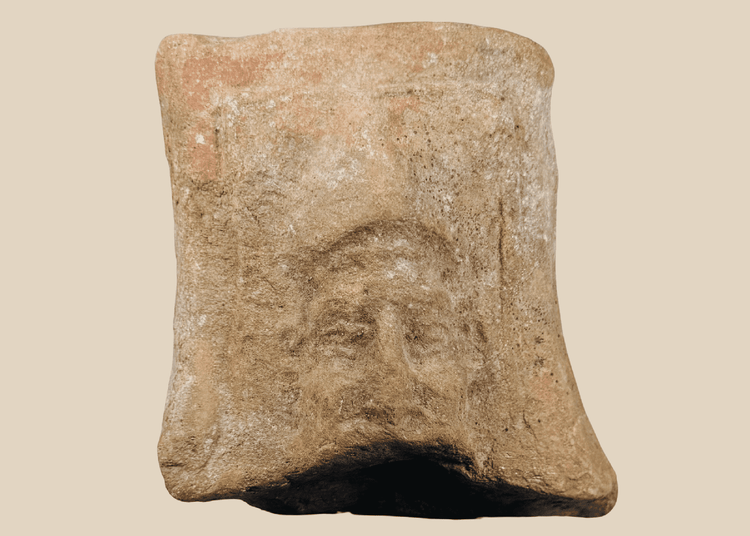
Fragment de plaque en terre cuite du bassin méditerranéen antique | Visage masculin | Circa IIIe siècle av. J.-C. – IIe siècle apr. J.-C.
- Prix habituel
- $700.00
- Prix soldé
- $700.00
- Prix habituel
Impossible de charger la disponibilité du service de retrait


Fragment de plaque en terre cuite du bassin méditerranéen antique | Visage masculin | Circa IIIe siècle av. J.-C. – IIe siècle apr. J.-C.
Description
Plus
Moins
Contexte historique et origine
Région : Méditerranée orientale, potentiellement grecque, hellénistique ou romaine provinciale
Matériau : Terre cuite moulée avec des traces de pigment rouge
Période : Période hellénistique–romaine, environ du IIIe siècle avant notre ère au IIe siècle de notre ère
Description
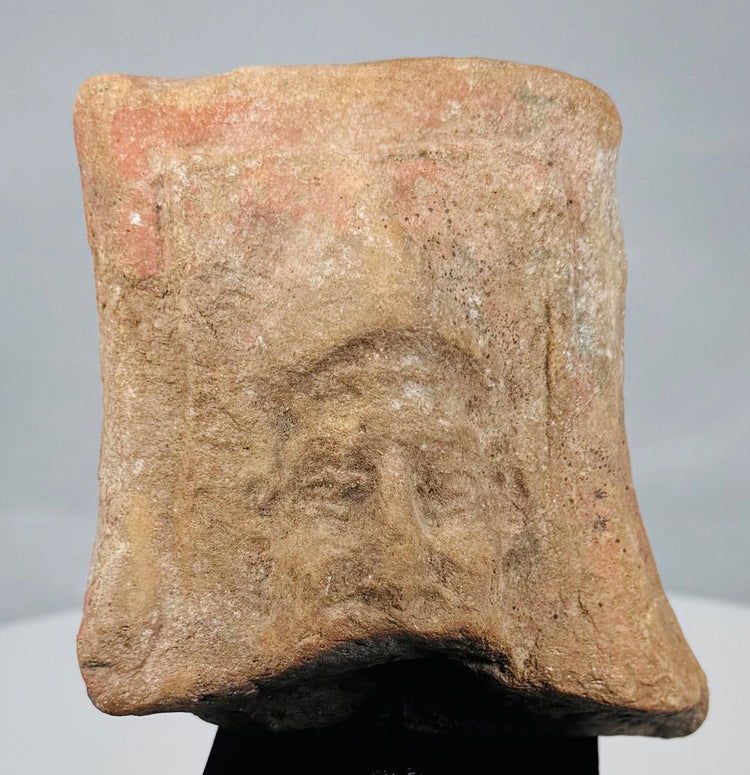
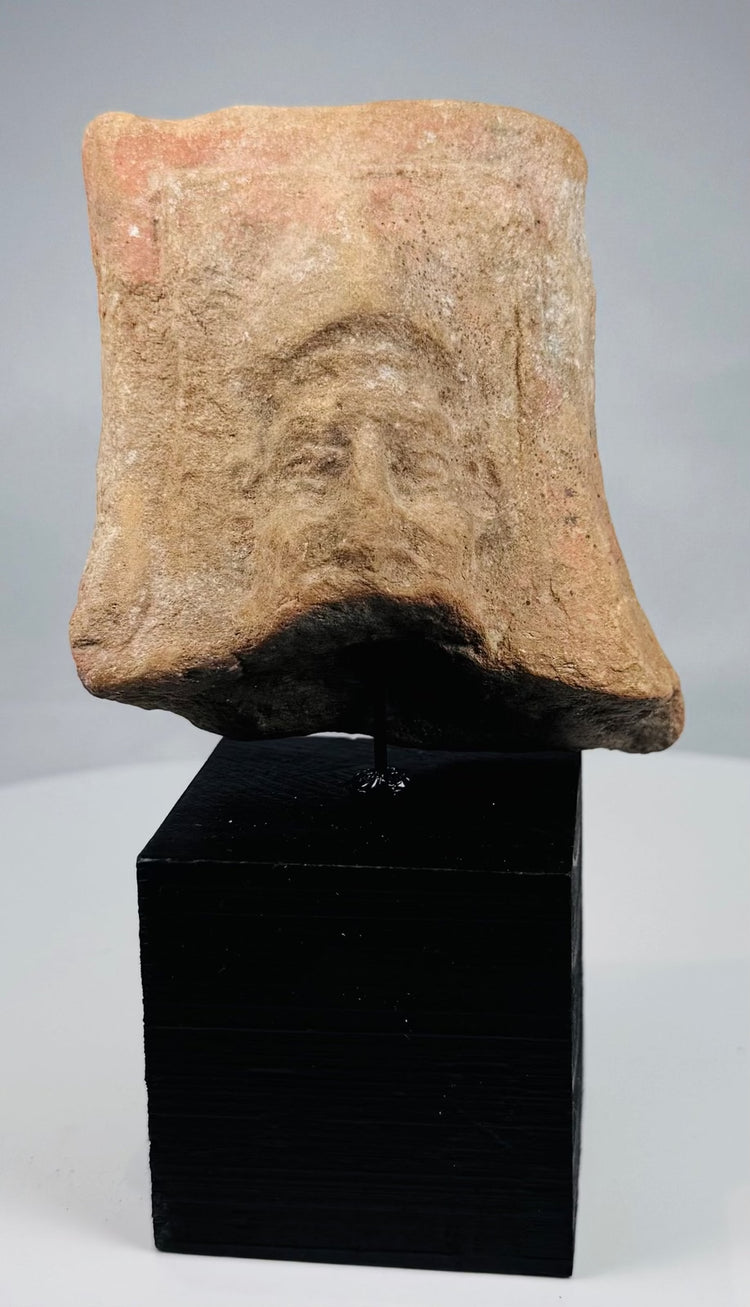
Cet intrigant fragment d'ancienne terre cuite est mieux décrit comme la partie supérieure d'une plaque en relief moulée, représentant le visage frontal d'un homme mature modelé en bas-relief. Le sujet a des yeux profondément enfoncés, un nez large, des contours faciaux prononcés, et ce qui semble être une moustache ou une barbe courte. Son expression vieillie peut représenter un mortel âgé, une divinité, un personnage théâtral ou un masque protecteur.
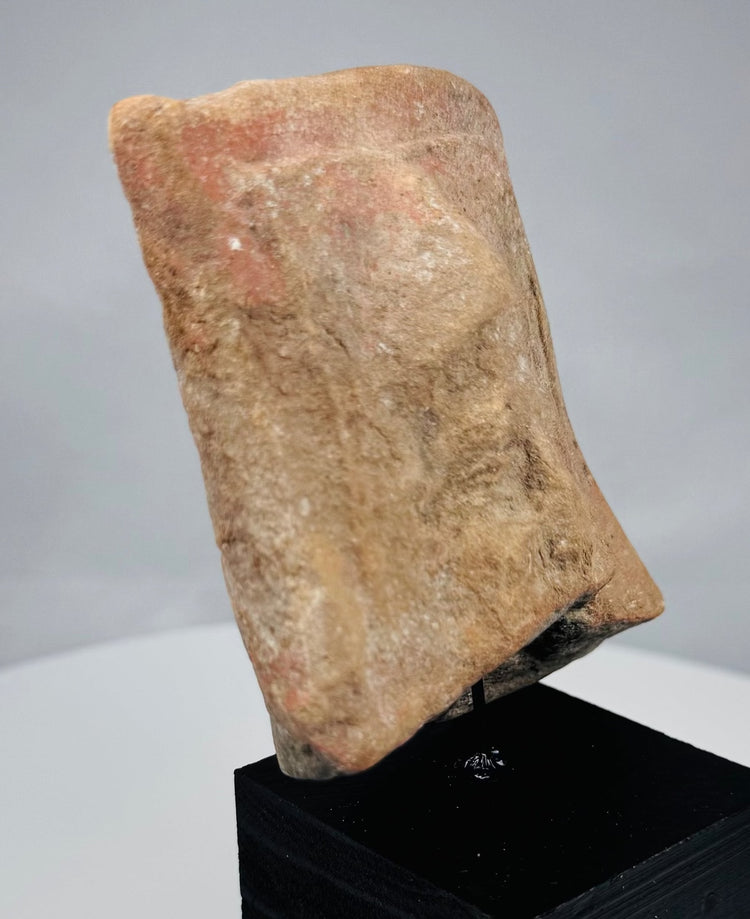
Le visage est placé dans un champ rectangulaire légèrement en retrait, bordé de lignes de cadre en relief. De faibles pigments rougeâtres restent visibles autour des bords supérieurs et latéraux, indiquant que la plaque était à l'origine peinte. Les anciens reliefs en terre cuite étaient fréquemment rehaussés de pigments minéraux, bien qu'une grande partie de leur couleur d'origine soit maintenant perdue. Des plaques anciennes comparables étaient produites à partir de moules et pouvaient conserver des surfaces peintes ou des engobes colorés.
Le bord inférieur concave irrégulier suggère que cet objet subsiste comme la partie supérieure d'une composition plus vaste. Il peut avoir formé à l'origine une partie d'une plaque votive, d'un ornement architectural, d'un élément funéraire ou d'un panneau décoratif en relief.
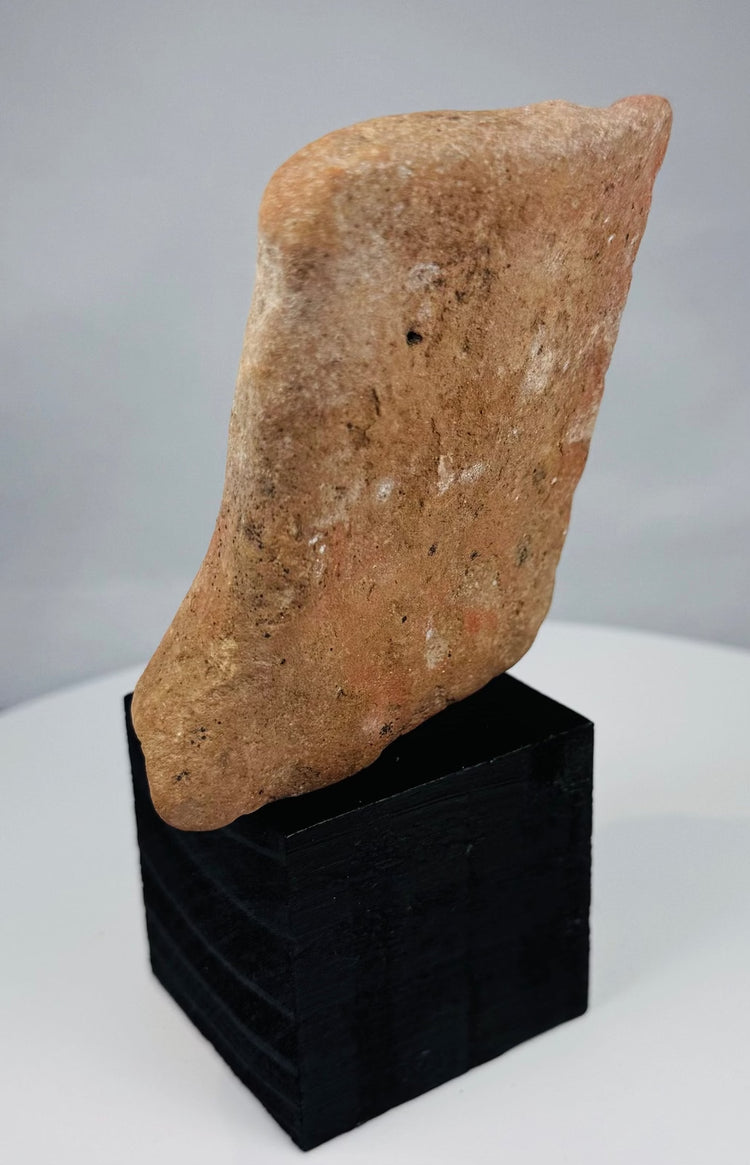
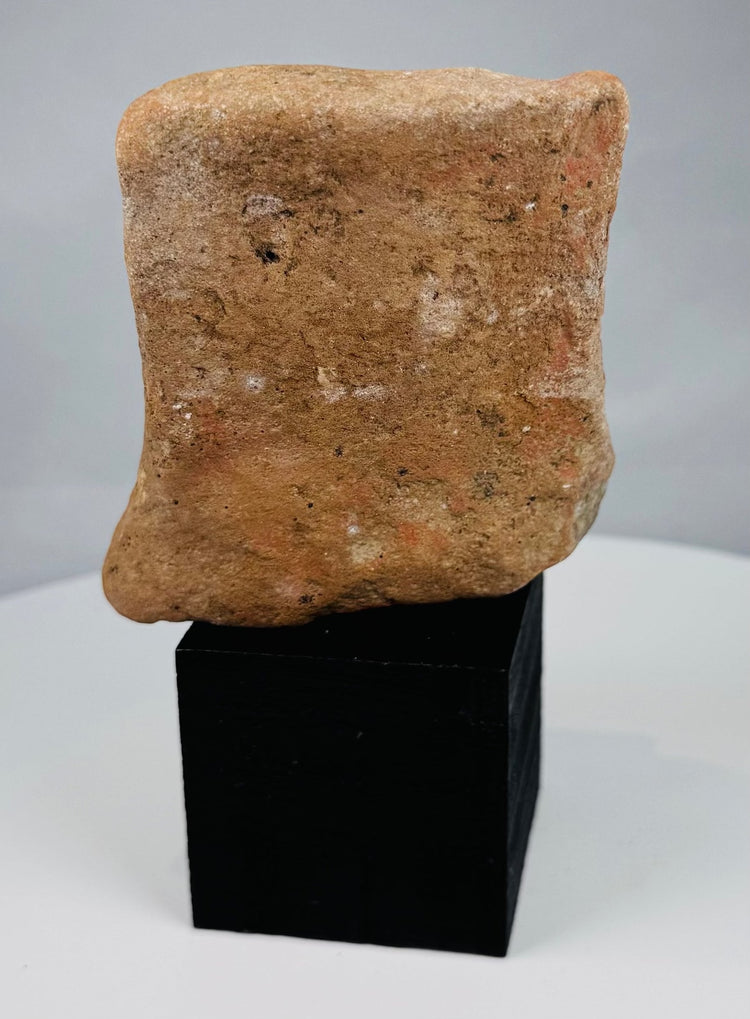
Le revers est simple et grossièrement fini, ce qui est cohérent avec un objet destiné à être vu principalement de face. Il est présenté sur un support d'affichage noir personnalisé ultérieur.
Caractéristiques
- Visage masculin frontal rendu en bas-relief
- Caractéristiques faciales matures ou âgées
- Cadre rectangulaire en relief
- Traces subsistantes de pigment rouge en surface
- Probablement la partie supérieure d'une composition en relief plus grande
- Fonction votive, funéraire ou architecturale possible
- Monté sur un support d'affichage personnalisé ultérieur
- Provenance d'une collection new-yorkaise de longue date
Signification culturelle
De petits reliefs en terre cuite moulés ont été produits dans tout l'ancien bassin méditerranéen à des fins religieuses, funéraires, domestiques et architecturales. Leurs sujets comprenaient des divinités, des adorateurs, des masques théâtraux, des figures mythologiques et des individus ordinaires. La terre cuite offrait un moyen accessible de reproduire des images sacrées et décoratives, tandis que l'application de pigments colorés donnait à l'objet fini une apparence sensiblement plus vive que ne le suggère sa surface actuellement altérée.
État
La plaque subsiste sous forme de fragment, avec une perte substantielle de la partie inférieure et un adoucissement attendu des détails faciaux moulés. La surface présente une usure étendue due à l'âge, des abrasions, des dépôts minéraux, une décoloration dispersée, de petits éclats et des pertes le long des bords. De faibles traces de pigment rougeâtre subsistent autour de certaines parties du bord. Le revers est patiné et non fini. Monté sur un support d'affichage noir personnalisé ultérieur. L'état est conforme à un âge considérable et à une conservation archéologique.
Dimensions (approximatives)
Hauteur : 5,5 pouces
Largeur : 3,5 pouces
Profondeur : 2 pouces
Âge (approximatif)
1 800–2 300 ans
Provenance
Anciennement dans la collection de Jack Guevrekian, Manhasset, New York, un numismate et collectionneur new-yorkais renommé avec un intérêt particulier pour la numismatique arménienne, les antiquités et les matériaux anciens. Guevrekian a constitué une vaste collection sur plusieurs décennies, dont une partie importante a été publiquement proposée sous le nom de The Jack Guevrekian Collection par la Numismatic & Antiquarian Service Corporation of America à New York en 1977.
Par la suite détenu dans une collection privée de New York.
Plus tard géré par la Howard S. Rose Gallery / Arte Primitivo à New York, une galerie et maison de vente aux enchères spécialisée de longue date dans les antiquités et œuvres d'art précolombiennes, classiques, égyptiennes, asiatiques et ethnographiques. La galerie a organisé des ventes aux enchères spécialisées, des expositions et des ventes privées depuis ses locaux de New York.
Ensuite géré par Artemis Fine Arts / Artemis Gallery, un spécialiste basé au Colorado en antiquités, art ancien, matériel ethnographique et beaux-arts, actif dans le domaine depuis 1993.
Puis est entré dans une collection privée à Toronto, Ontario, Canada.
En savoir plus
Voir un relief en terre cuite ancien similaire dans la collection du Metropolitan Museum of Art
Explorez notre Collection de céramiques, poteries et art du patrimoine ancien
Description
Contexte historique et origine
Région : Méditerranée orientale, potentiellement grecque, hellénistique ou romaine provinciale
Matériau : Terre cuite moulée avec des traces de pigment rouge
Période : Période hellénistique–romaine, environ du IIIe siècle avant notre ère au IIe siècle de notre ère
Description
Cet intrigant fragment d'ancienne terre cuite est mieux décrit comme la partie supérieure d'une plaque en relief moulée, représentant le visage frontal d'un homme mature modelé en bas-relief. Le sujet a des yeux profondément enfoncés, un nez large, des contours faciaux prononcés, et ce qui semble être une moustache ou une barbe courte. Son expression vieillie peut représenter un mortel âgé, une divinité, un personnage théâtral ou un masque protecteur.
Le visage est placé dans un champ rectangulaire légèrement en retrait, bordé de lignes de cadre en relief. De faibles pigments rougeâtres restent visibles autour des bords supérieurs et latéraux, indiquant que la plaque était à l'origine peinte. Les anciens reliefs en terre cuite étaient fréquemment rehaussés de pigments minéraux, bien qu'une grande partie de leur couleur d'origine soit maintenant perdue. Des plaques anciennes comparables étaient produites à partir de moules et pouvaient conserver des surfaces peintes ou des engobes colorés.
Le bord inférieur concave irrégulier suggère que cet objet subsiste comme la partie supérieure d'une composition plus vaste. Il peut avoir formé à l'origine une partie d'une plaque votive, d'un ornement architectural, d'un élément funéraire ou d'un panneau décoratif en relief.
Le revers est simple et grossièrement fini, ce qui est cohérent avec un objet destiné à être vu principalement de face. Il est présenté sur un support d'affichage noir personnalisé ultérieur.
Caractéristiques
- Visage masculin frontal rendu en bas-relief
- Caractéristiques faciales matures ou âgées
- Cadre rectangulaire en relief
- Traces subsistantes de pigment rouge en surface
- Probablement la partie supérieure d'une composition en relief plus grande
- Fonction votive, funéraire ou architecturale possible
- Monté sur un support d'affichage personnalisé ultérieur
- Provenance d'une collection new-yorkaise de longue date
Signification culturelle
De petits reliefs en terre cuite moulés ont été produits dans tout l'ancien bassin méditerranéen à des fins religieuses, funéraires, domestiques et architecturales. Leurs sujets comprenaient des divinités, des adorateurs, des masques théâtraux, des figures mythologiques et des individus ordinaires. La terre cuite offrait un moyen accessible de reproduire des images sacrées et décoratives, tandis que l'application de pigments colorés donnait à l'objet fini une apparence sensiblement plus vive que ne le suggère sa surface actuellement altérée.
État
La plaque subsiste sous forme de fragment, avec une perte substantielle de la partie inférieure et un adoucissement attendu des détails faciaux moulés. La surface présente une usure étendue due à l'âge, des abrasions, des dépôts minéraux, une décoloration dispersée, de petits éclats et des pertes le long des bords. De faibles traces de pigment rougeâtre subsistent autour de certaines parties du bord. Le revers est patiné et non fini. Monté sur un support d'affichage noir personnalisé ultérieur. L'état est conforme à un âge considérable et à une conservation archéologique.
Dimensions (approximatives)
Hauteur : 5,5 pouces
Largeur : 3,5 pouces
Profondeur : 2 pouces
Âge (approximatif)
1 800–2 300 ans
Provenance
Anciennement dans la collection de Jack Guevrekian, Manhasset, New York, un numismate et collectionneur new-yorkais renommé avec un intérêt particulier pour la numismatique arménienne, les antiquités et les matériaux anciens. Guevrekian a constitué une vaste collection sur plusieurs décennies, dont une partie importante a été publiquement proposée sous le nom de The Jack Guevrekian Collection par la Numismatic & Antiquarian Service Corporation of America à New York en 1977.
Par la suite détenu dans une collection privée de New York.
Plus tard géré par la Howard S. Rose Gallery / Arte Primitivo à New York, une galerie et maison de vente aux enchères spécialisée de longue date dans les antiquités et œuvres d'art précolombiennes, classiques, égyptiennes, asiatiques et ethnographiques. La galerie a organisé des ventes aux enchères spécialisées, des expositions et des ventes privées depuis ses locaux de New York.
Ensuite géré par Artemis Fine Arts / Artemis Gallery, un spécialiste basé au Colorado en antiquités, art ancien, matériel ethnographique et beaux-arts, actif dans le domaine depuis 1993.
Puis est entré dans une collection privée à Toronto, Ontario, Canada.
En savoir plus
Voir un relief en terre cuite ancien similaire dans la collection du Metropolitan Museum of Art
Explorez notre Collection de céramiques, poteries et art du patrimoine ancien
Vous aimerez peut-être aussi
