

Pot à quenouille gris du Proche-Orient ancien | Probablement de l'âge du fer iranien | Vers 1000 – 600 av. J.-C.
- Prix habituel
- $750.00
- Prix soldé
- $750.00
- Prix habituel
Impossible de charger la disponibilité du service de retrait


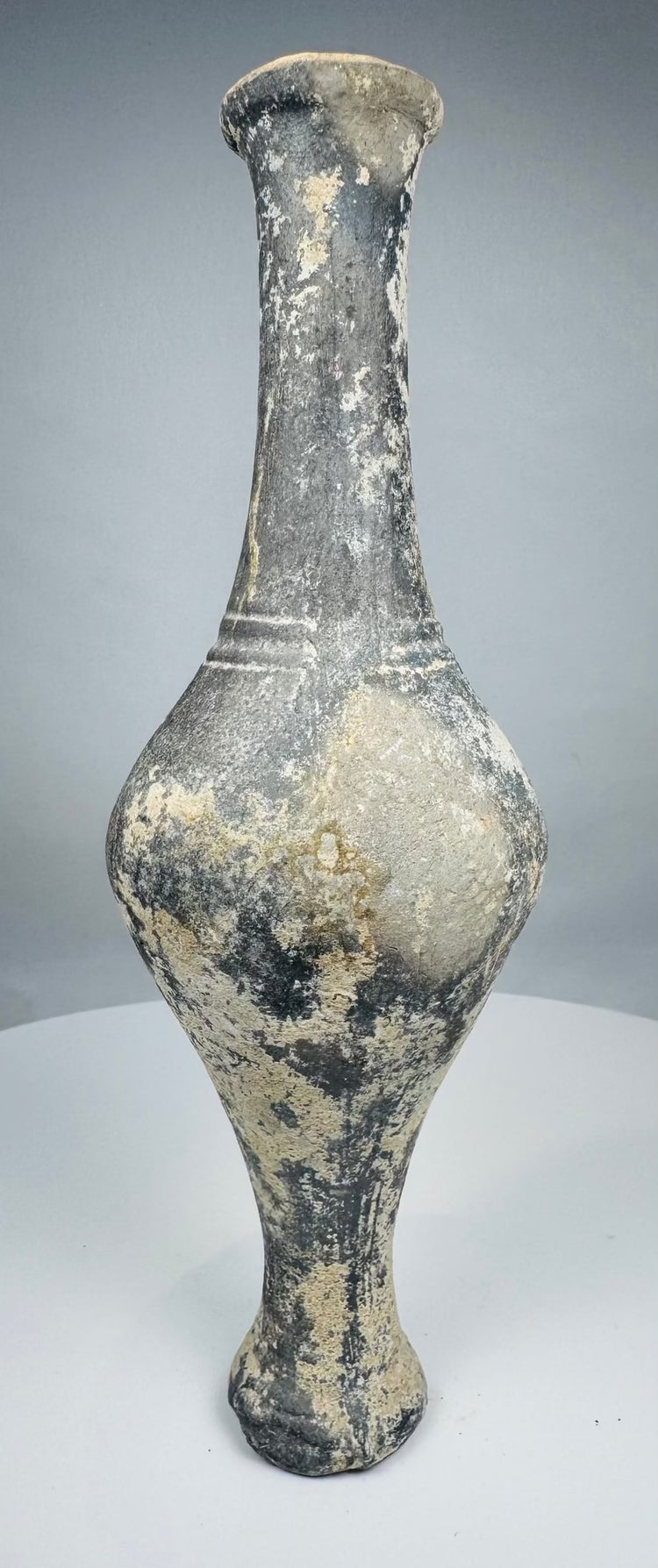
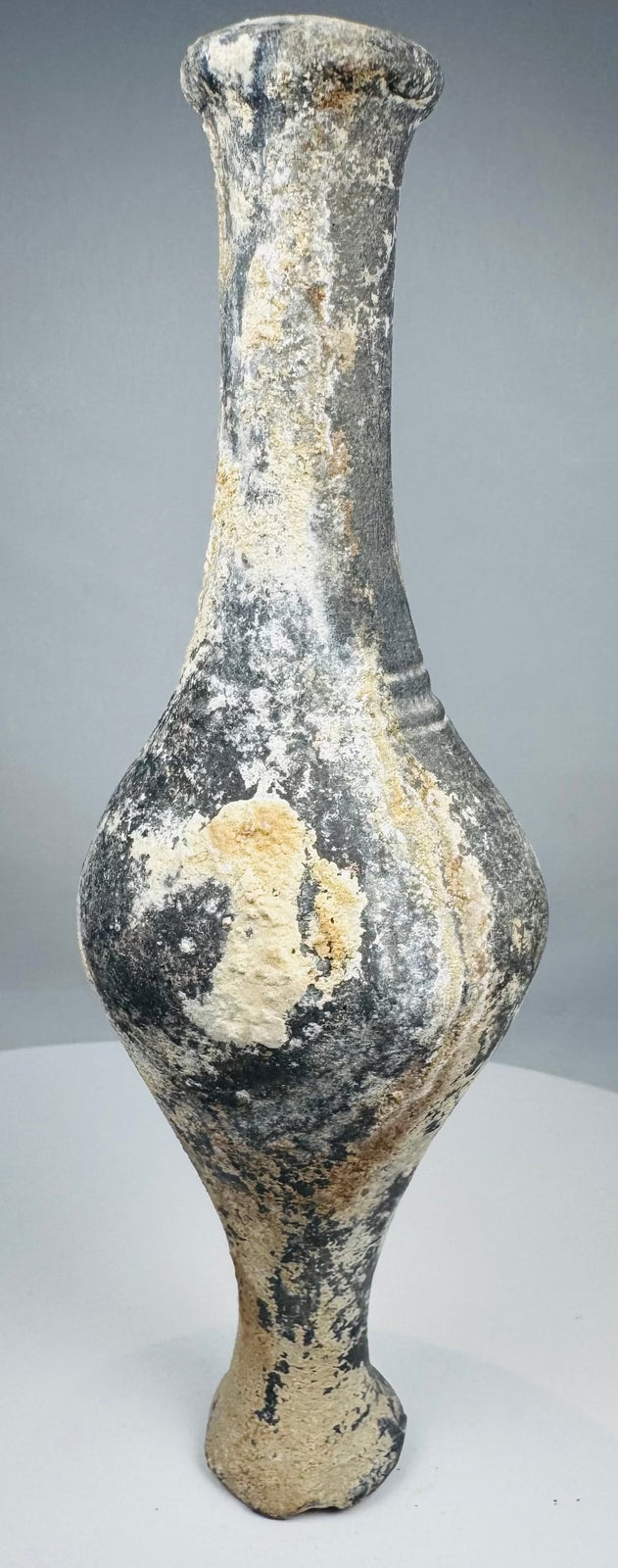
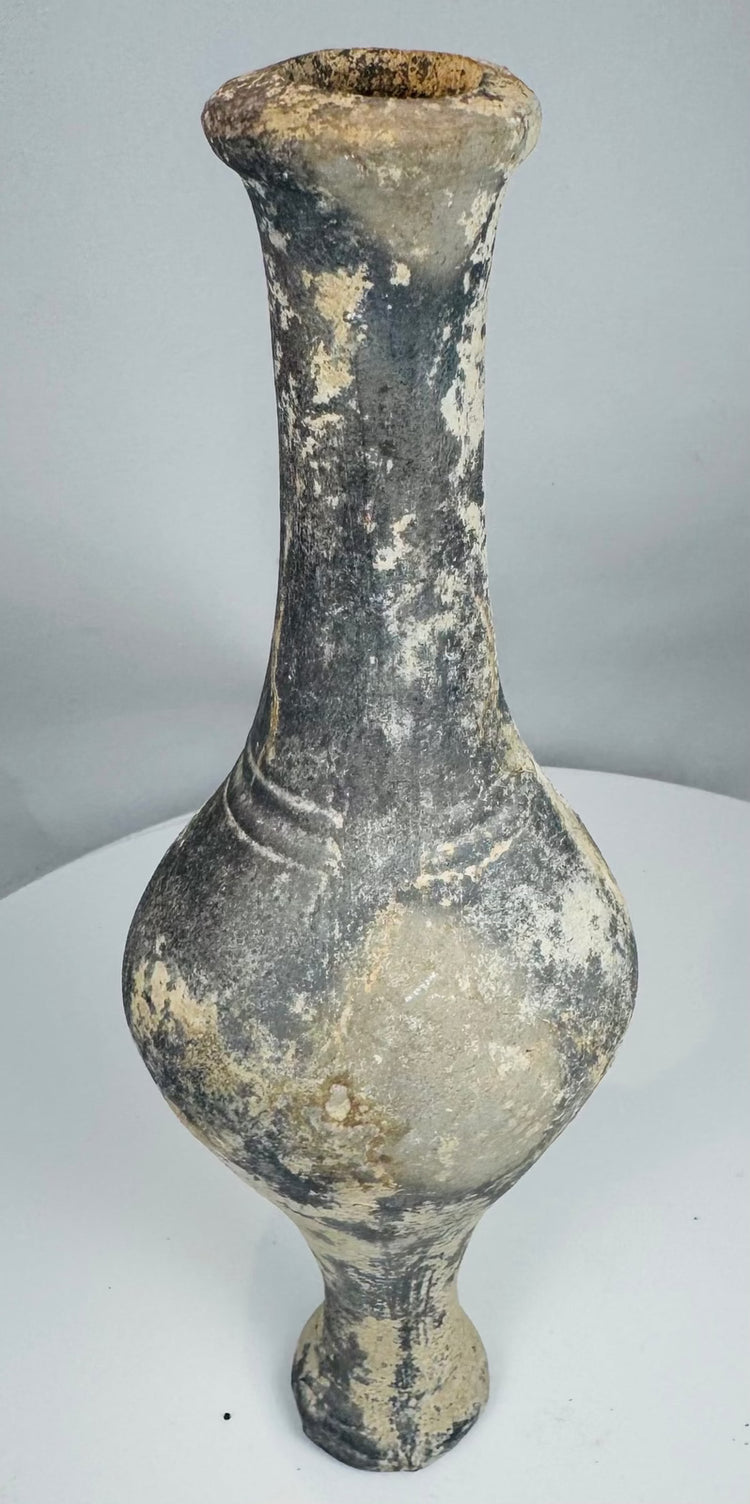
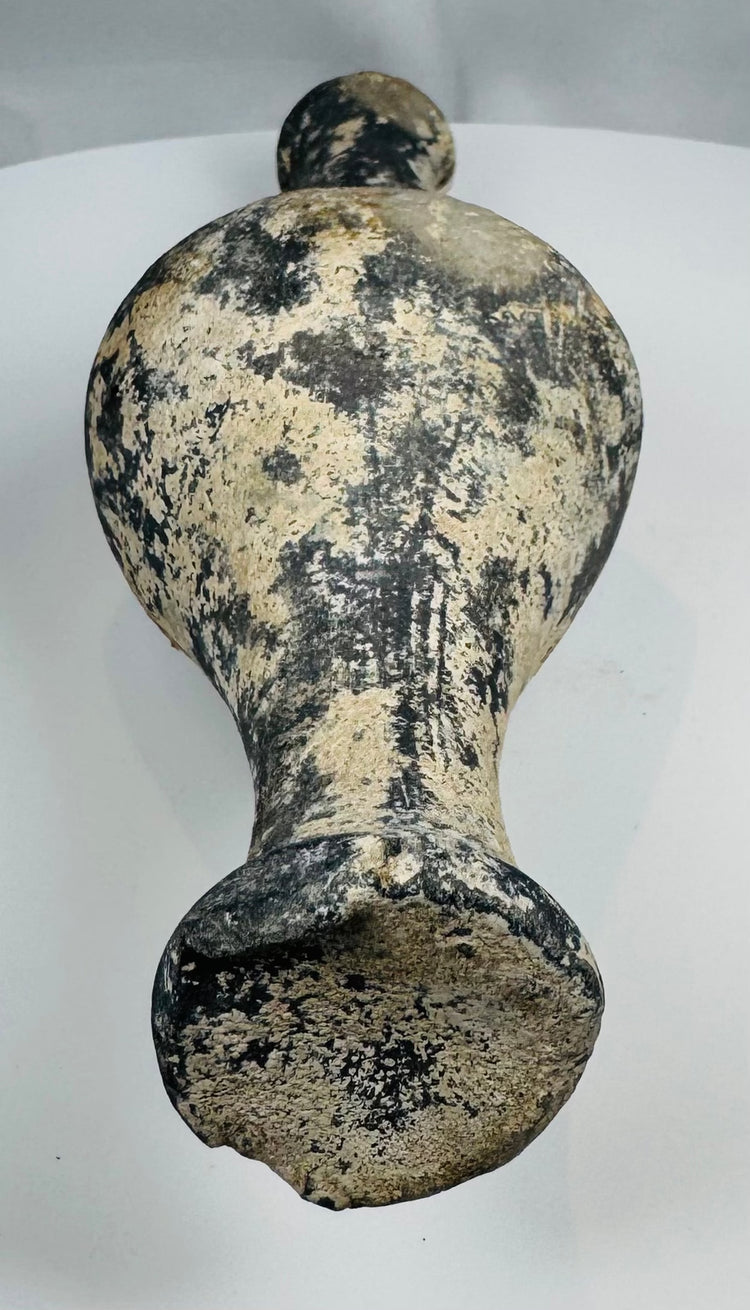
Pot à quenouille gris du Proche-Orient ancien | Probablement de l'âge du fer iranien | Vers 1000 – 600 av. J.-C.
Description
Plus
Moins
Contexte historique et origine
Région : Proche-Orient ancien, probablement le plateau iranien
Matériau : Terre cuite grisâtre façonnée au tour, surface brunie foncée avec concrétions minérales
Période : Âge du fer, début du premier millénaire avant J.-C., vers 1000–600 avant J.-C.
Description
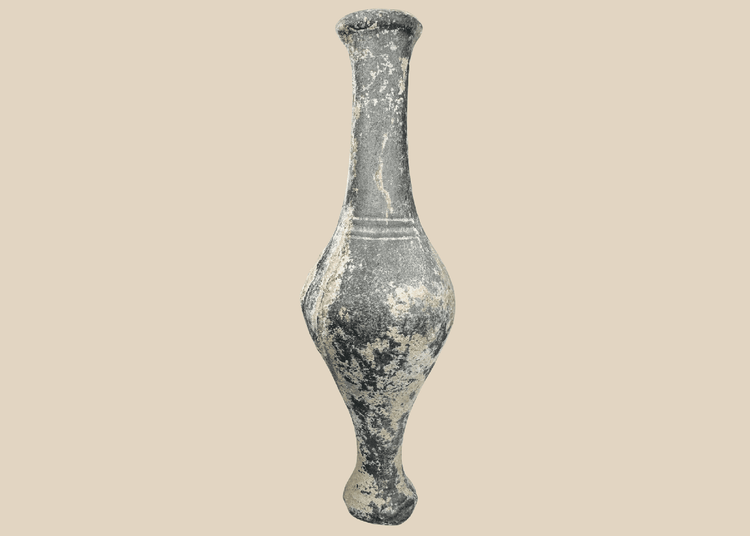
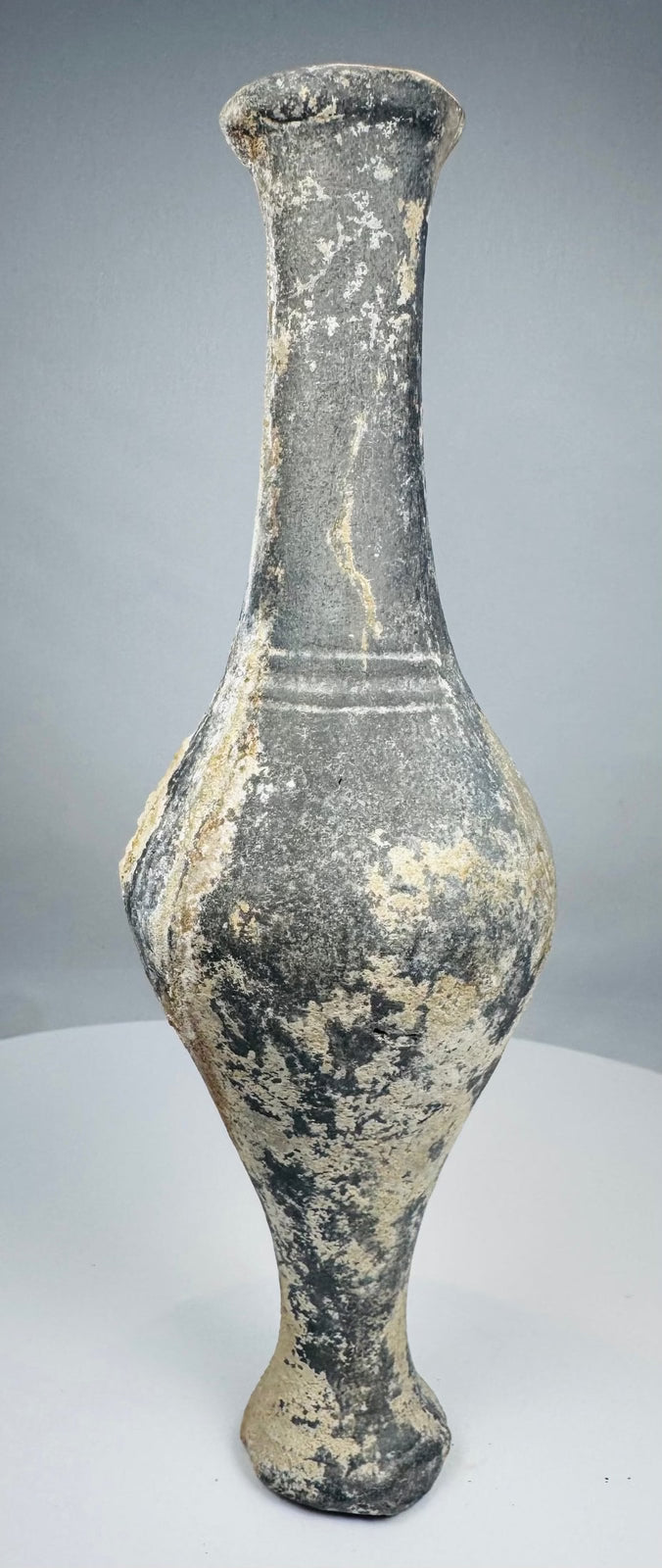
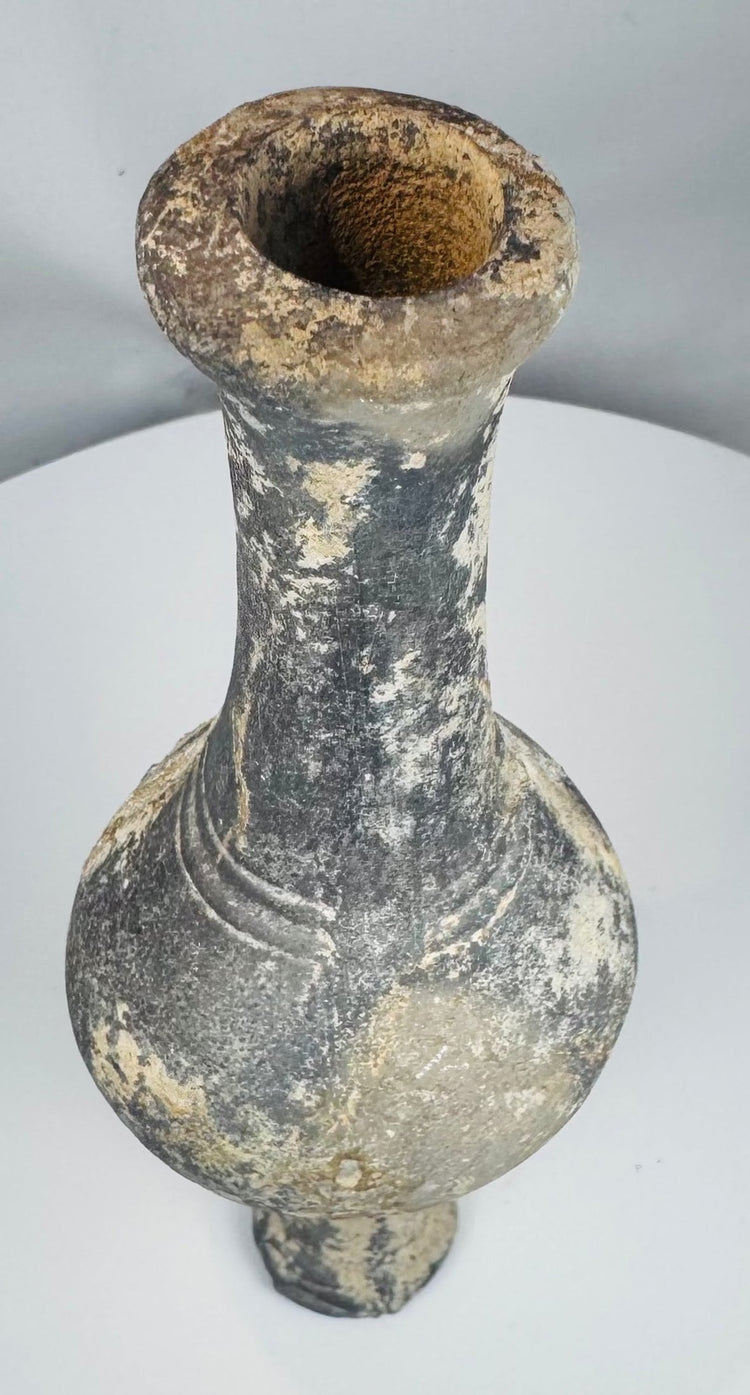
Ce récipient en poterie grisâtre antique est un bocal ou une bouteille de forme fusiforme, aux proportions délicates, datant du début du premier millénaire avant J.-C.
Le récipient présente un corps central arrondi, presque globulaire, qui se rétrécit brusquement vers les deux extrémités, produisant une silhouette élégante et allongée.
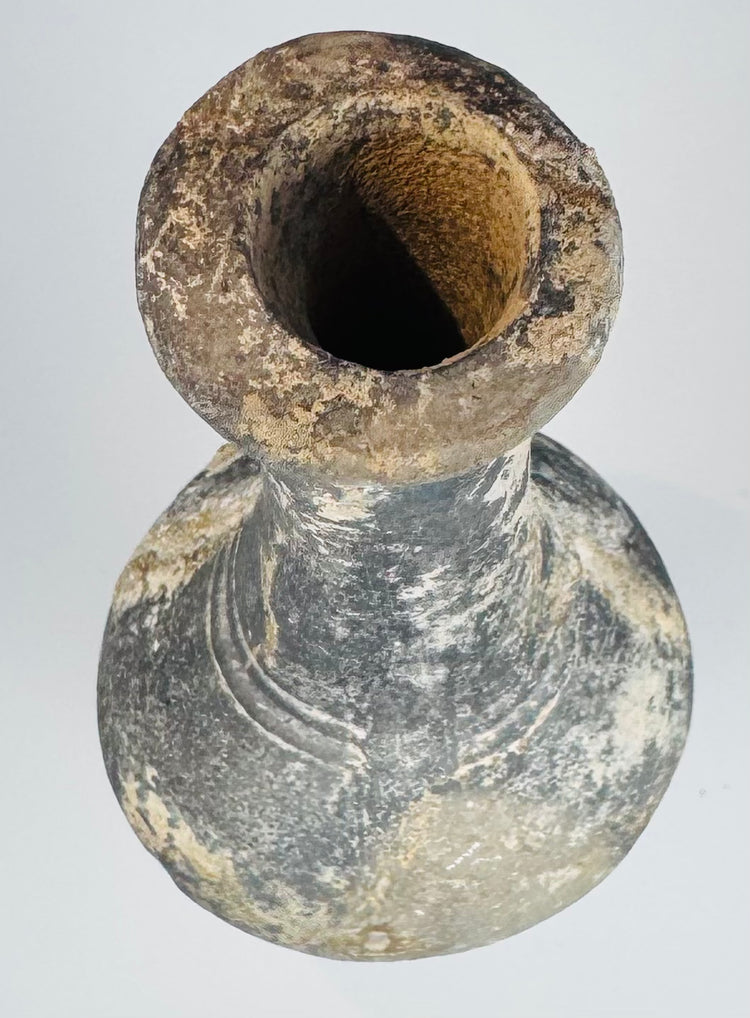
La partie supérieure du corps s'élève en un col haut et élancé se terminant par un rebord épaissi et évasé vers l'extérieur, entourant une ouverture relativement étroite. Deux fines arêtes horizontales encerclent la jonction entre le col et l'épaule, soulignant subtilement la transition vers le corps renflé.
En dessous, le corps se contracte en une tige inférieure étroite avant de s'élargir en un petit pied piédestal circulaire. Cette construction à pied élevé rehausse le récipient et crée le profil fusiforme d'où dérive le nom descriptif.
Le récipient a été formé à partir d'argile à cuisson grise et conserve de vastes zones d'une surface gris foncé à presque noire, probablement produite par une cuisson contrôlée et un brunissage ultérieur.
Des dépôts de terre beige pâle et des concrétions minérales recouvrent des portions substantielles du corps, créant un contraste saisissant avec la surface sombre restante.
Son ouverture étroite et son intérieur profond auraient rendu le récipient apte à stocker et à distribuer des liquides ou des substances relativement précieuses, potentiellement des huiles, des parfums, des médicaments ou des préparations cérémonielles. Sa fonction originale exacte ne peut être établie sans un contexte archéologique.
La poterie grise brunie a été produite dans plusieurs régions de l'Iran ancien pendant la fin de l'âge du bronze et l'âge du fer. Des poteries comparables sont documentées sur des sites tels que Hasanlu, Dinkha Tepe, Marlik et des cimetières du nord de l'Iran, bien que les formes et les dates des récipients varient considérablement d'une région à l'autre.
Caractéristiques
- Attribution au début du premier millénaire avant J.-C.
- Bouteille haute et allongée en forme de fuseau
- Corps central rond et globulaire
- Long col étroit
- Bord épaissi et évasé
- Deux arêtes horizontales à l'épaule
- Tige inférieure étroite
- Pied piédestal circulaire surélevé
- Surface brunie gris foncé à noire
- Vastes concrétions minérales pâles et dépôts de terre
Signification culturelle
La poterie grisâtre brunie représente une importante tradition céramique de l'Iran ancien et des régions voisines. Ces récipients ont été produits sous de nombreuses formes, notamment des bols, des cruches, des tasses, des récipients à piédestal et des bouteilles à long col, et sont fréquemment rencontrés dans les assemblages funéraires.
La cuisson contrôlée nécessaire pour produire une surface céramique grise ou noire démontre l'habileté technique des potiers antiques. Le brunissage comprimait et polissait la surface de l'argile avant la cuisson, produisant une finition plus lisse qui pouvait ressembler à de la pierre ou du métal.
Les proportions raffinées de ce récipient suggèrent qu'il a pu servir à un usage plus spécialisé que le simple stockage en vrac. Son ouverture étroite aurait limité l'évaporation et permis de distribuer son contenu en quantités contrôlées.
Condition
Le récipient reste substantiellement intact et structurellement stable.
L'usure liée à l'âge comprend des dépôts minéraux pâles étendus, des concrétions d'enfouissement, une décoloration, des rayures, des abrasions, des piqûres et des pertes généralisées de la surface brunie foncée.
Le bord présente des éclats mineurs, des abrasions et une irrégularité naturelle, tandis que le pied du piédestal présente une usure des bords et de petites pertes.
De subtiles marques de façonnage au tour, des irrégularités de cuisson et des contours inégaux sont visibles partout.
Dimensions (approximatives)
Hauteur : 20,3 cm (8 pouces)
Diamètre : 7,6 cm (3 pouces)
Âge (approximatif)
2 600 à 3 000 ans
Provenance
Anciennement dans la collection de Jack Guevrekian, Manhasset, New York, un numismate et collectionneur new-yorkais renommé, particulièrement intéressé par la monnaie arménienne, les antiquités et les objets anciens. Guevrekian a constitué une vaste collection sur plusieurs décennies, dont une partie importante a été publiquement proposée sous le nom de The Jack Guevrekian Collection par la Numismatic & Antiquarian Service Corporation of America à New York en 1977.
Par la suite conservé dans une collection privée de New York.
Ensuite, il a été géré par la Howard S. Rose Gallery / Arte Primitivo à New York, une galerie spécialisée et une maison de vente aux enchères de longue date traitant des antiquités et des œuvres d'art précolombiennes, classiques, égyptiennes, asiatiques et ethnographiques. La galerie a organisé des ventes aux enchères spécialisées, des expositions et des ventes privées depuis ses locaux de New York.
Ensuite, il a été géré par Artemis Fine Arts / Artemis Gallery, un spécialiste des antiquités, de l'art ancien, du matériel ethnographique et des beaux-arts basé au Colorado, actif dans le domaine depuis 1993.
Puis est entré dans une collection privée à Toronto, Ontario, Canada.
En savoir plus
Découvrez une bouteille en céramique de l'âge du fer apparentée, provenant d'Iran, dans la collection de The Metropolitan Museum of Art
Explorez notre Collection de Céramiques, Poteries et Art du Patrimoine Ancien
Description
Contexte historique et origine
Région : Proche-Orient ancien, probablement le plateau iranien
Matériau : Terre cuite grisâtre façonnée au tour, surface brunie foncée avec concrétions minérales
Période : Âge du fer, début du premier millénaire avant J.-C., vers 1000–600 avant J.-C.
Description
Ce récipient en poterie grisâtre antique est un bocal ou une bouteille de forme fusiforme, aux proportions délicates, datant du début du premier millénaire avant J.-C.
Le récipient présente un corps central arrondi, presque globulaire, qui se rétrécit brusquement vers les deux extrémités, produisant une silhouette élégante et allongée.
La partie supérieure du corps s'élève en un col haut et élancé se terminant par un rebord épaissi et évasé vers l'extérieur, entourant une ouverture relativement étroite. Deux fines arêtes horizontales encerclent la jonction entre le col et l'épaule, soulignant subtilement la transition vers le corps renflé.
En dessous, le corps se contracte en une tige inférieure étroite avant de s'élargir en un petit pied piédestal circulaire. Cette construction à pied élevé rehausse le récipient et crée le profil fusiforme d'où dérive le nom descriptif.
Le récipient a été formé à partir d'argile à cuisson grise et conserve de vastes zones d'une surface gris foncé à presque noire, probablement produite par une cuisson contrôlée et un brunissage ultérieur.
Des dépôts de terre beige pâle et des concrétions minérales recouvrent des portions substantielles du corps, créant un contraste saisissant avec la surface sombre restante.
Son ouverture étroite et son intérieur profond auraient rendu le récipient apte à stocker et à distribuer des liquides ou des substances relativement précieuses, potentiellement des huiles, des parfums, des médicaments ou des préparations cérémonielles. Sa fonction originale exacte ne peut être établie sans un contexte archéologique.
La poterie grise brunie a été produite dans plusieurs régions de l'Iran ancien pendant la fin de l'âge du bronze et l'âge du fer. Des poteries comparables sont documentées sur des sites tels que Hasanlu, Dinkha Tepe, Marlik et des cimetières du nord de l'Iran, bien que les formes et les dates des récipients varient considérablement d'une région à l'autre.
Caractéristiques
- Attribution au début du premier millénaire avant J.-C.
- Bouteille haute et allongée en forme de fuseau
- Corps central rond et globulaire
- Long col étroit
- Bord épaissi et évasé
- Deux arêtes horizontales à l'épaule
- Tige inférieure étroite
- Pied piédestal circulaire surélevé
- Surface brunie gris foncé à noire
- Vastes concrétions minérales pâles et dépôts de terre
Signification culturelle
La poterie grisâtre brunie représente une importante tradition céramique de l'Iran ancien et des régions voisines. Ces récipients ont été produits sous de nombreuses formes, notamment des bols, des cruches, des tasses, des récipients à piédestal et des bouteilles à long col, et sont fréquemment rencontrés dans les assemblages funéraires.
La cuisson contrôlée nécessaire pour produire une surface céramique grise ou noire démontre l'habileté technique des potiers antiques. Le brunissage comprimait et polissait la surface de l'argile avant la cuisson, produisant une finition plus lisse qui pouvait ressembler à de la pierre ou du métal.
Les proportions raffinées de ce récipient suggèrent qu'il a pu servir à un usage plus spécialisé que le simple stockage en vrac. Son ouverture étroite aurait limité l'évaporation et permis de distribuer son contenu en quantités contrôlées.
Condition
Le récipient reste substantiellement intact et structurellement stable.
L'usure liée à l'âge comprend des dépôts minéraux pâles étendus, des concrétions d'enfouissement, une décoloration, des rayures, des abrasions, des piqûres et des pertes généralisées de la surface brunie foncée.
Le bord présente des éclats mineurs, des abrasions et une irrégularité naturelle, tandis que le pied du piédestal présente une usure des bords et de petites pertes.
De subtiles marques de façonnage au tour, des irrégularités de cuisson et des contours inégaux sont visibles partout.
Dimensions (approximatives)
Hauteur : 20,3 cm (8 pouces)
Diamètre : 7,6 cm (3 pouces)
Âge (approximatif)
2 600 à 3 000 ans
Provenance
Anciennement dans la collection de Jack Guevrekian, Manhasset, New York, un numismate et collectionneur new-yorkais renommé, particulièrement intéressé par la monnaie arménienne, les antiquités et les objets anciens. Guevrekian a constitué une vaste collection sur plusieurs décennies, dont une partie importante a été publiquement proposée sous le nom de The Jack Guevrekian Collection par la Numismatic & Antiquarian Service Corporation of America à New York en 1977.
Par la suite conservé dans une collection privée de New York.
Ensuite, il a été géré par la Howard S. Rose Gallery / Arte Primitivo à New York, une galerie spécialisée et une maison de vente aux enchères de longue date traitant des antiquités et des œuvres d'art précolombiennes, classiques, égyptiennes, asiatiques et ethnographiques. La galerie a organisé des ventes aux enchères spécialisées, des expositions et des ventes privées depuis ses locaux de New York.
Ensuite, il a été géré par Artemis Fine Arts / Artemis Gallery, un spécialiste des antiquités, de l'art ancien, du matériel ethnographique et des beaux-arts basé au Colorado, actif dans le domaine depuis 1993.
Puis est entré dans une collection privée à Toronto, Ontario, Canada.
En savoir plus
Découvrez une bouteille en céramique de l'âge du fer apparentée, provenant d'Iran, dans la collection de The Metropolitan Museum of Art
Explorez notre Collection de Céramiques, Poteries et Art du Patrimoine Ancien
Vous aimerez peut-être aussi
