
Ancien chandelier unguentarium en verre bleu romain | Vers le 1er-3e siècle après J.-C.
- Prix habituel
- $600.00
- Prix soldé
- $600.00
- Prix habituel
Impossible de charger la disponibilité du service de retrait


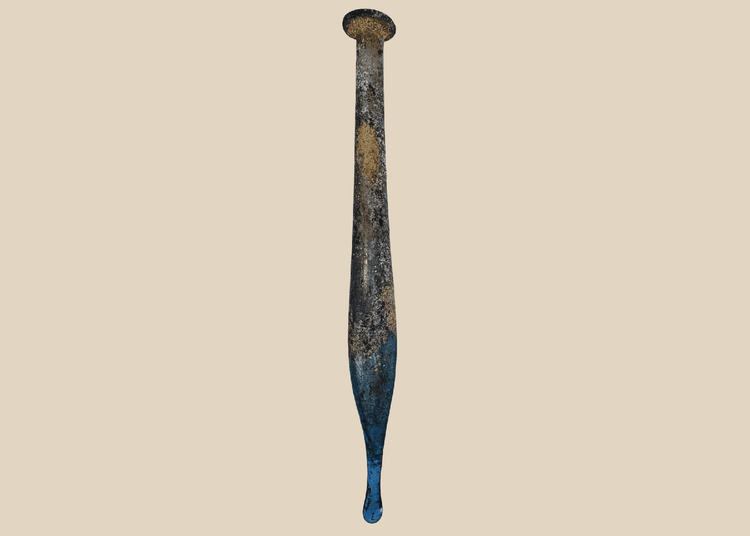


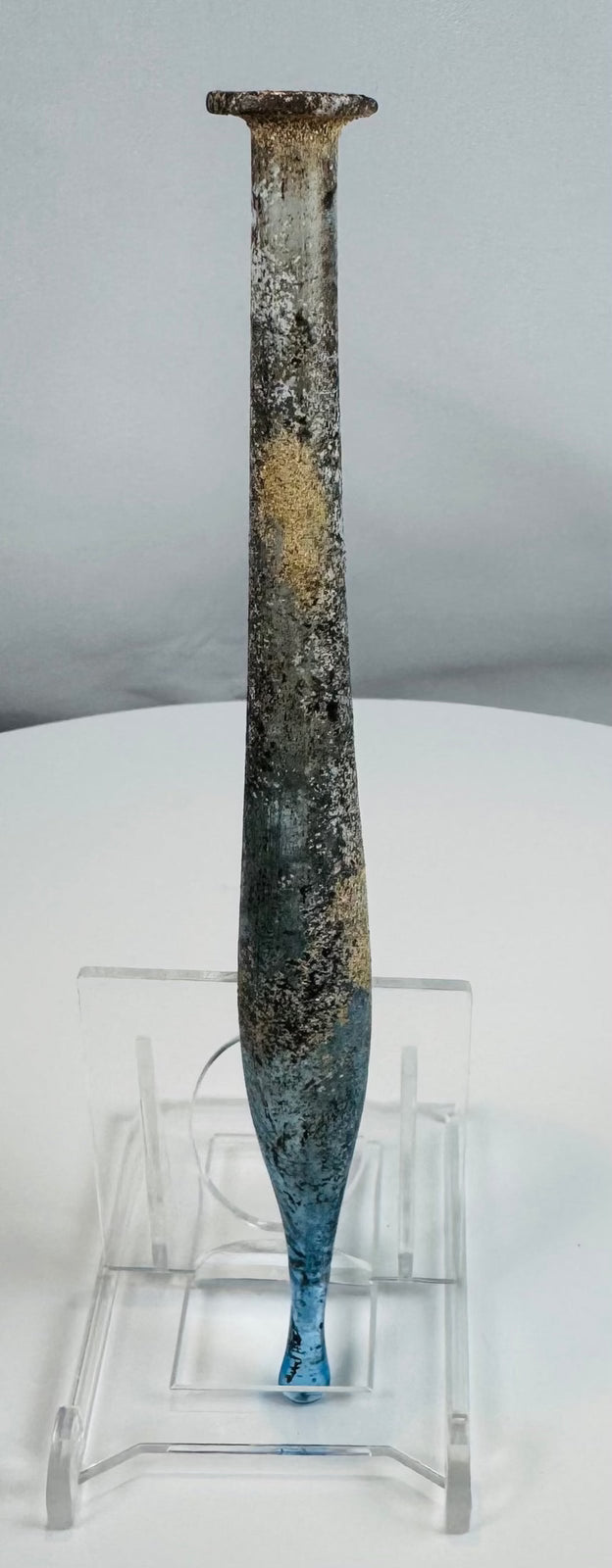
Ancien chandelier unguentarium en verre bleu romain | Vers le 1er-3e siècle après J.-C.
Description
Plus
Moins
Contexte historique et origine
Région : Méditerranée orientale / Empire romain
Matériau : Verre soufflé bleu
Période : Période impériale romaine, vers le 1er–3e siècle ap. J.-C.
Description
Cet authentique unguentarium romain en forme de chandelier est un exemple frappant des élégants récipients personnels utilisés dans tout l'Empire romain pour stocker les parfums, les huiles aromatiques, les préparations médicinales et les substances cosmétiques. Caractérisé par son corps fusiforme allongé (en forme de fuseau), son col tubulaire étroit et son rebord évasé, ce récipient représente l'une des formes les plus distinctives et reconnaissables de la verrerie romaine.
Souvent appelé « bouteille à larmes » ou « lachrymatory » dans le commerce des antiquités, les récipients de ce type étaient couramment trouvés dans des contextes domestiques, funéraires et cérémoniels dans tout le monde romain. La recherche moderne identifie généralement ces récipients comme des unguentaria destinés à des liquides précieux plutôt que des collecteurs de larmes littéraux, reflétant leur rôle pratique dans la vie quotidienne et les soins personnels.
Fabriqué à l'aide de la technique révolutionnaire du verre soufflé introduite à la fin des périodes hellénistique et romaine, cet exemple présente une belle coloration bleu pâle, accentuée par des siècles d'enfouissement. Des unguentaria en forme de chandelier similaires ont été découverts sur des sites archéologiques de tout l'Empire romain et sont représentés dans les collections de musées, illustrant l'utilisation généralisée de récipients en verre spécialisés pour les parfums, les huiles et les préparations de luxe pendant la période impériale.
Une irisation étendue, des incrustations minérales et une altération archéologique se sont développées sur la surface, créant l'apparence distinctive très prisée des collectionneurs de verre ancien. Ses proportions élégantes et son remarquable état de conservation en font un exemple exceptionnel du savoir-faire et de l'innovation technologique romains.
Caractéristiques
- Authentique unguentarium romain en forme de chandelier
- Corps élégant, allongé et fusiforme (en forme de fuseau)
- Belle coloration de verre bleu pâle
- Fabrication en verre soufflé
- Rebord évasé et col tubulaire étroit
- Présente une altération archéologique et des dépôts minéraux souhaitables
- Traditionnellement associé aux parfums, huiles, cosmétiques et préparations médicinales
- Exemple exceptionnel de verrerie romaine pour collectionneurs
Signification culturelle
L'invention du soufflage du verre a transformé la production dans tout l'Empire romain, permettant aux récipients en verre de devenir plus accessibles et plus largement distribués que jamais. Des unguentaria comme celui-ci ont joué un rôle important dans la vie quotidienne, servant de récipients pour les parfums, les huiles parfumées, les cosmétiques, les médicaments et d'autres substances précieuses. Leur utilisation généralisée reflète la sophistication du commerce romain, des pratiques de toilette personnelle et de la consommation de luxe dans le monde méditerranéen antique, tandis que leur survie offre un aperçu précieux des réalisations technologiques des verriers romains.
État
État ancien avec altération archéologique prévue, concrétions minérales, irisation, incrustation de surface, irrégularités de fabrication et usure liée à l'âge. Le récipient reste intact et très présentable. Veuillez examiner attentivement les photographies pour les détails de l'état.
Dimensions (approximatives)
Longueur : 6,5 po
Âge (approximatif)
1 700–2 000 ans
Provenance
D'une collection privée de Montréal, Québec, Canada, spécialisée dans les artefacts et antiquités romaines.
En savoir plus
Découvrez l'histoire et la fonction des unguentaria romains en forme de chandelier grâce à l'Université du Colorado à Boulder
Parcourez notre collection d'artefacts romains et grecs
Description
Contexte historique et origine
Région : Méditerranée orientale / Empire romain
Matériau : Verre soufflé bleu
Période : Période impériale romaine, vers le 1er–3e siècle ap. J.-C.
Description
Cet authentique unguentarium romain en forme de chandelier est un exemple frappant des élégants récipients personnels utilisés dans tout l'Empire romain pour stocker les parfums, les huiles aromatiques, les préparations médicinales et les substances cosmétiques. Caractérisé par son corps fusiforme allongé (en forme de fuseau), son col tubulaire étroit et son rebord évasé, ce récipient représente l'une des formes les plus distinctives et reconnaissables de la verrerie romaine.
Souvent appelé « bouteille à larmes » ou « lachrymatory » dans le commerce des antiquités, les récipients de ce type étaient couramment trouvés dans des contextes domestiques, funéraires et cérémoniels dans tout le monde romain. La recherche moderne identifie généralement ces récipients comme des unguentaria destinés à des liquides précieux plutôt que des collecteurs de larmes littéraux, reflétant leur rôle pratique dans la vie quotidienne et les soins personnels.
Fabriqué à l'aide de la technique révolutionnaire du verre soufflé introduite à la fin des périodes hellénistique et romaine, cet exemple présente une belle coloration bleu pâle, accentuée par des siècles d'enfouissement. Des unguentaria en forme de chandelier similaires ont été découverts sur des sites archéologiques de tout l'Empire romain et sont représentés dans les collections de musées, illustrant l'utilisation généralisée de récipients en verre spécialisés pour les parfums, les huiles et les préparations de luxe pendant la période impériale.
Une irisation étendue, des incrustations minérales et une altération archéologique se sont développées sur la surface, créant l'apparence distinctive très prisée des collectionneurs de verre ancien. Ses proportions élégantes et son remarquable état de conservation en font un exemple exceptionnel du savoir-faire et de l'innovation technologique romains.
Caractéristiques
- Authentique unguentarium romain en forme de chandelier
- Corps élégant, allongé et fusiforme (en forme de fuseau)
- Belle coloration de verre bleu pâle
- Fabrication en verre soufflé
- Rebord évasé et col tubulaire étroit
- Présente une altération archéologique et des dépôts minéraux souhaitables
- Traditionnellement associé aux parfums, huiles, cosmétiques et préparations médicinales
- Exemple exceptionnel de verrerie romaine pour collectionneurs
Signification culturelle
L'invention du soufflage du verre a transformé la production dans tout l'Empire romain, permettant aux récipients en verre de devenir plus accessibles et plus largement distribués que jamais. Des unguentaria comme celui-ci ont joué un rôle important dans la vie quotidienne, servant de récipients pour les parfums, les huiles parfumées, les cosmétiques, les médicaments et d'autres substances précieuses. Leur utilisation généralisée reflète la sophistication du commerce romain, des pratiques de toilette personnelle et de la consommation de luxe dans le monde méditerranéen antique, tandis que leur survie offre un aperçu précieux des réalisations technologiques des verriers romains.
État
État ancien avec altération archéologique prévue, concrétions minérales, irisation, incrustation de surface, irrégularités de fabrication et usure liée à l'âge. Le récipient reste intact et très présentable. Veuillez examiner attentivement les photographies pour les détails de l'état.
Dimensions (approximatives)
Longueur : 6,5 po
Âge (approximatif)
1 700–2 000 ans
Provenance
D'une collection privée de Montréal, Québec, Canada, spécialisée dans les artefacts et antiquités romaines.
En savoir plus
Découvrez l'histoire et la fonction des unguentaria romains en forme de chandelier grâce à l'Université du Colorado à Boulder
Parcourez notre collection d'artefacts romains et grecs
Vous aimerez peut-être aussi
