

Récipient verseur en terre cuite de la Rome antique | Cruche en poterie méditerranéenne | Vers 100-500 ap. J.-C.
- Prix habituel
- $500.00
- Prix soldé
- $500.00
- Prix habituel
Impossible de charger la disponibilité du service de retrait


Récipient verseur en terre cuite de la Rome antique | Cruche en poterie méditerranéenne | Vers 100-500 ap. J.-C.
Description
Plus
Moins
Contexte historique et origine
Région : Bassin méditerranéen, probablement Afrique du Nord ou Méditerranée orientale
Matériau : Terre cuite
Période : Provinciale romaine / Tradition punique tardive, vers 100-500 ap. J.-C.
Description
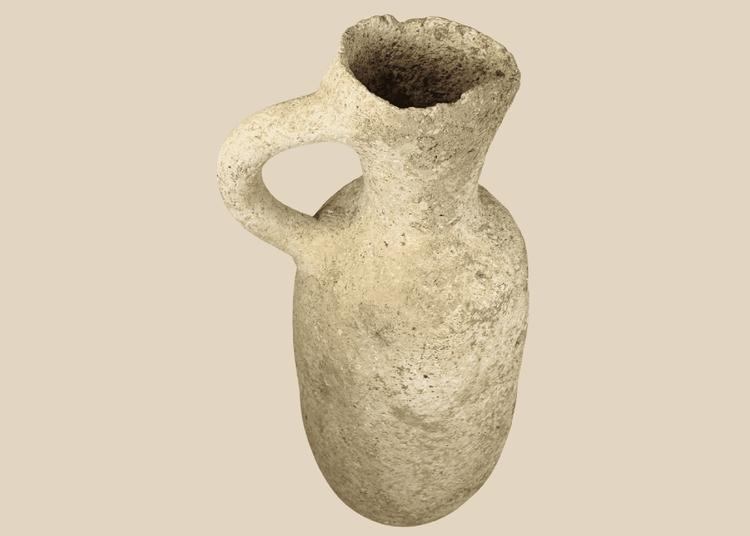
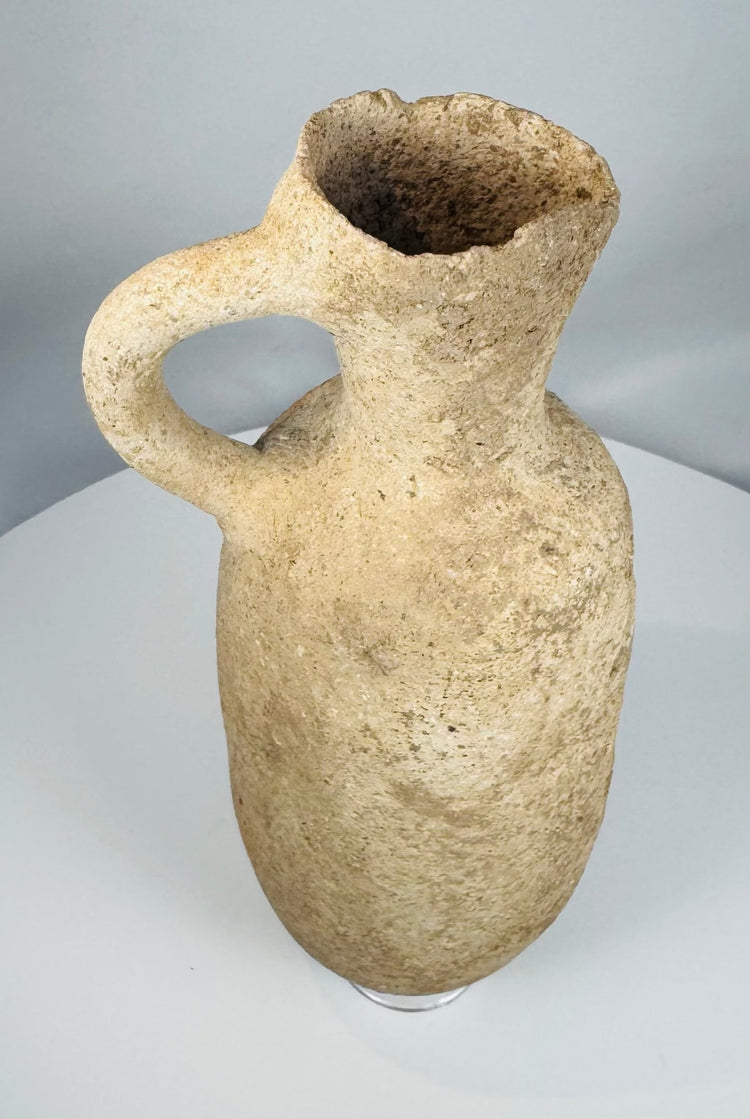
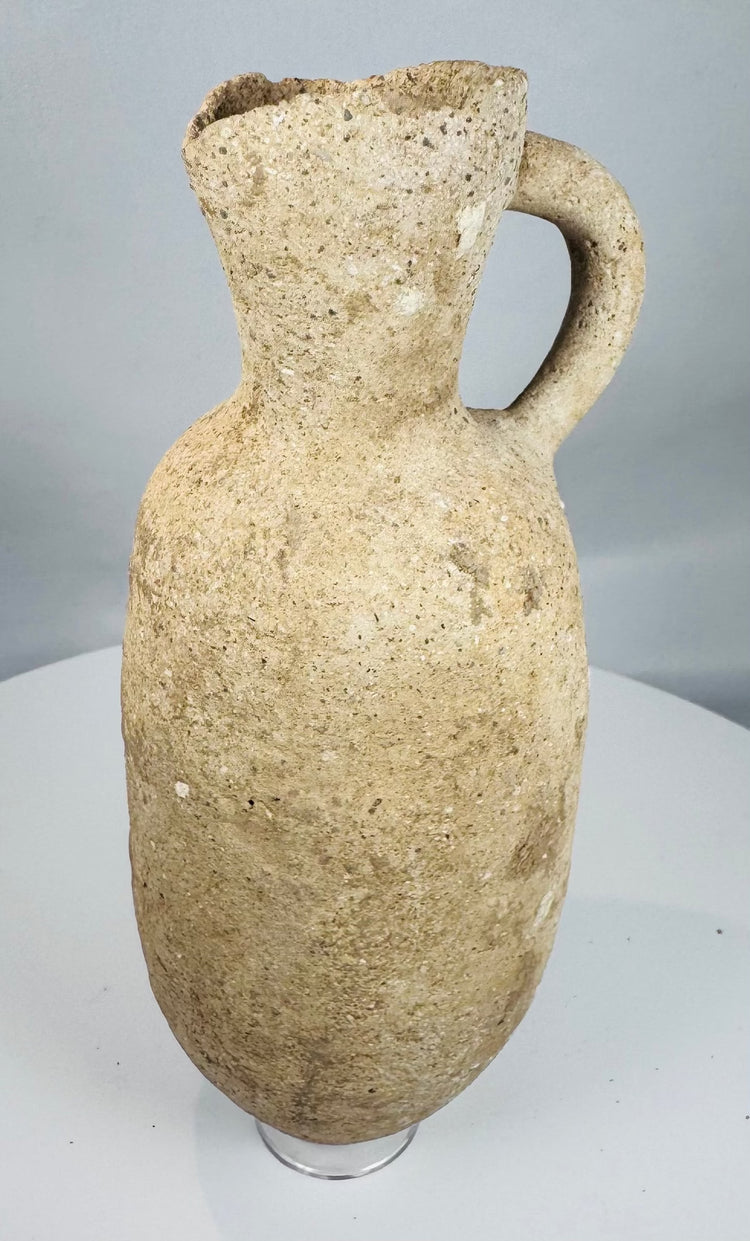
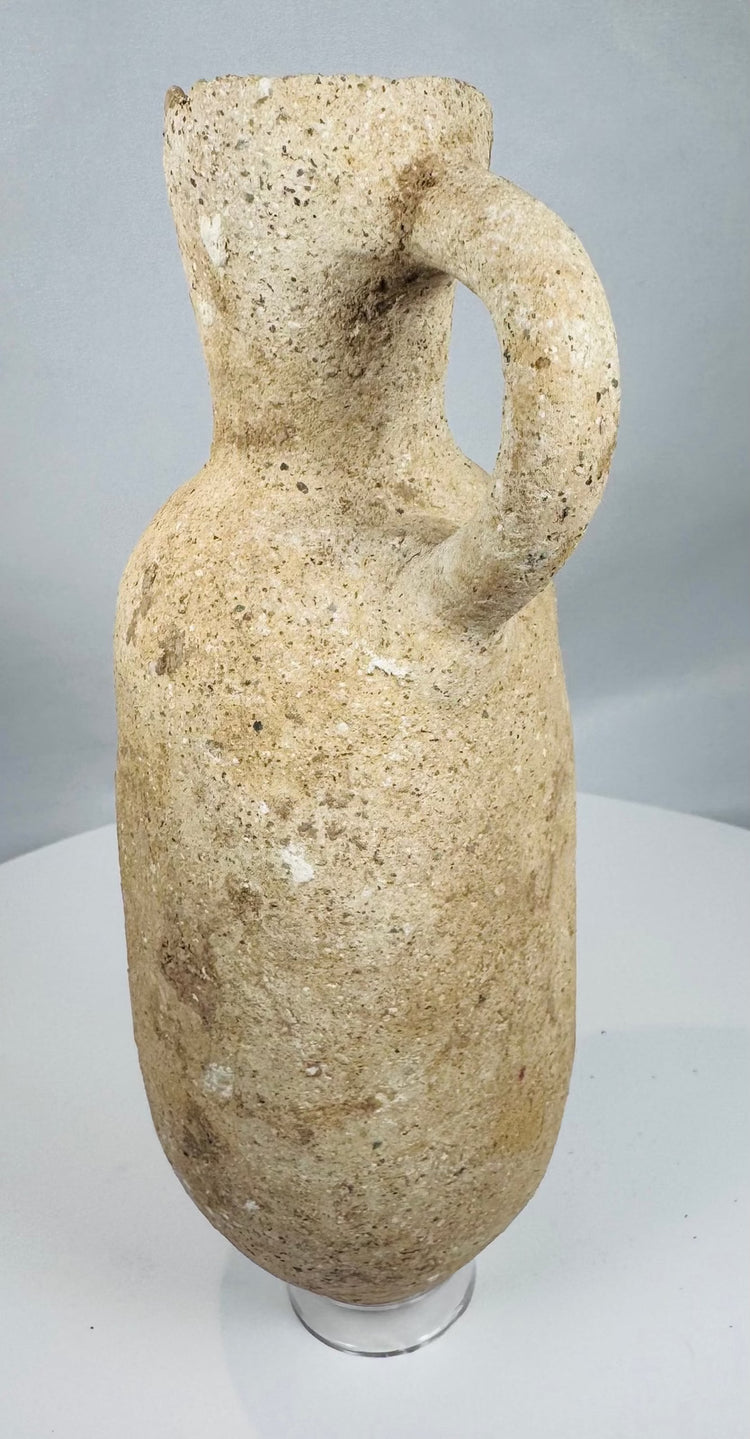
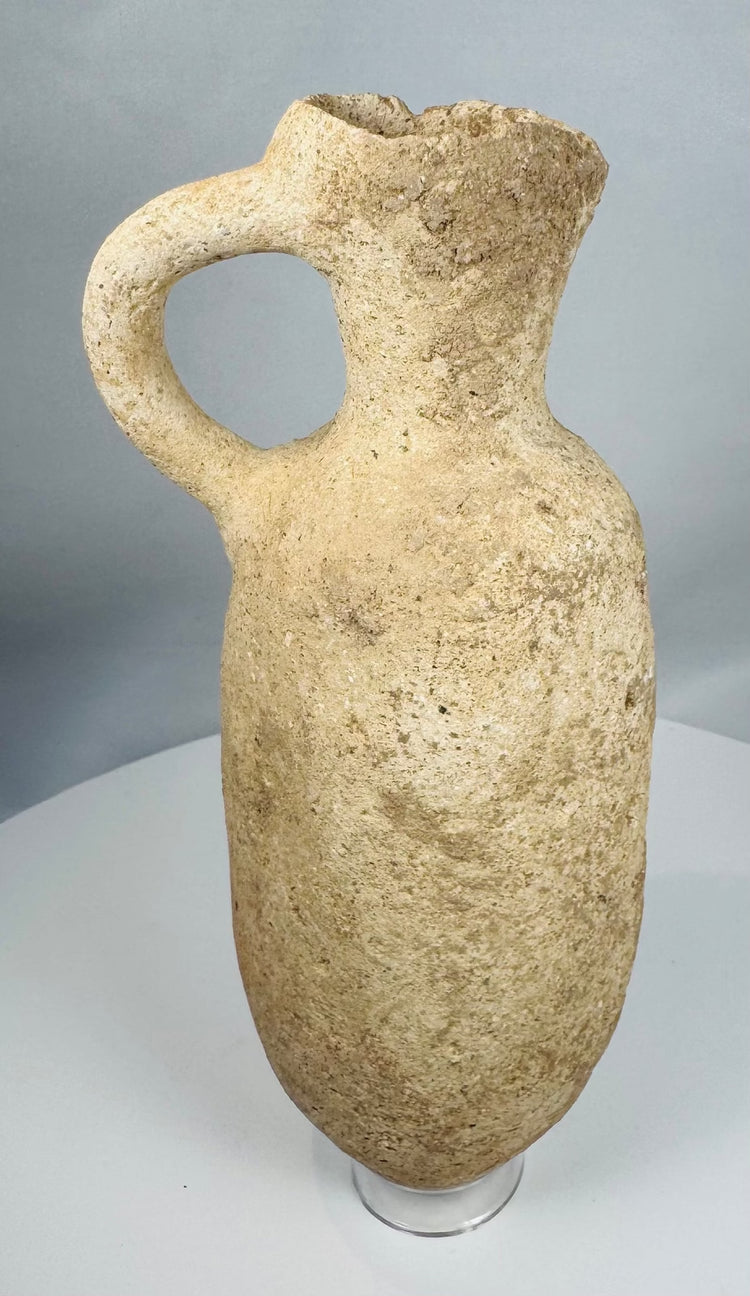
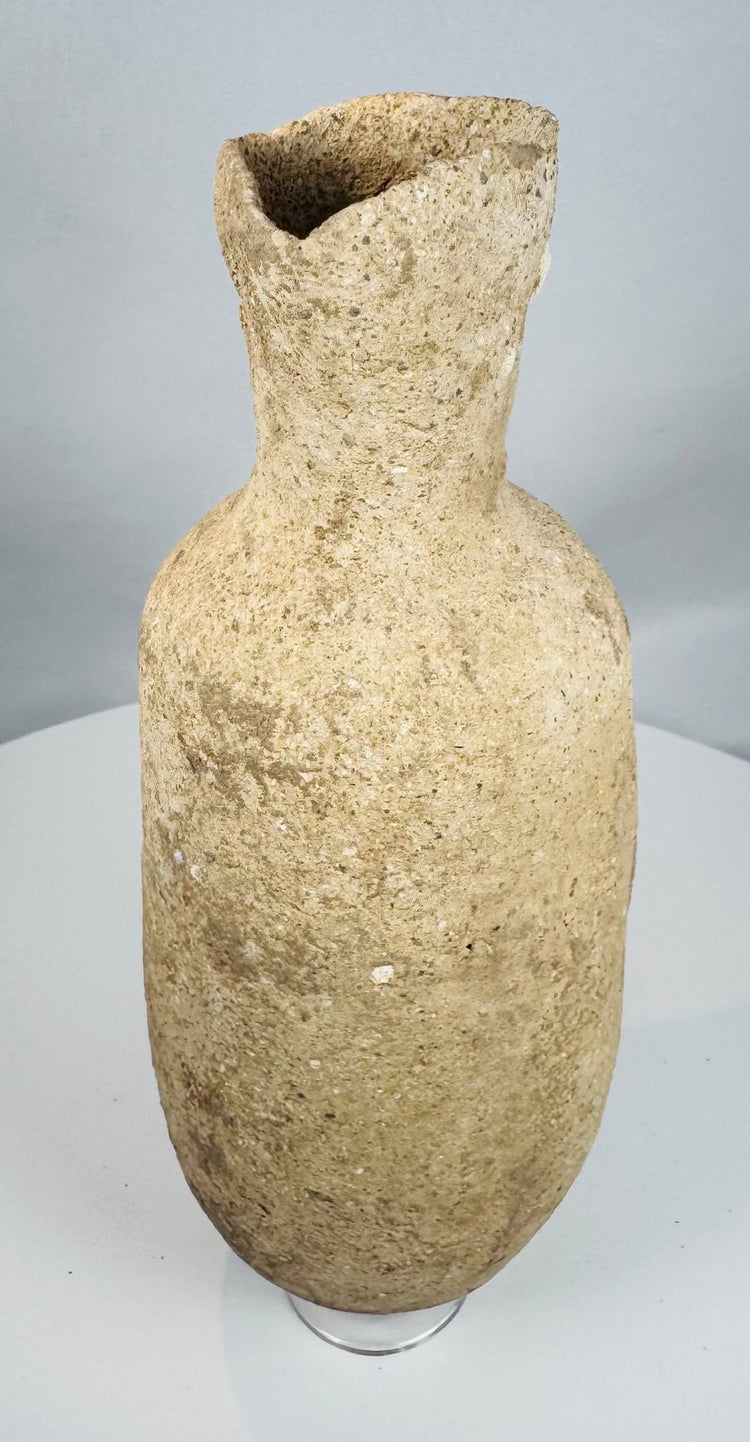
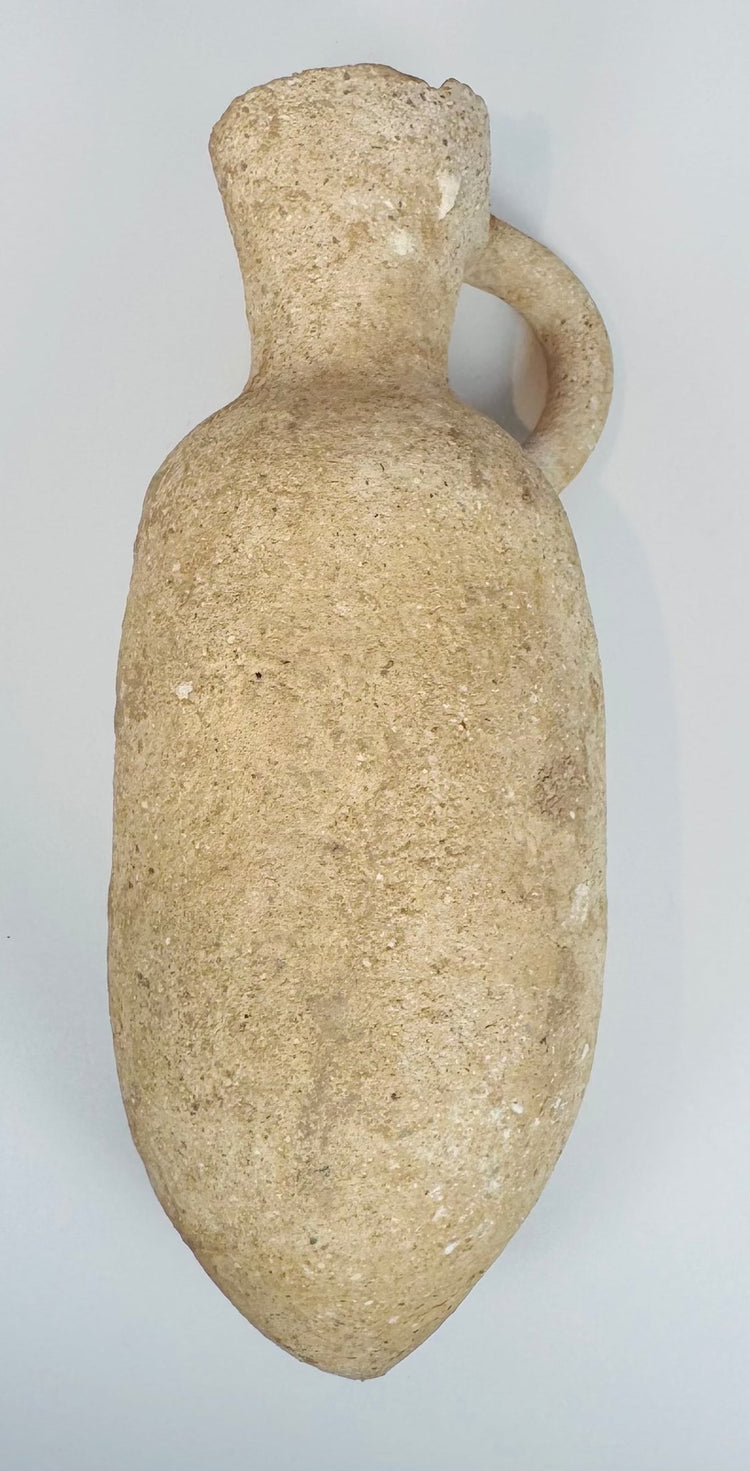
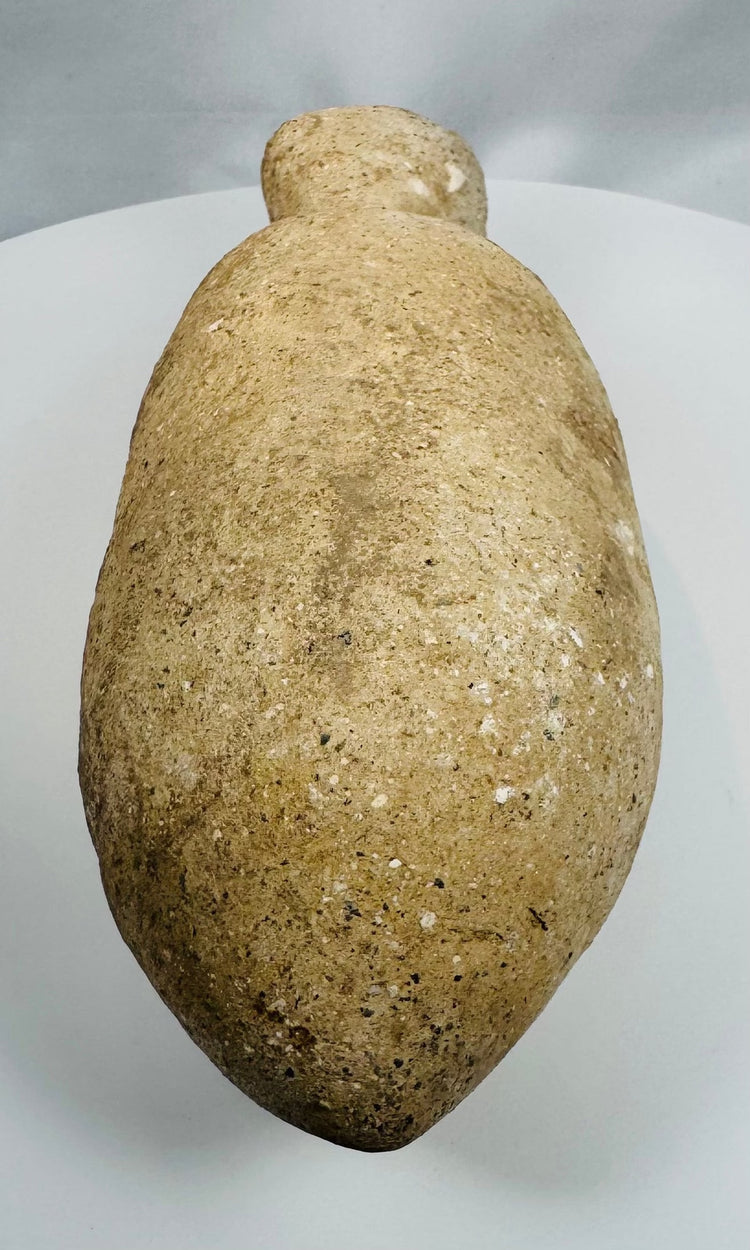
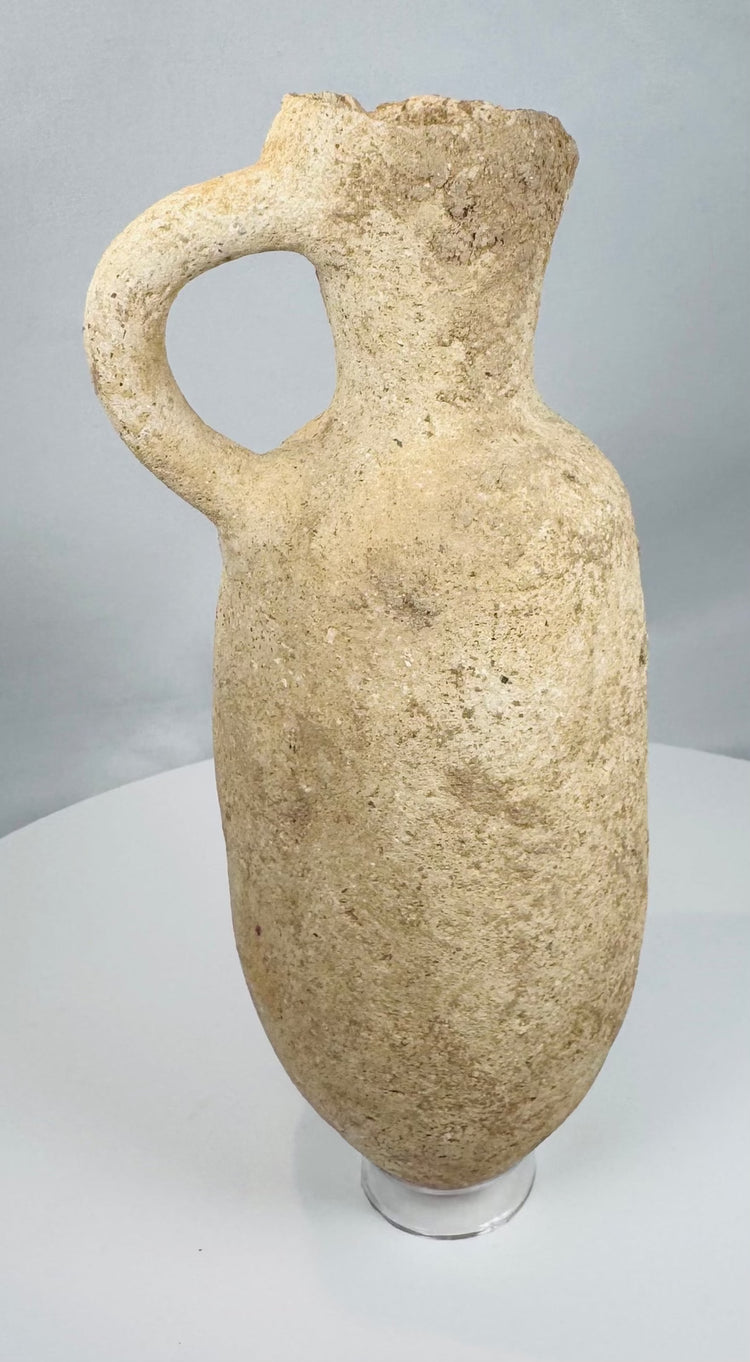
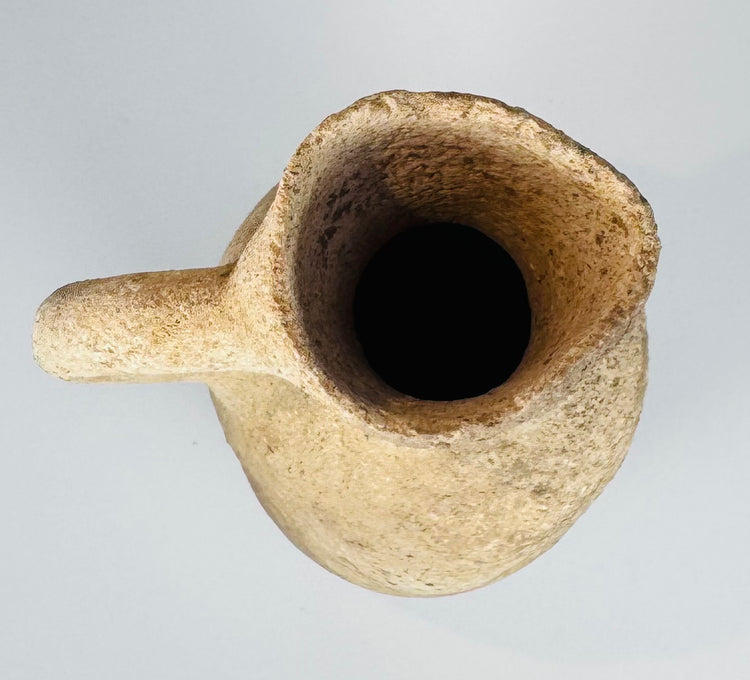
Cet ancien vase verseur en terre cuite représente une forme de céramique utilitaire couramment produite dans le monde romain et les régions influencées par les traditions céramiques puniques antérieures. Le vase présente un corps globulaire s'amincissant vers une base arrondie, un large col cylindrique avec un bord verseur légèrement évasé, et une anse robuste en forme de boucle joignant l'épaule au col.
La forme simple mais efficace reflète les traditions potières pratiques qui ont approvisionné les ménages, les ateliers et les communautés agricoles à travers la Méditerranée pendant des siècles. Les récipients de ce type étaient utilisés pour stocker, transporter et distribuer des liquides tels que l'eau, l'huile, le vin et d'autres produits essentiels à la vie quotidienne.
La pâte présente une argile grossière de couleur chamois avec des inclusions minérales visibles, caractéristiques des poteries utilitaires anciennes. L'altération superficielle étendue et les concrétions minérales accumulées lors de l'enfouissement contribuent à l'aspect archéologique et à l'authenticité du vase. La surface non décorée et la forme fonctionnelle soulignent le caractère quotidien de l'objet, offrant un aperçu des activités domestiques et commerciales de la période romaine.
Contrairement aux vaisselles de luxe, des récipients comme celui-ci étaient produits pour un usage pratique et survivent donc souvent avec des preuves d'une manipulation, d'un stockage et d'un enfouissement prolongés. La forme est restée remarquablement constante dans tout l'Empire romain et les régions adjacentes influencées par les traditions céramiques puniques.
Caractéristiques
- Ancien vase verseur en terre cuite
- Tradition provinciale romaine ou punique tardive
- Corps globulaire avec base arrondie
- Col cylindrique large avec bord verseur évasé
- Anse en forme de boucle appliquée
- Pâte de terre cuite grossière de couleur chamois
- Altération de surface et concrétions minérales
- Exemple archéologique authentique
Signification culturelle
Les récipients en céramique figuraient parmi les objets les plus importants de la vie quotidienne dans l'ensemble de la Méditerranée antique. La poterie était le principal moyen de stocker et de transporter des denrées alimentaires, des huiles, du vin, de l'eau, des parfums et d'autres produits. Parce que les récipients en argile étaient peu coûteux et largement disponibles, ils sont devenus des éléments essentiels de l'activité domestique, agricole et commerciale.
Des exemples comme celui-ci illustrent la continuité des traditions céramiques du monde punique à la période romaine. Bien que les styles décoratifs aient évolué, les formes de récipients pratiques sont souvent restées largement inchangées en raison de leur efficacité et de leur familiarité parmi les populations locales.
Condition
Bon état archéologique. Pertes et usure anciennes conformes à l'âge. Le bord présente des pertes mineures et des abrasions de surface. Altération générale, dépôts minéraux et incrustations d'enfouissement partout. Structurellement stable et bien présenté.
Dimensions (approximatives)
Hauteur : 20,3 cm
Diamètre : 7,6 cm
Âge (approximatif)
Environ 1 500 à 1 900 ans
Provenance
De la collection McMillan. La collection McMillan a été constituée sur plusieurs décennies et s'est concentrée sur des artefacts grecs, romains, égyptiens et du Proche-Orient anciens, en mettant l'accent sur les objets conservant des histoires de collection documentées et une valeur éducative. Par la suite conservée dans une collection privée à Saint Paul, Minnesota, États-Unis.
En savoir plus
Explorez le développement des traditions de la poterie grecque et méditerranéenne classique
Parcourez notre collection d'artefacts romains et grecs anciens
Description
Contexte historique et origine
Région : Bassin méditerranéen, probablement Afrique du Nord ou Méditerranée orientale
Matériau : Terre cuite
Période : Provinciale romaine / Tradition punique tardive, vers 100-500 ap. J.-C.
Description
Cet ancien vase verseur en terre cuite représente une forme de céramique utilitaire couramment produite dans le monde romain et les régions influencées par les traditions céramiques puniques antérieures. Le vase présente un corps globulaire s'amincissant vers une base arrondie, un large col cylindrique avec un bord verseur légèrement évasé, et une anse robuste en forme de boucle joignant l'épaule au col.
La forme simple mais efficace reflète les traditions potières pratiques qui ont approvisionné les ménages, les ateliers et les communautés agricoles à travers la Méditerranée pendant des siècles. Les récipients de ce type étaient utilisés pour stocker, transporter et distribuer des liquides tels que l'eau, l'huile, le vin et d'autres produits essentiels à la vie quotidienne.
La pâte présente une argile grossière de couleur chamois avec des inclusions minérales visibles, caractéristiques des poteries utilitaires anciennes. L'altération superficielle étendue et les concrétions minérales accumulées lors de l'enfouissement contribuent à l'aspect archéologique et à l'authenticité du vase. La surface non décorée et la forme fonctionnelle soulignent le caractère quotidien de l'objet, offrant un aperçu des activités domestiques et commerciales de la période romaine.
Contrairement aux vaisselles de luxe, des récipients comme celui-ci étaient produits pour un usage pratique et survivent donc souvent avec des preuves d'une manipulation, d'un stockage et d'un enfouissement prolongés. La forme est restée remarquablement constante dans tout l'Empire romain et les régions adjacentes influencées par les traditions céramiques puniques.
Caractéristiques
- Ancien vase verseur en terre cuite
- Tradition provinciale romaine ou punique tardive
- Corps globulaire avec base arrondie
- Col cylindrique large avec bord verseur évasé
- Anse en forme de boucle appliquée
- Pâte de terre cuite grossière de couleur chamois
- Altération de surface et concrétions minérales
- Exemple archéologique authentique
Signification culturelle
Les récipients en céramique figuraient parmi les objets les plus importants de la vie quotidienne dans l'ensemble de la Méditerranée antique. La poterie était le principal moyen de stocker et de transporter des denrées alimentaires, des huiles, du vin, de l'eau, des parfums et d'autres produits. Parce que les récipients en argile étaient peu coûteux et largement disponibles, ils sont devenus des éléments essentiels de l'activité domestique, agricole et commerciale.
Des exemples comme celui-ci illustrent la continuité des traditions céramiques du monde punique à la période romaine. Bien que les styles décoratifs aient évolué, les formes de récipients pratiques sont souvent restées largement inchangées en raison de leur efficacité et de leur familiarité parmi les populations locales.
Condition
Bon état archéologique. Pertes et usure anciennes conformes à l'âge. Le bord présente des pertes mineures et des abrasions de surface. Altération générale, dépôts minéraux et incrustations d'enfouissement partout. Structurellement stable et bien présenté.
Dimensions (approximatives)
Hauteur : 20,3 cm
Diamètre : 7,6 cm
Âge (approximatif)
Environ 1 500 à 1 900 ans
Provenance
De la collection McMillan. La collection McMillan a été constituée sur plusieurs décennies et s'est concentrée sur des artefacts grecs, romains, égyptiens et du Proche-Orient anciens, en mettant l'accent sur les objets conservant des histoires de collection documentées et une valeur éducative. Par la suite conservée dans une collection privée à Saint Paul, Minnesota, États-Unis.
En savoir plus
Explorez le développement des traditions de la poterie grecque et méditerranéenne classique
Parcourez notre collection d'artefacts romains et grecs anciens
Vous aimerez peut-être aussi
