

Croquis de Figure Académique Européenne Antique sur Vélin | Vers XVIIIe Siècle
- Prix habituel
- $1,000.00
- Prix soldé
- $1,000.00
- Prix habituel
Impossible de charger la disponibilité du service de retrait


Croquis de Figure Académique Européenne Antique sur Vélin | Vers XVIIIe Siècle
Description
Plus
Moins
Contexte historique et origine
Région : européenne
Matériau : Encre sépia sur vélin (parchemin animal)
Période : XVIIIe siècle
Description
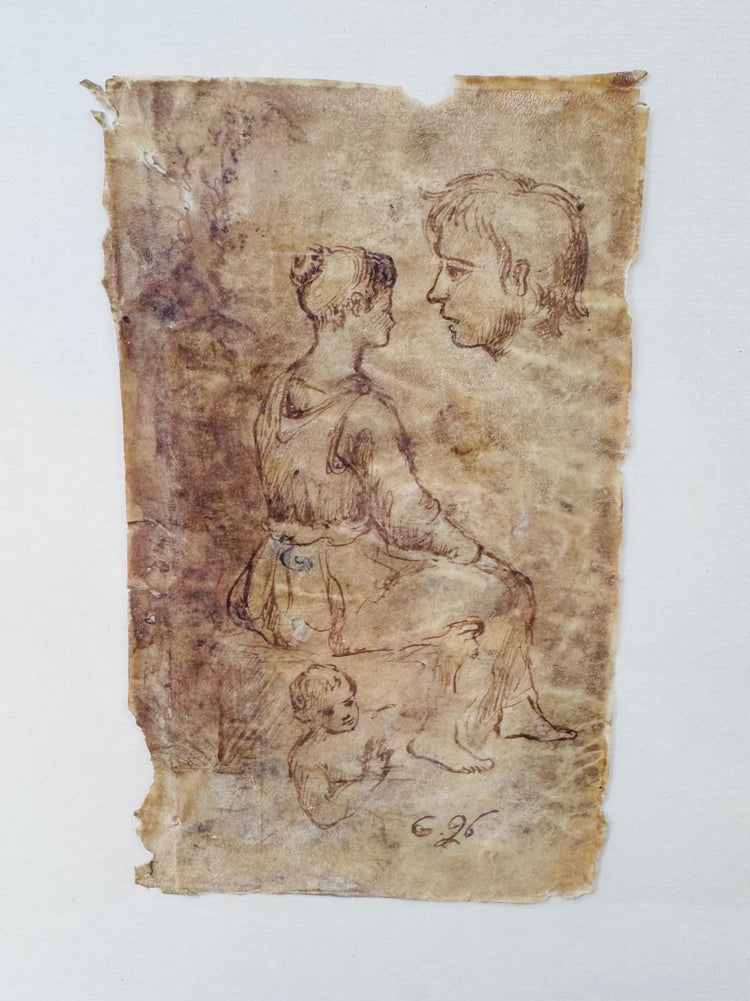
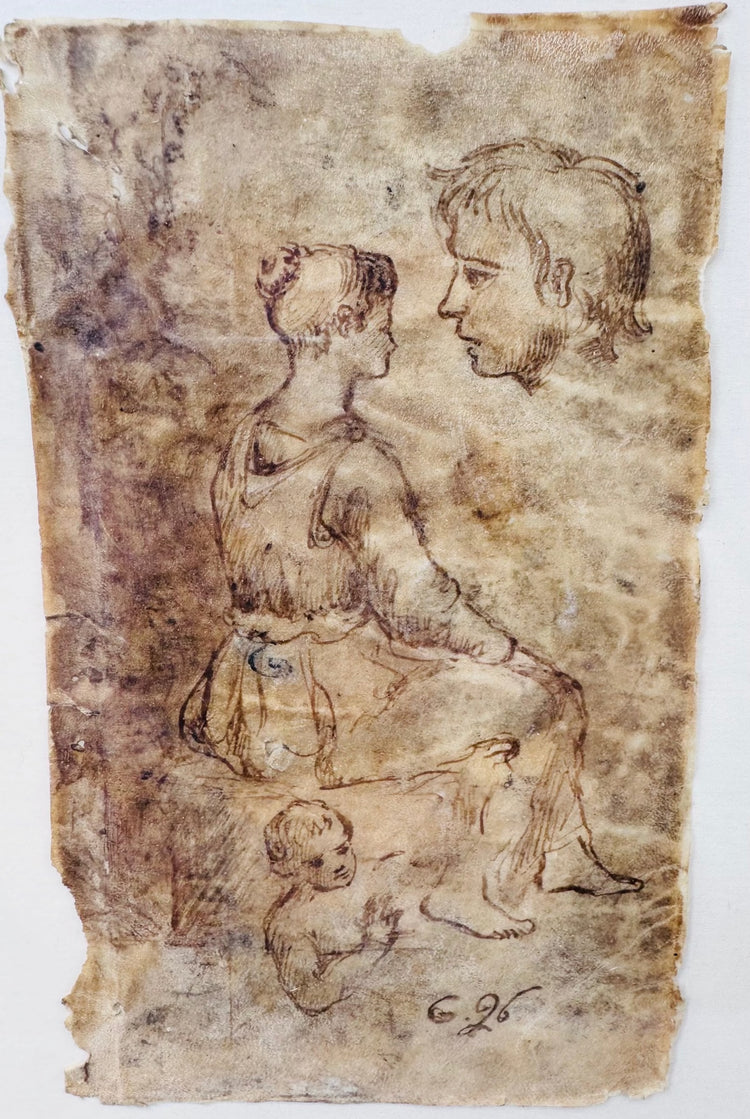
Cette fascinante étude de figure européenne est exécutée à l'encre sépia sur un petit fragment de vélin et représente une figure féminine assise vue de dos, accompagnée d'études d'une tête d'enfant et d'un profil masculin. La composition présente le caractère spontané d'une ébauche de travail d'artiste, capturant plusieurs études de figures sur une seule pièce de parchemin.
L'œuvre témoigne d'un dessin confiant par son trait fluide et son utilisation économique de l'ombrage. De telles études étaient couramment produites par les artistes comme exercices préparatoires, références anatomiques, ou explorations de pose et de composition avant l'exécution d'œuvres finies de plus grande taille.
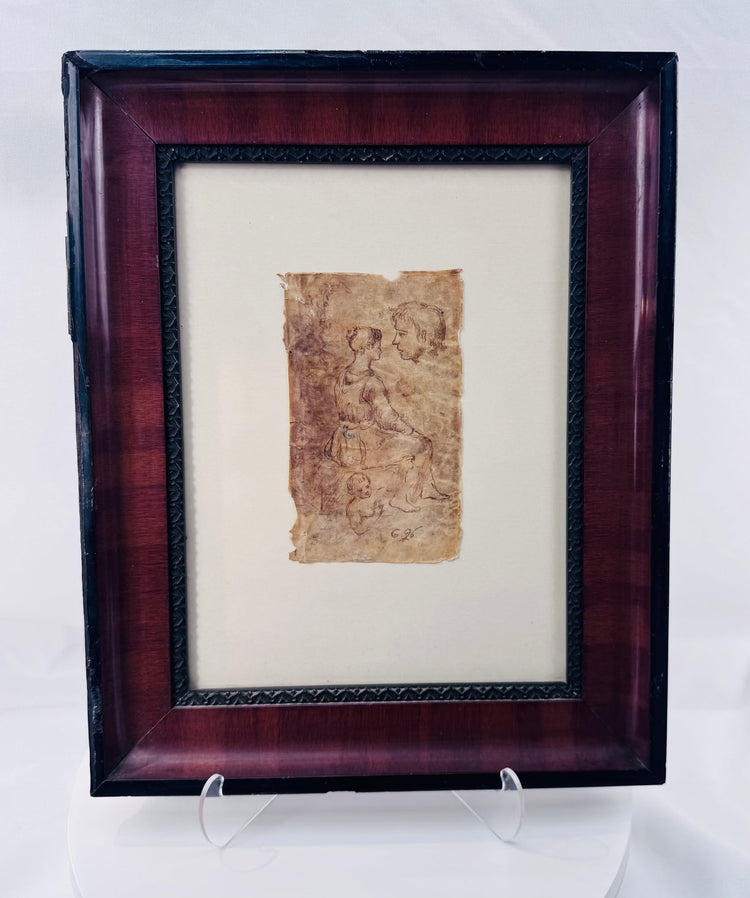
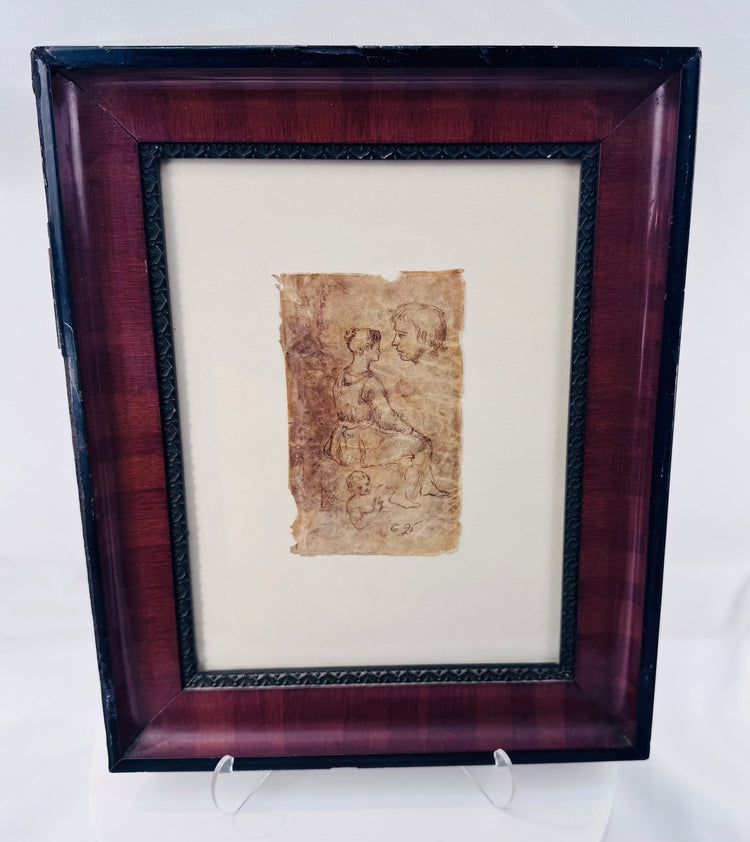
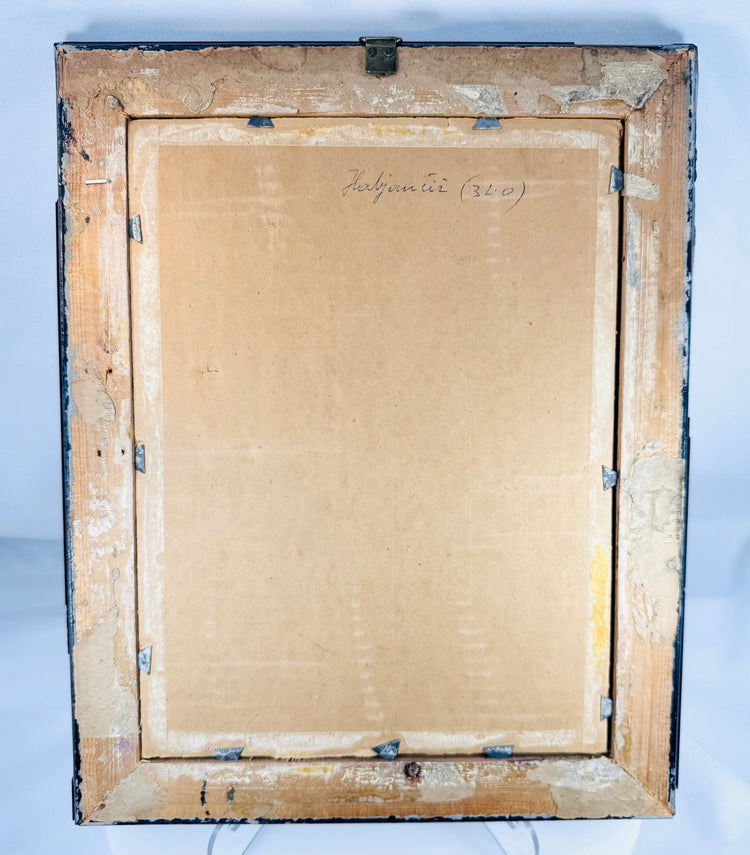
Le dessin porte l'inscription "G.26" en bas à droite et est conservé dans un magnifique cadre en bois de style d'époque. Une ancienne annotation manuscrite au verso semble faire référence à une attribution possible, bien qu'aucune paternité définitive ne puisse être confirmée à l'heure actuelle.
Caractéristiques
- Dessin original à l'encre sépia sur vélin
- Représente plusieurs études de figures, y compris des sujets féminins, masculins et enfantins
- Signé ou inscrit "G.26" en bas à droite
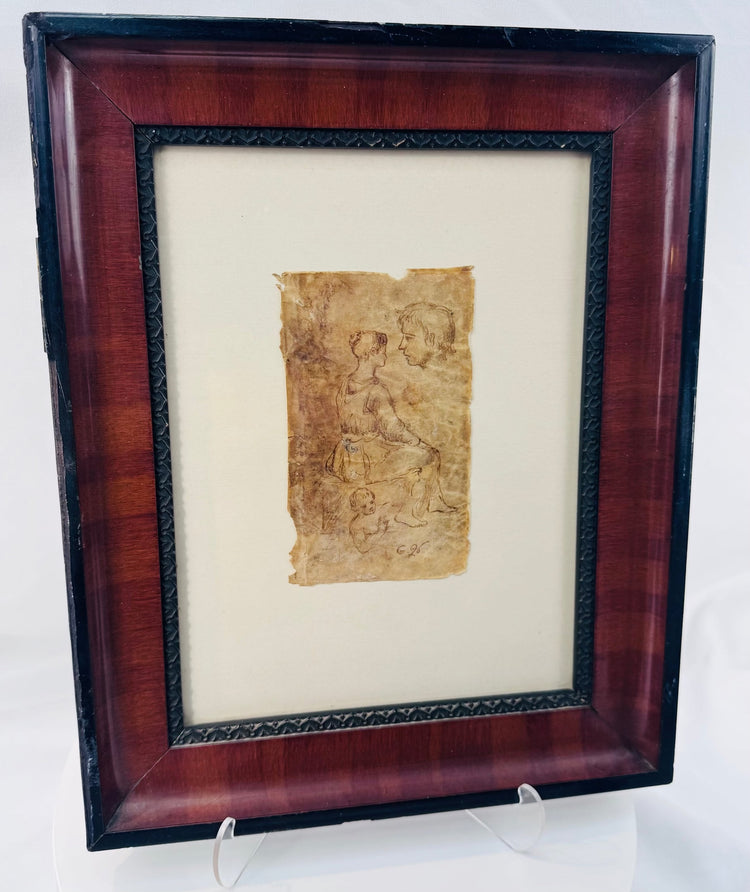
- Monté dans un cadre en bois décoratif
- Bel exemple d'étude d'artiste académique
- Œuvre d'art européenne ancienne authentique
Signification culturelle
Les études de figures ont constitué une partie essentielle de la formation artistique à travers l'Europe et ont été utilisées par les peintres, illustrateurs et dessinateurs pour affiner leur compréhension de l'anatomie, de la proportion, du mouvement et de la composition. Des œuvres comme celle-ci offrent un aperçu fascinant du processus créatif derrière les œuvres d'art finies plus grandes et préservent la main de l'artiste dans sa forme la plus directe et personnelle.
État
Tonification, taches et usure des bords liés à l'âge, conformes à l'âge. Le fragment de vélin présente des pertes et des bords irréguliers. Encadré sous verre. Le cadre présente une usure mineure proportionnelle à l'âge. Globalement bien présenté.
Dimensions (Approximatives)
Image
Hauteur : 5,5 pouces
Largeur : 3,5 pouces
Cadre
Hauteur : 13,75 pouces
Largeur : 11 pouces
Profondeur : 1,25 pouce
Âge (approximatif)
200 à 300 ans
Provenance
D'une collection privée à New York City, New York, USA.
En savoir plus
Découvrez un dessin historique comparable sur vélin dans la collection du Metropolitan Museum of Art
Parcourez notre Collection d'Art, de Céramiques et d'Objets de collection
Description
Contexte historique et origine
Région : européenne
Matériau : Encre sépia sur vélin (parchemin animal)
Période : XVIIIe siècle
Description
Cette fascinante étude de figure européenne est exécutée à l'encre sépia sur un petit fragment de vélin et représente une figure féminine assise vue de dos, accompagnée d'études d'une tête d'enfant et d'un profil masculin. La composition présente le caractère spontané d'une ébauche de travail d'artiste, capturant plusieurs études de figures sur une seule pièce de parchemin.
L'œuvre témoigne d'un dessin confiant par son trait fluide et son utilisation économique de l'ombrage. De telles études étaient couramment produites par les artistes comme exercices préparatoires, références anatomiques, ou explorations de pose et de composition avant l'exécution d'œuvres finies de plus grande taille.
Le dessin porte l'inscription "G.26" en bas à droite et est conservé dans un magnifique cadre en bois de style d'époque. Une ancienne annotation manuscrite au verso semble faire référence à une attribution possible, bien qu'aucune paternité définitive ne puisse être confirmée à l'heure actuelle.
Caractéristiques
- Dessin original à l'encre sépia sur vélin
- Représente plusieurs études de figures, y compris des sujets féminins, masculins et enfantins
- Signé ou inscrit "G.26" en bas à droite
- Monté dans un cadre en bois décoratif
- Bel exemple d'étude d'artiste académique
- Œuvre d'art européenne ancienne authentique
Signification culturelle
Les études de figures ont constitué une partie essentielle de la formation artistique à travers l'Europe et ont été utilisées par les peintres, illustrateurs et dessinateurs pour affiner leur compréhension de l'anatomie, de la proportion, du mouvement et de la composition. Des œuvres comme celle-ci offrent un aperçu fascinant du processus créatif derrière les œuvres d'art finies plus grandes et préservent la main de l'artiste dans sa forme la plus directe et personnelle.
État
Tonification, taches et usure des bords liés à l'âge, conformes à l'âge. Le fragment de vélin présente des pertes et des bords irréguliers. Encadré sous verre. Le cadre présente une usure mineure proportionnelle à l'âge. Globalement bien présenté.
Dimensions (Approximatives)
Image
Hauteur : 5,5 pouces
Largeur : 3,5 pouces
Cadre
Hauteur : 13,75 pouces
Largeur : 11 pouces
Profondeur : 1,25 pouce
Âge (approximatif)
200 à 300 ans
Provenance
D'une collection privée à New York City, New York, USA.
En savoir plus
Découvrez un dessin historique comparable sur vélin dans la collection du Metropolitan Museum of Art
Parcourez notre Collection d'Art, de Céramiques et d'Objets de collection
Vous aimerez peut-être aussi
