

Pointe de javelot ou de lance archéologique en fer | IIIe – XIVe siècle de notre ère
- Prix habituel
- $225.00
- Prix soldé
- $225.00
- Prix habituel
Impossible de charger la disponibilité du service de retrait


Pointe de javelot ou de lance archéologique en fer | IIIe – XIVe siècle de notre ère
Description
Plus
Moins
Contexte historique et origine
Région : Europe
Matériau : Fer forgé à la main
Période : Période romaine tardive à médiévale, vers le 3e–14e siècle de notre ère
Description
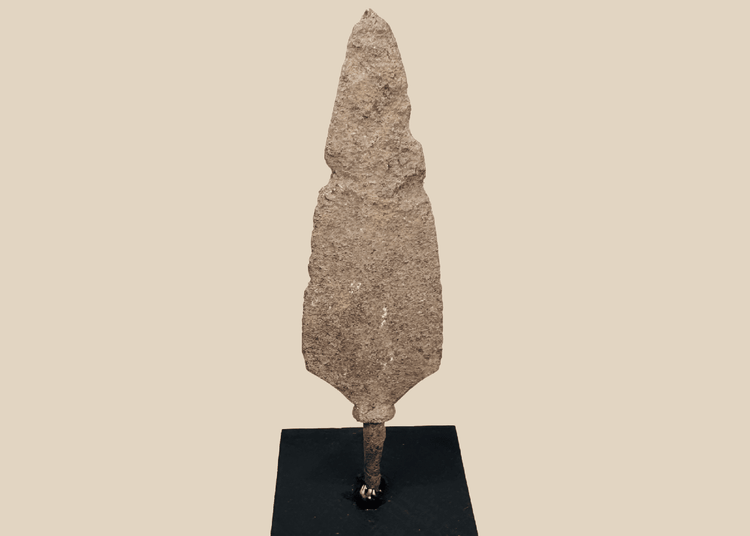
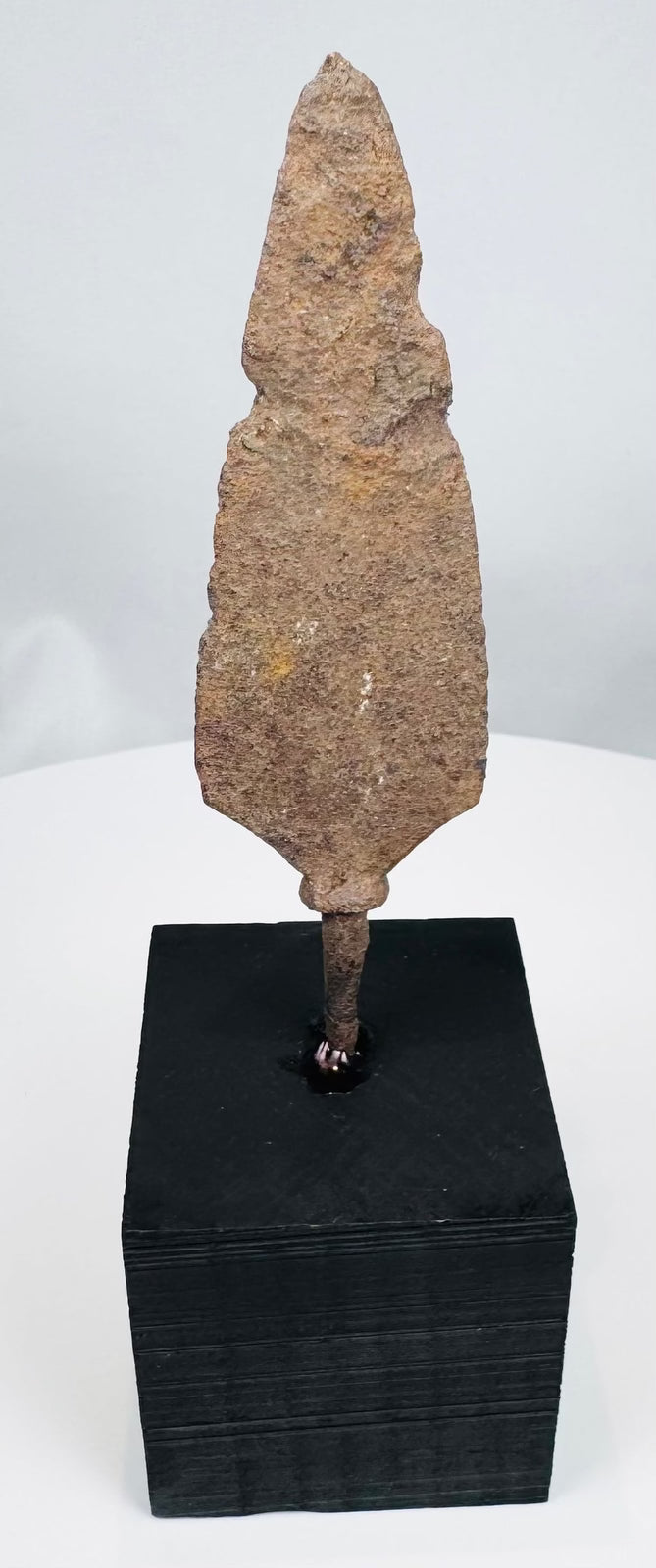
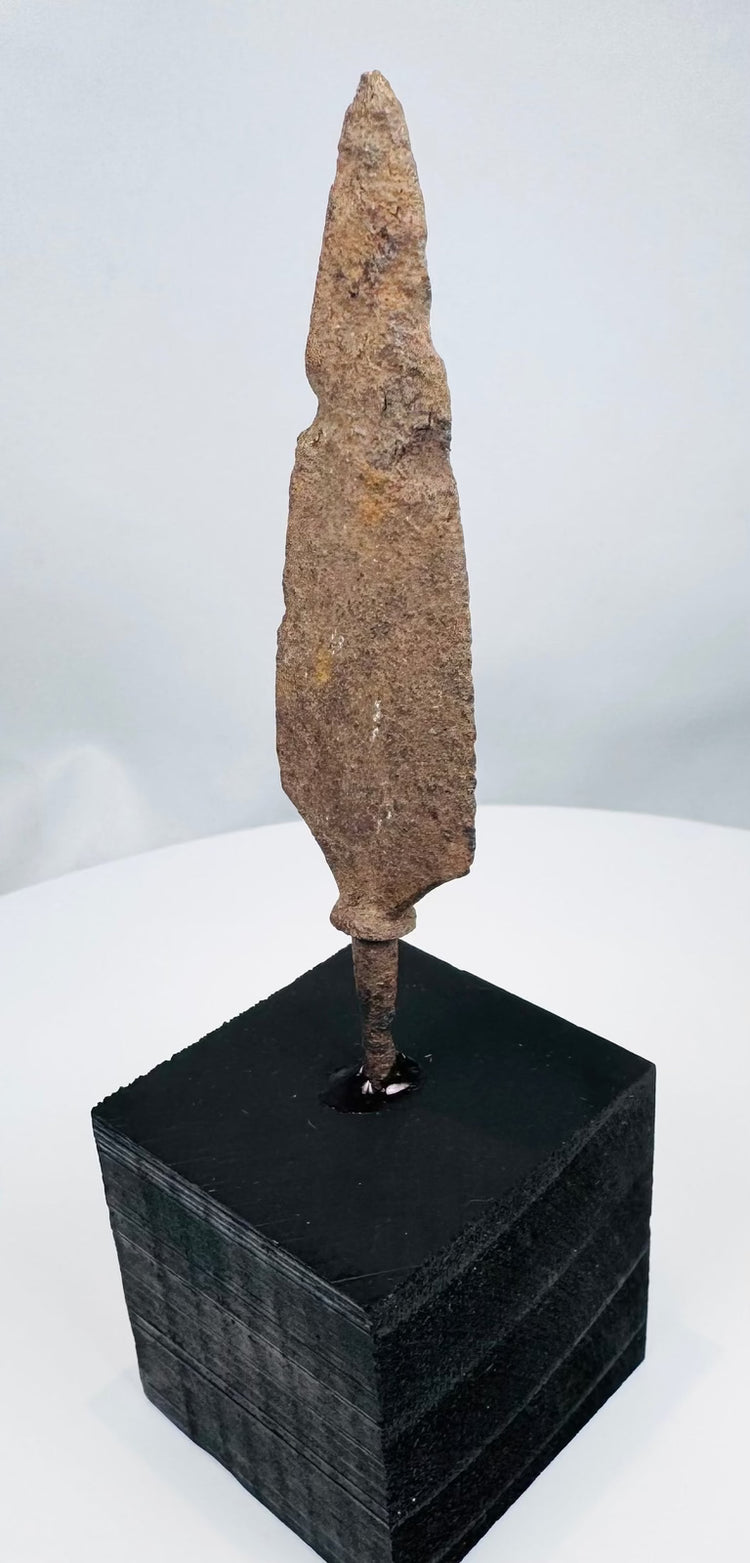
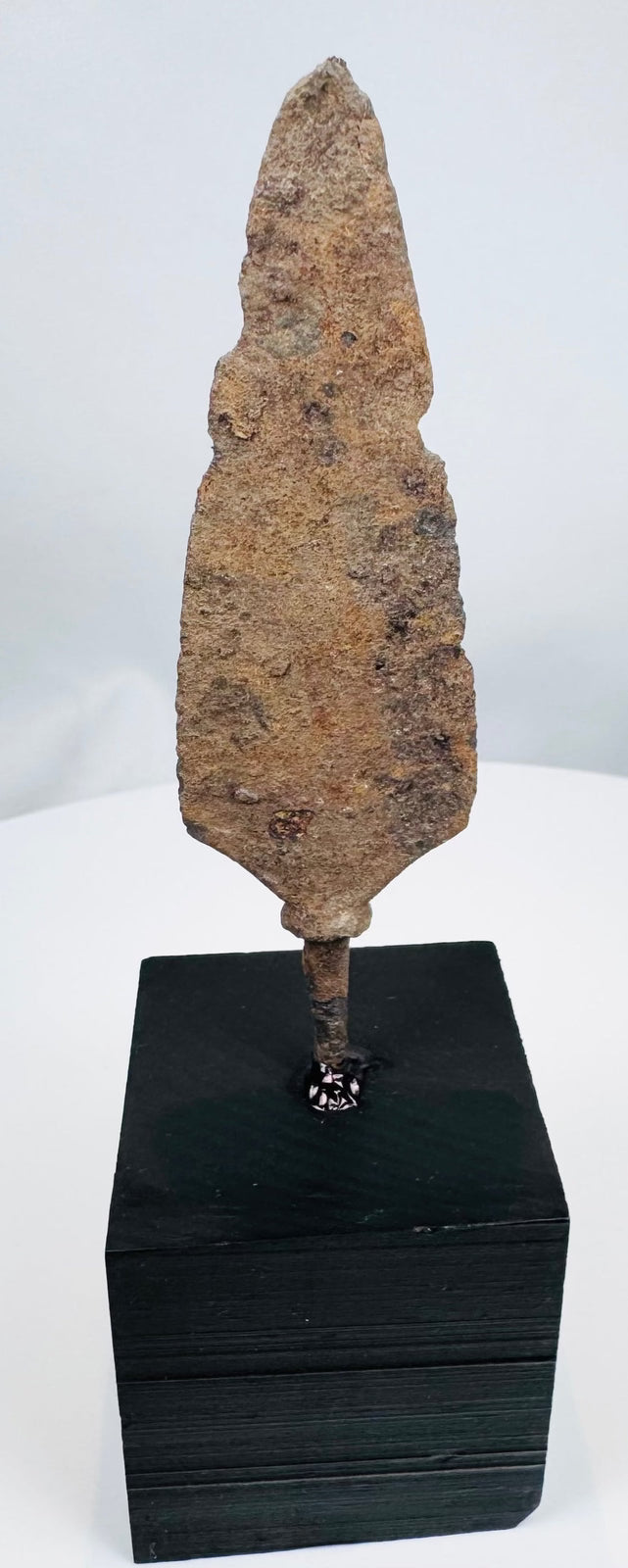
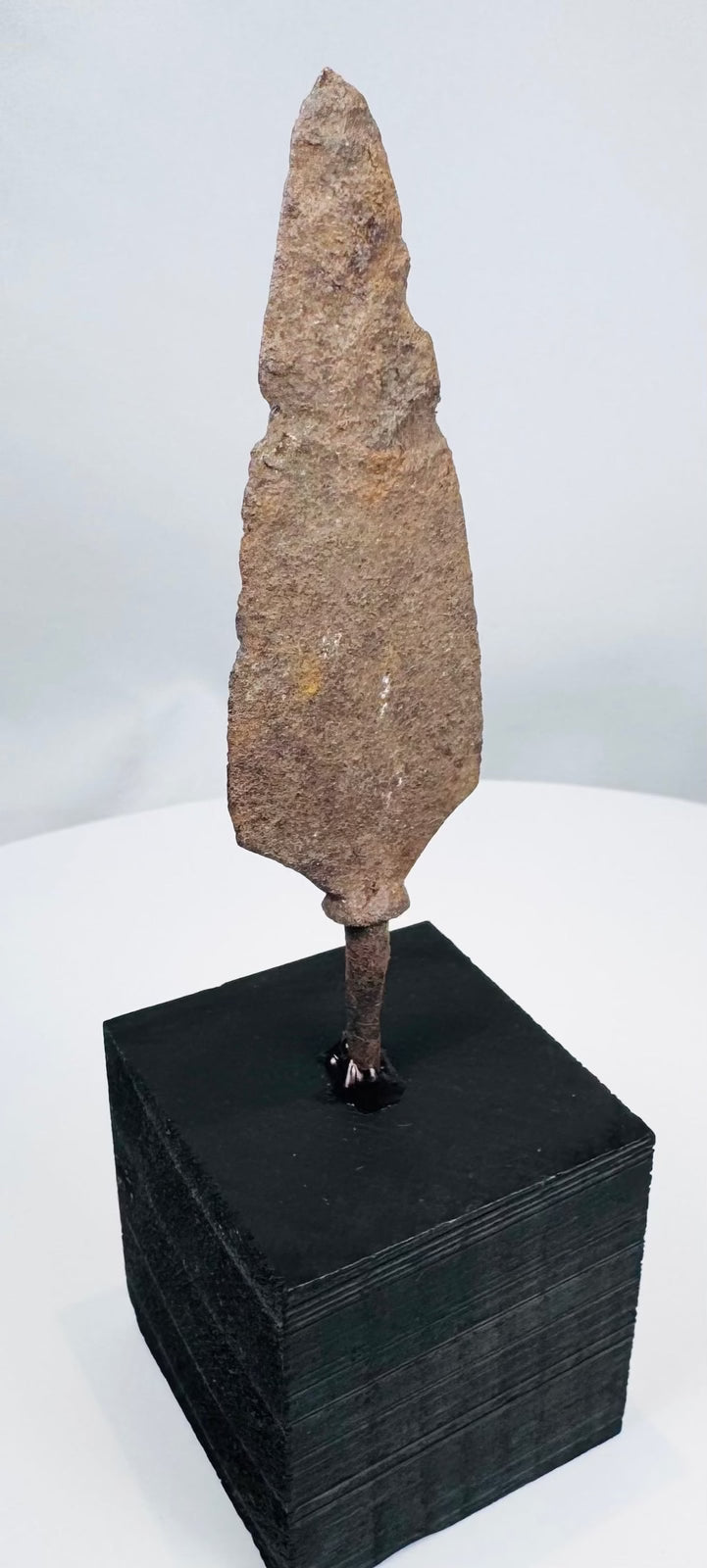
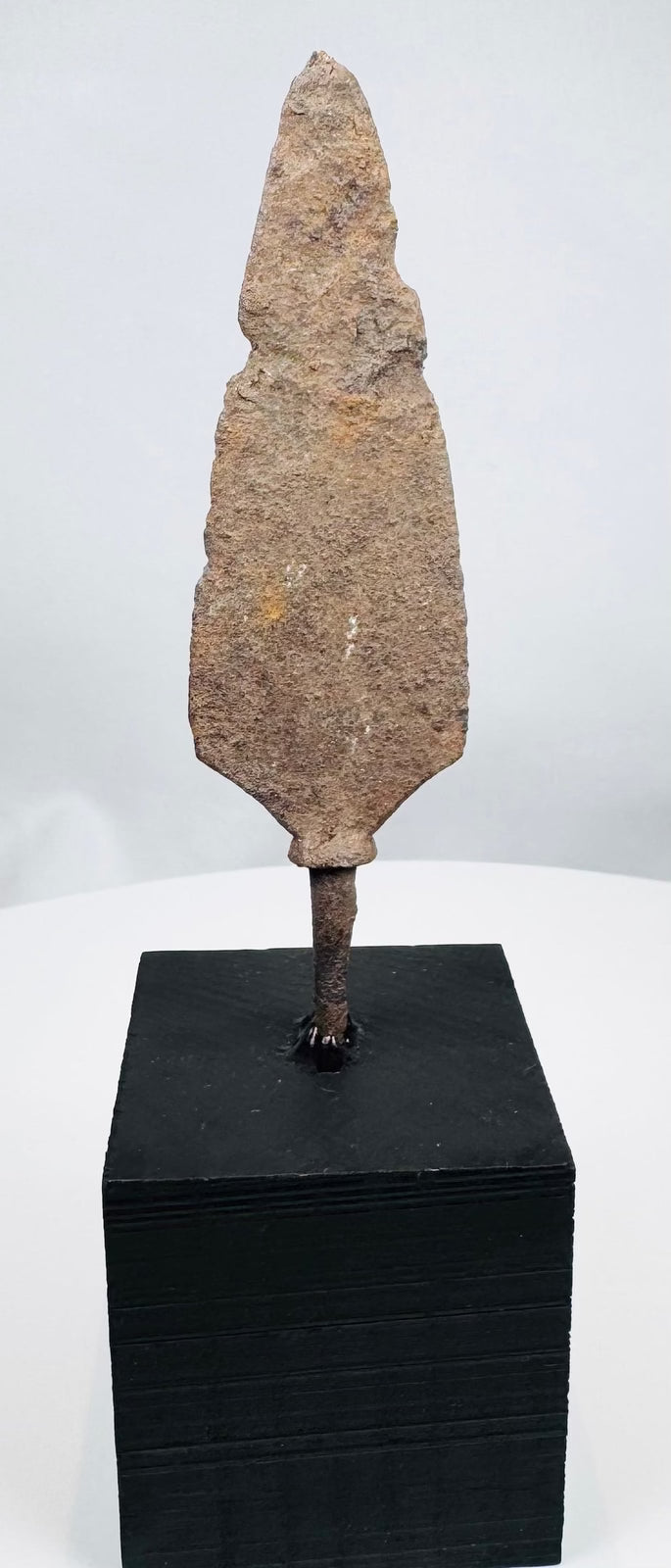
Cette importante pointe d'arme archéologique en fer est un exemple large et à soie datant généralement de la fin de l'époque romaine jusqu'à la période médiévale. Sa lame large et allongée, son profil supérieur effilé et sa soie de fixation conservée suggèrent qu'elle était à l'origine montée sur un fût en bois et utilisée comme fer de lance léger, pointe de javelot, grande tête de projectile ou arme de chasse.
La lame est formée d'un corps inférieur large qui se rétrécit vers les épaules avant de s'étendre vers le haut en une extrémité plus fine et pointue. Bien que la forte oxydation et l'incrustation minérale aient altéré le contour original, la forme restante conserve un profil distinctif en forme de feuille avec une surface centrale relativement plate et des bords irrégulièrement conservés.
À la base de la lame se trouve une petite transition ou collet surélevé menant à une longue soie rectangulaire. Cette soie aurait été insérée à l'origine dans un fût en bois préparé et fixée à l'aide de ligatures, d'adhésif ou d'un emmanchement à force. La construction à soie était largement employée en Europe pour les flèches, les carreaux, les javelots et les lances légères tout au long des périodes romaine et médiévale.
Sa lame relativement large a pu être destinée à créer un canal de blessure plus grand qu'une pointe étroite perforante d'armure, la rendant ainsi adaptée à la chasse ou à l'utilisation contre des cibles légèrement protégées. La partie supérieure étendue peut également indiquer que la lame originale était conçue pour combiner la pénétration avec une surface de coupe plus large.
Caractéristiques
- Forgée individuellement à la main à partir de fer
- Lame large en forme de feuille avec une extrémité pointue allongée
- Conserve sa soie de fixation rectangulaire originale
- Possible fer de lance, pointe de javelot ou grande tête de projectile
- Conçue pour être fixée à un fût en bois
- Oxydation archéologique et incrustation minérale importantes
- Surface asymétrique distinctive et bords anciens irréguliers
- Montée sur une base d'exposition moderne en bois noir
- Anciennement détenue au sein de collections européennes établies
Signification culturelle
Les fers de lance en fer, les pointes de javelots et les lourdes têtes de projectiles étaient des composants essentiels de la guerre et de la chasse tout au long des mondes romain et médiéval. Leurs formes variaient selon l'usage prévu, la tradition régionale, les matériaux disponibles et le type de cible qu'ils étaient conçus pour engager.
Les pointes à large lame étaient particulièrement efficaces contre les cibles légèrement protégées et le gibier, car leurs surfaces de coupe plus larges pouvaient créer des blessures importantes. Les exemples plus étroits étaient mieux adaptés à la pénétration, tandis que les formes plus grandes en forme de feuille pouvaient servir sur des javelots, des lances légères ou des armes de chasse polyvalentes.
La construction à soie observée ici reflète une méthode européenne établie de longue date pour fixer les pointes en fer forgé aux fûts en bois. Bien que le fût lui-même n'ait pas survécu, la soie restante témoigne de l'assemblage original et de la fonction pratique de l'objet.
État
La pointe d'arme reste stable dans un état archéologique fortement oxydé. Elle présente une rouille étendue, une incrustation minérale, des piqûres, un écaillage de surface, une décoloration, une perte de bord et des irrégularités conformes à un enfouissement prolongé et à un âge considérable.
Le profil original de la lame a été partiellement altéré par la corrosion, avec des pertes et un amincissement visibles le long des bords et de la section supérieure. La soie reste présente mais présente également de l'oxydation, une rugosité de surface et une perte de métal localisée.
L'objet a été fixé de manière permanente à une base d'exposition moderne en bois noir avec un matériau de montage visible. La base présente des rayures mineures, des marques de surface et des irrégularités naturelles.
Dimensions (approximatives)
Hauteur totale : 6,75 pouces
Âge (approximatif)
625 à 1 725 ans
Provenance
Anciennement proposée sur le marché de l'art allemand dans les années 2000, où le groupe est entré dans le commerce moderne des antiquités européennes.
Acquise par la suite auprès d'un collectionneur de l'Union européenne résidant à Londres, en Angleterre, qui possédait une collection privée d'artefacts anciens et médiévaux.
Plus tard détenue dans la collection privée d'un gentleman du Surrey, Royaume-Uni.
En savoir plus
Obtenez un contexte historique supplémentaire grâce au Musée archéologique de Cracovie, qui présente des fers de javelot et de lance en fer connexes.
Parcourez notre Collection d'armes, d'armures et d'armes historiques
Description
Contexte historique et origine
Région : Europe
Matériau : Fer forgé à la main
Période : Période romaine tardive à médiévale, vers le 3e–14e siècle de notre ère
Description
Cette importante pointe d'arme archéologique en fer est un exemple large et à soie datant généralement de la fin de l'époque romaine jusqu'à la période médiévale. Sa lame large et allongée, son profil supérieur effilé et sa soie de fixation conservée suggèrent qu'elle était à l'origine montée sur un fût en bois et utilisée comme fer de lance léger, pointe de javelot, grande tête de projectile ou arme de chasse.
La lame est formée d'un corps inférieur large qui se rétrécit vers les épaules avant de s'étendre vers le haut en une extrémité plus fine et pointue. Bien que la forte oxydation et l'incrustation minérale aient altéré le contour original, la forme restante conserve un profil distinctif en forme de feuille avec une surface centrale relativement plate et des bords irrégulièrement conservés.
À la base de la lame se trouve une petite transition ou collet surélevé menant à une longue soie rectangulaire. Cette soie aurait été insérée à l'origine dans un fût en bois préparé et fixée à l'aide de ligatures, d'adhésif ou d'un emmanchement à force. La construction à soie était largement employée en Europe pour les flèches, les carreaux, les javelots et les lances légères tout au long des périodes romaine et médiévale.
Sa lame relativement large a pu être destinée à créer un canal de blessure plus grand qu'une pointe étroite perforante d'armure, la rendant ainsi adaptée à la chasse ou à l'utilisation contre des cibles légèrement protégées. La partie supérieure étendue peut également indiquer que la lame originale était conçue pour combiner la pénétration avec une surface de coupe plus large.
Caractéristiques
- Forgée individuellement à la main à partir de fer
- Lame large en forme de feuille avec une extrémité pointue allongée
- Conserve sa soie de fixation rectangulaire originale
- Possible fer de lance, pointe de javelot ou grande tête de projectile
- Conçue pour être fixée à un fût en bois
- Oxydation archéologique et incrustation minérale importantes
- Surface asymétrique distinctive et bords anciens irréguliers
- Montée sur une base d'exposition moderne en bois noir
- Anciennement détenue au sein de collections européennes établies
Signification culturelle
Les fers de lance en fer, les pointes de javelots et les lourdes têtes de projectiles étaient des composants essentiels de la guerre et de la chasse tout au long des mondes romain et médiéval. Leurs formes variaient selon l'usage prévu, la tradition régionale, les matériaux disponibles et le type de cible qu'ils étaient conçus pour engager.
Les pointes à large lame étaient particulièrement efficaces contre les cibles légèrement protégées et le gibier, car leurs surfaces de coupe plus larges pouvaient créer des blessures importantes. Les exemples plus étroits étaient mieux adaptés à la pénétration, tandis que les formes plus grandes en forme de feuille pouvaient servir sur des javelots, des lances légères ou des armes de chasse polyvalentes.
La construction à soie observée ici reflète une méthode européenne établie de longue date pour fixer les pointes en fer forgé aux fûts en bois. Bien que le fût lui-même n'ait pas survécu, la soie restante témoigne de l'assemblage original et de la fonction pratique de l'objet.
État
La pointe d'arme reste stable dans un état archéologique fortement oxydé. Elle présente une rouille étendue, une incrustation minérale, des piqûres, un écaillage de surface, une décoloration, une perte de bord et des irrégularités conformes à un enfouissement prolongé et à un âge considérable.
Le profil original de la lame a été partiellement altéré par la corrosion, avec des pertes et un amincissement visibles le long des bords et de la section supérieure. La soie reste présente mais présente également de l'oxydation, une rugosité de surface et une perte de métal localisée.
L'objet a été fixé de manière permanente à une base d'exposition moderne en bois noir avec un matériau de montage visible. La base présente des rayures mineures, des marques de surface et des irrégularités naturelles.
Dimensions (approximatives)
Hauteur totale : 6,75 pouces
Âge (approximatif)
625 à 1 725 ans
Provenance
Anciennement proposée sur le marché de l'art allemand dans les années 2000, où le groupe est entré dans le commerce moderne des antiquités européennes.
Acquise par la suite auprès d'un collectionneur de l'Union européenne résidant à Londres, en Angleterre, qui possédait une collection privée d'artefacts anciens et médiévaux.
Plus tard détenue dans la collection privée d'un gentleman du Surrey, Royaume-Uni.
En savoir plus
Obtenez un contexte historique supplémentaire grâce au Musée archéologique de Cracovie, qui présente des fers de javelot et de lance en fer connexes.
Parcourez notre Collection d'armes, d'armures et d'armes historiques
Vous aimerez peut-être aussi
