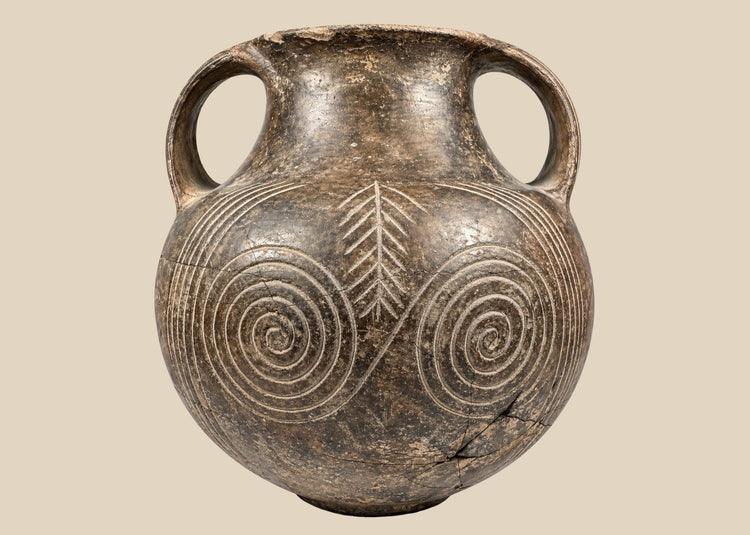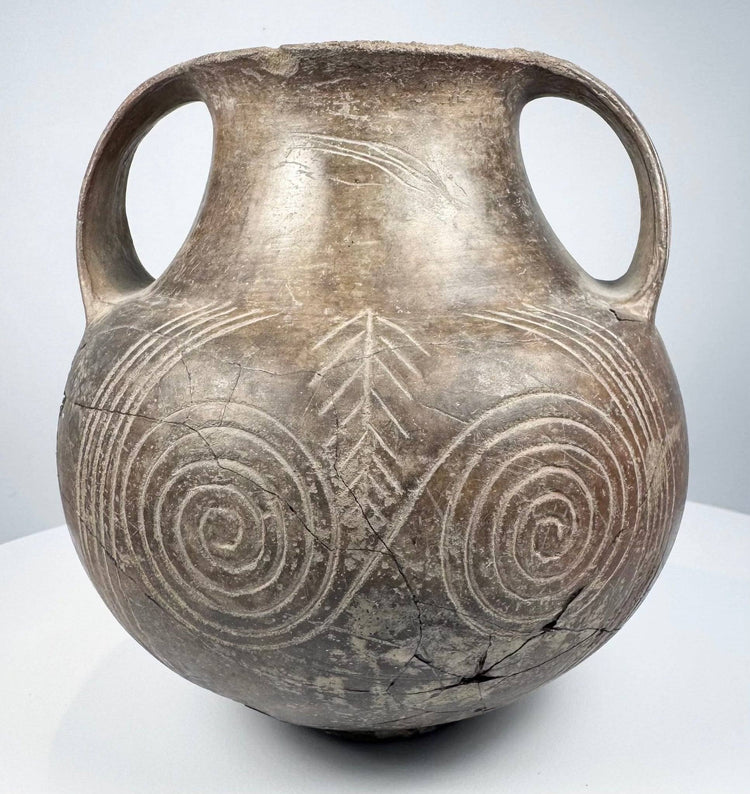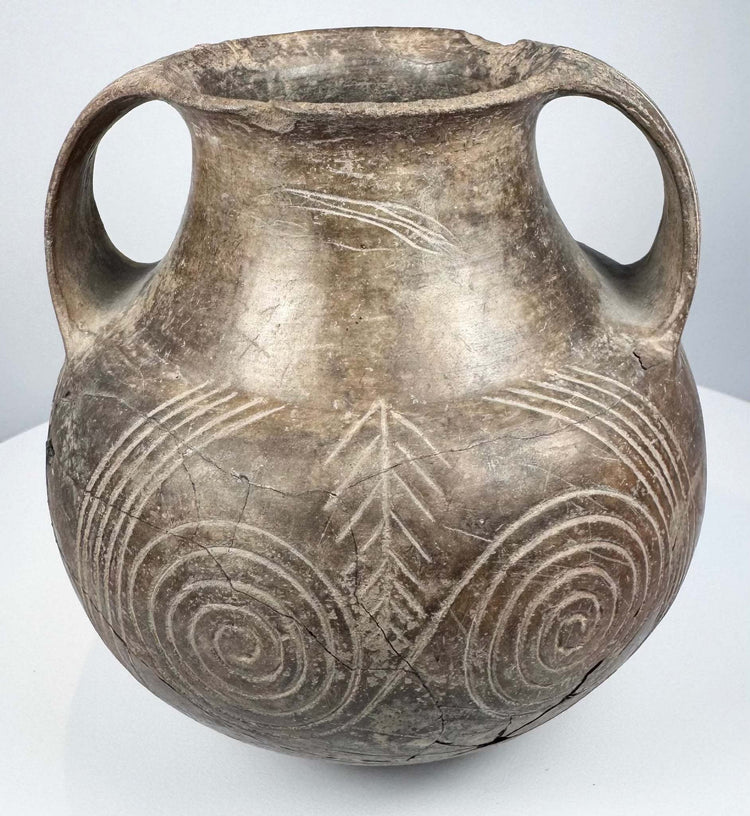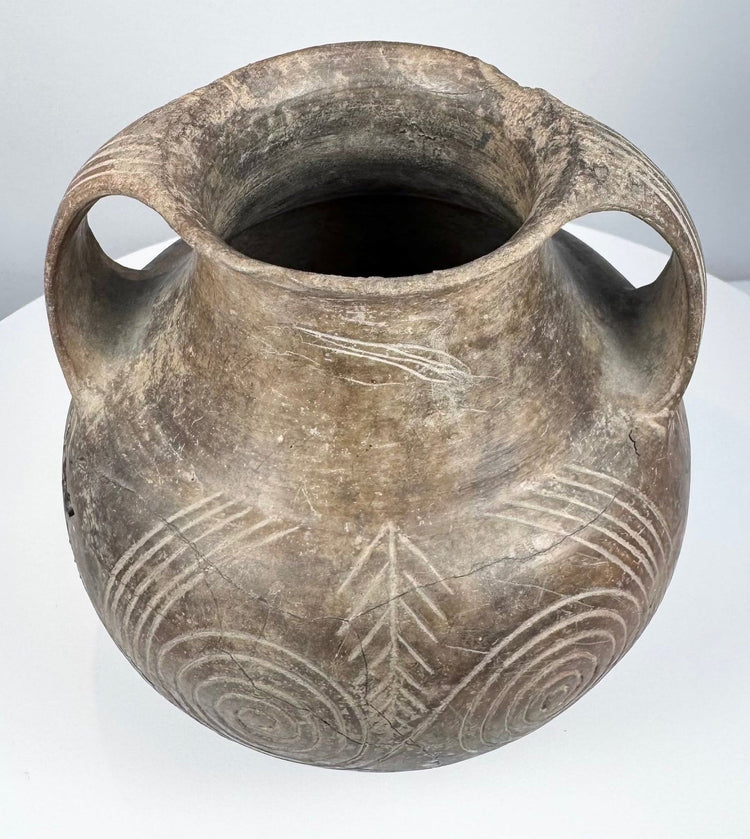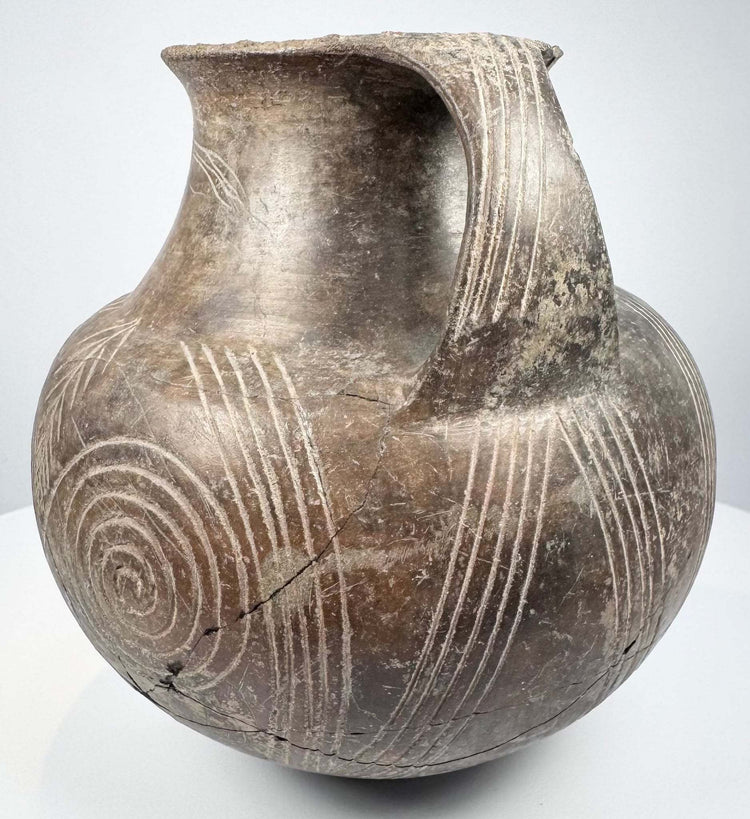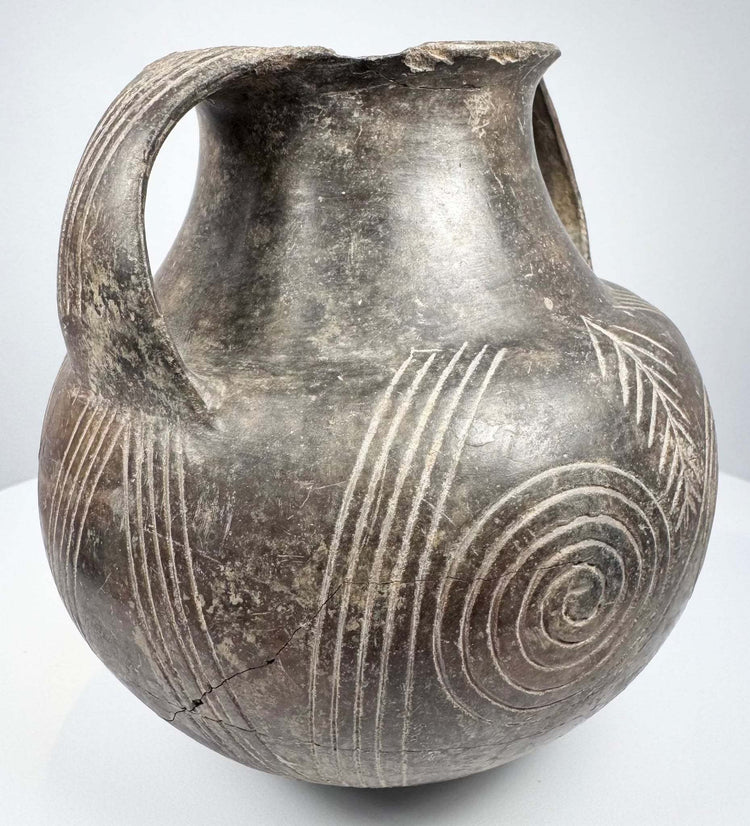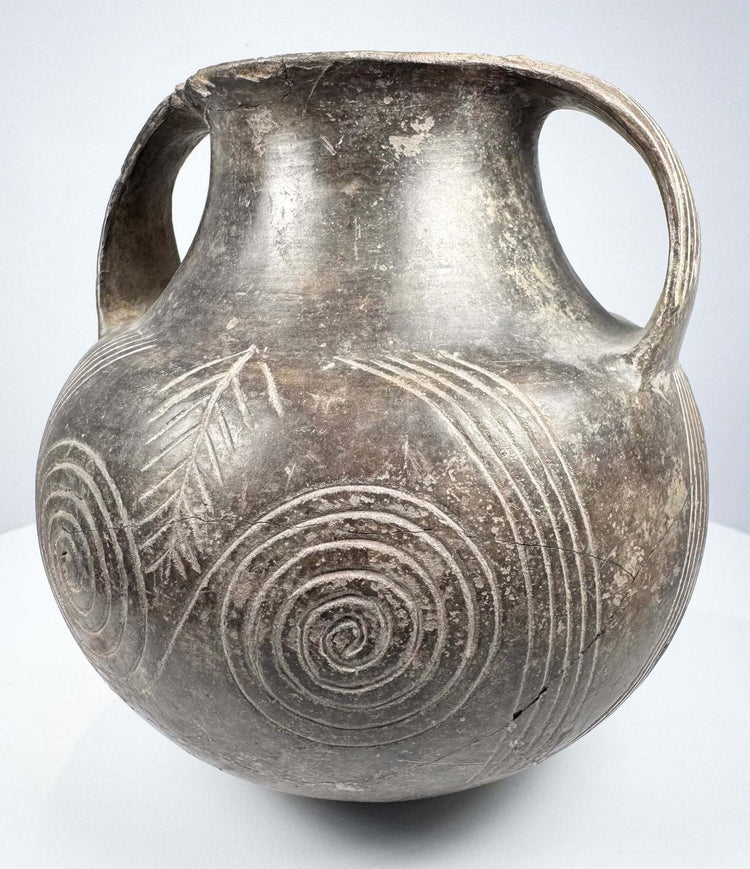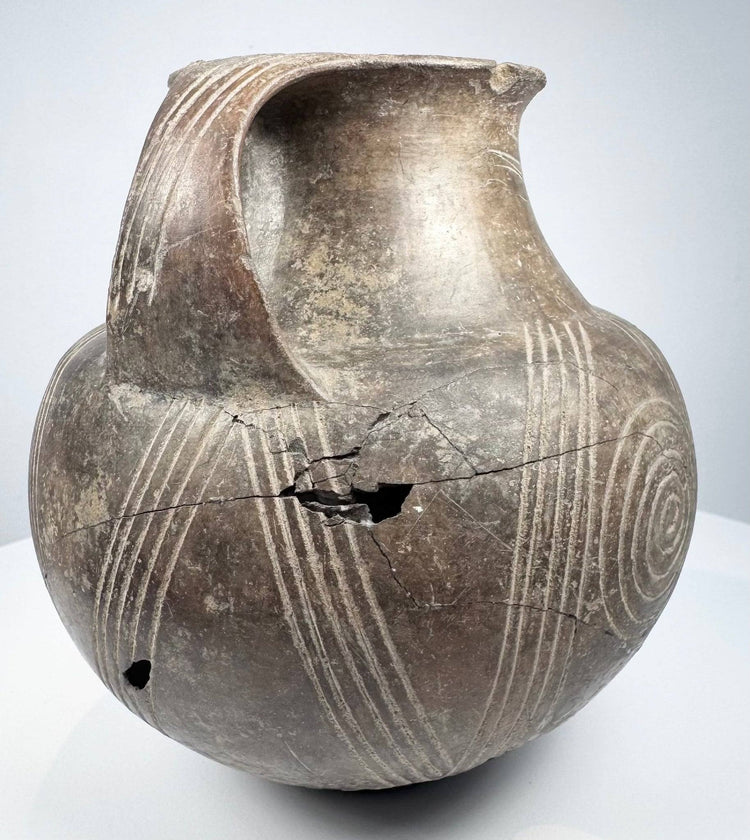
Cruche en céramique néolithique – début de l'âge du bronze | Vase rituel à deux anses | Europe centrale ou orientale | Vers 3000-2000 av. J.-C.

Historique de provenance et de propriété

Autrefois détenu dans une collection privée à Princeton, New Jersey, États-Unis, comprenant une vaste collection de poteries anciennes et d'artefacts connexes.

Prix habituel
$1,500.00
Prix soldé
$1,500.00
Prix habituel
Frais de port calculés à la caisse.

This is a one-of-a-kind historical object. Once sold, this exact piece will not be restocked.

Questions before acquiring? Additional photographs, condition details, documentation, shipping information or a private viewing are available upon request.
Early Etruscan impasto spiral amphora, circa 700–650 BCE, with double handles and deeply incised concentric decoration.
Rotating 360-degree video of an early Etruscan impasto spiral amphora, circa 700–650 BCE, showing its double handles, rounded body, incised spiral decoration, rim, base, and ancient surface patina.
Ancient Etruscan terracotta amphora showing its rounded body, high loop handles, short neck, and dark impasto surface.
Early Etruscan impasto amphora with twin loop handles, flared rim, rounded body, and large incised spiral motifs across the front.
Straight-on photograph of the Etruscan impasto amphora showing both loop handles and symmetrical concentric spiral decoration.
Etruscan terracotta amphora angled to show one handle opening, the short neck, rounded shoulder, and deeply incised spiral patterns.
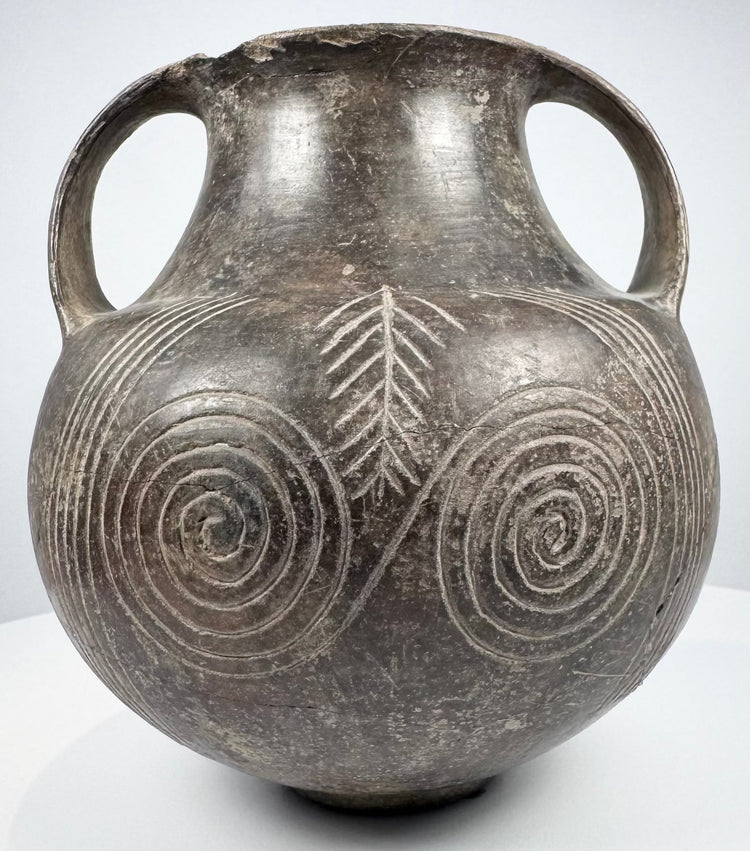
Early Etruscan amphora showing both handles, broad shoulder, and radiating geometric decoration between the large spiral motifs.
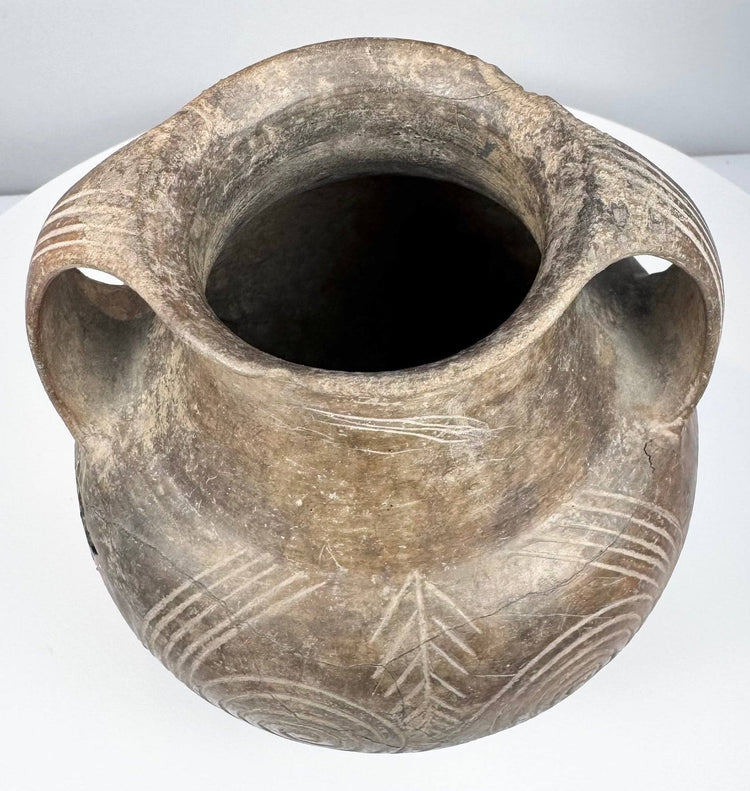
Upper angle of the Etruscan impasto vessel showing the open mouth, thick rim, twin handles, and incised decoration across the shoulder.
Side of the ancient Etruscan amphora showing one prominent loop handle and spiral ornament continuing around the rounded body.
Opposite side of the impasto amphora with one handle prominent and concentric spirals extending across the lower body.
Rear-side angle of the Etruscan vessel showing both handle attachments and a large incised spiral decorating the rounded body.
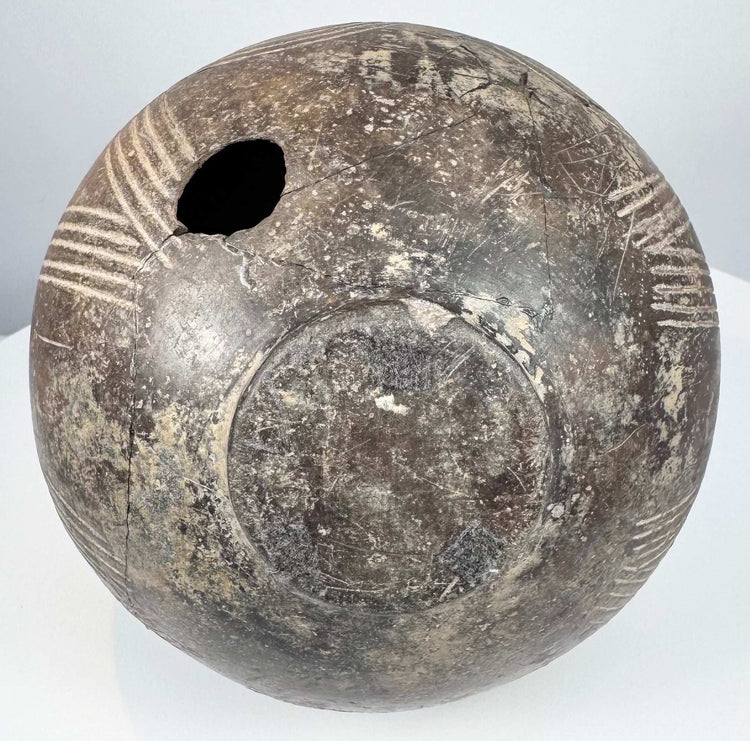
Ancient impasto amphora showing a side section with linear incisions, aged terracotta surface, and a visible vertical crack on the body.
Etruscan spiral amphora with both loop handles visible and two large concentric spiral motifs dominating the darker ancient surface.
  • Early Etruscan impasto spiral amphora, circa 700–650 BCE, with double handles and deeply incised concentric decoration.
  • Rotating 360-degree video of an early Etruscan impasto spiral amphora, circa 700–650 BCE, showing its double handles, rounded body, incised spiral decoration, rim, base, and ancient surface patina.
  • Ancient Etruscan terracotta amphora showing its rounded body, high loop handles, short neck, and dark impasto surface.
  • Early Etruscan impasto amphora with twin loop handles, flared rim, rounded body, and large incised spiral motifs across the front.
  • Straight-on photograph of the Etruscan impasto amphora showing both loop handles and symmetrical concentric spiral decoration.
  • Etruscan terracotta amphora angled to show one handle opening, the short neck, rounded shoulder, and deeply incised spiral patterns.
  • Early Etruscan amphora showing both handles, broad shoulder, and radiating geometric decoration between the large spiral motifs.
  • Upper angle of the Etruscan impasto vessel showing the open mouth, thick rim, twin handles, and incised decoration across the shoulder.
  • Side of the ancient Etruscan amphora showing one prominent loop handle and spiral ornament continuing around the rounded body.
  • Opposite side of the impasto amphora with one handle prominent and concentric spirals extending across the lower body.
  • Rear-side angle of the Etruscan vessel showing both handle attachments and a large incised spiral decorating the rounded body.
  • Ancient impasto amphora showing a side section with linear incisions, aged terracotta surface, and a visible vertical crack on the body.
  • Etruscan spiral amphora with both loop handles visible and two large concentric spiral motifs dominating the darker ancient surface.
Early Etruscan impasto spiral amphora, circa 700–650 BCE, with double handles and deeply incised concentric decoration.
Rotating 360-degree video of an early Etruscan impasto spiral amphora, circa 700–650 BCE, showing its double handles, rounded body, incised spiral decoration, rim, base, and ancient surface patina.
Ancient Etruscan terracotta amphora showing its rounded body, high loop handles, short neck, and dark impasto surface.
Early Etruscan impasto amphora with twin loop handles, flared rim, rounded body, and large incised spiral motifs across the front.
Straight-on photograph of the Etruscan impasto amphora showing both loop handles and symmetrical concentric spiral decoration.
Etruscan terracotta amphora angled to show one handle opening, the short neck, rounded shoulder, and deeply incised spiral patterns.
Early Etruscan amphora showing both handles, broad shoulder, and radiating geometric decoration between the large spiral motifs.
Upper angle of the Etruscan impasto vessel showing the open mouth, thick rim, twin handles, and incised decoration across the shoulder.
Side of the ancient Etruscan amphora showing one prominent loop handle and spiral ornament continuing around the rounded body.
Opposite side of the impasto amphora with one handle prominent and concentric spirals extending across the lower body.
Rear-side angle of the Etruscan vessel showing both handle attachments and a large incised spiral decorating the rounded body.
Ancient impasto amphora showing a side section with linear incisions, aged terracotta surface, and a visible vertical crack on the body.
Etruscan spiral amphora with both loop handles visible and two large concentric spiral motifs dominating the darker ancient surface.
Authenticity and secure checkout guarantee

Cruche en céramique néolithique – début de l'âge du bronze | Vase rituel à deux anses | Europe centrale ou orientale | Vers 3000-2000 av. J.-C.

Description

Contexte historique et origine

Région : Europe centrale ou orientale
Matériau : Terre cuite (poterie artisanale)
Période : Néolithique au début de l'âge du bronze, environ 3000-2000 av. J.-C.

Description

Cette ancienne cruche en poterie est un exemple rare et fascinant de l'artisanat européen primitif durant la transition des sociétés nomades aux sociétés agricoles. Construite à la main et décorée de motifs linéaires et circulaires incisés, la cruche incarne à la fois le design fonctionnel et l'art symbolique. Sa forme à double anse suggère qu'elle a pu être utilisée dans des contextes rituels, pour des libations ou des offrandes, en plus du stockage quotidien de liquides précieux tels que des huiles, de l'hydromel ou de l'eau.

Caractéristiques

- Motifs géométriques incisés incluant des motifs linéaires et des cercles concentriques

- Construction à double anse, probablement pour un usage cérémoniel

- Corps compact avec un large bord, fonctionnel pour le stockage et les versements rituels

- Usure naturelle et patine de surface développées au cours des millénaires

Signification culturelle

Les récipients de ce type n'étaient pas seulement utilitaires, mais portaient également une forte signification symbolique. Les motifs géométriques ont pu représenter la fertilité, la spiritualité ou les croyances cosmologiques centrales aux cultures néolithiques et de l'âge du bronze. La présence de doubles anses est souvent associée aux offrandes rituelles ou aux pratiques cérémonielles, soulignant le rôle probablement spirituel et pratique de la cruche.

État

Bon état ancien avec usure de surface visible, fissures et pertes mineures conformes à l'âge. La cruche reste structurellement solide, et la patine met en valeur son authenticité et son importance archéologique.

Dimensions (approximatives)

Hauteur : 5,5 pouces
Largeur : 5,5 pouces

Âge (approximatif)

4 025 à 5 025 ans

Provenance 

Anciennement détenue dans une collection privée à Princeton, New Jersey, États-Unis, comprenant une vaste collection de poteries anciennes et d'artefacts connexes.

En savoir plus

Voir un exemple similaire du début de l'âge du bronze au Metropolitan Museum of Art

Parcourir notre Collection de cruches et récipients rituels anciens

Description

Contexte historique et origine

Région : Europe centrale ou orientale
Matériau : Terre cuite (poterie artisanale)
Période : Néolithique au début de l'âge du bronze, environ 3000-2000 av. J.-C.

Description

Cette ancienne cruche en poterie est un exemple rare et fascinant de l'artisanat européen primitif durant la transition des sociétés nomades aux sociétés agricoles. Construite à la main et décorée de motifs linéaires et circulaires incisés, la cruche incarne à la fois le design fonctionnel et l'art symbolique. Sa forme à double anse suggère qu'elle a pu être utilisée dans des contextes rituels, pour des libations ou des offrandes, en plus du stockage quotidien de liquides précieux tels que des huiles, de l'hydromel ou de l'eau.

Caractéristiques

- Motifs géométriques incisés incluant des motifs linéaires et des cercles concentriques

- Construction à double anse, probablement pour un usage cérémoniel

- Corps compact avec un large bord, fonctionnel pour le stockage et les versements rituels

- Usure naturelle et patine de surface développées au cours des millénaires

Signification culturelle

Les récipients de ce type n'étaient pas seulement utilitaires, mais portaient également une forte signification symbolique. Les motifs géométriques ont pu représenter la fertilité, la spiritualité ou les croyances cosmologiques centrales aux cultures néolithiques et de l'âge du bronze. La présence de doubles anses est souvent associée aux offrandes rituelles ou aux pratiques cérémonielles, soulignant le rôle probablement spirituel et pratique de la cruche.

État

Bon état ancien avec usure de surface visible, fissures et pertes mineures conformes à l'âge. La cruche reste structurellement solide, et la patine met en valeur son authenticité et son importance archéologique.

Dimensions (approximatives)

Hauteur : 5,5 pouces
Largeur : 5,5 pouces

Âge (approximatif)

4 025 à 5 025 ans

Provenance 

Anciennement détenue dans une collection privée à Princeton, New Jersey, États-Unis, comprenant une vaste collection de poteries anciennes et d'artefacts connexes.

En savoir plus

Voir un exemple similaire du début de l'âge du bronze au Metropolitan Museum of Art

Parcourir notre Collection de cruches et récipients rituels anciens

Vous aimerez peut-être aussi