
Verrerie miniature islamique primitive bleu-vert | Vers le VIIIe – XIIe siècle de notre ère
- Prix habituel
- $300.00
- Prix soldé
- $300.00
- Prix habituel
Impossible de charger la disponibilité du service de retrait


Verrerie miniature islamique primitive bleu-vert | Vers le VIIIe – XIIe siècle de notre ère
Description
Plus
Moins
Contexte historique et origine
Région : Asie occidentale, probablement Iran, Mésopotamie ou régions voisines
Matériau : Verre soufflé bleu-vert pâle
Période : Période islamique primitive, vers les VIIIe-XIIe siècles de notre ère
Description
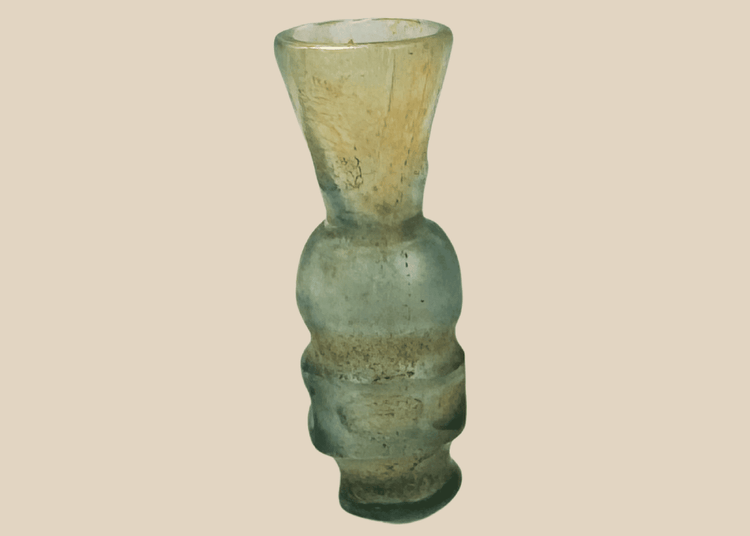
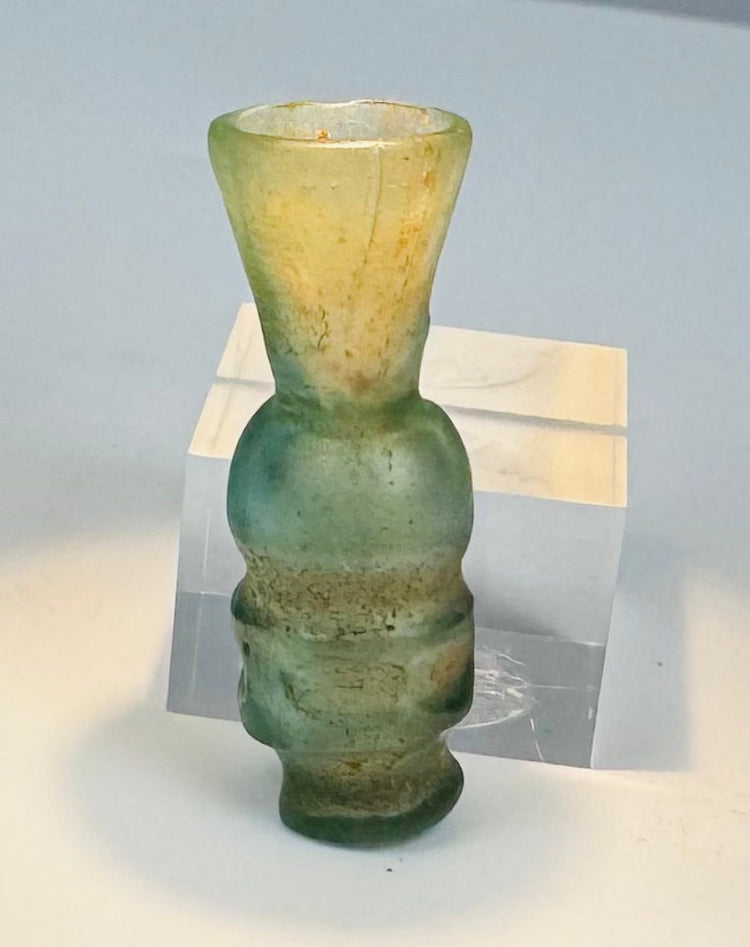
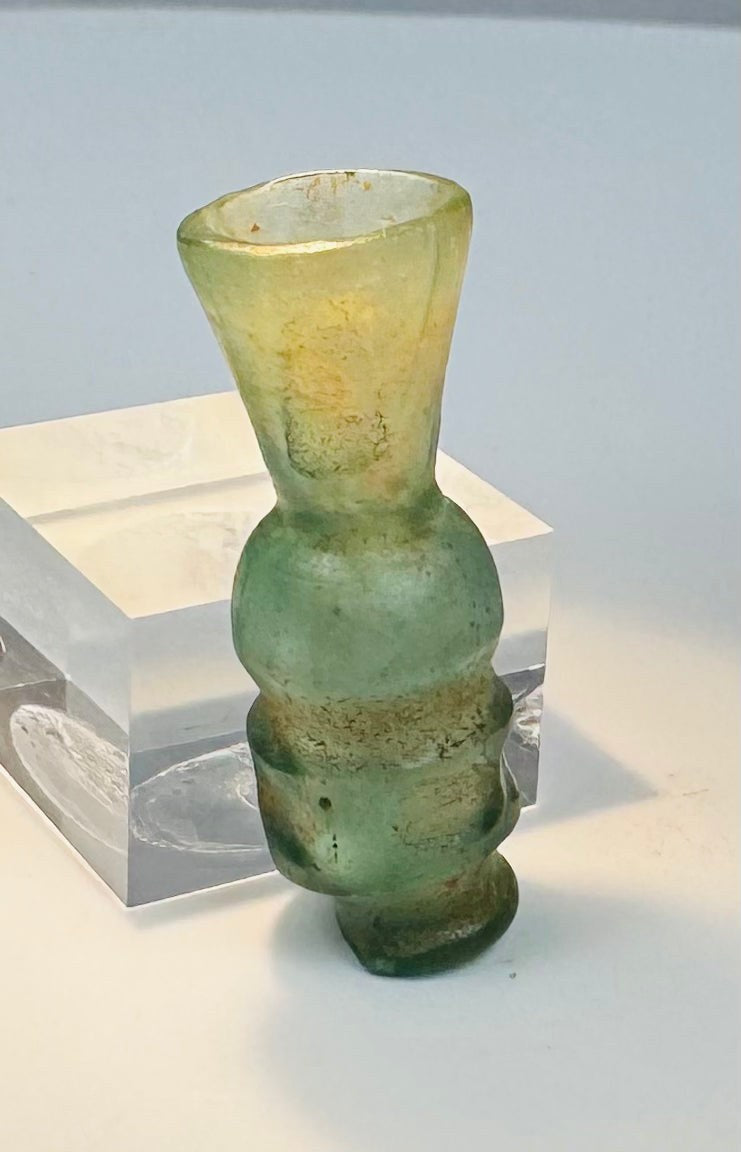
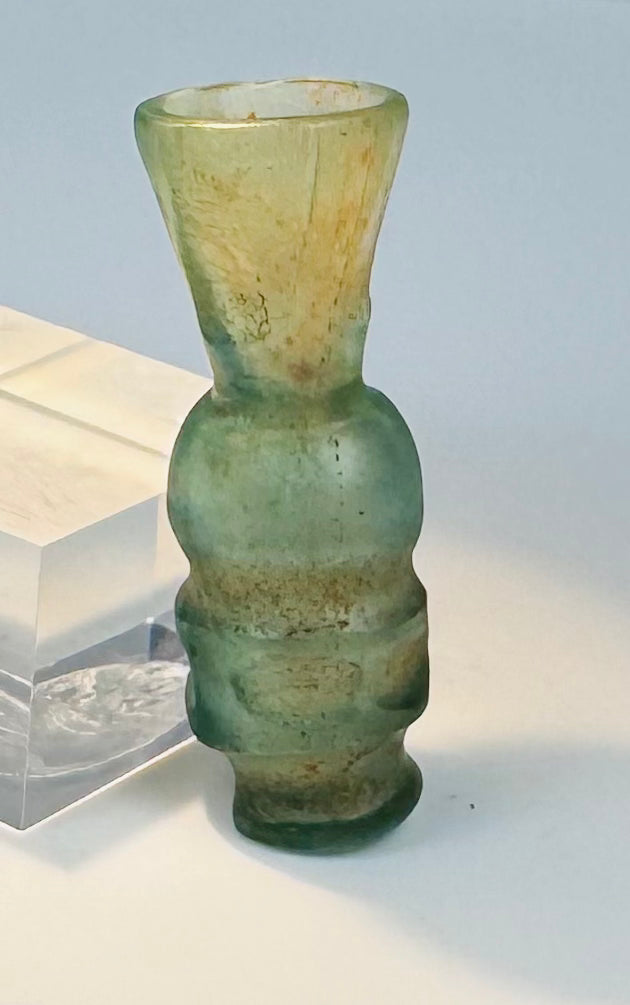
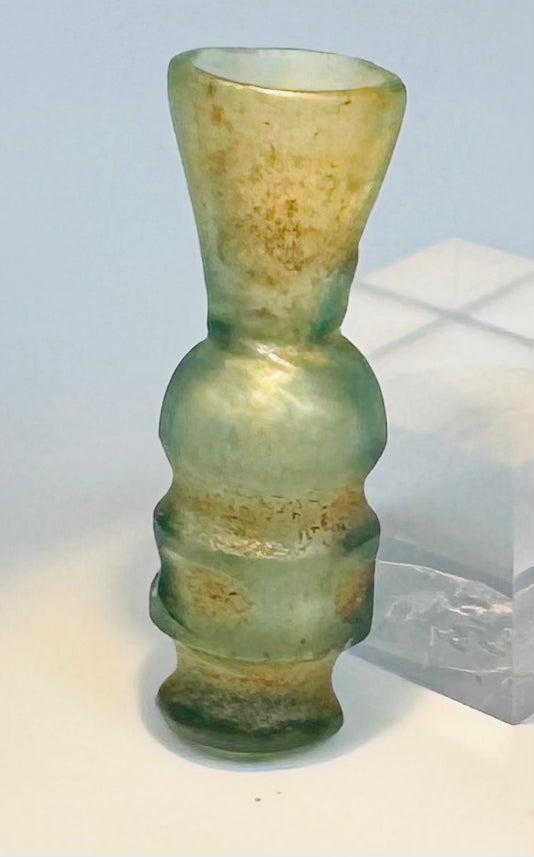
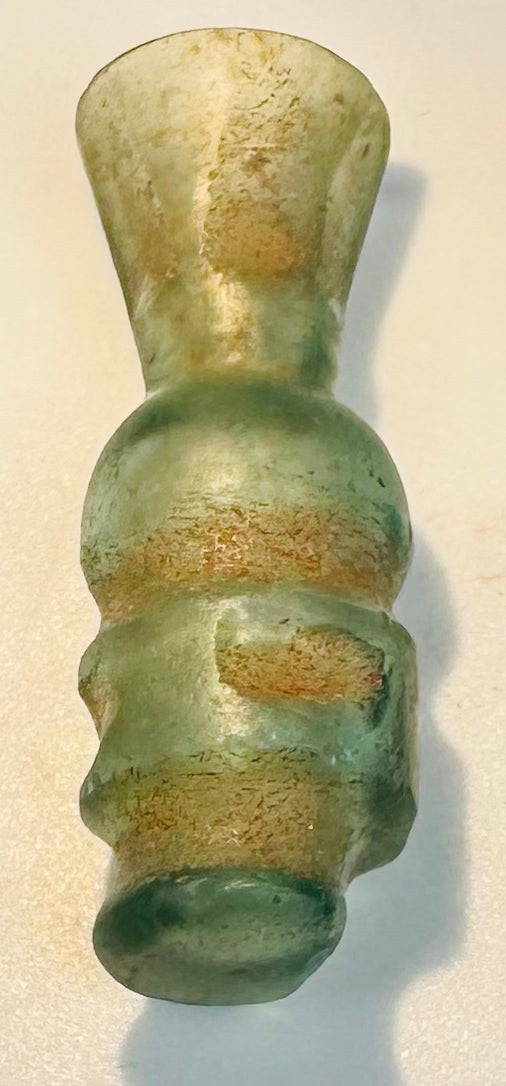
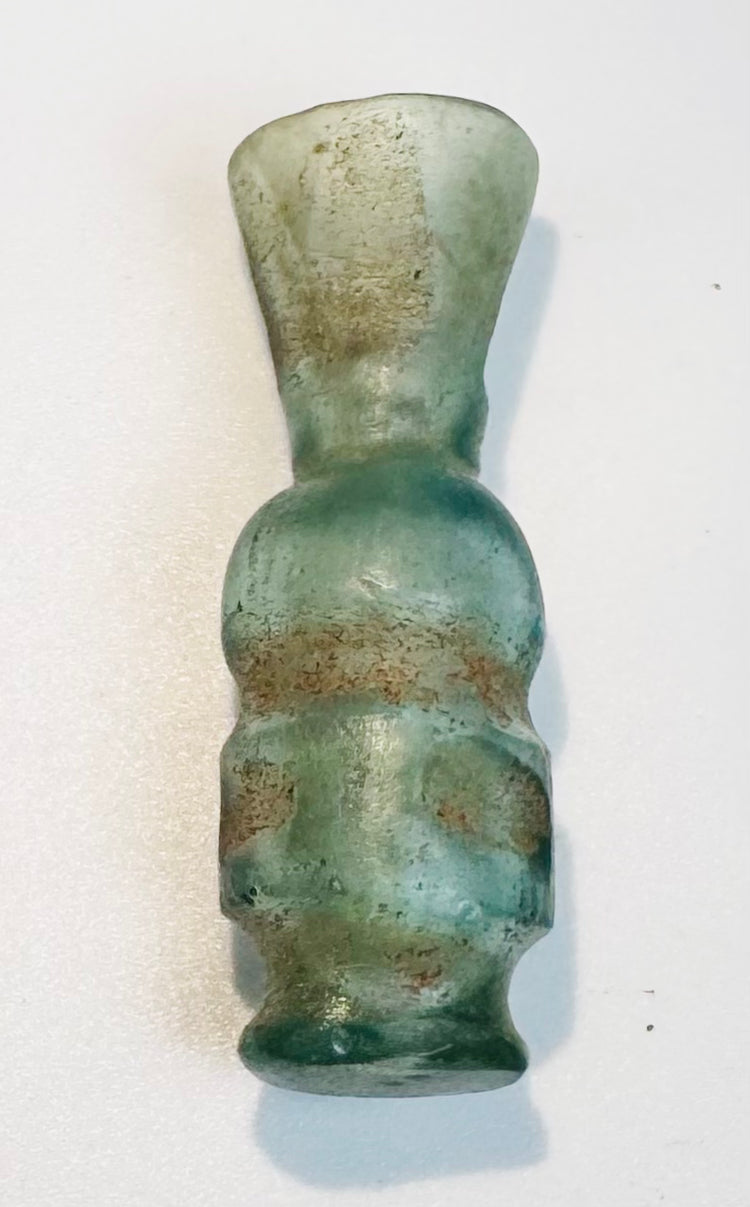
Ce petit récipient en verre soufflé bleu-vert pâle est un exemple miniature mais visuellement distinctif de la verrerie islamique primitive, datant globalement des VIIIe-XIIe siècles de notre ère. Ses proportions diminutives, son corps soigneusement façonné et son ouverture évasée suggèrent qu'il a pu servir de mini-récipient à cosmétiques, de flacon à parfum ou à onguent, de récipient médicinal, ou peut-être d'objet symbolique ou votif.
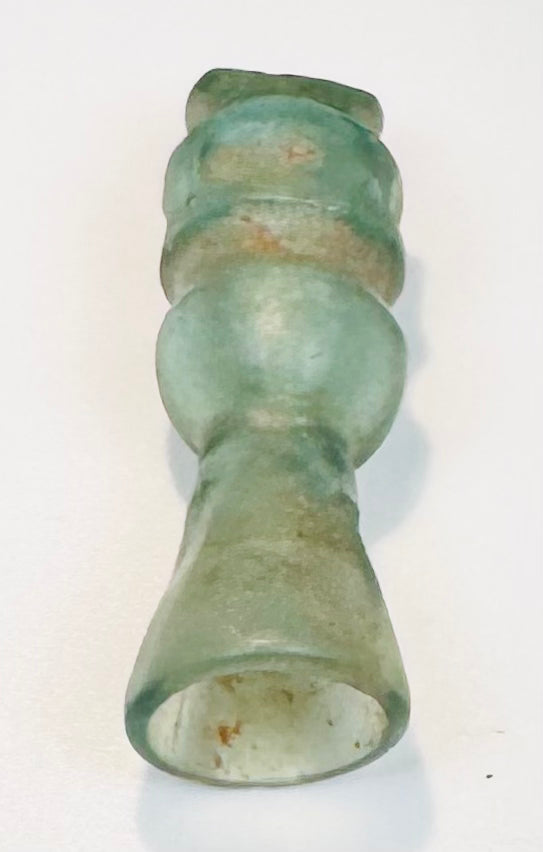
Le récipient présente un profil compact et vertical. Un col évasé et étroit s'élève au-dessus d'un renflement globulaire prononcé, tandis que le corps inférieur est divisé par des moulures horizontales en relief en une séquence de sections arrondies et cylindriques. Le récipient se termine par un petit pied discoïde qui lui permet de tenir debout.
Le haut du col s'élargit vers la bouche, formant une ouverture en forme de trompette avec un bord mince et légèrement irrégulier. Le renflement central arrondi constitue le point le plus large du récipient et est séparé du corps inférieur par une bande horizontale en relief. En dessous, le corps se rétrécit en une section moulée plus courte avant de se terminer par le pied saillant.
Le verre bleu-vert pâle présente une translucidité trouble, des zones de taches minérales jaune pâle et marron, et une légère irisation due à l'altération. Ces caractéristiques de surface sont cohérentes avec la détérioration chimique couramment observée sur le verre ancien et médiéval excavé ou enfoui depuis longtemps.
Des récipients en verre miniatures comparables sont connus dans le monde islamique médiéval, où les verriers produisaient une large gamme de petites bouteilles, flacons, récipients à cosmétiques et récipients spécialisés. La production de verre islamique pendant la période médiévale a incorporé à la fois les techniques romaines et sassanides héritées et des formes régionales distinctes développées à travers l'Iran, l'Irak, la Syrie, l'Égypte et les territoires environnants.
Caractéristiques
- Probablement produit en Asie occidentale
- Fabrication en verre soufflé bleu-vert pâle
- Petit col évasé ou en forme de trompette
- Corps central globulaire arrondi
- Moulures horizontales en relief autour de la section inférieure
- Corps inférieur tubulaire compact
- Petit pied discoïde saillant
- Possible récipient à cosmétiques, parfum, onguent ou médicaments
- Translucidité trouble avec altération de surface ancienne
- Dépôts minéraux pâles et iridescence localisée
- Forme de récipient diminutive rare
Importance culturelle
La verrerie était un artisanat important et très développé dans tout le monde islamique médiéval. Des ateliers opérant en Iran, Mésopotamie, Syrie, Égypte et régions voisines produisaient des récipients à des fins domestiques, commerciales, scientifiques, médicinales et de luxe.
Les récipients miniatures ont pu contenir des substances coûteuses telles que des parfums, des huiles parfumées, des cosmétiques, des médicaments, des pigments ou d'autres matériaux concentrés. Leur petite capacité était particulièrement appropriée pour des substances précieuses, puissantes ou utilisées seulement en quantités limitées.
Le corps façonné et les moulures horizontales en relief témoignent d'un contrôle délibéré du verre chaud lors de la fabrication. Plutôt que de former un simple tube non décoré, le verrier a créé une séquence de sections arrondies, étranglées et évasées qui donnaient au récipient miniature la présence visuelle d'un récipient beaucoup plus grand.
Les verriers islamiques médiévaux ont hérité des traditions techniques des ateliers romains, byzantins et sassanides antérieurs tout en développant de nouvelles formes régionales et approches décoratives. Les récipients conservés montrent une variation considérable de couleur, de forme, de taille et de fonction prévue.
État
Le récipient est en grande partie complet et conserve un profil solide et reconnaissable. Le verre présente une altération de surface étendue liée à l'âge, une turbidité, des dépôts minéraux pâles, des taches brunes et jaunes, des abrasions mineures, de petites piqûres et une iridescence localisée, cohérentes avec un âge considérable.
La bouche reste ouverte, avec de légères irrégularités et de petits éclats visibles autour du bord fin. Le pied discoïde présente des éclats et des irrégularités, bien que le récipient puisse toujours tenir debout. Des rayures mineures supplémentaires, des irrégularités de fabrication et des pertes de surface localisées sont présentes partout.
Dimensions (approximatives)
Hauteur : 1,25 pouce
Âge (approximatif)
825-1 225 ans
Provenance
Anciennement partie de la collection privée d'un gentleman européen, né en 1942 et décédé en 2024.
La collection a été constituée à partir des années 1970 et développée sur plusieurs décennies, avec un accent sur les objets anciens et historiques.
En savoir plus
Découvrez un récipient en verre islamique ancien apparenté via le Musée sans frontières
Explorez notre Collection d'antiquités et d'art ancien du Moyen-Orient
Description
Contexte historique et origine
Région : Asie occidentale, probablement Iran, Mésopotamie ou régions voisines
Matériau : Verre soufflé bleu-vert pâle
Période : Période islamique primitive, vers les VIIIe-XIIe siècles de notre ère
Description
Ce petit récipient en verre soufflé bleu-vert pâle est un exemple miniature mais visuellement distinctif de la verrerie islamique primitive, datant globalement des VIIIe-XIIe siècles de notre ère. Ses proportions diminutives, son corps soigneusement façonné et son ouverture évasée suggèrent qu'il a pu servir de mini-récipient à cosmétiques, de flacon à parfum ou à onguent, de récipient médicinal, ou peut-être d'objet symbolique ou votif.
Le récipient présente un profil compact et vertical. Un col évasé et étroit s'élève au-dessus d'un renflement globulaire prononcé, tandis que le corps inférieur est divisé par des moulures horizontales en relief en une séquence de sections arrondies et cylindriques. Le récipient se termine par un petit pied discoïde qui lui permet de tenir debout.
Le haut du col s'élargit vers la bouche, formant une ouverture en forme de trompette avec un bord mince et légèrement irrégulier. Le renflement central arrondi constitue le point le plus large du récipient et est séparé du corps inférieur par une bande horizontale en relief. En dessous, le corps se rétrécit en une section moulée plus courte avant de se terminer par le pied saillant.
Le verre bleu-vert pâle présente une translucidité trouble, des zones de taches minérales jaune pâle et marron, et une légère irisation due à l'altération. Ces caractéristiques de surface sont cohérentes avec la détérioration chimique couramment observée sur le verre ancien et médiéval excavé ou enfoui depuis longtemps.
Des récipients en verre miniatures comparables sont connus dans le monde islamique médiéval, où les verriers produisaient une large gamme de petites bouteilles, flacons, récipients à cosmétiques et récipients spécialisés. La production de verre islamique pendant la période médiévale a incorporé à la fois les techniques romaines et sassanides héritées et des formes régionales distinctes développées à travers l'Iran, l'Irak, la Syrie, l'Égypte et les territoires environnants.
Caractéristiques
- Probablement produit en Asie occidentale
- Fabrication en verre soufflé bleu-vert pâle
- Petit col évasé ou en forme de trompette
- Corps central globulaire arrondi
- Moulures horizontales en relief autour de la section inférieure
- Corps inférieur tubulaire compact
- Petit pied discoïde saillant
- Possible récipient à cosmétiques, parfum, onguent ou médicaments
- Translucidité trouble avec altération de surface ancienne
- Dépôts minéraux pâles et iridescence localisée
- Forme de récipient diminutive rare
Importance culturelle
La verrerie était un artisanat important et très développé dans tout le monde islamique médiéval. Des ateliers opérant en Iran, Mésopotamie, Syrie, Égypte et régions voisines produisaient des récipients à des fins domestiques, commerciales, scientifiques, médicinales et de luxe.
Les récipients miniatures ont pu contenir des substances coûteuses telles que des parfums, des huiles parfumées, des cosmétiques, des médicaments, des pigments ou d'autres matériaux concentrés. Leur petite capacité était particulièrement appropriée pour des substances précieuses, puissantes ou utilisées seulement en quantités limitées.
Le corps façonné et les moulures horizontales en relief témoignent d'un contrôle délibéré du verre chaud lors de la fabrication. Plutôt que de former un simple tube non décoré, le verrier a créé une séquence de sections arrondies, étranglées et évasées qui donnaient au récipient miniature la présence visuelle d'un récipient beaucoup plus grand.
Les verriers islamiques médiévaux ont hérité des traditions techniques des ateliers romains, byzantins et sassanides antérieurs tout en développant de nouvelles formes régionales et approches décoratives. Les récipients conservés montrent une variation considérable de couleur, de forme, de taille et de fonction prévue.
État
Le récipient est en grande partie complet et conserve un profil solide et reconnaissable. Le verre présente une altération de surface étendue liée à l'âge, une turbidité, des dépôts minéraux pâles, des taches brunes et jaunes, des abrasions mineures, de petites piqûres et une iridescence localisée, cohérentes avec un âge considérable.
La bouche reste ouverte, avec de légères irrégularités et de petits éclats visibles autour du bord fin. Le pied discoïde présente des éclats et des irrégularités, bien que le récipient puisse toujours tenir debout. Des rayures mineures supplémentaires, des irrégularités de fabrication et des pertes de surface localisées sont présentes partout.
Dimensions (approximatives)
Hauteur : 1,25 pouce
Âge (approximatif)
825-1 225 ans
Provenance
Anciennement partie de la collection privée d'un gentleman européen, né en 1942 et décédé en 2024.
La collection a été constituée à partir des années 1970 et développée sur plusieurs décennies, avec un accent sur les objets anciens et historiques.
En savoir plus
Découvrez un récipient en verre islamique ancien apparenté via le Musée sans frontières
Explorez notre Collection d'antiquités et d'art ancien du Moyen-Orient
Vous aimerez peut-être aussi
