

Terre cuite ottomane, foyer de pipe à tabac à décor floral | Méditerranée orientale | Circa XVIIIe – XIXe siècle
- Prix habituel
- $250.00
- Prix soldé
- $250.00
- Prix habituel
Impossible de charger la disponibilité du service de retrait


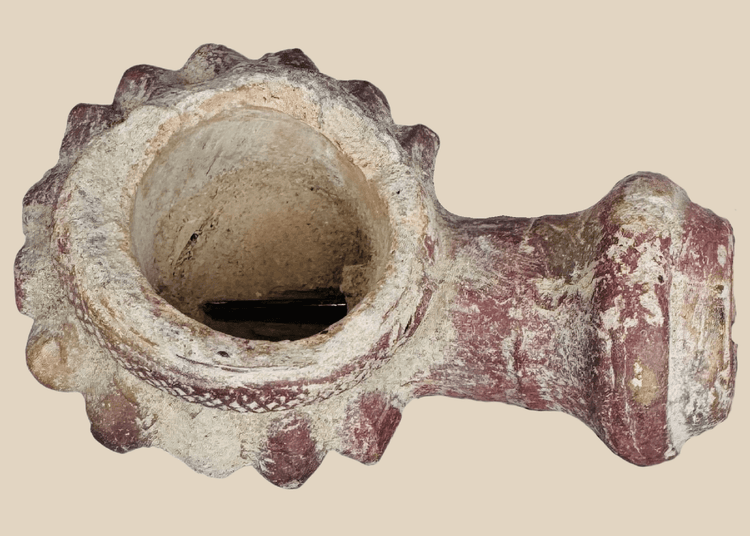
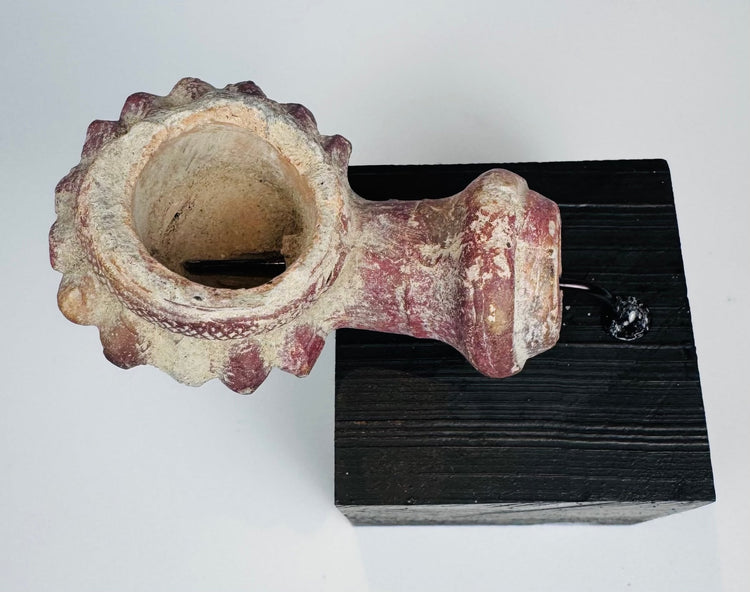
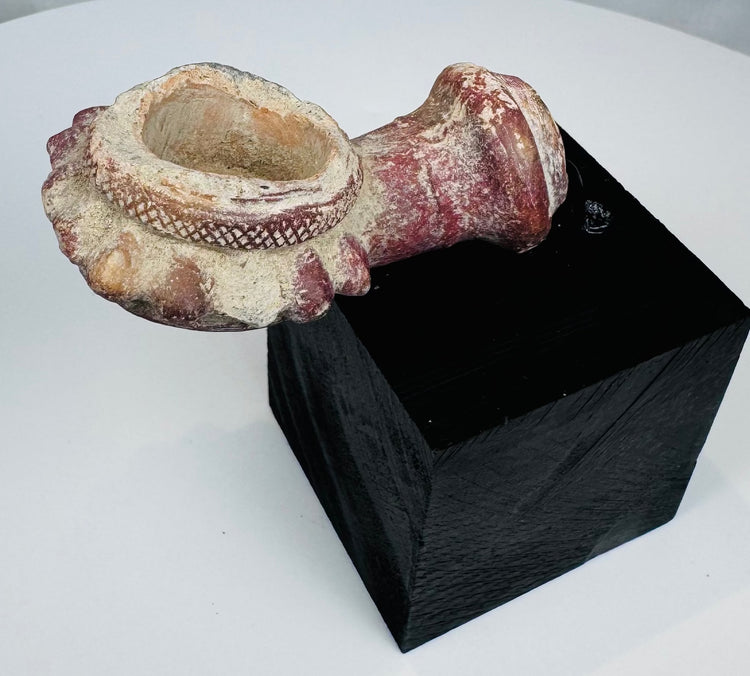
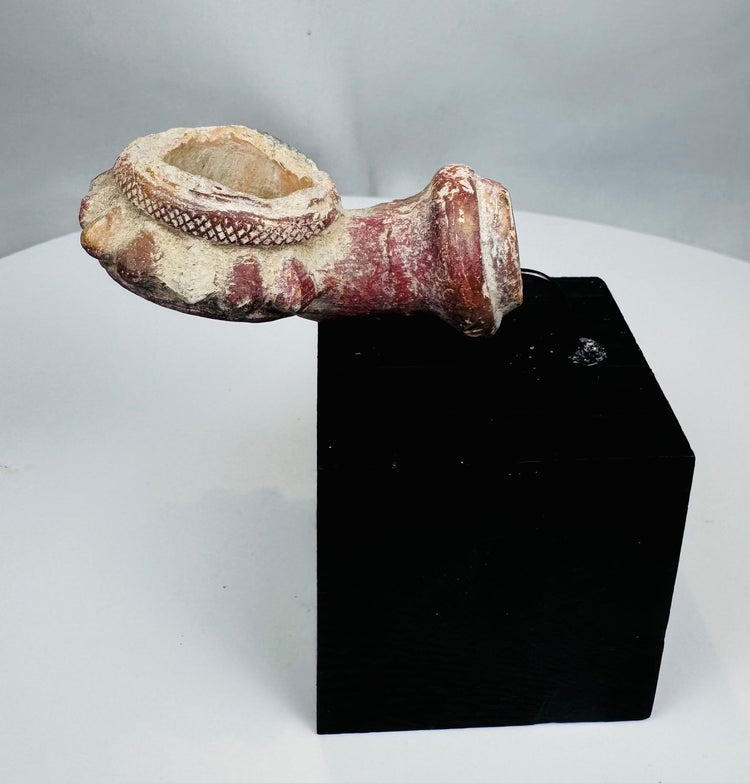
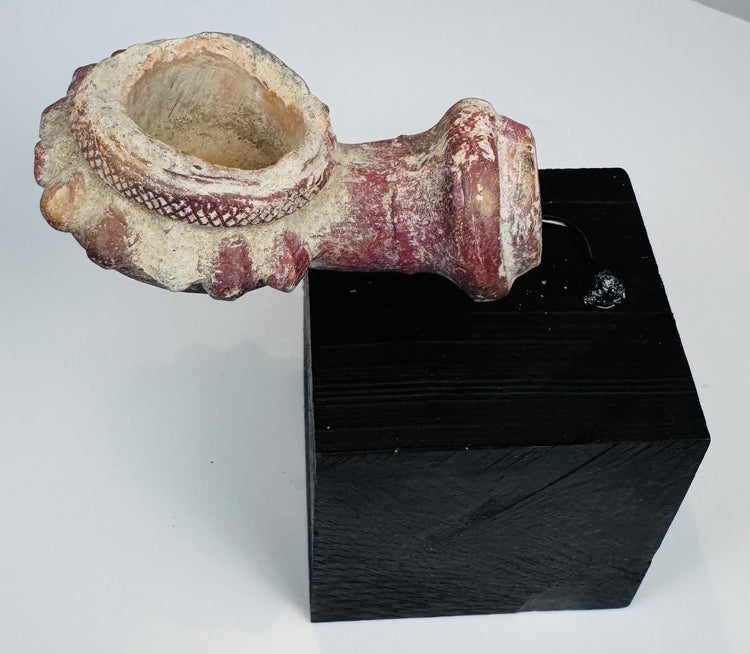
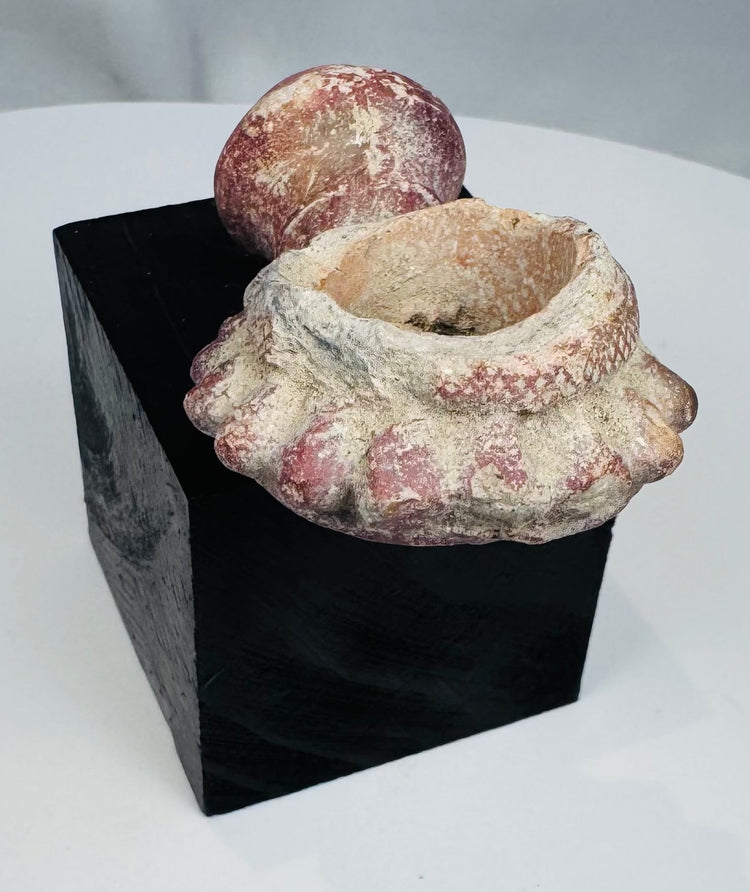
Terre cuite ottomane, foyer de pipe à tabac à décor floral | Méditerranée orientale | Circa XVIIIe – XIXe siècle
Description
Plus
Moins
Contexte historique et origine
Région : Empire ottoman, probablement Méditerranée orientale ou Levant
Matériau : Terre cuite moulée avec engobe rouge, légers dépôts minéraux et support de présentation moderne en métal et bois
Période : Fin de la période ottomane, probablement vers 1750-1900 de notre ère
Description
Ce fourneau de pipe à tabac décoratif en terre cuite représente le type d'appareil à fumer en céramique détachable largement utilisé dans tout l'Empire ottoman et les régions voisines aux XVIIIe et XIXe siècles.
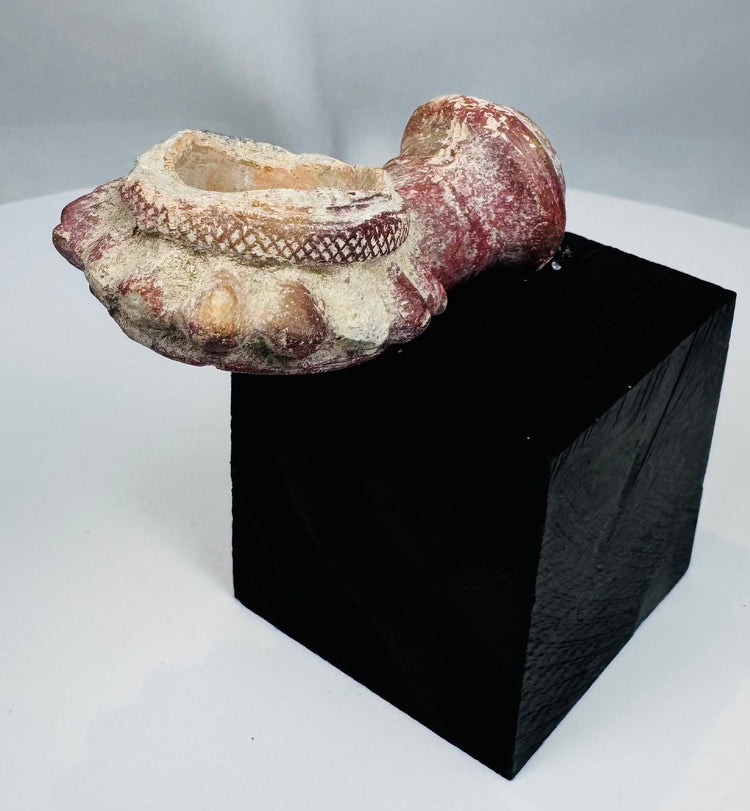
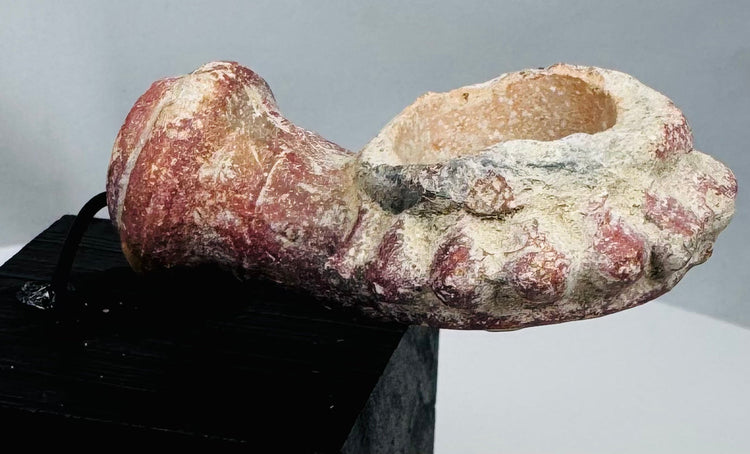
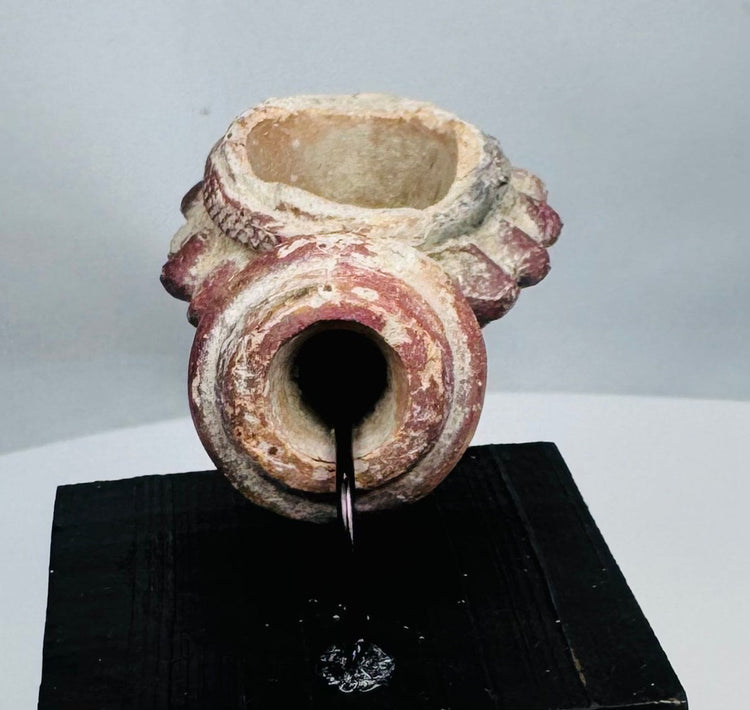
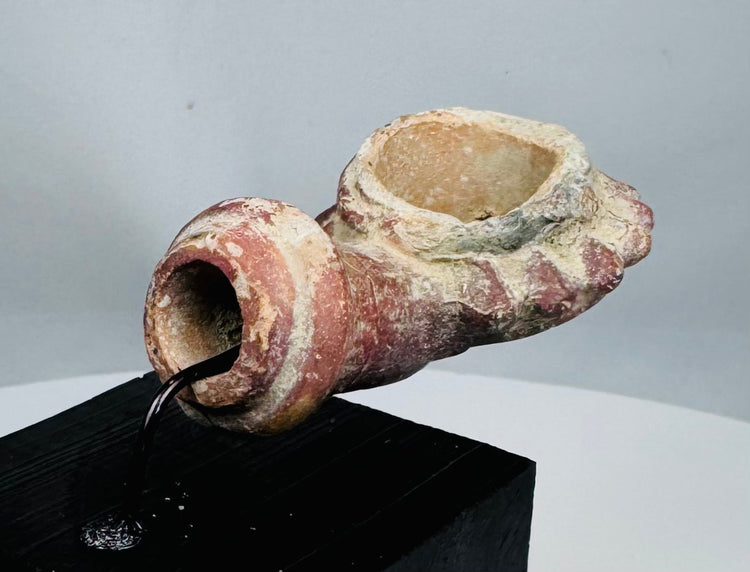
La pipe est formée d'une chambre à tabac profonde, presque verticale, entourée d'un large rebord surélevé. L'extérieur du fourneau est orné d'une bordure festonnée ou en forme de pétale, donnant à l'objet un profil floral vu de dessus.
Immédiatement sous l'ouverture, une étroite bande de décoration hachurée en relief offre une texture et un contraste visuel supplémentaires.
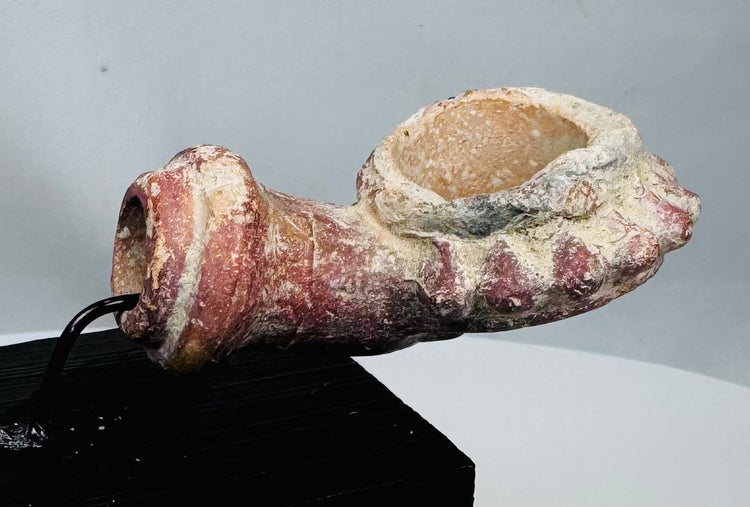
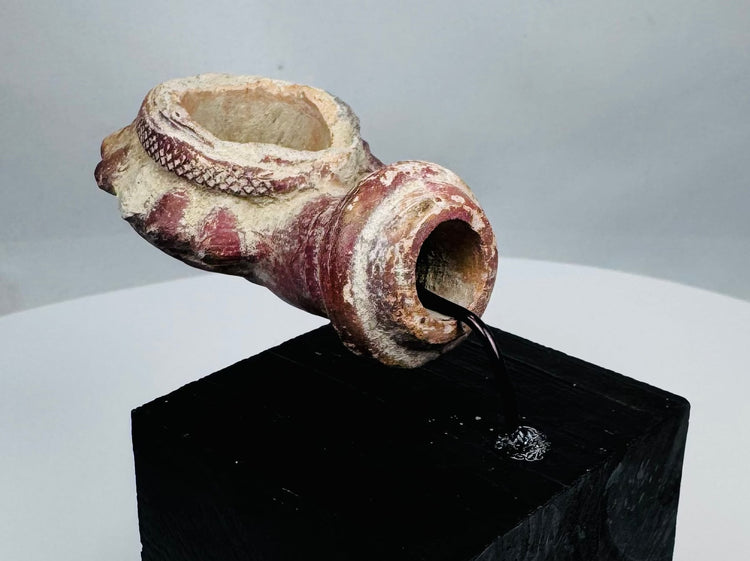
Une douille tubulaire substantielle s'étend horizontalement depuis le fourneau, avec des anneaux moulés entourant son extrémité ouverte. Une tige de pipe séparée en bois, roseau ou matériau composite aurait été initialement insérée dans cette douille, permettant à la fumée de voyager du fourneau à l'utilisateur.
Les tiges détachables étaient une caractéristique distinctive des pipes ottomanes et permettaient de remplacer indépendamment le fourneau en céramique fragile. Les exemples archéologiques ne conservent fréquemment que le fourneau et la douille en poterie après la disparition de la tige organique d'origine.
Le corps en terre cuite conserve d'importantes traces d'un engobe rouge-violet profond sous de légères concrétions d'enfouissement et une altération de surface. Des détails alternés peints ou enduits de rouge restent visibles sur le bord festonné, la douille de la tige et les bandes décoratives, donnant à la pipe un aspect archéologique attrayant.
La pièce est présentée sur une base d'affichage en bois noir personnalisée, supportée par un support métallique incurvé inséré par l'ouverture de la tige. Le support permet d'exposer la pipe dans son orientation horizontale d'origine tout en rendant clairement visibles le fourneau décoré et la douille de la tige.
Caractéristiques
- Chambre à tabac cylindrique profonde
- Large ouverture surélevée du fourneau
- Bordure extérieure festonnée florale ou en forme de pétale
- Bande hachurée en relief sous le rebord
- Grande douille tubulaire pour une tige détachable
- Anneaux moulés autour de l'extrémité de la tige
- Engobe ou pigment rouge-violet subsistant
- Vastes dépôts minéraux et d'enfouissement pâles
- Inclut un support de présentation en bois noir sur mesure
Signification culturelle
Les pipes à tabac en argile se sont répandues dans tout l'Empire ottoman après l'introduction du tabac au début du XVIIe siècle. Les fourneaux ottomans excavés présentent une variation régionale considérable, allant de formes arrondies simples à des exemples moulés élaborés décorés de rainures, de bandes estampées, de couronnes, de pétales et de marques de fabricants.
Ces pipes consistaient en un fourneau en céramique monté sur une longue tige détachable en bois, roseau ou matériau composite. Leur portabilité et leur construction remplaçable ont contribué à en faire des objets courants dans les maisons, les cafés, les marchés, les milieux militaires et la vie sociale publique.
La taille et la décoration élaborée de cet exemple suggèrent qu'il était destiné à être visuellement distinctif plutôt qu'entièrement utilitaire. Son bord floral, son ornement en relief et son traitement de surface rouge contrasté reflètent le caractère décoratif fréquemment appliqué aux accessoires de fumeurs ottomans.
Condition
Le fourneau de la pipe reste substantiellement intact et structurellement stable. L'usure liée à l'âge attendue comprend une érosion de surface étendue, des concrétions minérales, une décoloration, des rayures, des abrasions, de petits éclats et des pertes de l'engobe rouge ou de la finition peinte.
Le bord présente des irrégularités, des pertes mineures sur les bords et des zones d'usure de surface. Les projections festonnées restent largement préservées, bien que plusieurs présentent de petits éclats et des abrasions. La chambre à tabac intérieure contient des taches et des dépôts accumulés.
La douille de la tige reste ouverte et substantiellement complète, avec les éclats et l'usure attendus autour de son bord terminal. Aucune tige détachable d'origine ne subsiste.
Le support de montage métallique incurvé moderne est inséré à travers la douille et fixé à la base d'affichage en bois noir. Un adhésif ou un matériau de montage est visible là où le support rencontre le socle.
Dimensions (approximatives)
Hauteur avec support : 3,25 pouces
Largeur de la pipe : 2 pouces
Longueur : 3,75 pouces
Âge (approximatif)
125–275 ans
Provenance
Anciennement dans la collection de Jack Guevrekian, Manhasset, New York, un numismate et collectionneur new-yorkais renommé avec un intérêt particulier pour la numismatique arménienne, les antiquités et les matériaux anciens. Guevrekian a constitué une vaste collection sur plusieurs décennies, dont une partie significative a été proposée publiquement sous le titre The Jack Guevrekian Collection par la Numismatic & Antiquarian Service Corporation of America à New York en 1977.
Par la suite détenue dans une collection privée de New York.
Plus tard traitée par la Howard S. Rose Gallery / Arte Primitivo à New York, une galerie et maison de vente aux enchères spécialisée de longue date dans les antiquités précolombiennes, classiques, égyptiennes, asiatiques et ethnographiques, ainsi que les œuvres d'art. La galerie a mené des ventes aux enchères spécialisées, des expositions et des ventes privées depuis ses locaux de New York.
Ensuite traitée par Artemis Fine Arts / Artemis Gallery, un spécialiste basé au Colorado dans les antiquités, l'art ancien, le matériel ethnographique et les beaux-arts, actif dans le domaine depuis 1993.
Est ensuite entrée dans une collection privée à Toronto, Ontario, Canada.
En savoir plus
Voir un fourneau de pipe à tabac en argile moulée ottomane similaire dans la collection du British Museum
Explorez notre Collection d'Antiquités et d'Art Ancien du Moyen-Orient
Description
Contexte historique et origine
Région : Empire ottoman, probablement Méditerranée orientale ou Levant
Matériau : Terre cuite moulée avec engobe rouge, légers dépôts minéraux et support de présentation moderne en métal et bois
Période : Fin de la période ottomane, probablement vers 1750-1900 de notre ère
Description
Ce fourneau de pipe à tabac décoratif en terre cuite représente le type d'appareil à fumer en céramique détachable largement utilisé dans tout l'Empire ottoman et les régions voisines aux XVIIIe et XIXe siècles.
La pipe est formée d'une chambre à tabac profonde, presque verticale, entourée d'un large rebord surélevé. L'extérieur du fourneau est orné d'une bordure festonnée ou en forme de pétale, donnant à l'objet un profil floral vu de dessus.
Immédiatement sous l'ouverture, une étroite bande de décoration hachurée en relief offre une texture et un contraste visuel supplémentaires.
Une douille tubulaire substantielle s'étend horizontalement depuis le fourneau, avec des anneaux moulés entourant son extrémité ouverte. Une tige de pipe séparée en bois, roseau ou matériau composite aurait été initialement insérée dans cette douille, permettant à la fumée de voyager du fourneau à l'utilisateur.
Les tiges détachables étaient une caractéristique distinctive des pipes ottomanes et permettaient de remplacer indépendamment le fourneau en céramique fragile. Les exemples archéologiques ne conservent fréquemment que le fourneau et la douille en poterie après la disparition de la tige organique d'origine.
Le corps en terre cuite conserve d'importantes traces d'un engobe rouge-violet profond sous de légères concrétions d'enfouissement et une altération de surface. Des détails alternés peints ou enduits de rouge restent visibles sur le bord festonné, la douille de la tige et les bandes décoratives, donnant à la pipe un aspect archéologique attrayant.
La pièce est présentée sur une base d'affichage en bois noir personnalisée, supportée par un support métallique incurvé inséré par l'ouverture de la tige. Le support permet d'exposer la pipe dans son orientation horizontale d'origine tout en rendant clairement visibles le fourneau décoré et la douille de la tige.
Caractéristiques
- Chambre à tabac cylindrique profonde
- Large ouverture surélevée du fourneau
- Bordure extérieure festonnée florale ou en forme de pétale
- Bande hachurée en relief sous le rebord
- Grande douille tubulaire pour une tige détachable
- Anneaux moulés autour de l'extrémité de la tige
- Engobe ou pigment rouge-violet subsistant
- Vastes dépôts minéraux et d'enfouissement pâles
- Inclut un support de présentation en bois noir sur mesure
Signification culturelle
Les pipes à tabac en argile se sont répandues dans tout l'Empire ottoman après l'introduction du tabac au début du XVIIe siècle. Les fourneaux ottomans excavés présentent une variation régionale considérable, allant de formes arrondies simples à des exemples moulés élaborés décorés de rainures, de bandes estampées, de couronnes, de pétales et de marques de fabricants.
Ces pipes consistaient en un fourneau en céramique monté sur une longue tige détachable en bois, roseau ou matériau composite. Leur portabilité et leur construction remplaçable ont contribué à en faire des objets courants dans les maisons, les cafés, les marchés, les milieux militaires et la vie sociale publique.
La taille et la décoration élaborée de cet exemple suggèrent qu'il était destiné à être visuellement distinctif plutôt qu'entièrement utilitaire. Son bord floral, son ornement en relief et son traitement de surface rouge contrasté reflètent le caractère décoratif fréquemment appliqué aux accessoires de fumeurs ottomans.
Condition
Le fourneau de la pipe reste substantiellement intact et structurellement stable. L'usure liée à l'âge attendue comprend une érosion de surface étendue, des concrétions minérales, une décoloration, des rayures, des abrasions, de petits éclats et des pertes de l'engobe rouge ou de la finition peinte.
Le bord présente des irrégularités, des pertes mineures sur les bords et des zones d'usure de surface. Les projections festonnées restent largement préservées, bien que plusieurs présentent de petits éclats et des abrasions. La chambre à tabac intérieure contient des taches et des dépôts accumulés.
La douille de la tige reste ouverte et substantiellement complète, avec les éclats et l'usure attendus autour de son bord terminal. Aucune tige détachable d'origine ne subsiste.
Le support de montage métallique incurvé moderne est inséré à travers la douille et fixé à la base d'affichage en bois noir. Un adhésif ou un matériau de montage est visible là où le support rencontre le socle.
Dimensions (approximatives)
Hauteur avec support : 3,25 pouces
Largeur de la pipe : 2 pouces
Longueur : 3,75 pouces
Âge (approximatif)
125–275 ans
Provenance
Anciennement dans la collection de Jack Guevrekian, Manhasset, New York, un numismate et collectionneur new-yorkais renommé avec un intérêt particulier pour la numismatique arménienne, les antiquités et les matériaux anciens. Guevrekian a constitué une vaste collection sur plusieurs décennies, dont une partie significative a été proposée publiquement sous le titre The Jack Guevrekian Collection par la Numismatic & Antiquarian Service Corporation of America à New York en 1977.
Par la suite détenue dans une collection privée de New York.
Plus tard traitée par la Howard S. Rose Gallery / Arte Primitivo à New York, une galerie et maison de vente aux enchères spécialisée de longue date dans les antiquités précolombiennes, classiques, égyptiennes, asiatiques et ethnographiques, ainsi que les œuvres d'art. La galerie a mené des ventes aux enchères spécialisées, des expositions et des ventes privées depuis ses locaux de New York.
Ensuite traitée par Artemis Fine Arts / Artemis Gallery, un spécialiste basé au Colorado dans les antiquités, l'art ancien, le matériel ethnographique et les beaux-arts, actif dans le domaine depuis 1993.
Est ensuite entrée dans une collection privée à Toronto, Ontario, Canada.
En savoir plus
Voir un fourneau de pipe à tabac en argile moulée ottomane similaire dans la collection du British Museum
Explorez notre Collection d'Antiquités et d'Art Ancien du Moyen-Orient
Vous aimerez peut-être aussi
