

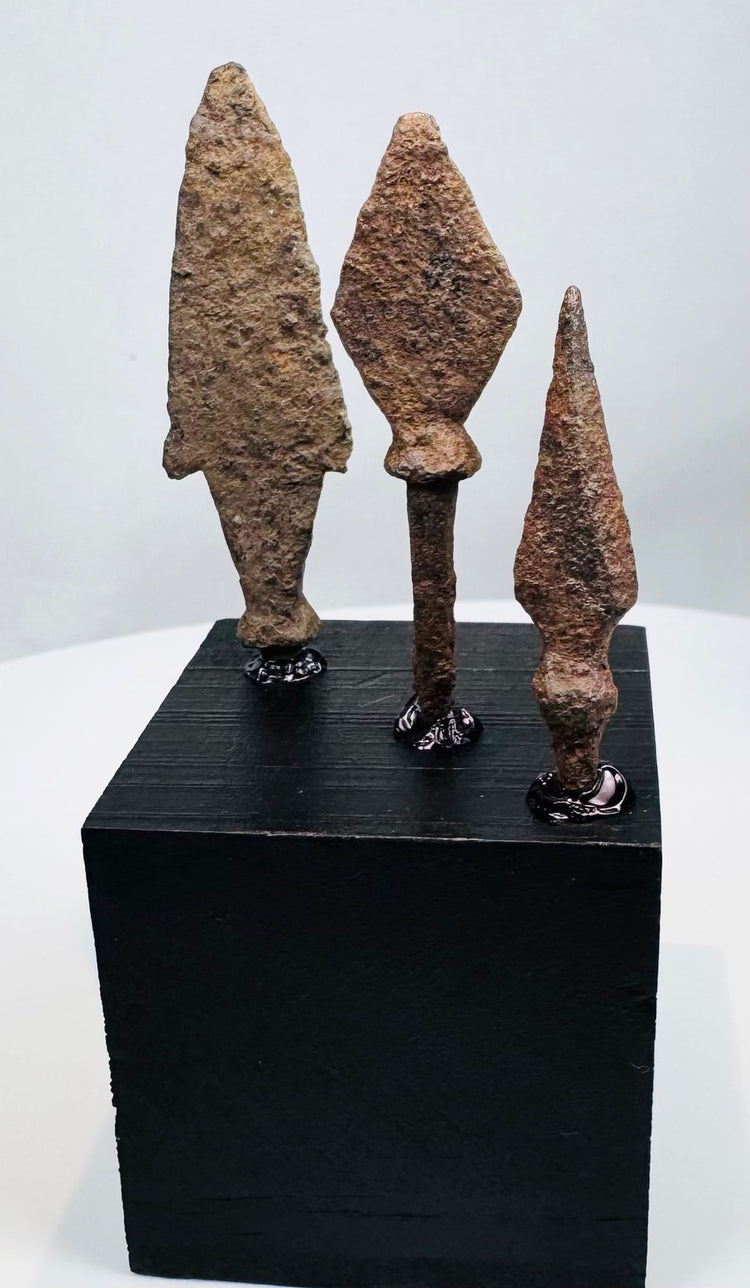
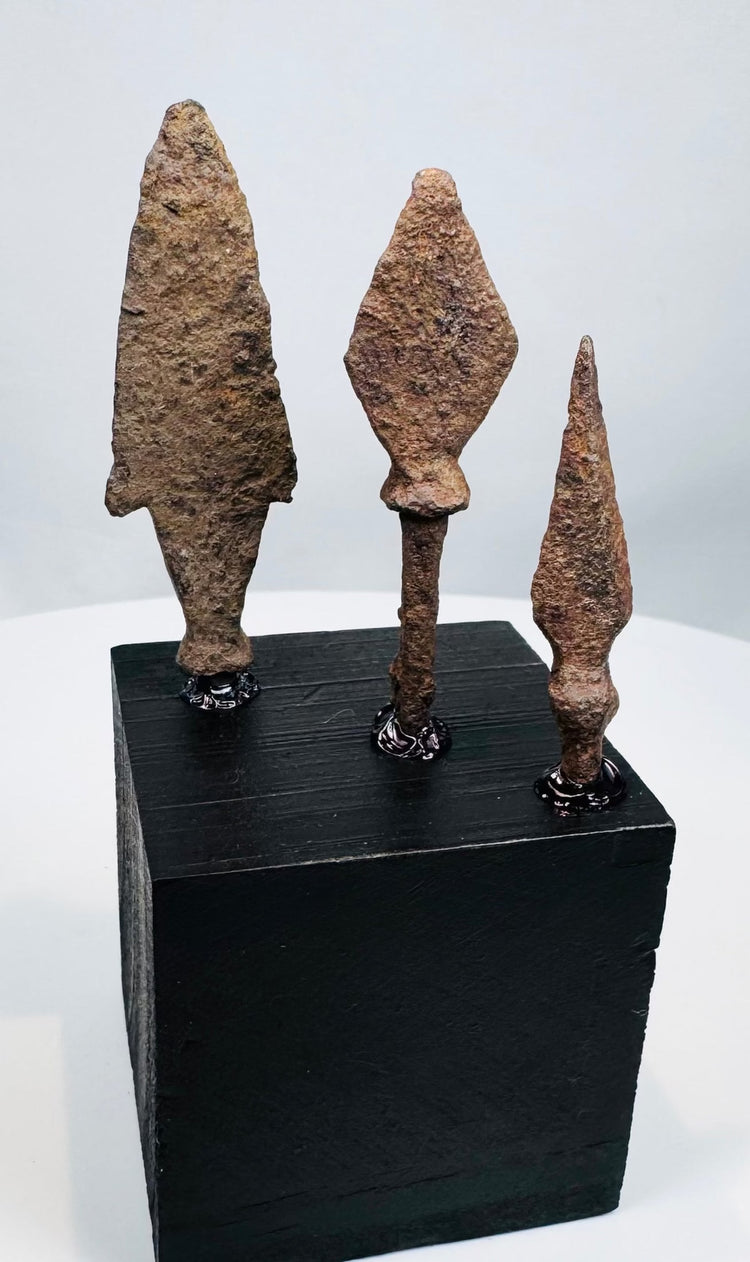
Groupe de pointes de projectiles en fer, de l'époque romaine au Moyen Âge, sur un présentoir | Circa 3e – 14e siècle EC
- Prix habituel
- $250.00
- Prix soldé
- $250.00
- Prix habituel
Impossible de charger la disponibilité du service de retrait


Groupe de pointes de projectiles en fer, de l'époque romaine au Moyen Âge, sur un présentoir | Circa 3e – 14e siècle EC
Description
Plus
Moins
Contexte historique et origine
Région : Europe
Matériau : Fer forgé à la main
Période : Fin de l'époque romaine jusqu'à la période médiévale, vers le 3e-14e siècle de notre ère
Description
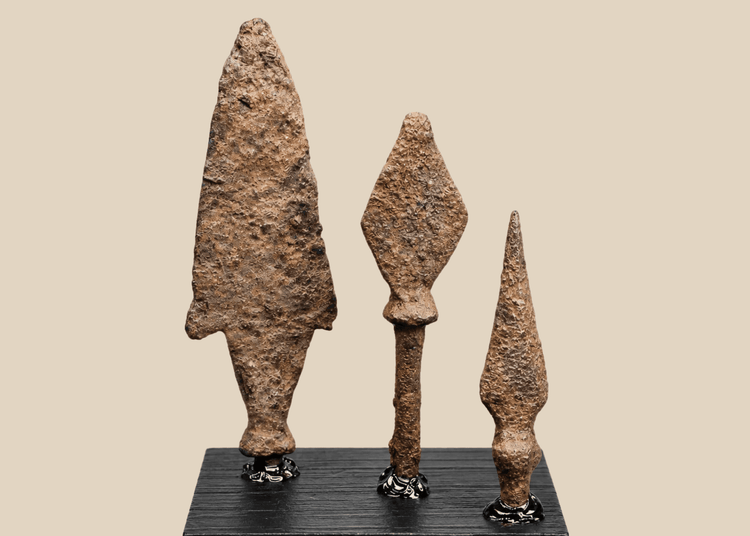
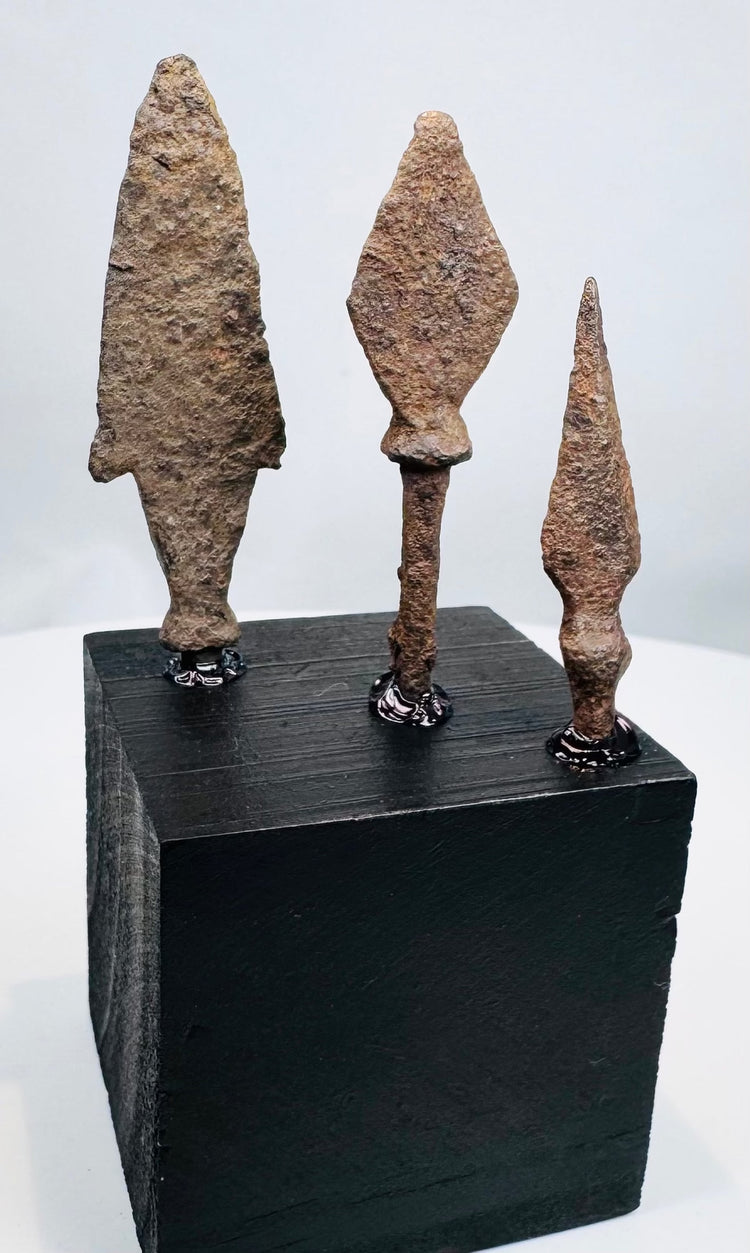
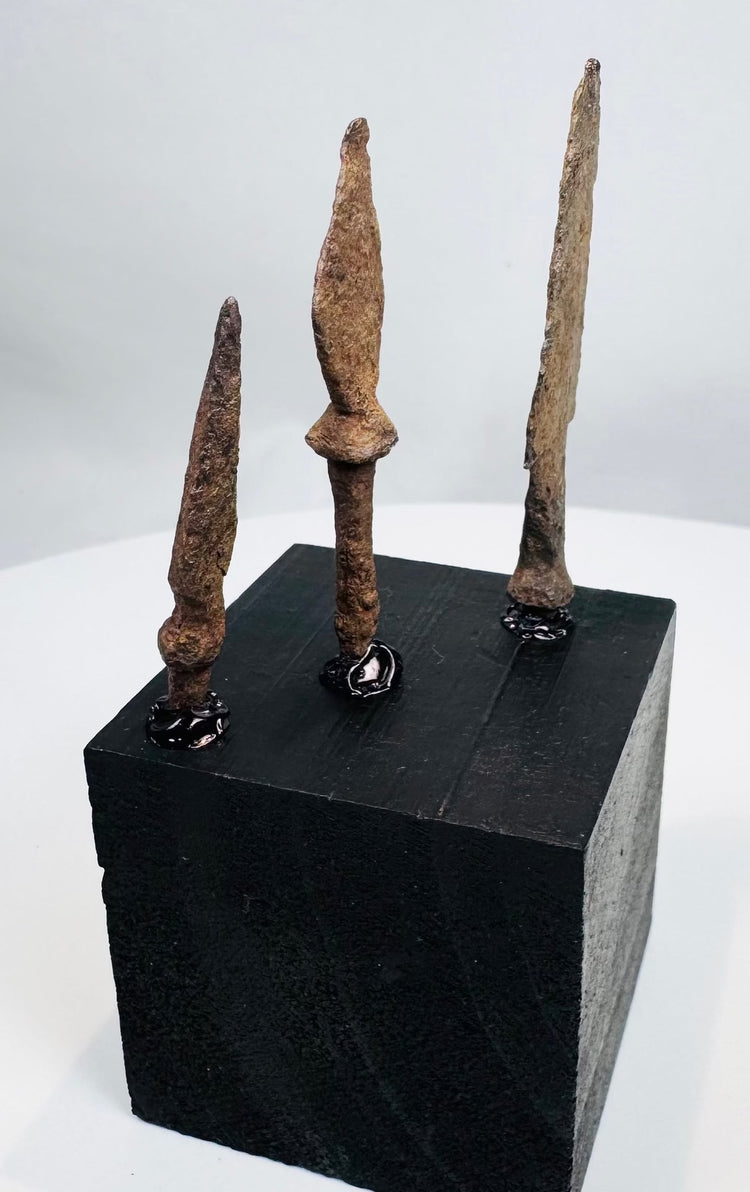
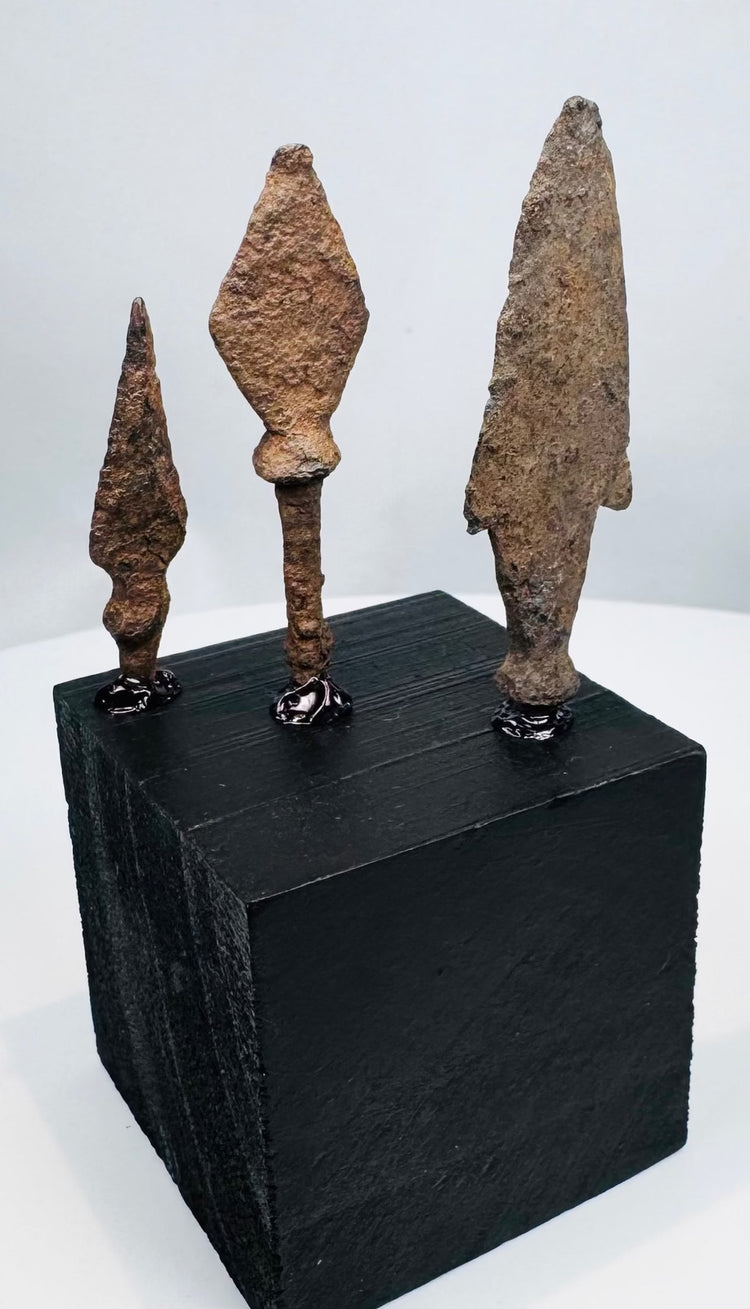
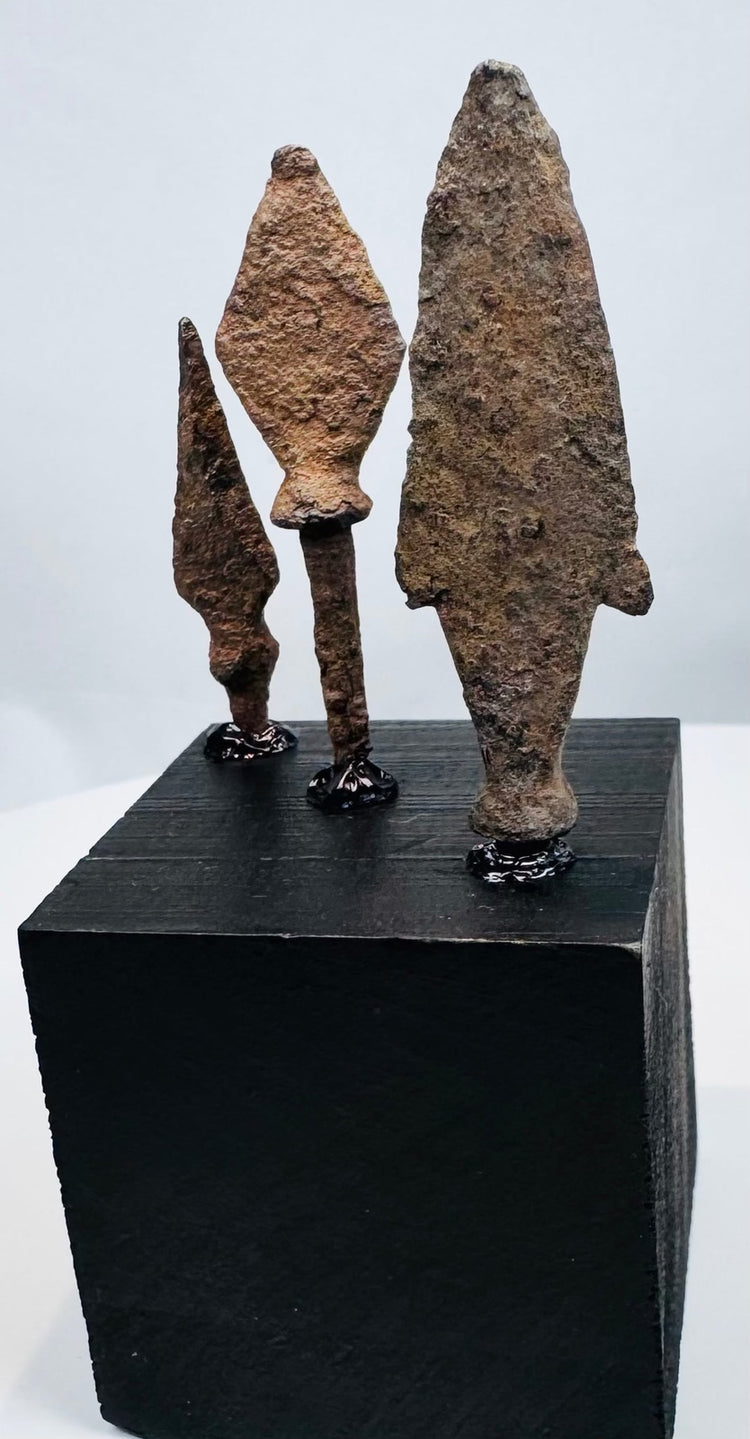
Ce groupe monté de trois pointes de projectile archéologiques en fer représente une sélection variée d'armes forgées à la main datant généralement de la fin de l'époque romaine jusqu'à la période médiévale. Le groupe comprend une grande lame allongée avec des épaules prononcées, une large pointe en forme de feuille avec une longue soie, et une petite pointe triangulaire étroite. Chacune a été montée individuellement sur une base d'exposition moderne en bois noir pour la présentation.
Le plus grand exemple possède une lame longue et étroite qui s'élargit légèrement dans la section inférieure avant de former des épaules latérales prononcées au-dessus de la soie de fixation restante. Son profil allongé suggère qu'il a pu fonctionner comme une pointe de flèche, une pointe de carreau, une pointe de javelot léger ou une petite pointe de lance. La pointe d'origine a été adoucie par la corrosion et la perte de métal due à l'âge, bien que la forme générale reste clairement reconnaissable.
L'exemple central présente une large lame en forme de diamant ou de feuille avec une longue soie rectangulaire. Son profil de coupe plus large aurait été adapté à la chasse ou à une utilisation contre des cibles légèrement protégées, où un canal de blessure plus important était souhaitable. La transition prononcée entre la lame et la soie indique qu'elle était destinée à être insérée dans un manche en bois préparé et fixée avec des ligatures, de l'adhésif ou un ajustement serré.
Le plus petit exemple possède une fine lame triangulaire se rétrécissant en une pointe étroite. Cette forme compacte est cohérente avec une pointe de flèche légère ou une petite pointe de projectile conçue pour la pénétration. Une base légèrement évasée fait la transition vers la soie restante, qui aurait à l'origine relié la pointe en fer à un manche en bois.
Les différences de taille et de profil illustrent la variété des formes de projectiles utilisées en Europe au cours de nombreux siècles. Les pointes étroites étaient généralement adaptées à la pénétration, tandis que les exemples plus larges en forme de feuille offraient une surface de coupe plus étendue.
Caractéristiques
- Forgées individuellement à la main en fer
- Inclut des formes allongées, en forme de feuille et triangulaires étroites
- Soies restantes initialement destinées à la fixation sur des manches en bois
- Pointes de flèches, pointes de carreaux, pointes de javelots ou pointes de lances légères possibles
- Associées à la guerre historique, à la chasse et à la défense personnelle
- Oxydation archéologique et incrustation minérale étendues
- Profils variés illustrant différentes fonctions de projectile
- Montées individuellement sur des bases d'exposition modernes en bois noir
- Anciennement conservées dans des collections européennes établies
Signification culturelle
Les pointes de projectile en fer étaient des composants essentiels de l'équipement militaire et de chasse dans les mondes romain et médiéval. Les archers, les arbalétriers, les guerriers montés, les chasseurs et les soldats d'infanterie se sont appuyés sur un large éventail de pointes spécialisées sélectionnées en fonction de la cible visée et du système d'arme.
Les pointes étroites et allongées concentraient l'impact sur une zone relativement petite et étaient utiles contre les vêtements épais, la protection en cuir, les cottes de mailles et les ouvertures vulnérables de l'équipement défensif. Les pointes plus larges en forme de feuille offraient une surface de coupe plus grande et étaient particulièrement efficaces pour la chasse ou contre les cibles légèrement protégées.
La construction à soie était largement utilisée en Europe pour les flèches, les carreaux, les javelots et les lances légères. La soie était insérée dans un manche en bois et fixée à l'aide de ligatures, d'adhésifs naturels ou d'un ajustement serré par friction. Bien que les manches d'origine n'aient pas survécu, les soies restantes préservent des preuves importantes de la façon dont les armes étaient assemblées à l'origine.
État
Les trois pointes de projectile restent stables dans un état archéologique fortement oxydé. Chacune présente une corrosion étendue, une incrustation minérale, des piqûres, un écaillage de surface, une décoloration, une perte de bord et des irrégularités conformes à un enfouissement prolongé et à un âge considérable.
La plus grande pointe présente un amincissement, des bords adoucis, une perte de surface et une pointe incomplète ou usée. La pointe centrale en forme de feuille conserve un contour général fort mais présente une forte oxydation, des piqûres et des irrégularités le long de la lame. La plus petite pointe reste reconnaissable mais présente de la corrosion, une rugosité de surface et des pertes localisées.
Les objets ont été fixés de manière permanente à des bases d'exposition modernes en bois noir avec un matériau de montage visible. Les bases présentent des rayures mineures, des traces de manipulation et des irrégularités de surface.
Dimensions (approximatives)
Hauteur totale de l'affichage : 4,25 po
Âge (approximatif)
625–1 725 ans
Provenance
Anciennement proposée sur le marché de l'art allemand dans les années 2000, où le groupe est entré dans le commerce moderne des antiquités européennes.
Acquise par la suite auprès d'un collectionneur de l'Union européenne résidant à Londres, en Angleterre, qui entretenait une collection privée d'artefacts anciens et médiévaux.
Conservée ensuite dans la collection privée d'un gentleman dans le Surrey, Royaume-Uni.
En savoir plus
Obtenez un contexte historique supplémentaire auprès du Musée archéologique de Cracovie, qui présente des pointes de javelots et de lances en fer similaires.
Parcourez notre Collection d'armes, d'armures et d'armements historiques
Description
Contexte historique et origine
Région : Europe
Matériau : Fer forgé à la main
Période : Fin de l'époque romaine jusqu'à la période médiévale, vers le 3e-14e siècle de notre ère
Description
Ce groupe monté de trois pointes de projectile archéologiques en fer représente une sélection variée d'armes forgées à la main datant généralement de la fin de l'époque romaine jusqu'à la période médiévale. Le groupe comprend une grande lame allongée avec des épaules prononcées, une large pointe en forme de feuille avec une longue soie, et une petite pointe triangulaire étroite. Chacune a été montée individuellement sur une base d'exposition moderne en bois noir pour la présentation.
Le plus grand exemple possède une lame longue et étroite qui s'élargit légèrement dans la section inférieure avant de former des épaules latérales prononcées au-dessus de la soie de fixation restante. Son profil allongé suggère qu'il a pu fonctionner comme une pointe de flèche, une pointe de carreau, une pointe de javelot léger ou une petite pointe de lance. La pointe d'origine a été adoucie par la corrosion et la perte de métal due à l'âge, bien que la forme générale reste clairement reconnaissable.
L'exemple central présente une large lame en forme de diamant ou de feuille avec une longue soie rectangulaire. Son profil de coupe plus large aurait été adapté à la chasse ou à une utilisation contre des cibles légèrement protégées, où un canal de blessure plus important était souhaitable. La transition prononcée entre la lame et la soie indique qu'elle était destinée à être insérée dans un manche en bois préparé et fixée avec des ligatures, de l'adhésif ou un ajustement serré.
Le plus petit exemple possède une fine lame triangulaire se rétrécissant en une pointe étroite. Cette forme compacte est cohérente avec une pointe de flèche légère ou une petite pointe de projectile conçue pour la pénétration. Une base légèrement évasée fait la transition vers la soie restante, qui aurait à l'origine relié la pointe en fer à un manche en bois.
Les différences de taille et de profil illustrent la variété des formes de projectiles utilisées en Europe au cours de nombreux siècles. Les pointes étroites étaient généralement adaptées à la pénétration, tandis que les exemples plus larges en forme de feuille offraient une surface de coupe plus étendue.
Caractéristiques
- Forgées individuellement à la main en fer
- Inclut des formes allongées, en forme de feuille et triangulaires étroites
- Soies restantes initialement destinées à la fixation sur des manches en bois
- Pointes de flèches, pointes de carreaux, pointes de javelots ou pointes de lances légères possibles
- Associées à la guerre historique, à la chasse et à la défense personnelle
- Oxydation archéologique et incrustation minérale étendues
- Profils variés illustrant différentes fonctions de projectile
- Montées individuellement sur des bases d'exposition modernes en bois noir
- Anciennement conservées dans des collections européennes établies
Signification culturelle
Les pointes de projectile en fer étaient des composants essentiels de l'équipement militaire et de chasse dans les mondes romain et médiéval. Les archers, les arbalétriers, les guerriers montés, les chasseurs et les soldats d'infanterie se sont appuyés sur un large éventail de pointes spécialisées sélectionnées en fonction de la cible visée et du système d'arme.
Les pointes étroites et allongées concentraient l'impact sur une zone relativement petite et étaient utiles contre les vêtements épais, la protection en cuir, les cottes de mailles et les ouvertures vulnérables de l'équipement défensif. Les pointes plus larges en forme de feuille offraient une surface de coupe plus grande et étaient particulièrement efficaces pour la chasse ou contre les cibles légèrement protégées.
La construction à soie était largement utilisée en Europe pour les flèches, les carreaux, les javelots et les lances légères. La soie était insérée dans un manche en bois et fixée à l'aide de ligatures, d'adhésifs naturels ou d'un ajustement serré par friction. Bien que les manches d'origine n'aient pas survécu, les soies restantes préservent des preuves importantes de la façon dont les armes étaient assemblées à l'origine.
État
Les trois pointes de projectile restent stables dans un état archéologique fortement oxydé. Chacune présente une corrosion étendue, une incrustation minérale, des piqûres, un écaillage de surface, une décoloration, une perte de bord et des irrégularités conformes à un enfouissement prolongé et à un âge considérable.
La plus grande pointe présente un amincissement, des bords adoucis, une perte de surface et une pointe incomplète ou usée. La pointe centrale en forme de feuille conserve un contour général fort mais présente une forte oxydation, des piqûres et des irrégularités le long de la lame. La plus petite pointe reste reconnaissable mais présente de la corrosion, une rugosité de surface et des pertes localisées.
Les objets ont été fixés de manière permanente à des bases d'exposition modernes en bois noir avec un matériau de montage visible. Les bases présentent des rayures mineures, des traces de manipulation et des irrégularités de surface.
Dimensions (approximatives)
Hauteur totale de l'affichage : 4,25 po
Âge (approximatif)
625–1 725 ans
Provenance
Anciennement proposée sur le marché de l'art allemand dans les années 2000, où le groupe est entré dans le commerce moderne des antiquités européennes.
Acquise par la suite auprès d'un collectionneur de l'Union européenne résidant à Londres, en Angleterre, qui entretenait une collection privée d'artefacts anciens et médiévaux.
Conservée ensuite dans la collection privée d'un gentleman dans le Surrey, Royaume-Uni.
En savoir plus
Obtenez un contexte historique supplémentaire auprès du Musée archéologique de Cracovie, qui présente des pointes de javelots et de lances en fer similaires.
Parcourez notre Collection d'armes, d'armures et d'armements historiques
Vous aimerez peut-être aussi
