



Lámpara de aceite de terracota bizantina antigua | Mediterráneo oriental | Siglo V-VI d.C.
- Precio habitual
- $400.00
- Precio de venta
- $400.00
- Precio habitual
No se pudo cargar la disponibilidad de retiro


Lámpara de aceite de terracota bizantina antigua | Mediterráneo oriental | Siglo V-VI d.C.
Descripción
Más
Menos
Contexto histórico y origen
Región: Mediterráneo oriental, probablemente el Levante, Chipre o los territorios bizantinos circundantes
Material: Terracota hecha en molde
Período: Período romano tardío a bizantino temprano, c. siglos V-VI d. C.
Descripción
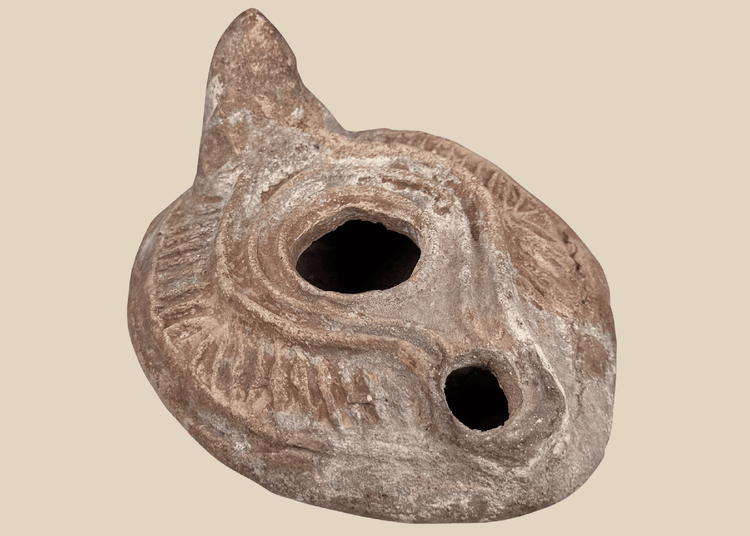
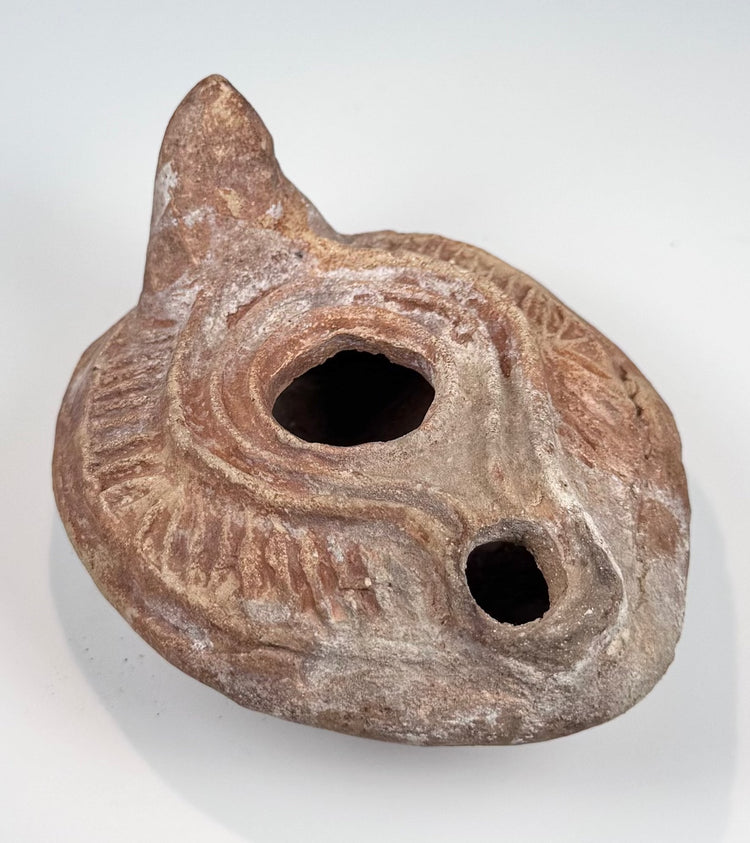
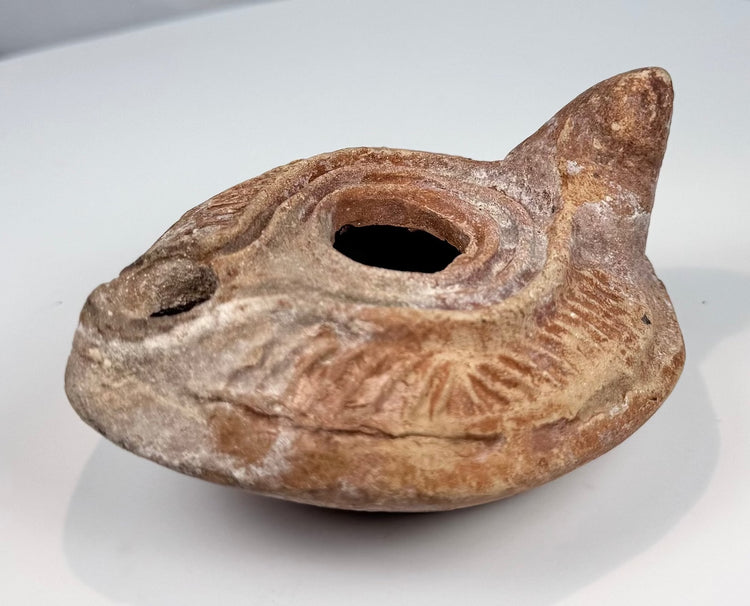
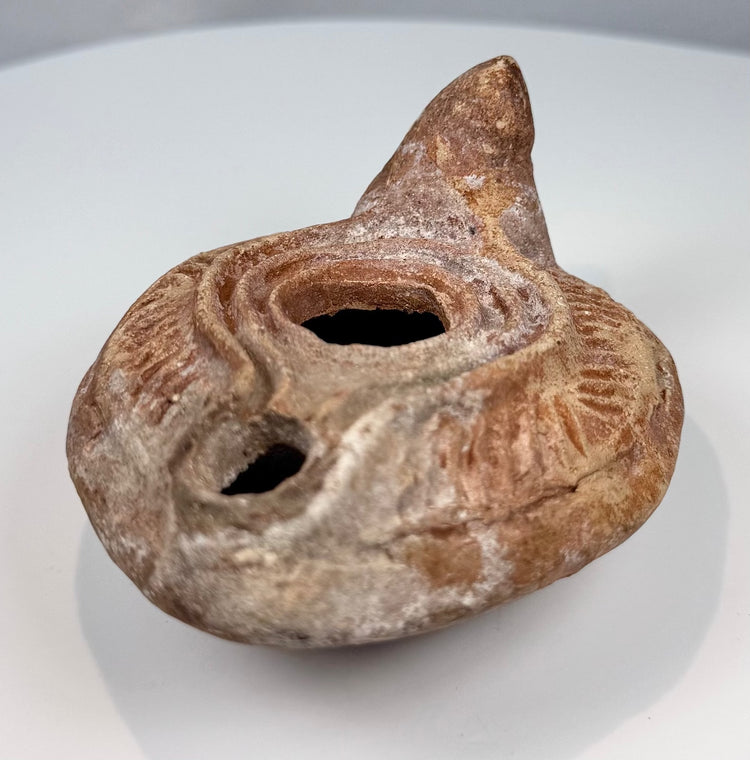
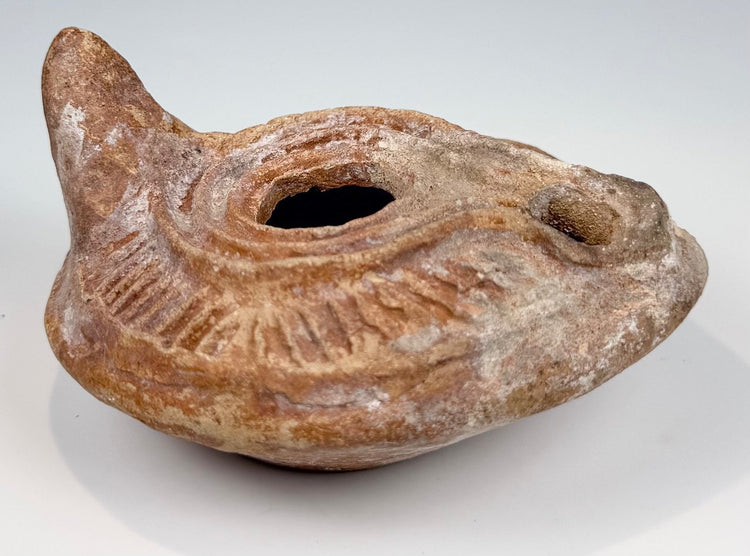
Esta antigua lámpara de aceite de terracota hecha en molde data del período romano tardío o bizantino temprano y fue creada para la combustión controlada de aceite de oliva u otro combustible. Su forma y decoración son consistentes con las tradiciones de las lámparas romanas tardías o bizantinas tempranas del Mediterráneo oriental.
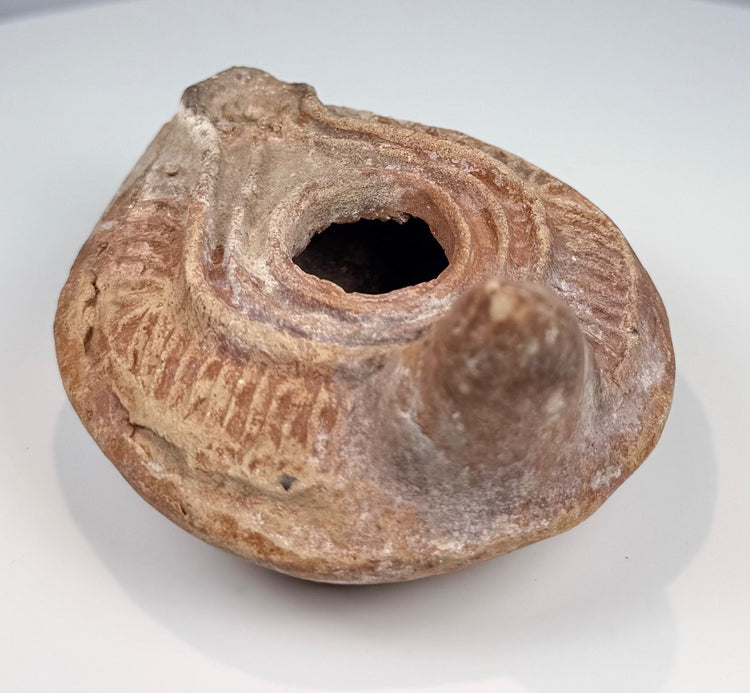
La lámpara tiene un cuerpo ovalado compacto con una abertura de llenado central elevada y una abertura de mecha circular más pequeña colocada en el extremo de una boquilla extendida. Los canales moldeados rodean el orificio de llenado y continúan hacia la boquilla, formando una superficie superior visualmente unificada. Trazos incisos repetidos dispuestos alrededor del hombro crean un patrón decorativo radiante o en espiga, mientras que la parte posterior se eleva en un prominente mango sólido.
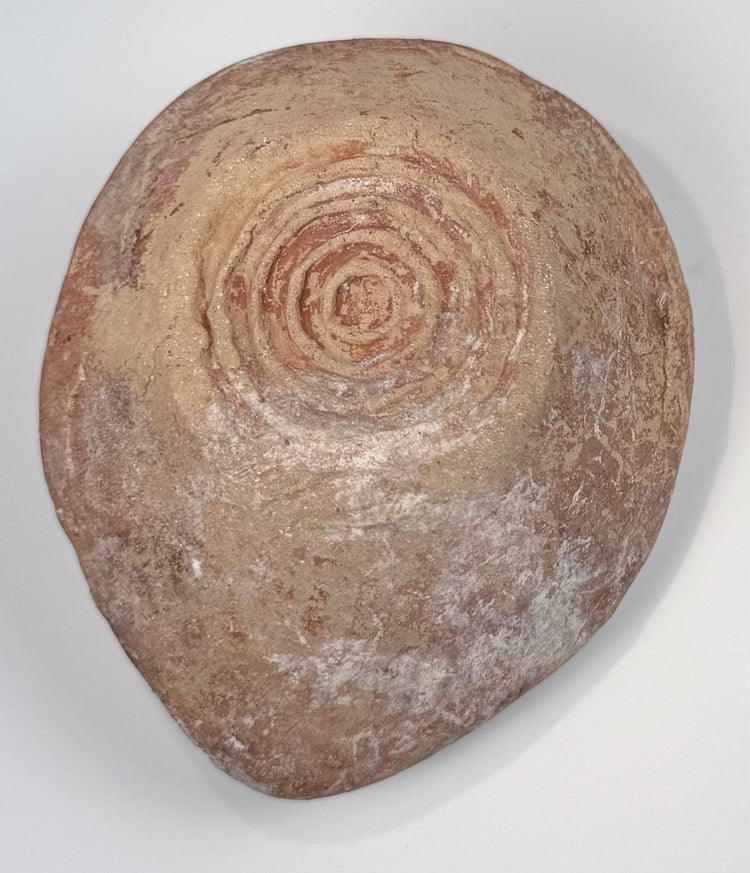
La parte inferior es comparativamente sencilla y muestra un anillo de base circular elevado formado por varios rebordes concéntricos. Esto habría proporcionado estabilidad cuando la lámpara se colocaba sobre una superficie plana. La terracota de color marrón rojizo conserva extensos depósitos minerales y costras terrosas consistentes con un enterramiento a largo plazo o una conservación arqueológica.
Características
- Forma romana tardía a bizantina temprana
- Probable fabricación en el Mediterráneo oriental
- Abertura de mecha circular separada
- Canal elevado que conecta el área de llenado y la boquilla
- Decoración repetida radiante o en espiga
- Mango trasero sólido prominente
- Anillos de base concéntricos elevados
- Tejido de loza de color marrón rojizo
- Conserva extensos depósitos minerales y costras de enterramiento
Importancia cultural
Las lámparas de aceite fueron objetos domésticos esenciales en los mundos romano y bizantino, proporcionando iluminación portátil en hogares privados, talleres, edificios religiosos, tumbas y espacios públicos. Se insertaba una mecha a través de la abertura más pequeña de la boquilla, mientras que el combustible se vertía a través de la abertura central más grande.
En los siglos V y VI, se produjeron lámparas de terracota moldeadas en numerosos talleres regionales de todo el Mediterráneo oriental. Su decoración abarcaba desde simples patrones geométricos hasta símbolos religiosos e imágenes figurativas.
Condición
La lámpara permanece sustancialmente intacta y muestra un extenso desgaste superficial relacionado con la edad. Hay depósitos minerales, incrustaciones terrosas, decoloración, abrasiones y pérdidas superficiales dispersas. Los bordes de las aberturas de llenado y mecha son irregulares y exhiben el desgaste esperado. Se observan pequeñas astillas e imperfecciones alrededor del cuerpo, el mango, la boquilla y la base. No se aprecia ninguna restauración inmediata.
Dimensiones (aproximadas)
Longitud: 10,16 cm
Anchura: 8,26 cm
Altura: 5,08 cm
Edad (aproximada)
1425–1625 años
Procedencia
Anteriormente en una colección privada en Rhode Island, EE. UU., reunida por un coleccionista con un interés de larga data en artefactos mediterráneos antiguos y cerámica temprana.
Más información
Estudie una lámpara de aceite de terracota bizantina comparable en la colección de El Museo Metropolitano de Arte
Descubra más objetos en nuestra Colección de artefactos culturales y etnográficos
Descripción
Contexto histórico y origen
Región: Mediterráneo oriental, probablemente el Levante, Chipre o los territorios bizantinos circundantes
Material: Terracota hecha en molde
Período: Período romano tardío a bizantino temprano, c. siglos V-VI d. C.
Descripción
Esta antigua lámpara de aceite de terracota hecha en molde data del período romano tardío o bizantino temprano y fue creada para la combustión controlada de aceite de oliva u otro combustible. Su forma y decoración son consistentes con las tradiciones de las lámparas romanas tardías o bizantinas tempranas del Mediterráneo oriental.
La lámpara tiene un cuerpo ovalado compacto con una abertura de llenado central elevada y una abertura de mecha circular más pequeña colocada en el extremo de una boquilla extendida. Los canales moldeados rodean el orificio de llenado y continúan hacia la boquilla, formando una superficie superior visualmente unificada. Trazos incisos repetidos dispuestos alrededor del hombro crean un patrón decorativo radiante o en espiga, mientras que la parte posterior se eleva en un prominente mango sólido.
La parte inferior es comparativamente sencilla y muestra un anillo de base circular elevado formado por varios rebordes concéntricos. Esto habría proporcionado estabilidad cuando la lámpara se colocaba sobre una superficie plana. La terracota de color marrón rojizo conserva extensos depósitos minerales y costras terrosas consistentes con un enterramiento a largo plazo o una conservación arqueológica.
Características
- Forma romana tardía a bizantina temprana
- Probable fabricación en el Mediterráneo oriental
- Abertura de mecha circular separada
- Canal elevado que conecta el área de llenado y la boquilla
- Decoración repetida radiante o en espiga
- Mango trasero sólido prominente
- Anillos de base concéntricos elevados
- Tejido de loza de color marrón rojizo
- Conserva extensos depósitos minerales y costras de enterramiento
Importancia cultural
Las lámparas de aceite fueron objetos domésticos esenciales en los mundos romano y bizantino, proporcionando iluminación portátil en hogares privados, talleres, edificios religiosos, tumbas y espacios públicos. Se insertaba una mecha a través de la abertura más pequeña de la boquilla, mientras que el combustible se vertía a través de la abertura central más grande.
En los siglos V y VI, se produjeron lámparas de terracota moldeadas en numerosos talleres regionales de todo el Mediterráneo oriental. Su decoración abarcaba desde simples patrones geométricos hasta símbolos religiosos e imágenes figurativas.
Condición
La lámpara permanece sustancialmente intacta y muestra un extenso desgaste superficial relacionado con la edad. Hay depósitos minerales, incrustaciones terrosas, decoloración, abrasiones y pérdidas superficiales dispersas. Los bordes de las aberturas de llenado y mecha son irregulares y exhiben el desgaste esperado. Se observan pequeñas astillas e imperfecciones alrededor del cuerpo, el mango, la boquilla y la base. No se aprecia ninguna restauración inmediata.
Dimensiones (aproximadas)
Longitud: 10,16 cm
Anchura: 8,26 cm
Altura: 5,08 cm
Edad (aproximada)
1425–1625 años
Procedencia
Anteriormente en una colección privada en Rhode Island, EE. UU., reunida por un coleccionista con un interés de larga data en artefactos mediterráneos antiguos y cerámica temprana.
Más información
Estudie una lámpara de aceite de terracota bizantina comparable en la colección de El Museo Metropolitano de Arte
Descubra más objetos en nuestra Colección de artefactos culturales y etnográficos
También te puede interesar
