



Ancient Chinese Gray Pottery Covered Bowl | Tang Dynasty, 7th–8th Century CE
- Precio habitual
- $1,000.00
- Precio de venta
- $1,000.00
- Precio habitual
No se pudo cargar la disponibilidad de retiro


Ancient Chinese Gray Pottery Covered Bowl | Tang Dynasty, 7th–8th Century CE
Descripción
Más
Menos
Historical Context & Origin
Region: China
Material: Gray earthenware
Period: Tang Dynasty, likely 7th–8th Century CE
Description
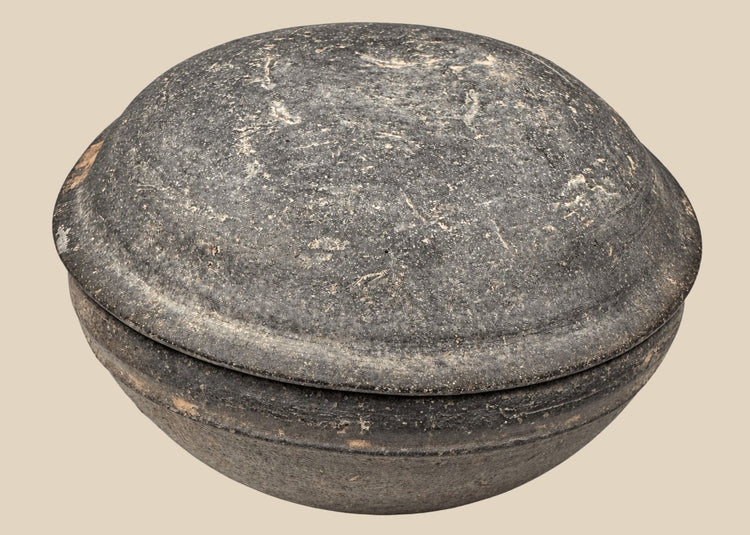
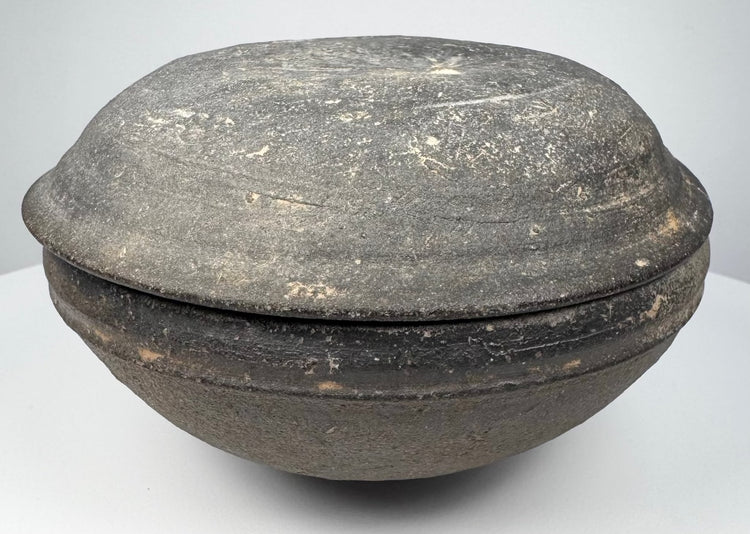
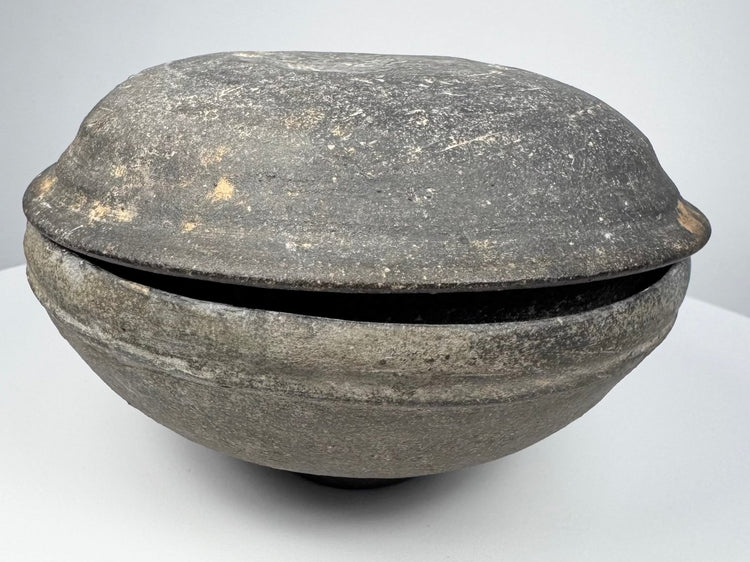
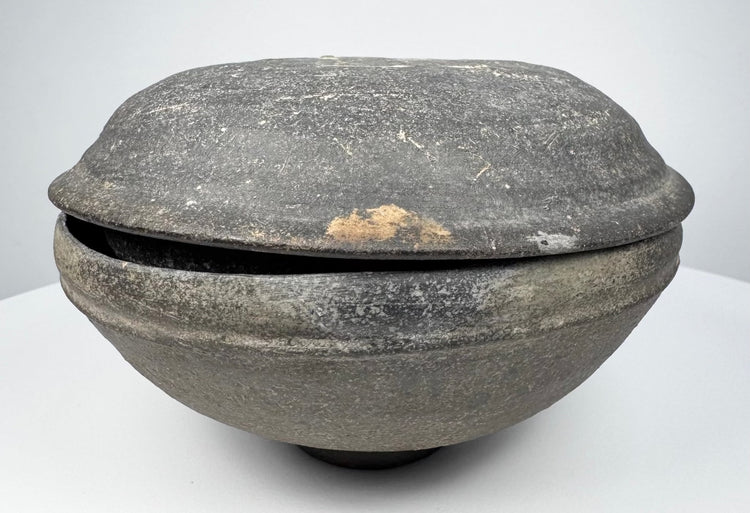
An ancient Chinese gray pottery covered bowl or round covered box, attributed to the Tang Dynasty and likely dating to the 7th–8th century CE.
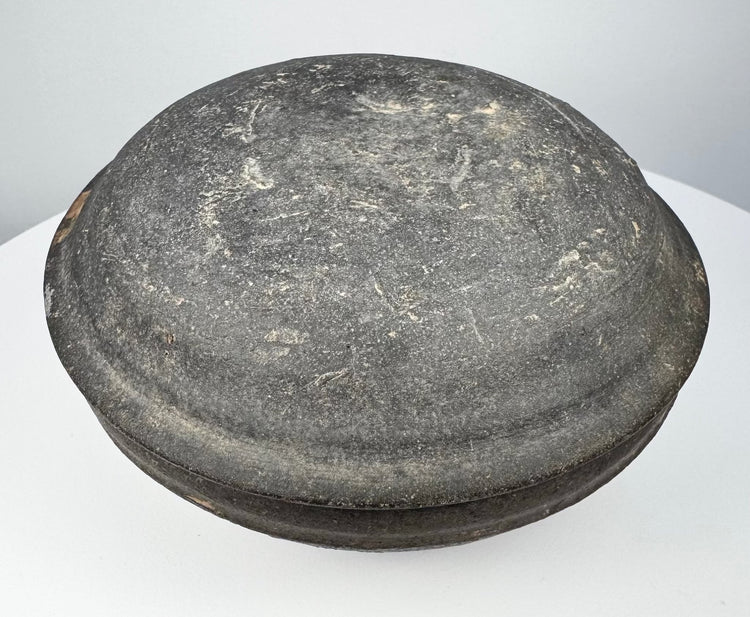
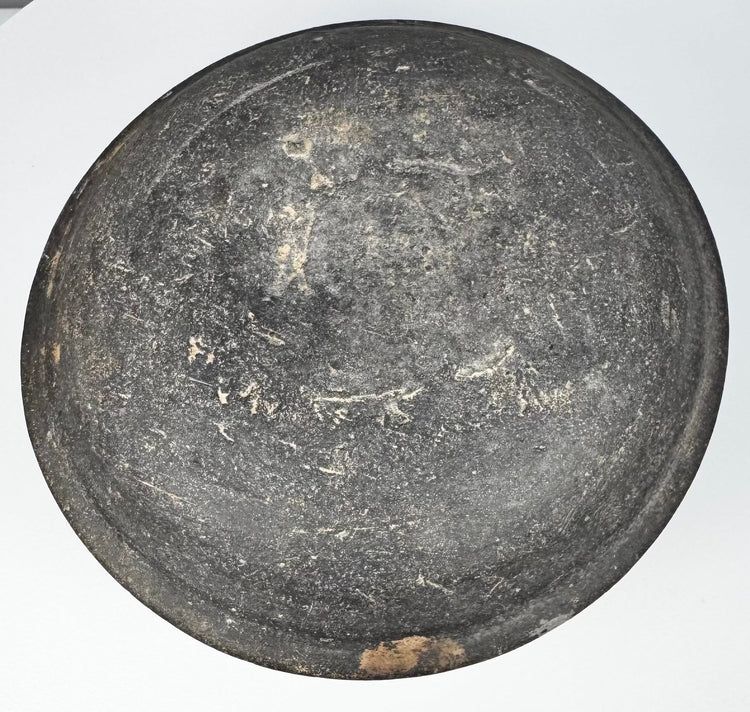
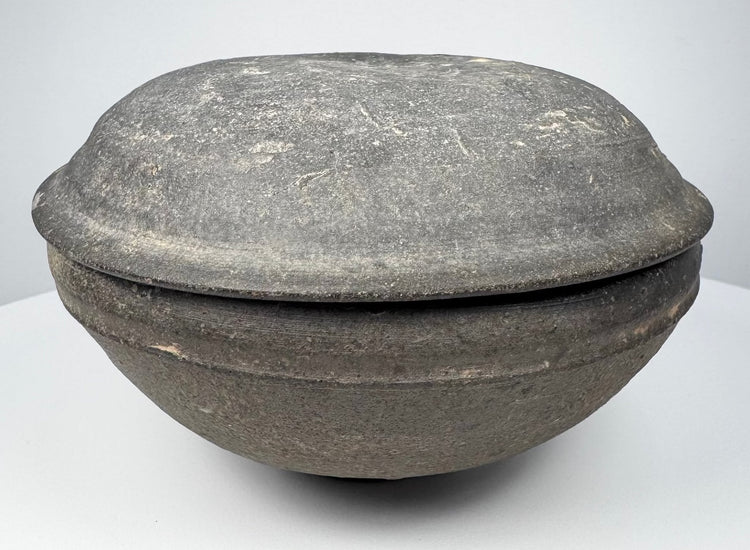
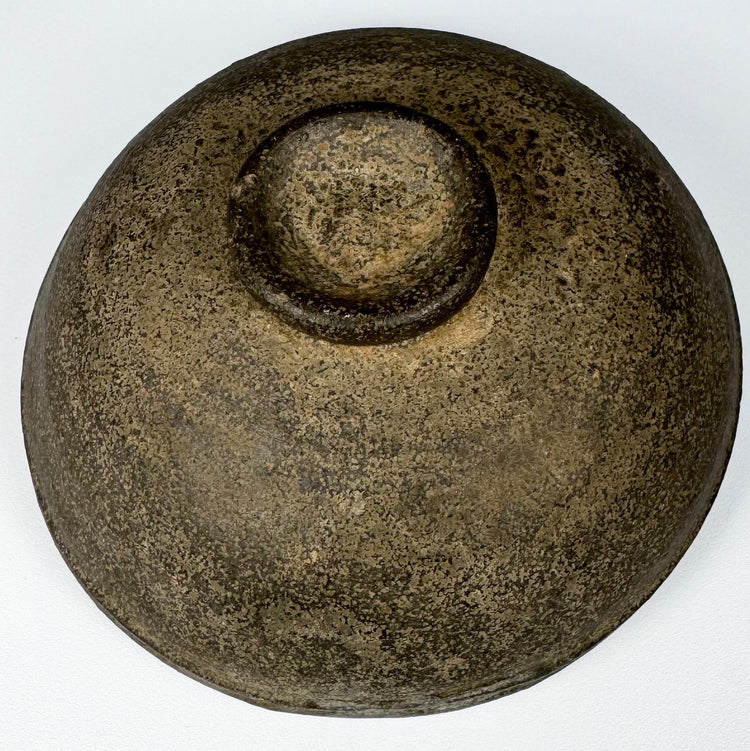
The vessel is formed in two separately made circular sections that fit together to create a distinctive compressed, almost lenticular profile. The lower section is broadly rounded and bowl-shaped, while the substantial cover rises in a shallow dome before meeting the lower vessel along a pronounced horizontal rim.
The ceramic body has fired to a deep charcoal-gray coloration, with areas of lighter gray, buff, and earthen-toned exposure visible across the surface. The vessel appears essentially unglazed, allowing the texture and firing character of the earthenware itself to remain prominent.
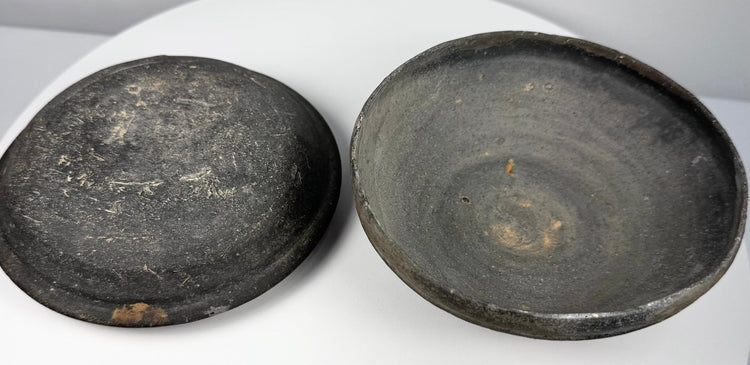
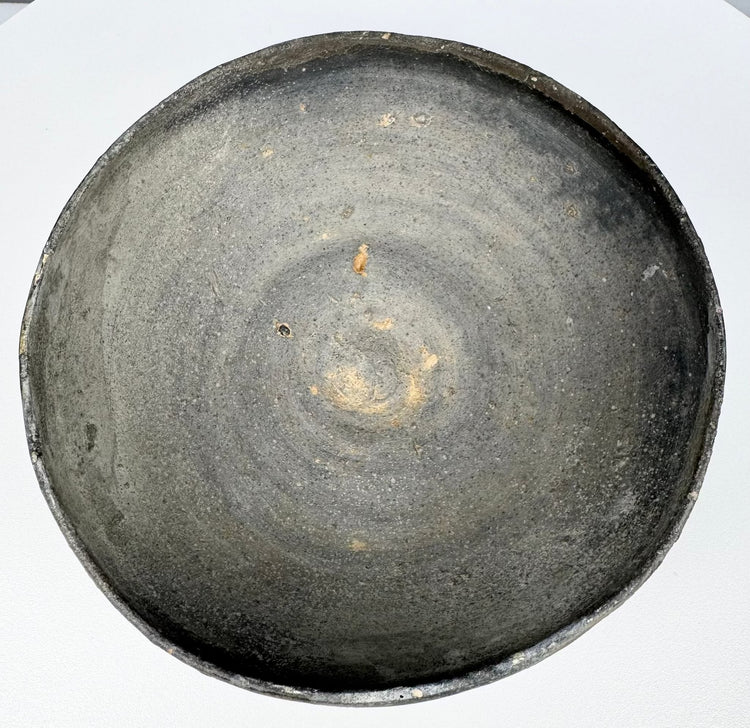
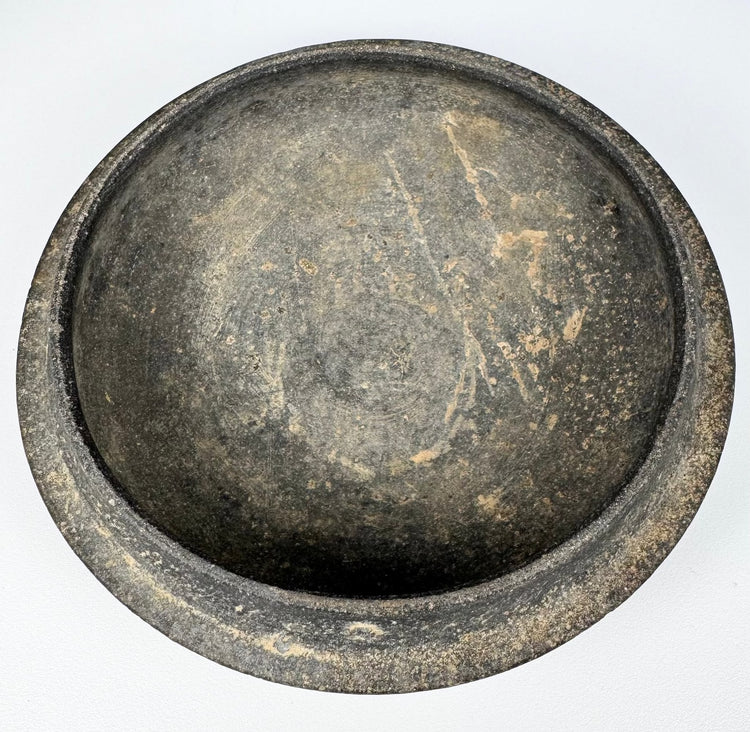
Concentric turning marks are clearly visible within the vessel and beneath the cover, indicating wheel-thrown manufacture. Minor irregularities to the rims and surfaces reflect the handmade character of the piece and its considerable age.
A closely comparable Chinese covered bowl preserved in The Metropolitan Museum of Art is dated to the Tang Dynasty, 7th–8th century CE. That museum example is likewise made of earthenware and shares the present vessel's low rounded proportions, shallow domed cover, projecting meeting rims, and compact two-part construction. Its recorded dimensions of approximately 3 inches high by 6 inches wide are also notably close to the proportions of the present example.
These similarities provide strong comparative support for a Tang-period attribution, although the precise kiln, regional workshop, and archaeological context of the present vessel cannot currently be established.
Features
- Ancient Chinese round covered bowl or box
- Form closely comparable to documented Tang Dynasty covered earthenware vessels
- Gray earthenware construction
- Compact compressed globular or lenticular profile
- Separately formed shallow domed cover
- Broad rounded lower bowl
- Pronounced horizontal meeting rims
- Essentially unglazed charcoal-gray surface
- Visible concentric wheel-turning marks
- Areas of lighter gray and buff ceramic exposure
- Scattered historic surface deposits and accretions
- Substantial handmade ceramic construction
Cultural Significance
The Tang Dynasty, which ruled China from 618–907 CE, represents one of the most culturally dynamic periods in Chinese history. Ceramic production flourished during this era, encompassing both highly decorated glazed wares and comparatively restrained earthenware vessels whose appeal depended upon form, proportion, and craftsmanship.
Covered vessels formed part of a much older Chinese ceramic tradition and continued to be produced during the Tang period in a variety of shapes, materials, and decorative treatments. Their paired construction provided a practical enclosed container while also allowing potters to create carefully balanced sculptural forms.
The present vessel is particularly notable for its simplicity. Rather than relying on applied decoration or glaze, its character is defined by the relationship between the broad rounded lower bowl and shallow domed cover, together creating a compact symmetrical silhouette.
The precise original use of such a vessel cannot be determined without archaeological context. Covered containers could serve a variety of practical or ceremonial purposes, and pottery vessels were also widely represented within Tang-period funerary assemblages. The present example is therefore best understood as a Tang-period covered ceramic form without assigning a more specific function that cannot presently be demonstrated.
Condition
Good ancient condition consistent with substantial age and historic handling.
The vessel exhibits extensive surface wear, abrasions, scratches, scattered earthen and mineral-like deposits, discoloration, minor pitting, and areas where the dark gray surface has worn to reveal lighter ceramic fabric beneath.
Minor chips, edge irregularities, firing imperfections, and age-related surface marks are visible throughout. These characteristics are consistent with handmade ancient pottery and prolonged historical wear.
The cover and lower vessel remain together and display a close overall fit. Concentric wheel-turning marks remain clearly visible to the interior and underside surfaces.
Dimensions (Approximate)
Height: 3.5 in
Diameter: 5.2 in
Age (Approximate)
1,200–1,400 years old
Provenance
Formerly part of a private collection in New Jersey, USA; subsequently handled by Eternity Gallery, Tampa, Florida, USA.
Eternity Gallery is a Tampa-based art and antiques dealer and auction house active on the international market since at least 2013, handling a broad range of material including Asian and European art, ceramics, bronzes, archaeological objects, Islamic art, Pre-Columbian antiquities, and other historic works.
Learn More
Compare a closely related Tang Dynasty covered earthenware bowl in the collection of The Metropolitan Museum of Art
Discover our Collection of Ancient Chinese Artifacts & Imperial Relics
Descripción
Historical Context & Origin
Region: China
Material: Gray earthenware
Period: Tang Dynasty, likely 7th–8th Century CE
Description
An ancient Chinese gray pottery covered bowl or round covered box, attributed to the Tang Dynasty and likely dating to the 7th–8th century CE.
The vessel is formed in two separately made circular sections that fit together to create a distinctive compressed, almost lenticular profile. The lower section is broadly rounded and bowl-shaped, while the substantial cover rises in a shallow dome before meeting the lower vessel along a pronounced horizontal rim.
The ceramic body has fired to a deep charcoal-gray coloration, with areas of lighter gray, buff, and earthen-toned exposure visible across the surface. The vessel appears essentially unglazed, allowing the texture and firing character of the earthenware itself to remain prominent.
Concentric turning marks are clearly visible within the vessel and beneath the cover, indicating wheel-thrown manufacture. Minor irregularities to the rims and surfaces reflect the handmade character of the piece and its considerable age.
A closely comparable Chinese covered bowl preserved in The Metropolitan Museum of Art is dated to the Tang Dynasty, 7th–8th century CE. That museum example is likewise made of earthenware and shares the present vessel's low rounded proportions, shallow domed cover, projecting meeting rims, and compact two-part construction. Its recorded dimensions of approximately 3 inches high by 6 inches wide are also notably close to the proportions of the present example.
These similarities provide strong comparative support for a Tang-period attribution, although the precise kiln, regional workshop, and archaeological context of the present vessel cannot currently be established.
Features
- Ancient Chinese round covered bowl or box
- Form closely comparable to documented Tang Dynasty covered earthenware vessels
- Gray earthenware construction
- Compact compressed globular or lenticular profile
- Separately formed shallow domed cover
- Broad rounded lower bowl
- Pronounced horizontal meeting rims
- Essentially unglazed charcoal-gray surface
- Visible concentric wheel-turning marks
- Areas of lighter gray and buff ceramic exposure
- Scattered historic surface deposits and accretions
- Substantial handmade ceramic construction
Cultural Significance
The Tang Dynasty, which ruled China from 618–907 CE, represents one of the most culturally dynamic periods in Chinese history. Ceramic production flourished during this era, encompassing both highly decorated glazed wares and comparatively restrained earthenware vessels whose appeal depended upon form, proportion, and craftsmanship.
Covered vessels formed part of a much older Chinese ceramic tradition and continued to be produced during the Tang period in a variety of shapes, materials, and decorative treatments. Their paired construction provided a practical enclosed container while also allowing potters to create carefully balanced sculptural forms.
The present vessel is particularly notable for its simplicity. Rather than relying on applied decoration or glaze, its character is defined by the relationship between the broad rounded lower bowl and shallow domed cover, together creating a compact symmetrical silhouette.
The precise original use of such a vessel cannot be determined without archaeological context. Covered containers could serve a variety of practical or ceremonial purposes, and pottery vessels were also widely represented within Tang-period funerary assemblages. The present example is therefore best understood as a Tang-period covered ceramic form without assigning a more specific function that cannot presently be demonstrated.
Condition
Good ancient condition consistent with substantial age and historic handling.
The vessel exhibits extensive surface wear, abrasions, scratches, scattered earthen and mineral-like deposits, discoloration, minor pitting, and areas where the dark gray surface has worn to reveal lighter ceramic fabric beneath.
Minor chips, edge irregularities, firing imperfections, and age-related surface marks are visible throughout. These characteristics are consistent with handmade ancient pottery and prolonged historical wear.
The cover and lower vessel remain together and display a close overall fit. Concentric wheel-turning marks remain clearly visible to the interior and underside surfaces.
Dimensions (Approximate)
Height: 3.5 in
Diameter: 5.2 in
Age (Approximate)
1,200–1,400 years old
Provenance
Formerly part of a private collection in New Jersey, USA; subsequently handled by Eternity Gallery, Tampa, Florida, USA.
Eternity Gallery is a Tampa-based art and antiques dealer and auction house active on the international market since at least 2013, handling a broad range of material including Asian and European art, ceramics, bronzes, archaeological objects, Islamic art, Pre-Columbian antiquities, and other historic works.
Learn More
Compare a closely related Tang Dynasty covered earthenware bowl in the collection of The Metropolitan Museum of Art
Discover our Collection of Ancient Chinese Artifacts & Imperial Relics
También te puede interesar
