

Dama de la corte de terracota de la antigua dinastía Tang china | Figura funeraria de tumba | Circa siglo VII - VIII d.C.
- Precio habitual
- $525.00
- Precio de venta
- $525.00
- Precio habitual
No se pudo cargar la disponibilidad de retiro


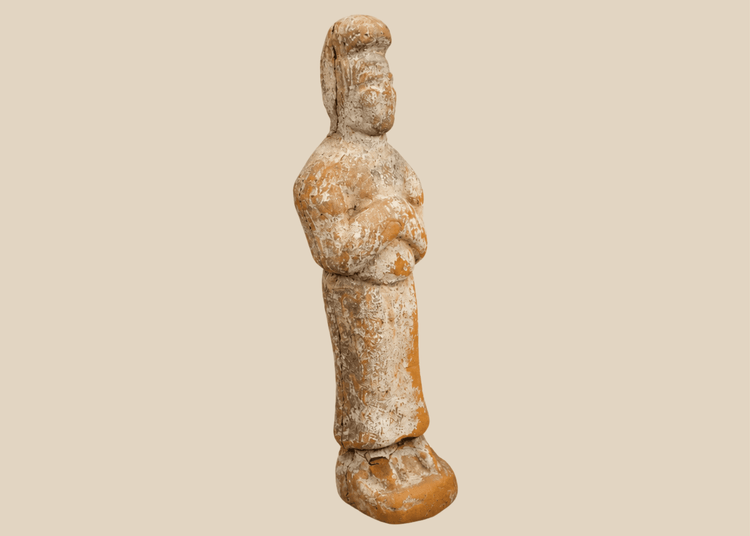
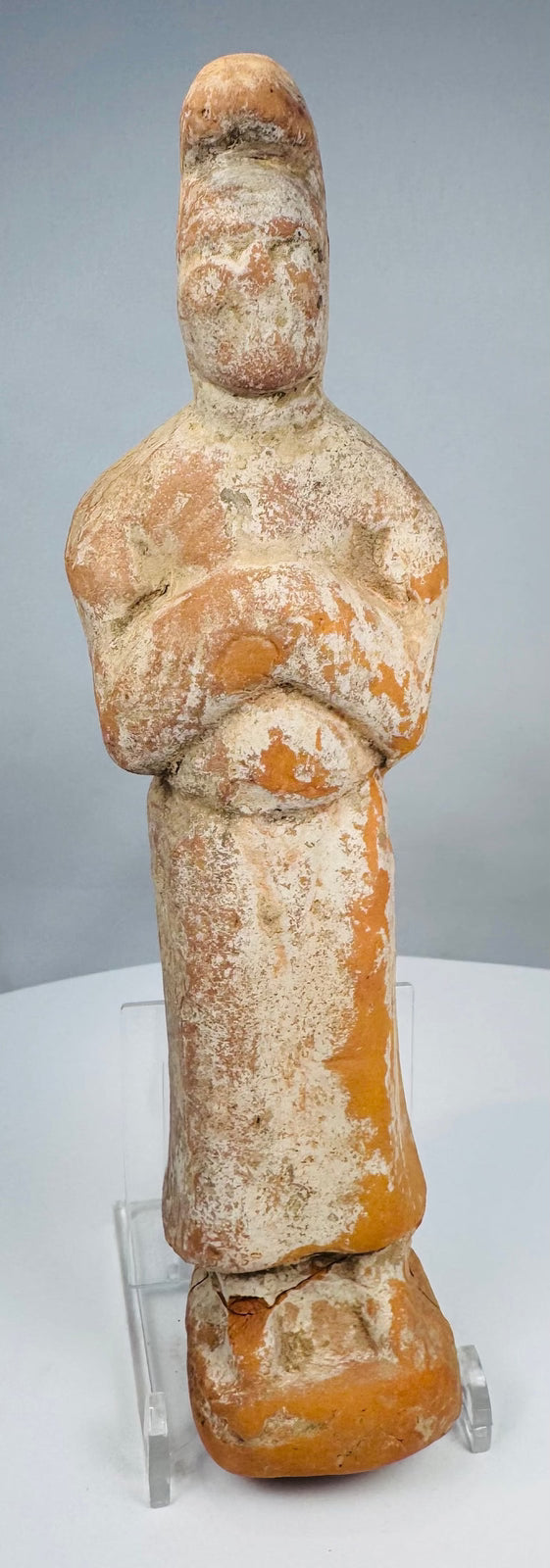
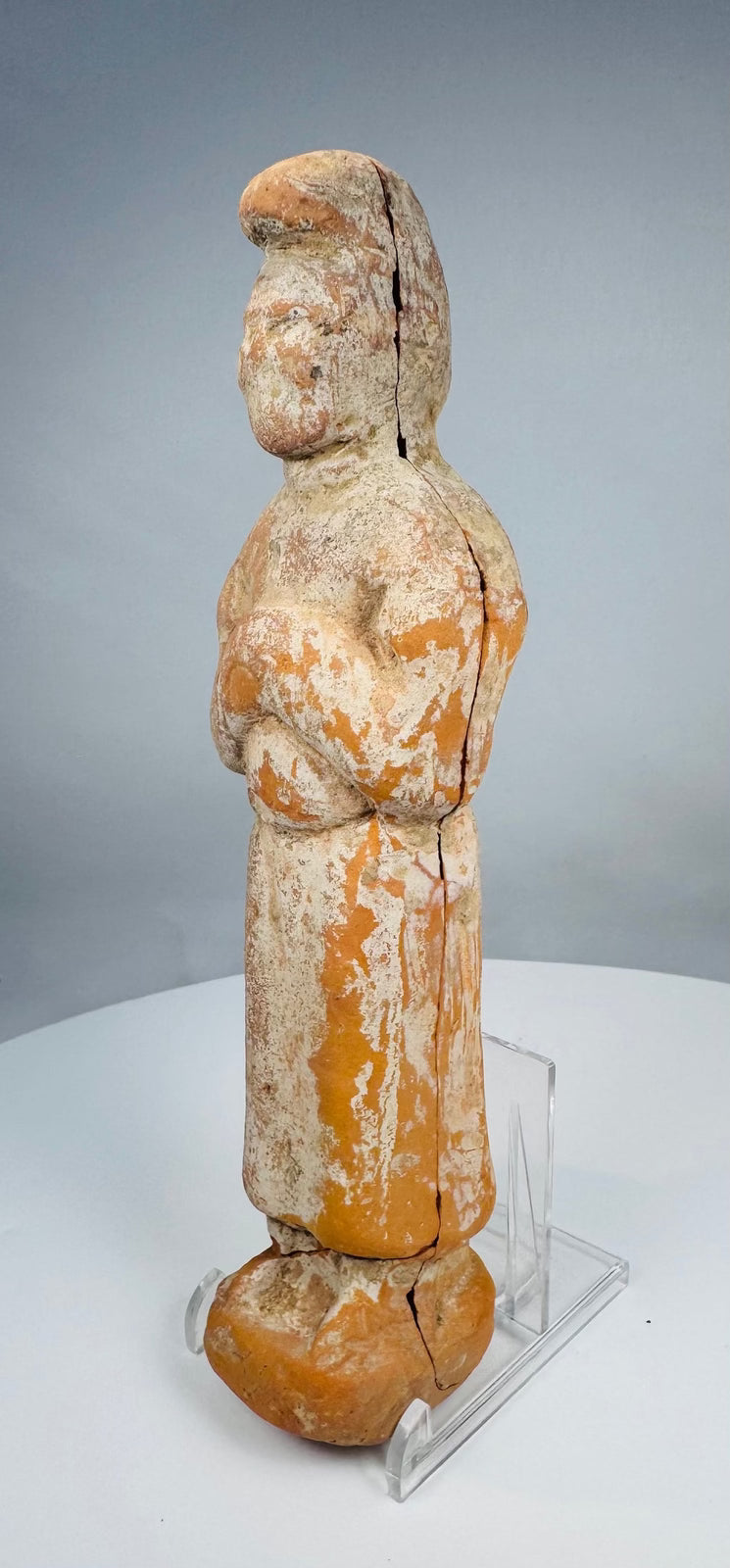
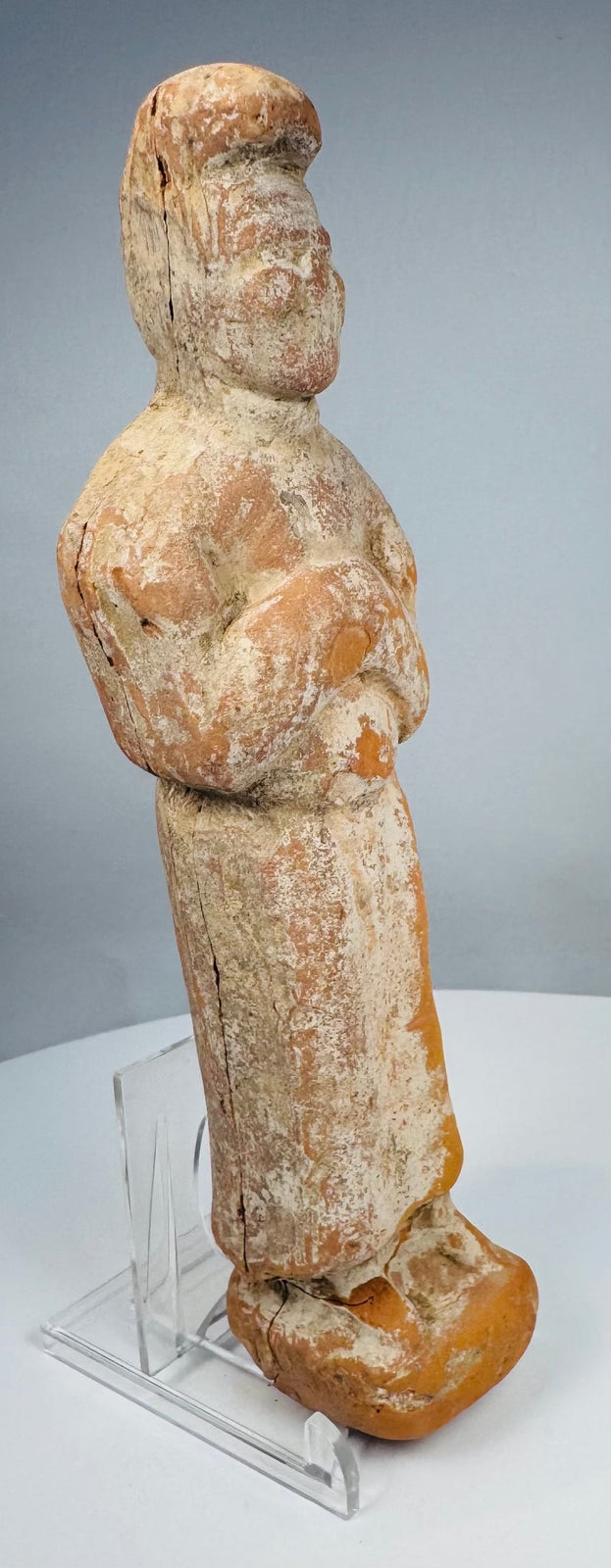
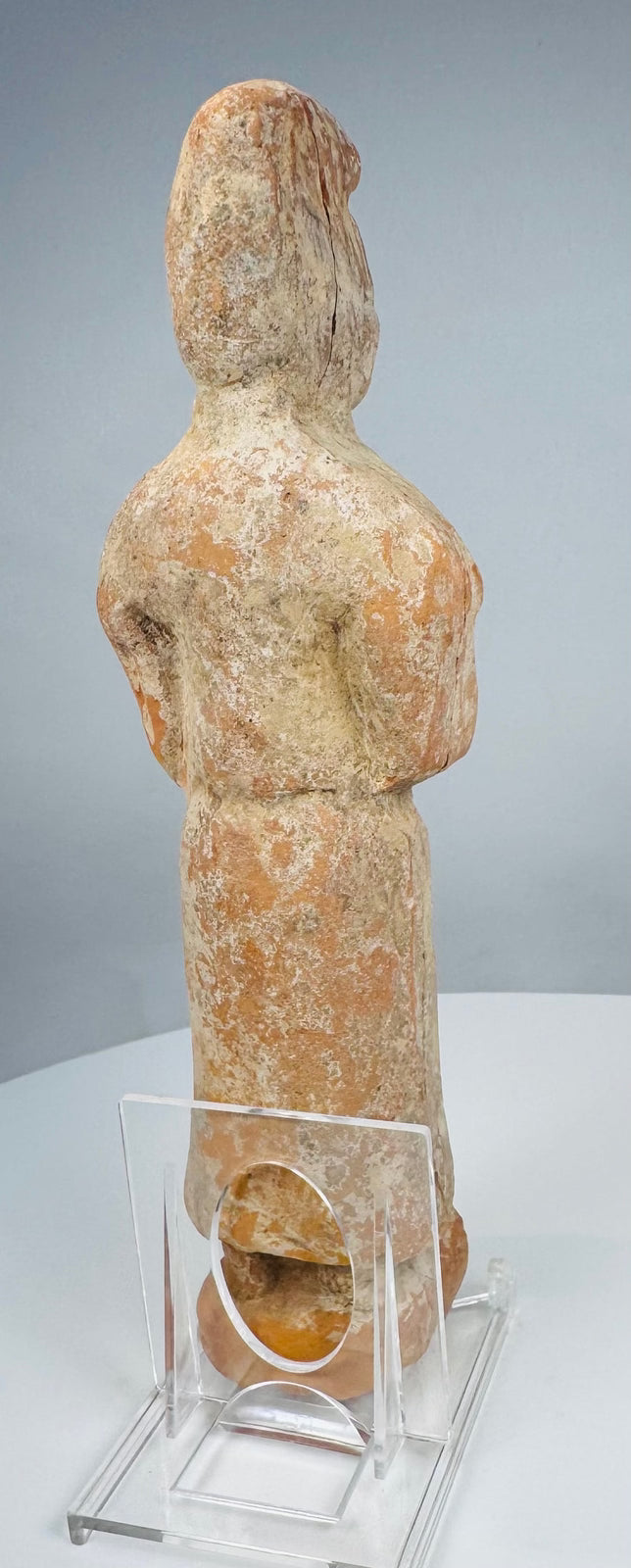
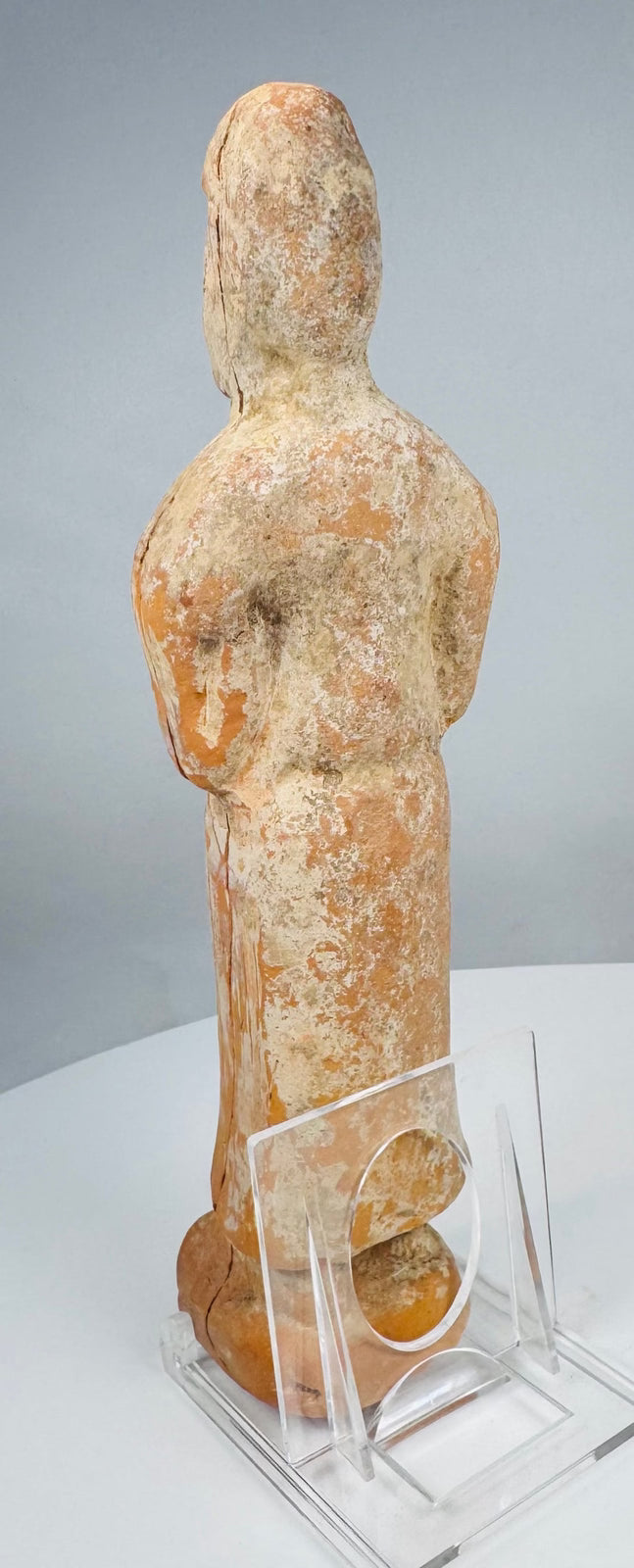
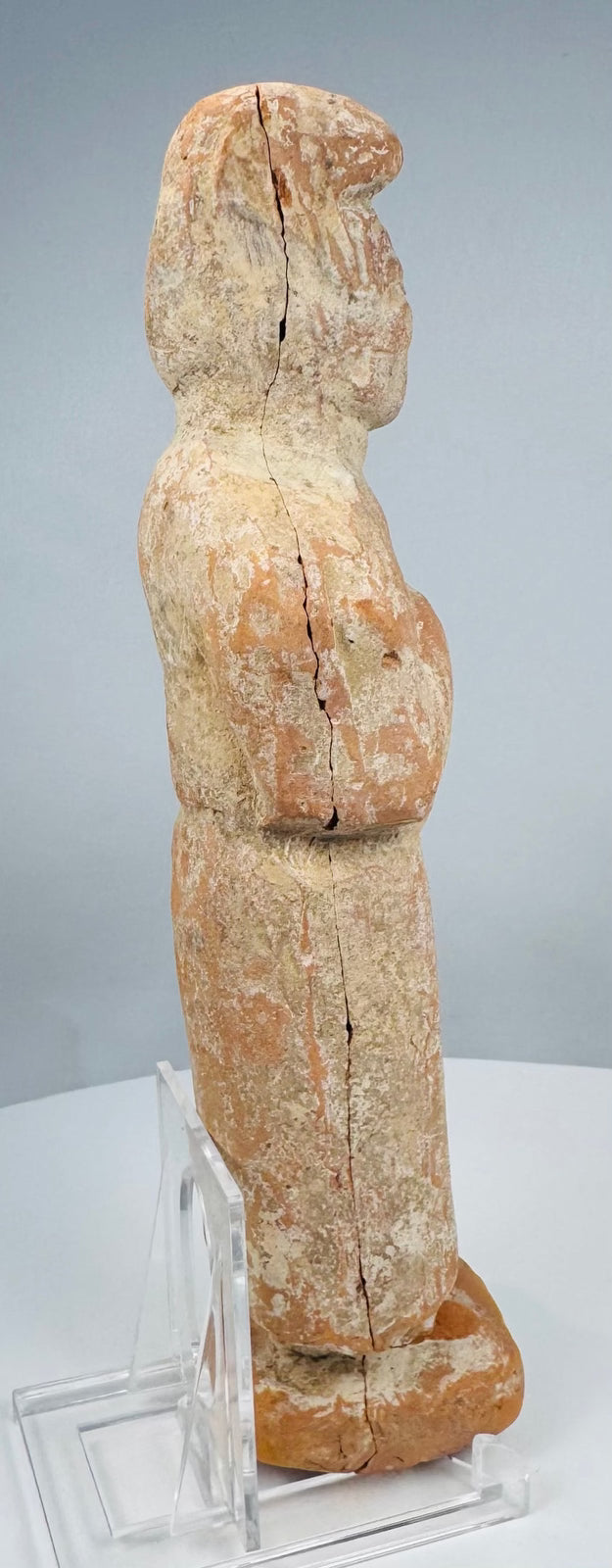
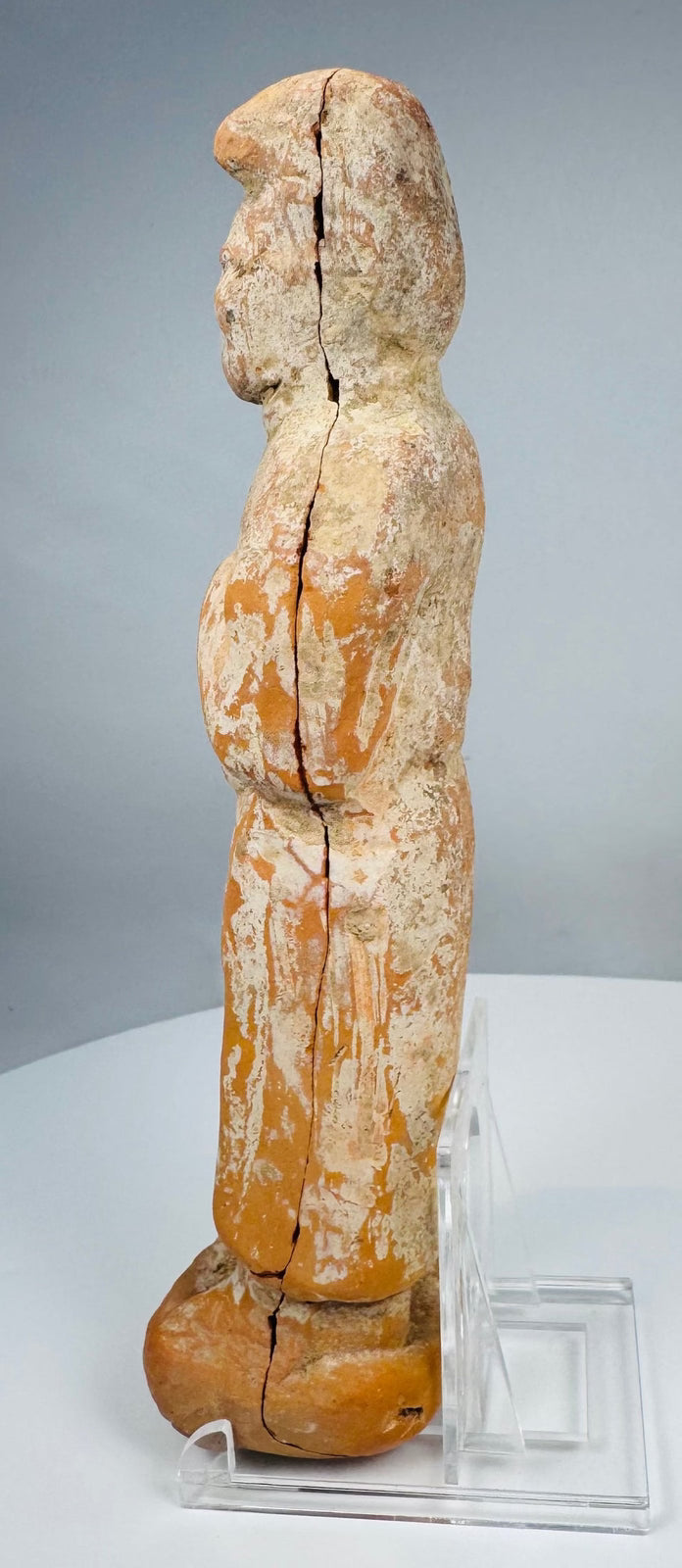
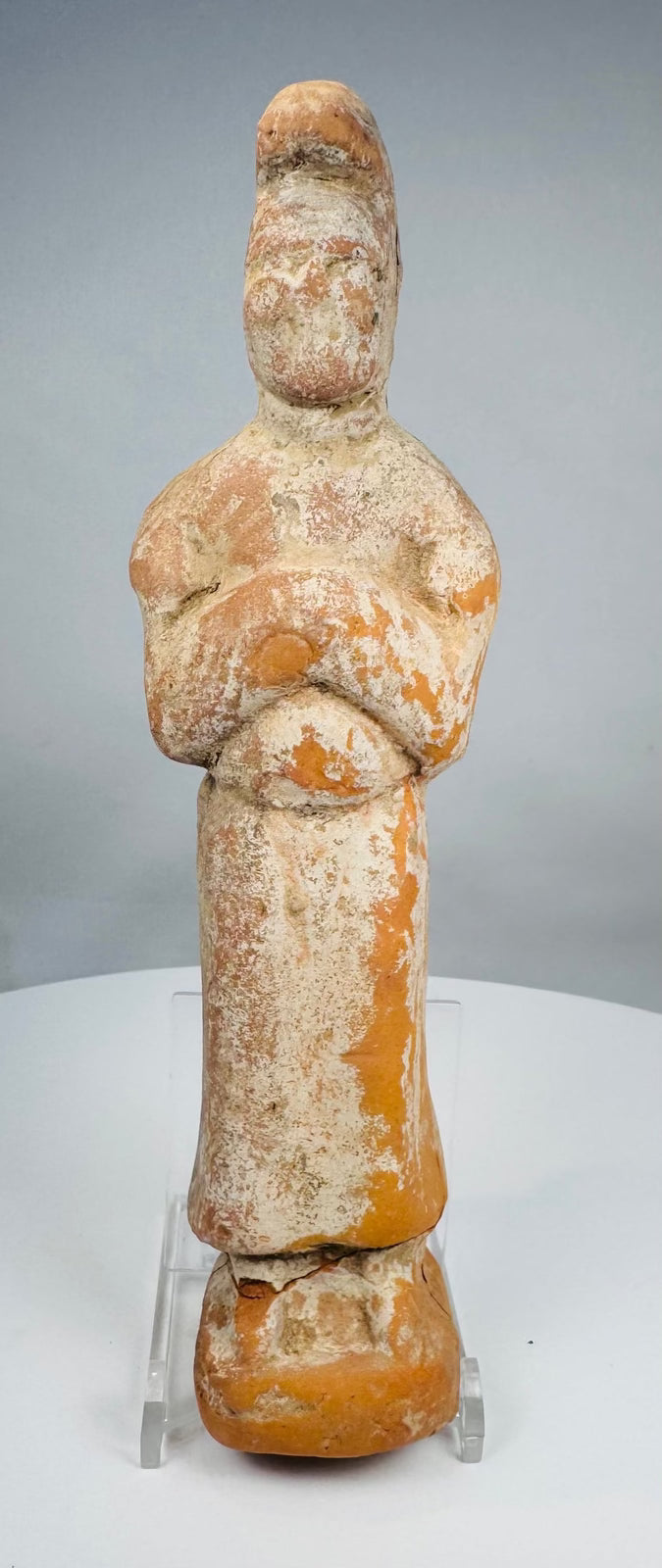
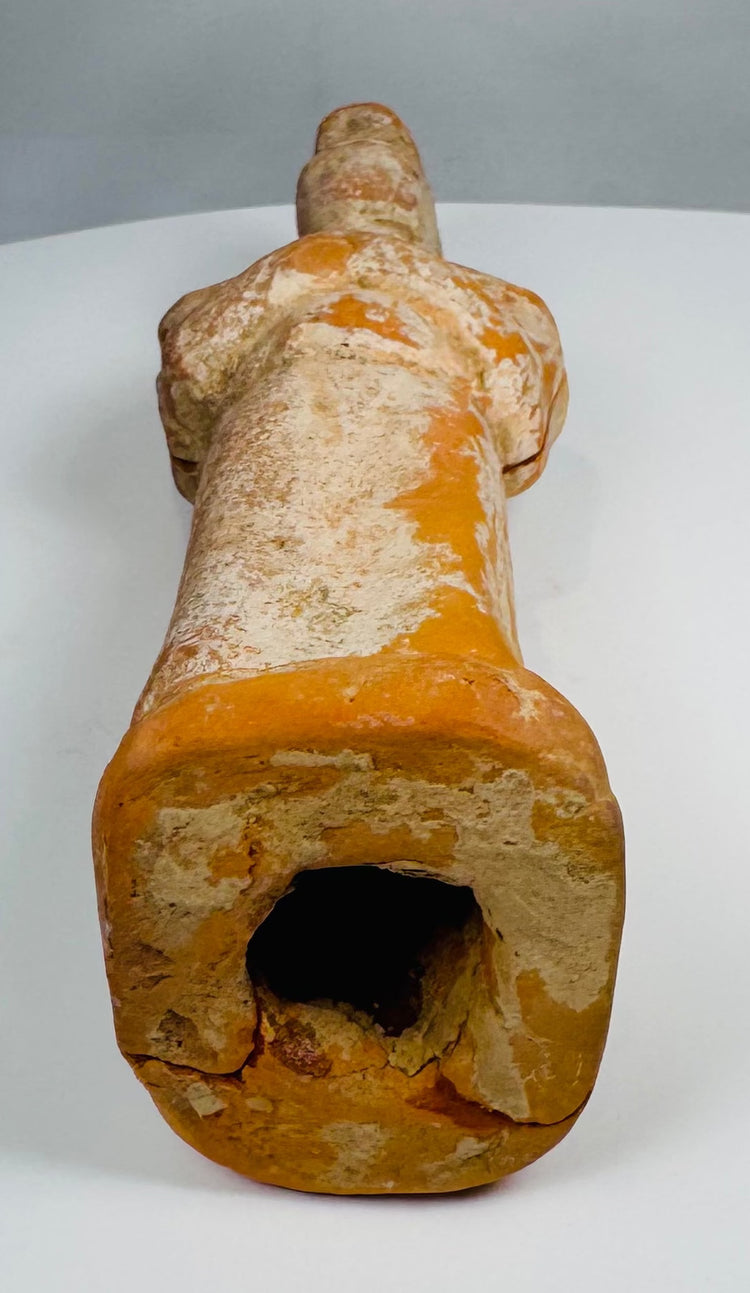
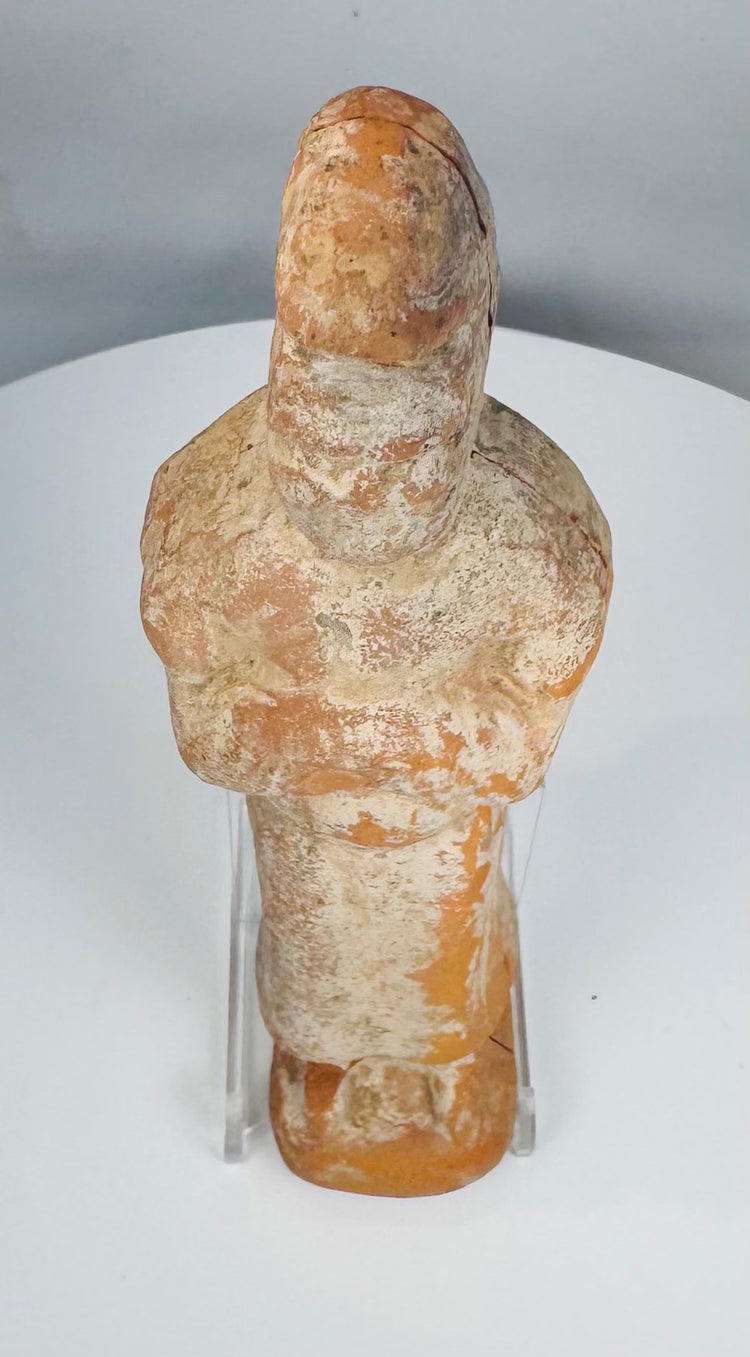
Dama de la corte de terracota de la antigua dinastía Tang china | Figura funeraria de tumba | Circa siglo VII - VIII d.C.
Descripción
Más
Menos
Contexto histórico y origen
Región: Norte de China
Material: Terracota moldeada y acabada a mano con restos de engobe pálido y trazas de pigmento
Período: Dinastía Tang, c. siglos VII-VIII d. C.
Descripción
Esta antigua figura china de terracota para tumba representa a un asistente de la corte o a una dama de la corte de pie, vestida con una larga túnica hasta el suelo.
La figura adopta una postura frontal formal, con ambos brazos flexionados hacia adelante y las manos ocultas o recogidas bajo las voluminosas mangas a la altura del abdomen.
El rostro alargado está representado con rasgos simplificados y modelados suavemente, que incluyen ojos estrechos, una nariz prominente, una boca pequeña y una barbilla redondeada. Sobre la cabeza se eleva un tocado alto y curvado o un elaborado peinado, una característica de moda asociada con las figuras femeninas de la corte producidas durante la dinastía Tang.
La larga túnica desciende en forma casi columnar hacia los pies, creando la silueta esbelta y digna de la figura. Un modelado sutil a lo largo de los lados inferiores sugiere pliegues verticales o tela en capas, mientras que las mangas ensanchadas forman una masa redondeada a lo largo de la parte delantera del cuerpo.
La figura se apoya sobre una base integral y fue formada como una escultura de loza hueca, con una abertura visible debajo.
Su cuerpo cerámico de color naranja rojizo conserva extensos restos de un engobe de color crema pálido o blanco que originalmente habría servido como base para una decoración pintada adicional. La mayoría de los pigmentos originales han desaparecido con el paso del tiempo y el enterramiento, dejando la cálida terracota expuesta en partes del rostro, la vestimenta y la base.
Las figurillas de tumbas Tang representaban con frecuencia a miembros de la casa, incluidos asistentes, funcionarios, músicos, sirvientes y damas de la corte, con la intención de acompañar al difunto en el más allá.
Características
- Probablemente un asistente o una dama de la corte de la dinastía Tang
- Tocado alto y curvado o peinado elaborado
- Postura formal de pie
- Manos recogidas dentro de las largas mangas
- Túnica de corte hasta el suelo
- Construcción de loza hueca moldeada
- Cuerpo de terracota naranja rojizo
- Gran parte del engobe pálido conservado
- Base integral con abertura inferior
Importancia cultural
Durante la dinastía Tang, se colocaban figuras de cerámica dentro de tumbas de élite y aristocráticas para crear un hogar simbólico para el difunto en el más allá.
Estas figuras funerarias, comúnmente conocidas como mingqi, representaban a damas de la corte, asistentes, funcionarios, sirvientes, músicos, animales y visitantes extranjeros, reflejando la prosperidad y el carácter cosmopolita de la sociedad Tang.
Los elaborados peinados, la vestimenta y las posturas de las figuras femeninas de las tumbas también proporcionan valiosa evidencia sobre la moda de la corte Tang y las costumbres sociales. Las figuras de corte comparables a menudo exhiben tocados altos o moños dramáticamente elevados, túnicas largas y manos discretamente sostenidas dentro de sus mangas en una postura ceremonial compuesta.
Las proporciones compactas de este ejemplo y el modelado simplificado sugieren que pudo haber formado parte de un grupo más grande de asistentes hechos para ser colocados juntos dentro de una cámara sepulcral.
Estado
La figura permanece sustancialmente completa, pero ha sufrido un considerable deterioro relacionado con la edad y una aparente estabilización o restauración.
Una prominente grieta o separación vertical se extiende a lo largo de un lado de la figura desde el tocado a través de la cabeza, el hombro, el torso, la túnica y la base. Se observan grietas, fisuras y uniones adicionales en toda la pieza, particularmente alrededor de la cabeza, los hombros, la parte inferior de la túnica y la unión entre la figura y la base.
Es posible que algunas partes hayan sido reensambladas a partir de fragmentos originales.
La base presenta una gran abertura en la parte inferior, consistente con la fabricación hueca, junto con grietas, pérdidas en los bordes y áreas de tejido cerámico expuesto.
La superficie exhibe una extensa pérdida del engobe y pigmento originales, depósitos minerales, concreciones de enterramiento, abrasiones, arañazos, decoloración, pequeños desconchones y áreas de erosión.
El revestimiento superficial pálido sobrevive de manera desigual en toda la figura, con la terracota naranja subyacente visible por todas partes.
Dimensiones (aproximadas)
Altura: 7.5 pulgadas
Anchura: 1.5 pulgadas
Profundidad: 1.75 pulgadas
Edad (aproximada)
1,200–1,400 años de antigüedad
Procedencia
Antigua parte de una colección privada de antigüedades y objetos arqueológicos de Brooklyn, Nueva York, EE. UU., reunida durante muchos años con un interés particular en la cultura material antigua.
Más información
Ver una figura de tumba de dama de la corte de la dinastía Tang relacionada en la colección de El Museo Metropolitano de Arte
Explora nuestra Colección de Artefactos Chinos Antiguos y Reliquias Imperiales
Descripción
Contexto histórico y origen
Región: Norte de China
Material: Terracota moldeada y acabada a mano con restos de engobe pálido y trazas de pigmento
Período: Dinastía Tang, c. siglos VII-VIII d. C.
Descripción
Esta antigua figura china de terracota para tumba representa a un asistente de la corte o a una dama de la corte de pie, vestida con una larga túnica hasta el suelo.
La figura adopta una postura frontal formal, con ambos brazos flexionados hacia adelante y las manos ocultas o recogidas bajo las voluminosas mangas a la altura del abdomen.
El rostro alargado está representado con rasgos simplificados y modelados suavemente, que incluyen ojos estrechos, una nariz prominente, una boca pequeña y una barbilla redondeada. Sobre la cabeza se eleva un tocado alto y curvado o un elaborado peinado, una característica de moda asociada con las figuras femeninas de la corte producidas durante la dinastía Tang.
La larga túnica desciende en forma casi columnar hacia los pies, creando la silueta esbelta y digna de la figura. Un modelado sutil a lo largo de los lados inferiores sugiere pliegues verticales o tela en capas, mientras que las mangas ensanchadas forman una masa redondeada a lo largo de la parte delantera del cuerpo.
La figura se apoya sobre una base integral y fue formada como una escultura de loza hueca, con una abertura visible debajo.
Su cuerpo cerámico de color naranja rojizo conserva extensos restos de un engobe de color crema pálido o blanco que originalmente habría servido como base para una decoración pintada adicional. La mayoría de los pigmentos originales han desaparecido con el paso del tiempo y el enterramiento, dejando la cálida terracota expuesta en partes del rostro, la vestimenta y la base.
Las figurillas de tumbas Tang representaban con frecuencia a miembros de la casa, incluidos asistentes, funcionarios, músicos, sirvientes y damas de la corte, con la intención de acompañar al difunto en el más allá.
Características
- Probablemente un asistente o una dama de la corte de la dinastía Tang
- Tocado alto y curvado o peinado elaborado
- Postura formal de pie
- Manos recogidas dentro de las largas mangas
- Túnica de corte hasta el suelo
- Construcción de loza hueca moldeada
- Cuerpo de terracota naranja rojizo
- Gran parte del engobe pálido conservado
- Base integral con abertura inferior
Importancia cultural
Durante la dinastía Tang, se colocaban figuras de cerámica dentro de tumbas de élite y aristocráticas para crear un hogar simbólico para el difunto en el más allá.
Estas figuras funerarias, comúnmente conocidas como mingqi, representaban a damas de la corte, asistentes, funcionarios, sirvientes, músicos, animales y visitantes extranjeros, reflejando la prosperidad y el carácter cosmopolita de la sociedad Tang.
Los elaborados peinados, la vestimenta y las posturas de las figuras femeninas de las tumbas también proporcionan valiosa evidencia sobre la moda de la corte Tang y las costumbres sociales. Las figuras de corte comparables a menudo exhiben tocados altos o moños dramáticamente elevados, túnicas largas y manos discretamente sostenidas dentro de sus mangas en una postura ceremonial compuesta.
Las proporciones compactas de este ejemplo y el modelado simplificado sugieren que pudo haber formado parte de un grupo más grande de asistentes hechos para ser colocados juntos dentro de una cámara sepulcral.
Estado
La figura permanece sustancialmente completa, pero ha sufrido un considerable deterioro relacionado con la edad y una aparente estabilización o restauración.
Una prominente grieta o separación vertical se extiende a lo largo de un lado de la figura desde el tocado a través de la cabeza, el hombro, el torso, la túnica y la base. Se observan grietas, fisuras y uniones adicionales en toda la pieza, particularmente alrededor de la cabeza, los hombros, la parte inferior de la túnica y la unión entre la figura y la base.
Es posible que algunas partes hayan sido reensambladas a partir de fragmentos originales.
La base presenta una gran abertura en la parte inferior, consistente con la fabricación hueca, junto con grietas, pérdidas en los bordes y áreas de tejido cerámico expuesto.
La superficie exhibe una extensa pérdida del engobe y pigmento originales, depósitos minerales, concreciones de enterramiento, abrasiones, arañazos, decoloración, pequeños desconchones y áreas de erosión.
El revestimiento superficial pálido sobrevive de manera desigual en toda la figura, con la terracota naranja subyacente visible por todas partes.
Dimensiones (aproximadas)
Altura: 7.5 pulgadas
Anchura: 1.5 pulgadas
Profundidad: 1.75 pulgadas
Edad (aproximada)
1,200–1,400 años de antigüedad
Procedencia
Antigua parte de una colección privada de antigüedades y objetos arqueológicos de Brooklyn, Nueva York, EE. UU., reunida durante muchos años con un interés particular en la cultura material antigua.
Más información
Ver una figura de tumba de dama de la corte de la dinastía Tang relacionada en la colección de El Museo Metropolitano de Arte
Explora nuestra Colección de Artefactos Chinos Antiguos y Reliquias Imperiales
También te puede interesar
